
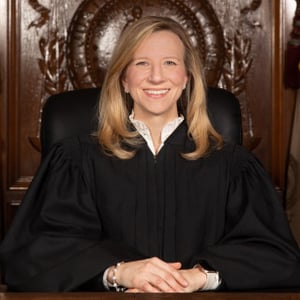
Justice, Supreme Court of Tennessee
Justice Sarah Campbell was confirmed to the Tennessee Supreme Court in 2022. She previously served as an Associate Solicitor General in the Tennessee Attorney General’s Office and as an associate at the law firm of Williams & Connolly LLP in Washington, DC. Justice Campbell earned her law degree from Duke University School of Law, a Master of Public Policy degree from Duke University, and her undergraduate degree from the University of Tennessee, where she received the Torchbearer Award. She served as a law clerk for Justice Samuel A. Alito, Jr. on the United States Supreme Court and Judge William H. Pryor Jr. on the U.S. Court of Appeals for the Eleventh Circuit.
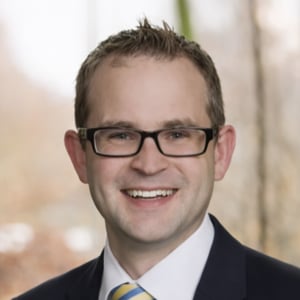
Commissioner, Sacramento County Superior Court
The Hon. Benjamin J. Cassady is a commissioner on the Sacramento County Superior Court in California. He was appointed to the bench by the judges of the Sacramento County Superior Court on February 13, 2024.
Prior to his appointment, Cassady was a deputy district attorney with the Placer County District Attorney’s Office, a position to which he was named in 2021. Before that, he handled law and motion and appellate work as an associate at Jones Day in Washington, D.C. (2017 to 2021).
Cassady earned a B.A. in political science and government from California State University, Chico. He then completed a J.D. at Yale Law School. He was licensed to practice in California (2013).
After graduating from law school, Cassady began his legal career as a judicial law clerk to the Hon. Thomas B. Griffith of the United States Court of Appeals for the District of Columbia Circuit. He also clerked for the Hon. Samuel A. Alito, Jr., of the Supreme Court of the United States.
He is from Marysville, California.

Judge, United States Court of Appeals, Fifth Circuit
Andrew Oldham is a Circuit Judge on the United States Court of Appeals for the Fifth Circuit. Before ascending to the bench, Judge Oldham served as General Counsel to Texas Governor Greg Abbott, where he advised the Governor on a range of issues under federal and state law and managed litigation in which the Governor was an interested party. Before that he served as Deputy Solicitor General for the State of Texas, where he represented Texas in federal courts across the country, including twice before the United States Supreme Court. Before moving to Texas, Judge Oldham was an attorney at Kellogg Hansen Todd Figel & Frederick in Washington, D.C. His practice focused on appellate litigation in federal courts of appeals throughout the country. Before entering private practice, Judge Oldham served as a law clerk to Justice Samuel A. Alito, Jr., at the Supreme Court of the United States and to Judge David B. Sentelle of the U.S. Court of Appeals for the District of Columbia Circuit. He also worked as an attorney-adviser in the Office of Legal Counsel at the U.S. Department of Justice from 2006 to 2008. Judge Oldham earned a B.A. from the University of Virginia with highest honors, a Truman Scholarship for graduate school, an M. Phil., first class (with distinction), from Cambridge University, and a J.D., magna cum laude, from Harvard Law School.

Judge, United States Court of Appeals, Sixth Circuit
Amul R. Thapar serves as a judge on the United States Court of Appeals for the Sixth Circuit. His judicial career began in 2007 when President George W. Bush nominated him to serve on the Eastern District of Kentucky, making him the first South Asian Article III judge in American history. In 2017, he became President Donald J. Trump’s first appellate court nominee.
Before joining the bench, Judge Thapar served as the United States Attorney for the Eastern District of Kentucky. While United States Attorney, Judge Thapar worked on the Attorney General’s Advisory Committee (“AGAC”) and chaired the AGAC’s Controlled Substances and Asset Forfeiture subcommittee. He also served on the Terrorism and National Security subcommittee, the Violent Crime subcommittee, and the Child Exploitation working group.
Judge Thapar has worked in private practice, at Williams & Connolly in Washington, D.C., and Squire, Sanders & Dempsey in Cincinnati, Ohio. He also served as an Assistant United States Attorney in both the Southern District of Ohio and the District of Columbia.
Judge Thapar received his undergraduate degree from Boston College and his law degree from the University of California, Berkeley. After graduating, Judge Thapar worked as a law clerk to the Honorable S. Arthur Spiegel of the United States District Court for the Southern District of Ohio, and the Honorable Nathaniel R. Jones of the United States Court of Appeals for the Sixth Circuit.
Judge Thapar has also published in the Yale Law Journal, Michigan Law Review, and Catholic University Law Review. He teaches courses on originalism, the Federalists and Anti-Federalists, and legal writing at Notre Dame Law School, the University of Virginia School of Law, and Vanderbilt Law School.
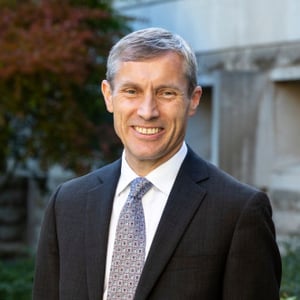
Kenneth F. Kahn '69 Dean and Martin F. Scheinman Professor of Conflict Resolution, School of Industrial and Labor Relations, Cornell University
Alexander Colvin, Ph.D. '99, is the Kenneth F. Kahn '69 Dean and the Martin F. Scheinman ’75, MS ‘76 Professor of Conflict Resolution at the ILR School, Cornell University. He is an associate member of the Cornell Law Faculty. His research and teaching focuses on employment dispute resolution, with a particular emphasis on procedures in nonunion workplaces and the impact of the legal environment on organizations. His current research projects include empirical investigations of employment arbitration and a cross-national study of labor and employment law change in the Anglo-American countries. He has published articles in journals such as Industrial & Labor Relations Review, Industrial Relations, British Journal of Industrial Relations, Personnel Psychology, Relations Industrielles, the Ohio State Journal on Dispute Resolution, and the Cornell Journal of Law & Public Policy. He is also co-author (with Harry C. Katz and Thomas A. Kochan) of the textbook An Introduction to Collective Bargaining and Industrial Relations, 4th edition (Irwin-McGraw-Hill).
Dean Colvin received his J.D. in 1992 from the University of Toronto and his Ph.D. in 1999 from Cornell University. He received the 2003 Outstanding Young Scholar Award from the Industrial Relations Research Association (IRRA) and the 2000 Best Dissertation Award from the IRRA for his dissertation entitled “Citizens and Citadels: Dispute Resolution and the Governance of Employment Relations”. Before joining the faculty of the ILR School in 2008, he taught at Penn State University from 1999-2008.
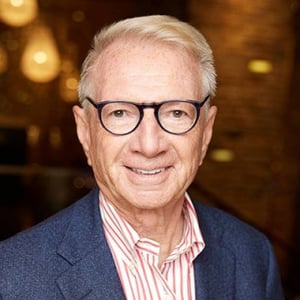
Senior Labor and Employment Counsel, CHRO Association
Roger King is a highly regarded labor relations attorney, whose career spans more than 40 years. Roger recently retired as a partner with Jones Day law firm. He now serves as Senior Labor and Employment counsel for the Association.
Roger specializes in labor and employment, healthcare, collective bargaining, contract administration and representation campaigns. Roger represented the winning side as co-counsel in the landmark U.S. Supreme Court case known as Noel Canning, which successfully challenged President Obama’s authority to make recess appointments to the National Labor Relations Board.
After graduating from Cornell University Law School, he was a Captain and Legal Services Officer in the United States Air Force, on the Staff of United States Senator Robert Taft, Jr. and, subsequently, was appointed as Professional Staff Counsel to the United States Senate Labor Committee.
Roger has testified before both the U.S. Senate and House Labor Committees, is a fellow of the College of Labor and Employment Lawyers, and serves on the Advocacy Committee of the American Society for Healthcare Human Resources Association (ASHHRA) and on the Executive Committee of the Ohio State Bar Association Labor and Employment Law Section Council.
He is a nationally recognized author/speaker on employment matters and has represented employers regarding labor and employment issues both before administrative agencies and in federal and state courts. He has represented the U.S. Chamber of Commerce, the Society for Human Resource Management (SHRM), the HR Policy Association (HRPA), the National Manufactures Association (NAM), the American Hospital Association (AHA), and the Coalition for a Democratic Workplace (CDW) in federal courts regarding numerous labor law issues.
Other clients Roger has represented include the Cleveland Clinic Foundation, Catholic Health Partners, MedStar Health, HCA, Texas Health Resources, Unity Point Health, UHS, Trinity Health, National Beef, General Cable, Orlando Health, ProMedica, Premier Health, Cedars-Sinai, Yale New Haven Health System, McLaren Health Care Corporation, Ohio, California and American Hospital Associations, Bon Secoure Health System, Kaleida Health, Sisters of Levenworth Health System, Lakeland Regional Medical Center, Clarion Clinic, Fisher-Titus Medical Center, Saint Joseph Health System, Benefis Healthcare, Community Health Systems, American Water Works, Macy’s Inc., Verizon and General Motors.
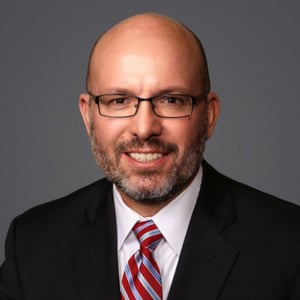
Shareholder, Ogletree, Deakins, Nash, Smoak & Stewart
Chris Murray is Co-Chair of the firm’s Arbitration and Alternative Dispute Resolution Practice Group. In this role, he assists attorneys throughout the firm and clients nationwide to create, roll out, and enforce effective employment arbitration agreements and other ADR programs. Mr. Murray has extensive experience with class/collective action waivers in employment arbitration. Mr. Murray was part of the Ogletree team that successfully defended the use of such waivers in the Fifth Circuit’s landmark decision in D.R. Horton, Inc. v. N.L.R.B. Since then, he has successfully defended the enforceability of class action waivers in numerous subsequent cases and submitted an amicus brief on the subject on behalf of several major employers’ associations in the Supreme Court’s Murphy Oil case. Mr. Murray assists clients and the Firm’s attorneys to draft or revise arbitration programs focused on a client’s specific needs and goals and in light of changing law and evolving best practices.
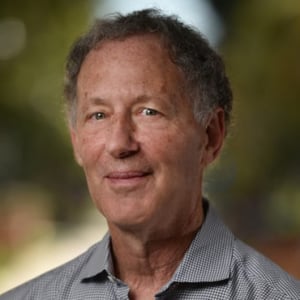
James C. Gaither Professor of Law; Vice Dean, Stanford Law School
Mark Kelman has tried, over the course of his career, to utilize the insights of neoclassical and behavioral economics, cognitive psychology, and political theory to illuminate a wide range of legal and policy controversies. He has paid special attention to antidiscrimination law (and most particularly disability law), criminal law, and taxation. He has written both articles and books that emphasize basic theory (e.g. THE HEURISTICS DEBATE, Oxford University Press 2011 or A GUIDE TO CRITICAL LEGAL STUDIES, Harvard University Press 1987, and a project on INJURIES that he is working on now, attempting both to elucidate what it means to be injured and why certain practices or outcomes – poverty, discrimination, sexual harassment, and death – are or are not injurious) as well as works that apply theoretical insights more directly to legal controversies (e.g. JUMPING THE QUEUE, with Gillian Lester, Harvard University Press, 1997 and the recently published, WHAT IS IN A NAME? TAXATION AND REGULATION ACROSS CONSTITUTIONAL DOMAINS, Carolina Academic Press, 2019). He employs a wide variety of methods in his work, from experiments (e.g. “Playing with Trolleys: Intuitions About the Permissibility of Aggregation,” with Tamar Kreps, JELS, 2014) to doctrinal analysis (e.g. “Untangling Horne, Resuscitating Nollan,” 104 Cornell Law Review Online, 2018) to eclectic pieces that blend empirical and conceptual analyses of contested social practices (e.g. “Concepts of Discrimination in ‘General Ability’ Job Testing,” Harvard Law Review, 1991 and “Hard Choices and Deficient Choosers,” Northwestern Journal of Law and Policy, 2018). He has, for many decades, taught first year courses in Property and Criminal Law and will, for the first time this academic year, offer a course attempting to synthesize the recurring themes and arguments that cut across the law school curriculum. He has also now served as Vice Dean at the Law School for the past fifteen years. Before joining the Stanford Law faculty in 1977, he served as Director of Criminal Justice Projects at the Fund for the City of New York.

Levin, Mabie & Levin Professor of Law, University of Florida Levin College of Law
Professor Gary Lawson joined the University of Florida Levin College of Law faculty on July 1, 2024, after twenty-four years at Boston University School of Law and eleven years at Northwestern University School of Law. While at Boston University, he was named a William Fairfield Warren Distinguished Professor in 2022 – the highest faculty honor within the university. He has authored or co-authored nine editions of a textbook on administrative law, a textbook on constitutional law, five university press books, one popular press book, and more than one hundred scholarly articles on topics ranging from aspects of constitutional theory and history to the proof of legal propositions. His works have been cited in more than twenty opinions of United States Supreme Court justices. He is a founding member, and serves on the Board of Directors, of the Federalist Society for Law and Public Policy Studies and is on the Editorial Advisory Board of the Heritage Guide to the Constitution.
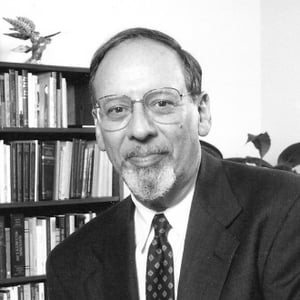
Dean Emeritus, George Mason School of Law
Lauded as a cultural laureate of the Commonwealth of Virginia, former Mason dean Henry G. Manne was the driving force behind the many innovations in legal education implemented at George Mason.
Professor Manne was designated one of the "founders" of the field of law and economics by the American Law and Economics Association. He launched the Law and Economics Center at Emory University and the University of Miami before bringing it to George Mason.
His monograph, An Intellectual History of the School of Law, George Mason University, traces the development of the law and economics movement and highlights the special contributions made by George Mason University School of Law to the movement. Professor Manne's other writings include such seminal works as Insider Trading and the Stock Market; Wall Street in Transition (with E. Solomon); and "Mergers and the Market for Corporate Control", Journal of Political Economy, April 1965. Professor Manne also designed and implemented at George Mason the nation's first system of fully integrated law school specialty track programs.
In August 2012, Dean Manne gave an oral history of his life, including his time at the Law and Economics Center, to the Securities and Exchange Commission Historical Society. An audio recording of the interview and transcript are available on the Society's website: audio (mp3); edited transcript (pdf).
He received a B.A. from Vanderbilt University (1950), J.D. from the University of Chicago (1952), J.S.D. from Yale University (1966), LL.D. from Seattle University (1987), and LL.D. from the Universidad Francesco Marroquin in Guatemala (1987).

Vice President for Legal Affairs, Cato Institute
Roger Pilon is the Cato’s Institute’s vice president for legal affairs, the founding director of Cato’s Robert A. Levy Center for Constitutional Studies, the inaugural holder of Cato’s B. Kenneth Simon Chair in Constitutional Studies, and the founding publisher of the Cato Supreme Court Review.
Prior to joining Cato, Pilon held five senior posts in the Reagan administration, including at State and Justice, and was a national fellow at Stanford’s Hoover Institution. In 1989 the Bicentennial Commission presented him with its Benjamin Franklin Award for excellence in writing on the U.S. Constitution. In 2001 Columbia University’s School of General Studies awarded him its Alumni Medal of Distinction. Pilon lectures and debates at universities and law schools across the country and testifies often before Congress.
His writing has appeared in the Wall Street Journal, the Washington Post, the New York Times, the Los Angeles Times, Legal Times, National Law Journal, Harvard Journal of Law and Public Policy, Stanford Law and Policy Review, and elsewhere. He has appeared on ABC’s Nightline, CBS’s 60 Minutes II, Fox News Channel, NPR, CNN, MSNBC, CNBC, C-SPAN, and other media.
Pilon holds a BA from Columbia University, an MA and a PhD from the University of Chicago, and a JD from the George Washington University School of Law.
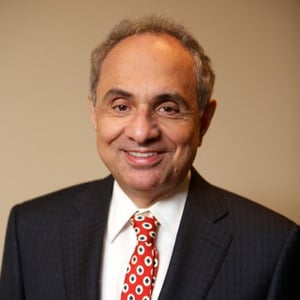
Professor of Economics; Co-Director of Classical liberal Institute, NYU Law School; Director of the Foundations of the Market Economy Program, New York University
Mario Rizzo is the Director of the Program on the Foundations of the Market Economy in the Department of Economics. He is also the Co-Director of the Classical Liberal Institute at the New York University School of Law. He has been a law and economics fellow at Yale Law School and the University of Chicago Law School. He teaches a yearly seminar at the NYU Law School called “Classical Liberalism.” He is the author of many articles in economics and in law journals. He is the coauthor of Austrian Economics Re-Examined: The Economics of Time and Ignorance. Professor Rizzo’s current research is focused on new or soft paternalism, behavioral economics, and the economic theory of rationality. He is completing a book, Puppets and Puppet Masters: Rationality, Behavioral Economics and New Paternalism, for Cambridge University Press.

Founding Partner, Boyden Gray & Associates
Ambassador C. Boyden Gray is the founding partner of Boyden Gray & Associates, a law and strategy firm in Washington, D.C., focused on constitutional and regulatory issues.
Mr. Gray worked in the White House for twelve years, first as counsel to the Vice President during the Reagan administration and then as White House Counsel to President George H.W. Bush. In the Reagan administration, he was Counsel to the Presidential Task Force on Regulatory Relief, for which he wrote the original Executive Order 12291 requiring cost-benefit analysis and White House review of regulations (later renumbered as current EO 12866). In the George H.W. Bush Administration, Mr. Gray was in charge of judicial selection and was also instrumental in the enactment of the Clean Air Act Amendments of 1990, the Energy Policy Act of 1992, and a cap-and-trade system for acid rain emissions. In 1993, he received the Presidential Citizens Medal. Under President George W. Bush, Mr. Gray was U.S. Ambassador to the European Union and U.S. Special Envoy to Europe for Eurasian Energy.
Mr. Gray practiced law for 25 years at the law firm of Wilmer, Cutler & Pickering and was chairman of the Administrative Law and Regulatory Practice Section of the American Bar Association from 2000 to 2002. Early in his career, Mr. Gray helped to develop the Business Roundtable and served as its first counsel. He is an adjunct professor at Antonin Scalia Law School and a former adjunct professor at NYU Law School (teaching energy and environmental law). Mr. Gray is on the Board of Directors of the Atlantic Council, the Federalist Society, Reason Foundation, and the Trust for the National Mall.
Mr. Gray earned his A.B. magna cum laude from Harvard, where he was an editor of the Crimson, and his J.D. with high honors from the University of North Carolina at Chapel Hill, where he was editor-in-chief of the Law Review. Mr. Gray served in the United States Marine Corps, and after law school, he clerked for Earl Warren, Chief Justice of the United States Supreme Court.
Levin, Mabie & Levin Professor of Law, University of Florida Levin College of Law
Professor Gary Lawson joined the University of Florida Levin College of Law faculty on July 1, 2024, after twenty-four years at Boston University School of Law and eleven years at Northwestern University School of Law. While at Boston University, he was named a William Fairfield Warren Distinguished Professor in 2022 – the highest faculty honor within the university. He has authored or co-authored nine editions of a textbook on administrative law, a textbook on constitutional law, five university press books, one popular press book, and more than one hundred scholarly articles on topics ranging from aspects of constitutional theory and history to the proof of legal propositions. His works have been cited in more than twenty opinions of United States Supreme Court justices. He is a founding member, and serves on the Board of Directors, of the Federalist Society for Law and Public Policy Studies and is on the Editorial Advisory Board of the Heritage Guide to the Constitution.
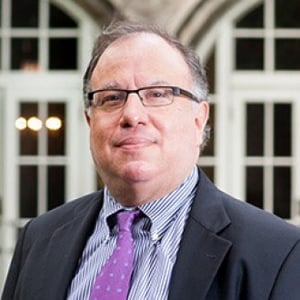
Harold Washington Professor of Law, Northwestern University Pritzker School of Law
Daniel B. Rodriguez, the Harold Washington Professor at the Law School, served as dean of the Law School from January 2012 through August 2018.
His principal academic work is in the areas of administrative law, local government law, statutory interpretation, federal and state constitutional law, and the law-business-technology interface.
Formerly, Professor Rodriguez served as Minerva House Drysdale Regents Chair in Law at the University of Texas-Austin; as a Research Fellow at Rice University’s Baker Institute for Public Policy; as Dean and Warren Distinguished Professor of Law at the University of San Diego School of Law; and, as a Professor of Law at University of California, Berkeley School of Law. He has also served as a visiting professor at several top law schools, including Stanford, Harvard, Columbia, University of Southern California, and Virginia.
Professor Rodriguez was the 2014 President of the Association of American Law Schools (AALS) and is currently serving as chair of the council of the American Bar Association Center for Innovation, a council member of the American Law Institute, and as an advisor to ROSS Intelligence, Inc.
Rodriguez received his law degree, with honors, from Harvard Law School and his undergraduate degree from California State University of Long Beach.
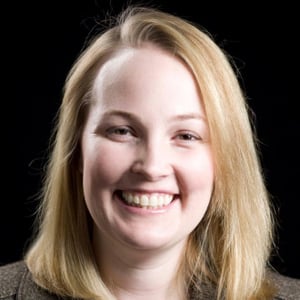
Professor of Law, BYU J. Reuben Clark Law School
Lisa Grow Sun graduated from the University of Utah summa cum laude in chemistry and then attended Harvard Law School. In 1997, she was the first woman to graduate first in her class from Harvard Law School, the first woman to graduate summa cum laude, and the first student to graduate summa cum laude in 15 years. She was the Notes Chair of the Harvard Law Review, a Senior Editor of the Harvard Journal of Law & Public Policy, and an editor of the Harvard Journal of Law and Technology.
After clerking for Judge J. Michael Luttig of the U.S. Fourth Circuit Court of Appeals and then for Justice Anthony M. Kennedy, Professor Sun was a Lecturer in Law at Stanford Law School, where she taught Federal Jurisdiction and Administrative Law. Professor Sun then spent two years in Beijing, China, where she taught Civil Procedure to Chinese judges, lawyers, and administrative officials as a Visiting Professor at the Temple/Tsinghua University Masters in Law Program.
Professor Sun has also worked as a consultant for law firms on appellate briefs and Supreme Court petitions for certiorari, and has served as a pro bono lawyer on constitutional, administrative, bankruptcy, and family law matters.
Professor Sun teaches Disaster Law, Constitutional Law, and Torts. Her primary research interest is in the emerging field of Disaster Law. She is coauthor of the leading disaster law textbook, Disaster Law and Policy, with Dan Farber, Jim Chen, and Rob Verchick.
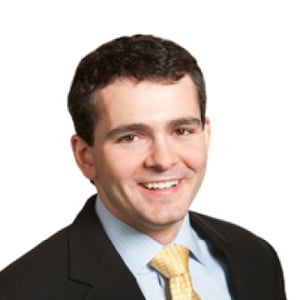
President, The Ethics and Public Policy Center
Ryan T. Anderson, Ph.D., is the President of the Ethics and Public Policy Center. In May 2025, Anderson was appointed by President Trump to the Religious Liberty Commission.
He is the author or co-author of five books, including the just-released Tearing Us Apart: How Abortion Harms Everything and Solves Nothing. Previous books include When Harry Became Sally: Responding to the Transgender Moment, Truth Overruled: The Future of Marriage and Religious Freedom, What Is Marriage? Man and Woman: A Defense, and Debating Religious Liberty and Discrimination. He is the co-editor of A Liberalism Safe for Catholicism? Perspectives from “The Review of Politics.”
Anderson’s research has been cited by two U.S. Supreme Court justices, Justice Samuel Alito and Justice Clarence Thomas, in two Supreme Court cases.
He received his bachelor of arts degree from Princeton University, graduating Phi Beta Kappa and magna cum laude, and he received his doctoral degree in political philosophy from the University of Notre Dame. His dissertation was titled: “Neither Liberal Nor Libertarian: A Natural Law Approach to Social Justice and Economic Rights.”
Anderson has made appearances on ABC, CNN, CNBC, MSNBC, and Fox News. His work has been published by the New York Times, the Washington Post, the Wall Street Journal, Oxford University Press, Cambridge University Press, the Harvard Journal of Law and Public Policy, the Harvard Health Policy Review, the Georgetown Journal of Law and Public Policy, First Things, the Claremont Review of Books, and National Review.
He is the John Paul II Teaching Fellow in Social Thought at the University of Dallas, a member of the James Madison Society at Princeton University, and a Fellow of the Institute for Human Ecology at the Catholic University of America, as well as the Founding Editor of Public Discourse, the online journal of the Witherspoon Institute of Princeton, New Jersey.
For 9 years he was the William E. Simon senior research fellow at The Heritage Foundation, and has served as an adjunct professor of philosophy and political science at Christendom College, and a Visiting Fellow at the Veritas Center at Franciscan University. He has also served as an assistant editor of First Things.
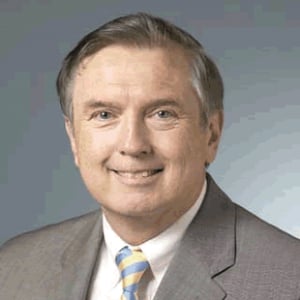
Professor of Law, University of Notre Dame Law School
Gerard V. Bradley is Professor of Law at the University of Notre Dame, where he teaches Legal Ethics and Constitutional Law. At Notre Dame he directs (with John Finnis) the Natural Law Institute and co-edits The American Journal of Jurisprudence, an international forum for legal philosophy. Bradley has been a Visiting Fellow at the Hoover Institution of Stanford University, and a Senior Fellow of the Witherspoon Institute, in Princeton, New Jersey. He served for many years as President of the Fellowship of Catholic Scholars.
Bradley received his B.A and J.D. degrees from Cornell University, graduating Summa cum laude from the law school in 1980. After serving in the Trial Division of the Manhattan District Attorney’s Office he joined the law faculty at the University of Illinois. He moved to Notre Dame in 1992. Bradley has published over one hundred scholarly articles and reviews. His most recent books are an edited collection of essays titled, Challenges to Religious Liberty in the Twenty-First Century (published by Cambridge University Press in 2012), Essays on Law, Religion, and Morality and Unquiet Americans: U.S. Catholics and the Common Good (both to be published in 2014.) He is currently working on a book about regulating obscenity in the Internet Age.

Senior Fellow and Director of Constitutional Studies, Manhattan Institute
Ilya Shapiro is a senior fellow and director of constitutional studies at the Manhattan Institute and a contributing editor of City Journal. Previously he was executive director and senior lecturer at the Georgetown Center for the Constitution, and before that a vice president of the Cato Institute.
Shapiro is the author of Lawless: The Miseducation of America’s Elites (2025) and Supreme Disorder: Judicial Nominations and the Politics of America’s Highest Court (2020), coauthor of Religious Liberties for Corporations? (2014), and editor of 11 volumes of the Cato Supreme Court Review (2008-18). He has contributed to a variety of academic, popular, and professional publications, including the Wall Street Journal, Harvard Journal of Law & Public Policy, Washington Post, Los Angeles Times, USA Today, National Review, and Newsweek. He also regularly provides commentary for various media outlets, writes the Shapiro’s Gavel newsletter on Substack, and once appeared on the Colbert Report.
Shapiro has testified many times before Congress and state legislatures and has filed more than 500 amicus curiae “friend of the court” briefs in the Supreme Court. He lectures regularly on behalf of the Federalist Society, is a member of the board of fellows of the Jewish Policy Center, was an inaugural Washington Fellow at the National Review Institute, and has been an adjunct law professor at the George Washington University and University of Mississippi. He is also the chairman of the board of advisers of the Mississippi Justice Institute, a barrister in the Edward Coke Appellate Inn of Court, and a former member of the Virginia Advisory Committee to the U.S. Commission on Civil Rights.
Earlier in his career, Shapiro was a special assistant/adviser to the Multi-National Force in Iraq on rule-of-law issues and practiced at Patton Boggs and Cleary Gottlieb. Before entering private practice, he clerked for Judge E. Grady Jolly of the U.S. Court of Appeals for the Fifth Circuit. He holds an AB from Princeton University, an MSc from the London School of Economics, and a JD from the University of Chicago Law School.
Vilas Research Fellow & Professor of Law, University of Wisconsin Law School
Shubha Ghosh has taught in the fields of intellectual property, business organizations, tort law, antitrust, property, and law & economics since Fall 1996. He is the author of over fifty articles and book chapters. He is the co-author of two intellectual property casebooks: Intellectual Property: Private Rights, The Public Interest, and the Regulation of Creative Activity (Thomson West 2007) and Intellectual Property in Business Organizations (Lexis-Nexis 2006).
Professor of Philosophy & Church-Studies at Baylor University
Francis J. Beckwith is Professor of Philosophy & Church-State Studies at Baylor University, where he also serves as Associate Director of Graduate Studies in Philosophy. Writing and teaching in the areas of law and religion, jurisprudence, and politics, his over one dozen books include Taking Rites Seriously: Law, Politics, and the Reasonableness of Faith (Cambridge University Press, 2015), A Second Look at First Things: A Case for Conservative Politics (St. Augustine Press, 2013), Politics for Christians: Statecraft as Soulcraft (InterVarsity Press, 2010), Defending Life: A Moral and Legal Case Against Abortion Choice (Cambridge University Press, 2007), and Relativism: Feet Firmly Planted in Mid-Air (Baker Books, 1998). His articles have appeared in a wide-range of journals including Harvard Journal of Law & Public Policy, American Journal of Jurisprudence, Journal of Law & Religion, Notre Dame Journal of Law, Ethics & Public Policy, Nevada Law Journal, International Philosophical Quarterly, Journal of Medicine & Philosophy, San Diego Law Review, Liberty University Law Review, Ratio Juris, Christian Bioethics, Journal of Law, Medicine & Ethics, Journal of Medical Ethics, Philosophia Christi, Catholic Social Science Review, Journal of Church & State, Hastings Constitutional Law Quarterly, Chapman Law Review, Journal of Social Philosophy, Human Life Review, and Social Theory and Practice.

Plenary Panel 3: Justice Alito’s Impact on Criminal Law & Procedure
Sarah Keeton Campbell, Benjamin J. Cassady, Andrew Oldham, Amul R. Thapar
Justice Alito has played a significant role in shaping contemporary criminal law and procedure, particularly...
Free Speech on Campus: The Tales of Two Students
Columbus Lawyers Chapter
Columbus, OHThe Ending Forced Arbitration of Sexual Assault and Sexual Harassment Act: Is this the beginning of the end of mandatory employment arbitration?
Alexander J.S. Colvin, G. Roger King, Christopher C. Murray
The “Ending Forced Arbitration of Sexual Assault and Sexual Harassment Act” amended the Federal Arbitration...
Panel I: Methods of Interpreting the Economic Rights Provisions of the Constitution [Archive Collection]
Mark Kelman, Gary Lawson, Henry G. Manne, Roger Pilon, Mario J. Rizzo
On October 16-17, 1987, the Federalist Society hosted a symposium in celebration of the bicentennial...
Federal Executive Power and COVID-19
C. Boyden Gray, Gary Lawson, Daniel B. Rodriguez, Lisa Grow Sun
The first day of the Federalist Society's COVID-19 & the Law Conference finished with a...
Topics
The President's Immigration Travel Ban: What Trump v. Hawaii Has to Say About Stating a Claim Under the Establishment Clause
It is little appreciated that the United States Supreme Court’s decision today in Trump v. Hawaii,...
Conscience Cases and Religious Liberty - Podcast
Ryan T. Anderson, Anthony Kreis
With the legalization of gay marriage, numerous cases have arisen in which private citizens have...
Gay Marriage in the Supreme Court - Podcast
Gerard V. Bradley, Ilya Shapiro
On January 16, 2015, the Supreme Court granted cert in four same-sex marriage cases from...
Does the Federal Courts' Religious Motive Test Violate Religious Liberty?
Irvine, CaliforniaFoxes, Drugs, WMDs, and YouTube: What Kind of Property is Intellectual Property?
Shubha Ghosh
On February 15, 2011, the Wisconsin Student Chapter hosted an event on intellectual property. The featured speaker was Prof. Shubha...