
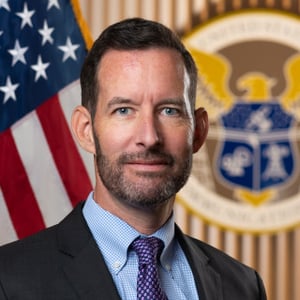
Chief of Staff, Federal Communications Commission (FCC)
Mr. Delacourt is Chief of Staff of the Federal Communications Commission. In this role, he manages the Chairman's policy agenda and strategic initiatives and serves as Chief Operating Officer for the Agency. He has a broad range of experience in telecommunications and technology law and policy spanning both the governmental and private sectors. Scott joined the FCC from Wiley Rein LLP where he served as Partner and Chair of the Wireless Practice Group. He previously served in leadership positions at the FCC, including Deputy Bureau Chief and Chief of Staff of the Wireless Bureau, Senior Counsel in the Office of General Counsel, and Legal Advisor to the Wireless Bureau Chief. Scott received his Law Degree, cum laude, from the University of Michigan Law School, and his Bachelor’s Degree, summa cum laude, from Georgetown University.
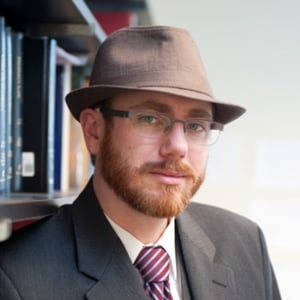
Professor of Law and Associate Dean, Boston College Law School; Nonresident Senior Fellow, American Enterprise Institute, Boston College Law School
Professor Lyons is a Professor and Associate Dean at Boston College Law School. He specializes in telecommunications and tech policy, energy, and administrative law. Before joining the faculty, he practiced at the firm of Munger, Tolles and Olson in Los Angeles. He also clerked for the Judge Cynthia Holcomb Hall of the Ninth Circuit Court of Appeals.
Professor Lyons is also a Nonresident Senior Fellow at the American Enterprise Institute, where he has written over 250 blog posts on tech policy issues, including net neutrality, telecommunications regulation, First Amendment issues with tech regulation, and generative AI.

Partner, Wiley Rein, LLP
Megan L. Brown is a partner at Wiley Rein LLP. She has significant litigation, appellate and regulatory experience before state and federal courts and agencies.
Ms. Brown helps businesses respond to federal, state and local regulation and investigations raising administrative law, statutory interpretation, and constitutional issues, including the First Amendment.
Professor of Law and Associate Dean, Boston College Law School; Nonresident Senior Fellow, American Enterprise Institute, Boston College Law School
Professor Lyons is a Professor and Associate Dean at Boston College Law School. He specializes in telecommunications and tech policy, energy, and administrative law. Before joining the faculty, he practiced at the firm of Munger, Tolles and Olson in Los Angeles. He also clerked for the Judge Cynthia Holcomb Hall of the Ninth Circuit Court of Appeals.
Professor Lyons is also a Nonresident Senior Fellow at the American Enterprise Institute, where he has written over 250 blog posts on tech policy issues, including net neutrality, telecommunications regulation, First Amendment issues with tech regulation, and generative AI.
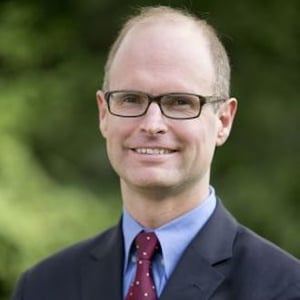
Professor of Law, Temple University Beasley School of Law
Professor Craig Green has taught and written in the fields of Administrative Law, American Legal History, Civil Procedure, Constitutional Law, and Federal Courts; he has also taught in the field of Reproductive Rights. Other teaching interests include Conflicts of Law, Remedies, Civil Procedure II, Complex Civil Litigation, Civil and Political Rights, First Amendment, Separation of Powers, Legislation, Federalism, Constitutional History, History of American Judging, and Sentencing. In 2009 and 2015, Green received Temple Law School’s George P. Williams Award as “Outstanding Professor of the Year,” and in 2010 he received Temple University’s Lindback Award for Distinguished Teaching.
Green’s research has addressed the role of federal courts in overseeing the executive branch, and the significance of iconic cases like Erie v. Tompkins in legal discourse. He has published articles concerning wartime detention, federal common law, judicial activism, precedential interpretation, equal protection, the federal sentencing guidelines, constitutional history, the economic recession of 2008, and customary international law. He has been invited to present research to the Sentencing Commission’s legal staff, as a keynote speaker at the Japanese-American Society for Legal Studies Annual Meeting in Kyoto, as a participant in the Turkish Institute for Justice’s conference “The Balance Between Freedom and Security in Fighting against Terrorism,” and as an organizing panelist for the British Association of Nineteenth-Century Americanists at the University of Warwick. In 2012, Green received Temple Law School’s Friel-Scanlan Award for Outstanding Scholarship.
In 2018, Green received a Ph.D from Princeton University’s History Department for completing his dissertation, “Creating American Land: A Territorial History from the Albany Plan to the U.S. Constitution.” The dissertation seeks to explain (1) how the United States’ imperial legal structure emerged from Revolution’s anti-imperial moment, (2) how American states and statehood emerged from the legal destruction of British colonies, (3) how Native American ideas about territory influenced and were affected by the law of Britain and the United States, and (4) what “law” meant in a context where institutional enforcement was most often impossible.
Green has an active interest in appellate litigation, and has served on moot courts for Supreme Court advocates at the University of Pennsylvania’s Supreme Court Institute, the Georgetown Law Center’s Supreme Court Institute, the National Association of Attorneys General, and law firms in Washington D.C.
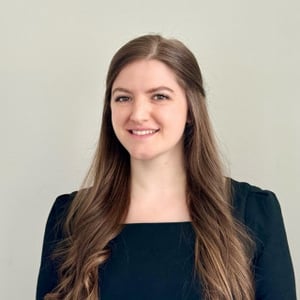
Andrea M. Leelike is working at the intersection of generative AI and the law as a Strategic Business Development Lead at Harvey AI. She previously worked as a Private Credit Associate at Proskauer Rose LLP in New York City and as a Finance Associate at Winston & Strawn LLP in Dallas.
Andrea attended the University of Pennsylvania Law School where she served as President of Penn’s Federalist Society chapter. She also served as an Associate Editor and Community Relations Board Member on the Journal of Law and Innovation. She is a native of eastern Long Island and earned her B.S.B.A. in Business Management and Administration at Boston University’s Questrom School of Business.

James Monroe Distinguished Professor of Law and Albert Clark Tate, Jr., Professor of Law, University of Virginia School of Law
Professor Saikrishna Prakash’s scholarship focuses on separation of powers, particularly executive powers. He teaches Constitutional Law, Foreign Relations Law and Presidential Powers at the Law School.
Prakash’s most recent book, “The Living Presidency: An Originalist Argument Against Its Ever-Expanding Powers,” was published by Harvard Belknap Press in 2020. He also authored “Imperial from the Beginning: The Constitution of the Original Executive” (Yale University Press, 2015). The former book focuses on the modern presidency while the latter considers the presidency of the Founders.
Prakash has authored over 75 law review articles. Among them are “Of Synchronicity and Supreme Law” in the Harvard Law Review, “The Indefensible Duty to Defend” in the Columbia Law Review, and “50 States, 50 Attorneys General and 50 Approaches to the Duty to Defend” and “The Executive Power Over Foreign Affairs” in the Yale Law Journal.
Prakash has published op-eds in The New York Times, The Wall Street Journal and the Los Angeles Times. At the request of Democrats and Republicans, he has testified before Congress on matters of presidential removal, the Mueller Report and how Congress might better check the presidency. He is currently a Miller Center Senior Fellow. In 2015, he received the Roger Traynor award for faculty scholarship. In the same year, he received an honorable mention from the American Society of Legal Writers for his book “Imperial from the Beginning.” He has given named lectures at William & Mary Law School, Princeton University and Toledo Law School, and keynote addresses at several conferences.
Prakash majored in economics and political science at Stanford University. At Yale Law School, he served as senior editor of the Yale Law Journal and received the John M. Olin Fellowship in Law, Economics and Public Policy. He subsequently clerked for Judge Laurence H. Silberman of the U.S. Court of Appeals for the District of Columbia Circuit and for Justice Clarence Thomas of the U.S. Supreme Court. After practicing in New York for two years, he served as a visiting professor at the University of Illinois College of Law and as an associate professor at Boston University School of Law. He then spent several years at the University of San Diego School of Law as the Herzog Research Professor of Law. Prakash has been a visiting professor at Northwestern University and the University of Chicago. He also has served as a James Madison Fellow at Princeton University and Visiting Research Fellow at the Hoover Institution of War & Peace at Stanford University.
Counselor, Department of Labor
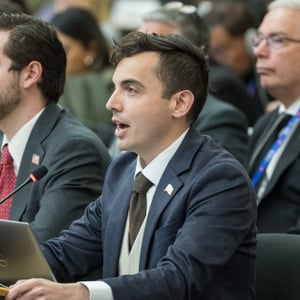
Lorenzo B. Riboni is a counselor at the Department of Labor and a judge advocate in the U.S. Army Reserve. Prior to serving in the Second Trump Administration, he practiced Labor and Employment Law at Littler Mendelson, P.C.
During law school, he was a Law & Public Policy Scholar at Temple University Beasley School of Law, where he served as the President of the Federalist Society. He also served as a law student researcher with the Labor & Employment Law Executive Committee. He is a native of San Diego, California and completed his bachelor’s degree in the administration of justice with Magna Cum Laude honors at the University of Pittsburgh.
Prior to law school, he served in the Military Police Corps. In 2014, he deployed to Afghanistan as a member of the Rule of Law Development Team’s personal security, assisting in their mission of handing over operational and administrative control of the Parwan Detention Facility and Justice Center to the Afghan Government. In 2016, he served at Naval Station Guantanamo Bay where he was a detention specialist in the Behavioral Health Unit ensuring the safe, humane, legal, and transparent care, custody, and control of detainees.
Mr. Riboni is focusing his career on management-side labor and employment law.

Emanuel S. Heller Professor of Law, University of California at Berkeley; Thomas Smith Senior Research Fellow, The Civitas Institute, University of Texas at Austin
John Yoo is the Emanuel Heller Professor of Law at the University of California at Berkeley. He is also the Thomas Smith Senior Research Fellow, Civitas Institute, at the University of Texas at Austin. He is also a Nonresident Senior Fellow at the American Enterprise Institute.
His most recent book, The Politically Incorrect Guide to the Supreme Court, co-authored with Robert Delahunty, was published in 2023. Professor Yoo’s other books include Defender-in-Chief: Trump’s Fight for Presidential Power; Striking Power: How Cyber, Robots, and Space Weapons Change the Rules for War; Point of Attack: Preventive War, International Law, and Global Welfare; and Crisis and Command: A History of Executive Power from George Washington to George Bush.
He is a co-author of volumes 1 and 2 of R. Rossum, G. Tarr, V. Munoz & J. Yoo American Constitution Law (Routledge, 2026), and a co-editor of the eight-volume series on the 250th anniversary of the American Revolution, We Hold These Truths, with Yuval Levin and Adam White of the American Enterprise Institute.
Professor Yoo has published more than 100 articles in academic journals on subjects including national security, constitutional law, international law, and the Supreme Court. He also regularly contributes to the editorial pages of the Wall Street Journal, New York Times, Washington Post, Los Angeles Times, and National Review, among others.
Professor Yoo has served in all three branches of government. He was an official in the U.S. Department of Justice, where he worked on national security and terrorism issues after the 9/11 attacks. He served as general counsel of the U.S. Senate Judiciary Committee. He has been a law clerk for Supreme Court Justice Clarence Thomas and federal appeals Judge Laurence Silberman. He has been a visiting professor at the University of Texas at Austin’s School of Civic Leadership, Seoul National University, the Interdisciplinary Center Herzliya, Keio University, Trento University, the University of Chicago, and the Free University of Amsterdam.
Professor Yoo supervises the Public Law and Policy Program and the California Constitution Center. He also serves on the boards of Founding Forward, the Washington Legal Foundation, the Pacific Legal Foundation, the Ulysses Grant Institute, the Federalist Society’s Separation of Powers and Federalism Division, the Universidad Cientifica del Sur Law School, and the Asia-Pacific Law Institute at Seoul National University. He is a winner of the Federalist Society’s Paul Bator award and the Heritage Foundation’s Edwin Meese III Originalism Lectureship.
Professor Yoo graduated from Yale Law School and summa cum laude from Harvard College.
James Monroe Distinguished Professor of Law and Albert Clark Tate, Jr., Professor of Law, University of Virginia School of Law
Professor Saikrishna Prakash’s scholarship focuses on separation of powers, particularly executive powers. He teaches Constitutional Law, Foreign Relations Law and Presidential Powers at the Law School.
Prakash’s most recent book, “The Living Presidency: An Originalist Argument Against Its Ever-Expanding Powers,” was published by Harvard Belknap Press in 2020. He also authored “Imperial from the Beginning: The Constitution of the Original Executive” (Yale University Press, 2015). The former book focuses on the modern presidency while the latter considers the presidency of the Founders.
Prakash has authored over 75 law review articles. Among them are “Of Synchronicity and Supreme Law” in the Harvard Law Review, “The Indefensible Duty to Defend” in the Columbia Law Review, and “50 States, 50 Attorneys General and 50 Approaches to the Duty to Defend” and “The Executive Power Over Foreign Affairs” in the Yale Law Journal.
Prakash has published op-eds in The New York Times, The Wall Street Journal and the Los Angeles Times. At the request of Democrats and Republicans, he has testified before Congress on matters of presidential removal, the Mueller Report and how Congress might better check the presidency. He is currently a Miller Center Senior Fellow. In 2015, he received the Roger Traynor award for faculty scholarship. In the same year, he received an honorable mention from the American Society of Legal Writers for his book “Imperial from the Beginning.” He has given named lectures at William & Mary Law School, Princeton University and Toledo Law School, and keynote addresses at several conferences.
Prakash majored in economics and political science at Stanford University. At Yale Law School, he served as senior editor of the Yale Law Journal and received the John M. Olin Fellowship in Law, Economics and Public Policy. He subsequently clerked for Judge Laurence H. Silberman of the U.S. Court of Appeals for the District of Columbia Circuit and for Justice Clarence Thomas of the U.S. Supreme Court. After practicing in New York for two years, he served as a visiting professor at the University of Illinois College of Law and as an associate professor at Boston University School of Law. He then spent several years at the University of San Diego School of Law as the Herzog Research Professor of Law. Prakash has been a visiting professor at Northwestern University and the University of Chicago. He also has served as a James Madison Fellow at Princeton University and Visiting Research Fellow at the Hoover Institution of War & Peace at Stanford University.
Professor of Law, Temple University Beasley School of Law
Professor Craig Green has taught and written in the fields of Administrative Law, American Legal History, Civil Procedure, Constitutional Law, and Federal Courts; he has also taught in the field of Reproductive Rights. Other teaching interests include Conflicts of Law, Remedies, Civil Procedure II, Complex Civil Litigation, Civil and Political Rights, First Amendment, Separation of Powers, Legislation, Federalism, Constitutional History, History of American Judging, and Sentencing. In 2009 and 2015, Green received Temple Law School’s George P. Williams Award as “Outstanding Professor of the Year,” and in 2010 he received Temple University’s Lindback Award for Distinguished Teaching.
Green’s research has addressed the role of federal courts in overseeing the executive branch, and the significance of iconic cases like Erie v. Tompkins in legal discourse. He has published articles concerning wartime detention, federal common law, judicial activism, precedential interpretation, equal protection, the federal sentencing guidelines, constitutional history, the economic recession of 2008, and customary international law. He has been invited to present research to the Sentencing Commission’s legal staff, as a keynote speaker at the Japanese-American Society for Legal Studies Annual Meeting in Kyoto, as a participant in the Turkish Institute for Justice’s conference “The Balance Between Freedom and Security in Fighting against Terrorism,” and as an organizing panelist for the British Association of Nineteenth-Century Americanists at the University of Warwick. In 2012, Green received Temple Law School’s Friel-Scanlan Award for Outstanding Scholarship.
In 2018, Green received a Ph.D from Princeton University’s History Department for completing his dissertation, “Creating American Land: A Territorial History from the Albany Plan to the U.S. Constitution.” The dissertation seeks to explain (1) how the United States’ imperial legal structure emerged from Revolution’s anti-imperial moment, (2) how American states and statehood emerged from the legal destruction of British colonies, (3) how Native American ideas about territory influenced and were affected by the law of Britain and the United States, and (4) what “law” meant in a context where institutional enforcement was most often impossible.
Green has an active interest in appellate litigation, and has served on moot courts for Supreme Court advocates at the University of Pennsylvania’s Supreme Court Institute, the Georgetown Law Center’s Supreme Court Institute, the National Association of Attorneys General, and law firms in Washington D.C.
Vice President and Senior Counsel, The Becket Fund for Religious Liberty
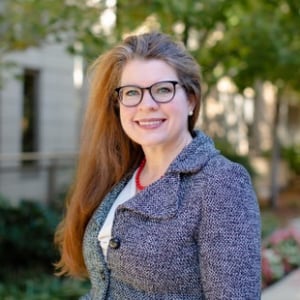
Lori Windham is vice president and senior counsel at Becket, where she has represented clients on cutting-edge religious freedom issues since 2005. She has represented parties before the Supreme Court, arguing Becket’s unanimous victory on behalf of foster families in Fulton v. Philadelphia, as well as working with the Becket team on its Supreme Court victories in Hosanna-Tabor, Hobby Lobby, and Little Sisters of the Poor. She won a victory for the world’s largest religious media network in EWTN v. Azar, staving off millions of dollars in government fines under unlawful the HHS mandate. She has won more than a dozen victories in federal appellate courts, including successful defense of cities and school districts sued for accommodating religion, victories for houses of worship facing discrimination in the land use process, and overturning a multimillion-dollar judgment against a major evangelical ministry. She recently won a first-in-the-nation injunction for an adoption agency threatened with shutdown for its religious beliefs.
Recognized in Washington as an expert on religious freedom issues, Lori has testified in Congressional oversight hearings before the U.S. House of Representatives Judiciary Committee and before the U.S. Commission on Civil Rights. Outside Washington, Lori is sought-after speaker on First Amendment law, including appearances at Yale Law School, Harvard Law School, Stanford Law School, Georgetown University Law Center, Central European University, and many others.
In addition to these venues, Lori also defends her clients in the media, including television appearances on CBS This Morning, Hardball, CNN Tonight, On the Record, America’s Newsroom, Opinion Journal, and many others. Her work has been covered by the New York Times, Wall Street Journal, Washington Post, and dozens of other papers. She is also a regular guest on radio, with appearances on shows ranging from Sean Hannity to NPR.
Lori has successfully represented a wide array of clients, including a Santeria priest prohibited from making animal sacrifices, synagogues prohibited from building on their own land, and religious student organizations penalized for their religious speech. One of her most challenging cases involved travel to a remote farming community to ensure that members of the local Amish community were not jailed for using their traditional building methods.
Lori is a graduate of Harvard Law School and earned her B.A. summa cum laude at Abilene Christian University. She has served on the Board of Visitors of Abilene Christian University and received the ACU Young Alumnus of the Year award for her work at Becket. She sits on the board of Dominion Christian School and the visiting committee of the Fund for American Studies’ Summer Law Fellowship.
President and General Counsel, Public Interest Legal Foundation
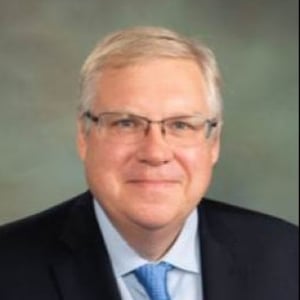
J. Christian Adams is the President and General Counsel of the Public Interest Legal Foundation. He served from 2005 to 2010 in the Voting Section at the United States Department of Justice Voting Section. President Trump appointed Adams to the Presidential Advisory Commission on Election Integrity. President Trump also appointed Adams as a Commissioner to the United States Commission on Civil Rights where he also now serves with a term through 2025. He has been involved in election law lawsuits in 33 states and the territory of Guam. He has represented multiple presidential campaigns in election litigation. He has a law degree from the University of South Carolina School of Law. He is a member of the South Carolina and Virginia Bars.
Attorney, Law Offices of Linda A. Kerns, LLC
National Affairs Columnist, National Review
John Fund is National Affairs Columnist for National Review magazine and a on-air analyst on the Fox News Channel. He is considered a notable expert on American politics and the nexus between politics and economics.
He previously served as a columnist and editorial board member for The Wall Street Journal. He is the author of several books, including Who's Counting: Bow Fraudsters and Bureaucrats Put Your Vote At Risk (Encounter Books, 2012); Stealing Elections: How Voter Fraud Threatens Our Democracy (Encounter Books, 2008) and The Dangers of Regulation Through Litigation (ATRA Press, 2008). He worked as a research analyst for the California Legislature in Sacramento before beginning his journalism career as a reporter for the syndicated columnists Rowland Evans and Robert Novak.
Roll Call, the newspaper of Capitol Hill, called him "the Tom Paine of the modern Congressional reform movement." He has won awards from the Institute for Justice, The School Choice Aliance and the Warren Brooks award for journalistic excellence from the American Legislative Exchange Council.
Director, Center for Representative Government, Cato Institute
John Samples directs Cato's Center for Representative Government, which studies campaign finance regulation, delegation of legislative authority, term limits, and the political culture of limited government and the civic virtues necessary for liberty. He is an adjunct professor at Johns Hopkins University. Samples is the author of The Struggle to Limit Government: A Modern Political History and The Fallacy of Campaign Finance Reform. Prior to joining Cato, Samples served eight years as director of Georgetown University Press, and before that, as vice president of the Twentieth Century Fund. He has published scholarly articles in Society, History of Political Thought, and Telos. Samples has also been featured in mainstream publications like USA Today, the New York Times, and the Los Angeles Times. He has appeared on NPR, Fox News Channel, and MSNBC. Samples received his Ph.D. in political science from Rutgers University.
President, Constitutional Accountability Center
Elizabeth is Constitutional Accountability Center’s President. From 2008-2016, she served as CAC's Chief Counsel, representing the Center as well as clients including preeminent constitutional scholars and historians, state and local government organizations, and groups such as the League of Women Voters and the AARP. She frequently participates in Supreme Court litigation and her legal brief writing has been recognized as “exemplary” by the Green Bag Almanac & Reader. Elizabeth has also argued several important cases in the federal courts of appeals on a range of issues, including immigration law, habeas corpus, and sovereign immunity. She joined CAC from private practice at Quinn Emanuel Urquhart & Sullivan in San Francisco, where she was an attorney working with former Stanford Law School Dean Kathleen Sullivan in the firm’s Supreme Court/appellate practice. Previously, Elizabeth was a supervising attorney and teaching fellow at the Georgetown University Law Center appellate litigation clinic, a law clerk for Judge James R. Browning of the U.S. Court of Appeals for the Ninth Circuit, and a lawyer at Pillsbury Winthrop Shaw Pittman, a law firm in Washington. She has appeared as a legal expert for NBC, ABC, PBS, CNN, Fox News, the BBC, Current TV, and NPR, among other outlets. Elizabeth has been quoted extensively in the print media and is a regular contributor to the ABA’s Preview of United States Supreme Court Cases. Her writings have appeared in The New York Times, Reuters, USA Today, Politico, CNN.com, Slate, and on numerous political and legal blogs, such as Huffington Post, SCOTUSblog, and ACSblog. She has also published in the UCLA Journal of Environmental Law & Policy, Syracuse Law Review, The Cato Institute’s Supreme Court Review, and the Yale Journal of International Law. Elizabeth is a graduate of Yale Law School.
Cozen O'Connor
General Counsel, James Madison Center for Free Speech
National Affairs Columnist, National Review
John Fund is National Affairs Columnist for National Review magazine and a on-air analyst on the Fox News Channel. He is considered a notable expert on American politics and the nexus between politics and economics.
He previously served as a columnist and editorial board member for The Wall Street Journal. He is the author of several books, including Who's Counting: Bow Fraudsters and Bureaucrats Put Your Vote At Risk (Encounter Books, 2012); Stealing Elections: How Voter Fraud Threatens Our Democracy (Encounter Books, 2008) and The Dangers of Regulation Through Litigation (ATRA Press, 2008). He worked as a research analyst for the California Legislature in Sacramento before beginning his journalism career as a reporter for the syndicated columnists Rowland Evans and Robert Novak.
Roll Call, the newspaper of Capitol Hill, called him "the Tom Paine of the modern Congressional reform movement." He has won awards from the Institute for Justice, The School Choice Aliance and the Warren Brooks award for journalistic excellence from the American Legislative Exchange Council.

Partner, Schaerr | Jaffe LLP
Erik Jaffe has been involved in appeals on a broad range of legal issues, including First Amendment challenges to campaign finance reform, Commerce Clause challenges to Health Care Reform and other federal legislation, Equal Protection Clause challenges to affirmative action in education, First Amendment challenges to school vouchers, Fifth Amendment challenges to takings of property, Second Amendment challenges to restrictions on gun ownership, and a wide variety of cases involving patents, copyrights, ERISA, securities fraud, federal preemption, environmental regulation, and other state and federal constitutional and statutory matters. He has represented businesses and non-profit groups, Judges, Senators, former government officials, Nobel Prize winners, and a broad cross-section of private individuals. Mr. Jaffe has been involved in over 120 Supreme Court matters, including filing over 30 cert. petitions, representing half-a-dozen parties on the merits, and filing over 70 amicus briefs at both the cert. and merits stages.
A 1990 graduate of the Columbia University School of Law, Mr. Jaffe was a law clerk to Judge Douglas H. Ginsburg of the United States Court of Appeals for the District of Columbia Circuit from 1990 to 1991. Following that clerkship he spent five years in litigation practice with the Washington, D.C. law firm of Williams & Connolly. In the summer of 1996 he left Williams & Connolly to clerk for Supreme Court Justice Clarence Thomas. At the end of that clerkship he started his own practice, and he was a sole practitioner from 1997 to 2018. He joined the firm of Schaerr | Jaffe LLP in 2018.
Member, Caplin & Drysdale
Services
Mr. Birkenstock focuses on advising corporations, non-profit organizations, candidates, officeholders, and other clients in structuring new political efforts and administering their political, lobbying, and issue-advocacy projects. He also helps clients respond to controversies involving issues of political law such as alleged campaign finance improprieties, conflicts of interest, and real or perceived violations of other legal and ethical obligations.Highlights
While at the DNC, Mr. Birkenstock worked closely with the party's fundraisers and campaign staff to help ensure their compliance with the myriad of state and federal laws governing their activities. He took primary responsibility for responding to several investigations into Democratic Party fundraising following the 1996 presidential election. He also assisted in the litigation and public relations efforts surrounding the 2000 Florida recount and helped implement the DNC's transition to the McCain-Feingold campaign finance regime.
General Counsel, James Madison Center for Free Speech
Attorney Advisor, Office of the General Counsel, U.S. Department of Homeland Security

Chairman and Founder, Institute for Free Speech; Josiah H. Blackmore II/Shirley M. Nault Designated Professor of Law, Capital University Law School
Burton Craige Distinguished Professor of Jurisprudence, UNC School of Law
Michael Gerhardt joined the Carolina Law faculty in 2005 and serves as the Burton Craige Distinguished Professor of Jurisprudence. His teaching and research focuses on constitutional conflicts between presidents and Congress. Gerhardt is the author of six books, including leading treatises on impeachment, appointments, presidential power, Supreme Court precedent, and separation of powers. He has written more than a hundred law review articles and dozens of op eds in the nation’s leading news publications, including SCOTUSblog, The New York Times, and Washington Post. His book, The Forgotten Presidents (Oxford University Press 2013), was named by The Financial Times as one of the best non-fiction books of 2013. He was inducted into the American Law Institute in 2016. Gerhardt attended the University of Chicago Law School, where he graduated order of the coif and served as a research assistant to both Phil Kurland and Cass Sunstein and as one of the two student editors of The Supreme Court Review. After law school, he clerked for Chief District Judge Robert McRae of the U.S. District Court of the Western District of Tennessee and Judge Gilbert Merritt of the U.S. Court of Appeals for the Sixth Circuit. He served as Deputy Media Director of Al Gore’s first Senate campaign, practiced law for three years for two boutique litigation firms in Washington and Atlanta, and taught for more than a decade at William & Mary Law School before joining Carolina Law.
Gerhardt’s extensive public service has included his testifying more than a dozen times before Congress, including as the only joint witness in the Clinton impeachment proceedings in the House; speaking behind closed doors to the entire House of Representatives about the history of impeachment in 1998; and serving as special counsel to the Senate Judiciary Committee for seven of the nine sitting Supreme Court justices. In 2015, he became the first legal scholar to be asked by the Library of Congress to serve as its principal adviser in revising the official United States Constitution Annotated. In 2019, the Order of the Coif named Gerhardt as its Distinguished Visitor for 2020, an award given to only one law professor each year for outstanding legal scholarship.

Former President & CEO, The Federalist Society for Law and Public Policy Studies
Eugene B. Meyer, former President and CEO of the Federalist Society, has served as Executive Director, CEO, and/or President of the organization for more than 40 years. He is responsible for shepherding the organization from a small group of law students to a community of 90,000 lawyers, law students, academics, judges, and others interested in the rule of law. The Society now includes a Student Chapter at nearly every ABA-accredited law school in the country and Lawyers Chapters in 220 major cities across the nation. Gene earned his B.A. in history at Yale in 1975 and his M.A. in political science from the London School of Economics in 1976. Gene currently serves on the boards of the U.S. Chess Center, the Holman Foundation, the Sarah Scaife Foundation, and the advisory board of the Adam Smith Society. He holds the title of International Chess Master.
Writer, Washington Bureau, Los Angeles Times
David G. Savage has covered the Supreme Court and legal issues for the Los Angeles Times in the Washington bureau since 1986. He has covered the Senate confirmation hearings for all of the nine justices, from Antonin Scalia to Elena Kagan. In addition to writing about the court’s work, he has written on the legal battles that have raged in Washington, from the Clinton impeachment in the 1990s to the Florida recount after 2000 presidential election, the “war on terrorism” in the years after the 9/11 attacks, and more recently, on voting rights and gay marriage. He joined The Times in 1981 and was an education writer on the Metro staff for five years.
Former United States Senator, Commonwealth of Pennsylvania
Partner, Wise Carter Child & Caraway -- Jackson, Miss.

Distinguished Senior Fellow and Antonin Scalia Chair in Constitutional Studies, Ethics and Public Policy Center
Edward Whelan is a Distinguished Senior Fellow of the Ethics and Public Policy Center and holds EPPC’s Antonin Scalia Chair in Constitutional Studies. He is the longest-serving President in EPPC’s history, having held that position from March 2004 through January 2021.
Mr. Whelan directs EPPC’s program on The Constitution, the Courts, and the Culture. His areas of expertise include constitutional law and the judicial confirmation process. As a contributor to National Review Online’s Bench Memos blog, he has been a leading commentator on nominations to the Supreme Court and the lower courts and on issues of constitutional law. He has written essays and op-eds for leading newspapers—including the Wall Street Journal, the New York Times, and the Washington Post—opinion journals, and academic symposia and law reviews. The National Law Journal has named Mr. Whelan among its “Champions and Visionaries” in the practice of law in D.C.
Mr. Whelan is co-editor of three volumes of Supreme Court Justice Antonin Scalia’s work: Scalia Speaks: Reflections on Law, Faith, and Life Well Lived (Crown Forum, 2017), a New York Times bestselling collection of speeches by Justice Scalia; On Faith: Lessons from an American Believer (Crown Forum, 2019), a collection of Justice Scalia’s writings on faith and religion; and The Essential Scalia: On the Constitution, the Courts, and the Rule of Law (Crown Forum, 2020), a collection of Justice Scalia’s views on legal issues.
Mr. Whelan, a lawyer and a former law clerk to Justice Scalia, has served in positions of responsibility in all three branches of the federal government. From just before the terrorist attacks of September 11, 2001, until joining EPPC in 2004, Mr. Whelan was the Principal Deputy Assistant Attorney General for the Office of Legal Counsel in the U.S. Department of Justice. In that capacity, he advised the White House Counsel’s Office, the Attorney General and other senior DOJ officials, and departments and agencies throughout the executive branch on difficult and sensitive legal questions. Mr. Whelan previously served on Capitol Hill as General Counsel to the U.S. Senate Committee on the Judiciary. In addition to clerking for Justice Scalia, he was a law clerk to Judge J. Clifford Wallace of the U.S. Court of Appeals for the Ninth Circuit.
In 1981 Mr. Whelan graduated with honors from Harvard College and was inducted into Phi Beta Kappa. He received his J.D. magna cum laude in 1985 from Harvard Law School, where he was a member of the Board of Editors of the Harvard Law Review.
For more on Mr. Whelan’s background, see this interview.

Courthouse Steps Decision Teleforum: Facebook v. Duguid
Scott D. Delacourt, Daniel Lyons
On April 1, 2021, the U.S. Supreme Court ruled in favor of Facebook in Facebook...
Courthouse Steps Oral Argument Teleforum: Facebook Inc. v. Duguid
Megan L. Brown, Daniel Lyons
The case of Facebook Inc. v. Duguid will have oral arguments before the Supreme Court on December...
Debate: The True Extent of Presidential Power
Craig Green, Andrea M. Leelike, Saikrishna Prakash, Lorenzo B. Riboni, John C. Yoo
On October 29, 2020, the Penn and Temple Student Chapters of the Federalist Society hosted...
Necessary & Proper Episode 58: Debate: The True Extent of Presidential Power
John C. Yoo, Saikrishna Prakash, Craig Green
On October 29, the Penn and Temple Student Chapters of the Federalist Society hosted former officemates...
Litigation Update: Religious Foster Care Agencies and the First Amendment
Lori Windham
What happens when governments try to exclude religious foster care agencies? Philadelphia put out an urgent...
Litigation Update: Non-citizen Voting
J. Christian Adams, Linda A. Kerns
The Public Interest Legal Foundation (“PILF”) filed a lawsuit against the Commonwealth of Pennsylvania’s Department...
Who's Counting?: How Fraudsters and Bureaucrats Put Your Vote at Risk
John Fund, John Samples, Elizabeth B. Wydra
In the past few years, various states, citing voter fraud and other concerns, have passed...
Election Through Litigation
Adam Bonin, James Bopp, John Fund, Erik S. Jaffe
On October 7, 2008, the Federalist Society presented the 2008 Election Law Conference. In recent years,...
Election Finance and 527s
Joseph M. Birkenstock, James Bopp, Reid Alan Cox, Bradley A. Smith, Scott E. Thomas
On October 7, 2008, the Federalist Society presented the 2008 Election Law Conference. This panel will...
Judicial Confirmations
Michael J. Gerhardt, Simon Heller, Eugene B. Meyer, David G. Savage, Arlen Specter, Michael B. Wallace, Edward Whelan
Senator Arlen Specter and a panel of experts examine the state of the judicial nomination...