
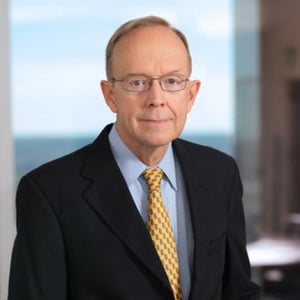
Former Deputy Attorney General for Virginia
Kennerly Davis has over forty years of experience in corporate management, public service, and the private practice of law. He has held senior executive positions in a Fortune 500 electric and gas company. He has served as Deputy Attorney General for the Commonwealth of Virginia, and as a legislative aide to a U.S. Senator and a U.S. Congressman. He practiced law for 25 years with Hunton Andrews Kurth LLP.
Davis is active in the Federalist Society as a member of the Regulatory Process Working Group of the Regulatory Transparency Project, and as a member of the Execuitve Committee of the Administrative Law and Regulation Practice Group. He is active in the national Alumni Free Speech Alliance, and involved in AFSA-chapter initiatives, including litigation, to publicize and correct the serious legal problems created by university Diversity, Equity, and Inclusion programs and the anonymous bias reporting systems used to enforce those DEI programs.
Davis writes and speaks on a wide variety of topics, including those related to the Founding of America, the natural rights foundation of our Republic, the constitutional rule of law, equal protection and free speech, DEI programs and bias reporting systems, capitalism, regulation and regulatory reform, and economic development. His articles have appeared in The Wall Street Journal, the Washington Examiner, the Richmond Times-Dispatch, The Federalist Society Review, the FedSoc Blog, Real Clear Energy, Townhall, the Daily Caller, reports of the Center for Strategic & International Studies, and other publications. He appears frequently on radio, podcasts, and television.
Davis graduated with honors from Cornell University with an A.B. degree in Government. He earned an M.A. degree from Pembroke College, Oxford, in Philosophy, Politics, and Economics. He was awarded a J.D. degree from Harvard Law School, and an M.B.A. degree from Virginia Commonwealth University.
Davis lives in Richmond, Virginia. He can be contacted by email: j.kendavis@verizon.net, and by phone: (804) 624-8525.

Director, Asia & Latin American Program, Inter-American Dialogue
Margaret Myers is director of the Asia & Latin America Program at the Inter-American Dialogue, adjunct researcher with the Núcleo Milenio sobre los Impactos de China en América Latina (ICLAC), and a senior advisor to the United States Institute of Peace. She established the Dialogue’s China and Latin America Working Group in 2011 to examine China’s growing presence in Latin America and the Caribbean. Myers also developed the China-Latin America Finance Database, the first publicly available source of empirical data on Chinese state lending in Latin America, in cooperation with Global China Initiative at Boston University’s Global Development Policy Center.
In addition to maintaining the Dialogue’s China and Latin America and 美洲对话 blogs, Myers has published numerous articles on Chinese leadership dynamics, international capital flows, Chinese agricultural policy, and Asia-Latin America relations, among other topics. The Political Economy of China-Latin America Relations and The Changing Currents of Trans-Pacific Integration: China, the TPP, and Beyond, her co-edited volumes with Dr. Carol Wise and Dr. Adrian Hearn, respectively, were published in 2016. Myers has testified before the House Committee on Foreign Affairs, the Senate Finance and Foreign Relations Committees, and the US-China Security and Economic Commission on the China-Latin America relationship. She is also regularly featured in major domestic and international media, including the Economist, Financial Times, New York Times, The Wall Street Journal, El Comercio, El País, Folha de São Paulo, CNN en Español, and BBC. In 2018, she was identified by Global Americans as part of the “new generation of public intellectuals.”
Before arriving at the Dialogue, Myers worked as a Latin America analyst and China analyst for the US Department of Defense, during which time she was deployed with the US Navy in support of Partnership of the Americas. Myers has also worked as a senior China analyst for Science Applications International Corporation; a consultant for the Inter-American Development Bank; a faculty member at Georgetown University, the George Washington University, and Johns Hopkins SAIS; a mentor for the Indian Foreign Policy Research Institute’s School of Foreign Policy; and for Fauquier County Schools, where she developed the county’s first Mandarin language program. Myers received her bachelor’s degree from the University of Virginia and conducted her graduate work at The George Washington University, Zhejiang University of Technology, and the Johns Hopkins University/Nanjing University Center for Chinese-American Studies. Myers was a Council on Foreign Relations term member. She was also the recipient of a Freeman fellowship for China studies, a Fulbright Specialist grant to research China-Colombia relations in Bogotá, and a Woodrow Wilson Center fellowship to write a forthcoming book on China-Latin America relations.
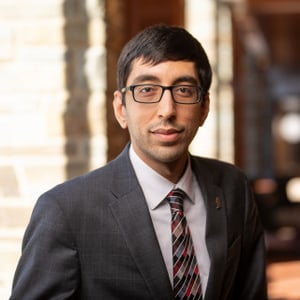
Judicial Law Clerk, U.S. District Court for the Southern District of Florida
Nitin is a recent graduate of Cornell Law School. Before his time in Ithaca, he majored in International Studies and Political Science at Johns Hopkins University and focused on power competition in South Asia during his graduate studies at the University of Oxford.

Senior Fellow, Fletcher School of Law and Diplomacy, Tufts University
Mihaela Papa is a Senior Fellow at the Fletcher School, where she has co-founded and led the Rising Power Alliances project and served as faculty in sustainable development and global governance.
Papa is an expert in negotiation strategy and coalition building, with a focus on BRICS and the transition to sustainability. She started her BRICS research as postdoctoral fellow at Harvard Law School and a visiting scholar at Fudan University's Center for BRICS Studies. Her recent publications analyze BRICS convergence and BRICS-US relations (EJIR, 2023), whether BRICS can de-dollarize global finance (CUP 2022 and ISA-West award), and BRICS resilience (Global Policy 2021). Her publications on environmental foreign policy, climate diplomacy, and global governance appeared in Global Environmental Politics, Global Environmental Change, Climate Policy, and other journals. Her commentary was featured in Foreign Affairs and The Conversation, as well as on CNN, Bloomberg, BBC, AP, News24, the South China Morning Post, and other media outlets.
Papa is also an active practitioner with a proven track record advising institutions on global strategies and leading international collaborations and programs, including at MIT and the Croatian Ministry of Foreign Affairs. She served as a consultant for the U.S. government, the European Commission, and the International Institute for Sustainable Development. Originally a trade economist with a BA from Croatia, she completed her MA in Law and Diplomacy and PhD in International Relations at The Fletcher School, Tufts University.
Deputy Secretary, Pennsylvania Department of Environmental Protection
Mr. Perry is the Deputy Secretary in the Department of Environmental Protection’s newly created Office of Oil and Gas Management. Prior to becoming Deputy Secretary, Scott was the Director for the Bureau of Oil and Gas Management for almost two years. Scott was also an Assistant Counsel with DEP's Bureau of Regulatory Counsel where he advised the Department’s Office of Energy and Technology Deployment, Bureau of Oil and Gas Management, Bureau of Radiation Protection, Bureau of Laboratories, Division of Residual Waste, Division of Municipal Financial Assistance and Division of Source Water and Groundwater Protection. He earned his B.A. from Penn State in 1995 and his J.D. from Willamette University, College of Law in Salem, Oregon, in 2000. Mr. Perry lives in Camp Hill, Pennsylvania with his wife June, and son Nickolas.
Partner, Bracewell & Giuliani LLP
Jason Hutt advises energy companies, manufacturers, project developers, investor groups and financial institutions about environmental risks and liabilities associated with regulatory compliance, project development, congressional investigations, internal investigations and corporate transactions. He also assists in the defense of administrative, civil and criminal proceedings involving environmental enforcement agencies at the federal and state levels.
Mr. Hutt counsels clients on current and upcoming regulatory developments at the nexus of environmental and energy policy, with focused attention on natural gas development (including hydraulic fracturing), responses to the Deepwater Horizon incident, and climate change. He is nationally recognized for his work on shale gas issues on behalf of producers, oil field services companies, hedge funds and technology developers.
Mr. Hutt routinely is involved in identifying, evaluating and managing environmental risks and opportunities associated with corporate acquisitions, divestitures and financings, including environmental due diligence, purchase and sale agreement negotiation, and post-closing integration efforts. Within the energy sector, his representative experience includes transactions involving petroleum refineries, liquefied natural gas (LNG) import terminals, renewable energy projects (e.g., wind, biofuels and geothermal), natural gas processing plants, cogeneration facilities, oil and gas wells, pipelines, propane retailers and synfuel facilities.
Representative work in other sectors involves operations and industries such as chemical manufacturers, oil field services, independent tank terminal operators, glass manufacturing, textiles manufacturing, uranium mining, industrial cleaning operations, hazardous waste management facilities, paper and plastic manufacturing facilities, and medical equipment manufacturing facilities.
Mr. Hutt performs environmental risk evaluations and advises on permit strategy and contract negotiation in relation to project development. His most recent work has involved onshore and offshore LNG import terminals, highway expansions, coal-fired power plant siting on tribal lands, utility privatizations at military bases, international undersea pipelines, interstate undersea electric transmission cables and a pump-storage project.

Associate Attorney, Sierra Club Environmental Law Program
Craig Segall started at the Sierra Club in 2008 as an environmental law fellow. Before coming to the Club, Craig was a law clerk to the Honorable Marsha S. Berzon of the U.S. Court of Appeals for the Ninth Circuit. He is a graduate of the University of Chicago and of Stanford Law School, where he spent most of his time in the basement working with Stanford's environmental law clinic. When not practicing law, Craig keeps busy outdoors. In recent years, he has barely beaten a 12-year-old to the top of Mount Whitney, accidentally driven transmission-deep into a salt lake, and, on an ill-advised hike in South Africa, provoked a surprisingly aggressive ostrich.

Director of Regulatory and State Affairs, Institute for Energy Research
Daniel Simmons is Director of State Affairs at the Institute for Energy Research. He oversees energy research and outreach at the state level. Before joining IER, Simmons served as the Director of the Natural Resources Task Force at the American Legislative Exchange Council (ALEC). ALEC’s Natural Resources Task Force promotes policy innovations through markets, property rights, and the rule of law in energy, environment, natural resources, and agricultural policy areas.
Prior to working for ALEC, Simmons was a Research Fellow at the Mercatus Center at George Mason University. He analyzed proposed federal regulations and wrote comments to federal agencies during the rulemaking process. He also drafted law review articles based on a current regulatory and legal issues.
Previous to working at the Mercatus Center, Simmons served as Legislative Staff for the Committee on Resources in the U.S. House of Representatives where he handled endangered species and forestry issues.
Simmons holds a B.A. in Economics from Utah State University and a J.D. from George Mason University School of Law. He is a member of the Virginia State Bar.
Professor of Law and Director of the Natural Resources Law Cente, University of Colorado Law School
Professor Mark Squillace is the Director of the Natural Resources Law Center at the University of Colorado Law School. Before coming to Colorado, Professor Squillace taught at the University of Toledo College of Law where he was the Charles Fornoff Professor of Law and Values. Prior to Toledo, Mark taught at the University of Wyoming College of Law where he served a three-year term as the Winston S. Howard Professor of Law. He is a former Fulbright scholar and the author or co-author of numerous articles and books on natural resources and environmental law. In 2000, Professor Squillace took a leave from law teaching to serve as Special Assistant to the Solicitor at the U.S. Department of the Interior. In that capacity he worked directly with the Secretary of the Interior, Bruce Babbitt, on variety of legal and policy issues.

Executive Vice President, The Federalist Society
Dean Reuter is Executive Vice President at the Federalist Society for Law and Public Policy Studies. He has served in two federal government agency Offices of the Inspector General, as Counsel to the Inspector General and Deputy Inspector General, responsible for policing the use of federal funds granted and contracted through those agencies. As such, he helped conduct and oversee criminal investigations across the country. He is the principal author of the non-fiction book, The Hidden Nazi: The Untold Story of America's Deal with the Devil, and editor of Liberty’s Nemesis: The Unchecked Expansion of the State and Confronting Terror: 9/11 and the Future of American National Security. He was appointed by the President and served as Vice-Chairman of the Board of Directors of the Corporation for National and Community Service, and recently served as an appointee on the U.S. Commission on Presidential Scholars. He is a graduate of Hood College (BA with Honors) and the University of Maryland School of Law.

Explainer Episode 66 - Strategic Petroleum Reserve
John Kennerly Davis
Earlier this year, the U.S. Energy Information Administration reported that the nation’s Strategic Petroleum Reserve,...
BRICS Expansion and Corresponding Implications
Margaret Myers, Nitin R. Nainani, Mihaela Papa
Before the 2010s, Brazil, Russia, India, China, and South Africa were flagged as future growth...
Drilling and Fracking: Who Regulates? - Podcast
Scott R. Perry, Jason B. Hutt, Craig Segall, Joel Burcat
The techniques of directional drilling and hydraulic fracturing for oil and natural gas have been...
The Keystone Pipeline - Podcast
Daniel R. Simmons, Mark Squillace, Dean Reuter
The Keystone Pipeline is designed to transport petroleum products from Northeast Alberta, Canada, to as...