
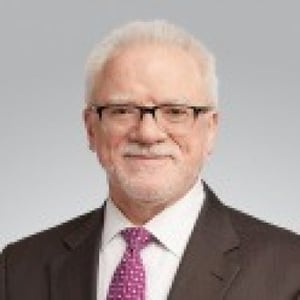
Partner, Williams & John LTD
David L. Applegate is a partner of Williams & John Ltd., where he chairs the firm's intellectual property practice group and is a member of the commercial litigation practice group. He focuses his practice on patent, trademark, copyright, trade secret, unfair competition, and business litigation and arbitration, and on U. S. Supreme Court and related amicus brief practice.
Mr. Applegate is a Fellow of Litigation Counsel of America, the Intellectual Property Institute, and the Diversity Law Institute; a Senior Master Member of the Richard Linn American Inn of Court; a Past President of the Chicago Lincoln American Inn of Court; and a Legal Policy Advisor to The Heartland Institute. He is "AV Preeminent" peer review rated by Martindale-Hubbell, reflecting the highest peer recognition for both ethical standards and legal ability, and has been named by his peers for inclusion in Illinois Leading Lawyers and IllinoisSuper Lawyers in both commercial and intellectual property litigation for decades.
Throughout his career, Mr. Applegate has represented corporations and individuals as both plaintiffs and defendants in state and federal litigation at the trial and appellate levels. He has tried multiple cases to verdict in both jury and bench trials nationwide and has argued appeals in the Illinois appellate courts and the U.S. Court of Appeals for the Seventh and Federal Circuits; his amicus brief was cited twice in the U. S. Supreme Court’s 5-4 majority opinion in the Janus case. Mr. Applegate also has extensive commercial arbitration and private mediation experience in both national and international dispute resolution forums, and is a former member of the Chicago International Dispute Resolution Association. In 2001, the U. S. District Court for the Northern District of Illinois and the Chicago Chapter of the Federal Bar Association recognized him for his outstanding individual commitment to pro bono service to indigent clients throughout the Northern District of Illinois.
In addition to his legal practice, Mr. Applegate has written and spoken frequently on matters of law and public policy, including on both local and national television and radio. He is an avid collector and amateur historian of original comic strip and editorial cartoon art, and has written extensively in that field as well for over three decades.
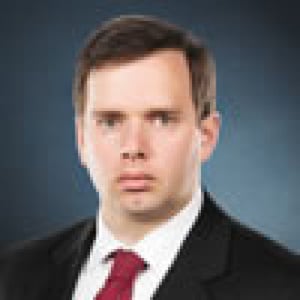
Associate, Arent Fox LLP
Christopher Bowen is an attorney with a Arent Fox LLP where he focuses on government contractor litigation and counseling, including bid protests, contract claims, audits, individual and company debarments and suspensions, security clearances, NISPOM compliance during mergers and acquisitions, and False Claims Act lawsuits. Prior to joining the law firm, Mr. Bowen was an attorney with the United States Department of Justice, where he handled government contract litigation, as well as Fifth Amendment Takings Clause and smuggling claims. He has argued before the United States Court of Appeal for the Federal Circuit, the United States Court of Federal Claims, and the United States District Court for the Eastern District of Virginia. He has filed briefs with the United States Court of Appeals for the Fifth Circuit, the United States District Courts for the District of Colorado and the Northern District of California, and the United States Court of International Trade. Mr. Bowen attended Dartmouth College and the George Washington University Law School, and clerked for the Honorable Diane S. Sykes on the United States Court of Appeals for the Seventh Circuit.
Super Lawyers has recognized Christopher Bowen as a “Rising Star” for both 2014 and 2015.
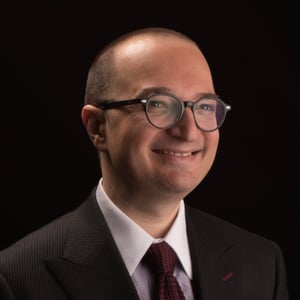
Professor of Law, University of Baltimore School of Law (on leave); Senior Counsel, U.S. Department of Justice
Professor Dolin’s scholarship centers on patent law with a specific focus on how the patent regime affects innovation, especially in bio-pharmaceutical areas. His work in these areas includes a number of scholarly articles, presentations, amicus briefs, and congressional testimony.
Dr. Dolin is currently on leave from his academic duties while he serves as Senior Counsel in the Civil Rights Division of the United States Department of Justice.
From January 2020 to January 2022, Professor Dolin served as a resident Associate Justice of the Supreme Court of the Republic of Palau. In this role, he (together with other members of the Court) heard appeals in civil, criminal, administrative, and constitutional law matters.
Prior to joining the University of Baltimore School of Law, Professor Dolin held visiting appointments in other law schools. He also served as a law clerk to the Hon. Pauline Newman, of the U.S. Court of Appeals for the Federal Circuit and the late Hon. H. Emory Widener Jr., of the U.S. Court of Appeals for the Fourth Circuit.
Rumors that he has a real Russian bear in his office are entirely true.
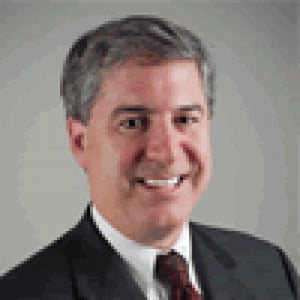
John W. Wade Professor of Law, Pepperdine University School of Law
Richard L. Cupp, Jr. serves as the John W. Wade Professor of Law at Pepperdine Law School. He loves teaching and working with students. He is widely recognized as a leading scholar and commentator in the fields of torts and products liability law. He has authored more than 20 significant scholarly articles and numerous shorter articles. Professor Cupp is an elected member of the American Law Institute, and he has served as chair of the Association of American Law Schools Section on Torts and Compensation Systems.
In addition to his work in torts and products liability, Professor Cupp writes and speaks extensively about the legal and moral status of animals. He has advised many organizations on these subjects, including the National Academy of Sciences Committee on Science, Technology and Law, the National Academy of Sciences Committee on Neuroscience, the American Veterinary Medical Association, the National Association for Biomedical Research, the Animal Health Institute, and the American Animal Hospital Association.

Professor of Law, Antonin Scalia Law School, George Mason University
ILYA SOMIN is Professor of Law at George Mason University and the B. Kenneth Simon Chair in Constitutional Studies at the Cato Institute. His research focuses on constitutional law, property law, democratic theory, federalism, and migration rights. He is the author of Free to Move: Foot Voting, Migration, and Political Freedom (Oxford University Press, revised and expanded edition, 2022), Democracy and Political Ignorance: Why Smaller Government is Smarter (Stanford University Press, revised and expanded second edition, 2016), and The Grasping Hand: Kelo v. City of New London and the Limits of Eminent Domain (University of Chicago Press, 2015, rev. paperback ed., 2016), coauthor of A Conspiracy Against Obamacare: The Volokh Conspiracy and the Health Care Case (Palgrave Macmillan, 2013), and co-editor of Eminent Domain: A Comparative Perspective (Cambridge University Press, 2017). Democracy and Political Ignorance has been translated into Italian and Japanese.
Somin’s work has appeared in numerous scholarly journals, including the Yale Law Journal, Stanford Law Review, Northwestern University Law Review, Georgetown Law Journal, Critical Review, and others. Somin has also published articles in a variety of popular press outlets, including the New York Times, Washington Post, Wall Street Journal, Los Angeles Times, CNN, NBC, The Atlantic, USA Today, Boston Globe, US News and World Report, South China Morning Post, National Law Journal and Reason. He has been quoted or interviewed by the New York Times, Washington Post, Wall Street Journal, Time, Newsweek, The Economist, the Christian Science Monitor, the Financial Times, The Guardian, the Associated Press, CBS, MSNBC, NPR, BBC, Reuters, the Canadian Broadcasting Corporation, the Australian Broadcasting Corporation, Radio Free Europe/Radio Liberty, Al Jazeera, and the Voice of America, among other media.
Somin’s writings have been cited in decisions by the United States Supreme Court, multiple state supreme courts and lower federal courts, and the Supreme Court of Israel. He is co-counsel for the plaintiffs in VOS Selections, Inc. v. Trump, a case challenging the constitutionality of President Trump’s “Liberation Day” tariffs. Somin has testified on the use of drones for targeted killing in the War on Terror before the US Senate Judiciary Subcommittee on the Constitution, Civil Rights, and Human Rights. In 2009, he testified on property rights issues at the United States Senate Judiciary Committee confirmation hearings for Supreme Court Justice Sonia Sotomayor. Somin writes regularly for the popular Volokh Conspiracy law and politics blog, now affiliated with Reason magazine (previously affiliated with the Washington Post from 2014 to 2017). From 2006 to 2013, he served as Co-Editor of the Supreme Court Economic Review, one of the country’s top-rated law and economics journals.
Somin has served as a visiting professor at the University of Pennsylvania Law School. He has also been a visiting professor or scholar at the Georgetown University Law Center, the University of Hamburg, Germany, the University of Torcuato Di Tella in Buenos Aires, Argentina, Uriel Reichman University in Israel, and Zhengzhou University in China. He is a University Affiliate of the Schar School of Policy and Government at George Mason University, and an affiliated faculty member of the George Mason University Institute for Immigration Research. Before joining the faculty at George Mason, Somin was the John M. Olin Fellow in Law at Northwestern University Law School in 2002-2003. In 2001-2002, he clerked for the Hon. Judge Jerry E. Smith of the U.S. Court of Appeals for the Fifth Circuit. Professor Somin earned his B.A., Summa Cum Laude, at Amherst College, M.A. in Political Science from Harvard University, and J.D. from Yale Law School.

Executive Director, Ohio Dental Association
David J. Owsiany is the executive director of the Ohio Dental Association and a past president of the Columbus Lawyers Chapter of the Federalist Society.
He has served as CEO of a statewide health care association, president of the Buckeye Institute, chief of policy for the Ohio Department of Insurance, judicial law clerk for the Illinois Appellate Court, and staffer on the United State Senate Judiciary Committee.
Mr. Owsiany has written dozens of articles on legal and public policy issues for various publications, including the University of Toledo Law Review, the Federalist Society's State Court Docket Watch, Columbus Dispatch, Cincinnati Enquirer, Crain’s Cleveland Business, and Akron Beacon Journal.
Owsiany received his J.D. from Washington University School of Law in St. Louis and B.A. from the University of Michigan in Ann Arbor.
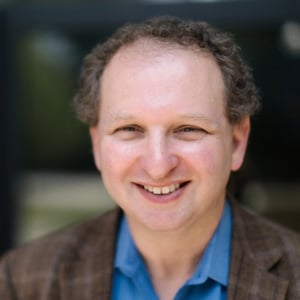
Assistant Professor of Law, Emory University School of Law
Alexander "Sasha" Volokh is an assistant professor of law, joining the Emory Law faculty in Fall 2009.
Professor Volokh earned his B.S. from UCLA and his J.D. and Ph.D. in economics from Harvard University. He clerked for Judge Alex Kozinski of the Ninth Circuit and for Supreme Court Justices Sandra Day O'Connor and Samuel Alito. Before coming to Emory, he was a visiting associate professor at Georgetown University Law Center and a visiting assistant professor at University of Houston Law Center.
His interests include law and economics, administrative law and the regulatory process, environmental law and policy, and legal history. His current research topics include the private management of government services, medieval law, judicial decisionmaking and statutory interpretation.
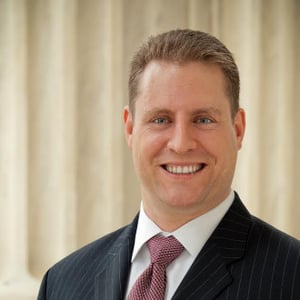
Senior Counsel, Schaerr Jaffe LLP
Ken Klukowski is senior counsel at the law firm Schaerr Jaffe, focusing on constitutional, administrative, and election law, and the federal courts. He has served in politically appointed positions in the U.S. government, including senior counsel in the Civil Division of the U.S. Department of Justice, and prior to that in the White House as special counsel in the Office of Management and Budget. He was also the constitutional rights advisor on the Presidential Transition Team of President Donald J. Trump. In the private sector, he has worked as a senior fellow of the American Constitutional Rights Union, senior counsel at First Liberty Institute, and a legal journalist. He litigates constitutional cases in the U.S. Supreme Court and lower federal courts, and contributes to media coverage of the nation’s highest court and legal issues. Earlier in his career, Klukowski served as special deputy attorney general of Indiana, and worked on faculty at Liberty University School of Law. His academic works have been published by journals such as the Federalist Society’s Harvard Journal of Law & Public Policy, and his columns have appeared in the Wall Street Journal and other national publications. His amicus briefs and nine law review articles have been cited by various federal courts and top legal journals. He has participated in numerous Supreme Court cases, and lectured and debated at 100 law school events nationwide. Klukowski received his bachelor’s degree from the University of Notre Dame, studied history at Arizona State University, earned his law degree from Scalia Law School at George Mason University, and served as a law clerk to Chief Judge Alice Batchelder on the U.S. Court of Appeals for the Sixth Circuit.
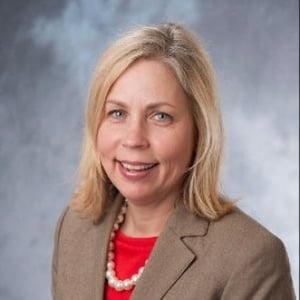
Senior Executive Counsel, NFIB Small Business Legal Center
Elizabeth Milito serves as Senior Executive Counsel with the National Federation of Independent Business, a position she has held since March 2004. Ms. Milito came to NFIB from the U.S. Department of Veteran's Affairs where she defended the agency in employment and labor lawsuits and was responsible for training and counseling managers on fair employment and HR practices. She has an extensive background in tort, medical malpractice and employment law.
Prior to serving as an attorney at the Department of Veteran's Affairs, Ms. Milito worked as a trial attorney at Nationwide Insurance Company. At Nationwide, she completed over 100 trials to verdict. Ms. Milito was the editor of notes and comments for the Maryland Law Review at the University of Maryland School of Law where she earned her Juris Doctor degree in May of 1996. Following her education, she served as a clerk to the Honorable Alan M. Wilner on the Maryland Court of Appeals, the state's highest court.
Ms. Milito is responsible for managing litigation and amicus work for NFIB. She has testified before Congress, federal agencies, and state legislatures on the small business impact of labor and employment issues. She also comments and writes regularly on small business cases before federal and state courts. Ms. Milito frequently counsels businesses facing employment discrimination charges, wage and hour claims, wrongful termination lawsuits, and in most other areas of human resources law. She also provides and develops on-line and on-site training on a variety of employment law matters and is a frequent media spokesperson on employment and labor matters.

What’s at Stake in Cuozzo v. Lee?: The View of the Petitioner
David L. Applegate
Currently pending on the docket of the United States Supreme Court is the case of...
Kellogg Brown & Root—What Happens to a Case Deferred?
Christopher Andrew Bowen
This article details the Fourth Circuit’s and the Supreme Court’s recent decisions in United States...
The Costs of Patent Reform: Early Data and Abuses in the Uneven Playing Field of Post-Issuance Review
Gregory Dolin
Note from the Editor: This article is a critical examination of patent reform. As always,...
Human Responsibility, Not Legal Personhood, For Nonhuman Animals
Richard L. Cupp
Introduction We should focus on human legal accountability for responsible treatment of nonhuman animals rather...
Topics
SCOTUS Opinions: 6/18/2015
(1) Brumfield v. Cain: By a vote of 5-4 the judgment of the Fifth Circuit...
Topics
SCOTUS Orders and Opinions: 6/1/2015
The Supreme Court has issued orders and opinions; a summary follows: ORDER LIST: No new...
Does the Government's seizure of raisins violate the Takings Clause?
Ilya Somin
George Mason Law School Professor Ilya Somin previews an upcoming Supreme Court case in which...
North Carolina Board of Dental Examiners v. Federal Trade Commission
David J. Owsiany, Alexander Volokh
Note from the Editor: The Federalist Society is pleased to present two different perspectives on the North...
In Whose Name We Pray: Restoring the Establishment Clause in Town of Greece v. Galloway
Kenneth A. Klukowski
Note from the Editor: This article is a discussion about the Establishment Clause issue in...
United States v. Home Concrete & Supply, LLC and Its Implications for Administrative Law
Elizabeth Milito
I. Introduction On April 25, 2012, the United States Supreme Court decided United States v....