
Professor of Law, University of Wyoming College of Law
George Mocsary is an expert in corporate and small-business law, and the law of firearms.
Currently, he is Professor of Law, Founder & Director of Firearms Research Center, and Director of the Business Planning Practicum and at the University of Wyoming College of Law.
Professor Mocsary teaches and writes about Agency & Partnership, Contracts, Corporations, Securities Regulation, the Second Amendment, and Firearms Law, including the intersection of Firearms Law and private law. He is a co-author of Firearms Law and the Second Amendment: Regulation, Rights, and Policy (3rd ed. 2021), the first casebook on this topic.
Prior to his appointment at Wyoming, he served as an Associate Professor of Law at the Southern Illinois University School of Law and spent two years as a Visiting Assistant Professor at the University of Connecticut School of Law. He practiced corporate and bankruptcy law at Cravath, Swaine and Moore in New York, and clerked for the Honorable Harris L. Hartz of the U.S. Court of Appeals for the Tenth Circuit.
Professor Mocsary holds a J.D. from Fordham Law School and an M.B.A. from the University of Rochester Simon School of Business. At Fordham, he graduated first in his class, and served as Notes and Articles Editor of the Fordham Law Review. He has published in the George Washington Law Review, George Mason Law Review, Fordham Law Review, Duke Law Journal Online, and other journals. His work has been cited by the Supreme Court of the United States, several U.S. Courts of Appeals, the Supreme Court of Illinois, the Delaware Court of Chancery, and other courts.
Senior Counsel, Litigation, Defense of Freedom Institute
Don Daugherty is Senior Counsel, Litigation, at the Defense of Freedom Institute for Policy Studies. He previously served as a Senior Counsel at the Institute for Free Speech and the Wisconsin Institute for Law & Liberty. Before that, he was a partner at three of Wisconsin’s largest firms, with nearly 30 years of trial and appellate litigation experience. He has been consistently recognized as among the “Best Lawyers in America,” as well as Wisconsin’s “Super Lawyers.” He received his B.A. from the University of Virginia and his J.D. from Northwestern University Law School. After law school, he served as a clerk to the Honorable Roger J. Miner of the United States Court of Appeals for the Second Circuit.
Don is on the Board of Advisors for the Milwaukee Lawyers’ Chapter of the Federalist Society, and on the Executive Committee of the Federalist Society’s Litigation Practice Group.
David C. Tryon is the director of litigation at The Buckeye Institute. In this role, he supervises all litigation and outside litigation counsel and actively participates in Buckeye’s cases in both state and federal court.
Immediately prior to joining Buckeye, Tryon served as deputy solicitor general in the West Virginia Attorney General’s office, where he handled both trials and appellate matters, including preparing amicus curiae briefs. Many of the matters either challenged federal laws and regulations that infringed on state’s rights or defended the validity of West Virginia laws against constitutional challenges.
Tryon served as the deputy assistant secretary for policy and development in the Office for Civil Rights in the U.S. Department of Education from 2019-2020. While there, he assisted with developing and implementing new policies and guidance and was responsible for the Civil Rights Data Collection, which covers all primary and secondary schools receiving federal funds.
Nominated as the chief counsel for advocacy at the U.S. Small Business Administration, Tryon was favorably voted out of the Senate Committee on Small Business and Entrepreneurship. In connection with his nomination, he had numerous meetings with small business organizations to learn the concerns and needs of small businesses.
Tryon has had more than 30 years of commercial litigation experience in state and federal courts, including trials and appeals. Several of these cases involved the U.S. Constitution or the Ohio Constitution. In Arnold v. City of Cleveland, he was successful in having the Ohio Supreme Court declare the right to bear arms a fundamental right under the Ohio Constitution.
Tryon has dedicated much of his time to civic affairs. He served on the local school board for four years, two of those as school board president. During his nine years on the Executive Board for the Greater Cleveland Council of the Boy Scouts of America, he organized two major parades, created a personnel committee for leadership training of professional staff, and was involved in restructuring the Council. From 2015 to 2020, he served on the Ohio Advisory Committee to the United States Commission on Civil Rights. He was part of a select group to participate in Leadership Cleveland, Class of 2016. He also led the Cleveland Lawyers Chapter of the Federalist Society for nearly 20 years.
Tryon received a Bachelor of Science Degree (magna cum laude) from Brigham Young University and his Juris Doctorate (cum laude) from the University of Michigan.
James L. Oberstar Professor of Law and Public Policy, University of St. Thomas School of Law
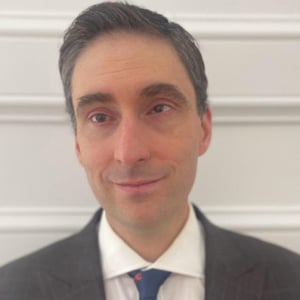
Senior Litigation Counsel, Washington Legal Foundation
Zac joined WLF in 2025 as Senior Litigation Counsel. In that role, he regularly represents WLF and other clients as counsel of record in cases before the U.S. Supreme Court and the federal appellate courts. Before arriving at WLF, Zac served as counsel to Commissioner Allen Dickerson of the Federal Election Commission. Zac also spent eight years litigating First Amendment cases as a staff attorney for the Institute for Free Speech, where he represented clients in federal and state cases across the country. He received his J.D. from George Mason University’s School of Law, where he participated in GMU’s Wiley Rein Supreme Court clinic.
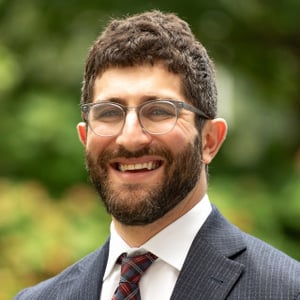
Associate Professor of Law, Temple University Beasley School of Law
Jacob Schuman is an Associate Professor at Temple University Beasley School of Law, where he teaches Constitutional Law, Evidence, and the Law of the Police. His scholarship focuses on the law of community supervision and has been published or is forthcoming in the Stanford Law Review, New York University Law Review, Michigan Law Review, Virginia Law Review, American Criminal Law Review, Philadelphia Inquirer, and New Republic.
Professor Schuman’s scholarship is regularly cited by courts, scholars, journalists, and advocates, including by federal judges on the Second, Fourth, and Seventh Circuit U.S. Courts of Appeals. It has also won plaudits across the ideological spectrum, from the American Constitution Society to the Federalist Society. He has filed amicus briefs based on his work on behalf of clients such as the National Association of Federal Defenders and the National Association of Criminal Defense Lawyers.
Prior to joining Temple Law, Professor Schuman served in the appellate unit of the Federal Community Defender Office in Philadelphia, where he represented indigent criminal defendants before the U.S. Court of Appeals for the Third Circuit. He also worked as a white-collar criminal defense lawyer in Washington, D.C. After graduating magna cum laude from Harvard Law School, he clerked for the Honorable Michael Boudin on the U.S. Court of Appeals for the First Circuit and the Honorable James Boasberg on the U.S. District Court for the District of Columbia.
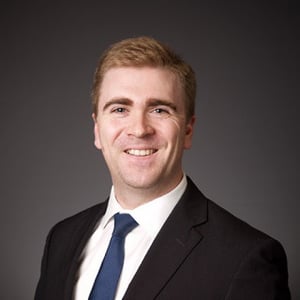
Legal Counsel, Center for Free Speech, Alliance Defending Freedom
Logan Spena serves as legal counsel for the Center for Free Speech at Alliance Defending Freedom, where he works to defend free speech and combat global censorship and coercion.
Before joining ADF, Spena served as Deputy Policy Director in the Missouri governor’s office where he oversaw the state’s regulatory reform efforts and worked to approve legislation on many issues including education, foster care, and protecting the unborn.
Spena graduated from the University of Virginia School of Law in 2016, where he served on the Editorial Board of the Virginia Law Review. Spena earned his B.A. in Government: Political Theory from Patrick Henry College in 2012. Spena is a member of the bars of Virginia and Missouri.
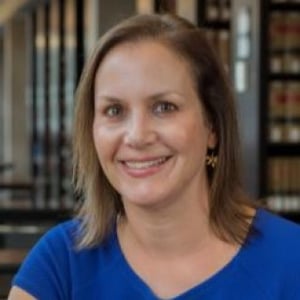
Director of Clinical and Experiential Learning, Clinical Professor of Law & Director of the Criminal and Juvenile Justice Clinic, University of Chicago Law School
Erica Zunkel is a Clinical Professor of Law and directs the Criminal and Juvenile Justice Clinic. Under Professor Zunkel’s supervision, law students represent indigent individuals in criminal trial courts, on appeal, and in post-conviction proceedings, and pursue policy and impact projects to effect system change. Professor Zunkel’s Excessive Sentences Project is an initiative that aims to free prisoners serving lengthy sentences through the use of second look mechanisms such as compassionate release, parole, and clemency. Zunkel and her clinic students have secured the early release of 17 individuals, resulting in hundreds of years in prison saved for their clients. In recognition of her post-conviction work, Zunkel received the 2024 Excellence in Pro Bono Service Award from the United States Northern District of Illinois District Court and the Federal Bar Association.
Zunkel’s case and research interests include post-conviction remedies for excessive sentences in the federal and state systems, mandatory minimums, and sentencing. In 2022, Illinois Governor J.B. Pritzker appointed Professor Zunkel to be a Commissioner on the Illinois Torture Inquiry and Relief Commission, which examines claims of police torture.
Before coming to the Law School in 2012, Professor Zunkel was a federal public defender in San Diego, California and a law clerk for U.S. District Court Judge Martha Vázquez in Santa Fe, New Mexico. She received her B.A. from Cornell University and her J.D. from the University of California-Berkeley School of Law.
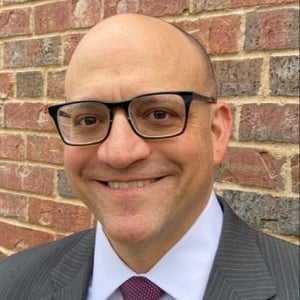
Executive Director & Secretary, American Civil Rights Project
Dan Morenoff is the executive director at the American Civil Rights Project and an adjunct fellow at the Manhattan Institute.
His work focuses on protecting and, where necessary, restoring the primacy of all Americans' shared civil rights against the identitarian alternative.
Before practicing law, Morenoff served on the legislative staff of Sen. Phil Gramm (R-TX). Morenoff holds a B.A. from Columbia College of Columbia University in the City of New York and a J.D. from the University of Chicago Law School. He has also served as an officer or director of several community organizations in Dallas, Texas.

Associate, Wiley Rein LLP
Joel S. Nolette is an associate at Wiley Rein LLP, where he advocates on behalf of corporate and individual clients in a broad spectrum of complex litigation matters. In 2017, Joel graduated cum laude from the Georgetown University Law Center, where he served as the Editor in Chief of Volume 15 of the Georgetown Journal of Law and Public Policy. From 2019 to 2021, Joel clerked for the Honorable Raymond W. Gruender of the U.S. Court of Appeals for the Eighth Circuit; and from 2021 to 2022, he clerked for the Honorable Timothy J. Kelly of the U.S. District Court for the District of Columbia. Before attending law school, Joel graduated summa cum laude from Gordon College in Wenham, MA, with his Bachelor of Arts in Biblical Studies and worked as a letter carrier with the U.S. Postal Service.
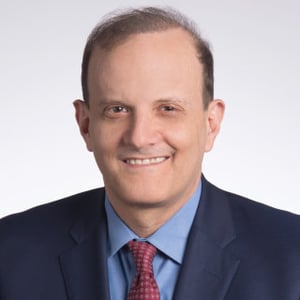
Partner, Duane Morris LLP; Managing Principal, Duane Morris Institute
Jonathan A. Segal is a partner at Duane Morris LLP in the Employment, Labor, Benefits and Immigration Practice Group. He is also the managing principal of the Duane Morris Institute. The Duane Morris Institute provides training for human resource professionals, in-house counsel, benefits administrators and managers at Duane Morris, at client sites and by way of webinar on myriad employment, labor, benefits and immigration matters.
Previously a litigator, Jonathan’s practice now focuses almost entirely on helping employers meet their business objectives or missions by minimizing legal risk, maximizing compliance and focusing on relationship with business objectives or mission and legal requirements or restrictions.
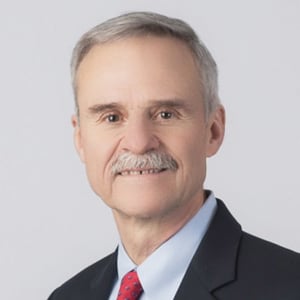
Partner & Deputy General Counsel, Wiley Rein LLP
Rick is a trial lawyer and appellate advocate. As an Assistant U.S. Attorney for the Southern District of New York, Rick learned to love nothing so much as going to trial, unless it is crafting briefs and presenting oral argument in an important appeal. Assistants in that office were fortunate to be able to do both.
Rick represents lawyers and other professionals in malpractice claims, defends insurers in coverage and “bad faith” litigation, and represents clients in commercial litigation. He also represents lawyers in disciplinary proceedings, provides legal ethics advice to law firms, has served as an expert witness on legal ethics and insurance coverage, and is Deputy General Counsel at Wiley.
Rick recently completed a three-year term as Chair of the American Bar Association Standing Committee on Lawyers Professional Liability and now serves as a Special Advisor to the Committee. During his tenure as Chair of the Standing Committee, Rick also served as a member of the Coordinating Council of the ABA Center for Professional Responsibility. Previously, Rick served a three-year term as a member of the Standing Committee. He speaks regularly on professional liability and insurance coverage topics.
Rick has acted as lead counsel for trials in the District of Columbia, Florida, Maryland, New York, Texas, and Virginia, as well as for arbitration hearings. On the appellate side, Rick has presented oral argument in the Supreme Court of the United States; 10 of the federal courts of appeals; the Supreme Courts of Connecticut, Delaware, Maryland, North Carolina, and Ohio; and state intermediate appellate courts in California, Florida, Maryland, New York, and Texas. His strong record of success includes winning his case in the United States Supreme Court and all five state Supreme Court cases.
Beginning with the Marc Rich cases while he was an AUSA (for those who can remember that far back), Rick has handled many high-profile representations, including dealing with the press as appropriate. Those matters include conducting an internal investigation for a U.S. Senator and representing the Senator in connection with a grand jury investigation, representing high-level White House officials in connection with criminal and congressional investigations arising from the Whitewater and Monica Lewinsky investigations, and representing Prof. Alan Dershowitz in connection with a defamation case in Florida.
Rick is an Adjunct Professor at the University of North Carolina School of Law, where he is the co-director of the Supreme Court Program, which operates as a clinic in which students assist in preparing submissions to the United States Supreme Court. From 2003 to 2017, Rick was an Adjunct Instructor in Trial Advocacy at the University of Virginia School of Law.
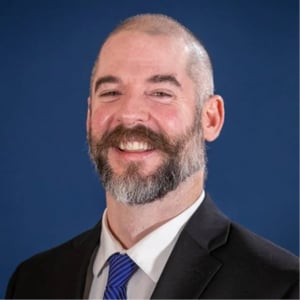
Deputy Director, Regulatory Studies Center, George Washington University
Will Yeatman is deputy director of the GW Regulatory Studies Center. A lawyer, he has spent almost two decades working on federal regulatory policy, with an emphasis on administrative law.
Yeatman has testified many times before Congress and state legislatures, and his scholarly work has appeared in such academic journals as Georgetown Law Journal, Administrative Law Review, and the (forthcoming) Catholic University Law Review. His popular writing has appeared in The Wall Street Journal, Foreign Policy, and Bloomberg.
Yeatman came to the RSC from the Pacific Legal Foundation. Previously, he had been at the Cato Institute’s Center for Constitutional Studies and the Competitive Enterprise Institute. From 2004 to 2006, he served as a Peace Corps volunteer in the Kyrgyz Republic.
Yeatman holds a BA in environmental sciences from the University of Virginia, an MA in international studies from the Denver University Graduate School of International Studies, and a JD from the Georgetown University Law Center. He is a member of the Washington, DC Bar.
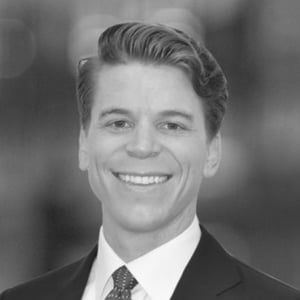
Chief Civil Counsel, Senate Judiciary Committee
Austin Rogers serves as Chief Counsel for the Senate Judiciary Committee, covering the civil portfolio for the Chairman. He obtained dual graduate degrees in Law and Theology from Duke University (summa cum laude), where he served on the Duke Law Journal and Harvard Journal of Law & Public Policy. After law school, he clerked for Chief Judge Steven D. Merryday in the Middle District of Florida. Following his clerkship, he practiced law at White & Case, specializing in commercial and appellate litigation. Prior to serving as Chief Civil Counsel for the Senate Judiciary Committee, he served as Senior Counsel of Oversight and Investigations for the Senate Judiciary Committee.
Austin obtained undergraduate degrees (summa cum laude) in International Business and Theology from Southeastern University and Wheaton College, respectively, and played college soccer at both schools.
He has published First Amendment scholarship in the Duke Law Journal and the Marquette Law Review, and he has a forthcoming article that will be published in the Florida Law Review. He is a member of the District of Columbia Bar, the Republican National Lawyers Association, and the Federalist Society, where he serves in a volunteer capacity. Austin is actively involved in his church and serves on its worship team.
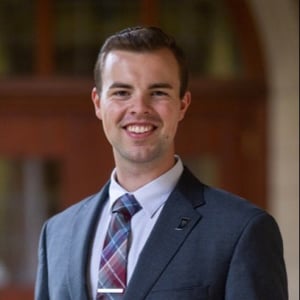
Law Clerk, United States District Court for the Northern District of Texas
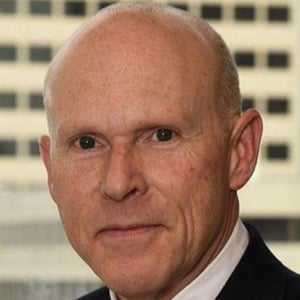
Partner, Taft Stettinius & Hollister
Robert McBride is the partner-in-charge of the Kentucky office of Taft Stettinius & Hollister. As a seasoned trial attorney, he is experienced in investigating and prosecuting a wide variety of criminal matters. As lead attorney, Bob prosecuted cases involving complex financial frauds, money laundering, federal tax violations, healthcare fraud, national security matters, violations of the Export Control Act, immigration, and human trafficking crimes, and public corruption. He also prosecuted narcotics trafficking organizations, firearms violations and crimes against children. As a prosecutor, Bob successfully tried many federal cases to jury verdict. Bob is also experienced in litigating forfeiture claims, habeas actions and appeals before the Sixth Circuit Court of Appeals.
Bob has a long record serving the United States as an attorney before entering private practice. He was an Assistant United States Attorney in the Eastern District of Kentucky for over 15 years. As an AUSA, Bob first chaired criminal jury trials in U.S. District Court and handled appeals before the Sixth Circuit Court of Appeals. Additionally, he was the District’s National Security Prosecutor and the Anti-Terrorism Advisory Council Coordinator. Bob also held several leadership positions. In 2006, he was assigned as the manager of the London Branch Office. Shortly thereafter, he was promoted to Criminal Chief and served in that position until January 2010. As Criminal Chief, Bob supervised the Criminal Division’s personnel and exercised oversight of all prosecutions in the District. More recently, he was the supervisor of the Ft. Mitchell Branch Office, where he handled a number of high profile investigations and prosecutions.
Bob also served in the United States Navy, Judge Advocate General’s Corps, for 10 years. His major assignments included senior prosecutor on the Island of Guam, Officer-in-Charge of a Detachment in New Orleans focusing on criminal defense, and Staff Judge Advocate, Recruit Training Command. Bob attained the rank of Lieutenant Commander. He was also an enlisted Combat Engineer in the Army National Guard.

Courthouse Steps Oral Argument: Wolford v. Lopez
George A. Mocsary
In New York State Rifle & Pistol Association v. Bruen (2022), the Supreme Court invalidated...
Structure Over Spectacle: The Supreme Court's 2024 Term
Donald A. Daugherty, David C. Tryon
After several years of headline-grabbing decisions that reshaped national political debate—from abortion and affirmative action...
A Seat at the Sitting - November 2025
Thomas C. Berg, Zac Morgan, Jacob Schuman, Logan Spena, Erica Zunkel
Each month, a panel of constitutional experts convenes to discuss the Court’s upcoming docket sitting...
Disparate-Impact Liability: Unfounded, Unconstitutional, & Not Long For This World
Dan Morenoff
For more than fifty years—ever since the Supreme Court decided Griggs v. Duke Power Co.[1]—almost...
Topics
Supreme Court Justices Concerned about Religious Discrimination in Oklahoma’s Charter School Program
On Wednesday, April 30, 2025, the U.S. Supreme Court heard oral arguments in Oklahoma Statewide...
Topics
Oral Argument in Mahmoud v. Taylor: Petitioners Likely to Win, But How Far Will the Majority Go?
Last week, the Supreme Court heard oral argument in Mahmoud v. Taylor, with the argument...
A Seat at the Sitting - February 2025
Joel S. Nolette, Jonathan A. Segal, Richard A. Simpson, Will Yeatman, Austin Rogers
Each month, a panel of constitutional experts convenes to discuss the Court’s upcoming docket sitting...
Topics
Oral Argument in TikTok v. Garland: Does the First Amendment Apply, and How?
On Friday, January 10, the Supreme Court heard oral arguments in TikTok v. Garland. The...
South Carolina Supreme Court Holds Unconstitutional Law Providing State Funds to Students for Private School Expenses
Jared C. Huber
The South Carolina Legislature passed the Education Scholarship Trust Fund Act (ESTF) to “provide scholarships...
Courthouse Steps Oral Argument: Delligatti v. United States
Robert K. McBride
Delligatti v. United States concerns whether a crime that requires proof of bodily injury or...