

U.S. Court of Appeals, Seventh Circuit
Frank H. Easterbrook is a judge of the United States Court of Appeals for the Seventh Circuit and a Senior Lecturer at the Law School of the University of Chicago. He was Chief Judge from 2006–2013. Before joining the court in 1985, he was the Lee andBrena Freeman Professor of Law at the University of Chicago, where he taught and wrote in antitrust, securities, corporate law, jurisprudence, and criminal procedure. He has published The Economic Structure of Corporate Law (with Daniel R. Fischel) and about 100 scholarly articles. He served as Co-Editor of the Journal of Law and Economics from 1982 to 1991 and as a member of the Judicial Conference’s Standing Committee on Rules of Practice and Procedure from 1991 to 1997. Before joining the faculty of the Law School in 1979, Judge Easterbrook was Deputy Solicitor General of the United States. He holds degrees from Swarthmore College (B.A. with high honors, 1970) and the University of Chicago (J.D. cum laude, 1973), and is a member of the American Academy of Arts and Sciences, the American Law Institute, the Mont Pelerin Society, Phi Beta Kappa, and the Order of the Coif.

Laurence A. Tisch Professor of Law and Director, Classical Liberal Institute, New York University School of Law; Director, Classical Liberal Institute, Civitas Institute University of Texas at Austin
Richard A. Epstein is the Laurence A. Tisch Professor of Law, at New York University, a senior research fellow at the Civitas Institute at the University of Texas Austin, and a senior Lecturer, the University of Chicago. He received an LL.D., h.c . from the University of Ghent, 2003 , and an LLD h.c . from the University of Siegen in 2018 and the Bradley Prize in 2011. He has been a member of the American Academy of Arts and Sciences since 1985. He has edited both the Journal of Legal Studies (1981-1991) and the Journal of Law and Economics (1991-2001). He is also a founder and director of the Classical Liberal Institute at NYU Law School. His most recent book is The Classical Liberal Constitution: The Uncertain Quest for Limited Government (2014). His other books include Takings: Private Property and the Power of Eminent Domain ( 1985); Bargaining with the State (1993); Simple Rules for a Complex World (1995); Principles for a Free Society: Reconciling Individual Liberty and the Common Good (1998); Skepticism and Freedom: A Modern Theory of Classical Liberalism (2003); Design for Liberty: Private Property, Public Administration and the Rule of Law (2011), and most recently, The Myth of Birthright citizenship—and Beyond (2026). He has taught courses in , administrative law, antitrust, constitutional, contracts, environmental law, land use planning; real property, torts and water law. He has written and spoken extensively on a wide range of topics, and is writes a regular column for Defining Ideas.
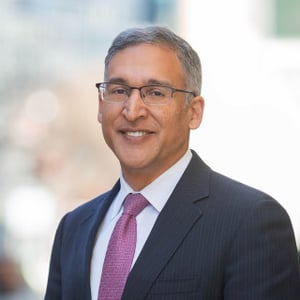
Partner, Millbank LLP
Mr. Katyal, the former Acting Solicitor General of the United States, focuses on appellate and complex litigation. He has argued 54 cases before the Supreme Court of the United States.
He has extensive experience in matters of antitrust, corporate, constitutional, securities, technology, criminal, patent, copyright, trademark, ERISA, products liability, labor, employment and tribal law. In the 2022-23 Supreme Court term, he argued five separate cases (nearly 10% of the docket), including winning the landmark voting case Moore v. Harper, which Judge Michael Luttig described as “the most important case for American democracy in the almost two and a half centuries since America’s founding.” Judge Luttig also said Mr. Katyal’s argument “was the single best oral argument I have ever heard made in the Supreme Court of the United States.” His cases include successfully striking down the Guantanamo military tribunals, successfully defending the constitutionality of the Voting Rights Act and successfully defending the Peace Cross in Maryland. His 2017 win in Bristol Myers Squibb v. Superior Court was a landmark victory for personal jurisdiction law and his 2006 win in Hamdan v. Rumsfeld was described by former Acting Solicitor General Walter Dellinger as “simply the most important decision on presidential power and the rule of law ever. Ever.”
From 2010 to 2011, Mr. Katyal served as Acting Solicitor General of the United States, where he argued several major Supreme Court cases involving a variety of issues, such as his successful defense of the constitutionality of the Voting Rights Act of 1965, his victorious defense of former Attorney General John Ashcroft for alleged abuses in the war on terror, his unanimous victory against eight states who sued the nation's leading power plants for contributing to global warming, and a variety of other matters. As Acting Solicitor General, he was responsible for representing the federal government of the United States in all appellate matters before the US Supreme Court and the Courts of Appeals throughout the nation. He served as Counsel of Record hundreds of times in the US Supreme Court. He was also the only head of the Solicitor General's office to argue a case in the US Court of Appeals for the Federal Circuit, on the important question of whether certain aspects of the human genome were patentable.
After graduating from Yale Law School, Mr. Katyal clerked for The Honorable Guido Calabresi of the US Court of Appeals for the Second Circuit as well as for The Honorable Justice Stephen G. Breyer of the US Supreme Court. He also served in the Deputy Attorney General's Office at the Justice Department as National Security Advisor and as Special Assistant to the Deputy Attorney General during 1998-1999.
Mr. Katyal is a best-selling New York Times author and has published dozens of scholarly articles in law journals (including several in the Harvard Law Review and Yale Law Journal), as well as many op-ed articles in publications such as the New York Times and the Washington Post. He has testified numerous times before various committees of both the US House of Representatives and the US Senate.
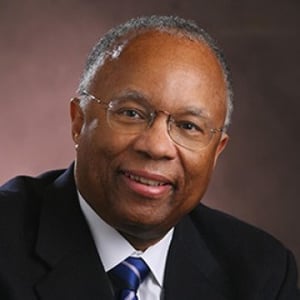
John A. Sibley Professor in Corporate and Business Law, The University of Georgia School of Law
Larry D. Thompson has served on the University of Georgia School of Law’s faculty as the holder of the John A. Sibley Chair of Corporate and Business Law since 2011, noting he was on a leave of absence from June 2012 through 2014. He is presently a member of the Faculty Division of the law school's Dean Rusk International Law Center Council.
Thompson first retired from PepsiCo in May 2011. In June 2012, he rejoined the company as executive vice president, government affairs, general counsel and corporate secretary. His responsibilities included leading PepsiCo’s worldwide legal function, as well as its global government affairs and public policy group and its global citizenship and sustainability team. Thompson again retired from PepsiCo in December 2014.
Thompson has extensive leadership experience in both the public and private sectors. In 2001, Thompson was confirmed by the U.S. Senate as deputy attorney general of the United States. As deputy attorney general, Attorney General John Ashcroft named Thompson in 2002 to lead the Department of Justice’s National Security Coordination Council. Also in 2002, President George W. Bush named Thompson to head the government-wide Corporate Fraud Task Force.
From 1982 to 1986, he served as U.S. attorney for the Northern District of Georgia where he led major political corruption and drug trafficking prosecutions brought by the U.S. Attorney’s Office. As U.S. attorney, Thompson also led the Southeastern Organized Crime Drug Enforcement Task Force.
Thompson has held other significant leadership positions in the public sector. In 1995, he was named independent counsel for the Department of Housing and Urban Development Investigation. In 2000, he was selected by the U.S. Congress to chair the bi-partisan Judicial Review Commission on Foreign Asset Control.
In the private sector, in addition to his leadership roles at PepsiCo, Thompson was a partner in the Atlanta law firm of King & Spalding. He was the founding co-chair of the firm’s special matters and government investigations practice.
Thompson has received numerous awards for his professional achievements, including the Edmund Jennings Randolph Award for outstanding contributions to the accomplishment of the Department of Justice’s mission, the Outstanding Litigator Award from the Federal Bar Association and a Honorary Doctor of Laws degree from Pace University in New York. He has also been recognized by Atlanta’s Gate City Bar Association as a member of its hall of fame.
Thompson is an elected Fellow of the American Board of Criminal Lawyers. In 2014, Ethisphere magazine recognized him by noting that as “the outgoing General Counsel of one of the world’s most well-recognized corporations [Thompson] has set the bar high for GC’s everywhere. [His] background in both public and private sectors earned him the trust and respect of his peers worldwide as he demonstrated how ethics and integrity are essential components of business success.”
In 2004, Thompson served as a Senior Fellow with the Brookings Institution in Washington, D.C.
Thompson speaks and writes frequently on a number of legal topics. His recent publications include:
● “The Responsible Corporation: Its Historical Roots and Continuing Promise" in 29 Notre Dame Journal of Law, Ethics & Public Policy 199 (2015).
● “In-sourcing Corporate Responsibility for Enforcement of the Foreign Corrupt Practices Act" in 51 American Criminal Law Review 199 (2014).
● “Keynote Speech: The Reality of Overcriminalization” in 7 George Mason University Journal of Law, Economics and Policy 577 (2011).
Thompson holds a B.A. from Culver-Stockton College in Canton, Missouri, a M.A. from Michigan State University and a law degree from the University of Michigan.
U.S. Court of Appeals, Seventh Circuit
Frank H. Easterbrook is a judge of the United States Court of Appeals for the Seventh Circuit and a Senior Lecturer at the Law School of the University of Chicago. He was Chief Judge from 2006–2013. Before joining the court in 1985, he was the Lee andBrena Freeman Professor of Law at the University of Chicago, where he taught and wrote in antitrust, securities, corporate law, jurisprudence, and criminal procedure. He has published The Economic Structure of Corporate Law (with Daniel R. Fischel) and about 100 scholarly articles. He served as Co-Editor of the Journal of Law and Economics from 1982 to 1991 and as a member of the Judicial Conference’s Standing Committee on Rules of Practice and Procedure from 1991 to 1997. Before joining the faculty of the Law School in 1979, Judge Easterbrook was Deputy Solicitor General of the United States. He holds degrees from Swarthmore College (B.A. with high honors, 1970) and the University of Chicago (J.D. cum laude, 1973), and is a member of the American Academy of Arts and Sciences, the American Law Institute, the Mont Pelerin Society, Phi Beta Kappa, and the Order of the Coif.
Laurence A. Tisch Professor of Law and Director, Classical Liberal Institute, New York University School of Law; Director, Classical Liberal Institute, Civitas Institute University of Texas at Austin
Richard A. Epstein is the Laurence A. Tisch Professor of Law, at New York University, a senior research fellow at the Civitas Institute at the University of Texas Austin, and a senior Lecturer, the University of Chicago. He received an LL.D., h.c . from the University of Ghent, 2003 , and an LLD h.c . from the University of Siegen in 2018 and the Bradley Prize in 2011. He has been a member of the American Academy of Arts and Sciences since 1985. He has edited both the Journal of Legal Studies (1981-1991) and the Journal of Law and Economics (1991-2001). He is also a founder and director of the Classical Liberal Institute at NYU Law School. His most recent book is The Classical Liberal Constitution: The Uncertain Quest for Limited Government (2014). His other books include Takings: Private Property and the Power of Eminent Domain ( 1985); Bargaining with the State (1993); Simple Rules for a Complex World (1995); Principles for a Free Society: Reconciling Individual Liberty and the Common Good (1998); Skepticism and Freedom: A Modern Theory of Classical Liberalism (2003); Design for Liberty: Private Property, Public Administration and the Rule of Law (2011), and most recently, The Myth of Birthright citizenship—and Beyond (2026). He has taught courses in , administrative law, antitrust, constitutional, contracts, environmental law, land use planning; real property, torts and water law. He has written and spoken extensively on a wide range of topics, and is writes a regular column for Defining Ideas.
Partner, Millbank LLP
Mr. Katyal, the former Acting Solicitor General of the United States, focuses on appellate and complex litigation. He has argued 54 cases before the Supreme Court of the United States.
He has extensive experience in matters of antitrust, corporate, constitutional, securities, technology, criminal, patent, copyright, trademark, ERISA, products liability, labor, employment and tribal law. In the 2022-23 Supreme Court term, he argued five separate cases (nearly 10% of the docket), including winning the landmark voting case Moore v. Harper, which Judge Michael Luttig described as “the most important case for American democracy in the almost two and a half centuries since America’s founding.” Judge Luttig also said Mr. Katyal’s argument “was the single best oral argument I have ever heard made in the Supreme Court of the United States.” His cases include successfully striking down the Guantanamo military tribunals, successfully defending the constitutionality of the Voting Rights Act and successfully defending the Peace Cross in Maryland. His 2017 win in Bristol Myers Squibb v. Superior Court was a landmark victory for personal jurisdiction law and his 2006 win in Hamdan v. Rumsfeld was described by former Acting Solicitor General Walter Dellinger as “simply the most important decision on presidential power and the rule of law ever. Ever.”
From 2010 to 2011, Mr. Katyal served as Acting Solicitor General of the United States, where he argued several major Supreme Court cases involving a variety of issues, such as his successful defense of the constitutionality of the Voting Rights Act of 1965, his victorious defense of former Attorney General John Ashcroft for alleged abuses in the war on terror, his unanimous victory against eight states who sued the nation's leading power plants for contributing to global warming, and a variety of other matters. As Acting Solicitor General, he was responsible for representing the federal government of the United States in all appellate matters before the US Supreme Court and the Courts of Appeals throughout the nation. He served as Counsel of Record hundreds of times in the US Supreme Court. He was also the only head of the Solicitor General's office to argue a case in the US Court of Appeals for the Federal Circuit, on the important question of whether certain aspects of the human genome were patentable.
After graduating from Yale Law School, Mr. Katyal clerked for The Honorable Guido Calabresi of the US Court of Appeals for the Second Circuit as well as for The Honorable Justice Stephen G. Breyer of the US Supreme Court. He also served in the Deputy Attorney General's Office at the Justice Department as National Security Advisor and as Special Assistant to the Deputy Attorney General during 1998-1999.
Mr. Katyal is a best-selling New York Times author and has published dozens of scholarly articles in law journals (including several in the Harvard Law Review and Yale Law Journal), as well as many op-ed articles in publications such as the New York Times and the Washington Post. He has testified numerous times before various committees of both the US House of Representatives and the US Senate.
John A. Sibley Professor in Corporate and Business Law, The University of Georgia School of Law
Larry D. Thompson has served on the University of Georgia School of Law’s faculty as the holder of the John A. Sibley Chair of Corporate and Business Law since 2011, noting he was on a leave of absence from June 2012 through 2014. He is presently a member of the Faculty Division of the law school's Dean Rusk International Law Center Council.
Thompson first retired from PepsiCo in May 2011. In June 2012, he rejoined the company as executive vice president, government affairs, general counsel and corporate secretary. His responsibilities included leading PepsiCo’s worldwide legal function, as well as its global government affairs and public policy group and its global citizenship and sustainability team. Thompson again retired from PepsiCo in December 2014.
Thompson has extensive leadership experience in both the public and private sectors. In 2001, Thompson was confirmed by the U.S. Senate as deputy attorney general of the United States. As deputy attorney general, Attorney General John Ashcroft named Thompson in 2002 to lead the Department of Justice’s National Security Coordination Council. Also in 2002, President George W. Bush named Thompson to head the government-wide Corporate Fraud Task Force.
From 1982 to 1986, he served as U.S. attorney for the Northern District of Georgia where he led major political corruption and drug trafficking prosecutions brought by the U.S. Attorney’s Office. As U.S. attorney, Thompson also led the Southeastern Organized Crime Drug Enforcement Task Force.
Thompson has held other significant leadership positions in the public sector. In 1995, he was named independent counsel for the Department of Housing and Urban Development Investigation. In 2000, he was selected by the U.S. Congress to chair the bi-partisan Judicial Review Commission on Foreign Asset Control.
In the private sector, in addition to his leadership roles at PepsiCo, Thompson was a partner in the Atlanta law firm of King & Spalding. He was the founding co-chair of the firm’s special matters and government investigations practice.
Thompson has received numerous awards for his professional achievements, including the Edmund Jennings Randolph Award for outstanding contributions to the accomplishment of the Department of Justice’s mission, the Outstanding Litigator Award from the Federal Bar Association and a Honorary Doctor of Laws degree from Pace University in New York. He has also been recognized by Atlanta’s Gate City Bar Association as a member of its hall of fame.
Thompson is an elected Fellow of the American Board of Criminal Lawyers. In 2014, Ethisphere magazine recognized him by noting that as “the outgoing General Counsel of one of the world’s most well-recognized corporations [Thompson] has set the bar high for GC’s everywhere. [His] background in both public and private sectors earned him the trust and respect of his peers worldwide as he demonstrated how ethics and integrity are essential components of business success.”
In 2004, Thompson served as a Senior Fellow with the Brookings Institution in Washington, D.C.
Thompson speaks and writes frequently on a number of legal topics. His recent publications include:
● “The Responsible Corporation: Its Historical Roots and Continuing Promise" in 29 Notre Dame Journal of Law, Ethics & Public Policy 199 (2015).
● “In-sourcing Corporate Responsibility for Enforcement of the Foreign Corrupt Practices Act" in 51 American Criminal Law Review 199 (2014).
● “Keynote Speech: The Reality of Overcriminalization” in 7 George Mason University Journal of Law, Economics and Policy 577 (2011).
Thompson holds a B.A. from Culver-Stockton College in Canton, Missouri, a M.A. from Michigan State University and a law degree from the University of Michigan.
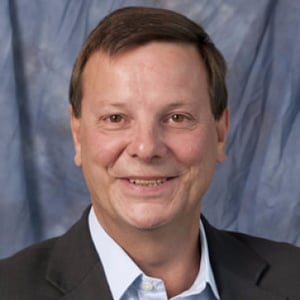
Professor of Law, Antonin Scalia Law School, George Mason University
Professor of Law Michael S. Greve joined the faculty of the Antonin Scalia Law School, George Mason University in fall 2012 after having served as John G. Searle Scholar at the American Enterprise Institute (AEI), where he specialized in constitutional law, courts, and business regulation and served as chairman of the Competitive Enterprise Institute. Prior to joining AEI, Greve was founder and co-director of the Center for Individual Rights, a public interest law firm specializing in constitutional litigation.
Greve has served previously as an adjunct professor at a number of universities, including Cornell and Johns Hopkins Universities, and has been a visiting professor at Boston College since 2004. He was awarded a PhD and an MA in government by Cornell University. Greve also earned a Diploma from the University of Hamburg in Germany.
A prolific writer, Greve is the author of nine books and a multitude of articles appearing in scholarly publications, as well as numerous editorials, short articles, and book reviews. He is a frequent speaker for professional and scholarly organizations and has made many appearances on radio and television.
In addition Greve has provided congressional and state legislative testimony, has lobbied and consulted in federal agency proceedings, and has provided litigation services and management in over 30 cases, including matters before the U.S. Supreme Court.
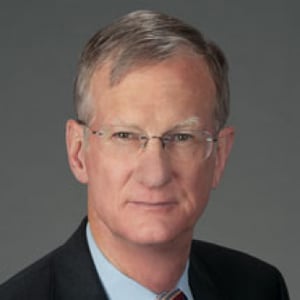
Legal Scholar and Solo Practitioner
Jack received his B.A. in History from the University of Virginia in 1977, graduating with Highest Distinction. After graduating Yale Law School in 1980, he served active duty in the U.S. Army's JAG Corps, rising to the rank of Major, where he represented the United States in more than 250 cases.
He practiced for a decade as an Associate for Bradley Arant in Birmingham, Alabama. He proudly served the State of Alabama in the Office of the Attorney General, both as Deputy and Assistant Attorney General, handling complex civil and criminal litigation cases for the people of Alabama. In 2000, he won the "Best Brief Award" from the National Association of Attorneys General for his brief in a case decided by the U.S. Supreme Court, James Alexander v. Martha Sandoval – a case he won. He was Special Assistant to the Inspector General for the Corporation for National and Community Service, Visiting Legal Fellow for the Center for Judicial and Legal Studies for the Heritage Foundation, Of Counsel at Strickland Brockington Lewis, a solo practitioner, and General Counsel for Indigo Energy.
Most recently, he "re-upped" for military service, volunteering his legal services to the Georgia State Defense Force where twice each month he provided legal services for National Guardsmen who were being deployed. He wore his military uniform for the last time in October 2024.
Jack Park passed away on March 16, 2026.
Publius comes from the pen name Alexander Hamilton, James Madison, and John Jay used when they wrote 85 publicly printed letters now known as the Federalist Papers. Hamilton chose “Publius” as a name that would represent friends of the newly proposed American republic - Publius Valeria Publicola was a Roman general who helped to found the Roman Republic. The Federalist Society continues the tradition of publishing things under the name Publius in celebration of our constitutional roots and recognition that author credit is not always necessary.
U.S. Court of Appeals, Seventh Circuit
Frank H. Easterbrook is a judge of the United States Court of Appeals for the Seventh Circuit and a Senior Lecturer at the Law School of the University of Chicago. He was Chief Judge from 2006–2013. Before joining the court in 1985, he was the Lee andBrena Freeman Professor of Law at the University of Chicago, where he taught and wrote in antitrust, securities, corporate law, jurisprudence, and criminal procedure. He has published The Economic Structure of Corporate Law (with Daniel R. Fischel) and about 100 scholarly articles. He served as Co-Editor of the Journal of Law and Economics from 1982 to 1991 and as a member of the Judicial Conference’s Standing Committee on Rules of Practice and Procedure from 1991 to 1997. Before joining the faculty of the Law School in 1979, Judge Easterbrook was Deputy Solicitor General of the United States. He holds degrees from Swarthmore College (B.A. with high honors, 1970) and the University of Chicago (J.D. cum laude, 1973), and is a member of the American Academy of Arts and Sciences, the American Law Institute, the Mont Pelerin Society, Phi Beta Kappa, and the Order of the Coif.
Laurence A. Tisch Professor of Law and Director, Classical Liberal Institute, New York University School of Law; Director, Classical Liberal Institute, Civitas Institute University of Texas at Austin
Richard A. Epstein is the Laurence A. Tisch Professor of Law, at New York University, a senior research fellow at the Civitas Institute at the University of Texas Austin, and a senior Lecturer, the University of Chicago. He received an LL.D., h.c . from the University of Ghent, 2003 , and an LLD h.c . from the University of Siegen in 2018 and the Bradley Prize in 2011. He has been a member of the American Academy of Arts and Sciences since 1985. He has edited both the Journal of Legal Studies (1981-1991) and the Journal of Law and Economics (1991-2001). He is also a founder and director of the Classical Liberal Institute at NYU Law School. His most recent book is The Classical Liberal Constitution: The Uncertain Quest for Limited Government (2014). His other books include Takings: Private Property and the Power of Eminent Domain ( 1985); Bargaining with the State (1993); Simple Rules for a Complex World (1995); Principles for a Free Society: Reconciling Individual Liberty and the Common Good (1998); Skepticism and Freedom: A Modern Theory of Classical Liberalism (2003); Design for Liberty: Private Property, Public Administration and the Rule of Law (2011), and most recently, The Myth of Birthright citizenship—and Beyond (2026). He has taught courses in , administrative law, antitrust, constitutional, contracts, environmental law, land use planning; real property, torts and water law. He has written and spoken extensively on a wide range of topics, and is writes a regular column for Defining Ideas.
Partner, Millbank LLP
Mr. Katyal, the former Acting Solicitor General of the United States, focuses on appellate and complex litigation. He has argued 54 cases before the Supreme Court of the United States.
He has extensive experience in matters of antitrust, corporate, constitutional, securities, technology, criminal, patent, copyright, trademark, ERISA, products liability, labor, employment and tribal law. In the 2022-23 Supreme Court term, he argued five separate cases (nearly 10% of the docket), including winning the landmark voting case Moore v. Harper, which Judge Michael Luttig described as “the most important case for American democracy in the almost two and a half centuries since America’s founding.” Judge Luttig also said Mr. Katyal’s argument “was the single best oral argument I have ever heard made in the Supreme Court of the United States.” His cases include successfully striking down the Guantanamo military tribunals, successfully defending the constitutionality of the Voting Rights Act and successfully defending the Peace Cross in Maryland. His 2017 win in Bristol Myers Squibb v. Superior Court was a landmark victory for personal jurisdiction law and his 2006 win in Hamdan v. Rumsfeld was described by former Acting Solicitor General Walter Dellinger as “simply the most important decision on presidential power and the rule of law ever. Ever.”
From 2010 to 2011, Mr. Katyal served as Acting Solicitor General of the United States, where he argued several major Supreme Court cases involving a variety of issues, such as his successful defense of the constitutionality of the Voting Rights Act of 1965, his victorious defense of former Attorney General John Ashcroft for alleged abuses in the war on terror, his unanimous victory against eight states who sued the nation's leading power plants for contributing to global warming, and a variety of other matters. As Acting Solicitor General, he was responsible for representing the federal government of the United States in all appellate matters before the US Supreme Court and the Courts of Appeals throughout the nation. He served as Counsel of Record hundreds of times in the US Supreme Court. He was also the only head of the Solicitor General's office to argue a case in the US Court of Appeals for the Federal Circuit, on the important question of whether certain aspects of the human genome were patentable.
After graduating from Yale Law School, Mr. Katyal clerked for The Honorable Guido Calabresi of the US Court of Appeals for the Second Circuit as well as for The Honorable Justice Stephen G. Breyer of the US Supreme Court. He also served in the Deputy Attorney General's Office at the Justice Department as National Security Advisor and as Special Assistant to the Deputy Attorney General during 1998-1999.
Mr. Katyal is a best-selling New York Times author and has published dozens of scholarly articles in law journals (including several in the Harvard Law Review and Yale Law Journal), as well as many op-ed articles in publications such as the New York Times and the Washington Post. He has testified numerous times before various committees of both the US House of Representatives and the US Senate.
John A. Sibley Professor in Corporate and Business Law, The University of Georgia School of Law
Larry D. Thompson has served on the University of Georgia School of Law’s faculty as the holder of the John A. Sibley Chair of Corporate and Business Law since 2011, noting he was on a leave of absence from June 2012 through 2014. He is presently a member of the Faculty Division of the law school's Dean Rusk International Law Center Council.
Thompson first retired from PepsiCo in May 2011. In June 2012, he rejoined the company as executive vice president, government affairs, general counsel and corporate secretary. His responsibilities included leading PepsiCo’s worldwide legal function, as well as its global government affairs and public policy group and its global citizenship and sustainability team. Thompson again retired from PepsiCo in December 2014.
Thompson has extensive leadership experience in both the public and private sectors. In 2001, Thompson was confirmed by the U.S. Senate as deputy attorney general of the United States. As deputy attorney general, Attorney General John Ashcroft named Thompson in 2002 to lead the Department of Justice’s National Security Coordination Council. Also in 2002, President George W. Bush named Thompson to head the government-wide Corporate Fraud Task Force.
From 1982 to 1986, he served as U.S. attorney for the Northern District of Georgia where he led major political corruption and drug trafficking prosecutions brought by the U.S. Attorney’s Office. As U.S. attorney, Thompson also led the Southeastern Organized Crime Drug Enforcement Task Force.
Thompson has held other significant leadership positions in the public sector. In 1995, he was named independent counsel for the Department of Housing and Urban Development Investigation. In 2000, he was selected by the U.S. Congress to chair the bi-partisan Judicial Review Commission on Foreign Asset Control.
In the private sector, in addition to his leadership roles at PepsiCo, Thompson was a partner in the Atlanta law firm of King & Spalding. He was the founding co-chair of the firm’s special matters and government investigations practice.
Thompson has received numerous awards for his professional achievements, including the Edmund Jennings Randolph Award for outstanding contributions to the accomplishment of the Department of Justice’s mission, the Outstanding Litigator Award from the Federal Bar Association and a Honorary Doctor of Laws degree from Pace University in New York. He has also been recognized by Atlanta’s Gate City Bar Association as a member of its hall of fame.
Thompson is an elected Fellow of the American Board of Criminal Lawyers. In 2014, Ethisphere magazine recognized him by noting that as “the outgoing General Counsel of one of the world’s most well-recognized corporations [Thompson] has set the bar high for GC’s everywhere. [His] background in both public and private sectors earned him the trust and respect of his peers worldwide as he demonstrated how ethics and integrity are essential components of business success.”
In 2004, Thompson served as a Senior Fellow with the Brookings Institution in Washington, D.C.
Thompson speaks and writes frequently on a number of legal topics. His recent publications include:
● “The Responsible Corporation: Its Historical Roots and Continuing Promise" in 29 Notre Dame Journal of Law, Ethics & Public Policy 199 (2015).
● “In-sourcing Corporate Responsibility for Enforcement of the Foreign Corrupt Practices Act" in 51 American Criminal Law Review 199 (2014).
● “Keynote Speech: The Reality of Overcriminalization” in 7 George Mason University Journal of Law, Economics and Policy 577 (2011).
Thompson holds a B.A. from Culver-Stockton College in Canton, Missouri, a M.A. from Michigan State University and a law degree from the University of Michigan.

Topics
Lina Khan Left a Robinson-Patman Mess for the FTC: How Will the Commissioners Clean It Up?
Nobody likes to lose an election. But in the spirit of facilitating the peaceful transition...
Showcase Panel III: Second Look Doctrines: Should Congress be Empowered to Override the Court? Should Voters in State Initiatives and Referenda be Able to Override State Supreme Courts?
Frank H. Easterbrook, Richard A. Epstein, Neal K. Katyal, Larry D. Thompson
Some scholars have praised Canada, Britain, and Israel for having a form of judicial review...
Showcase Panel III: Second Look Doctrines: Should Congress be Empowered to Override the Court? Should Voters in State Initiatives and Referenda be Able to Override State Supreme Courts?
Frank H. Easterbrook, Richard A. Epstein, Neal K. Katyal, Larry D. Thompson
Some scholars have praised Canada, Britain, and Israel for having a form of judicial review...
Showcase Panel III: Second Look Doctrines: Should Congress be Empowered to Override the Court? Should Voters in State Initiatives and Referenda be Able to Override State Supreme Courts?
2008 National Lawyers Convention
Washington, DCInterstate Comity: Cheers for Texas
Michael S. Greve
Letter from the Editor . . .The Federalist Society takes seriously its responsibility as a...
Extraterritorial Application of State Antitrust Law Rejected in Texas
John J. Park
In late October 2006, the Supreme Court of Texas handed down a decision with important...
Extraterritorial Application of State Antitrust Law (Texas)
Publius
In a recent opinion affirming a jury verdict against The Coca-Cola Company and several Coca-Cola...