
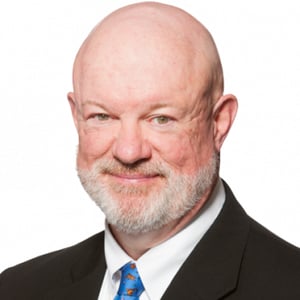
Senior Legal Fellow, the Meese Institute for the Rule of Law, Advancing American Freedom
Paul J. Larkin is a Senior Legal Fellow in the Meese Institute for the Rule of Law at Advancing American Freedom. Paul has held various positions in the federal and state governments throughout his career, such as being an attorney in the Organized Crime and Racketeering Section of the Criminal Division at the U.S. Department of Justice, an Assistant to the Solicitor General in the Office of the Solicitor General at the U.S. Department of Justice, Special Agent-in-Charge and Acting Director of the Criminal Investigation Division at the Environmental Protection Agency, and a member of the Parole Abolition and Sentencing Reform Commission and of the Juvenile Justice Reform Commission in the Office of Virginia Governor George Allen.
He has also worked at Verizon Communications and two law firms in Washington, D.C. His current research is principally in the fields of drug policy, criminal justice policy, and administrative law and policy. He has published numerous articles in law and public policy journals, both in print and online.
Senior Policy Analyst, The George Washington University Regulatory Studies Center
Sofie Miller's regulatory research portfolio includes economic analysis of energy efficiency standards, analysis of regulatory benefits, use of cost benefit analysis by agencies, retrospective review of existing rules, regressive effects of regulations, and the efficacy of public participation within the rulemaking process. Sofie has submitted public comments on regulations establishing energy efficiency standards, airline passenger protections, consumer product safety, and standards to prevent foodborne illnesses. Sofie has published articles in Regulation Magazine and the journal Engage, and is the editor of the GW Regulatory Studies Center's weekly Regulation Digest, which tracks regulatory developments in federal agencies, think tanks, and the media.
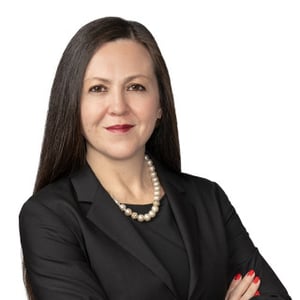
Partner, Axinn, Veltrop & Harkrider LLP
Koren Wong-Ervin is a recognized thought leader on competition issues who has testified before Congress on domestic and international issues in antitrust policy. She has more than eighteen years of experience in government, private practice, and as in-house counsel, including representing defendants and plaintiffs in high-stakes litigations and representing companies in domestic and foreign investigations. While at the Federal Trade Commission (FTC), Koren served as an Attorney Advisor to Commissioner Joshua Wright and Counsel for Intellectual Property & International Antitrust.
The combination of Koren's experience representing defendants—along with her experience at the FTC and as a former plaintiffs class action attorney—gives her insights into the thinking on both sides of cases, including complex multi-district litigations, allowing her to develop both effective offensive and defensive strategies. On top of this, her in-house experience as the Director of Antitrust Litigation & Policy at a major technology company gives her a first-hand understanding of how companies work and unique insight into the needs of clients. Koren also has a deep understanding of economics, as evidenced by the fact that she has trained over 500 foreign judges and enforcers on a variety of economic topics.
Koren’s scholarship has been cited by courts and the Department of Justice. She has authored over sixty articles, including on vertical mergers and restraints, acquisitions of potential competitors, consummated mergers, multisided platforms, the intersection of antitrust and intellectual property, incremental innovations or “product hopping,” optimal penalties, extraterritoriality, methodologies for calculating patent infringement damages, and international due process and convergence. She has spoken at over 200 domestic and international events.

Founding Partner, Lodestar Law and Economics PLLC
Josh is the founder of Lodestar Law and Economics, PLLC. On January 1, 2013, the U.S. Senate unanimously confirmed Wright as a Commissioner of the Federal Trade Commission (FTC). He is a leading scholar in antitrust law, economics, intellectual property, regulation, and consumer protection, and has published more than 100 articles and book chapters, co-authored a leading antitrust casebook, and edited several book volumes focusing on these issues. Commentators have recognized Wright as “widely considered his generation’s greatest mind on antitrust law,” and his academic work ranks him as one of the most cited antitrust academics in the world. Wright was also awarded the Paul M. Bator Award by the Federalist Society in 2014 to “an academic who demonstrated excellence in legal scholarship, a commitment to teaching, a concern for students, and who has made a significant public impact.” Wright also served as the Executive Director of the Global Antitrust Institute, the world’s premiere academic institute focused upon antitrust education for judges and regulators and has taught hundreds of judges and thousands of regulators from dozens of countries.
Wright’s practice focuses upon helping clients solve complex competition, consumer protection, and regulatory problems by providing legal and economic analysis, strategic advice and counseling, and economic expert testimony.

Director, Commercial Freedom; Senior Fellow, R Street Institute
C. Jarrett Dieterle researches and writes on regulatory affairs, alcohol policy, occupational licensing and other commercial freedom issues. He also oversees the Institute’s postal, labor and disintermediation policy programs.
Jarrett previously worked as a regulatory attorney at a Washington law firm. In that role, he advised private companies on how to navigate complex regulatory regimes and helped them challenge overreaching regulations. He also practiced appellate advocacy, co-authoring several Supreme Court amicus briefs. He previously clerked for a federal judge on the U.S. Court of Federal Claims, and has worked and written for numerous policy organizations and think tanks such as the Reason Foundation, Manhattan Institute, Mackinac Center, Federalist Society, Institute for Justice, Atlantic Legal Foundation and the Washington Legal Foundation.
Jarrett earned his bachelor’s from the University of Richmond, with a major in political science and minor in economics. He received his juris doctor from Georgetown University Law Center.
Jarrett currently lives in Richmond, Virginia with his wife, Maria, and their Australian shepherd, Pepper.
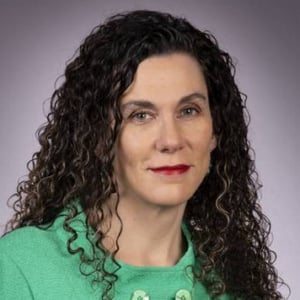
Associate Professor of Law, Center for Intellectual Property and Entrepreneurship, University of Missouri School of Law
Professor Lietzan researches, writes, and teaches primarily in the areas of food and drug regulation, intellectual property, and administrative law. Some of her recent scholarship has focused on the nature and purpose of the new drug approval system, federal regulation of fecal microbiota transplantation, federal regulation of products derived from cannabis, the political economy of the Hatch-Waxman (generic drug) statute, and incentives to study already approved drugs for new uses. She is an award-winning teacher, and she has been an elected member of the American Law Institute since 2006.
Professor Lietzan brings to her scholarship and teaching eighteen years of private practice experience, eight of them as a partner in the food and drug group at Covington & Burling in Washington, DC. In practice, she handled a wide range of complex legal problems and broader legislative and regulatory policy questions affecting FDA-regulated companies. This work included lifecycle management and strategy issues, regulatory strategy and advocacy, white collar defense, congressional investigations, briefing in products liability cases, and international regulatory policy work. She was involved in every major amendment to the Federal Food, Drug, and Cosmetic Act (FDCA) between 1997 and 2014 and was deeply immersed for more than a decade in the development of the Biologics Price Competition and Innovation Act of 2010. She has been consistently identified by her peers in private practice as a “Best Lawyer in America” in the categories of FDA law (since 2013) and Biotechnology Law (since 2007).
Professor Lietzan has held one leadership position or another at the Food and Drug Law Institute (FDLI) since 2004, including a stint on its Board of Directors from 2008 to 2012. She also held leadership positions in the American Bar Association’s Section of Science and Technology Law for fourteen years.
Professor Lietzan received a bachelor’s degree from the University of North Carolina, where she graduated with honors in history. She holds a master’s degree in history from UCLA and a law degree with high honors from Duke Law School.

James L. Oberstar Professor of Law and Public Policy, University of St. Thomas School of Law
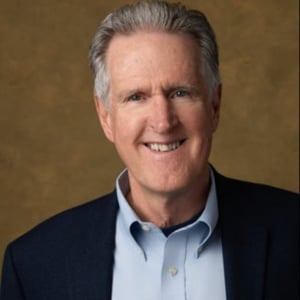
Senior Legal Counsel, Pacific Legal Foundation
Before becoming an attorney, James had been a productive member of society working as an exploration geologist in the late 1970s throughout the southwestern United States. However, after several years of dealing with irrational government bureaucrats and environmental policies untethered from reality, James decided that what the world needs is more lawyers — if they are willing to fight for rationality in regulatory regimes, property rights, and liberty.
James attended the University of Arizona College of Law in Tucson, where he served as an editor for the Law Review and received a J.D. degree in 1983. He had previously received a Masters degree in geological sciences from Brown University and an undergraduate degree from Hamilton College in New York. James received the Professional Achievement Award from the University of Arizona Alumni Association in 2018.
James has worked with Pacific Legal Foundation since 1983, litigating cases from Alaska to Florida. He is a member of the Federalist Society’s Environmental Law and Property Rights Practice Group’s Executive Committee, a member of the American College of Real Estate Lawyers, and an honorary member of Owners Counsel of America, an organization comprised of eminent domain attorneys who represent property owners. The Owners Counsel awarded James its Crystal Eagle award in 2013. In 2022, James was awarded the Brigham-Kanner Property Rights Prize at the William & Mary College of Law. The prize is awarded annually to an individual whose work has advanced the cause of property rights and has contributed to the overall awareness of the important role property rights occupy in the broader scheme of individual liberty.
In 2001, James successfully argued a major property rights case, Palazzolo v. Rhode Island, before the United States Supreme Court, a case which affirmed that rights in regulated property do not disappear when land is bought and sold. He has written extensively on all aspects of property rights and environmental law and frequently speaks on these subjects throughout the nation.
When James is not suing the government he enjoys skiing faster than he should, bicycling, hiking, swimming, and spending quality time with his wife, family, and grandchild.
Mr. Burling’s book Nowhere to Live: The Hidden Story of America’s Housing Crisis is available now on Amazon.
James is a member of the bar only in the states of Alaska and California.

Vice President, Edwin Meese III Institute for the Rule of Law, Advancing American Freedom
John G. Malcolm oversees Advancing American Freedom’s work to increase understanding of the Constitution and the rule of law as Vice President of the organization’s Edwin Meese III Institute for the Rule of Law. Malcolm brings to the challenge a wealth of legal expertise and experience in both the public and private sectors.
Prior to joining Advancing American Freedom in 2025, Malcolm was the Vice President of the Institute for Constitutional Government and the Director of the Meese Center for Legal and Judicial Studies at the Heritage Foundation. Prior to joining Heritage in 2012, Malcolm was general counsel at the U.S. Commission on International Religious Freedom, as well as a distinguished practitioner in residence at Pepperdine Law School. From 2004 to 2009, Malcolm was executive vice president and director of worldwide anti-piracy operations for the Motion Picture Association.
Malcolm served as a deputy assistant attorney general in the Department of Justice’s Criminal Division from 2001 to 2004, where he oversaw sections on computer crime and intellectual property, domestic security, child exploitation and obscenity, and special investigations. Immediately prior to that, he was a founding partner in the Atlanta law firm of Malcolm & Schroeder, LLP.
From 1990 to 1997, Malcolm was an assistant U.S. attorney in Atlanta, assigned to the fraud and public corruption section, and also an associate independent counsel, investigating fraud and abuse in the Department of Housing and Urban Development. He was honored with the Director’s Award for Superior Performance for his work in connection with the successful prosecution of Walter Leroy Moody Jr., who assassinated an 11th Circuit judge and the head of the Savannah chapter of the NAACP.
A graduate of Harvard Law School and Columbia College, Malcolm began his career as a law clerk to a federal district court judge and a federal appellate court judge, and as an associate at the Atlanta-based law firm of Sutherland, Asbill & Brennan (new Eversheds Sutherland).
Malcolm, who resides in Washington, D.C., serves on the Board of Trustees of the Washington National Opera and is a Senate-confirmed member of the Board of Directors of the Legal Services Corporation, the largest funder of civil legal aid in the United States.

Professionals, Amateurs, and Rape: How Colleges Are Failing Their Students
Paul James Larkin
A Review of: The Campus Rape Frenzy: The Attack on Due Process at America’s Universities,...
Compliance Nightmare Looms for Baltimore Police Department
In my January 4, 2017 post titled “Will Trump Have the First Numerate Administration?,” I...
The Risks of Regulating in the Dark
Sofie E. Miller
Note from the Editor: This article argues that regulations passed in the final weeks of...
Will Trump Have the First Numerate Administration?
On November 28, 2016, the Department of Justice (DOJ) filed an amicus curiae brief urging the Supreme...
Intellectual Property and Standard Setting
Koren Wong-Ervin, Joshua D. Wright
Note from the Editor: This article discusses the controversial topic of intellectual property in standard...
The Sandbagging Phenomenon: How Governments Lower Eminent Domain Appraisals to Punish Landowners
Jarrett Dieterle
Note from the Editor: This article discusses a controversial practice known as “sandbagging” in eminent...
A Second Look at the CREATES Act: What’s Not Being Said
Erika Lietzan
Note from the Editor: This article critically discusses the CREATES Act, which is currently pending...
Religious Exemptions and Third-Party Harms
Thomas C. Berg
Note from the Editor: This article discusses the effect that third-party harms should have on religious...
Final Agency Actions and Judicial Review: United States Army Corps of Engineers v. Hawkes Co.
James S. Burling
Note from the Editor: This article discusses the Supreme Court’s recent decision in United States Army...
Book Review: The War on Cops
John G. Malcolm
Note from the Editor: This book review supports the basic contentions of Heather Mac Donald’s...