
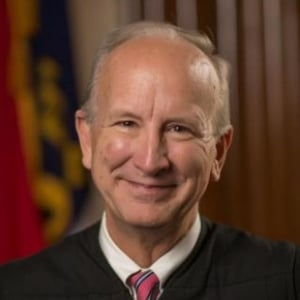
Chief Justice, North Carolina Supreme Court
Chief Justice Paul Newby was born in Asheboro and grew up in Jamestown, N.C. He received his B.A. degree in Public Policy Studies from Duke University and law degree from UNC-Chapel Hill School of Law.
Chief Justice Newby was first elected to the Supreme Court as an Associate Justice in 2004. He was elevated to the highest judicial office in North Carolina in the 2020 election. As Chief Justice, he is head of the Judicial Branch, a co-equal branch of state government with the Legislative and Executive branches. He is entrusted with leading the Judicial Branch and its 7,600 elected officials and employees.
He is a former adjunct professor of law at Campbell University and has published a book on the North Carolina Constitution.
Chief Justice Newby’s legal experience includes private practice and corporate inhouse legal counsel. He also served almost 20 years as an Assistant United States Attorney, during which he played an integral role in conducting the undercover sting operation that recovered North Carolina’s original copy of the Bill of Rights, stolen in the aftermath of the Civil War.
Chief Justice Newby is an Eagle Scout and is the recipient of the Heroism Award (for rescuing nine people from a riptide), the God and Service Award, the Silver Beaver Award, and the Scouter of the Year Award. In 2012, he was designated a Distinguished Eagle Scout, a national honor that recognizes both his service to the Boy Scouts and his dedication to public service.
Chief Justice Newby has been married to Macon Tucker Newby since 1983, and they have four children. He is active in his local church, where he serves as a teacher and mentor to young professionals.
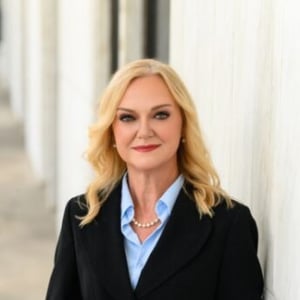
I. Beverly Lake, Jr. Chair in Constitutional Studies and Chief Legal Officer, John Locke Foundation
Jeanette Doran is the I. Beverly Lake, Jr. Chair in Constitutional Studies and Senior Counsel at the John Locke Foundation.
Doran began her legal career as a federal law clerk in the Middle District of North Carolina after graduating with honors from Campbell Law School. She then served as the Research and Writing Attorney in the appeals section of the Federal Public Defender’s Office, appearing before the U.S. Court of Appeals for the Fourth Circuit. In 2004, she joined the UNC–Chapel Hill School of Government, and a year later became staff attorney at NCICL, ultimately rising to executive director in 2011. Appointed in 2013 by the Governor to chair the Division of Employment Security’s Board of Review, she completed that public service in 2019.
Doran is also the president of the North Carolina Institute for Constitutional Law (NCICL), and she serves on the state’s Rules Review Commission. She is admitted to practice before the U.S. Supreme Court, the Fourth Circuit, multiple federal district courts, and all North Carolina courts. Doran holds a Juris Doctor from Campbell University.
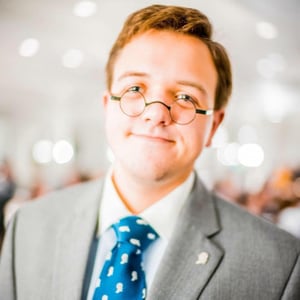
Adam Griffin is a graduate of the University of North Carolina School of Law. During law school, he served as a research assistant to Professor Stephen E. Sachs and UNC Law Dean Martin Brinkley. After law school, Adam spent two years litigating for liberty at the Institute for Justice as an inaugural Law and Liberty Fellow. He then served as a law clerk to Chief Judge Richard E. Myers in the United States District Court for the Eastern District of North Carolina, and previously worked at Pacific Legal Foundation and the Civil Rights Division of the Department of Justice.
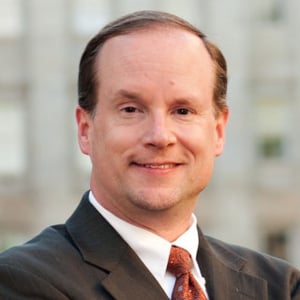
President, John William Pope Foundation
John Hood is president of the John William Pope Foundation. Hood also serves on the board of the John Locke Foundation, the state policy think tank he helped found in 1989 and led as its president for more than two decades.
Since 1986, Hood has written a syndicated column on politics and public policy for North Carolina newspapers. It appears regularly in more than 50 papers across the state. A frequent radio and television commentator, Hood is the author of seven nonfiction books on such subjects as business, advertising, public policy, and political history. His latest three books — Mountain Folk, Forest Folk, and Water Folk — are historical-fantasy novels set in early America.
A former Bradley Fellow at the Heritage Foundation, Hood teaches at Duke University’s Sanford School of Public Policy. His articles have appeared in magazines such as Readers’ Digest, The New Republic, National Review, Military History, and Reason as well as newspapers such as The Wall Street Journal and USA Today. His broadcast appearances include CNN, NBC News, National Public Radio, and Fox News.
At Locke, Hood created the E.A. Morris Fellowship for Emerging Leaders, which prepares young North Carolinians for leadership roles in the public and private sectors. He also serves on the faculty and as board chair of the NC Institute of Public Leadership; as co-chair of the North Carolina Leadership Forum, based at Duke University; as vice-chair of the James G. Martin Center for Academic Renewal, State Policy Network, and the Carolina Liberty Foundation; and on the board the Student Free Press Association.
Hood received his BA in journalism from the University of North Carolina at Chapel Hill, where he serves as vice chair of North Carolina Public Radio-WUNC and on the foundation board of the Hussman School of Journalism and Media. He earned a MA in liberal studies and a graduate certificate in nonprofit management from UNC-Greensboro.
A native of Mecklenburg County, Hood now resides in Wake County with his wife, two sons, and a stepdaughter.
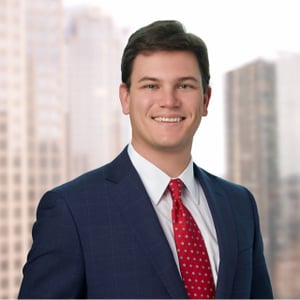
Associate, Burr & Forman LLP
Wade is a litigator with the firm’s General Commercial Litigation group, and his practice spans from the Great Smoky Mountains in North Carolina to the Lowcountry of South Carolina. He works regularly with clients across several industries and sectors, including white collar defense, antitrust, government investigations, construction, appellate, commercial disputes, labor and employment, and financial services.
With first-chair jury trial and bench trial experience, as well as appellate litigation experience before state and federal courts of appeal, Wade understands how critical it is to create a strong record from the commencement of litigation, and even prior to that time.
Wade recognizes that each client has unique needs, and he works closely with clients to develop a strategy tailored to meet those requirements. For some clients, this may include an aggressive litigation strategy designed to bring an efficient resolution to a dispute; for others, it may require a carefully-managed campaign to limit negative fallout or collateral damage. Wade understands that consistency creates results. Whether it’s a relatively small monetary dispute or bet-the-business litigation, Wade’s consistent and even-keeled approach to problem-solving puts clients first and helps achieve positive outcomes.
Outside the office, Wade is an avid golfer and serves as a volunteer baseball coach at for the varsity team at Charlotte Country Day School and an assistant coach for the Queen City Mustangs, Charlotte’s American Legion Baseball team.
Wade earned his J.D. from the University of North Carolina School of Law and his B.A. in Political Science from Davidson College. Before joining Burr & Forman, Wade clerked for The Honorable Frank D. Whitney, United States District Court Judge for the Western District of North Carolina.
Chief Justice, North Carolina Supreme Court
Chief Justice Paul Newby was born in Asheboro and grew up in Jamestown, N.C. He received his B.A. degree in Public Policy Studies from Duke University and law degree from UNC-Chapel Hill School of Law.
Chief Justice Newby was first elected to the Supreme Court as an Associate Justice in 2004. He was elevated to the highest judicial office in North Carolina in the 2020 election. As Chief Justice, he is head of the Judicial Branch, a co-equal branch of state government with the Legislative and Executive branches. He is entrusted with leading the Judicial Branch and its 7,600 elected officials and employees.
He is a former adjunct professor of law at Campbell University and has published a book on the North Carolina Constitution.
Chief Justice Newby’s legal experience includes private practice and corporate inhouse legal counsel. He also served almost 20 years as an Assistant United States Attorney, during which he played an integral role in conducting the undercover sting operation that recovered North Carolina’s original copy of the Bill of Rights, stolen in the aftermath of the Civil War.
Chief Justice Newby is an Eagle Scout and is the recipient of the Heroism Award (for rescuing nine people from a riptide), the God and Service Award, the Silver Beaver Award, and the Scouter of the Year Award. In 2012, he was designated a Distinguished Eagle Scout, a national honor that recognizes both his service to the Boy Scouts and his dedication to public service.
Chief Justice Newby has been married to Macon Tucker Newby since 1983, and they have four children. He is active in his local church, where he serves as a teacher and mentor to young professionals.
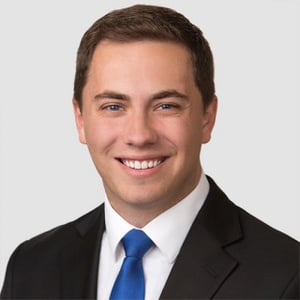
Assistant General Counsel, Office of General Counsel of the United States House of Representatives
Ken Daines serves in the Office of General Counsel of the U.S. House of Representatives, representing the House, Committees, and Members in the U.S. Supreme Court, courts of appeal, and federal district courts on matters related to their official duties. Previously, he served as an enforcement attorney at the Federal Election Commission’s Office of General Counsel. His experience also includes working at both a boutique and a large law firm where his practice focused on trial and appellate litigation in federal and state courts, including matters presenting constitutional law, FOIA, redistricting, and election-related issues, as well as drafting amicus briefs for the Supreme Court and other federal courts.
Ken clerked for Judge Ryan D. Nelson of the U.S. Court of Appeals for the Ninth Circuit and for Judge Dee V. Benson of the U.S. District Court for the District of Utah. He earned his J.D. from Stanford Law School and a B.A. in International Relations and Chinese, magna cum laude, from Brigham Young University. While in law school, he worked as a student attorney for the Religious Liberty Clinic. Ken is a member of the District of Columbia and Maryland Bars.
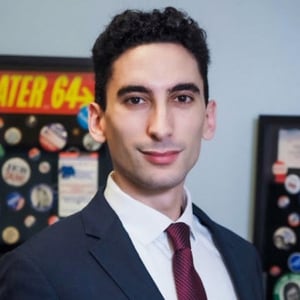
Andrew Pardue is an associate at Holtzman Vogel Baran Torchinsky Josefiak PLLC specializing in election and campaign finance law.
Prior to joining the firm, Andrew served as a law clerk for the D.C. Criminal Code Reform Commission and the Office of the Virginia Attorney General’s Civil Litigation Division, Consumer Protection Section. He also interned in the chambers of Magistrate Judge Lawrence Leonard of the United States District Court for the Eastern District of Virginia.
Andrew graduated from Harvard University with a B.A. in Government and a secondary concentration in Economics. He earned his J.D. from William & Mary Law School. While in law school, he served as Senior Notes Editor on the William & Mary Law Review and authored a published student note on congressional investigations of the executive branch. He also served as a graduate research fellow with the Center for the Study of Law and Markets. Andrew is a member of the Virginia Bar, the Federalist Society, and the Republican National Lawyers Association.
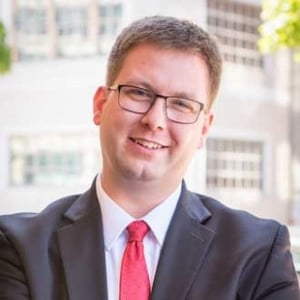
Senior Associate, Holtzman Vogel Josefiak Torchinsky PLLC
Drew Watkins is a senior associate with Holtzman Vogel Josefiak Torchinsky PLLC, providing counsel in the areas of campaign finance and election law, lobbying and ethics compliance, and tax-exempt organizations.
Prior to joining the firm, Drew served as a law clerk to the Honorable Joseph R. Goeke, Senior Judge of the United States Tax Court in Washington, D.C., and worked in the Office of General Counsel for the Governor of Kentucky, Matthew G. Bevin. While in law school, Drew served as a law clerk for the Kentucky Executive Branch Ethics Commission and interned for Senate Majority Leader Mitch McConnell in his office in Washington, D.C.
Drew graduated from the University of Louisville with a B.S. in Justice Administration. He earned his Juris Doctor, magna cum laude, from the University of Kentucky College of Law and was a member of the Order of the Coif. During law school, he served as a senior staff editor on the Kentucky Law Journal and authored a published student note on the Justice Against Sponsors of Terrorism Act. He is a member of the Kentucky, D.C. and Virginia bars and the Federalist Society.
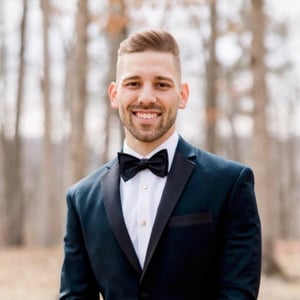
Associate Counsel, Lawyers Democracy Fund
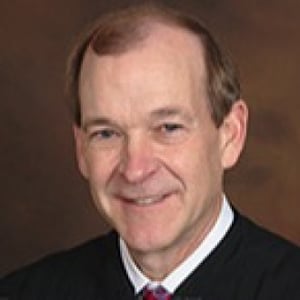
James C. Dever III serves as a United States District Judge for the Eastern District of North Carolina. President George W. Bush nominated Judge Dever (then age 39) in May 2002, and the United States Senate unanimously confirmed him. Before serving as a United States District Judge, Judge Dever served as a United States Magistrate Judge for fifteen months. He served as Chief Judge from October 2011 through October 2018.
Judge Dever received his B.B.A., with high honors, from the University of Notre Dame in 1984. He attended Notre Dame on a four-year ROTC scholarship. He was a Distinguished Military Graduate, was elected to Beta Gamma Sigma, and received the Raymond P. Kent Award (which is awarded to the graduating senior with the highest average in finance/economics classes). He received his J.D., with high honors, from Duke University School of Law in 1987. At Duke, he served as editor-in-chief of the Duke Law Journal, was elected to the Order of the Coif, and received numerous academic awards.
After graduating from law school, he served for one year as a law clerk for Judge J. Clifford Wallace of the U.S. Court of Appeals for the Ninth Circuit. Following his clerkship, Judge Dever was the sole attorney entering active duty in the Air Force selected to serve in the Air Force General Counsel’s Honors Program at the Pentagon. While on active duty, he provided legal advice to and conducted litigation for the Secretary of the Air Force. He served on active duty in the Air Force at the Pentagon from October 1988 until September 1992. At the conclusion of his service, he received the Meritorious Service Medal.
Judge Dever then returned to North Carolina and joined Maupin Taylor & Ellis, P.A. in Raleigh. While in private practice, he engaged in a wide variety of complex civil litigation and served on the law firm’s management committee. He was repeatedly listed in the Best Lawyers in America and in Business North Carolina’s Legal Elite for Employment Law. Since 1997, Judge Dever has taught employment law and criminal procedure as an adjunct law professor at Campbell University’s Norman Adrian Wiggins School of Law. Since 2008, Judge Dever has co-taught a seminar on sentencing and punishment as a senior lecturing fellow at Duke University School of Law. Since 2009, he has taught criminal procedure as a senior lecturing fellow at Duke University School of Law. In 2014, Chief Justice John Roberts appointed Judge Dever to serve on the Advisory Committee on Criminal Rules, where Judge Dever served until 2021. Judge Dever also serves as a member of Duke Law School's Board of Visitors.
Judge Dever’s chambers are in Raleigh, North Carolina.
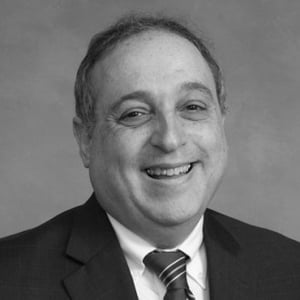
Executive Director, North Carolina Justice Center
Mr. Glazier has held his current position as Executive Director of the North Carolina Justice Center since 2015. The Justice Center focuses on anti-poverty work in the areas of education, immigration, health care, housing, workers’ rights, consumer law, and budget and tax policy.
Prior to his position as Executive Director of the Justice Center, Mr. Glazier served seven terms from 2003-2015 as state representative from Cumberland County in the North Carolina General Assembly. Mr. Glazier received multiple Legislator of Year Awards, and also received the Order of the Long Leaf Pine from Governor McCrory in 2015.
Mr. Glazier received his law degree from Wake Forest University School of Law in 1981 and his undergraduate degree from Penn State University in 1977.

Professor of Law, Notre Dame Law School
Professor Derek Muller is a nationally-recognized scholar in the field of election law. His research focuses on the role of states in the administration of federal elections, the constitutional contours of voting rights and election administration, the limits of judicial power in the domain of elections, and the Electoral College.
He has published more than two dozen academic works, and his op-eds have appeared in the New York Times, the Los Angeles Times, and the Wall Street Journal. He has testified before Congress, and he is a contributor at the Election Law Blog. He is a co-author on a Federal Courts casebook published by Carolina Academic Press. He is also the co-reporter on a new Restatement of the Law, Election Litigation, an effort led by the American Law Institute.
Professor Muller teaches Election Law, Civil Procedure, and Evidence.
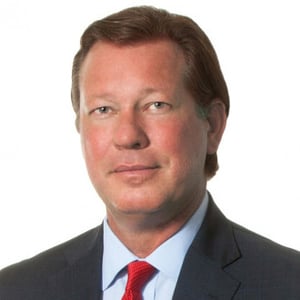
Partner, Nelson Mullins Riley & Scarborough LLP
Phil regularly represents management in labor/employment law and related matters. He advises clients on covenants not to compete and litigates claims involving restrictive covenants, trade secrets, and other business-related litigation. Phil also regularly defends management and employers in employment discrimination cases and counsels management on how to prevent or reduce the risk of these lawsuits.

Justice, Michigan Supreme Court
Stephen Markman was appointed Justice of the Michigan Supreme Court on October 1, 1999. He served as the Chief Justice from 2017-2019. Before his appointment, he served as Judge on the Michigan Court of Appeals from 1995-1999. Prior to this, he practiced law with the firm of Miller, Canfield, Paddock & Stone in Detroit.
From 1989-1993, Justice Markman served as United States Attorney, or federal prosecutor, in Michigan, after having been nominated by President George H. W. Bush and confirmed by the United States Senate. From 1985-1989, he served as Assistant Attorney General of the United States, after having been nominated by President Ronald Reagan and confirmed by the United States Senate. In that position, he headed the Department of Justice’s Office of Legal Policy, which served as the principal policy development office within the Department, and which coordinated the federal judicial selection process. Prior to this, he served for seven years as Chief Counsel of the United States Senate Subcommittee on the Constitution, and as Deputy Chief Counsel of the United States Senate Judiciary Committee.
Justice Markman has authored articles for such publications as the University of Michigan Journal of Law Reform, the Detroit College of Law Review, the Stanford Law Review, the University of Chicago Law Review, the American Criminal Justice Law Review, the Barrister’s Law Journal, the Harvard Journal of Law & Public Policy, and the American University Law Review. He has also served as a contributing editor of National Review magazine, and has authored chapters in such books as “In the Name of Justice: The Aims of the Criminal Law,” “Still the Law of the Land,” and “Originalism: A Quarter Century of Debate.”
Justice Markman has taught constitutional law at Hillsdale College since 1993. He has served on the Board of Directors of the Western Michigan University Thomas M. Cooley Law School. He traveled to Ukraine on two occasions on behalf of the State Department, to provide assistance in the development of that nation’s post-Soviet constitution. He is a Fellow of the Michigan Bar Foundation, a Master of the Bench of the Inns of Court, and a member of the One Hundred Club. He has spoken before hundreds of youth, civic, charitable, and legal groups throughout Michigan and nationally, and has coached Little League baseball and basketball. He lives with his wife Mary Kathleen in Mason, and has two sons, James and Charles.
Justice Markman was re-elected to the Supreme Court in 2000, 2004, and 2012. His present term expires January 1, 2021.
Chief Justice, North Carolina Supreme Court
Chief Justice Paul Newby was born in Asheboro and grew up in Jamestown, N.C. He received his B.A. degree in Public Policy Studies from Duke University and law degree from UNC-Chapel Hill School of Law.
Chief Justice Newby was first elected to the Supreme Court as an Associate Justice in 2004. He was elevated to the highest judicial office in North Carolina in the 2020 election. As Chief Justice, he is head of the Judicial Branch, a co-equal branch of state government with the Legislative and Executive branches. He is entrusted with leading the Judicial Branch and its 7,600 elected officials and employees.
He is a former adjunct professor of law at Campbell University and has published a book on the North Carolina Constitution.
Chief Justice Newby’s legal experience includes private practice and corporate inhouse legal counsel. He also served almost 20 years as an Assistant United States Attorney, during which he played an integral role in conducting the undercover sting operation that recovered North Carolina’s original copy of the Bill of Rights, stolen in the aftermath of the Civil War.
Chief Justice Newby is an Eagle Scout and is the recipient of the Heroism Award (for rescuing nine people from a riptide), the God and Service Award, the Silver Beaver Award, and the Scouter of the Year Award. In 2012, he was designated a Distinguished Eagle Scout, a national honor that recognizes both his service to the Boy Scouts and his dedication to public service.
Chief Justice Newby has been married to Macon Tucker Newby since 1983, and they have four children. He is active in his local church, where he serves as a teacher and mentor to young professionals.
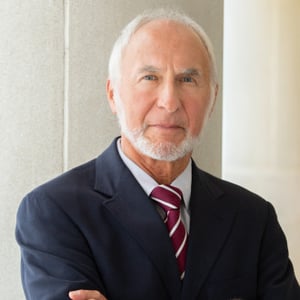
William Rand Kenan Jr. Professor of Law Emeritus, UNC School of Law
John V. Orth joined the Carolina Law faculty in 1978 and serves as the William Rand Kenan, Jr. Professor of Law. He teaches first-year Property, Trusts & Estates, and Legal History. Orth is the author of six books, three of them published by Oxford University Press, and ninety articles and book chapters. His writings cover a wide array of topics including labor law, constitutional law (both federal and state), legal history, wills and trusts, and basic property law. His works have been cited by federal and state courts, including the United States Supreme Court and the North Carolina Supreme Court. He has extensive contacts with Australian law professors and has published several articles comparing American and Australian law.
Orth has a law degree from the Harvard Law School and a Ph.D. in history from Harvard University. After completing his studies, he clerked for Judge John Gibbons of the U.S. Court of Appeals for the 3d Circuit. While teaching, he has maintained contact with the practice of law by consulting on questions concerning property, constitutional law, and wills and trusts.
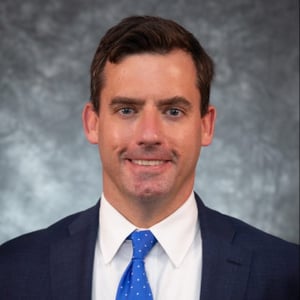
Senior Vice President for Legal Affairs & General Counsel, UNC System Office
As the Senior Vice President and General Counsel in the Office of Legal Affairs, Mr. Tripp provides strategic counsel to the University of North Carolina, the Board of Governors, and President Peter Hans. He leads a team of talented professionals serving the diverse legal needs of a nationally acclaimed university system. In addition, he directly supports the operations of the Board of Governors and staffs the Committee on University Governance.
Mr. Tripp brings to the University a decade of experience in public service from his tenure at the North Carolina Senate, where he served as counsel to the Senate Rules Chairman and later as general counsel and then Chief of Staff to the President Pro Tempore. His practice areas include public law, litigation, administrative procedure, and regulatory compliance. Before entering the public sphere, Mr. Tripp worked in private practice in both Raleigh and Atlanta, Georgia. Mr. Tripp began his legal career serving under and learning from the Honorable United States District Judge Terrence W. Boyle as his law clerk at Elizabeth City.
Mr. Tripp graduated with honors from the Duke University School of Law and obtained his B.A. in history and political science from the University of North Carolina at Chapel Hill. He and his wife are raising their two boys and a girl in Raleigh.
United States District Court, Western District of North Carolina

America 250: How Did State Constitutions Shape the American Founding?
Triangle Lawyer Chapter
Raleigh, NCPanel 1: Benchmarking Liberty: America 250
2025 North Carolina Chapters Conference
Raleigh, NCThe North Carolina Constitution with Chief Justice Paul Martin Newby
Campbell Student Chapter
raleigh, NCValuing the Constitution: A Conversation with Chief Justice Paul Newby
North Carolina Student Chapter
Chapel Hill, NCNorth Carolina Judiciary with Chief Justice Paul Newby
North Carolina Student Chapter
Chapel Hill, NCNorth Carolina Supreme Court Invalidates Redistricting Map and Voter ID Law Enacted By Legislature
Ken Daines, Andrew Pardue, Andrew Watkins
State courts often play an important role in reviewing and interpreting state laws that govern...
State Court Docket Watch: NC NAACP v. Moore
Austin Cromack
In North Carolina State Conference of National Association for the Advancement of Colored People...
Panel 2: The Law of Democracy: Recent and Future Developments in Election Law
James C. Dever, Rick Glazier, Derek T. Muller, Phillip J. Strach
CLE credit anticipated. Featuring: Rick Glazier, Executive Director, North Carolina Justice Center Professor Derek Muller,...
Panel 1: State Constitutionalism in North Carolina
Steve J. Markman, Paul Newby, John Orth, Andrew Tripp
CLE credit anticipated. Featuring: Professor John Orth, William Rand Kenan Jr. Professor of Law, UNC...
Lunch & Introductory Remarks
Frank D. Whitney
Featuring: Hon. Frank D. Whitney, United States District Court, Western District of North Carolina