
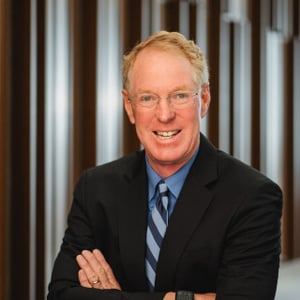
Ronald N. Boyce Presidential Professor of Criminal Law and University Distinguished Professor of Law, The University of Utah College of Law
Paul G. Cassell is an internationally recognized legal scholar on criminal and civil justice, crime victims' rights, constitutional law, evidence, judicial process, and other legal issues. Cassell received a B.A. (1981) and a J.D. (1984) from Stanford University, where he graduated Order of the Coif and was President of the Stanford Law Review. He clerked for then-Judge Antonin Scalia when Scalia was on the U.S. Court of Appeals for the D.C. Circuit (1984-85) and for Chief Justice Warren Burger of the United States Supreme Court (1985-86). Cassell then served as an Associate Deputy Attorney General with the U.S. Justice Department (1986-88) and as an Assistant U.S. Attorney for the Eastern District of Virginia (1988 to 1991). Cassell joined the faculty at the College of Law in 1992, where he taught full-time until he was sworn in as a U.S. District Court Judge for the District of Utah in July 2002. In November 2007, he resigned his judgeship to return full-time to the College of Law to teach, write, and litigate concerning issues relating to crime victims' rights and criminal and civil justice reform. Professor Cassell has also published numerous law review articles in journals such as the Stanford Law Review, the Michigan Law Review, the Harvard Journal of Law and Public Policy, and the Journal of Criminal Law and Criminology. He is a co-author of the nation's only law school textbook on crime victims' rights, Victims in Criminal Procedure (various editions, most recently in its fifth edition published in 2025). Professor Cassell has argued pro bono cases relating to criminal procedure and crime victims' rights before the United States Supreme Court, the 2nd, 4th, 5th, 6th, 7th, 8th, 9th, 10th, 11th, and D.C. Circuits (including the 5th and 11th Circuits en banc), several U.S. District Courts, the Utah Supreme Court, and the Arizona Supreme Court. In 2020, Cassell received the Ronald Wilson Reagan Public Policy Award - National Crime Victims' Service Award from the U.S. Department of Justice. Cassell is a member of the American Law Institute, a fellow of the American Bar Foundation, and an inaugural member of the Council on Criminal Justice. He is also an occasional blogger at The Volokh Conspiracy.
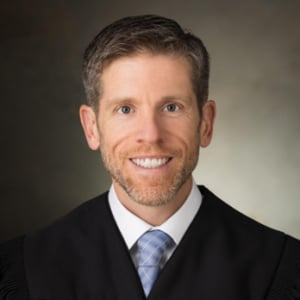
Justice, Utah Supreme Court
Justice John Nielsen was appointed to the Utah Supreme Court in October 2025 by Governor Spencer J. Cox. Prior to his appointment Judge John Nielsen was appointed to the Third District Court in 2024 by Governor Spencer J. Cox. He served Salt Lake, Tooele, and Summit Counties. He served as chair of the Utah Supreme Court's Appellate Representation Committee and previously served on the Evidence Rules Committee. Before his appointment as a Judge, he was a partner at the law firm of Schaerr & Jaffe. He previously was a shareholder in the law firm of Lee Nielsen. Nielsen was also an Assistant Solicitor General in the Utah Attorney General's Office, and a Deputy Utah County Attorney. He graduated magna cum laude from the J. Reuben Clark Law School at Brigham Young University in 2007. 12/25
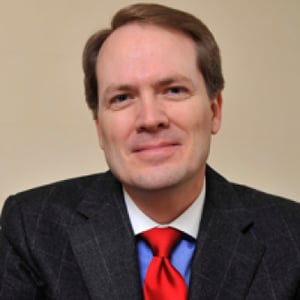
Judge, U.S. District Court, District of Utah
Howard C. Nielson Jr. is a judge on the United States District Court for the District of Utah. On September 28, 2017, President Donald Trump nominated Nielson to a seat on this court.
Prior to his nomination, Judge Nielson practiced at Cooper and Kirk. Judge Nielson iwas a Distinguished Lecturer at the J. Reuben Clark Law School at Brigham Young University, where he taught classes on constitutional, national security, and foreign affairs law. In 2008, Mr. Nielson was appointed to serve as a member of the Utah Supreme Courtís Ethics and Discipline Committee.
Before joining Cooper and Kirk, Mr. Nielson served from 2001 to 2005 at the U.S. Department of Justice. From 2001 to 2003 he was Counsel to the Attorney General, in which capacity he advised the Attorney General on a variety of legal matters and supervised high profile litigation relating to national security and other departmental priorities. In 2003 he was appointed Deputy Assistant Attorney General for the Office of Legal Counsel, which provides legal opinions and informal advice to the White House, the Attorney General, and Executive Branch Departments and Agencies on issues covering the full spectrum of international, constitutional, statutory, and regulatory law. Mr. Nielson served in this capacity for two years, during which time his work involved a broad range of issues relating to national security and other areas of constitutional, statutory, and international law.
Prior to his work at the Justice Department, Mr. Nielson practiced law from 1999 to 2001 as an associate in the Issues and Appeals Practice Group at Jones, Day, Reavis & Pogue (now Jones Day) in Washington, D.C. He worked on a variety of litigation and other matters, especially in the areas of constitutional and employment law. Before that time he served as a law clerk to Judge J. Michael Luttig of the United States Court of Appeals for the Fourth Circuit, and to Justice Anthony M. Kennedy.
Ronald N. Boyce Presidential Professor of Criminal Law and University Distinguished Professor of Law, The University of Utah College of Law
Paul G. Cassell is an internationally recognized legal scholar on criminal and civil justice, crime victims' rights, constitutional law, evidence, judicial process, and other legal issues. Cassell received a B.A. (1981) and a J.D. (1984) from Stanford University, where he graduated Order of the Coif and was President of the Stanford Law Review. He clerked for then-Judge Antonin Scalia when Scalia was on the U.S. Court of Appeals for the D.C. Circuit (1984-85) and for Chief Justice Warren Burger of the United States Supreme Court (1985-86). Cassell then served as an Associate Deputy Attorney General with the U.S. Justice Department (1986-88) and as an Assistant U.S. Attorney for the Eastern District of Virginia (1988 to 1991). Cassell joined the faculty at the College of Law in 1992, where he taught full-time until he was sworn in as a U.S. District Court Judge for the District of Utah in July 2002. In November 2007, he resigned his judgeship to return full-time to the College of Law to teach, write, and litigate concerning issues relating to crime victims' rights and criminal and civil justice reform. Professor Cassell has also published numerous law review articles in journals such as the Stanford Law Review, the Michigan Law Review, the Harvard Journal of Law and Public Policy, and the Journal of Criminal Law and Criminology. He is a co-author of the nation's only law school textbook on crime victims' rights, Victims in Criminal Procedure (various editions, most recently in its fifth edition published in 2025). Professor Cassell has argued pro bono cases relating to criminal procedure and crime victims' rights before the United States Supreme Court, the 2nd, 4th, 5th, 6th, 7th, 8th, 9th, 10th, 11th, and D.C. Circuits (including the 5th and 11th Circuits en banc), several U.S. District Courts, the Utah Supreme Court, and the Arizona Supreme Court. In 2020, Cassell received the Ronald Wilson Reagan Public Policy Award - National Crime Victims' Service Award from the U.S. Department of Justice. Cassell is a member of the American Law Institute, a fellow of the American Bar Foundation, and an inaugural member of the Council on Criminal Justice. He is also an occasional blogger at The Volokh Conspiracy.
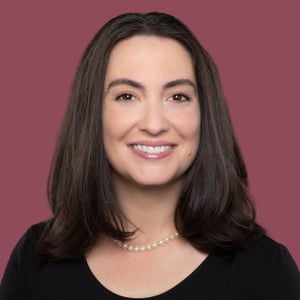
Director of Federal Affairs, Electronic Frontier Foundation
India McKinney currently serves as the director of federal affairs at the Electronic Frontier Foundation, where she works to fight for encryption, for consumer privacy, and civil liberties in the digital realm.. She is a former Capitol Hill staffer with over 10 years experience as a legislative staffer.
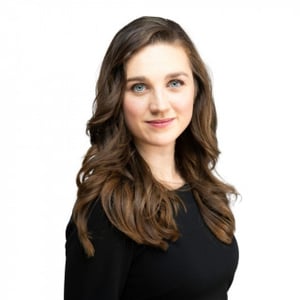
Fellow, Ethics and Public Policy Center
Clare Morell is a fellow at the Ethics and Public Policy Center, where she directs EPPC’s Technology and Human Flourishing Project. Prior to joining EPPC, Ms. Morell worked in both the White House Counsel’s Office and the Department of Justice, as well as in the private and non-profit sectors. She is also the author of the forthcoming book, The Tech Exit: A Practical Guide to Freeing Kids and Teens from Smartphones, which will be published by Penguin Random House.
At the Department of Justice, Ms. Morell worked as an Advisor to Attorney General Bill Barr. As part of her work for the Attorney General, she helped oversee the President’s Commission on Law Enforcement and the Administration of Justice and served as Editor of the Commission’s final report. A major focus of the Commission’s report was the challenges that Big Tech’s end-to-end encryption presents to law enforcement for gaining lawful access to crucial intelligence in criminal investigations, like domestic terrorism, as well as human and drug trafficking crimes. Ms. Morell also supported the Attorney General’s work on Section 230 reform as one of his main priorities.
Prior to her role with the Office of the Attorney General, Ms. Morell worked on judicial nominations for the White House Counsel’s office and monitored all nominations data to create high-level presentations for briefing White House leadership. From her experience, Ms. Morell brings an intimate knowledge and understanding of how policy is advanced within the Executive Branch of the federal government, particularly in the Department of Justice and the White House.
Ms. Morell has had opinion pieces published in the Wall Street Journal, Fox News, Newsweek, the Washington Examiner, National Review, American Affairs Journal, Deseret News, The Federalist, Public Discourse, WORLD Magazine, the Washington Times, and the Daily Signal.
Ms. Morell received a B.S.F.S. from Georgetown University’s Walsh School of Foreign Service, where she majored in Science, Technology, and International Affairs. She graduated summa cum laude and received the Edmund A. Walsh Award for academic achievement in international law. She also is proficient in Spanish.
Ms. Morell lives with her husband and three children in Washington, D.C.
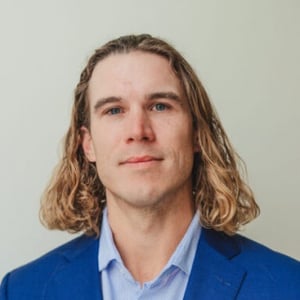
Resident Senior Fellow, Technology and Innovation, R Street Institute
Spence works for the R Street Institute on the impact of misinformation on society and public policy, including creating a new framework for information governance.
Previously, Spence served as the director of technology policy at the Reason Foundation, where he was responsible for managing fundraising efforts and policy implementation. He also served as a graduate fellow in the Executive Office of the Governor in Florida.
Before pursuing his graduate studies, Spence was the business development manager for a technology startup, Dealers United, in Sarasota, Florida.
In recognition of his work, Spence won the Policy Paper of the Year award in the Florida Legislature in 2015 for his policy brief on data sharing and software procurement.
Spence earned his master’s degree in public administration from Florida State University and his bachelor’s degree in political science from Stetson University.
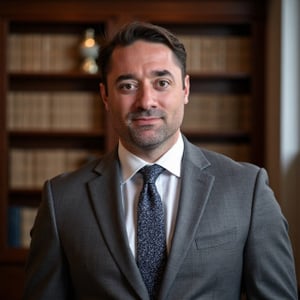
Partner, Holtzman Vogel Baran Torchinsky & Josefiak PLLC
Brandon Smith is a partner at Holtzman Vogel, based in Tennessee, where he focuses on government investigations, white collar matters, and specialty litigation. A seasoned government leader and legal strategist, Brandon has played a central role in shaping conservative policy and litigation at the highest levels of state government.
Before joining the firm, Brandon served as Chief of Staff and Assistant Solicitor General in the Tennessee Attorney General’s Office. In that role, he led multi-state litigation, high-profile constitutional challenges, and efforts to counter federal overreach and ESG-related corporate activism. He worked closely with nearly every Republican Attorney General’s Office in the country, coordinating litigation, strategy, and multi-state policy efforts.
Earlier in his career, Brandon served as Executive Director of Legislative and Regulatory Affairs for Kentucky Governor Matt Bevin and as Policy Director to Kansas Governor Sam Brownback, where he helped drive key legislative and budget initiatives. He also held roles as Deputy Director of the Federalist Society and as an adjunct professor at American University.
Brandon’s career has been defined by a commitment to defending federalism, advancing conservative governance, and shaping legal and policy fights that matter.
Ronald N. Boyce Presidential Professor of Criminal Law and University Distinguished Professor of Law, The University of Utah College of Law
Paul G. Cassell is an internationally recognized legal scholar on criminal and civil justice, crime victims' rights, constitutional law, evidence, judicial process, and other legal issues. Cassell received a B.A. (1981) and a J.D. (1984) from Stanford University, where he graduated Order of the Coif and was President of the Stanford Law Review. He clerked for then-Judge Antonin Scalia when Scalia was on the U.S. Court of Appeals for the D.C. Circuit (1984-85) and for Chief Justice Warren Burger of the United States Supreme Court (1985-86). Cassell then served as an Associate Deputy Attorney General with the U.S. Justice Department (1986-88) and as an Assistant U.S. Attorney for the Eastern District of Virginia (1988 to 1991). Cassell joined the faculty at the College of Law in 1992, where he taught full-time until he was sworn in as a U.S. District Court Judge for the District of Utah in July 2002. In November 2007, he resigned his judgeship to return full-time to the College of Law to teach, write, and litigate concerning issues relating to crime victims' rights and criminal and civil justice reform. Professor Cassell has also published numerous law review articles in journals such as the Stanford Law Review, the Michigan Law Review, the Harvard Journal of Law and Public Policy, and the Journal of Criminal Law and Criminology. He is a co-author of the nation's only law school textbook on crime victims' rights, Victims in Criminal Procedure (various editions, most recently in its fifth edition published in 2025). Professor Cassell has argued pro bono cases relating to criminal procedure and crime victims' rights before the United States Supreme Court, the 2nd, 4th, 5th, 6th, 7th, 8th, 9th, 10th, 11th, and D.C. Circuits (including the 5th and 11th Circuits en banc), several U.S. District Courts, the Utah Supreme Court, and the Arizona Supreme Court. In 2020, Cassell received the Ronald Wilson Reagan Public Policy Award - National Crime Victims' Service Award from the U.S. Department of Justice. Cassell is a member of the American Law Institute, a fellow of the American Bar Foundation, and an inaugural member of the Council on Criminal Justice. He is also an occasional blogger at The Volokh Conspiracy.

Senior Fellow, National Review
Bestselling author Andrew C. McCarthy is a contributing editor at National Review, a senior fellow at National Review Institute, and a Fox News contributor. He is a former Chief Assistant United States Attorney in the Southern District of New York and led the terrorism prosecution against the “Blind Sheikh” (Omar Abdel Rahman) and eleven other jihadists for conducting a war of urban terrorism against the United States that included the 1993 World Trade Center bombing and a plot to bomb New York City landmarks. During is 20-year career as a prosecutor, he received numerous honors, including the Justice Department’s highest awards. Andy speaks and writes widely on law and national security, radical Islam, politics, and culture. He has testified before Congress as an expert on issues of constitutional law, counterterrorism, and law-enforcement. He is a columnist for The Hill, and his essays and book reviews appear frequently at The New Criterion. His most recent New York Times bestselling book is Ball of Collusion (Encounter Books, 2019), about the Russiagate controversy (an updated version was published in 2020). His other books include Willful Blindness (2008), The Grand Jihad (2010), Spring Fever: The Illusion of Islamic Democracy (2012), and Faithless Execution (2014). He has also written several pamphlets in the Broadside series published by Encounter Books, most recently Islam and Free Speech (2015).
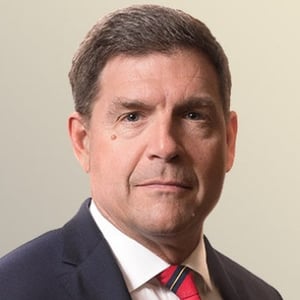
Partner, King & Spalding
John Richter is a trial and investigations partner in the Special Matters and Investigations Practice Group, and represents and defends companies, Boards of Directors, Board committees, and individuals facing a variety of white-collar criminal and regulatory enforcement matters, parallel civil litigation, and internal corporate investigations. John previously served as the Acting Assistant Attorney General in charge of the Criminal Division at the U.S. Department of Justice and as the U.S. Attorney for the Western District of Oklahoma, having been nominated by President George W. Bush and confirmed by unanimous consent of the U.S. Senate.
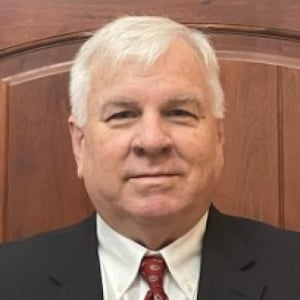
Founder, Law Offices of William L. Shipley & Associates
Bill’s legal career spanning more than 32 years has been built in the courtroom, not in the office.
After starting out his career with four years in private practice, In 1992 Bill joined the United States Attorney’s Office for the Eastern District of California where he initially represented the United States in civil litigation – including cases involving millions of dollars in dispute.
The desire to handle trials in front of juries led him to move to the Criminal Division of the US Attorney’s Office, where he served as a criminal prosecutor from 1995 to 2002 in California, and from 2003 until 2013 in the United States Attorney’s Office for the District of Hawaii.
Bill was the lead federal prosecutor in every federal criminal trial he was involved in except for his very first one. He was responsible for overseeing and prosecuting cases involving organized crime, white-collar crime, drug crimes, violent crimes, environmental crimes, contract and commercial fraud, tax fraud, and health care fraud. Over the course of his career, he handled more than 1000 cases, took more than 60 jury trials to verdict as lead counsel, handled dozens of appeals, and appeared nearly 20 times before the Ninth Circuit Court of Appeals as counsel for the United States.
He received national recognition and awards from the Department of Justice and his peers in law enforcement for his successful prosecutions of individuals and companies trafficking in chemicals used to manufacture methamphetamine.
In private practice, he has taken all his experience and training as a prosecutor and used it on behalf of his clients to ensure no one is wrongfully accused or convicted. He understands the power and resources the government can employ against his clients, and that his skills and tenacity are the weapons that he can employ on behalf of his clients to defend themselves.
Since starting his private law practice in 2013, Bill has represented defendants in federal criminal cases, as well as plaintiffs in civil fraud cases, employment matters, trade secrets cases, civil rights claims, probate disputes, and medical malpractice matters. He has tried cases in state and federal court, as well as appearing again before the U.S. Ninth Circuit Court of Appeals, and has argued twice before the D.C. Circuit.
Beginning in the fall of 2021, Bill began representing individuals charged in connection with the riot on Capitol Hill on January 6, 2021. Over the course of three years he represented approximately 90 defendants, with 12 of those chosing to take their cases to trial. He represented two different Oath Keeper members in separate trials, one of whom was the only January 6 defendant to be acquitted by a jury on all the felony counts against him. He was also the first defense attorney to obtain an acquittal in a bench trial on the controversial 18 U.S.C. Sec. 1512(c)(2) charge that was later ruled inapplicable to the January 6 riot by the Supreme Court in Fischer v. United States.
Bill is a graduate of UCLA, where he obtained undergraduate degrees in both Political Science and Sociology. He received his law degree from the Antonin Scalia School of Law at George Mason University in Virginia.
Ronald N. Boyce Presidential Professor of Criminal Law and University Distinguished Professor of Law, The University of Utah College of Law
Paul G. Cassell is an internationally recognized legal scholar on criminal and civil justice, crime victims' rights, constitutional law, evidence, judicial process, and other legal issues. Cassell received a B.A. (1981) and a J.D. (1984) from Stanford University, where he graduated Order of the Coif and was President of the Stanford Law Review. He clerked for then-Judge Antonin Scalia when Scalia was on the U.S. Court of Appeals for the D.C. Circuit (1984-85) and for Chief Justice Warren Burger of the United States Supreme Court (1985-86). Cassell then served as an Associate Deputy Attorney General with the U.S. Justice Department (1986-88) and as an Assistant U.S. Attorney for the Eastern District of Virginia (1988 to 1991). Cassell joined the faculty at the College of Law in 1992, where he taught full-time until he was sworn in as a U.S. District Court Judge for the District of Utah in July 2002. In November 2007, he resigned his judgeship to return full-time to the College of Law to teach, write, and litigate concerning issues relating to crime victims' rights and criminal and civil justice reform. Professor Cassell has also published numerous law review articles in journals such as the Stanford Law Review, the Michigan Law Review, the Harvard Journal of Law and Public Policy, and the Journal of Criminal Law and Criminology. He is a co-author of the nation's only law school textbook on crime victims' rights, Victims in Criminal Procedure (various editions, most recently in its fifth edition published in 2025). Professor Cassell has argued pro bono cases relating to criminal procedure and crime victims' rights before the United States Supreme Court, the 2nd, 4th, 5th, 6th, 7th, 8th, 9th, 10th, 11th, and D.C. Circuits (including the 5th and 11th Circuits en banc), several U.S. District Courts, the Utah Supreme Court, and the Arizona Supreme Court. In 2020, Cassell received the Ronald Wilson Reagan Public Policy Award - National Crime Victims' Service Award from the U.S. Department of Justice. Cassell is a member of the American Law Institute, a fellow of the American Bar Foundation, and an inaugural member of the Council on Criminal Justice. He is also an occasional blogger at The Volokh Conspiracy.
Director of Federal Affairs, Electronic Frontier Foundation
India McKinney currently serves as the director of federal affairs at the Electronic Frontier Foundation, where she works to fight for encryption, for consumer privacy, and civil liberties in the digital realm.. She is a former Capitol Hill staffer with over 10 years experience as a legislative staffer.
Fellow, Ethics and Public Policy Center
Clare Morell is a fellow at the Ethics and Public Policy Center, where she directs EPPC’s Technology and Human Flourishing Project. Prior to joining EPPC, Ms. Morell worked in both the White House Counsel’s Office and the Department of Justice, as well as in the private and non-profit sectors. She is also the author of the forthcoming book, The Tech Exit: A Practical Guide to Freeing Kids and Teens from Smartphones, which will be published by Penguin Random House.
At the Department of Justice, Ms. Morell worked as an Advisor to Attorney General Bill Barr. As part of her work for the Attorney General, she helped oversee the President’s Commission on Law Enforcement and the Administration of Justice and served as Editor of the Commission’s final report. A major focus of the Commission’s report was the challenges that Big Tech’s end-to-end encryption presents to law enforcement for gaining lawful access to crucial intelligence in criminal investigations, like domestic terrorism, as well as human and drug trafficking crimes. Ms. Morell also supported the Attorney General’s work on Section 230 reform as one of his main priorities.
Prior to her role with the Office of the Attorney General, Ms. Morell worked on judicial nominations for the White House Counsel’s office and monitored all nominations data to create high-level presentations for briefing White House leadership. From her experience, Ms. Morell brings an intimate knowledge and understanding of how policy is advanced within the Executive Branch of the federal government, particularly in the Department of Justice and the White House.
Ms. Morell has had opinion pieces published in the Wall Street Journal, Fox News, Newsweek, the Washington Examiner, National Review, American Affairs Journal, Deseret News, The Federalist, Public Discourse, WORLD Magazine, the Washington Times, and the Daily Signal.
Ms. Morell received a B.S.F.S. from Georgetown University’s Walsh School of Foreign Service, where she majored in Science, Technology, and International Affairs. She graduated summa cum laude and received the Edmund A. Walsh Award for academic achievement in international law. She also is proficient in Spanish.
Ms. Morell lives with her husband and three children in Washington, D.C.
Resident Senior Fellow, Technology and Innovation, R Street Institute
Spence works for the R Street Institute on the impact of misinformation on society and public policy, including creating a new framework for information governance.
Previously, Spence served as the director of technology policy at the Reason Foundation, where he was responsible for managing fundraising efforts and policy implementation. He also served as a graduate fellow in the Executive Office of the Governor in Florida.
Before pursuing his graduate studies, Spence was the business development manager for a technology startup, Dealers United, in Sarasota, Florida.
In recognition of his work, Spence won the Policy Paper of the Year award in the Florida Legislature in 2015 for his policy brief on data sharing and software procurement.
Spence earned his master’s degree in public administration from Florida State University and his bachelor’s degree in political science from Stetson University.
Partner, Holtzman Vogel Baran Torchinsky & Josefiak PLLC
Brandon Smith is a partner at Holtzman Vogel, based in Tennessee, where he focuses on government investigations, white collar matters, and specialty litigation. A seasoned government leader and legal strategist, Brandon has played a central role in shaping conservative policy and litigation at the highest levels of state government.
Before joining the firm, Brandon served as Chief of Staff and Assistant Solicitor General in the Tennessee Attorney General’s Office. In that role, he led multi-state litigation, high-profile constitutional challenges, and efforts to counter federal overreach and ESG-related corporate activism. He worked closely with nearly every Republican Attorney General’s Office in the country, coordinating litigation, strategy, and multi-state policy efforts.
Earlier in his career, Brandon served as Executive Director of Legislative and Regulatory Affairs for Kentucky Governor Matt Bevin and as Policy Director to Kansas Governor Sam Brownback, where he helped drive key legislative and budget initiatives. He also held roles as Deputy Director of the Federalist Society and as an adjunct professor at American University.
Brandon’s career has been defined by a commitment to defending federalism, advancing conservative governance, and shaping legal and policy fights that matter.
Ronald N. Boyce Presidential Professor of Criminal Law and University Distinguished Professor of Law, The University of Utah College of Law
Paul G. Cassell is an internationally recognized legal scholar on criminal and civil justice, crime victims' rights, constitutional law, evidence, judicial process, and other legal issues. Cassell received a B.A. (1981) and a J.D. (1984) from Stanford University, where he graduated Order of the Coif and was President of the Stanford Law Review. He clerked for then-Judge Antonin Scalia when Scalia was on the U.S. Court of Appeals for the D.C. Circuit (1984-85) and for Chief Justice Warren Burger of the United States Supreme Court (1985-86). Cassell then served as an Associate Deputy Attorney General with the U.S. Justice Department (1986-88) and as an Assistant U.S. Attorney for the Eastern District of Virginia (1988 to 1991). Cassell joined the faculty at the College of Law in 1992, where he taught full-time until he was sworn in as a U.S. District Court Judge for the District of Utah in July 2002. In November 2007, he resigned his judgeship to return full-time to the College of Law to teach, write, and litigate concerning issues relating to crime victims' rights and criminal and civil justice reform. Professor Cassell has also published numerous law review articles in journals such as the Stanford Law Review, the Michigan Law Review, the Harvard Journal of Law and Public Policy, and the Journal of Criminal Law and Criminology. He is a co-author of the nation's only law school textbook on crime victims' rights, Victims in Criminal Procedure (various editions, most recently in its fifth edition published in 2025). Professor Cassell has argued pro bono cases relating to criminal procedure and crime victims' rights before the United States Supreme Court, the 2nd, 4th, 5th, 6th, 7th, 8th, 9th, 10th, 11th, and D.C. Circuits (including the 5th and 11th Circuits en banc), several U.S. District Courts, the Utah Supreme Court, and the Arizona Supreme Court. In 2020, Cassell received the Ronald Wilson Reagan Public Policy Award - National Crime Victims' Service Award from the U.S. Department of Justice. Cassell is a member of the American Law Institute, a fellow of the American Bar Foundation, and an inaugural member of the Council on Criminal Justice. He is also an occasional blogger at The Volokh Conspiracy.
Senior Fellow, National Review
Bestselling author Andrew C. McCarthy is a contributing editor at National Review, a senior fellow at National Review Institute, and a Fox News contributor. He is a former Chief Assistant United States Attorney in the Southern District of New York and led the terrorism prosecution against the “Blind Sheikh” (Omar Abdel Rahman) and eleven other jihadists for conducting a war of urban terrorism against the United States that included the 1993 World Trade Center bombing and a plot to bomb New York City landmarks. During is 20-year career as a prosecutor, he received numerous honors, including the Justice Department’s highest awards. Andy speaks and writes widely on law and national security, radical Islam, politics, and culture. He has testified before Congress as an expert on issues of constitutional law, counterterrorism, and law-enforcement. He is a columnist for The Hill, and his essays and book reviews appear frequently at The New Criterion. His most recent New York Times bestselling book is Ball of Collusion (Encounter Books, 2019), about the Russiagate controversy (an updated version was published in 2020). His other books include Willful Blindness (2008), The Grand Jihad (2010), Spring Fever: The Illusion of Islamic Democracy (2012), and Faithless Execution (2014). He has also written several pamphlets in the Broadside series published by Encounter Books, most recently Islam and Free Speech (2015).
Partner, King & Spalding
John Richter is a trial and investigations partner in the Special Matters and Investigations Practice Group, and represents and defends companies, Boards of Directors, Board committees, and individuals facing a variety of white-collar criminal and regulatory enforcement matters, parallel civil litigation, and internal corporate investigations. John previously served as the Acting Assistant Attorney General in charge of the Criminal Division at the U.S. Department of Justice and as the U.S. Attorney for the Western District of Oklahoma, having been nominated by President George W. Bush and confirmed by unanimous consent of the U.S. Senate.
Founder, Law Offices of William L. Shipley & Associates
Bill’s legal career spanning more than 32 years has been built in the courtroom, not in the office.
After starting out his career with four years in private practice, In 1992 Bill joined the United States Attorney’s Office for the Eastern District of California where he initially represented the United States in civil litigation – including cases involving millions of dollars in dispute.
The desire to handle trials in front of juries led him to move to the Criminal Division of the US Attorney’s Office, where he served as a criminal prosecutor from 1995 to 2002 in California, and from 2003 until 2013 in the United States Attorney’s Office for the District of Hawaii.
Bill was the lead federal prosecutor in every federal criminal trial he was involved in except for his very first one. He was responsible for overseeing and prosecuting cases involving organized crime, white-collar crime, drug crimes, violent crimes, environmental crimes, contract and commercial fraud, tax fraud, and health care fraud. Over the course of his career, he handled more than 1000 cases, took more than 60 jury trials to verdict as lead counsel, handled dozens of appeals, and appeared nearly 20 times before the Ninth Circuit Court of Appeals as counsel for the United States.
He received national recognition and awards from the Department of Justice and his peers in law enforcement for his successful prosecutions of individuals and companies trafficking in chemicals used to manufacture methamphetamine.
In private practice, he has taken all his experience and training as a prosecutor and used it on behalf of his clients to ensure no one is wrongfully accused or convicted. He understands the power and resources the government can employ against his clients, and that his skills and tenacity are the weapons that he can employ on behalf of his clients to defend themselves.
Since starting his private law practice in 2013, Bill has represented defendants in federal criminal cases, as well as plaintiffs in civil fraud cases, employment matters, trade secrets cases, civil rights claims, probate disputes, and medical malpractice matters. He has tried cases in state and federal court, as well as appearing again before the U.S. Ninth Circuit Court of Appeals, and has argued twice before the D.C. Circuit.
Beginning in the fall of 2021, Bill began representing individuals charged in connection with the riot on Capitol Hill on January 6, 2021. Over the course of three years he represented approximately 90 defendants, with 12 of those chosing to take their cases to trial. He represented two different Oath Keeper members in separate trials, one of whom was the only January 6 defendant to be acquitted by a jury on all the felony counts against him. He was also the first defense attorney to obtain an acquittal in a bench trial on the controversial 18 U.S.C. Sec. 1512(c)(2) charge that was later ruled inapplicable to the January 6 riot by the Supreme Court in Fischer v. United States.
Bill is a graduate of UCLA, where he obtained undergraduate degrees in both Political Science and Sociology. He received his law degree from the Antonin Scalia School of Law at George Mason University in Virginia.
Ronald N. Boyce Presidential Professor of Criminal Law and University Distinguished Professor of Law, The University of Utah College of Law
Paul G. Cassell is an internationally recognized legal scholar on criminal and civil justice, crime victims' rights, constitutional law, evidence, judicial process, and other legal issues. Cassell received a B.A. (1981) and a J.D. (1984) from Stanford University, where he graduated Order of the Coif and was President of the Stanford Law Review. He clerked for then-Judge Antonin Scalia when Scalia was on the U.S. Court of Appeals for the D.C. Circuit (1984-85) and for Chief Justice Warren Burger of the United States Supreme Court (1985-86). Cassell then served as an Associate Deputy Attorney General with the U.S. Justice Department (1986-88) and as an Assistant U.S. Attorney for the Eastern District of Virginia (1988 to 1991). Cassell joined the faculty at the College of Law in 1992, where he taught full-time until he was sworn in as a U.S. District Court Judge for the District of Utah in July 2002. In November 2007, he resigned his judgeship to return full-time to the College of Law to teach, write, and litigate concerning issues relating to crime victims' rights and criminal and civil justice reform. Professor Cassell has also published numerous law review articles in journals such as the Stanford Law Review, the Michigan Law Review, the Harvard Journal of Law and Public Policy, and the Journal of Criminal Law and Criminology. He is a co-author of the nation's only law school textbook on crime victims' rights, Victims in Criminal Procedure (various editions, most recently in its fifth edition published in 2025). Professor Cassell has argued pro bono cases relating to criminal procedure and crime victims' rights before the United States Supreme Court, the 2nd, 4th, 5th, 6th, 7th, 8th, 9th, 10th, 11th, and D.C. Circuits (including the 5th and 11th Circuits en banc), several U.S. District Courts, the Utah Supreme Court, and the Arizona Supreme Court. In 2020, Cassell received the Ronald Wilson Reagan Public Policy Award - National Crime Victims' Service Award from the U.S. Department of Justice. Cassell is a member of the American Law Institute, a fellow of the American Bar Foundation, and an inaugural member of the Council on Criminal Justice. He is also an occasional blogger at The Volokh Conspiracy.
Senior Fellow, National Review
Bestselling author Andrew C. McCarthy is a contributing editor at National Review, a senior fellow at National Review Institute, and a Fox News contributor. He is a former Chief Assistant United States Attorney in the Southern District of New York and led the terrorism prosecution against the “Blind Sheikh” (Omar Abdel Rahman) and eleven other jihadists for conducting a war of urban terrorism against the United States that included the 1993 World Trade Center bombing and a plot to bomb New York City landmarks. During is 20-year career as a prosecutor, he received numerous honors, including the Justice Department’s highest awards. Andy speaks and writes widely on law and national security, radical Islam, politics, and culture. He has testified before Congress as an expert on issues of constitutional law, counterterrorism, and law-enforcement. He is a columnist for The Hill, and his essays and book reviews appear frequently at The New Criterion. His most recent New York Times bestselling book is Ball of Collusion (Encounter Books, 2019), about the Russiagate controversy (an updated version was published in 2020). His other books include Willful Blindness (2008), The Grand Jihad (2010), Spring Fever: The Illusion of Islamic Democracy (2012), and Faithless Execution (2014). He has also written several pamphlets in the Broadside series published by Encounter Books, most recently Islam and Free Speech (2015).
Partner, King & Spalding
John Richter is a trial and investigations partner in the Special Matters and Investigations Practice Group, and represents and defends companies, Boards of Directors, Board committees, and individuals facing a variety of white-collar criminal and regulatory enforcement matters, parallel civil litigation, and internal corporate investigations. John previously served as the Acting Assistant Attorney General in charge of the Criminal Division at the U.S. Department of Justice and as the U.S. Attorney for the Western District of Oklahoma, having been nominated by President George W. Bush and confirmed by unanimous consent of the U.S. Senate.
Founder, Law Offices of William L. Shipley & Associates
Bill’s legal career spanning more than 32 years has been built in the courtroom, not in the office.
After starting out his career with four years in private practice, In 1992 Bill joined the United States Attorney’s Office for the Eastern District of California where he initially represented the United States in civil litigation – including cases involving millions of dollars in dispute.
The desire to handle trials in front of juries led him to move to the Criminal Division of the US Attorney’s Office, where he served as a criminal prosecutor from 1995 to 2002 in California, and from 2003 until 2013 in the United States Attorney’s Office for the District of Hawaii.
Bill was the lead federal prosecutor in every federal criminal trial he was involved in except for his very first one. He was responsible for overseeing and prosecuting cases involving organized crime, white-collar crime, drug crimes, violent crimes, environmental crimes, contract and commercial fraud, tax fraud, and health care fraud. Over the course of his career, he handled more than 1000 cases, took more than 60 jury trials to verdict as lead counsel, handled dozens of appeals, and appeared nearly 20 times before the Ninth Circuit Court of Appeals as counsel for the United States.
He received national recognition and awards from the Department of Justice and his peers in law enforcement for his successful prosecutions of individuals and companies trafficking in chemicals used to manufacture methamphetamine.
In private practice, he has taken all his experience and training as a prosecutor and used it on behalf of his clients to ensure no one is wrongfully accused or convicted. He understands the power and resources the government can employ against his clients, and that his skills and tenacity are the weapons that he can employ on behalf of his clients to defend themselves.
Since starting his private law practice in 2013, Bill has represented defendants in federal criminal cases, as well as plaintiffs in civil fraud cases, employment matters, trade secrets cases, civil rights claims, probate disputes, and medical malpractice matters. He has tried cases in state and federal court, as well as appearing again before the U.S. Ninth Circuit Court of Appeals, and has argued twice before the D.C. Circuit.
Beginning in the fall of 2021, Bill began representing individuals charged in connection with the riot on Capitol Hill on January 6, 2021. Over the course of three years he represented approximately 90 defendants, with 12 of those chosing to take their cases to trial. He represented two different Oath Keeper members in separate trials, one of whom was the only January 6 defendant to be acquitted by a jury on all the felony counts against him. He was also the first defense attorney to obtain an acquittal in a bench trial on the controversial 18 U.S.C. Sec. 1512(c)(2) charge that was later ruled inapplicable to the January 6 riot by the Supreme Court in Fischer v. United States.
Bill is a graduate of UCLA, where he obtained undergraduate degrees in both Political Science and Sociology. He received his law degree from the Antonin Scalia School of Law at George Mason University in Virginia.

Senior Legal Fellow, Courts and the Constitution, Legal Policy Center, The Heritage Foundation
Zack is a Senior Legal Fellow of Courts and the Constitution at The Heritage Foundation.
He previously served for several years as an Assistant United States Attorney in the Northern District of Florida. Prior to that, he spent two years as an associate in the Washington, D.C. office of Cleary Gottlieb Steen & Hamilton, which he joined after clerking for the Hon. Emmett R. Cox on the United States Court of Appeals for the Eleventh Circuit.
Smith received his undergraduate, master’s, and law degrees from the University of Florida. During law school, Smith served as the Editor in Chief of the Florida Law Review and served on the executive boards of several student organizations, including the UF Chapter of the Federalist Society.
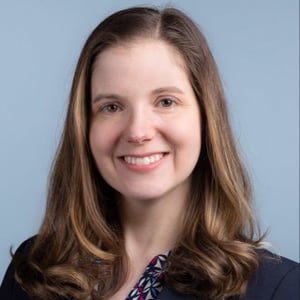
Vice President and Deputy Chief Counsel, U.S. Chamber Litigation Center, U.S. Chamber of Commerce
Jennifer B. Dickey is vice president and deputy chief counsel at the U.S. Chamber Litigation Center, the litigation arm of the U.S. Chamber of Commerce. Dickey handles a variety of litigation matters for the Chamber.
Dickey joined the Chamber following her service as Acting Assistant Attorney General and Principal Deputy Assistant Attorney General in the Civil Division at the U.S. Department of Justice. She also previously served as Deputy Associate Attorney General, providing strategic oversight of the Civil Division, Civil Rights Division, and Foreign Claims Settlement Commission, as well as Special Assistant to the President and Associate Counsel to the President. In the latter capacity, she provided legal advice on a wide array of executive actions and rulemakings, civil litigation, and judicial nominations.
Dickey also practiced law at Kirkland & Ellis LLP before her government service. She was a commercial and appellate litigator, representing businesses in federal and state courts.
Earlier in her career, Dickey served as a law clerk for the Honorable Clarence Thomas of the Supreme Court of the United States and the Honorable William H. Pryor Jr. of the United States Court of Appeals for the Eleventh Circuit.
Dickey earned her law degree magna cum laude from Duke University School of Law, where she was an Executive Editor of the Duke Law Journal, and her undergraduate degree magna cum laude from Dartmouth College.

Professor of Law, Widener University Commonwealth Law School
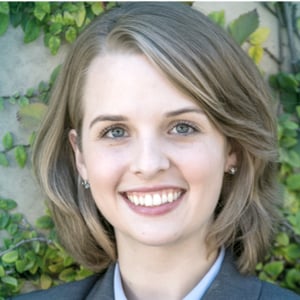
Counsel, Lehotsky Keller Cohn LLP
Shannon Grammel is a litigator with experience at all levels of federal and state courts.
Ms. Grammel has represented both private- and public-sector clients in a broad array of substantive legal areas, including constitutional law, administrative law, election law, and complex commercial litigation. Ms. Grammel has authored briefs before the Supreme Court of the United States, several federal courts of appeals, multiple state supreme courts, and federal and state trial courts. She has also argued in state appellate court and has participated in both federal- and state-court trials.
Before joining Lehotsky Keller Cohn LLP, Ms. Grammel served as Deputy Solicitor General of Kansas. Before that, she was a member of the Supreme Court & Appellate group in Latham & Watkins LLP’s Washington D.C. office.
Ms. Grammel served as a law clerk for Justice Brett M. Kavanaugh of the Supreme Court of the United States and Judge J. Harvie Wilkinson III of the U.S. Court of Appeals for the Fourth Circuit. Ms. Grammel earned her law degree from Stanford Law School, where she was President of the Stanford Law Review.
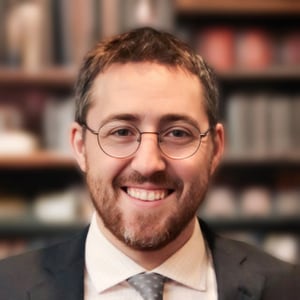
Senior Attorney, Institute for Free Speech
Brett Nolan is a Senior Attorney at the Institute for Free Speech, a public interest law firm that defends the First Amendment rights of those engaged in political speech and advocacy around the country.
Before joining the Institute, Brett served as the Principal Deputy Solicitor General of Kentucky, where he represented the Commonwealth in a wide variety of high-stakes litigation at every level of state and federal court. In that role, Brett led a successful challenge against the Department of Treasury over the constitutionality of a federal law limiting the ability of states to modify their tax codes, and he helped secure a U.S. Supreme Court victory that upheld a state’s constitutional right to defend its interests in federal court.
Prior to that, Brett served as the Deputy General Counsel to the former Governor of Kentucky, where he advised the governor and other executive branch officials on legal and policy issues and represented them in litigation. Brett clerked for Judge John Nalbandian of the U.S. Court of Appeals for the Sixth Circuit and Judge Karen K. Caldwell of the U.S. District Court for the Eastern District of Kentucky. Between clerkships, he worked in private practice. Brett received his law degree from the University of Chicago Law School, where he graduated with High Honors and was an editor of The University of Chicago Law Review.
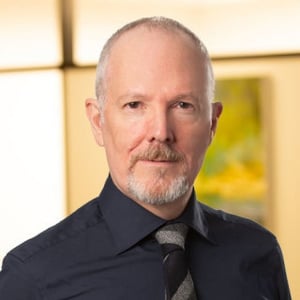
Partner, Bailey Glasser LLP
Greg Porter has extensive trial and class action experience in complex pension, 401(k) plan, and employee stock ownership plan (ESOPs) lawsuits in federal court. Greg has led Bailey Glasser’s ERISA and trust practice to major trial and appellate victories, including seminal decisions in the Seventh and Fourth Circuit Courts of Appeal and a $30 million trial judgment that broke new ground for ESOPs. With co-counsel, the firm’s ERISA practice won a 9-0 decision in the Supreme Court, Intel Corp v. Sulyma, that established key statute of limitations rights for employees in ERISA cases.
Greg has recovered hundreds of millions of dollars on behalf of employees who lost retirement savings in 401(k) plans and ESOPs. He understands complex financial transactions, investments, and instruments.
Greg has also developed techniques for successfully investigating and prosecuting complex lawsuits involving business valuation, securities lending, hedge funds, and private equity. He has argued appeals in the Second, Fourth, Sixth and Eighth U.S. Circuit Courts of Appeal.
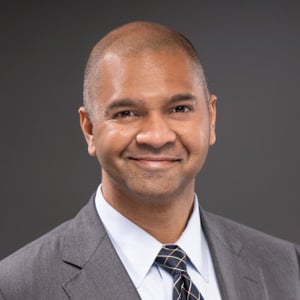
Senior Fellow, Stand Together Trust
Vikrant Reddy is a senior fellow at Stand Together Trust, specializing in the area of criminal justice reform. Reddy previously served as a senior policy analyst at the Texas Public Policy Foundation (TPPF), where he managed the launch of TPPF’s national Right on Crime initiative in 2010. He has worked as a research assistant at the Cato Institute, as a judicial clerk to the Hon. Gina M. Benavides in Texas, and as an attorney in private practice. He is a member of the State Bar of Texas, and he serves on the Executive Committee of the Criminal Law Practice Group of the Federalist Society. He is also an appointee to the U.S. Commission on Civil Rights Texas State Advisory Committee.
Reddy’s research and scholarly opinions have appeared in a range of national media outlets, including USA Today, National Review, The Federalist, and others.
Reddy earned his law degree from the Southern Methodist University School of Law. He received his undergraduate degree from the University of Texas at Austin.
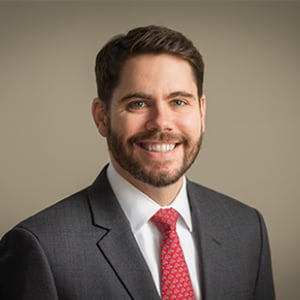
Partner, Consovoy McCarthy PLLC
Mr. Weir is an experienced litigator who focuses on constitutional and regulatory matters. He has particular expertise in cases involving the First and Fourteenth Amendments, civil rights statutes, and challenges to federal agency actions. He has briefed and presented oral argument in state and federal courts across the country, including in the Supreme Court of the United States. He was trial counsel and part of the team that prevailed before the Supreme Court in the landmark case Students for Fair Admissions, Inc. v. Harvard College and University of North Carolina.
Since 2015, Mr. Weir has been an adjunct professor for the Administrative Law and Supreme court clinics at the Antonin Scalia Law School at George Mason University. He is a former law clerk to Judge Carlos T. Bea of the United States Court of Appeals for the Ninth Circuit and Judge Anthony J. Trenga of the United States District Court for the Eastern District of Virginia. He earned his A.B. cum laude from Georgetown University and his J.D. summa cum laude from George Mason University School of Law.

Senior Legal Counsel, Pacific Legal Foundation
Before becoming an attorney, James had been a productive member of society working as an exploration geologist in the late 1970s throughout the southwestern United States. However, after several years of dealing with irrational government bureaucrats and environmental policies untethered from reality, James decided that what the world needs is more lawyers — if they are willing to fight for rationality in regulatory regimes, property rights, and liberty.
James attended the University of Arizona College of Law in Tucson, where he served as an editor for the Law Review and received a J.D. degree in 1983. He had previously received a Masters degree in geological sciences from Brown University and an undergraduate degree from Hamilton College in New York. James received the Professional Achievement Award from the University of Arizona Alumni Association in 2018.
James has worked with Pacific Legal Foundation since 1983, litigating cases from Alaska to Florida. He is a member of the Federalist Society’s Environmental Law and Property Rights Practice Group’s Executive Committee, a member of the American College of Real Estate Lawyers, and an honorary member of Owners Counsel of America, an organization comprised of eminent domain attorneys who represent property owners. The Owners Counsel awarded James its Crystal Eagle award in 2013. In 2022, James was awarded the Brigham-Kanner Property Rights Prize at the William & Mary College of Law. The prize is awarded annually to an individual whose work has advanced the cause of property rights and has contributed to the overall awareness of the important role property rights occupy in the broader scheme of individual liberty.
In 2001, James successfully argued a major property rights case, Palazzolo v. Rhode Island, before the United States Supreme Court, a case which affirmed that rights in regulated property do not disappear when land is bought and sold. He has written extensively on all aspects of property rights and environmental law and frequently speaks on these subjects throughout the nation.
When James is not suing the government he enjoys skiing faster than he should, bicycling, hiking, swimming, and spending quality time with his wife, family, and grandchild.
Mr. Burling’s book Nowhere to Live: The Hidden Story of America’s Housing Crisis is available now on Amazon.
James is a member of the bar only in the states of Alaska and California.
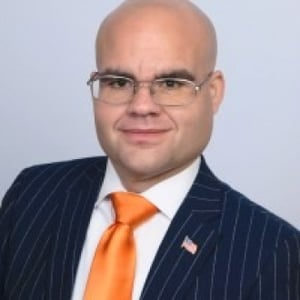
Counsel, Keller Postman LLC
John Masslon is a Counsel at Keller Postman LLC, where he works on a broad range of disputes, including products liability and consumer protections suits. He helps develop legal strategies, writes briefs, and presents argument on legal questions. Before joining Keller Postman, John was senior litigation counsel at Washington Legal Foundation. There, he wrote about 100 amicus briefs supporting free enterprise in courts across the country. He filed the first amicus brief in the Supreme Court supporting the challenge to OSHA’s vaccine mandate. He also filed a brief supporting ending the in-house proceedings at the Securities and Exchange Commission. Previously, John served as assistant solicitor general in a state attorney general’s office. There, he was first chair in a federal trial challenging a state election law that was ultimately upheld. He also wrote the briefs that convinced the state supreme court to uphold the State’s right-to-work statute.
John obtained his B.S. in economics with a minor in mathematical sciences from Clemson University. He then received his J.D. and LL.M. in Taxation from Georgetown University Law Center. After law school, John worked for Judge Arthur J. Schwab of the United States District Court for the Western District of Pennsylvania and clerked for Judge Judith Ference Olson of the Superior Court of Pennsylvania.
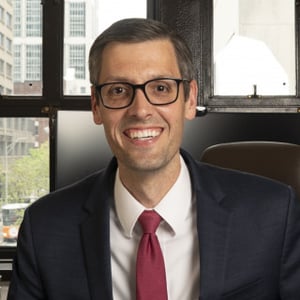
Solicitor General, Tennessee Attorney General's Office
Matt Rice serves as the Solicitor General of Tennessee. Before joining the State, Matt worked in private practice at Williams & Connolly LLP. He clerked for Justice Clarence Thomas on the United States Supreme Court as well as Judge Sandra Ikuta on the United States Court of Appeals for the Ninth Circuit. Before his legal career, Matt played professional baseball in the Tampa Bay Rays organization.
Senior Legal Fellow, Courts and the Constitution, Legal Policy Center, The Heritage Foundation
Zack is a Senior Legal Fellow of Courts and the Constitution at The Heritage Foundation.
He previously served for several years as an Assistant United States Attorney in the Northern District of Florida. Prior to that, he spent two years as an associate in the Washington, D.C. office of Cleary Gottlieb Steen & Hamilton, which he joined after clerking for the Hon. Emmett R. Cox on the United States Court of Appeals for the Eleventh Circuit.
Smith received his undergraduate, master’s, and law degrees from the University of Florida. During law school, Smith served as the Editor in Chief of the Florida Law Review and served on the executive boards of several student organizations, including the UF Chapter of the Federalist Society.
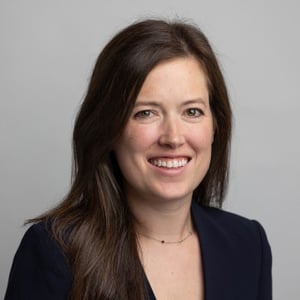
Senior Attorney, Institute of Justice
Kirby Thomas West is a senior attorney at the Institute for Justice, where she is also the co-director of IJ’s National Initiative to End Forfeiture Abuse. She joined IJ in 2018 and litigates cases defending property rights, free speech, and educational choice.
In her time at IJ, Kirby has launched challenges to unconstitutional civil forfeiture and impoundment schemes. She has also litigated educational choice cases, including as part of the IJ team that litigated Carson v. Makin, a landmark educational choice case decided in 2022.
In 2024, Kirby was a Wasserstein Public Interest Fellow at Harvard Law School.
Before joining IJ, Kirby Was an attorney at Baker Botts LLP, in Washington D.C. She clerked for Judge Dennis Shedd of the U.S. Court of Appeals for the Fourth Circuit.
Kirby received her law degree cum laude from Harvard Law School in 2015.

Nielsen, Nielson, and Nelson: Judging on Three Different Courts
Utah Lawyer Chapter
Salt Lake City, UTSafeguarding Vulnerable Populations Online
Paul G. Cassell, India McKinney, Clare Morell, Spence Purnell, Brandon J. Smith
Modern life is increasingly dependent on the internet, but with dependence comes vulnerability. Popular websites...
Safeguarding Vulnerable Populations Online
Paul G. Cassell, India McKinney, Clare Morell, Spence Purnell, Brandon J. Smith
Modern life is increasingly dependent on the internet, but with dependence comes vulnerability. Popular websites...
Safeguarding Vulnerable Populations Online
Who is the Prosecutor Here?: Rule 48(a) and the Michael Flynn, January 6, and Eric Adams Cases
Paul G. Cassell, Andrew McCarthy, John C. Richter, William L. Shipley
The Federal Rule of Criminal Procedure 48(a) reads, “The government may, with leave of court,...
Who is the Prosecutor Here?: Rule 48(a) and the Michael Flynn, January 6, and Eric Adams Cases
Paul G. Cassell, Andrew McCarthy, John C. Richter, William L. Shipley
The Federal Rule of Criminal Procedure 48(a) reads, “The government may, with leave of court,...
Who is the Prosecutor Here?: Rule 48(a) and the Michael Flynn, January 6, and Eric Adams Cases
Glossip v. Oklahoma - Post-Decision SCOTUScast
Zack Smith
On February 25, 2025, the U.S. Supreme Court issued their 5-3 opinion in Glossip v. Oklahoma. The Court...
A Seat at the Sitting - January 2025
Jennifer B. Dickey, Michael R. Dimino, Shannon Grammel Denmark, Brett Nolan, Gregory Y. Porter, Vikrant P. Reddy, Bryan Weir
Each month, a panel of constitutional experts convenes to discuss the Court’s upcoming docket sitting...
A Seat at the Sitting - October 2024
James S. Burling, John Masslon, Matt Rice, Zack Smith, Kirby Thomas West
Each month, a panel of constitutional experts convenes to discuss the Court’s upcoming docket sitting...