

Partner, Pillsbury Winthrop Shaw Pittman LLP
Richard Blaylock’s practice covers financing, M&A, licensing, collaboration and partnering arrangements, and intellectual property counseling for start-up and established companies whose value derives from innovative technology.
Richard is well-versed in a wide array of technologies, including those germane to both life sciences (pharmaceuticals, biologics, and diagnostics) as well as high technology (software, robotics, wireless, novel materials, and pollution control). He has counseled companies across a wide range of technologies with respect to company formation, licensing, partnering and collaborations, financing and intellectual property strategy, as well as patent, license, trademark, trade secrets and unfair competition disputes.
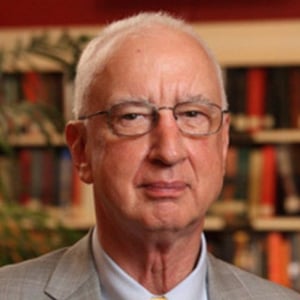
Former Chief Judge, United States Court of Appeals for the Federal Circuit
Judge Michel served for more than 22 years on the Federal Circuit, retiring on May 31, 2010. From December 25, 2004 until his retirement, he also discharged the duties of Chief Judge of this national court, serving simultaneously on the U.S. Judicial Conference -- the Judiciary's governing body -- and by appointment of the Chief Justice on its seven-judge Executive Committee.
He judged several thousand appeals and authored more than 800 opinions, one third concerning intellectual property law. Intellectual Asset Management magazine inducted him into its Hall of Fame and he was designated one of the 50 most influential leaders in intellectual property law in the world. His contributions were also recognized by lifetime achievement and similar awards by the American Intellectual Property Law Association (AIPLA); Intellectual Property Owners Education Foundation (IPO); the American Bar Association's Intellectual Property Section; Managing Intellectual Property magazine; the Sedona Conference; the Patent and Trademark Office Society (PTOS); the New York, Chicago, Philadelphia, and Los Angeles Intellectual Property Law Associations; and the William C. Connor, the Giles S. Rich, and the Richard Linn Intellectual Property American Inns of Court. In 2010 the Los Angeles IP Inn was renamed in his honor as the Paul R. Michel IP Inn.
Judge Michel received the Jefferson Medal, the Eli Whitney Award, and the Katz-Kiley Prize as well as Honorary Doctor of Law degrees from the Catholic University of America and the John Marshall Law School. He is a lifetime Member of Honore of FICPI, the international association of private practitioners of intellectual property law. Williams College granted him the Kellogg Award for "outstanding leadership in law and public service."
Judge Michel has written numerous articles on patent law and advocacy, taught related courses and master classes at George Washington University, the University of Akron, and John Marshall law schools, serving as well on their IP advisory boards and on counterpart boards at the universities of California (Berkley), Washington, and Maryland. He co-authored a casebook, Patent Litigation and Strategy (West, 1999) and an August 2010 editorial in the New York Times on strengthening the patent system to promote prosperity and create new jobs.
A frequent speaker at conferences and law schools during his judicial tenure and since, he retired from a lifetime appointment to be free to speak out on the national need for better patent policy and protection of intellectual property and the vital, unmet resource needs of the courts, the PTO, the International Trade Commission, and other IP-related agencies. He was appointed Distinguished Scholar in Residence by IPO, following his retirement. Judge Michel also consults for law firms and their clients in intellectual property litigations, conducting moot courts, mock trials, case evaluations, editing briefs, advising on strategy and providing mediation and arbitration services.
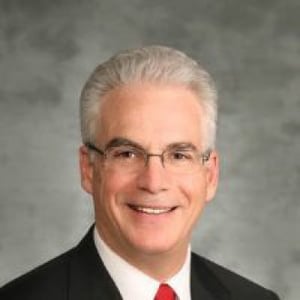
Dinsmore & Shohl LLP, Partner
Brian is chair of Dinsmore’s IP Transactions and Licensing Group. He is a past president of the Licensing Executives Society (USA and Canada), Inc. (LES), the leading professional society devoted to commercial transactions and licensing of intangible property. He continues to serve LES as senior vice president for public policy. He has extensive experience in a wide variety of commercial transactions involving intangible property, and is known for creative licensing strategies to promote collaboration and resolve IP-related disputes.
He is a registered patent attorney with more than 30 years of experience before the U.S. Patent and Trademark Office and in structuring global IP portfolios and strategies. He has extensive experience in contested proceedings before the USPTO Patent Trial and Appeal Board (interferences, Inter Partes Reviews and Post Grant Reviews), as well as contested matters in federal courts and the International Trade Commission. His wide-ranging experience affords a broad, informed perspective and facilitates creative approaches to intellectual property management, licensing, and enforcement.
In addition to his leadership of LES, Brian served on the LES Board of Directors 2007 – 2018. In his ongoing role as senior vice president for public policy he is responsible for coordinating the society’s public policy positions, amicus briefs, and congressional outreach. He works with legislators, the executive branch, and the courts toward consistent, reliable, and prudent IP laws and policies that advance innovation and economic development. He has also served LES as trustee for education, and has long served as an author, editor, and faculty member of LES educational programs focusing on best practices in IP licensing.
He is also active in the global society, LES International (LESI). Among his various roles in LESI, he has served as co-chair of the External Relations Committee, coordinating public policy and advocacy for effective IP laws and policies among the 33 regional LES societies, and with various non-governmental organizations such as WIPO and EPO. In 2019, he received the LES International President’s Service Recognition Award.
Brian also serves as Chair of the Board of Directors of the Bayh Dole Coalition, a 501(c)(4) corporation dedicated to promoting and preserving the Bayh Dole Act. He is a member of the Founding Board of Directors of the United States Intellectual Property Alliance (USIPA), an organization dedicated to raising public awareness of, and appreciation for, the role of IP in fostering innovation for the public good; and he has served on the DC Bar Intellectual Property Section Steering Committee (2013 – 2016).
In 2016, Brian testified before the U.S. Senate Committee on Small Business and Entrepreneurship on the effects of the America Invents Act on small business and entrepreneurs in a hearing entitled “An Examination of Changes to the U.S. Patent System & Impacts on America's Small Businesses.”
With his longstanding and diverse patent practice, in both private practice and in-house, Brian advises corporate leaders and entrepreneurs in effective IP procurement practices, and in maximizing value from IP assets. He has been retained as a testifying witness in IP and licensing disputes by the U.S. Department of Justice, the U.S. Department of the Treasury, and by various private enterprises.
Brian has been acknowledged by IAM magazine as among its “IAM Strategy 300”, the world’s leading IP strategists, and among “The World's Leading Patent and Technology Licensing Lawyers.”
He earned B.S. and M.S. degrees from the Department of Chemistry, Rochester Institute of Technology, Rochester, NY; and Juris Doctor from Syracuse University, College of Law, Syracuse, NY (1986).
Brian has served his alma mater as president of the RIT Alumni Association 2005 – 2009; and now serves on the RIT Board of Trustees as a member of its Executive Committee, chair of its Student Life Committee, and vice-chair of its Committee on Trustees. In 2013, Brian was awarded RIT’s Outstanding Alumnus Award, and in 2005 he was awarded the Distinguished Alumnus Award by RIT’s College of Science.
Deputy General Counsel and Vice President for Intellectual Property, Biotechnology Industry Organization
Hans Sauer is Deputy General Counsel for Intellectual Property for the Biotechnology Industry Organization, a major trade association representing over 1,100 biotechnology companies from the medical, agricultural, environmental and industrial sectors in the United States and 31 other countries. At BIO, Dr. Sauer advises the organization’s board of directors, amicus committee, and various staff committees on patent and other intellectual property-related matters. Prior to taking his current position at BIO in 2006, he was Chief Patent Counsel for MGI Pharma, Inc. in Bloomington MN, and Senior Patent Counsel for Guilford Pharmaceuticals Inc. in Baltimore, MD. Hans has 18 years of in-house experience in the biotechnology industry, first as a research scientist and later as a lawyer. His scientific work was in the area of age-related neurological disorders; after becoming a lawyer he worked on several drug development programs, being responsible for patent prosecution and portfolio oversight, clinical trial health information privacy, and sales and marketing legal compliance. He did his postdoc at Genentech in South San Francisco, and holds a M.S. degree from the University of Ulm in his native Germany; a Ph.D. in Neuroscience from the University of Lund, Sweden; and a J.D. degree from Georgetown University, where he serves as adjunct professor.
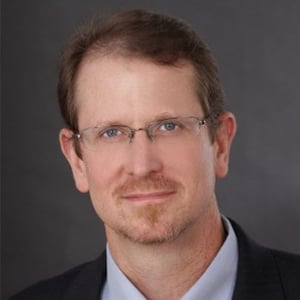
Executive Director, High Tech Inventors Alliance
David W. Jones is the Executive Director of the High Tech Inventors Alliance. Prior to HTIA, David was Assistant General Counsel for Patent Policy at Microsoft, where he spent more than a decade handling both domestic and international patent issues. He previously held multiple positions on Capitol Hill, most recently as antitrust and IP counsel to Senator Orrin Hatch on the Senate Judiciary Committee. David clerked for Chief Judge Sharon Prost on the Federal Circuit and Judge Will Garwood on the Fifth Circuit and is a graduate of the University of Virginia School of Law.
Former Chief Judge, United States Court of Appeals for the Federal Circuit
Judge Michel served for more than 22 years on the Federal Circuit, retiring on May 31, 2010. From December 25, 2004 until his retirement, he also discharged the duties of Chief Judge of this national court, serving simultaneously on the U.S. Judicial Conference -- the Judiciary's governing body -- and by appointment of the Chief Justice on its seven-judge Executive Committee.
He judged several thousand appeals and authored more than 800 opinions, one third concerning intellectual property law. Intellectual Asset Management magazine inducted him into its Hall of Fame and he was designated one of the 50 most influential leaders in intellectual property law in the world. His contributions were also recognized by lifetime achievement and similar awards by the American Intellectual Property Law Association (AIPLA); Intellectual Property Owners Education Foundation (IPO); the American Bar Association's Intellectual Property Section; Managing Intellectual Property magazine; the Sedona Conference; the Patent and Trademark Office Society (PTOS); the New York, Chicago, Philadelphia, and Los Angeles Intellectual Property Law Associations; and the William C. Connor, the Giles S. Rich, and the Richard Linn Intellectual Property American Inns of Court. In 2010 the Los Angeles IP Inn was renamed in his honor as the Paul R. Michel IP Inn.
Judge Michel received the Jefferson Medal, the Eli Whitney Award, and the Katz-Kiley Prize as well as Honorary Doctor of Law degrees from the Catholic University of America and the John Marshall Law School. He is a lifetime Member of Honore of FICPI, the international association of private practitioners of intellectual property law. Williams College granted him the Kellogg Award for "outstanding leadership in law and public service."
Judge Michel has written numerous articles on patent law and advocacy, taught related courses and master classes at George Washington University, the University of Akron, and John Marshall law schools, serving as well on their IP advisory boards and on counterpart boards at the universities of California (Berkley), Washington, and Maryland. He co-authored a casebook, Patent Litigation and Strategy (West, 1999) and an August 2010 editorial in the New York Times on strengthening the patent system to promote prosperity and create new jobs.
A frequent speaker at conferences and law schools during his judicial tenure and since, he retired from a lifetime appointment to be free to speak out on the national need for better patent policy and protection of intellectual property and the vital, unmet resource needs of the courts, the PTO, the International Trade Commission, and other IP-related agencies. He was appointed Distinguished Scholar in Residence by IPO, following his retirement. Judge Michel also consults for law firms and their clients in intellectual property litigations, conducting moot courts, mock trials, case evaluations, editing briefs, advising on strategy and providing mediation and arbitration services.

Professor of Law, Antonin Scalia Law School, George Mason University
Adam Mossoff is Professor of Law at Antonin Scalia Law School, George Mason University. He has published extensively on why patents, copyrights, and other intellectual property rights have been—and should be—legally secured to innovators and creators as property rights. His scholarship has been relied on by the United States Supreme Court, by lower federal courts, and by U.S. federal agencies. He has been invited to testify numerous times before the U.S. Senate and the House of Representatives on intellectual property legislation. His writings on intellectual property policy have also appeared in the Wall Street Journal, New York Times, Forbes, Investors Business Daily, and in other media outlets. His journal articles can be downloaded here.
Professor Mossoff is a longstanding member of the Executive Committee of the Intellectual Property Practice Group of the Federalist Society, on which he served as Chairperson from 2016-2018, and he is Chair of the Intellectual Property Working Group of the Regulatory Transparency Project of the Federalist Society. He is a Senior Fellow and Chair of the Forum for Intellectual Property at the Hudson Institute, a Visiting Intellectual Property Fellow at the Heritage Foundation, and a member of the Board of Directors of the Center for Intellectual Property Understanding. He is a member of the Intellectual Property Rights Policy Committee of ANSI and he has served as Chair and Vice-Chair of the Intellectual Property Committee of the IEEE-USA, on which he remains a member in good standing.
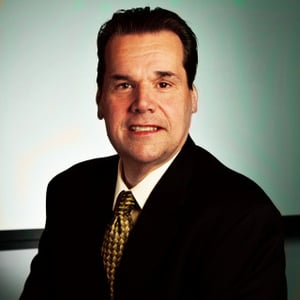
Partner, Patrick Doerr
Mr. Rando has represented clients in matters involving computer hardware and software, silicon chip manufacturing, biotechnology, medical devices, pharmaceuticals, chemical compounds, food additives, alternative energy, AI, autonomous vehicles, blockchain, consumer electronics, communications, internet, and e-commerce. He has appeared in courts across the country, including the Southern and Eastern Districts of New York and multiple U.S. Courts of Appeals.
As appellate counsel, Mr. Rando has served as counsel of record or co-counsel in more than 30 amicus briefs filed before the U.S. Supreme Court and Federal Circuit on issues of patent law, statutory interpretation, separation of powers, and constitutional law. Noteworthy filings include eBay Inc. v. MercExchange (2006), Oil States v. Greene’s Energy (2017), American Axle v. Neapco (2021), Amgen v. Sanofi (2023), and Cellect v. Vidal (2024).
Mr. Rando is a Fellow of the Academy of Court-Appointed Masters, having served by judicial appointment as Special Master in numerous complex patent cases, including multi-day Markman hearings and post-discovery proceedings. He also serves as a court-appointed Mediator and Neutral in both patent and commercial disputes.
He has played an active role in judicial and legislative engagement. Mr. Rando co-developed and conducted lecture series for the SDNY and EDNY Patent Pilot Program Judges and Clerks, covering the America Invents Act and Section 101 eligibility post-Alice and Mayo. He represented both the Federal Bar Association (FBA) and New York Intellectual Property Law Association (NYIPLA) at the Tillis/Coons Section 101 Patent Reform Roundtable, and submitted written testimony to the U.S. Senate Judiciary Committee in 2019.
Mr. Rando is a former president of the NYIPLA (2023–2024) and has held nearly every leadership position in the organization. He also served as Chair of the FBA’s Intellectual Property Law Section and was a founding member and president of the FBA’s EDNY Chapter. He is a founding member of the Association of Amicus Counsel, and an active contributor to the Federalist Society IP Practice Group Executive Committee.
He frequently lectures at CLE programs, universities, and legal associations on IP, constitutional law, and appellate advocacy. He has been quoted extensively in publications such as Law360, Bloomberg Law, WIPR, and National Law Journal. His scholarly publications include articles in The Federal Lawyer, Touro Law Review, and IPWatchdog.
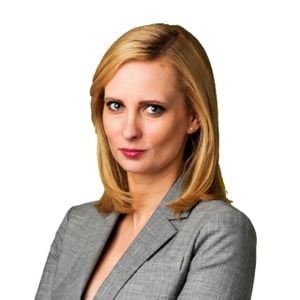
Executive Director, Committee for Justice
Ashley Baker is Executive Director of the Committee for Justice and founder of the Alliance on Antitrust coalition. Her work focuses on antitrust law, technology regulation, administrative-agency authority, the Supreme Court, and judicial nominations. She closely follows the Federal Trade Commission and the Department of Justice’s Antitrust Division, with particular attention to merger review, agency procedure, and the effects of regulation on American innovation and competitiveness. She is also founder of the Alliance on Antitrust Coalition.
Ashley has testified before the United States Senate on antitrust law. Her writing has appeared in Fox News, USA Today, The Boston Globe, The Hill, RealClearPolitics, The American Spectator, and other national publications. She also provides policy analysis through congressional testimony and correspondence, regulatory comments, and public commentary.
Ashley serves on the Federalist Society’s Regulatory Transparency Project and Antitrust and Consumer Protection Practice Group Executive Committee. She is also active in the Republican National Lawyers Association and has spoken on the Supreme Court and the federal judiciary. An authority on the judicial-confirmation process, she worked closely on the successful confirmation efforts for Justices Neil Gorsuch and Brett Kavanaugh, as well as multiple federal appellate judges.
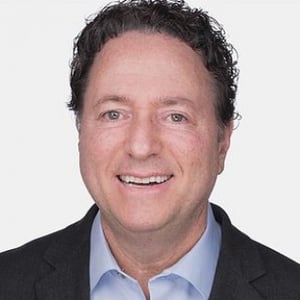
President, Committee for Justice
Curt Levey is President of the Committee For Justice, an organization devoted to advancing constitutionally limited government and individual liberty. He is a veteran of Supreme Court and other judicial confirmation battles and serves on the executive committee of the Federalist Society's Civil Rights Practice Group.
After graduating Harvard Law School with honors and clerking for the U.S. Court of Appeals for the Sixth Circuit, Mr. Levey served as Director of Legal & Public Affairs at the Center for Individual Rights (CIR). There he worked on landmark Supreme Court cases, including the University of Michigan affirmative action cases and the successful constitutional challenge to the Violence Against Women Act. After CIR, Mr. Levey headed the Title IX policy group at the U.S. Department of Education.
Before attending law school, Mr. Levey earned an M.S. and B.A. in computer science from Brown University and worked in the field of artificial intelligence (AI). He invented a new type of AI technology, for which he wrote a successful patent application.

Associate Dean for Academic Affairs, Austin E. Owen Research Scholar & Professor of Law, The University of Richmond School of Law
Dean Kristen Jakobsen Osenga teaches and writes in the areas of patent law, antitrust, and legislation and regulation. Some of her recent scholarship focuses on standard development organizations, patent eligible subject matter, patent licensing firms, litigation and remedies for patent infringement, and patent law reform. She has written numerous law review articles on these and other topics, as well as book chapters and op eds on various aspects of patent law. Additionally, she has spoken on these issues at many academic conferences and bar events. Dean Osenga is Chief Policy Counselor for the Inventors Defense Alliance, as well as an active member of the Federal Circuit Bar Association and the American Intellectual Property Law Association.
Dean Osenga received a B.S. degree in Biomedical Engineering from the University of Iowa, an M.S. degree in Electrical Engineering from Southern Illinois University – Carbondale, and a J.D. from the University of Illinois College of Law, where she graduated magna cum laude. After law school, she practiced at the law firm of Finnegan, Henderson, Farabow, Garrett, & Dunner LLP, (now Finnegan) where she did patent prosecution and litigation. She then clerked for the Judge Richard Linn of the U.S. Court of Appeals for the Federal Circuit. After clerking, she entered academia, teaching first at Chicago-Kent College of Law and then at the University of Richmond, where she has been since 2006. She has also been a Visiting Professor at Emory University School of Law and at William & Mary School of Law.
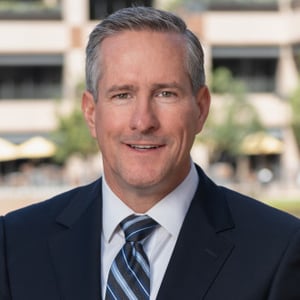
Managing Partner, Brown Wegner LLP
Mr. Brown leads a law firm in California focused on trials and appeals in intellectual property and other complex commercial disputes. Previously, he practiced for more than a decade in the Intellectual Property Group at Jones Day, was an Adjunct Professor at Chapman University School of Law, and served a judicial law clerk to a federal district judge in Los Angeles. Mr. Brown has been named a Southern California Super Lawyer for ten years, was listed among the Top 50 Lawyers in Orange County several years. He is a Master in the Howard T. Markey Intellectual Property American Inn of Court.
Education

Founding Partner, Boyden Gray & Associates
Ambassador C. Boyden Gray is the founding partner of Boyden Gray & Associates, a law and strategy firm in Washington, D.C., focused on constitutional and regulatory issues.
Mr. Gray worked in the White House for twelve years, first as counsel to the Vice President during the Reagan administration and then as White House Counsel to President George H.W. Bush. In the Reagan administration, he was Counsel to the Presidential Task Force on Regulatory Relief, for which he wrote the original Executive Order 12291 requiring cost-benefit analysis and White House review of regulations (later renumbered as current EO 12866). In the George H.W. Bush Administration, Mr. Gray was in charge of judicial selection and was also instrumental in the enactment of the Clean Air Act Amendments of 1990, the Energy Policy Act of 1992, and a cap-and-trade system for acid rain emissions. In 1993, he received the Presidential Citizens Medal. Under President George W. Bush, Mr. Gray was U.S. Ambassador to the European Union and U.S. Special Envoy to Europe for Eurasian Energy.
Mr. Gray practiced law for 25 years at the law firm of Wilmer, Cutler & Pickering and was chairman of the Administrative Law and Regulatory Practice Section of the American Bar Association from 2000 to 2002. Early in his career, Mr. Gray helped to develop the Business Roundtable and served as its first counsel. He is an adjunct professor at Antonin Scalia Law School and a former adjunct professor at NYU Law School (teaching energy and environmental law). Mr. Gray is on the Board of Directors of the Atlantic Council, the Federalist Society, Reason Foundation, and the Trust for the National Mall.
Mr. Gray earned his A.B. magna cum laude from Harvard, where he was an editor of the Crimson, and his J.D. with high honors from the University of North Carolina at Chapel Hill, where he was editor-in-chief of the Law Review. Mr. Gray served in the United States Marine Corps, and after law school, he clerked for Earl Warren, Chief Justice of the United States Supreme Court.
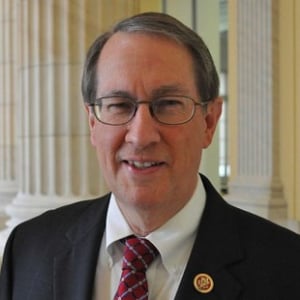
Former Congressman, United States House of Representatives
Bob Goodlatte served in the United States House of Representatives representing Virginia's 6th congressional district for 13 terms.
Goodlatte’s service to the people of the Sixth District began in 1977 when he became District Director for former Congressman Caldwell Butler. He served in this position for two years until 1979, and was responsible for helping folks across the District seeking assistance with or encountering problems from various federal agencies. In 1979, he founded his own private law practice in Roanoke. Later, he was a partner in the law firm of Bird, Kinder and Huffman, working there from 1981 until taking office.
Rep. Goodlatte was first elected to serve as Chairman of the House Judiciary Committee in the 113th Congress. He was the first Judiciary Committee Chairman from Virginia in the last 125 years. Rep. Goodlatte was an active Member of the Judiciary Committee since arriving in Congress, serving in a variety of leadership positions on the Committee including taking the lead on many intellectual property issues. During his time in Congress, Rep. Goodlatte made a name for himself as a leader on Internet and technology issues. He was Co-Chair of the Congressional Internet Caucus and the International Creativity and Theft-Prevention Caucus.
Rep. Goodlatte is a graduate of Washington and Lee University School of Law, and his undergraduate degree in Government was earned at Bates College in Lewiston, Maine.

H. Ross & Helen Workman Research Scholar, Director, Program in I, University of Illinois College of Law
Professor Jay P. Kesan's academic interests are in the areas of technology, law, and business. Specifically, his work focuses on patent law, intellectual property, entrepreneurship, cyberlaw, digital government (e-gov), agricultural biotechnology law, and biofuels regulation. His recent publications can be found on SSRN (Social Science Research Network).
At the University of Illinois, Professor Kesan is appointed in the College of Law, the Institute of Genomic Biology, the Department of Electrical & Computer Engineering, the Information Trust Institute, the Coordinated Science Laboratory, the College of Business, and the Department of Agricultural & Consumer Economics.
He directs the Program in Intellectual Property & Technology Law at the College of Law. At the Institute of Genomic Biology (IGB), he is group leader of the Business, Economics & Law of Genomic Biology (BioBEL) theme, and he directs research on biofuel law & regulation at the Energy Biosciences Institute (EBI).
Most recently, he served as a Thomas A. Edison Scholar at the U.S. Patent and Trademark Office (USPTO).
His recent awards include: Honorable Mention ($1,000 Award), Competition on Cyberdeterrence conducted by the National Research Council for work on “Thinking Through Active Defense in Cyberspace,” 2011; Microsoft Research Awards in 2011 and 2012 for work on technology standards and patent policy; Best Paper Award for Contributions to Foundations of Electronic Governance at the 4th International Conference on Theory and Practice of Electronic Governance (ICEGOV), Beijing, China, Oct. 25-28, 2010; Best Paper Award for "An Empirical Examination of Open Standards Development" (with R. Shah), 41st Hawaii International Conference on System Sciences (HICSS), 2008; Best Paper Award for "An Empirical Study of Open Standards" (with R. Shah) published in the Proceedings of the 8th Annual International Conference on Digital Government Research, 2007; and IBM Faculty Award in 2006.
His books include: Adopting Open Source Software, A Practical Guide (with Fitzgerald, Russo, Shaikh and Succi), MIT Press (2011); The Commercial Law of Intellectual Property (with Alces, Frisch and See), Aspen Publishing Co. (2003-2014 Cumm. Supp.) (treatise); Intellectual Property in Business Organizations (with Ghosh and Gruner), Lexis-Nexis Publishing Co. (2d ed. 2012) (unique and first-of-its-kind casebook on transactional IP); Defining Values for Research & Technology(Greenough, McConnaughay and Kesan (eds.)), Rowman & Littlefield Publishing (Fall 2006); Intellectual Property: Private Rights, the Public Interest, and the Regulation of Creative Activity (with Ghosh, Gruner & Reis), West Publishing Co. (2d ed. 2010) (casebook); Agricultural Biotechnology and Intellectual Property: Seeds of Change, Kesan (ed.), CABI Publishing Co., Oxford (2007).
He has received numerous, multi-year research grants/awards for his work in the areas of intellectual property and technology regulation from the National Science Foundation, The National Academy of Sciences—Board of Science, Technology and Economic Policy (STEP), the private sector, the U.S. Department of Agriculture, the Energy Biosciences Institute, the Federal Judicial Center, the Net Institute, the Coleman Foundation, and the University of Illinois Campus Research Board.
Professor Kesan continues to be professionally active in the areas of patent litigation and technology entrepreneurship. He was appointed by federal judges to serve as a special master in patent litigations, and has served as a technical and legal expert and/or counsel in patent matters. He also serves on the boards of directors/advisors of start-up technology companies.
He participated twice in panels at the Federal Trade Commission and the Department of Justice Hearings on the Implications of Competition and Patent Law and Policy. He testified about biofuel regulation issues before the U.S. House of Representatives Subcommittee on Energy and Environment, House Committee on Science, Space, and Technology. He has also worked with the U.S. Department of Commerce and the U.S. Civilian Research & Development Foundation on their intellectual property protection and technology commercialization activities in the former Soviet Union countries.
He is regular radio commentator for “Legal Issues in the News,” WILL-AM-FM Illinois Public Radio.
Professor Kesan was a JSPS Invited Fellow and visiting associate professor at the University of Tokyo, Japan and has also served as a Foreign Research Fellow at the Institute of Intellectual Property (IIP) in Tokyo, Japan. He has also taught as a visiting faculty at Georgetown University, DePaul University, Florida State University, and Seattle University.
He serves as faculty editor-in-chief of the University of Illinois Journal of Law, Technology & Policy, which published its inaugural issue in Spring 2001. He has also developed an online course on "Legal Issues in Technology Entrepreneurship," supported by a grant from the Coleman Foundation.
Professor Kesan received his J.D. summa cum laude from Georgetown University, where he received several awards including Order of the Coif and served as associate editor of the Georgetown Law Journal. After graduation, he clerked for Judge Patrick E. Higginbotham of the United States Court of Appeals for the Fifth Circuit.
Prior to attending law school, Jay Kesan – who also holds a Ph.D. in electrical and computer engineering – worked as a research scientist at the IBM T.J. Watson Research Center in New York. He is a registered patent attorney and practiced at the former firm of Pennie & Edmonds LLP in the areas of patent litigation and patent prosecution. In addition, he has published numerous scientific papers, and he has obtained several patents in the U.S. and abroad.

Chief Economist, Abundance Institute
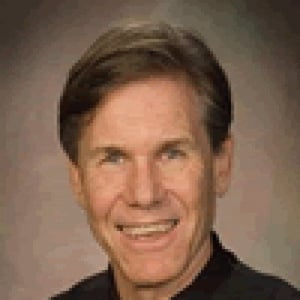
Chief Judge (ret.), U.S. Court of Appeals for the Federal Circuit, and Honorary Professor, Tsinghua University
Randall R. Rader was appointed to the United States Court of Appeals for the Federal Circuit by President George H. W. Bush in 1990 and served as Chief Judge from June 2010 to June 2014. He was appointed to the United States Claims Court (now the U. S. Court of Federal Claims) by President Ronald W. Reagan in 1988. Judge Rader's most prized title may well be "Professor Rader."
As Professor, Judge Rader has taught courses on patent law and other advanced intellectual property courses at The George Washington University Law School,University of Virginia School of Law, Georgetown University Law Center, the Munich Intellectual Property Law Center, and other university programs in Tokyo, Taipei, New Delhi, and Beijing. Due to the size and diversity of his classes, Judge Rader may have taught patent law to more students than anyone else. Judge Rader has also co-authored several texts including the most widely used textbook on U. S. patent law, "Cases and Materials on Patent Law," (St. Paul, Minn.: Thomson/West 3d ed. 2009) and "Patent Law in a Nutshell," (St. Paul, Minn.: Thomson/West 2007) (translated into Chinese and Japanese). Judge Rader has won acclaim for leading dozens of government and educational delegations to every continent (except Antarctica), teaching rule of law and intellectual property law principles.
Judge Rader has received many awards, including the Sedona Lifetime Achievement Award for Intellectual Property Law, 2009; Distinguished Teaching Awards from George Washington University Law School, 2003 and 2008 (by election of the students); the Jefferson Medal from the New Jersey Intellectual Property Law Association, 2003; the Distinguished Service Award from the Berkeley Center for Law and Technology, 2003; the J. William Fulbright Award for Distinguished Public Service from George Washington University Law School, 2000; and the Younger Federal Lawyer Award from the Federal Bar Association, 1983. Before appointment to the Court of Federal Claims, Judge Rader served as Minority and Majority Chief Counsel to Subcommittees of the U.S. Senate Committee on the Judiciary. From 1975 to 1980, he served as Counsel in the House of Representatives for representatives serving on the Interior, Appropriations, and Ways and Means Committees. He received a B.A. in English from Brigham Young University in 1974 and a J.D. from George Washington University Law School in 1978.

Deep Dive Episode 177 – Patents and Pandemics: Innovation Policy and the Patent Waiver Petition at the WTO
Richard Blaylock, Paul Redmond Michel, Brian O'Shaughnessy, Hans Sauer
India and South Africa have submitted a petition to the World Trade Organization seeking a...
The Injunction Presumption: Revisiting eBay v. MercExchange
David Jones, Paul Redmond Michel, Adam Mossoff, Robert J. Rando
The Federalist Society's Intellectual Property Practice Group is pleased to host this panel discussion on...
Trade Secrets Litigation: Do Damages Awarded in Texas Case Have Broader Ramifications?
Ashley Baker, Curt Levey
Intellectual property (IP) theft has taken an increasingly prominent place in the news as various...
What Happened to the Public’s Interest in Patent Law?
Kristen Osenga
Note from the Editor: This article discusses the role of the concept of the public...
Courthouse Steps Decision: TC Heartland LLC v. Kraft Foods Group Brands LLC - Podcast
William J. Brown, J Hartline
On May 22, 2017, the Supreme Court handed down its unanimous opinion in the closely-watched...
TC Heartland LLC v. Kraft Foods Group Brands LLC - Post-Argument SCOTUScast
J Hartline
On March 27, 2017, the Supreme Court heard oral argument in TC Heartland LLC v....
Courthouse Steps: TC Heartland v. Kraft Foods - Podcast
J Hartline
The question presented in TC Heartland LLC v. Kraft Foods Group Brands LLC is seemingly...
House Judiciary Committee Agenda
C. Boyden Gray, Bob Goodlatte
Congressman Goodlatte discusses the House Judiciary Committee's agenda for the 115th Congress. He delivered these...
Does Patent Litigation Need a Federal Solution? - Podcast
Jay Kesan, Eli Dourado
The America Invents Act, the first substantial legislative changes to patent law, took effect two...
Who Rules Patents? A Discussion with Chief Judge Randall R. Rader - Podcast
Randall R. Rader
Having completed work on the America Invents Act in 2011, Congress is now considering further...