
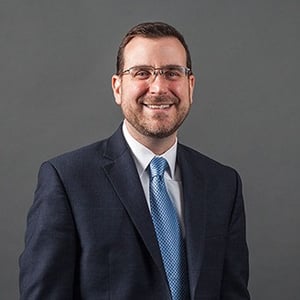
Professor of Law, Antonin Scalia Law School, George Mason University
Adam Mossoff is Professor of Law at Antonin Scalia Law School, George Mason University. He has published extensively on why patents, copyrights, and other intellectual property rights have been—and should be—legally secured to innovators and creators as property rights. His scholarship has been relied on by the United States Supreme Court, by lower federal courts, and by U.S. federal agencies. He has been invited to testify numerous times before the U.S. Senate and the House of Representatives on intellectual property legislation. His writings on intellectual property policy have also appeared in the Wall Street Journal, New York Times, Forbes, Investors Business Daily, and in other media outlets. His journal articles can be downloaded here.
Professor Mossoff is a longstanding member of the Executive Committee of the Intellectual Property Practice Group of the Federalist Society, on which he served as Chairperson from 2016-2018, and he is Chair of the Intellectual Property Working Group of the Regulatory Transparency Project of the Federalist Society. He is a Senior Fellow and Chair of the Forum for Intellectual Property at the Hudson Institute, a Visiting Intellectual Property Fellow at the Heritage Foundation, and a member of the Board of Directors of the Center for Intellectual Property Understanding. He is a member of the Intellectual Property Rights Policy Committee of ANSI and he has served as Chair and Vice-Chair of the Intellectual Property Committee of the IEEE-USA, on which he remains a member in good standing.
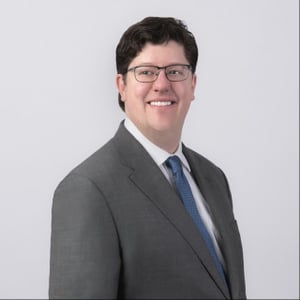
Partner, Wiley Rein LLP
Wesley is a trial and appellate lawyer who represents pharmaceutical companies and technology companies in patent litigation, licensing and trade secret disputes, and other complex matters. He has deposed numerous fact witnesses and scientific experts, cross-examined witnesses at trial, briefed dispositive motions and appeals, and argued a successful appeal as lead counsel before the Ninth Circuit.
Wesley currently co-chairs the American Bar Association’s Intellectual Property Litigation Non-Practicing Entity (NPE) sub-committee and serves on the Intellectual Property Executive Committee for the Federalist Society.
Professor of Law, Antonin Scalia Law School, George Mason University
Adam Mossoff is Professor of Law at Antonin Scalia Law School, George Mason University. He has published extensively on why patents, copyrights, and other intellectual property rights have been—and should be—legally secured to innovators and creators as property rights. His scholarship has been relied on by the United States Supreme Court, by lower federal courts, and by U.S. federal agencies. He has been invited to testify numerous times before the U.S. Senate and the House of Representatives on intellectual property legislation. His writings on intellectual property policy have also appeared in the Wall Street Journal, New York Times, Forbes, Investors Business Daily, and in other media outlets. His journal articles can be downloaded here.
Professor Mossoff is a longstanding member of the Executive Committee of the Intellectual Property Practice Group of the Federalist Society, on which he served as Chairperson from 2016-2018, and he is Chair of the Intellectual Property Working Group of the Regulatory Transparency Project of the Federalist Society. He is a Senior Fellow and Chair of the Forum for Intellectual Property at the Hudson Institute, a Visiting Intellectual Property Fellow at the Heritage Foundation, and a member of the Board of Directors of the Center for Intellectual Property Understanding. He is a member of the Intellectual Property Rights Policy Committee of ANSI and he has served as Chair and Vice-Chair of the Intellectual Property Committee of the IEEE-USA, on which he remains a member in good standing.
Partner, Wiley Rein LLP
Wesley is a trial and appellate lawyer who represents pharmaceutical companies and technology companies in patent litigation, licensing and trade secret disputes, and other complex matters. He has deposed numerous fact witnesses and scientific experts, cross-examined witnesses at trial, briefed dispositive motions and appeals, and argued a successful appeal as lead counsel before the Ninth Circuit.
Wesley currently co-chairs the American Bar Association’s Intellectual Property Litigation Non-Practicing Entity (NPE) sub-committee and serves on the Intellectual Property Executive Committee for the Federalist Society.
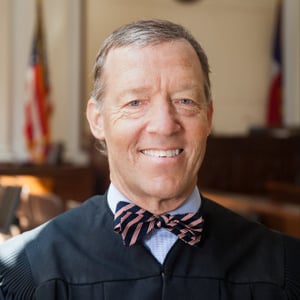
Federal Judge, Western District of Texas, Waco Division
Judge Alan Albright is the federal district judge for the Western District of Texas, Waco Division. Judge Albright was nominated by President Trump on January 24, 2018 and confirmed on September 6, 2018. He was sworn in on September 18, 2018.
Prior to taking the bench, Judge Albright was a partner in the Austin office of Bracewell LLP. He practiced IP litigation and handled trials in both federal court and the ITC. Before practicing law in Austin, he earned a BA in Political Science from Trinity University in San Antonio and a J.D. from The University of Texas School of Law in Austin, where he was a member of the Texas Law Review. Following law school, Judge Albright clerked for The Honorable James R. Nowlin in Austin, Texas. Judge Albright later served as a United States Magistrate Judge from 1992–99. He has also taught as an adjunct professor of law at The University of Texas School of Law. Judge Albright was recently inducted into the American College of Trial Lawyers. He has two sons and he is an avid runner and cyclist.
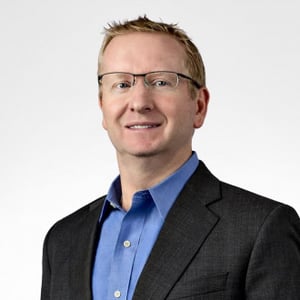
Partner, Jackson Walker
Arthur offers clients a winning combination of trial and appellate experience gained as a federal prosecutor and more than 20 years of experience in handling patent, copyright, trademark, and trade secrets litigation.
While his practice concentrates on intellectual property litigation, Arthur also has significant experience in internal investigations, False Claims Act suits, partnership and breach of fiduciary duty, breach of contract, and employment litigation. Arthur also has represented clients testifying before Congressional committees.
Arthur writes and speaks frequently on topics ranging from the case against Boston bomber Dzhokhar Tsarnaev to patent litigation reform.
Prior to joining Michael Best, Arthur served as an Assistant United States Attorney in the Southern District of New York, where he was the lead prosecutor in criminal trials, including federal intellectual property crimes. He also argued numerous appeals.
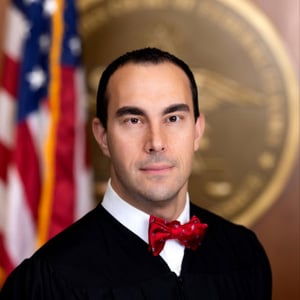
U.S. Court of Federal Claims and Jurist-In-Residence Professor of Law, The University of Akron School of Law
Judge Ryan T. Holte was sworn in as a judge on the United States Court of Federal Claims in July 2019. Prior to confirmation he served as the David L. Brennan Professor of Law and Director of the Center for Intellectual Property Law and Technology at The University of Akron School of Law (2017-2019) and an assistant professor of law at Southern Illinois University School of Law (2013-2017). Judge Holte has written and presented widely on patent law subjects and empirical legal studies of Federal Circuit and district court patent law cases. His most recent articles were published in the Iowa Law Review (2019), George Mason Law Review (2018), and Washington Law Review (2017).
In practice, Judge Holte served for six years as general counsel and partner of an electrical engineering technology company and is co-inventor of multiple patents related to Systems and Methods for Countering Satellite-Navigated Munitions. Prior to entering academia, Judge Holte practiced as a litigation attorney at the Federal Trade Commission and an associate in the Intellectual Property Practice Group at Jones Day. Prior to practice, he served as a law clerk to Judge Stanley F. Birch, Jr. on the United States Court of Appeals for the Eleventh Circuit and as a law clerk to Judge Loren A. Smith on the United States Court of Federal Claims.
Judge Holte received his JD from the University of California Davis School of Law and his BS, magna cum laude, in engineering from the California Maritime Academy where he was a First Class graduate of the Corps of Cadets Third Engineering Division and sailed as a U.S. Merchant Marine oiler.

H. Ross & Helen Workman Research Scholar, Director, Program in I, University of Illinois College of Law
Professor Jay P. Kesan's academic interests are in the areas of technology, law, and business. Specifically, his work focuses on patent law, intellectual property, entrepreneurship, cyberlaw, digital government (e-gov), agricultural biotechnology law, and biofuels regulation. His recent publications can be found on SSRN (Social Science Research Network).
At the University of Illinois, Professor Kesan is appointed in the College of Law, the Institute of Genomic Biology, the Department of Electrical & Computer Engineering, the Information Trust Institute, the Coordinated Science Laboratory, the College of Business, and the Department of Agricultural & Consumer Economics.
He directs the Program in Intellectual Property & Technology Law at the College of Law. At the Institute of Genomic Biology (IGB), he is group leader of the Business, Economics & Law of Genomic Biology (BioBEL) theme, and he directs research on biofuel law & regulation at the Energy Biosciences Institute (EBI).
Most recently, he served as a Thomas A. Edison Scholar at the U.S. Patent and Trademark Office (USPTO).
His recent awards include: Honorable Mention ($1,000 Award), Competition on Cyberdeterrence conducted by the National Research Council for work on “Thinking Through Active Defense in Cyberspace,” 2011; Microsoft Research Awards in 2011 and 2012 for work on technology standards and patent policy; Best Paper Award for Contributions to Foundations of Electronic Governance at the 4th International Conference on Theory and Practice of Electronic Governance (ICEGOV), Beijing, China, Oct. 25-28, 2010; Best Paper Award for "An Empirical Examination of Open Standards Development" (with R. Shah), 41st Hawaii International Conference on System Sciences (HICSS), 2008; Best Paper Award for "An Empirical Study of Open Standards" (with R. Shah) published in the Proceedings of the 8th Annual International Conference on Digital Government Research, 2007; and IBM Faculty Award in 2006.
His books include: Adopting Open Source Software, A Practical Guide (with Fitzgerald, Russo, Shaikh and Succi), MIT Press (2011); The Commercial Law of Intellectual Property (with Alces, Frisch and See), Aspen Publishing Co. (2003-2014 Cumm. Supp.) (treatise); Intellectual Property in Business Organizations (with Ghosh and Gruner), Lexis-Nexis Publishing Co. (2d ed. 2012) (unique and first-of-its-kind casebook on transactional IP); Defining Values for Research & Technology(Greenough, McConnaughay and Kesan (eds.)), Rowman & Littlefield Publishing (Fall 2006); Intellectual Property: Private Rights, the Public Interest, and the Regulation of Creative Activity (with Ghosh, Gruner & Reis), West Publishing Co. (2d ed. 2010) (casebook); Agricultural Biotechnology and Intellectual Property: Seeds of Change, Kesan (ed.), CABI Publishing Co., Oxford (2007).
He has received numerous, multi-year research grants/awards for his work in the areas of intellectual property and technology regulation from the National Science Foundation, The National Academy of Sciences—Board of Science, Technology and Economic Policy (STEP), the private sector, the U.S. Department of Agriculture, the Energy Biosciences Institute, the Federal Judicial Center, the Net Institute, the Coleman Foundation, and the University of Illinois Campus Research Board.
Professor Kesan continues to be professionally active in the areas of patent litigation and technology entrepreneurship. He was appointed by federal judges to serve as a special master in patent litigations, and has served as a technical and legal expert and/or counsel in patent matters. He also serves on the boards of directors/advisors of start-up technology companies.
He participated twice in panels at the Federal Trade Commission and the Department of Justice Hearings on the Implications of Competition and Patent Law and Policy. He testified about biofuel regulation issues before the U.S. House of Representatives Subcommittee on Energy and Environment, House Committee on Science, Space, and Technology. He has also worked with the U.S. Department of Commerce and the U.S. Civilian Research & Development Foundation on their intellectual property protection and technology commercialization activities in the former Soviet Union countries.
He is regular radio commentator for “Legal Issues in the News,” WILL-AM-FM Illinois Public Radio.
Professor Kesan was a JSPS Invited Fellow and visiting associate professor at the University of Tokyo, Japan and has also served as a Foreign Research Fellow at the Institute of Intellectual Property (IIP) in Tokyo, Japan. He has also taught as a visiting faculty at Georgetown University, DePaul University, Florida State University, and Seattle University.
He serves as faculty editor-in-chief of the University of Illinois Journal of Law, Technology & Policy, which published its inaugural issue in Spring 2001. He has also developed an online course on "Legal Issues in Technology Entrepreneurship," supported by a grant from the Coleman Foundation.
Professor Kesan received his J.D. summa cum laude from Georgetown University, where he received several awards including Order of the Coif and served as associate editor of the Georgetown Law Journal. After graduation, he clerked for Judge Patrick E. Higginbotham of the United States Court of Appeals for the Fifth Circuit.
Prior to attending law school, Jay Kesan – who also holds a Ph.D. in electrical and computer engineering – worked as a research scientist at the IBM T.J. Watson Research Center in New York. He is a registered patent attorney and practiced at the former firm of Pennie & Edmonds LLP in the areas of patent litigation and patent prosecution. In addition, he has published numerous scientific papers, and he has obtained several patents in the U.S. and abroad.

Chief Economist, Abundance Institute
Federal Judge, Western District of Texas, Waco Division
Judge Alan Albright is the federal district judge for the Western District of Texas, Waco Division. Judge Albright was nominated by President Trump on January 24, 2018 and confirmed on September 6, 2018. He was sworn in on September 18, 2018.
Prior to taking the bench, Judge Albright was a partner in the Austin office of Bracewell LLP. He practiced IP litigation and handled trials in both federal court and the ITC. Before practicing law in Austin, he earned a BA in Political Science from Trinity University in San Antonio and a J.D. from The University of Texas School of Law in Austin, where he was a member of the Texas Law Review. Following law school, Judge Albright clerked for The Honorable James R. Nowlin in Austin, Texas. Judge Albright later served as a United States Magistrate Judge from 1992–99. He has also taught as an adjunct professor of law at The University of Texas School of Law. Judge Albright was recently inducted into the American College of Trial Lawyers. He has two sons and he is an avid runner and cyclist.
Partner, Jackson Walker
Arthur offers clients a winning combination of trial and appellate experience gained as a federal prosecutor and more than 20 years of experience in handling patent, copyright, trademark, and trade secrets litigation.
While his practice concentrates on intellectual property litigation, Arthur also has significant experience in internal investigations, False Claims Act suits, partnership and breach of fiduciary duty, breach of contract, and employment litigation. Arthur also has represented clients testifying before Congressional committees.
Arthur writes and speaks frequently on topics ranging from the case against Boston bomber Dzhokhar Tsarnaev to patent litigation reform.
Prior to joining Michael Best, Arthur served as an Assistant United States Attorney in the Southern District of New York, where he was the lead prosecutor in criminal trials, including federal intellectual property crimes. He also argued numerous appeals.
U.S. Court of Federal Claims and Jurist-In-Residence Professor of Law, The University of Akron School of Law
Judge Ryan T. Holte was sworn in as a judge on the United States Court of Federal Claims in July 2019. Prior to confirmation he served as the David L. Brennan Professor of Law and Director of the Center for Intellectual Property Law and Technology at The University of Akron School of Law (2017-2019) and an assistant professor of law at Southern Illinois University School of Law (2013-2017). Judge Holte has written and presented widely on patent law subjects and empirical legal studies of Federal Circuit and district court patent law cases. His most recent articles were published in the Iowa Law Review (2019), George Mason Law Review (2018), and Washington Law Review (2017).
In practice, Judge Holte served for six years as general counsel and partner of an electrical engineering technology company and is co-inventor of multiple patents related to Systems and Methods for Countering Satellite-Navigated Munitions. Prior to entering academia, Judge Holte practiced as a litigation attorney at the Federal Trade Commission and an associate in the Intellectual Property Practice Group at Jones Day. Prior to practice, he served as a law clerk to Judge Stanley F. Birch, Jr. on the United States Court of Appeals for the Eleventh Circuit and as a law clerk to Judge Loren A. Smith on the United States Court of Federal Claims.
Judge Holte received his JD from the University of California Davis School of Law and his BS, magna cum laude, in engineering from the California Maritime Academy where he was a First Class graduate of the Corps of Cadets Third Engineering Division and sailed as a U.S. Merchant Marine oiler.
Chief Economist, Abundance Institute
H. Ross & Helen Workman Research Scholar, Director, Program in I, University of Illinois College of Law
Professor Jay P. Kesan's academic interests are in the areas of technology, law, and business. Specifically, his work focuses on patent law, intellectual property, entrepreneurship, cyberlaw, digital government (e-gov), agricultural biotechnology law, and biofuels regulation. His recent publications can be found on SSRN (Social Science Research Network).
At the University of Illinois, Professor Kesan is appointed in the College of Law, the Institute of Genomic Biology, the Department of Electrical & Computer Engineering, the Information Trust Institute, the Coordinated Science Laboratory, the College of Business, and the Department of Agricultural & Consumer Economics.
He directs the Program in Intellectual Property & Technology Law at the College of Law. At the Institute of Genomic Biology (IGB), he is group leader of the Business, Economics & Law of Genomic Biology (BioBEL) theme, and he directs research on biofuel law & regulation at the Energy Biosciences Institute (EBI).
Most recently, he served as a Thomas A. Edison Scholar at the U.S. Patent and Trademark Office (USPTO).
His recent awards include: Honorable Mention ($1,000 Award), Competition on Cyberdeterrence conducted by the National Research Council for work on “Thinking Through Active Defense in Cyberspace,” 2011; Microsoft Research Awards in 2011 and 2012 for work on technology standards and patent policy; Best Paper Award for Contributions to Foundations of Electronic Governance at the 4th International Conference on Theory and Practice of Electronic Governance (ICEGOV), Beijing, China, Oct. 25-28, 2010; Best Paper Award for "An Empirical Examination of Open Standards Development" (with R. Shah), 41st Hawaii International Conference on System Sciences (HICSS), 2008; Best Paper Award for "An Empirical Study of Open Standards" (with R. Shah) published in the Proceedings of the 8th Annual International Conference on Digital Government Research, 2007; and IBM Faculty Award in 2006.
His books include: Adopting Open Source Software, A Practical Guide (with Fitzgerald, Russo, Shaikh and Succi), MIT Press (2011); The Commercial Law of Intellectual Property (with Alces, Frisch and See), Aspen Publishing Co. (2003-2014 Cumm. Supp.) (treatise); Intellectual Property in Business Organizations (with Ghosh and Gruner), Lexis-Nexis Publishing Co. (2d ed. 2012) (unique and first-of-its-kind casebook on transactional IP); Defining Values for Research & Technology(Greenough, McConnaughay and Kesan (eds.)), Rowman & Littlefield Publishing (Fall 2006); Intellectual Property: Private Rights, the Public Interest, and the Regulation of Creative Activity (with Ghosh, Gruner & Reis), West Publishing Co. (2d ed. 2010) (casebook); Agricultural Biotechnology and Intellectual Property: Seeds of Change, Kesan (ed.), CABI Publishing Co., Oxford (2007).
He has received numerous, multi-year research grants/awards for his work in the areas of intellectual property and technology regulation from the National Science Foundation, The National Academy of Sciences—Board of Science, Technology and Economic Policy (STEP), the private sector, the U.S. Department of Agriculture, the Energy Biosciences Institute, the Federal Judicial Center, the Net Institute, the Coleman Foundation, and the University of Illinois Campus Research Board.
Professor Kesan continues to be professionally active in the areas of patent litigation and technology entrepreneurship. He was appointed by federal judges to serve as a special master in patent litigations, and has served as a technical and legal expert and/or counsel in patent matters. He also serves on the boards of directors/advisors of start-up technology companies.
He participated twice in panels at the Federal Trade Commission and the Department of Justice Hearings on the Implications of Competition and Patent Law and Policy. He testified about biofuel regulation issues before the U.S. House of Representatives Subcommittee on Energy and Environment, House Committee on Science, Space, and Technology. He has also worked with the U.S. Department of Commerce and the U.S. Civilian Research & Development Foundation on their intellectual property protection and technology commercialization activities in the former Soviet Union countries.
He is regular radio commentator for “Legal Issues in the News,” WILL-AM-FM Illinois Public Radio.
Professor Kesan was a JSPS Invited Fellow and visiting associate professor at the University of Tokyo, Japan and has also served as a Foreign Research Fellow at the Institute of Intellectual Property (IIP) in Tokyo, Japan. He has also taught as a visiting faculty at Georgetown University, DePaul University, Florida State University, and Seattle University.
He serves as faculty editor-in-chief of the University of Illinois Journal of Law, Technology & Policy, which published its inaugural issue in Spring 2001. He has also developed an online course on "Legal Issues in Technology Entrepreneurship," supported by a grant from the Coleman Foundation.
Professor Kesan received his J.D. summa cum laude from Georgetown University, where he received several awards including Order of the Coif and served as associate editor of the Georgetown Law Journal. After graduation, he clerked for Judge Patrick E. Higginbotham of the United States Court of Appeals for the Fifth Circuit.
Prior to attending law school, Jay Kesan – who also holds a Ph.D. in electrical and computer engineering – worked as a research scientist at the IBM T.J. Watson Research Center in New York. He is a registered patent attorney and practiced at the former firm of Pennie & Edmonds LLP in the areas of patent litigation and patent prosecution. In addition, he has published numerous scientific papers, and he has obtained several patents in the U.S. and abroad.
Partner, McCarter & English, LLP
Erik concentrates his practice in the area of Intellectual Property/Information Technology. He is a trial attorney specializing in patent, trademark, and licensing disputes in federal and state courts, arbitrations, and the U.S. Patent and Trademark Office. He has handled a wide range of technology cases involving, for example, x-ray inspection systems, speech recognition software, Internet security software, diagnostic and medical devices, immunoassays, telecommunications electronics, and water purification systems.
Erik has extensive experience representing national and international clients in patent litigation in federal courts throughout the country. He has successfully enforced patent rights and has also defended companies accused of infringement. Erik has also designed and implemented trademark and copyright protection and enforcement strategies for clients in virtually every industry, including business consulting, financial services, life sciences, electronics, communications equipment, computer products, and consumer goods.
Erik's recent litigation victories include, for example, a case involving infringement of x-ray technology patents in which he obtained sanctions against an alleged infringer for making material misrepresentations to the court and for other misconduct. Sanctions included an award of attorneys' fees and striking of the validity defenses. He also successfully moved to exclude the alleged infringer's expert witness. This case settled on the first day of trial, after Erik and his team defeated the accused infringer's motion for summary judgment of non-infringement and won a number of motionsin limine.
In a precedent-setting case, Erik represented a vendor of Internet security software that had been sued by an adware company for blocking pop-up ads and adware. A federal court dismissed the claims, holding that his client was immune from civil liability under the Communications Decency Act. 47 USC § 230(c)(2)(B). The United States Court of Appeals for the Ninth Circuit affirmed the district court's ruling. SeeZango, Inc. v. Kaspersky Lab., Inc.(9th Cir. Case No. 07-35800). The case set precedent as the first application of the Act to immunize a vendor of Internet security software used to screen adware and spyware.
Erik represented a Sonoma winery that that owned a well-known trademark. In a summary judgment decision, a federal court ruled that the winery's licensee, an importer of luxury vodka, breached the license, that the winery properly terminated the license, and that the importer's continued sale of the vodka infringed the winery's trademark rights. The case settled soon afterwards.
Erik represented an R&D lab that had invented the key component of a medical diagnostic device. When the R&D lab discovered that its licensee, the manufacturer of the device, was using questionable accounting methods to reduce royalties, the lab sued to recover the unpaid royalties. Erik's client was awarded approximately $11 million in unpaid royalties, attorneys' fees, and interest. The First Circuit Court of Appeals upheld this award. SeeCytyc Corp. v. DEKA Products Limited Partnership, 439 F.2d 27 (1st Cir. 2006).
Erik writes and speaks on intellectual property and litigation issues. He has been honored for the past four years as aMassachusetts Super Lawyerin the field of intellectual property litigation in Massachusetts by Law & Politics and Boston Magazine.
Partner, Burns & Levinson LLP
Prior to joining Burns & Levinson LLP in January 2006, Mr. Cohen was a partner with the firm Perkins Smith & Cohen LLP.
He has more than 40 years experience as a lawyer dealing with patent, copyright, trademark, unfair competition, licensing/franchising, visual arts, software, databases and publication law, formation and operation of business enterprises and not-for-profit organizations, international trade, litigation/ADR, and legal ethics. He handles acquisition, licensing and litigation of intellectual property rights. He has also served as an expert witness, arbitrator and mediator in intellectual property matters.
Partner, McCarter & English LLP
Mr. Cote represents both small and large businesses and occasionally individuals in both federal and state courts throughout the country. His practice concentrates primarily on hospitality, employment, civil rights, contracts, unfair and deceptive conduct, class action, private property rights and appellate litigation.
During his time with McCarter, Mr. Cote has played an integral role in obtaining several significant victories for the firm's clients, including the dismissal of a challenge under the public trust doctrine to the private ownership of lawfully filled, tidelands that were developed pursuant to a legislative grant issued in 1832 and the successful defense of a large food service company in a case of first impression concerning the application and interpretation of the Massachusetts Tips Act. Mr. Cote was also instrumental in obtaining a sanctions award of $100,000 in connection with a construction accident case brought in bad faith against one of the firm's clients.
Prior to his admission to the bar, Mr. Cote served for over ten years as a paralegal and law clerk in Arizona, Massachusetts, Vermont and Washington, D.C. During this time, he served as the principal legal assistant to the Arizona Legislature's Ombudsman for Private Property Rights. He also clerked for the Honorable Roger J. Marzulla and Nancie G. Marzulla at Defenders of Property Rights, which, at the time, was the nation's only non-profit legal foundation dedicated exclusively to the protection of private property rights. He is a contributing author of that organization's 1999 publication "State Property Rights Legislation Report: Federalism in Action."
Mr. Cote presently serves as the vice-chair of the Boston Lawyers Division of the Federalist Society for Law and Public Policy Studies. He is also a member of the executive committee for the Federalist Society's Litigation Practice Group and the primary author of the Environmental Practice Group's 2001 terrorism briefing paper entitled: "National Security vs. Public Disclosure: The War on Terrorism's Implications Upon Federal Emergency Planning and Right to Know Laws."

Stevenson Bernard Professor, George Washington University Law School
The Honorable F. Scott Kieff is the Stevenson Bernard Professor at George Washington University Law School and a Visiting Fellow at Stanford University’s Hoover Institution.
He served as Commissioner of the U.S. International Trade Commission from 2013-2017. He also served during the Bush, Obama, and Trump Administrations in the part-time leadership of the national security defense-intelligence community.
He was previously a professor of law and medicine at Washington University in Saint Louis and a Senior Fellow at Hoover. A former law clerk to U.S. Circuit Judge Giles S. Rich, he is a graduate of Penn Law School and MIT, where he studied molecular biology and microeconomics. He was elected to the European Academy of Sciences and Arts in 2012 and the Academia Europaea in 2024.
His private sector work through Kieff Strategies LLC (www.kieffstrategies.com) provides neutral services including mediation and compliance, and expert services including crisis management, advising, and testimony.

Professor of Law, Boston University School of Law
The son of an economics professor, Michael Meurer knew by the time he was 13 that he, too, wanted to teach at the university level. An S.B., J.D. and Ph.D. later, he became an economics professor at Duke University and later a law professor at the University of Buffalo. He came to Boston University School of Law in 1999, where he has taught courses in patents, intellectual property and public policy toward the high-tech industry. "It's a special privilege to be able to speak three times a week to an attentive and thoughtful audience," he says.
Professor Meurer has received several grants and fellowships, including two grants from the Pew Charitable Trust, a Ford Foundation grant, an Olin Faculty Fellowship at Yale Law School and a postdoctoral fellowship at AT&T Bell Labs. He has served as an expert witness for the Federal Trade Commission on a merger case presenting issues related to patent licensing. He also has consulted with government officials from developing countries about antitrust law, and taught short courses in American intellectual property law at the law faculties of the University of Victoria and the National University of Singapore. "I'm excited by the prospect of having a positive influence on American technology law and policy," Professor Meurer says. Outside of work, he enjoys playing and watching basketball.
Associate Professor, Boston College Law School
David Olson is an associate professor and the Faculty Director of the Program on Innovation and Entrepreneurship. He teaches patent law, intellectual property law, antitrust law, and various seminars. His research and writing primarily focus on patents, copyrights, antitrust, and incentives for innovation and competition. Since joining BC Law in 2007, he has been recognized for his teaching excellence and contributions. In 2011, he received the Business & Law Society Faculty Award for Achievement in Business & Law. In 2012, he received the Professor Emil Slizewski Award for Faculty Excellence. For one semester in 2015, Olson served as a visiting professor at Pontifical Catholic University, Rio de Janeiro, Brazil, where he conducted research and taught a course on intellectual property.
Olson has published scholarly articles on patent law, copyright law, antitrust, music licensing, and first amendment copyright issues. His writing has been cited in Supreme Court and other legal opinions. He has testified before the U.S. Congress on matters of drug patents, FDA regulation, and antitrust.
The media frequently seeks Olson’s insights and opinions. He has been quoted in the Wall Street Journal, Associated Press, and Reuters, among others. He has appeared as a guest panelist on WBUR’s Radio Boston, WAMU's Kojo Namdi Show, and Public Radio Canada. His op-eds have appeared in the Chicago Tribune, Washington Times, and The Hill.
Olson came to Boston College from Stanford Law School's Center for Internet and Society, where he conducted research on patent law and litigated copyright fair use impact cases. Before entering academia, Olson practiced law as a patent litigator. He clerked for Judge Jerry Smith of the U.S. Court of Appeals for the Fifth Circuit.

From the Courthouse Steps: Hikma v. Amarin
Adam Mossoff, Wesley Weeks
In Hikma Pharmaceuticals USA v. Amarin Pharma, the Supreme Court unanimously held that, to plausibly allege induced...
From the Courthouse Steps: Hikma v. Amarin
Adam Mossoff, Wesley Weeks
In Hikma Pharmaceuticals USA v. Amarin Pharma, the Supreme Court unanimously held that, to plausibly allege induced...
Patent Litigation in the Western District of Texas: An Afternoon Discussion with Judge Alan Albright and a New Take on Patent Case Procedures
Alan D. Albright, Arthur Gollwitzer, Ryan T. Holte
The Federalist Society’s Intellectual Property Practice Group will host a conversation with the Hon. Alan D. Albright of...
Patent Litigation in the Western District of Texas: An Afternoon Discussion with Judge Alan Albright and a New Take on Patent Case Procedures
TeleforumDoes Patent Litigation Need a Federal Solution? - Podcast
Jay Kesan, Eli Dourado
The America Invents Act, the first substantial legislative changes to patent law, took effect two...
Does Patent Litigation Need a Federal Solution?
TeleforumPatent Enforcement in the 21st Century
Boston Lawyers Chapter, Intellectual Property Practice Group, and Litigation Practice Group
Boston, MA