

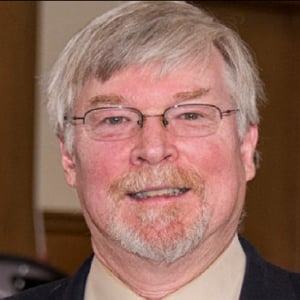
Senior Fellow, Potomac Institute for Policy Studies
Dean Cheng currently a Senior Fellow at the Potomac Institute for Policy Studies, specializing in the US relationship with China. Prior to being with the Potomac institute, he recently retired as the Senior Research Fellow for Chinese Political and Military Affairs at the Heritage Foundation. He is fluent in Chinese, and uses Chinese language materials regularly in his work. Previously, he worked with the China Studies Division (previously, Project Asia) at the Center for Naval Analysis, a Federally Funded Research and Development Center, where he specialized in Chinese military issues, with a focus on Chinese military doctrine and Chinese space capabilities. Before that, he worked for Science Applications International Corporation (SAIC), and as an analyst with the US Congress’ Office of Technology Assessment in the International Security and Space Division.
His published work includes the volume Cyber Dragon: Inside China’s Information Warfare and Cyber Operations (Praeger Publishing, 2016). He has testified before Congress, and spoken at the National Space Symposium, the US National Defense University, the USSTRATCOM Deterrence Symposium, Harvard, and MIT. He has appeared frequently in print and broadcast media to discuss Chinese space and military activities.
General Counsel, TechFreedom
James Dunstan serves as the General Counsel to TechFreedom. Jim has served as a Senior Adjunct Fellow to TechFreedom since its inception. Jim has more than 37 years of private practice experience in a technology-focused practice, including telecommunications, media, computer game, and outer space law. Jim spent 17 years at the telecom boutique firm Haley Bader & Potts (10 years in management), and headed the Telecommunications and Information Technology Group at Garvey, Schubert & Barer from 2000-2006. Jim founded his own firm, Mobius Legal Group, in 2010; he continues that private practice (on matters not in conflict with TechFreedom’s work) while serving as TechFreedom’s General Counsel.
Jim’s career includes being on the legal team that won the first cellular radio license for MCI in 1984, writing the constitutional challenge to the FCC’s Fairness Doctrine that took down the Doctrine in Syracuse Peace Council v. FCC, 867 F.2d 654 (1989), and helping shape the FCC’s children’s television rules on behalf of a client which produces the majority of educational programming for the major television networks. He litigated the first “virtual property” case and drafted and negotiated the first lease for a manned space station (Mir) as well as writing the first contract that was actually executed in outer space.
At TechFreedom, Jim’s substantive portfolio includes FCC regulation, the Children’s Online Protection and Privacy Act (COPPA), and all things outer space. As General Counsel, he oversees the entire legal team, and participates in TechFreedom’s robust appellate litigation team.
Jim was the 1978 Harry S. Truman Scholar from Arizona, is a graduate of Claremont McKenna College (1980), and the Georgetown University Law Center (1983). He is admitted to practice law in the District of Columbia and the Commonwealth of Virginia. Jim holds multiple patents for innovative computer input devices and has a number of patents pending in the field of computer game devices and methods. Jim is an avid musician, playing French horn in the Fairfax Wind Symphony, and with the Silver 5 Brass Quintet.
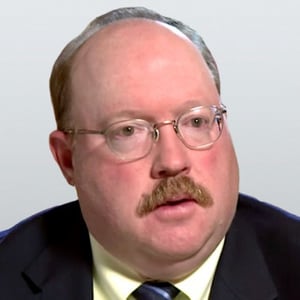
Senior Fellow, Asian Military Affairs, International Assessment and Strategy Center
Mr. Richard D. Fisher, Jr. is a Senior Fellow with the International Assessment and Strategy Center. He has previously worked with the Center for Security Policy, Jamestown Foundation China Brief, U.S. House of Representatives Republican Policy Committee, and The Heritage Foundation. Mr. Fisher has previously testified on aspects of China’s strategic challenge before the United States Senate, the House of Representatives and the U.S.-China Economic and Security Review Commission. He is the author of China’s Military Modernization, Building for Regional and Global Reach (Praeger, 2008, Stanford University Press, 2010, Taiwan Ministry of National Defense translation, 2012). His articles have been published in the Jane’s Intelligence Review, Jane’s Defence Weekly, Aviation Week and Space Technology, Armed Forces Journal, Far Eastern Economic Review, Asian Wall Street Journal, The Washington Times, The Sankei Shimbun, World Airpower Review and Air Forces Monthly. He received a B.A. (Honors) in 1981 from Eisenhower College.
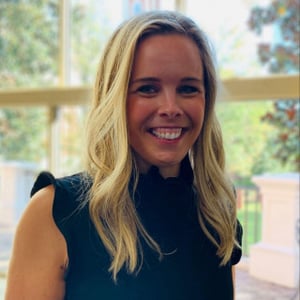
Senior Litigation Counsel, New Civil Liberties Alliance
Margaret Harker litigates for a public interest law firm. She has significant experience in government investigations and litigation, having served in the three branches of our government. Previously, she led complex Congressional investigations for the House Committee on Oversight and Government Reform—including the only government-wide investigation into federal agencies’ strategy (or lack thereof) to counter Chinese Communist Party political warfare against America.
Prior to her time on Capitol Hill, Harker served in the U.S. Department of Justice. She was an Assistant United States Attorney in both the Eastern District of Tennessee and the Eastern District of Virginia. She was a Trial Attorney in the National Security Division, Counterintelligence and Export Control Section, with an emphasis on the administration and enforcement of the Foreign Agents Registration Act.
Harker clerked for the Honorable Henry E. Hudson, U.S. District Court for the Eastern District of Virginia and the Honorable Randolph A. Beales, Court of Appeals of Virginia.
Earlier in her career, she studied in Beijing, China, and worked at the U.S. Chamber of Commerce’s China Center.
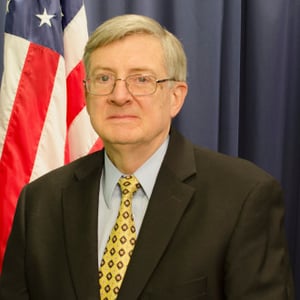
Senior Research Fellow, Mercatus Center, George Mason University; Former General Counsel at the Federal Trade Commission (FTC)
Alden Abbott is a Senior Research Fellow at the Mercatus Center. Prior to joining Mercatus, he served as the General Counsel of the Federal Trade Commission (FTC). As the Commission’s chief legal officer and adviser, he represented the agency in court and provides legal counsel to the Commission and its bureaus and offices.
Prior to rejoining the FTC in April 2018, Mr. Abbott served in executive positions at the Heritage Foundation (2014-2018) and BlackBerry (2012-2014). He also held a variety of senior positions in the U.S. federal government (in the FTC, the Commerce Department, and the Justice Department's Office of Legal Counsel and the Antitrust Division).
He speaks French, Spanish, and Italian.

Professor of Law and Journalism, University of Florida
Professor Jane Bambauer is the Brechner Eminent Scholar at the Levin College of Law and at the College of Journalism and Communications. She teaches Torts, First Amendment, Media Law, Criminal Procedure, and Privacy Law.
Professor Bambauer’s research assesses the social costs and benefits of Big Data, AI, and predictive algorithms. Her work analyzes how the regulation of these new information technologies will affect free speech, privacy, law enforcement, health and safety, competitive markets, and government accountability. Professor Bambauer’s research has been featured in over 20 scholarly publications, including the Stanford Law Review, the Michigan Law Review, the California Law Review, and the Journal of Empirical Legal Studies. Her work has also been featured in media outlets, including the Washington Post, the New York Times, Fox News, and Lawfare, where she is a contributing editor.
Professor Bambauer currently serves as the Chair of the National AI Advisory Committee Subcommittee on Law Enforcement, and she has previously served as the deputy director of the Center for Quantum Networks, a multi-institutional engineering research center funded by the National Science Foundation. She holds a B.S. in Mathematics from Yale College and a J.D. from Yale Law School.
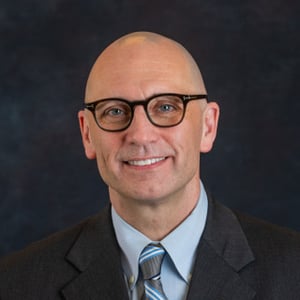
Senior Counsel for Law and Policy, Committee for Justice
Jeff is a registered patent attorney and an intellectual property and innovation policy professional with a unique combination of training and real-world experience. Jeff is also currently a PhD candidate at the University of Pittsburgh Graduate School of Public and International Affairs (GSPIA). His dissertation is entitled “An Inquiry into the Nature and Causes of American Innovation: An Austrian Economics Perspective.”
Jeff maintains an active intellectual property law practice in the life sciences space. While counseling clients and working on his dissertation and other scholarship, Jeff remains active in the policy analysis and advocacy space. He currently serves as the President of the Association for American Innovation and a member and former Chair of the Public Policy Legal Task Force (PPLTF) for the Association of University of Technology Managers (AUTM).
Jeff has a bachelor’s degree chemical and biomedical engineering with concentrations in molecular biology and fermentation technology and from Carnegie Mellon. He also has a master’s degree in industrial administration (business) from Carnegie Mellon where he concentrated on international management, marketing and finance. He earned his law degree from the Duquesne University School of Law with a focus on intellectual property law.
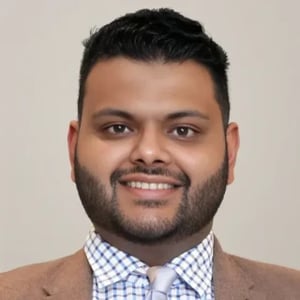
Postgraduate Research Fellow, Mercatus Center, George Mason University
Satya Marar is a Research Fellow at the Mercatus Center at George Mason University where he was formerly an MA Fellow. He holds an MA in Economics from George Mason University and a BA in writing and an LLB with Honors in law from Macquarie University in Sydney, Australia. He is currently pursuing an LLM in US law at George Mason University. He has previously worked at Reason Foundation and the Australian Taxpayers’ Alliance. His research interests include antitrust & competition policy, intellectual property, trade and technology policy.
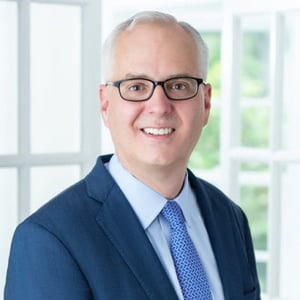
Principal, Clear IP, LLC
Joseph Matal is the Principal at Clear IP, LLC.
Joe has served as both the U.S. Patent and Trademark’s Acting Director and Acting Solicitor. As Acting Solicitor, he defended the agency in intellectual property cases before the U.S. Court of Appeals for the Federal Circuit and U.S. Supreme Court. In his role in the Solicitor’s Office, he participated in briefing almost every major case involving PTAB trials that has come before the Federal Circuit, including cases that have defined the Board’s powers and the evidence that it may consider, the content of final decisions, and the burdens and scope of motions to amend. Recent cases include Uniloc v. Hulu, Thryv v. Click-to-Call, and Aqua Products v. Matal. Previously, Joe served in senior legal roles for more than a decade for the U.S. Senate Judiciary Committee. In that capacity, he negotiated and drafted many of the key provisions of the America Invents Act.
In his roles at the USPTO, Joe briefed and argued numerous appeals of patent and trademark decisions before the Federal Circuit; oversaw the management of the USPTO and its 13,000 employees; and advised the U.S. Solicitor General’s Office in key IP cases before the Supreme Court.

Visiting Fellow, National Security Institute, George Mason University's Antonin Scalia Law School
Mr. Taylor was counsel and chief counsel of the House Subcommittee on the Constitution, Civil Rights, and Civil Liberties, for over 20 years, where he shepherded dozens of bills through committee to be signed into law by presidents of both political parties. He was also counsel to the House Oversight Committee, where he handled constitutional and civil rights issues. He is the author of over a dozen law review articles on legal reform, continuity in government, religious liberty, congressional powers, civil rights, and patent law. He is an elected member of the American Law Institute (the first active congressional staff person elected to that body in its 100-year history), a 1991 graduate of Yale University (BA, summa cum laude), and a 1994 graduate of Harvard Law School (JD, cum laude). He is a Visiting Fellow at the National Security Institute at George Mason University's Antonin Scalia Law School.
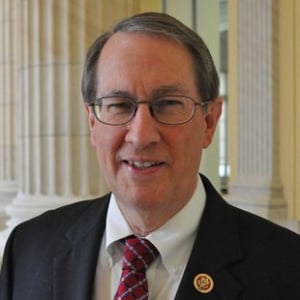
Former Congressman, United States House of Representatives
Bob Goodlatte served in the United States House of Representatives representing Virginia's 6th congressional district for 13 terms.
Goodlatte’s service to the people of the Sixth District began in 1977 when he became District Director for former Congressman Caldwell Butler. He served in this position for two years until 1979, and was responsible for helping folks across the District seeking assistance with or encountering problems from various federal agencies. In 1979, he founded his own private law practice in Roanoke. Later, he was a partner in the law firm of Bird, Kinder and Huffman, working there from 1981 until taking office.
Rep. Goodlatte was first elected to serve as Chairman of the House Judiciary Committee in the 113th Congress. He was the first Judiciary Committee Chairman from Virginia in the last 125 years. Rep. Goodlatte was an active Member of the Judiciary Committee since arriving in Congress, serving in a variety of leadership positions on the Committee including taking the lead on many intellectual property issues. During his time in Congress, Rep. Goodlatte made a name for himself as a leader on Internet and technology issues. He was Co-Chair of the Congressional Internet Caucus and the International Creativity and Theft-Prevention Caucus.
Rep. Goodlatte is a graduate of Washington and Lee University School of Law, and his undergraduate degree in Government was earned at Bates College in Lewiston, Maine.
Principal, Clear IP, LLC
Joseph Matal is the Principal at Clear IP, LLC.
Joe has served as both the U.S. Patent and Trademark’s Acting Director and Acting Solicitor. As Acting Solicitor, he defended the agency in intellectual property cases before the U.S. Court of Appeals for the Federal Circuit and U.S. Supreme Court. In his role in the Solicitor’s Office, he participated in briefing almost every major case involving PTAB trials that has come before the Federal Circuit, including cases that have defined the Board’s powers and the evidence that it may consider, the content of final decisions, and the burdens and scope of motions to amend. Recent cases include Uniloc v. Hulu, Thryv v. Click-to-Call, and Aqua Products v. Matal. Previously, Joe served in senior legal roles for more than a decade for the U.S. Senate Judiciary Committee. In that capacity, he negotiated and drafted many of the key provisions of the America Invents Act.
In his roles at the USPTO, Joe briefed and argued numerous appeals of patent and trademark decisions before the Federal Circuit; oversaw the management of the USPTO and its 13,000 employees; and advised the U.S. Solicitor General’s Office in key IP cases before the Supreme Court.
Visiting Fellow, National Security Institute, George Mason University's Antonin Scalia Law School
Mr. Taylor was counsel and chief counsel of the House Subcommittee on the Constitution, Civil Rights, and Civil Liberties, for over 20 years, where he shepherded dozens of bills through committee to be signed into law by presidents of both political parties. He was also counsel to the House Oversight Committee, where he handled constitutional and civil rights issues. He is the author of over a dozen law review articles on legal reform, continuity in government, religious liberty, congressional powers, civil rights, and patent law. He is an elected member of the American Law Institute (the first active congressional staff person elected to that body in its 100-year history), a 1991 graduate of Yale University (BA, summa cum laude), and a 1994 graduate of Harvard Law School (JD, cum laude). He is a Visiting Fellow at the National Security Institute at George Mason University's Antonin Scalia Law School.
Former Congressman, United States House of Representatives
Bob Goodlatte served in the United States House of Representatives representing Virginia's 6th congressional district for 13 terms.
Goodlatte’s service to the people of the Sixth District began in 1977 when he became District Director for former Congressman Caldwell Butler. He served in this position for two years until 1979, and was responsible for helping folks across the District seeking assistance with or encountering problems from various federal agencies. In 1979, he founded his own private law practice in Roanoke. Later, he was a partner in the law firm of Bird, Kinder and Huffman, working there from 1981 until taking office.
Rep. Goodlatte was first elected to serve as Chairman of the House Judiciary Committee in the 113th Congress. He was the first Judiciary Committee Chairman from Virginia in the last 125 years. Rep. Goodlatte was an active Member of the Judiciary Committee since arriving in Congress, serving in a variety of leadership positions on the Committee including taking the lead on many intellectual property issues. During his time in Congress, Rep. Goodlatte made a name for himself as a leader on Internet and technology issues. He was Co-Chair of the Congressional Internet Caucus and the International Creativity and Theft-Prevention Caucus.
Rep. Goodlatte is a graduate of Washington and Lee University School of Law, and his undergraduate degree in Government was earned at Bates College in Lewiston, Maine.

President and Founder, International Center for Law & Economics
Geoffrey A. Manne is the president and founder of the International Center for Law and Economics (ICLE), a nonprofit, nonpartisan research center based in Portland, Oregon. He is also a distinguished fellow at Northwestern Law School’s Searle Center on Law, Regulation, & Economic Growth. In April 2017 he was appointed by FCC Chairman Ajit Pai to the FCC’s Broadband Deployment Advisory Committee, and he recently served for two years on the FCC’s Consumer Advisory Committee.
Mr. Manne earned his JD and AB degrees from the University of Chicago and is an expert in the economic analysis of law, specializing in competition, telecommunications, consumer protection, intellectual property, and technology policy.
Prior to founding ICLE, Manne was a law professor at Lewis & Clark Law School. From 2006-2009, he took a leave from teaching to develop Microsoft’s law and economics academic outreach program. Manne has also served as a lecturer in law at the University of Chicago Law School and the University of Virginia School of Law. He practiced antitrust law and appellate litigation at Latham & Watkins, clerked for Hon. Morris S. Arnold on the 8th Circuit Court of Appeals, and worked as a research assistant for Judge Richard Posner. He was also once (very briefly) employed by the FTC.
Mr. Manne’s publications have appeared in numerous journals including the Journal of Competition Law and Economics, the Harvard Journal of Law and Technology, the Supreme Court Economic Review, and the Arizona Law Review, among others. With former FTC Commissioner, Joshua Wright, Manne is the editor of a volume from Cambridge University Press entitled, Competition Policy and Intellectual Property Law Under Uncertainty: Regulating Innovation. Manne has also testified on several occasions before Congress and at the FCC and FTC, and he regularly files written comments and amicus briefs on key antitrust, IP, and telecommunications issues. His analysis is frequently published in popular print and broadcasting outlets such as the Wall Street Journal, Wired, Foreign Affairs, NPR, and Bloomberg, among others.
Manne is a member of the American Law and Economics Association, the Canadian Law and Economics Association, and the Society for Institutional & Organizational Economics. He blogs at Truth on the Market (www.truthonthemarket.com) (of which he is also the co-founder), is a contributor at WIRED, and tweets at @geoffmanne. His scholarly publications are available at http://ssrn.com/author=175541.
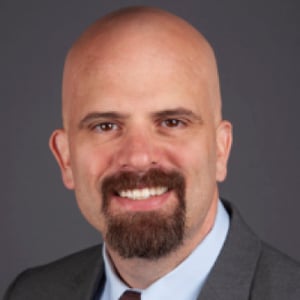
Director of Innovation Policy, International Center for Law & Economics
Kristian Stout, ICLE’s Director of Innovation Policy is an expert in intellectual property, antitrust, telecommunications, and Internet governance. Kristian has been a Fellow at the Internet Law & Policy Foundry, as well as the Eagleton Institute of Politics. Before practicing law, Kristian worked as a technology entrepreneur and a lecturer in the Computer Science Department at Rutgers University. Kristian served on the board of the New Jersey Leadership Program, and wasthe Chair of the Asset Forfeiture Working Group for the NJ State Advisory Committee to the United States Commission on Civil Rights. He has previously served on the Broadband Deployment Advisory Committee for the Federal Communications Commission. Kristian graduated magna cum laude from the Rutgers University School of law, and served on the editorial board of the Rutgers Journal of Law and Public Policy.
Senior Scholar, International Center for Law & Economics
Julian Morris is a Senior Scholar at the International Center for Law & Economics.
Senior Fellow for Law & Economics, International Center for Law & Economics
Dirk Auer is the Senior Fellow for Law & Economics at the International Center for Law & Economics.
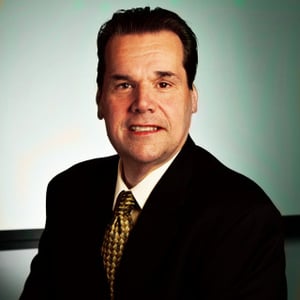
Partner, Patrick Doerr
Mr. Rando has represented clients in matters involving computer hardware and software, silicon chip manufacturing, biotechnology, medical devices, pharmaceuticals, chemical compounds, food additives, alternative energy, AI, autonomous vehicles, blockchain, consumer electronics, communications, internet, and e-commerce. He has appeared in courts across the country, including the Southern and Eastern Districts of New York and multiple U.S. Courts of Appeals.
As appellate counsel, Mr. Rando has served as counsel of record or co-counsel in more than 30 amicus briefs filed before the U.S. Supreme Court and Federal Circuit on issues of patent law, statutory interpretation, separation of powers, and constitutional law. Noteworthy filings include eBay Inc. v. MercExchange (2006), Oil States v. Greene’s Energy (2017), American Axle v. Neapco (2021), Amgen v. Sanofi (2023), and Cellect v. Vidal (2024).
Mr. Rando is a Fellow of the Academy of Court-Appointed Masters, having served by judicial appointment as Special Master in numerous complex patent cases, including multi-day Markman hearings and post-discovery proceedings. He also serves as a court-appointed Mediator and Neutral in both patent and commercial disputes.
He has played an active role in judicial and legislative engagement. Mr. Rando co-developed and conducted lecture series for the SDNY and EDNY Patent Pilot Program Judges and Clerks, covering the America Invents Act and Section 101 eligibility post-Alice and Mayo. He represented both the Federal Bar Association (FBA) and New York Intellectual Property Law Association (NYIPLA) at the Tillis/Coons Section 101 Patent Reform Roundtable, and submitted written testimony to the U.S. Senate Judiciary Committee in 2019.
Mr. Rando is a former president of the NYIPLA (2023–2024) and has held nearly every leadership position in the organization. He also served as Chair of the FBA’s Intellectual Property Law Section and was a founding member and president of the FBA’s EDNY Chapter. He is a founding member of the Association of Amicus Counsel, and an active contributor to the Federalist Society IP Practice Group Executive Committee.
He frequently lectures at CLE programs, universities, and legal associations on IP, constitutional law, and appellate advocacy. He has been quoted extensively in publications such as Law360, Bloomberg Law, WIPR, and National Law Journal. His scholarly publications include articles in The Federal Lawyer, Touro Law Review, and IPWatchdog.
Former Congressman, United States House of Representatives
Bob Goodlatte served in the United States House of Representatives representing Virginia's 6th congressional district for 13 terms.
Goodlatte’s service to the people of the Sixth District began in 1977 when he became District Director for former Congressman Caldwell Butler. He served in this position for two years until 1979, and was responsible for helping folks across the District seeking assistance with or encountering problems from various federal agencies. In 1979, he founded his own private law practice in Roanoke. Later, he was a partner in the law firm of Bird, Kinder and Huffman, working there from 1981 until taking office.
Rep. Goodlatte was first elected to serve as Chairman of the House Judiciary Committee in the 113th Congress. He was the first Judiciary Committee Chairman from Virginia in the last 125 years. Rep. Goodlatte was an active Member of the Judiciary Committee since arriving in Congress, serving in a variety of leadership positions on the Committee including taking the lead on many intellectual property issues. During his time in Congress, Rep. Goodlatte made a name for himself as a leader on Internet and technology issues. He was Co-Chair of the Congressional Internet Caucus and the International Creativity and Theft-Prevention Caucus.
Rep. Goodlatte is a graduate of Washington and Lee University School of Law, and his undergraduate degree in Government was earned at Bates College in Lewiston, Maine.
Principal, Clear IP, LLC
Joseph Matal is the Principal at Clear IP, LLC.
Joe has served as both the U.S. Patent and Trademark’s Acting Director and Acting Solicitor. As Acting Solicitor, he defended the agency in intellectual property cases before the U.S. Court of Appeals for the Federal Circuit and U.S. Supreme Court. In his role in the Solicitor’s Office, he participated in briefing almost every major case involving PTAB trials that has come before the Federal Circuit, including cases that have defined the Board’s powers and the evidence that it may consider, the content of final decisions, and the burdens and scope of motions to amend. Recent cases include Uniloc v. Hulu, Thryv v. Click-to-Call, and Aqua Products v. Matal. Previously, Joe served in senior legal roles for more than a decade for the U.S. Senate Judiciary Committee. In that capacity, he negotiated and drafted many of the key provisions of the America Invents Act.
In his roles at the USPTO, Joe briefed and argued numerous appeals of patent and trademark decisions before the Federal Circuit; oversaw the management of the USPTO and its 13,000 employees; and advised the U.S. Solicitor General’s Office in key IP cases before the Supreme Court.
Visiting Fellow, National Security Institute, George Mason University's Antonin Scalia Law School
Mr. Taylor was counsel and chief counsel of the House Subcommittee on the Constitution, Civil Rights, and Civil Liberties, for over 20 years, where he shepherded dozens of bills through committee to be signed into law by presidents of both political parties. He was also counsel to the House Oversight Committee, where he handled constitutional and civil rights issues. He is the author of over a dozen law review articles on legal reform, continuity in government, religious liberty, congressional powers, civil rights, and patent law. He is an elected member of the American Law Institute (the first active congressional staff person elected to that body in its 100-year history), a 1991 graduate of Yale University (BA, summa cum laude), and a 1994 graduate of Harvard Law School (JD, cum laude). He is a Visiting Fellow at the National Security Institute at George Mason University's Antonin Scalia Law School.
Partner, Patrick Doerr
Mr. Rando has represented clients in matters involving computer hardware and software, silicon chip manufacturing, biotechnology, medical devices, pharmaceuticals, chemical compounds, food additives, alternative energy, AI, autonomous vehicles, blockchain, consumer electronics, communications, internet, and e-commerce. He has appeared in courts across the country, including the Southern and Eastern Districts of New York and multiple U.S. Courts of Appeals.
As appellate counsel, Mr. Rando has served as counsel of record or co-counsel in more than 30 amicus briefs filed before the U.S. Supreme Court and Federal Circuit on issues of patent law, statutory interpretation, separation of powers, and constitutional law. Noteworthy filings include eBay Inc. v. MercExchange (2006), Oil States v. Greene’s Energy (2017), American Axle v. Neapco (2021), Amgen v. Sanofi (2023), and Cellect v. Vidal (2024).
Mr. Rando is a Fellow of the Academy of Court-Appointed Masters, having served by judicial appointment as Special Master in numerous complex patent cases, including multi-day Markman hearings and post-discovery proceedings. He also serves as a court-appointed Mediator and Neutral in both patent and commercial disputes.
He has played an active role in judicial and legislative engagement. Mr. Rando co-developed and conducted lecture series for the SDNY and EDNY Patent Pilot Program Judges and Clerks, covering the America Invents Act and Section 101 eligibility post-Alice and Mayo. He represented both the Federal Bar Association (FBA) and New York Intellectual Property Law Association (NYIPLA) at the Tillis/Coons Section 101 Patent Reform Roundtable, and submitted written testimony to the U.S. Senate Judiciary Committee in 2019.
Mr. Rando is a former president of the NYIPLA (2023–2024) and has held nearly every leadership position in the organization. He also served as Chair of the FBA’s Intellectual Property Law Section and was a founding member and president of the FBA’s EDNY Chapter. He is a founding member of the Association of Amicus Counsel, and an active contributor to the Federalist Society IP Practice Group Executive Committee.
He frequently lectures at CLE programs, universities, and legal associations on IP, constitutional law, and appellate advocacy. He has been quoted extensively in publications such as Law360, Bloomberg Law, WIPR, and National Law Journal. His scholarly publications include articles in The Federal Lawyer, Touro Law Review, and IPWatchdog.

Race to a Moon Base—And Frontiers Beyond
Dean Cheng, James Dunstan, Richard D. Fisher, Margaret Harker
As Artemis II navigated around the far side of the moon, setting a new human...
When Should We Recognize Something as a Property Right?
Alden F. Abbott, Jane Bambauer, Jeffrey E. Depp, Satya Marar
America has historically led the way in intangible property rights. We were the first country...
Ten Years On: The America Invents Act and the role of the Patent Trial and Appeal Board in resolving patent disputes
Joseph Matal, Paul Brian Taylor, Bob Goodlatte
On September 16, 2011, President Obama signed the American Invents Act (AIA) into law. The...
Ten Years On: The America Invents Act and the role of the Patent Trial and Appeal Board in resolving patent disputes
Joseph Matal, Paul Brian Taylor, Bob Goodlatte
On September 16, 2011, President Obama signed the American Invents Act (AIA) into law. The...
Ten Years On: The America Invents Act and the role of the Patent Trial and Appeal Board in resolving patent disputes
The Deterioration of Appropriate Remedies in Patent Disputes
Geoffrey A. Manne, Kristian Stout, Julian Morris, Dirk Auer
Note from the Editor: The Federalist Society takes no positions on particular legal and public...
Should We Be Re-Thinking Section 101?
Until 2012, it was never seriously doubted that methods and devices for the diagnostic testing...
Courthouse Steps Decision Teleforum: Peter v. NantKwest Inc.
Robert J. Rando
On December 11, 2019, the Supreme Court issued its decision in Peter v. NantKwest Inc....
Courthouse Steps Decision Teleforum: Peter v. NantKwest Inc.
TeleforumTopics
Argument Spotlight: Return Mail v. USPS
On February 20, 2019 the Supreme Court heard yet another case stemming from the...