

Chief Judge, United States Court of Appeals, Fifth Circuit
Jennifer Walker Elrod is the Chief Judge of the United States Court of Appeals for the Fifth Circuit. She was nominated to the Fifth Circuit in 2007, and she served as a Circuit Judge on the court until assuming the role of Chief Judge in October 2024. Prior to serving as a Circuit Judge, Chief Judge Elrod was appointed and then twice elected Judge of the 190th District Court of Harris County, Texas, where she spent over five years presiding over more than 200 jury and non-jury trials.
Chief Judge Elrod graduated cum laude from Harvard Law School, where she was an active member of the Harvard Federalist Society, an Ames Moot Court finalist, and a Senior Editor of the Harvard Journal of Law & Public Policy. She clerked for the Honorable Sim Lake in the Southern District of Texas. Before serving as a judge, Chief Judge Elrod worked in private practice, focusing on civil litigation, antitrust, and employment matters.
She has been repeatedly recognized for her work as a jurist, as well as for her pro bono work and contributions to the community. She has been named the 2022 Texas Review of Law & Politics’ Jurist of the Year, the 2018 Harvard Federalist Society’s Alumni of the Year, the 2016–17 Texas Association of Civil Trial and Appellate Specialists’ Appellate Judge of the Year, and the 2008 Mexican-American Bar Association of Texas’s Judge of the Year.
Chief Judge Elrod is actively engaged in the academic and legal communities. Chief Judge Elrod currently serves on the Board of Directors and as the Jurist-in-Residence at the South Texas College of Law, where she teaches civil procedure and First Amendment law. She is also a member of the American Law Institute and of the Board of Advisors for the Harvard Journal of Law & Public Policy, and she is a former member of the Board of Regents of her alma mater, Baylor University, and the Board of Visitors at Brigham Young University Law School. She previously served as the Chair of the Codes of Conduct Committee for the Judicial Conference of the United States. She has also served as the M.D. Anderson Visiting Public Service Professor at the Texas Tech University School of Law and as Jurist-in-Residence at Brigham Young University Law School, and she has taught legal writing at the University of Houston Law Center. She presented the Lewis F. Powell, Jr. Distinguished Lecture at the Washington and Lee University School of Law and is a frequent speaker on the topics of trial and appellate procedure, ethics, employment law, and constitutional law. Chief Judge Elrod also serves on the board of the Garland R. Walker Inn of Court, and co-produces an annual musical CLE, for which her pupilage group has won multiple national awards.
Chief Judge Elrod’s publications include: Trial by Siri: AI Comes to the Courtroom; Don’t Mess with Texas Judges: In Praise of the State Judiciary; For Good: Enriching Your Practice and Your Life Through Pro Bono and Community Service; Is the Jury Still Out?: A Case for the Continued Viability of the American Jury; and W(h)ither the Jury? The Diminishing Role of the Jury Trial in our Legal System.
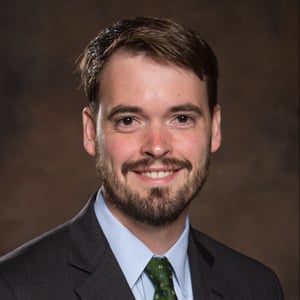
Senior Attorney, Institute for Justice
Rob Johnson is a senior attorney at the Institute for Justice, where he litigates to protect private property, free speech, and other individual rights. Rob is a nationally-recognized expert on civil forfeiture. He previously represented a series of small business owners who had their entire bank accounts seized by the IRS, and he launched an initiative that resulted in the IRS reopening hundreds of closed forfeiture cases and returning millions of dollars. He has also litigated cases challenging the constitutionality of civil forfeiture procedures, and he scored a victory striking down a forfeiture program as a violation of due process.
Beyond civil forfeiture, Rob has litigated cases defending a range of constitutional rights. He was part of teams that successfully challenged occupational licensing requirements for tour guides in Savannah and Charleston. He also developed a class action lawsuit fighting the NYPD’s use of a draconian “no-fault eviction” statute to coerce residents to waive their constitutional rights, which led New York City to reform the challenged law.
Rob’s writing has been published in the Wall Street Journal, Washington Post, Politico, and Reason, among other venues. Rob has testified about occupational licensing before the House and Senate Judiciary Committees and has twice testified about civil forfeiture before the House Ways & Means Oversight Subcommittee. He has also testified before state legislatures across the country.
From 2014-2017, Rob served as IJ’s first Elfie Gallun Fellow for Freedom and the Constitution. In that role, Rob wrote and spoke about the vital role the U.S. Constitution plays in protecting our most precious freedoms. He is currently at work on a book about the Fourteenth Amendment.
Rob studied literature and anthropology at Columbia University, and he studied law at Harvard Law School. Upon graduation, he clerked for Chief Judge Alex Kozinski on the Ninth Circuit and for Justice Anthony Kennedy on the Supreme Court.
Rob lives in Cleveland with his wife and two daughters—all named after characters in Shakespeare plays—and is an amateur large format photographer.
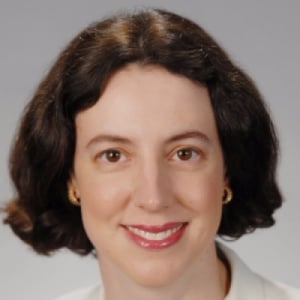
Donald Phillip Rothschild Research Professor, George Washington University Law School
Renée Lettow Lerner is Donald Phillip Rothschild Research Professor of Law at George Washington University Law School.
Professor Lerner works in the fields of U.S. and English legal history, civil and criminal procedure, and comparative law. She advises judges, lawyers, and government officials from the United States and countries in Europe, Latin America, and Asia about the differences between adversarial and nonadversarial legal systems.
She writes extensively about the history of American juries. Her work includes not only scholarly articles, but also online publications intended for a broader audience of legal professionals and the public. In many different settings, she has debated the role of juries with other academics and with lawyers. She has a book forthcoming with Oxford University Press in the Very Short Introduction Series entitled “The Jury.” She is also working on a book about the American civil jury, from the colonial period to the present.
She is the author, with John Langbein and Bruce Smith, of the book History of the Common Law: The Development of Anglo-American Legal Institutions (2009).
Her recent writings include a book review of Amalia D. Kessler’s Inventing American Exceptionalism: The Origins of American Adversarial Legal Culture, 1800-1877, 67 J. Legal Ed. 888 (2018); “How the Creation of Appellate Courts in England and the United States Limited Judicial Comment on Evidence to the Jury,” 40 Journal of the Legal Profession 215 (2016); “The Troublesome Inheritance of Americans in Magna Carta and Trial by Jury,” in Magna Carta and its Modern Legacy 77-98 (Robert Hazell and James Melton eds., Cambridge University Press 2015); and “The Failure of Originalism in Preserving Constitutional Rights to Civil Jury Trial,” 22 William & Mary Bill of Rights Journal 811 (2014).
Professor Lerner received an A.B. summa cum laude in history from Princeton University. She was a Rhodes Scholar at Oxford University, where she studied English legal history. At Yale Law School, she was Articles Editor of the Yale Law Journal. She served as a law clerk to Justice Anthony M. Kennedy of the U.S. Supreme Court and to Judge Stephen F. Williams of the U.S. Court of Appeals for the District of Columbia Circuit. From 2003 to 2005, she served as Deputy Assistant Attorney General in the Office of Legal Counsel at the U.S. Department of Justice.

Professor of Law, University of Michigan Law School
Christopher J. Walker is a Professor of Law at the University of Michigan. Prior to joining Michigan law faculty in 2022, he spent a decade teaching at The Ohio State University Moritz College of Law. He previously clerked for Justice Anthony Kennedy of the U.S. Supreme Court, worked on the Civil Appellate Staff at the U.S. Department of Justice, and served on the Senate Judiciary Committee staff for the Gorsuch Supreme Court confirmation. Professor Walker’s research focuses on administrative law, regulation, and law and policy at the agency level. Outside the law school, he chaired the American Bar Association’s Section of Administrative Law and Regulatory Practice in 2020-21 and served as one of forty Public Members of the Administrative Conference of the United States from 2016-2022, and he continues to serve in both organizations in various capacities. He also works of counsel at the U.S. Chamber Litigation Center. In 2022, he received the Federalist Society’s Joseph Story Award.
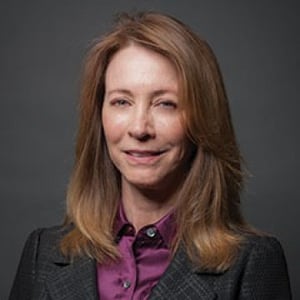
Founder, Libertas-West Project
Karen Lugo is a constitutional law consultant and national security analyst. She was Director of the Center for Tenth Amendment at Texas Public Policy Foundation from 2013 to 2015. When living in California, she was Co-Director of the Center for Constitutional Jurisprudence Center. From 2005 – 2012, she was a clinical visiting and adjunct professor at Chapman University School of Law where she co-taught the advanced Constitutional Law Clinic. Karen has co-authored and written circuit-level and Supreme Court amicus briefs on such issues as FISA Surveillance, Healthcare Reform, Arizona’s Border Security, Gay Marriage, The Ten Commandments, Eminent Domain, Christian Clubs on University Campuses, and Material Support for Terrorists.
Karen is the founder of the Libertas-West Project, a center for study Islamic integration and radicalization issues. In this capacity, she consulted with the Center for Security Policy to write a book on local over-watch of mosque construction and community engagement called: Mosques in America: A Guide to Accountable Permit Hearings and Continuing Citizen Oversight.
Karen writes and speaks for European and American groups on the importance of basing assimilation efforts on principles of Western exceptionalism. She presented a policy brief to the French Conseil d’Etat analyzing the legal implications of banning the burqa. Ms. Lugo has written one of the most comprehensive overviews of sharia law in American courts, American Family Law and Sharia-Compliant Marriages, for the Federalist Society law journal, Engage. She has written several white papers on the American Law for American Courts legislation and sharia tribunals in America.
Ms. Lugo was an appointee to the California Advisory Committee to the U.S. Commission on Civil Rights. She also taught a Human Rights law course on the contrast between French and English Enlightenment theories in Strasbourg, France.
Until moving from California, Ms. Lugo was a member of the David Horowitz Freedom Center Board of Directors. She was also a regular guest on the Orange County PBS local issues debate program, Inside OC, and she is a contributor to Pajamas Media, National Review Online, City Journal, American Spectator, American Greatness, Townhall.com, American Thinker, Daily Caller, and Family Security Matters. She has been interviewed by dozens of radio hosts and has spoken for civic groups on constitutional and cultural concerns.
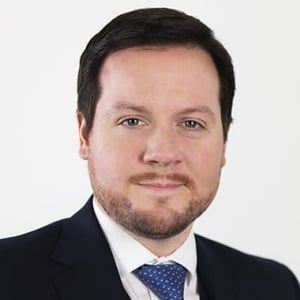
Legal Counsel, Alliance Defending Freedom International
Lorcán Price is legal counsel with ADF International in Strasbourg, France, where he heads litigation efforts at the European Court of Human Rights and handles needs that involve the Council of Europe and the Venice Commission. Prior to joining ADF International in 2015, Lorcán worked at the Irish Parliament as a speechwriter and then as a practicing barrister in Dublin, Ireland. He received his B.A. in philosophy from the National University of Ireland–Galway, achieved the degree of Barrister Advocate at the Honourable Society of the Kings Inns–Dublin, and obtained his Masters in Law degree from Trinity College–Dublin with an emphasis on European competition law and commercial insolvency law. He also is a well-known speaker and author for the pro-life movement in Ireland.
Partner, Briard Bonichot & Associés
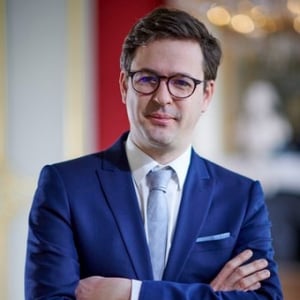
Stéphane Bonichot is a Partner at Briard Bonichot & Associés, a Paris-based firm renowned for its work before France’s highest courts. A member of the Paris Bar since 2010, he represents clients across a wide spectrum of legal fields, including civil and commercial law, banking and financial matters, securities, competition, intellectual property, criminal law, and international economic law, with particular expertise in Franco-German legal issues. He holds dual master’s degrees in French and German law from the University of Cologne and the University of Paris I Panthéon-Sorbonne, as well as a master’s in Law and Economic Globalization from Sciences Po Paris and Paris I. He also earned an LL.M. from the London School of Economics and Political Science and is completing advanced training at the Institut de formation et de recherche des avocats aux Conseils (IFRAC).
Senior Counsel, Alliance Defending Freedom International
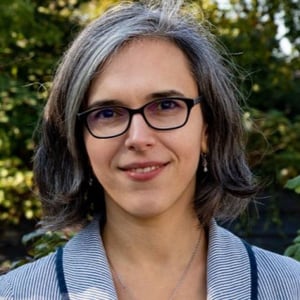
Dr. Adina Portaru serves as senior counsel, Europe, for ADF International in Belgium, where she leads the work of our Brussels and Strasbourg teams with a particular focus on advocacy at the international organisations and institutions in Europe.
Independent scholar and journalist
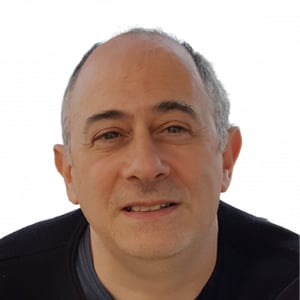
John Rosenthal is a journalist and political analyst who has been covering European
politics for the last two decades. His writings have appeared in such publications as Policy
Review, World Affairs, The Weekly Standard, World Politics Review, Al-Monitor and Brussels
Signal, as well as in French and German in publications like Les Temps Modernes and Die
Weltwoche. He holds a PhD in philosophy and previously taught political philosophy and the
history of European philosophy at schools in both the United States and Europe.
He is the author of “Make Speech Free Again: How the U.S. can defeat E.U. censorship” in
the Spring 2025 issue of the Claremont Review of Books.

Professor of Law, University of San Diego School of Law
Maimon Schwarzschild is Professor of Law at the University of San Diego, where he has taught
since 1982. He has published extensively on constitutional law, jurisprudence, law and religion,
and civil rights. He is an English barrister and an American lawyer: he was an attorney in the
Civil Rights Division of the US Department of Justice from 1976 to 1981 and practised as a
barrister in London in the 1980s. He was a visiting professor at the Sorbonne for several years,
and has been a visiting professor at the Hebrew University in Jerusalem. He is a Director of the
Institute of Law and Religion at the University of San Diego and a member of the editorial board
of Law and Philosophy. With Gail Heriot he recently co-edited a volume entitled “A Dubious
Expediency: How Race Preferences Damage Higher Education”, published by Encounter Books.

President, TechFreedom
Berin Szoka serves as President of TechFreedom. Previously, he was a Senior Fellow and the Director of the Center for Internet Freedom at The Progress & Freedom Foundation. Before joining PFF, he was an Associate in the Communications Practice Group at Latham & Watkins LLP, where he advised clients on regulations affecting the Internet and telecommunications industries. Before joining Latham's Communications Practice Group, Szoka practiced at Lawler Metzger Milkman & Keeney, LLC, a boutique telecommunications law firm in Washington, and clerked for the Hon. H. Dale Cook, Senior U.S. District Judge for the Northern District of Oklahoma. Szoka received his Bachelor's degree in economics from Duke University and his juris doctor from the University of Virginia School of Law, where he served as Submissions Editor of the Virginia Journal of Law and Technology. He is admitted to practice law in the District of Columbia and California (inactive).

AI Innovation and Law Fellow, University of Texas School of Law
Kevin Frazier is an AI Innovation and Law Fellow with University of Texas School of Law.
Senior Fellow, Foundation for American Innovation
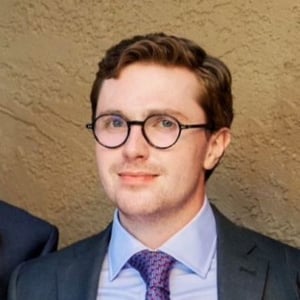
Dean Woodley Ball is a senior fellow at FAI. He most recently served as Senior Policy Advisor for Artificial Intelligence and Emerging Technology at the White House Office of Science and Technology Policy and Strategic Advisor for AI at the National Science Foundation. Previously he was a Research Fellow in the Artificial Intelligence & Progress Project at George Mason University's Mercatus Center and a Policy Fellow at Fathom.
Dean is author of Hyperdimensional. His work focuses on emerging technologies and the future of governance, spanning artificial intelligence, manufacturing innovation, neural technology, bioengineering, technology policy, political theory, public finance, urban infrastructure, and criminal justice reform. Outside of FAI, his scholarship has been published by the Mercatus Center, the Hoover Institution, the Carnegie Endowment for International Peace, the Federation of American Scientists, the Manhattan Institute, and American Compass.
His writing has appeared in National Affairs, The New Atlantis, Pirate Wires, Lawfare, The Dispatch, The Hill, Tech Policy Press, the Washington Post, the Orange County Register, the Coolidge Quarterly, and National Review. His academic work includes "Neither Harbour nor Floor: Contemplating the Singularity with Michael Oakeshott" in the forthcoming Liberalism Revisited (Palgrave) and "Ideas of Another Order: Michael Oakeshott and Confucius in Conversation" in Collingwood and British Idealism Studies.
Prior to his government service, Dean held senior positions at Stanford's Hoover Institution, the Calvin Coolidge Presidential Foundation, and the Manhattan Institute, where he oversaw the Hayek Book Prize. He also consults on passion projects, including on-the-ground policing reform in Argentina and Chile and the restoration of the Florentine guild system for sacred liturgical art.
Dean serves on the Board of Directors of the Alexander Hamilton Institute and was selected as an Aspen Ideas Fellow. He graduated magna cum laude from Hamilton College with a B.A. in History and lives in Washington, D.C. with his wife, Abigail, and their two cats, Io and Ganymede.
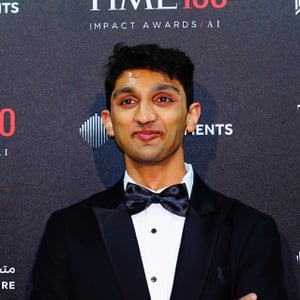
Vice President of Political Affairs, Encode
As Vice President of Political Affairs, Sunny led Encode’s co-sponsorship of California’s SB 1047, a landmark AI safety bill that would have required testing of advanced AI systems and created whistleblower protections. The bill passed both chambers of the state legislature with strong bipartisan margins, drawing support from an unlikely coalition including Nobel Laurate Geoffrey Hinton, Elon Musk, and Mark Ruffalo.
He also spearheaded efforts leading to the first U.S. law establishing guardrails for AI use in nuclear weapons systems, ensuring human control while enabling security benefits. At Encode, he has coordinated campaigns to authorize and fund a U.S. AI Safety Institute and advance legislation targeting AI-generated exploitation.
His technical work includes pioneering a benchmark for testing AI legal reasoning capabilities (presented at NeurIPS) and developing systems for rapid cloud deployment of AI services. He has also published research on cross-platform information analysis at AAAI. Before Encode, he served in technical roles at NASA, Deloitte, and a nuclear energy company.

Head of AI Policy, Abundance Institute
Neil Chilson is the Head of AI Policy at the Abundance Institute. Prior to this position, he served as a Senior Research Fellow at the Center for Growth and Opportunity. Chilson is a lawyer, computer scientist, and author of the book “Getting Out of Control: Emergent Leadership in a Complex World.”
Chilson was previously the senior research fellow for Technology and Innovation at Stand Together, where he guided efforts to understand and promote the legal and cultural paradigms that best enable people to discover, innovate, and improve all our lives.
Before Stand Together, Chilson was the Chief Technologist at the Federal Trade Commission, where he focused on the economics of privacy and blockchain-related issues. Previously, he was an attorney advisor to Acting FTC Chairman Maureen K. Ohlhausen. In both roles he advised Chairman Ohlhausen and worked with staff on nearly every major technology-related case, report, workshop, or other FTC proceeding since January 2014. Neil joined the FTC from telecom firm Wilkinson Barker Knauer. Neil is frequently quoted by the press and his work has appeared in numerous news outlets, including The Wall Street Journal, The Washington Post, USAToday, and Newsweek. Neil has a J.D. from The George Washington Law School, a M.S. in computer science from University of Illinois, Urbana-Champaign, and a B.S. in computer science from Harding University.
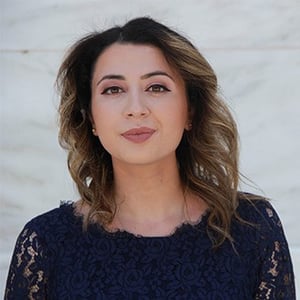
Senior Legal Fellow, The Future of Free Speech, Vanderbilt University
Ashkhen Kazaryan is a renowned expert in First Amendment law and technology policy, specializing in digital free speech, artificial intelligence, and the intersection of constitutional rights with emerging technologies. As a Senior Legal Fellow at the Future of Free Speech at Vanderbilt University, she leads initiatives to protect free expression and shape policies that uphold the First Amendment in the digital age.
Previously, Ashkhen was the lead for North and Latin America on the content regulation team at Meta, where she also served as the company’s policy lead on Section 230. She has also been a Senior Fellow at Stand Together and the Director of Civil Liberties at TechFreedom, where she worked extensively on platform liability, free speech, and internet governance. She is currently Fellow for the First Amendment at the Freedom Forum.
Ashkhen earned her specialist in law degree summa cum laude from Lomonosov Moscow State University in 2012 and later received a master of law degree from Yale Law School in 2016. During her time at Yale, she contributed as an articles editor for the Yale Journal of Law and Feminism, a senior editor for the Yale Law and Policy Review, and an editor for the Yale Journal of Law and Technology, while also serving as co-chair of the Public Interest Fellowship.
Nonresident Senior Fellow, Brookings Institute, Professor of Electrical Engineering and Law, UCLA
John Villasenor is a professor of electrical engineering, law, public policy, and management at UCLA, and is the faculty co-director of the UCLA Institute for Technology, Law, and Policy. He is also a nonresident senior fellow at the Brookings Institution and a member of the Council on Foreign Relations.
Professor Villasenor’s work addresses the intersection of technology, law, and policy, with a focus on topics including digital communications, artificial intelligence, cybersecurity, and privacy. He has published in many academic journals as well as in the Atlantic, Billboard, the Chronicle of Higher Education, Fast Company, Forbes, the Los Angeles Times, the New York Times, Scientific American, Slate, the Washington Post.
He has also provided congressional testimony on multiple occasions. Prior to joining the faculty at UCLA, Professor Villasenor was with the NASA Jet Propulsion Laboratory, where he developed methods of imaging the earth from space. He holds a B.S. degree from the University of Virginia, and an M.S. and Ph.D. from Stanford University.
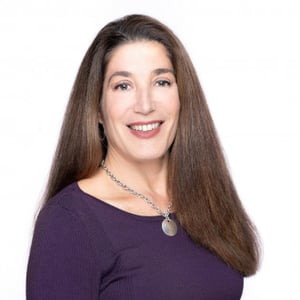
Director, Independent Women's Law Center, Independent Women's
Jennifer C. Braceras, a member of the Federalist Society Board of Visitors, is the director of Independent Women’s Law Center and a former member of the U.S. Commission on Civil Rights.
Ms. Braceras is a graduate of the Harvard Law School, where she served as an editor of the Law Review. After law school, she clerked for two federal judges and practiced labor and employment law with the Boston law firm Ropes & Gray.
A long time political columnist and editor, Ms. Braceras's writing has appeared in a variety of publications, including the Wall Street Journal, the Boston Globe, the Hill, and National Review Online. She co-hosts At the Bar, a bimonthly virtual happy hour discussion about issues at the intersection of law, politics, and culture.
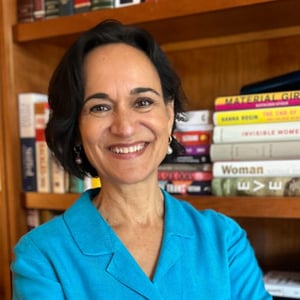
Thomas L. Perkins Distinguished Professor of Law, Duke Law School
Doriane Coleman is the Thomas L. Perkins Distinguished Professor of Law at Duke Law School, where she specializes in interdisciplinary scholarship focused on women, children, medicine, sports, and law. Her work, single- and co-authored, has been published in numerous U.S. and international journals. She also writes op-eds and is regularly cited in the press.
Her most recent scholarship has centered on sex, its evolving definition, and the implications of this evolution for law and society. The first two articles in this series – Sex in Sport and Re-affirming the Value of the Sports Exception to Title IX's General Non-Discrimination Rule – have been widely read and used in the development of eligibility criteria for the female category. A third article – Sex Neutrality – traces the history of sex in law and addresses the merits of a final move from sex skepticism to sex-blindness. Her book On Sex and Gender – A Commonsense Approach (2024) expands on these themes for a broader audience.
At Duke, Coleman is a Faculty Fellow and Member of the Advisory Council of the Kenan Institute for Ethics, and a Faculty Associate of the Trent Center for Bioethics, Humanities & History of Medicine at the School of Medicine, and the University’s Initiative for Science & Society. She is also a member of the University’s Athletic Council and co-director of the Law School’s Center for Sports Law and Policy.
She received her Juris Doctor degree from Georgetown Law and her Bachelor of Arts degree from Cornell University. She was a litigation associate at Wilmer, Cutler & Pickering before beginning her academic career at Howard University School of Law.
Before law school, Coleman ran the 800 meters in collegiate and international competition. She was a multiple All American, All East, and All Ivy athlete, the U.S. National Collegiate Indoor Champion in the 800 meters in 1982, the U.S. National Indoor Champion in the 4 x 400 meters relay in 1982, and the Swiss National Champion in the 800 meters in 1982 and 1983. Over the course of her athletic career she competed for Villanova and Cornell, the Swiss and U.S. National Teams, Athletics West, the Santa Monica and Atoms Track Clubs, and Lausanne Sports.

Supreme Court & Appellate Litigation Chair, Lex Politica; Of Counsel, Alliance Defending Freedom
Erin Morrow Hawley serves as Chair of Lex Politica's Supreme Court and Appellate Practice overseeing the firm’s strategic appellate litigation and critical motions practice in the trial courts. Erin is an experienced litigator who represents clients in constitutional, regulatory, and appellate matters in federal and state courts throughout the country.
Erin has represented dozens of clients before the Supreme Court of the United States, served as lead counsel in high-profile cases raising novel constitutional and statutory issues, and authored numerous successful petitions for certiorari and briefs in opposition. She has argued in state and federal appellate and trial courts throughout the country, including the Supreme Court of the United States. Erin represents diverse clients in high-stakes litigation from state governments to faith-based nonprofits to Fortune 100 companies. She possesses expertise on a wide range of subject matters including administrative law, the First Amendment, religious liberty, federal jurisdiction, federal preemption, equitable jurisdiction, tax law, the Affordable Care Act, and Title IX.
Erin represents clients in cases where public communications strategy is paramount. She is a sought-after speaker and writer, has testified multiple times before Congress, and is a frequent presenter on constitutional and administrative law issues, including at the Oxford Union, the National Federalist Society Convention, and university campuses across the country. She is a frequent commentator to media outlets, including Fox News, MSNBC, the Wall Street Journal, WORLD, USA Today, the Federalist, and the Hill.
Erin previously oversaw Alliance Defending Freedom’s--where she still serves as Of Counsel--litigation strategies to empower women and protect the dignity of life, defend pregnancy centers’ First Amendment rights from government overreach, and safeguard Americans’ freedoms from the ever-encroaching administrative state.
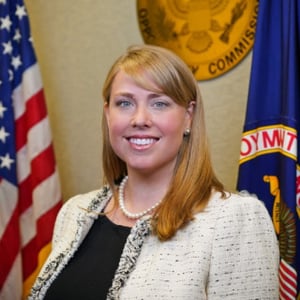
Chair, United States Equal Employment Opportunity Commission
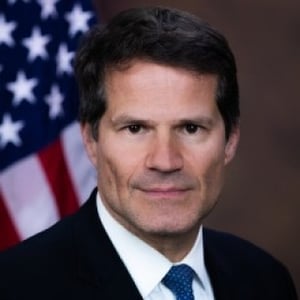
Solicitor General, United States of America
On April 4, 2025, D. John Sauer became the 49th Solicitor General of the United States. He previously served as Solicitor General of Missouri from 2017 to 2023.. Before that, he served as a federal prosecutor for five years and spent time in civil practice at boutique law firms, including the firm he founded, the James Otis Law Group. Mr. Sauer has first-chaired many jury and bench trials, and served as lead counsel in many appeals. He has presented oral argument in the U.S. Supreme Court, the U.S. Court of Appeals for the Eighth Circuit, the Supreme Court of Missouri, and many other state and federal appellate courts. Mr. Sauer served as a law clerk to Justice Antonin Scalia of the U.S. Supreme Court and Judge J. Michael Luttig of the U.S. Court of Appeals for the Fourth Circuit. He was a Rhodes Scholar and a magna cum laude graduate of Harvard Law School.
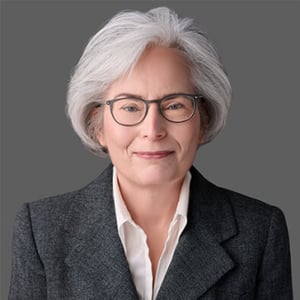
Partner, Rule Garza Howley LLP
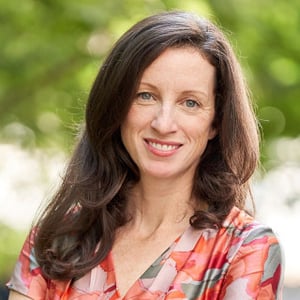
David Daniels Allen Distinguished Chair of Law, Vanderbilt University Law School
Rebecca Haw Allensworth studies antitrust and professional licensing. Her work on antitrust focuses on how to adapt competition policy to address competition problems posed by tech platforms and her research on professional licensing explores how lawmakers should balance the need for expertise in regulating the professions with the problems that can arise from self-regulation. She is currently writing The Licensing Racket, a book about professional licensing and self-regulation. Her article about medical licensing boards and unethical prescribers, “Licensed to Pill,” appeared in The New York Review of Books in July 2020. Her work has been cited by the U.S. Supreme Court and has received the thirteenth annual Jerry S. Cohen Memorial Fund Writing Award for groundbreaking antitrust scholarship.
Professor Allensworth earned her undergraduate degree from Yale and an M.Phil. from Cambridge University before earning her J.D. at Harvard Law School, where she served as articles editor of the Harvard Law Review. She served as law clerk to Judge Richard A. Posner of the U.S. Court of Appeals for the Seventh Circuit and then as a Climenko Fellow at Harvard Law School before coming to Vanderbilt. She held the Tarkington Chair of Teaching Excellence before her appointment to a David Daniels Allen Chair in Law in 2022.

Partner, Antitrust and Competition, Wilson Sonsini Goodrich & Rosati
Maureen Ohlhausen is a partner in the Washington, D.C., office of Wilson Sonsini Goodrich & Rosati, where she advises industry-leading clients on complex antitrust and litigation matters, with a focus on high-profile cases. Sought after for her depth of experience on antitrust and Federal Trade Commission (FTC)-related issues, Maureen is known for her relationships with officials in the U.S. and abroad.
After finishing law school and clerking at the U.S. Court of Appeals for the D.C. Circuit, Maureen joined the FTC in 1997. She held a series of roles at the agency over the next 12 years, rising to the position of Director of the FTC Office of Policy Planning, where she led the agency’s work on e-commerce and headed the FTC’s Internet Access Task Force, which produced an influential report analyzing competition and consumer protection legal issues in the broadband and internet sectors. She then went into private practice at a leading telecommunications law firm, where she headed the FTC practice group.
In 2012, Maureen was confirmed by the Senate as a Commissioner of the FTC and was appointed Acting Chairman in January 2017, a role she held until May 2018. As Acting Chairman, Maureen directed all aspects of the agency’s antitrust work, including merger review, conduct enforcement, and all consumer protection enforcement, with an emphasis on privacy and technology issues. Under her leadership, the FTC won several influential merger challenges in court and reached a number of key digital privacy settlements.
To date, Maureen is the only FTC Commissioner to have received the Robert Pitofsky Lifetime Achievement Award in recognition of her contributions to the FTC.
Following the end of her term at the FTC, and immediately prior to joining Wilson Sonsini, Maureen was chair of the global antitrust and competition practice at Baker Botts, based in that firm’s Washington, D.C., office.
A recognized thought leader, Maureen is a frequent author and speaker, and is often quoted by leading print and broadcast media on antitrust, FTC, and privacy and data security matters. She has published dozens of articles on antitrust, privacy, intellectual property, regulation, FTC litigation, telecommunications, and international law issues in prestigious publications. During her tenure at the FTC and in private practice, she testified more than two dozen times before Congress, including before the Senate Commerce Committee and the House Energy and Commerce Antitrust Sub-Committee. She also testified before the Antitrust Modernization Commission.

Tamar is an Assistant Professor. She holds a J.D. degree from the University of British Columbia, and a B.A. (Hons), LL.M., and SJD degrees from the University of Toronto.
Tamar practiced international commercial arbitration in a law firm in Vancouver and as Deputy Counsel at the International Court of Arbitration of the International Chamber of Commerce in Paris. She also acted as legal advisor to the Jerusalem Arbitration Center in Israel and Palestine and was a Graduate Fellow with the conflict resolution group of The Carter Center in Atlanta.

Trial by Jury or Administrative Adjudication: What Would the Founders Say?
Jennifer Walker Elrod, Robert E. Johnson, Renée Lettow Lerner, Christopher J. Walker
In this Federalist Society America 250 series, experts analyze modern legal and policy debates through...
Litigation Update: Prosecutor v. Päivi Räsänen
Karen J. Lugo, Lorcán Price
Päivi Räsänen, a Finnish parliamentarian, has been criminally prosecuted for expressing her Christian beliefs on marriage...
[Free to Choose Network] We Hold These Truths: The Global Quest for Liberty
In We Hold These Truths, Federal Judge Douglas Ginsburg explores the enduring influence of...
The Digital Services Act and Global Free Speech
Stéphane Bonichot, Adina Portaru, John Rosenthal, Maimon Schwarzschild, Berin Szóka
The European Union’s Digital Services Act applies to digital platforms and service providers offering services...
Tech Roundup Episode 25 - How are the States Approaching AI?
Kevin Frazier, Dean W. Ball, Sunny Gandhi
As the second Trump administration kicks off an ambitious AI agenda, individual states have been...
Stargate and DeepSeek: The International and Technological Implications of the AI “Arms Race”
Neil Chilson, Ashkhen Kazaryan, John Villasenor
On January 22, 2025, newly-elected President Trump announced a widespread project to invest $500 billion...
Showcase Panel III: Sex, Gender, and the Law
Jennifer C. Braceras, Doriane Lambelet Coleman, Erin M. Hawley, Andrea R. Lucas, D. John Sauer
CLE credit for this event is available at On-Demand CLE. The 1964 Civil Rights Act outlaws...
U.S. Out of Africa? Then What?
Last month, the last American troops left Niger, following withdrawal of U.S. troops in Chad...
Litigation Update: US v. Apple
Deborah A. Garza, Rebecca Haw Allensworth, Maureen K. Ohlhausen
In March of this year, the U.S. Justice Department and 16 states filed a sweeping...
Coinbase, Inc. v. Bielski - Post-Argument SCOTUScast
Tamar Meshel
On March 21, 2023, the Supreme Court heard oral argument in Coinbase, Inc. v. Bielski. At...