
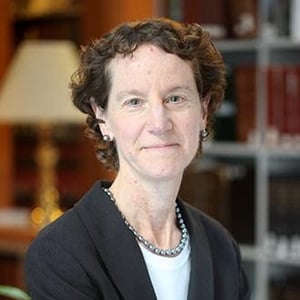
Partner, Arnold & Porter
Debbie Feinstein heads the firm's Global Antitrust group, and brings a wealth of experience to her practice in advising clients on a range of antitrust challenges before US antitrust authorities. She recently re-joined the firm from the US Federal Trade Commission (FTC), where she was Director of the Bureau of Competition. In that capacity, she was responsible for supervising the investigation and enforcement of the US antitrust laws against anticompetitive mergers and conduct. During her tenure from 2013 to 2017, the FTC had substantial litigation success and a number of major merger wins, including challenges to Sysco Corp.'s acquisition of rival US Foods Inc., and Staples Inc.'s merger with Office Depot Inc. She had previously served at the FTC from 1989 to 1991 as Assistant to the Director of the Bureau of Competition and Attorney Advisor.

Senior Judge, United States Court of Appeals, District of Columbia Circuit
Circuit Judge Douglas H. Ginsburg was appointed to the United States Court of Appeals for the District of Columbia in 1986. After receiving his B.S. from Cornell University in 1970, and his J.D. from the University of Chicago Law School in 1973, he clerked on the D.C. Circuit and for Justice Thurgood Marshall on the United States Supreme Court. Thereafter, Judge Ginsburg was a professor at the Harvard Law School, the Deputy Assistant and then Assistant Attorney General for the Antitrust Division of the Department of Justice, as well as the Administrator of the Office of Information and Regulatory Affairs in the Office of Management and Budget. Concurrent with his service as a federal judge, Judge Ginsburg has taught at the University of Chicago Law School and the New York University School of Law. Judge Ginsburg is currently a Professor of Law at the George Mason University and a visiting professor at University College London, Faculty of Laws.
Judge Ginsburg is the Chairman of the International Advisory Board of the Global Antitrust Institute at the Law and Economics Center of the George Mason University School of Law. He also serves on the Advisory Boards of: Competition Policy International; the Harvard Journal of Law and Public Policy; the Journal of Competition Law and Economics; the Journal of Law, Economics & Policy; the Supreme Court Economic Review; the University of Chicago Law Review; the New York University Journal of Law and Liberty; and, at University College London, both the Centre for Law, Economics and Society and the Jevons Institute for Competition Law and Economics.
In 2020, Judge Ginsburg was the 11th recipient of the John Sherman Award, presented by the Antitrust Division of the Department of Justice in recognition of the awardee’s Lifetime Contributions to Antitrust Law and Policy.
In 2014, Judge Ginsburg received the Lifetime Achievement Award given annually by the Global Competition Review.
He is the author or co-author of several books and more than 100 articles on competition and regulation, including, most recently, Growing Convergence: The Limited Role of Antitrust in Standard Essential Patent Disputes, in CPI Antitrust Chronicle, Summer 2021, Vol. 1, No. 2.
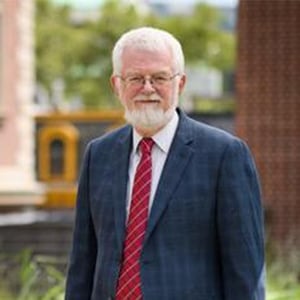
James G. Dinan University Professor, Carey Law School, University of Pennsylvania
Herbert Hovenkamp is a Fellow of the American Academy of Arts and Sciences, and in 2008 won the Justice Department’s John Sherman Award for his lifetime contributions to antitrust law. In 2012 he served on the ABA’s Committee to advise the President-elect on antitrust matters. His principal writing includes The Opening of American Law: Neoclassical Legal Thought, 1870-1970 (Oxford, 2015); Antitrust Law (formerly with Phillip E. Areeda and Donald F. Turner) (22 vols., Aspen 2008-18); Principles of Antitrust (West, 2017); Creation Without Restraint: Promoting Liberty and Rivalry in Innovation (Oxford, 2012, with Bohannan); The Making of Competition Policy (Oxford, 2012, with Crane); The Antitrust Enterprise: Principle and Execution (Harvard, 2006); Federal Antitrust Policy: The Law of Competition and Its Practice (West, 5th ed. 2015); IP and Antitrust (2 vols., Aspen, 2017, with Janis, Lemley, Leslie, and Carrier); and Enterprise and American Law, 1836-1937 (Harvard, 1991). He has also co-authored casebooks in antitrust, property law, and a free open source casebook on innovation and competition policy. He has consulted on numerous antitrust cases for various government entities and private plaintiffs. He has two sons.

Partner, Litigation Department, Paul Hastings
Michael Murray is co-chair of the Antitrust and Competition practice at Paul Hastings and represents clients in high-stakes mergers and acquisitions and antitrust litigation and investigations. Based in the firm’s Washington, D.C. office, Michael is Chambers ranked and brings significant government antitrust and competition experience, having most recently served as the principal deputy assistant attorney general in the Antitrust Division at the Department of Justice (DOJ), where he oversaw the work of approximately 350 lawyers and 50 economists. In that capacity, Michael supervised DOJ’s merger investigations, conduct matters and litigation for several years.
Michael is the rare antitrust lawyer who maintains both an active merger control practice and a bustling litigation practice. In 2025, for example, he shepherded over $65 billion of transactions through global merger control regimes, including a litigated merger challenge in the U.S., while also representing over a dozen clients in major antitrust litigation. In that year, he won awards for both his merger work and his litigation matters. Chambers USA describes Mike for having “an encyclopedic knowledge of antitrust law [who] can recite different issues for different circuits.”
Michael also is a partner in the Appellate, Regulatory and Complex Litigation practices at Paul Hastings. He brings significant government experience to a practice consisting of preparing and litigating challenges to agency rulemaking, adjudication or other activity, having served as an associate deputy attorney general at DOJ, where he oversaw the Civil Division’s defense of high-profile rulemaking challenges and other agency actions. Earlier in his career, Michael clerked for the Honorable Justice Anthony M. Kennedy of the U.S. Supreme Court and the Honorable Judge Diarmuid F. O'Scannlain of the U.S. Court of Appeals for the Ninth Circuit. He also served as an AUSA for the U.S. Attorney's Office for the Eastern District of Virginia.
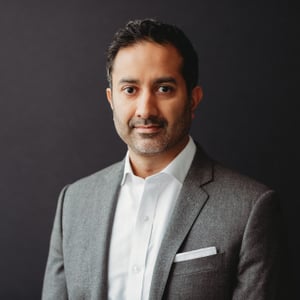
Antitrust Partner, White & Case
Rahul Rao is a partner in the Global Antitrust Practice at White & Case and the former Deputy Director of the Federal Trade Commission’s Bureau of Competition. He advises clients on merger clearance, government investigations, antitrust litigation, and regulatory strategy, with particular depth in healthcare, life sciences, private equity, retail, and labor markets.
At the FTC, Rahul led major merger and conduct investigations, supervised enforcement in critical sectors, and helped shape landmark policy initiatives, including the revised Merger Guidelines and the Commission’s noncompete rulemaking. Earlier, he helped establish the Washington State Attorney General’s Antitrust Division as a national leader in labor market competition enforcement.
Having served on both the federal and state enforcement front lines, Rahul brings clients a unique understanding of agency priorities, risk profiles, and strategies for navigating today’s increasingly dynamic antitrust environment.
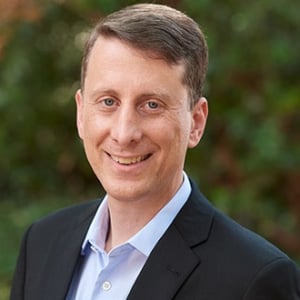
Carolyn Craig Franklin Chair in Law; Professor of Law and Business; Affiliate Professor of Business, USC Gould School of Law and Marshall School of Business
D. Daniel Sokol is the Carolyn Craig Franklin Chair in Law and a Professor of Law and Business at the USC Gould School of Law and Marshall School of Business (marketing department). He holds a courtesy appointment in the Department of Economics. He also serves as faculty director of the Center for Transnational Law and Business and the co-director of the USC Marshall Initiative on Digital Competition. Additionally, in a part time capacity, he serves as Senior Advisor at White & Case LLP.
Professor Sokol is among the top 10 most cited antitrust law professors in the past five years. He focuses his teaching and scholarship on complex business issues from early stage start-ups to multinational businesses and the issues that businesses face regarding competition: antitrust, data breaches, corporate governance, digital platforms, compliance, innovation, M&A, digital transformation, and global business regulation.
He is a member of the American Law Institute. He also serves as academic advisor to the United States Chamber of Commerce and as a non-governmental Advisor to the International Competition Network. His work has appeared in a variety of journals: Strategic Management Journal, Journal of Law and Economics, Journal of Economics & Management Strategy, Harvard Business Review, Sloan Management Review, Michigan Law Review and Northwestern Law Review, among others.
Partner, Arnold & Porter
Debbie Feinstein heads the firm's Global Antitrust group, and brings a wealth of experience to her practice in advising clients on a range of antitrust challenges before US antitrust authorities. She recently re-joined the firm from the US Federal Trade Commission (FTC), where she was Director of the Bureau of Competition. In that capacity, she was responsible for supervising the investigation and enforcement of the US antitrust laws against anticompetitive mergers and conduct. During her tenure from 2013 to 2017, the FTC had substantial litigation success and a number of major merger wins, including challenges to Sysco Corp.'s acquisition of rival US Foods Inc., and Staples Inc.'s merger with Office Depot Inc. She had previously served at the FTC from 1989 to 1991 as Assistant to the Director of the Bureau of Competition and Attorney Advisor.
Senior Judge, United States Court of Appeals, District of Columbia Circuit
Circuit Judge Douglas H. Ginsburg was appointed to the United States Court of Appeals for the District of Columbia in 1986. After receiving his B.S. from Cornell University in 1970, and his J.D. from the University of Chicago Law School in 1973, he clerked on the D.C. Circuit and for Justice Thurgood Marshall on the United States Supreme Court. Thereafter, Judge Ginsburg was a professor at the Harvard Law School, the Deputy Assistant and then Assistant Attorney General for the Antitrust Division of the Department of Justice, as well as the Administrator of the Office of Information and Regulatory Affairs in the Office of Management and Budget. Concurrent with his service as a federal judge, Judge Ginsburg has taught at the University of Chicago Law School and the New York University School of Law. Judge Ginsburg is currently a Professor of Law at the George Mason University and a visiting professor at University College London, Faculty of Laws.
Judge Ginsburg is the Chairman of the International Advisory Board of the Global Antitrust Institute at the Law and Economics Center of the George Mason University School of Law. He also serves on the Advisory Boards of: Competition Policy International; the Harvard Journal of Law and Public Policy; the Journal of Competition Law and Economics; the Journal of Law, Economics & Policy; the Supreme Court Economic Review; the University of Chicago Law Review; the New York University Journal of Law and Liberty; and, at University College London, both the Centre for Law, Economics and Society and the Jevons Institute for Competition Law and Economics.
In 2020, Judge Ginsburg was the 11th recipient of the John Sherman Award, presented by the Antitrust Division of the Department of Justice in recognition of the awardee’s Lifetime Contributions to Antitrust Law and Policy.
In 2014, Judge Ginsburg received the Lifetime Achievement Award given annually by the Global Competition Review.
He is the author or co-author of several books and more than 100 articles on competition and regulation, including, most recently, Growing Convergence: The Limited Role of Antitrust in Standard Essential Patent Disputes, in CPI Antitrust Chronicle, Summer 2021, Vol. 1, No. 2.
James G. Dinan University Professor, Carey Law School, University of Pennsylvania
Herbert Hovenkamp is a Fellow of the American Academy of Arts and Sciences, and in 2008 won the Justice Department’s John Sherman Award for his lifetime contributions to antitrust law. In 2012 he served on the ABA’s Committee to advise the President-elect on antitrust matters. His principal writing includes The Opening of American Law: Neoclassical Legal Thought, 1870-1970 (Oxford, 2015); Antitrust Law (formerly with Phillip E. Areeda and Donald F. Turner) (22 vols., Aspen 2008-18); Principles of Antitrust (West, 2017); Creation Without Restraint: Promoting Liberty and Rivalry in Innovation (Oxford, 2012, with Bohannan); The Making of Competition Policy (Oxford, 2012, with Crane); The Antitrust Enterprise: Principle and Execution (Harvard, 2006); Federal Antitrust Policy: The Law of Competition and Its Practice (West, 5th ed. 2015); IP and Antitrust (2 vols., Aspen, 2017, with Janis, Lemley, Leslie, and Carrier); and Enterprise and American Law, 1836-1937 (Harvard, 1991). He has also co-authored casebooks in antitrust, property law, and a free open source casebook on innovation and competition policy. He has consulted on numerous antitrust cases for various government entities and private plaintiffs. He has two sons.
Partner, Litigation Department, Paul Hastings
Michael Murray is co-chair of the Antitrust and Competition practice at Paul Hastings and represents clients in high-stakes mergers and acquisitions and antitrust litigation and investigations. Based in the firm’s Washington, D.C. office, Michael is Chambers ranked and brings significant government antitrust and competition experience, having most recently served as the principal deputy assistant attorney general in the Antitrust Division at the Department of Justice (DOJ), where he oversaw the work of approximately 350 lawyers and 50 economists. In that capacity, Michael supervised DOJ’s merger investigations, conduct matters and litigation for several years.
Michael is the rare antitrust lawyer who maintains both an active merger control practice and a bustling litigation practice. In 2025, for example, he shepherded over $65 billion of transactions through global merger control regimes, including a litigated merger challenge in the U.S., while also representing over a dozen clients in major antitrust litigation. In that year, he won awards for both his merger work and his litigation matters. Chambers USA describes Mike for having “an encyclopedic knowledge of antitrust law [who] can recite different issues for different circuits.”
Michael also is a partner in the Appellate, Regulatory and Complex Litigation practices at Paul Hastings. He brings significant government experience to a practice consisting of preparing and litigating challenges to agency rulemaking, adjudication or other activity, having served as an associate deputy attorney general at DOJ, where he oversaw the Civil Division’s defense of high-profile rulemaking challenges and other agency actions. Earlier in his career, Michael clerked for the Honorable Justice Anthony M. Kennedy of the U.S. Supreme Court and the Honorable Judge Diarmuid F. O'Scannlain of the U.S. Court of Appeals for the Ninth Circuit. He also served as an AUSA for the U.S. Attorney's Office for the Eastern District of Virginia.
Antitrust Partner, White & Case
Rahul Rao is a partner in the Global Antitrust Practice at White & Case and the former Deputy Director of the Federal Trade Commission’s Bureau of Competition. He advises clients on merger clearance, government investigations, antitrust litigation, and regulatory strategy, with particular depth in healthcare, life sciences, private equity, retail, and labor markets.
At the FTC, Rahul led major merger and conduct investigations, supervised enforcement in critical sectors, and helped shape landmark policy initiatives, including the revised Merger Guidelines and the Commission’s noncompete rulemaking. Earlier, he helped establish the Washington State Attorney General’s Antitrust Division as a national leader in labor market competition enforcement.
Having served on both the federal and state enforcement front lines, Rahul brings clients a unique understanding of agency priorities, risk profiles, and strategies for navigating today’s increasingly dynamic antitrust environment.
Carolyn Craig Franklin Chair in Law; Professor of Law and Business; Affiliate Professor of Business, USC Gould School of Law and Marshall School of Business
D. Daniel Sokol is the Carolyn Craig Franklin Chair in Law and a Professor of Law and Business at the USC Gould School of Law and Marshall School of Business (marketing department). He holds a courtesy appointment in the Department of Economics. He also serves as faculty director of the Center for Transnational Law and Business and the co-director of the USC Marshall Initiative on Digital Competition. Additionally, in a part time capacity, he serves as Senior Advisor at White & Case LLP.
Professor Sokol is among the top 10 most cited antitrust law professors in the past five years. He focuses his teaching and scholarship on complex business issues from early stage start-ups to multinational businesses and the issues that businesses face regarding competition: antitrust, data breaches, corporate governance, digital platforms, compliance, innovation, M&A, digital transformation, and global business regulation.
He is a member of the American Law Institute. He also serves as academic advisor to the United States Chamber of Commerce and as a non-governmental Advisor to the International Competition Network. His work has appeared in a variety of journals: Strategic Management Journal, Journal of Law and Economics, Journal of Economics & Management Strategy, Harvard Business Review, Sloan Management Review, Michigan Law Review and Northwestern Law Review, among others.
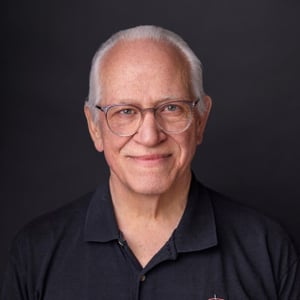
Chief Counsel, FIRE
Robert Corn-Revere joined FIRE from the law firm of Davis Wright Tremaine where he was a partner for 20 years specializing in freedom of expression and communications law. Before his time at DWT, he was a partner at Hogan & Hartson and served as legal advisor and later chief counsel to Federal Communications Commission Chairman James H. Quello.
Corn-Revere is a prominent writer, thinker, and advocate on free expression issues. In 2021, Cambridge University Press published his book, “The Mind of the Censor and the Eye of the Beholder: The First Amendment and the Censor’s Dilemma,” which explores how free expression became a part of America’s identity. He also co-authored the three-volume treatise, “Modern Communication Law,” published by West Group. In 2003, he successfully petitioned Governor George E. Pataki to grant the first posthumous pardon in New York history to the late comedian Lenny Bruce, who was convicted for “obscene” comedy routines.
Before joining FIRE full-time, Corn-Revere was a volunteer on FIRE’s Advisory Council. He also served as outside counsel for FIRE’s Stand Up For Speech Litigation Project, successfully litigating on behalf of college students and faculty whose First Amendment rights were violated.
He is regularly listed as a leading First Amendment and media law practitioner by The Best Lawyers in America, SuperLawyers Washington, D.C., and by Chambers USA. Best Lawyers in America named him as Washington, D.C.’s 2017 “Lawyer of the Year” in the areas of First Amendment Law and Litigation – First Amendment. He was again named as Best Lawyers’ “Lawyer of the Year” for First Amendment Law for 2019 and 2021, and in Media Law for 2022.
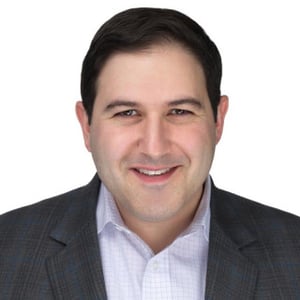
Executive Vice President/Chief Legal Officer, Sinclair Broadcast Group
David Gibber has served as Executive Vice President/Chief Legal Officer since March 2024. Prior to that, since joining Sinclair in 2011, he has served as Vice President/Deputy General Counsel, Deputy General Counsel/Director of Legal Services and Legal Counsel. Prior to joining Sinclair, he was an associate at Gordon Feinblatt, LLC in Baltimore, Maryland. Mr. Gibber received his J.D. degree from the University of Maryland School of Law, where he graduated magna cum laude, Order of the Coif. Mr. Gibber also sits on the board of directors of various charitable and community organizations.
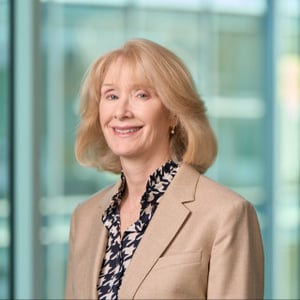
Partner, HWG LLP
Patricia Paoletta is a partner with the law firm of HWG LLP, where she specializes in telecommunications, trade and technology policy. Ms. Paoletta provides advice on regulatory, trade and legislative policy to clients before the FCC, Congress and the Administration. Her clients include providers of content, cloud, mobile broadband, VoIP, international telecommunications, small cells, cognitive radio, public safety and homeland security solutions. She serves on Advisory Boards for several entities engaged in information services, communications and technology.
Ms. Paoletta has accrued considerable experience with telecommunications trade and policy in the public sector. From 1990 to 1995, she was senior advisor to the International Bureau Chief and Office Director at the Federal Communications Commission. In the mid 1990s, Ms. Paoletta served as Director of Telecommunications Trade Policy in the Office of the U.S. Trade Representative, Executive Office of the President, where she worked on the WTO Information Technology Agreement (ITA) and the Basic Telecommunications Agreement. After USTR, Ms. Paoletta served as Majority Counsel to the House Energy and Commerce Committee. She then moved to Level 3 Communications, as Vice President, Government Relations.
Ms. Paoletta is on the Steering Committee of the Transatlantic Roundtable on Telecommunications and Information Technology of the European Institute. She is a member of the USTR Alumni Association, Washington International Trade Association, the Federal Communications Bar Association (FCBA), and Women in Technology. Ms. Paoletta has served on the Board of Advisors for the Inter-American Dialogue's Latin America Telecom Advisor, Co-Chairman of the American Bar Association International Communications Committee, and as a member of the U.S. Chamber of Commerce's Technology Policy Committee.
Ms. Paoletta served as a delegate in 2012 to the ITU-R's Study Group 6 Working Party 6A Meeting and in 2009 and 2010 to the ITU-R's Study Group I Working Party IB Meetings; the 2009 meetings of CITEL (the Committee on International Telecommunications at the Organization of American States) PCC-II; the International Telecommunication Union (ITU) World Telecommunications Standards Assembly (2000); the ITU Internet Protocol Telephony Experts Group and the ITU World Telecommunications Policy Forum in 2001; as Chairman of the National Reliability and Interoperability Council (NRIC) Steering Committee (2000-2001); as Board Member for the Voice on the Net Coalition (2001); as Co-Chairman of the FCBA's Annual Seminar Committee (2009-2011); as a member of the FCBA's Ad Hoc Speakers Committee (2006-2007); as Co-Chairman for the FCBA International Practice Committee (2001-2002 and 2005-2006); and as a Co-Chairman of the FCBA Legislative Practice Committee (1999-2000).
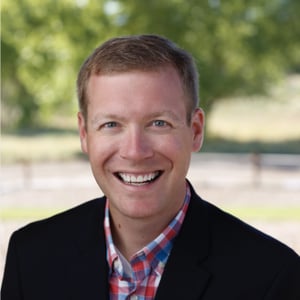
President, Center for American Rights
Daniel Suhr serves as president of the Center for American Rights, where he spends every day on the front lines of the fight to preserve our rights and liberties. The Center's mission is to advance free speech, free enterprise, and parental freedom in education through strategic, precedent-setting litigation.
Daniel formerly worked as policy director for Wisconsin Governor Scott Walker, as chief of staff for Wisconsin Lieutenant Governor Rebecca Kleefisch, and as a law clerk for Judge Diane Sykes of the U.S. Court of Appeals for the Seventh Circuit. He holds a B.A. and J.D. from Marquette University, and master’s degrees from Georgetown and the University of Missouri.
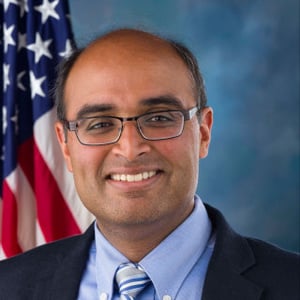
Consultant, American Edge Project and U.S. Chamber of Commerce
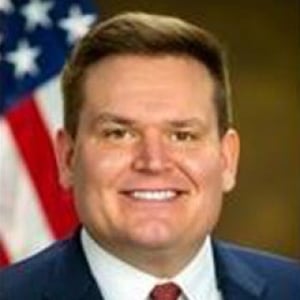
Chief Counsel, Senate Judiciary Committee
Thomas DeMatteo is Chief Counsel on the Senate Judiciary Committee to Senator Mike Lee. He previously served as counsel to the Assistant Attorney General of the Department of Justice Antitrust Division, where he worked closely with leadership and staff on civil merger and non-merger matters across numerous industries including, large technology platforms, defense, finance, and consumer products.
Mr. DeMatteo joined the Antitrust Division through the Attorney General’s Honors Program as a Trial Attorney and previously worked at an international law firm, where he advised clients on antitrust and competition matters. He is a graduate of Washington and Lee University School of Law and the University of Rochester, where he was a member of the football team and selected to the Liberty League All-Academic Team.

President and Founder, International Center for Law & Economics
Geoffrey A. Manne is the president and founder of the International Center for Law and Economics (ICLE), a nonprofit, nonpartisan research center based in Portland, Oregon. He is also a distinguished fellow at Northwestern Law School’s Searle Center on Law, Regulation, & Economic Growth. In April 2017 he was appointed by FCC Chairman Ajit Pai to the FCC’s Broadband Deployment Advisory Committee, and he recently served for two years on the FCC’s Consumer Advisory Committee.
Mr. Manne earned his JD and AB degrees from the University of Chicago and is an expert in the economic analysis of law, specializing in competition, telecommunications, consumer protection, intellectual property, and technology policy.
Prior to founding ICLE, Manne was a law professor at Lewis & Clark Law School. From 2006-2009, he took a leave from teaching to develop Microsoft’s law and economics academic outreach program. Manne has also served as a lecturer in law at the University of Chicago Law School and the University of Virginia School of Law. He practiced antitrust law and appellate litigation at Latham & Watkins, clerked for Hon. Morris S. Arnold on the 8th Circuit Court of Appeals, and worked as a research assistant for Judge Richard Posner. He was also once (very briefly) employed by the FTC.
Mr. Manne’s publications have appeared in numerous journals including the Journal of Competition Law and Economics, the Harvard Journal of Law and Technology, the Supreme Court Economic Review, and the Arizona Law Review, among others. With former FTC Commissioner, Joshua Wright, Manne is the editor of a volume from Cambridge University Press entitled, Competition Policy and Intellectual Property Law Under Uncertainty: Regulating Innovation. Manne has also testified on several occasions before Congress and at the FCC and FTC, and he regularly files written comments and amicus briefs on key antitrust, IP, and telecommunications issues. His analysis is frequently published in popular print and broadcasting outlets such as the Wall Street Journal, Wired, Foreign Affairs, NPR, and Bloomberg, among others.
Manne is a member of the American Law and Economics Association, the Canadian Law and Economics Association, and the Society for Institutional & Organizational Economics. He blogs at Truth on the Market (www.truthonthemarket.com) (of which he is also the co-founder), is a contributor at WIRED, and tweets at @geoffmanne. His scholarly publications are available at http://ssrn.com/author=175541.
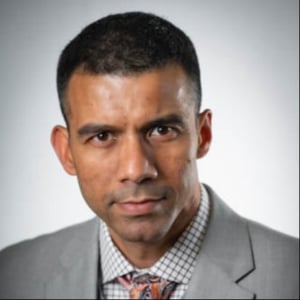
Public Advisor, National Institute of Standards and Technology
Anant Raut am a public advisor to the National Institute of Standards and Technology, part of an expert group developing a risk management framework for generative artificial intelligence (AI) systems. He advises on governance and pre-deployment testing standards.
Anant is the former global head of competition policy for Meta Platforms, Inc. There he stood up a global policy team; provided centralized subject matter expertise for our regional leads; worked cross-functionally on business priority issues; and developed some of the company’s key public policy positions, including proactive stances on interoperability and data sharing. Later he layered on a product counseling role, providing competition and regulatory guidance for every Meta product and service worldwide.
Anant is an experienced antitrust law and policy practitioner, having been an enforcer at both the Federal Trade Commission and the Department of Justice Antitrust Division.
Mr. Raut has deep experience with legislative and federal budget processes through my time on Capitol Hill. He previously served as antitrust counsel to the Democratic Chair and Ranking Member of the House and Senate Judiciary Committees. There he worked across the aisle to pass bills such as the Music Modernization Act, the Marrakesh Treaty Implementation Act, the SUCCESS Act, and reauthorization of the Antitrust Criminal Penalty Enhancement Reform Act. He worked closely with my Republican colleagues for bipartisan oversight and investigations of industries as varied as digital advertising, airlines, and railroads. As counsel, Anant helped shape key policy positions for the Democratic leaders of each of those committees. He was also the de facto in-house expert for the Senate Democratic Caucus on antitrust, consumer protection, privacy, intellectual property, bankruptcy, and arbitration law and policy.
Anant serves on the board of advisors to some of the most forward-looking institutions on antitrust policy, including the American Antitrust Institute and the Loyola Chicago Institute for Consumer Antitrust Studies. He also co-hosts two popular industry podcasts, Our Curious Amalgam and Trust and Trade, which tackle leading edge antitrust and consumer protection issues every month.
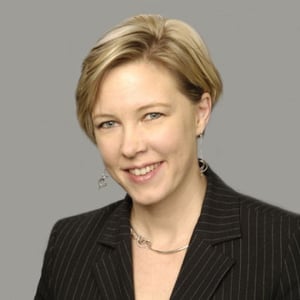
Clinical Professor and Senior Scholar and Senior Fellow for Copyright Research and Policy of C-IP2, Antonin Scalia Law School, George Mason University
Sandra Aistars is Senior Fellow for Copyright Research and Policy and a Senior Scholar at the Center for Intellectual Property x Innovation Policy (C-IP2). She also leads the law school’s Arts & Entertainment Advocacy Program. Professor Aistars has over twenty years of advocacy experience on behalf of copyright and other intellectual property owners. She has served on trade missions and been an industry advisor to the Department of Commerce on intellectual property implications for international trade negotiations; worked on legislative and regulatory matters worldwide; frequently testified before Congress and federal agencies regarding intellectual property matters; chaired cross-industry coalitions and technology standards efforts; and is regularly tapped by government agencies to lecture in U.S. government-sponsored study tours for visiting legislators, judges, prosecutors, and regulators.
Immediately prior to joining Scalia Law, Professor Aistars was the Chief Executive Officer of the Copyright Alliance – a nonprofit, public interest organization that represents the interests of artists and creators across the creative spectrum. While at Scalia Law, she continues to collaborate with the Copyright Alliance as a member of its Academic Advisory Board. Professor Aistars currently serves on the boards of the Washington Area Lawyers for the Arts (WALA) and the Howard Intellectual Property Program (HIPP), and she has previously served as trustee of the Copyright Society of the USA (CSUSA). Professor Aistars has also previously served as Vice President and Associate General Counsel at Time Warner Inc. She began her legal career in private practice at Weil, Gotshal and Manges LLP.

Samuel H. McCoy II Professor of Law, University of Virginia School of Law
John F. Duffy is the Samuel H. McCoy II Professor of Law and Class of 1966 Research Professor of Law at the University of Virginia School of Law, where he teaches administrative law, torts and intellectual property. Professor Duffy has published articles on a wide range of administrative law and regulatory issues in journals such as University of Chicago Law Review, Yale Law Journal, Stanford Law Review, Virginia Law Review, Columbia Law Review, Texas Law Review, Northwestern University Law Review, NYU Law Review, University of Pennsylvania Law Review and the Supreme Court Review. His 1998 article Administrative Common Law in Judicial Review, 77 Tex. L. Rev. 113 (1998), was one of the first articles to criticize the Chevron doctrine as being irreconcilable with § 706 of the APA; it won the American Bar Association’s Scholarship Award in Administrative Law. His 2008 article “Are Administrative Patent Judges Unconstitutional?” was covered on National Public Radio), in the New York Times (Adam Liptak, In One Flaw, Questions on Validity of 46 Judges, May 6, 2008), and in the Wall Street Journal (Dan Slater, Patently Unconstitutional, May 6, 2008). The NYT and WSJ agreed that he was “a different kind of law professor,” “one of the lucky few” whose “writings actually wind up changing the law.”
As an attorney in the courts, Duffy has twice successfully convinced the Supreme Court to overturn lower court doctrines that had been applied in many cases over decades but that were unanimously held to be irreconcilable with Supreme Court precedents. See TC Heartland v. Kraft Foods Group Brands, 581 U.S. 258 (2017); KSR v. Teleflex, 550 U.S. 398 (2007).
Prior to entering legal academics, Duffy clerked on the D.C. Circuit for Stephen Williams and on the Supreme Court for Antonin Scalia. While clerking, he became known as Justice Scalia’s “hapless law clerk,” who had been tasked with unearthing three-quarters of a century of legislative history that made “no difference” to the outcome in an otherwise forgettable case. See Conroy v. Aniskoff, 507 U.S. 511, 527-28 (1993) (Scalia, J., concurring in the judgment).
In earlier days, Duffy enjoyed being a professional blackjack player unwelcome in all Atlantic City casinos and a semi-professional road runner (best marathon time 2:24:33). He holds an A.B. in physics from Harvard and a J.D. from the University of Chicago.

Special Counsel, Hunton Andrews Kurth
After serving on the United State Court of Appeals for the D. C. Circuit from 2005, Judge Griffith stepped down from the bench in 2020. Currently he is a Lecturer on Law at Harvard Law School, a Fellow at the Wheatley Institute at Brigham Young University, and Special Counsel in the Washington, DC office of the law firm of Hunton Andrews Kurth. Most recently, he was a member of President Biden's Commission on the Supreme Court. He is the author of Civic Charity and the Constitution , and the co-author, along with former judges Michael Luttig and Michael McConnell, of Lost, Not Stolen: The Conservative Case that Trump Lost and Biden Won the 2020 Presidential Election. https://lostnotstolen.org/ . Before being appointed to the D. C. Circuit, Judge Griffith was the General Counsel at BYU; Senate Legal Counsel, the non-partisan chief legal officer of the U. S. Senate; and a partner at Wiley, Rein & Fielding. Long active in rule-of-law programs in former communist nations, Judge Griffith is a member of the international advisory board of the CEELI Institute in Prague. He is a graduate of BYU and the University of Virginia School of Law and is a member of the American Law Institute.
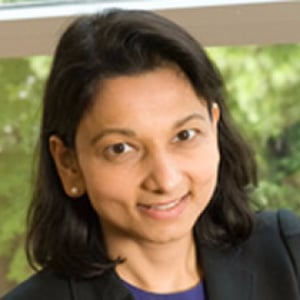
Elvin R. Latty Professor of Law, Duke University School of Law
Arti Rai, Elvin R. Latty Professor of Law and co-Director, Duke Law Center for Innovation Policy, is an internationally recognized expert in intellectual property (IP) law, administrative law, and health policy. Rai has also taught at Harvard, Yale, and the University of Pennsylvania law schools. Rai's research on IP law and policy in biotechnology, pharmaceuticals, and software has been funded by NIH, the Kauffman Foundation, and the Woodrow Wilson Center. She has published over 50 articles, essays, and book chapters on IP law, administrative law, and health policy. Her publications have appeared in both peer-reviewed journals and law reviews, including Science, the New England Journal of Medicine, the Journal of Legal Studies, Nature Biotechnology, and the Columbia, Georgetown, and Northwestern law reviews. She is the editor of Intellectual Property Law and Biotechnology: Critical Concepts (Edward Elgar, 2011) and the co-author of a 2012 Kauffman Foundation monograph on cost-effective health care innovation.
From 2009-2010, Rai served as the Administrator of the Office of External Affairs at the U.S. Patent and Trademark Office (USPTO). As External Affairs Administrator, Rai led policy analysis of the patent reform legislation that ultimately became the America Invents Act and worked to establish the USPTO’s Office of the Chief Economist. Prior to that time, she had served on President-Elect Obama’s transition team reviewing the USPTO. Prior to entering academia, Rai clerked for the Honorable Marilyn Hall Patel of the U.S. District Court for the Northern District of California; was a litigation associate at Jenner & Block (doing patent litigation as well as other litigation); and was a litigator at the Federal Programs Branch of the U.S. Department of Justice's Civil Division.
Rai regularly testifies before Congress and relevant administrative bodies on IP law and policy issues and regularly advises federal agencies on IP policy issues raised by the research that they fund. She is a member of the National Advisory Council for Human Genome Research and of an Expert Advisory Council to the Defense Advanced Projects Research Agency (DARPA). Rai is a public member of the Administrative Conference of the United States, a member of the American Law Institute, and co-chair of the IP Committee of the Administrative Law Section of the ABA. Rai is currently a member of the Institute of Medicine Committee on Strategies for Responsible Sharing of Clinical Trial Data and has served on, or as a reviewer for, numerous National Academies of Science committees. In 2011, Rai won the World Technology Network Award for Law.
Rai graduated from Harvard College, magna cum laude, with a degree in biochemistry and history (history and science), attended Harvard Medical School for the 1987-1988 academic year, and received her J.D., cum laude, from Harvard Law School in 1991. Rai's moot court team at Harvard Law School won Best Brief and Team honors at the school's prestigious Ames Moot Court Competition.

Associate Professor, Boston College Law School
David Olson is an associate professor and the Faculty Director of the Program on Innovation and Entrepreneurship. He teaches patent law, intellectual property law, antitrust law, and various seminars. His research and writing primarily focus on patents, copyrights, antitrust, and incentives for innovation and competition. Since joining BC Law in 2007, he has been recognized for his teaching excellence and contributions. In 2011, he received the Business & Law Society Faculty Award for Achievement in Business & Law. In 2012, he received the Professor Emil Slizewski Award for Faculty Excellence. For one semester in 2015, Olson served as a visiting professor at Pontifical Catholic University, Rio de Janeiro, Brazil, where he conducted research and taught a course on intellectual property.
Olson has published scholarly articles on patent law, copyright law, antitrust, music licensing, and first amendment copyright issues. His writing has been cited in Supreme Court and other legal opinions. He has testified before the U.S. Congress on matters of drug patents, FDA regulation, and antitrust.
The media frequently seeks Olson’s insights and opinions. He has been quoted in the Wall Street Journal, Associated Press, and Reuters, among others. He has appeared as a guest panelist on WBUR’s Radio Boston, WAMU's Kojo Namdi Show, and Public Radio Canada. His op-eds have appeared in the Chicago Tribune, Washington Times, and The Hill.
Olson came to Boston College from Stanford Law School's Center for Internet and Society, where he conducted research on patent law and litigated copyright fair use impact cases. Before entering academia, Olson practiced law as a patent litigator. He clerked for Judge Jerry Smith of the U.S. Court of Appeals for the Fifth Circuit.
Partner, Arnold & Porter
Debbie Feinstein heads the firm's Global Antitrust group, and brings a wealth of experience to her practice in advising clients on a range of antitrust challenges before US antitrust authorities. She recently re-joined the firm from the US Federal Trade Commission (FTC), where she was Director of the Bureau of Competition. In that capacity, she was responsible for supervising the investigation and enforcement of the US antitrust laws against anticompetitive mergers and conduct. During her tenure from 2013 to 2017, the FTC had substantial litigation success and a number of major merger wins, including challenges to Sysco Corp.'s acquisition of rival US Foods Inc., and Staples Inc.'s merger with Office Depot Inc. She had previously served at the FTC from 1989 to 1991 as Assistant to the Director of the Bureau of Competition and Attorney Advisor.
Senior Judge, United States Court of Appeals, District of Columbia Circuit
Circuit Judge Douglas H. Ginsburg was appointed to the United States Court of Appeals for the District of Columbia in 1986. After receiving his B.S. from Cornell University in 1970, and his J.D. from the University of Chicago Law School in 1973, he clerked on the D.C. Circuit and for Justice Thurgood Marshall on the United States Supreme Court. Thereafter, Judge Ginsburg was a professor at the Harvard Law School, the Deputy Assistant and then Assistant Attorney General for the Antitrust Division of the Department of Justice, as well as the Administrator of the Office of Information and Regulatory Affairs in the Office of Management and Budget. Concurrent with his service as a federal judge, Judge Ginsburg has taught at the University of Chicago Law School and the New York University School of Law. Judge Ginsburg is currently a Professor of Law at the George Mason University and a visiting professor at University College London, Faculty of Laws.
Judge Ginsburg is the Chairman of the International Advisory Board of the Global Antitrust Institute at the Law and Economics Center of the George Mason University School of Law. He also serves on the Advisory Boards of: Competition Policy International; the Harvard Journal of Law and Public Policy; the Journal of Competition Law and Economics; the Journal of Law, Economics & Policy; the Supreme Court Economic Review; the University of Chicago Law Review; the New York University Journal of Law and Liberty; and, at University College London, both the Centre for Law, Economics and Society and the Jevons Institute for Competition Law and Economics.
In 2020, Judge Ginsburg was the 11th recipient of the John Sherman Award, presented by the Antitrust Division of the Department of Justice in recognition of the awardee’s Lifetime Contributions to Antitrust Law and Policy.
In 2014, Judge Ginsburg received the Lifetime Achievement Award given annually by the Global Competition Review.
He is the author or co-author of several books and more than 100 articles on competition and regulation, including, most recently, Growing Convergence: The Limited Role of Antitrust in Standard Essential Patent Disputes, in CPI Antitrust Chronicle, Summer 2021, Vol. 1, No. 2.
James G. Dinan University Professor, Carey Law School, University of Pennsylvania
Herbert Hovenkamp is a Fellow of the American Academy of Arts and Sciences, and in 2008 won the Justice Department’s John Sherman Award for his lifetime contributions to antitrust law. In 2012 he served on the ABA’s Committee to advise the President-elect on antitrust matters. His principal writing includes The Opening of American Law: Neoclassical Legal Thought, 1870-1970 (Oxford, 2015); Antitrust Law (formerly with Phillip E. Areeda and Donald F. Turner) (22 vols., Aspen 2008-18); Principles of Antitrust (West, 2017); Creation Without Restraint: Promoting Liberty and Rivalry in Innovation (Oxford, 2012, with Bohannan); The Making of Competition Policy (Oxford, 2012, with Crane); The Antitrust Enterprise: Principle and Execution (Harvard, 2006); Federal Antitrust Policy: The Law of Competition and Its Practice (West, 5th ed. 2015); IP and Antitrust (2 vols., Aspen, 2017, with Janis, Lemley, Leslie, and Carrier); and Enterprise and American Law, 1836-1937 (Harvard, 1991). He has also co-authored casebooks in antitrust, property law, and a free open source casebook on innovation and competition policy. He has consulted on numerous antitrust cases for various government entities and private plaintiffs. He has two sons.
Partner, Litigation Department, Paul Hastings
Michael Murray is co-chair of the Antitrust and Competition practice at Paul Hastings and represents clients in high-stakes mergers and acquisitions and antitrust litigation and investigations. Based in the firm’s Washington, D.C. office, Michael is Chambers ranked and brings significant government antitrust and competition experience, having most recently served as the principal deputy assistant attorney general in the Antitrust Division at the Department of Justice (DOJ), where he oversaw the work of approximately 350 lawyers and 50 economists. In that capacity, Michael supervised DOJ’s merger investigations, conduct matters and litigation for several years.
Michael is the rare antitrust lawyer who maintains both an active merger control practice and a bustling litigation practice. In 2025, for example, he shepherded over $65 billion of transactions through global merger control regimes, including a litigated merger challenge in the U.S., while also representing over a dozen clients in major antitrust litigation. In that year, he won awards for both his merger work and his litigation matters. Chambers USA describes Mike for having “an encyclopedic knowledge of antitrust law [who] can recite different issues for different circuits.”
Michael also is a partner in the Appellate, Regulatory and Complex Litigation practices at Paul Hastings. He brings significant government experience to a practice consisting of preparing and litigating challenges to agency rulemaking, adjudication or other activity, having served as an associate deputy attorney general at DOJ, where he oversaw the Civil Division’s defense of high-profile rulemaking challenges and other agency actions. Earlier in his career, Michael clerked for the Honorable Justice Anthony M. Kennedy of the U.S. Supreme Court and the Honorable Judge Diarmuid F. O'Scannlain of the U.S. Court of Appeals for the Ninth Circuit. He also served as an AUSA for the U.S. Attorney's Office for the Eastern District of Virginia.
Antitrust Partner, White & Case
Rahul Rao is a partner in the Global Antitrust Practice at White & Case and the former Deputy Director of the Federal Trade Commission’s Bureau of Competition. He advises clients on merger clearance, government investigations, antitrust litigation, and regulatory strategy, with particular depth in healthcare, life sciences, private equity, retail, and labor markets.
At the FTC, Rahul led major merger and conduct investigations, supervised enforcement in critical sectors, and helped shape landmark policy initiatives, including the revised Merger Guidelines and the Commission’s noncompete rulemaking. Earlier, he helped establish the Washington State Attorney General’s Antitrust Division as a national leader in labor market competition enforcement.
Having served on both the federal and state enforcement front lines, Rahul brings clients a unique understanding of agency priorities, risk profiles, and strategies for navigating today’s increasingly dynamic antitrust environment.
Carolyn Craig Franklin Chair in Law; Professor of Law and Business; Affiliate Professor of Business, USC Gould School of Law and Marshall School of Business
D. Daniel Sokol is the Carolyn Craig Franklin Chair in Law and a Professor of Law and Business at the USC Gould School of Law and Marshall School of Business (marketing department). He holds a courtesy appointment in the Department of Economics. He also serves as faculty director of the Center for Transnational Law and Business and the co-director of the USC Marshall Initiative on Digital Competition. Additionally, in a part time capacity, he serves as Senior Advisor at White & Case LLP.
Professor Sokol is among the top 10 most cited antitrust law professors in the past five years. He focuses his teaching and scholarship on complex business issues from early stage start-ups to multinational businesses and the issues that businesses face regarding competition: antitrust, data breaches, corporate governance, digital platforms, compliance, innovation, M&A, digital transformation, and global business regulation.
He is a member of the American Law Institute. He also serves as academic advisor to the United States Chamber of Commerce and as a non-governmental Advisor to the International Competition Network. His work has appeared in a variety of journals: Strategic Management Journal, Journal of Law and Economics, Journal of Economics & Management Strategy, Harvard Business Review, Sloan Management Review, Michigan Law Review and Northwestern Law Review, among others.

Revisiting Philadelphia National Bank: The Structural Presumption and the Future of Merger Review
Debbie Feinstein, Douglas H. Ginsburg, Herbert Hovenkamp, Michael Murray, Rahul Rao, D. Daniel Sokol
The 1963 Supreme Court case United States v. Philadelphia National Bank established a "structural presumption": if a merger...
Revisiting Philadelphia National Bank: The Structural Presumption and the Future of Merger Review
Disinformation in Broadcasting and the Public Interest Standard
Robert Corn-Revere, David Gibber, Patricia J. Paoletta, Daniel Suhr
The Communications Act of 1934 requires that licensees operate consistent with the “public interest convenience...
Searching for the Right Remedy in U.S. v. Google
Asheesh Agarwal, Thomas DeMatteo, Geoffrey A. Manne, Anant Raut
In August 2024, a federal district court held that Google possesses monopolistic power over “general...
FCC Enforcement Bureau Reform
The Supreme Court’s decision in SEC v. Jarkesy will have significant impacts on agency authority in the...
Intellectual Property: The Role of Congress and Executive Agencies in 21st Century IP Regimes
Sandra Aistars, John F. Duffy, Thomas B. Griffith, Arti K. Rai, David S. Olson
The Constitution specifically vests power in Congress to grant authors and inventors exclusive rights in...