
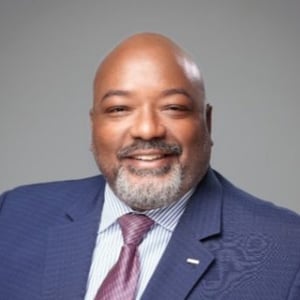
Senior Strategic and Global Intelligence Advisor, Lexpat Global Services
Darrell M. Blocker is the Senior Strategic and Global Intelligence Advisor at Lexpat Global Services. Among other things, Darrell is a globally-recognized subject matter expert on North Korea, the Islamic Republic of Iran, and counterterrorism, and serves as a strategic advisor to high net worth individuals and businesses operating in the defense, national security and international affairs sectors. He is active in the entertainment and nonprofit industries and as a creative consultant, keynote speaker, and ABC News contributor. He is also the founder of DMB Consulting Services, a strategic crisis management and executive advisory firm.
In his 32-year career in public service, Darrell served across six consecutive Presidential Administrations (from Reagan to Trump), including four years in the U.S. Air Force, followed by 28 years as a Central Intelligence Agency operative within their Clandestine Service. His traditional overseas assignments include the Republic of Korea (with the USAF), and Niger, Senegal, Morocco, Nigeria, Uganda, and Switzerland (with the CIA). His war zone assignments were to Panama (USAF), and then Somalia in the aftermath of Blackhawk Down, Burundi after the Hutu-Tutsi massacres, and Pakistan after 9/11 (CIA).
During his storied career, Darrell rose to the civilian rank equivalent to a 3-Star general (Lieutenant General/Vice Admiral). Along the way, his contributions to national security earned him several awards, including the Distinguished Career Intelligence Medal, the George H.W. Bush Award for Excellence in Counterterrorism, the Iraqi Campaign Citation for contributions to Operation Iraqi Freedom, the USAF Commendation Medal for Korea and the Expeditionary Campaign Medal for Panama. It has been widely reported that he later was on President Biden’s shortlist to become the Director of the CIA.
Darrell is a prolific speaker and contributor to public discourse on international security and effective operations. His speaking engagements include the Jewish Federation of Toronto, the Jewish Federation of Greater Los Angeles, the International Spy Museum in Washington DC., the CIA’s CulperCon 2022, and numerous international conferences on intelligence and security matters. His TEDx talk delivered in April 2022 entitled “LISTEN MORE, SPEAK LESS: LESSONS IN KINDNESS FROM A CIA OPERATIVE can be found here. Stories about Darrell have been featured in press and news articles by ABC News, the Wall Street Journal, the Jewish Telegraphic Agency, Fox News, CNN, the New York Times, the Daily Beast, and the DailyMail.
Darrell volunteers with and serves on the board of Peace4Kids.org, a non-profit advocacy group for youth in foster care, and cofounded SME/Creatives, a creative and collaborative storytelling consulting firm operating in the entertainment space. He is also the Vice Chairman of the GreenMet Board of Directors, a nonresident fellow at the University of Georgia’s School of Public and International Affairs Center for International Trade and Security and a 2024 Council of Advisors Leadership Council member for Black Professionals in International Affairs.
Darrell is an avid crossword puzzle enthusiast and music was his first true love. He sang in the UGA’s Men’s Glee Club for four years and in bands in Senegal and Uganda. He spent his formative years in Okinawa, Japan, but his dream of becoming a ninja never materialized. Even so, being an intelligence officer brought all his passions into a singular and meaningful career that took him to 27 addresses and homes in eleven foreign countries over the past 60 years.

Former Chief Counsel to the DCI Counterterrorist Center, Central Intelligence Agency
Jonathan Fredman is a Non-Resident Fellow at the School of Public and International Affairs at Princeton University. He held numerous leadership positions at the Central Intelligence Agency during a 36-year career, including Chief Counsel, Director of Central Intelligence (DCI) Counterterrorist Center; Chief Counsel, DCI Counterintelligence Center; Counsel for Operations, CIA Directorate of Science and Technology; and Chief Counsel for several additional CIA divisions and mission centers. He also served as Assistant Deputy Director of National Intelligence for Special Programs at the Office of the Director of National Intelligence, and as Special Assistant to the Director of Central Intelligence, and taught national security and foreign intelligence at the University of Pennsylvania Law School.
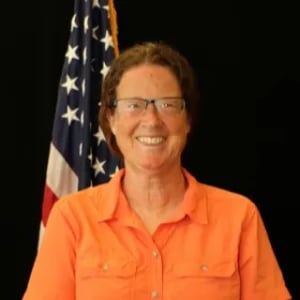
Adjunct Professor of History and Strategic Intelligence, Patrick Henry College
Mary Habeck is a strategic planner and an expert on military matters, Russia, Great Power
Competition, and extremism. She teaches on these issues at Johns Hopkins School of Advanced
International Studies (SAIS), Georgetown, American University, and Patrick Henry College, and
is a consultant for various parts of the federal government. From 2005-2013 she was an
Associate Professor in Strategic Studies at SAIS, teaching courses on extremism, military history,
and strategic thought. Before moving to SAIS, Dr. Habeck taught American and European
military history in Yale’s history department, 1994-2005. She received her PhD in history from
Yale in 1996, an MA in international relations from Yale in 1989, and a BA in international
studies, Russian, and Spanish from Ohio State in 1987.
Dr Habeck was appointed by President Bush to the Council on the Humanities at the National
Endowment for the Humanities (2006-2013), and in 2008-2009 she was the Special Advisor for
Strategic Planning on the National Security Council staff, where she worked on extremism.
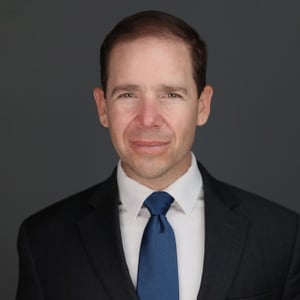
Founder and CEO, Lexpat Global Services
Adam Pearlman is the Founder and Chief Executive Officer of Lexpat Global Services. He is a National Security Law expert and a proven senior leader with experience across the U.S. Departments of Justice, Defense, and State, in the White House, and with the U.S. Federal Judiciary.
Before founding Lexpat, Mr. Pearlman served as the Senior Advisor for Legal Policy in the State Department’s Bureau of Counterterrorism. There, he counseled senior officials on matters covering the entire spectrum of programs and operations to counter terrorism and violent extremism. While participating in sensitive diplomatic engagements and helping to coordinate military operations, he also advised in the development of sanctions policy and initiatives to build legal and operational capacity in partner nations. Mr. Pearlman also managed the Bureau’s participation in federal litigation and led U.S. delegations in multilateral forums concerning criminal justice and rule of law. Separately, Mr. Pearlman supported the State Department’s Bureau of International Narcotics and Law Enforcement Affairs (INL) as the contracted Senior Justice and Rule of Law Advisor in Cabo Verde, Africa. There he was the chief implementer of a Foreign Assistance program that grew eight-fold during his tenure, building host nation capacity across the law enforcement, justice sector, rule of law, anti-money laundering, and corrections disciplines.
A former Associate Deputy General Counsel of the Department of Defense, Mr. Pearlman was agency counsel for complex civil and criminal national security matters in federal and military courts. He also led the Supreme Court and appellate unit of the team dedicated to litigating classified counterterrorism cases. His earlier service in the Department of Justice spanned four litigating divisions and the Office of the Deputy Attorney General. His diverse experience included reviewing complex international transactions and mergers, and advising on immigration removal proceedings, human rights abuses, and terrorist financing investigations. Mr. Pearlman also served with distinction in Iraq as an early advisor to the Iraqi High Tribunal’s prosecution of Saddam Hussein. He was a law clerk for The Honorable Royce C. Lamberth of the U.S. District Court for the District of Columbia, and during law school interned in the White House Counsel’s Office.
Mr. Pearlman is a Senior Fellow at the National Security Institute at George Mason University’s Antonin Scalia Law School, a member of the American Bar Association’s Advisory Committee on Law and National Security, and the Editor-in-Chief of the U.S. Intelligence Community Law Sourcebook. Previously, he has been a Term Member of the Council on Foreign Relations, National Security Fellow at the Foundation for Defense of Democracies, member of the ABA’s Africa Law Initiative Council and of the Center for Strategic & International Studies’ (CSIS) Project on Nuclear Issues, vice chairman of the ABA Section of International Law’s committees on national security, and aerospace and defense, and a liaison to the Board of Directors of the ABA’s Rule of Law Initiative. He has published articles in the Harvard National Security Journal, Stanford Law & Policy Review, Intelligence & National Security, The Foreign Service Journal, Lawfare, and many other outlets.
Mr. Pearlman earned his B.A., with honors, from UCLA, and his J.D., with honors, from The George Washington University Law School, where he was a member of the International Law Review. He also earned a Master of Science of Strategic Intelligence degree from the National Intelligence University, where he was the inaugural recipient of the Kornblum Award for national security law and ethics. Mr. Pearlman is a Certified Financial Crime Specialist and holds certificates in international human rights law from the University of Oxford and in anti-corruption law from American University’s Washington College of Law. He is admitted to the State Bars of California and Virginia, as well as to the Bar of the United States Supreme Court. He speaks and reads Portuguese at the intermediate level.
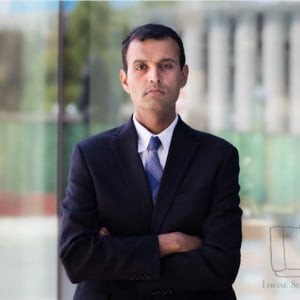
Managing Director, Berkeley Research Group (BRG)
Dr. Dasgupta served as Assistant Secretary for Trade and Economic Security, responsible for a comprehensive national security portfolio. His duties included oversight of the Committee on Foreign Investment in the United States (CFIUS), Team Telecom, the Forced Labor Enforcement Task Force (FLETF), Information and Communications Technology and Services (ICTS), Arctic security initiatives, the Icebreaker Collaboration Effort (ICE) Pact, and related trade matters. Sohan Dasgupta also served as political head of the Millennium Challenge Corporation (MCC), supporting U.S. foreign policy and national security objectives. Previously, he had served as Deputy General Counsel of the U.S. Department of Homeland Security (DHS).
Dr. Dasgupta holds a JD from the University of California, Berkeley, where he was elected to the Order of the Coif; a PhD in international trade and arbitration from the University of Cambridge; MSc from the University of Oxford; and BA in Economics–Operations Research and History from Columbia University. He commenced his legal career with clerkships on the U.S. Court of Appeals for the Ninth Circuit and the U.S. District Court for the Southern District of West Virginia.
Dr. Dasgupta has addressed the Hungarian, Romanian, and Guatemalan parliaments, and has spoken at the invitation of Members of the U.S. Congress, the British Parliament, the European Union Parliament, the Congress of the Philippines, and the Legislative Assembly of El Salvador.
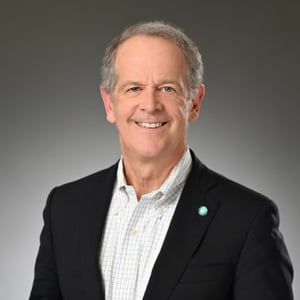
Visiting Professor of Public and International Affairs, Charles and Marie Robertson Visiting Professor, Princeton School of Public and International Affairs
Martin S. Flaherty is a longtime is Visiting Professor at the Princeton School of Public and International Affairs, where he was Fellow in the Program in Law and Public Affairs. He is also Leitner Family Professor of International Human Rights Law and Founding Co-Director of the Leitner Center for International Law and Justice at Fordham Law School. Professor Flaherty also currently teaches at Columbia Law School and Barnard College. Previously he has taught at China University of Political Science and Law and the National Judges College in Beijing, Sungkyunkwan University in Seoul, Queen’s University Belfast. Professor Flaherty earlier served as a law clerk for Justice Byron R. White of the U.S. Supreme Court and Chief Judge John Gibbons of the U.S. Court of Appeals for the Third Circuit.
Flaherty received a J.D. from Columbia Law School, where he was Book Reviews and Articles Editor of the Columbia Law Review, an M.A. and M.Phil., with distinction, from Yale (in history), and B.A. summa cum laude from Princeton. For the Leitner Center, Human Rights First, and the New York City Bar Association, he has led or participated in human rights missions to Northern Ireland, Turkey, Hong Kong, Mexico, Malaysia, Kenya, Romania and China. Professor Flaherty is currently the President of the American Association of the International Commission of Jurists, https://www.aaicj.org, a member of the Council on Foreign Relations, and a legal expert advisor at the Sixth Committee of the United Nations General Assembly.
Flaherty’s scholarly publications focus upon international human rights, foreign affairs, and constitutional law and history, and appear in such journals as the Columbia Law Review, the Yale Law Journal, the Michigan Law Review, the University of Chicago Law Review, Constitutional Commentary, the Harvard Journal of Law and Policy, and the Harvard Human Rights Journal. He has written, appeared, or been quoted in The New York Times, The Washington Post, The New Yorker, The Boston Globe, The Daily News, Newsday, the PBS Newshour, CNN, MSNBC, and NPR. He is also the author of the Restoring the Global Judiciary: Why the Supreme Court Should Rule in Foreign Affairs (Princeton University Press, 2019).

Professor Emeritus of Law, Antonin Scalia Law School, George Mason University
Jeremy A. Rabkin is a Professor Emeritus of Law at the Antonin Scalia Law School, George Mason University. Before joining the faculty in June 2007, he was for over two decades a professor in the Department of Government at Cornell University. Professor Rabkin serves on the board of directors of the Center for Individual Rights, a public interest law firm based in Washington, D.C. Previously he was a board member of the U.S. Institute of Peace and the board of academic advisors of the American Enterprise Institute.
Professor Rabkin’s books include Law Without Nations? (Princeton University Press, 2005). He authored “If You Need a Friend, Don’t Call a Cosmopolitan,” a chapter in Varieties of Sovereignty and Citizenship (Sigal R. Ben-Porath & Rogers M. Smith eds., University of Pennsylvania Press, 2012). His articles have appeared in major law reviews and political science journals and his journalistic contributions in a range of magazines and newspapers, including the Washington Post and the Wall Street Journal.
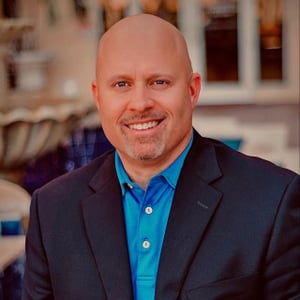
General Counsel and Chief Compliance Officer, Arete Advisors, LLC
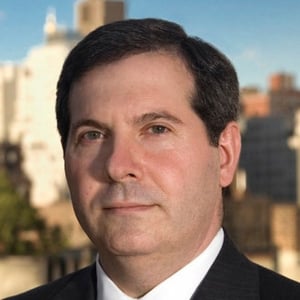
Partner, DeMarco Law, PLLC
Joseph V. DeMarco is a partner at DeMarco Law, PLLC where he focuses on counseling clients on complex issues involving information privacy and security, theft of intellectual property, computer intrusions, on-line fraud, and the lawful use of new technology. His years of experience in private practice and in government handling the most difficult cybercrime investigations handled by the United States Attorney’s Office have made him one of the nation’s most sought-after lawyers on Internet crime and the law relating to emerging technologies. In addition to his counsel practice, Mr. DeMarco serves as an Arbitrator, resolving complex commercial and high-technology disputes between businesses. He is on the National Panel of Neutrals of the American Arbitration Association (AAA) and Federal Arbitration, Inc. (FedArb).
From 1997 to 2007, Mr. DeMarco served an Assistant United States Attorney for the Southern District of New York, where he founded and headed the Computer Hacking and Intellectual Property (CHIPs) Program, a group of five prosecutors dedicated to investigating and prosecuting violations of federal cybercrime laws and intellectual property offenses. Under his leadership, CHIPs prosecutions grew from a trickle in 1997 to a top priority of the United States Attorney’s Office, encompassing all forms of criminal activity affecting e-commerce and critical infrastructures including computer hacking crimes; transmission of Internet worms and viruses; electronic theft of trade secrets; illegal use of “spyware”; web-based frauds; unlawful Internet gambling; and criminal copyright and trademark infringement offenses. As a recognized thought leader in the field, Mr. DeMarco was frequently asked to counsel prosecutors and law enforcement agents regarding novel investigative and surveillance techniques and methodologies, and regularly provided advice to the United States Attorney concerning the Office’s most sensitive computer-related investigations. In 2001, Mr. DeMarco also served as a visiting Trial Attorney at the Department of Justice Computer Crimes and Intellectual Property Section in Washington, D.C., where he focused his work on Internet privacy, gaming, and theft of intellectual property.
Since 2002, Mr. DeMarco has served as an Adjunct Professor at Columbia Law School, where he teaches the upper-class Internet and Computer Crimes seminar. He has been invited to speak throughout the world on cybercrime, e-commerce, and IP enforcement. He has lectured on the subject of cybercrime at Harvard Law School, the Practicing Law Institute, the National Advocacy Center, and at the FBI Academy in Quantico, Virginia, and has served as an instructor on cybercrime to judges attending the New York State Judicial Institute.
Prior to joining the United States Attorney’s Office, Mr. DeMarco was a litigation associate at Cravath, Swaine & Moore in New York City, where he concentrated his work on intellectual property, antitrust, and securities law issues for various high-technology clients. Prior to that, Mr. DeMarco served as law clerk to the Honorable J. Daniel Mahoney, United States Circuit Judge for the Second Circuit Court of Appeals.
Mr. DeMarco holds a J.D. magna cum laude from New York University School of Law. At NYU he was a member of the NYU Law Review. He received his B.S.F.S. summa cum laude from the Edmund A. Walsh School of Foreign Service at Georgetown University.
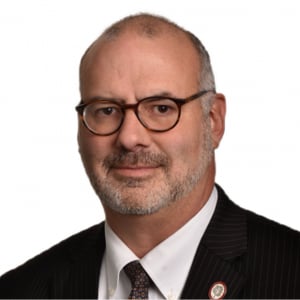
Senior Litigator, The Buckeye Institute; Partner, Wegman Hessler Valore
Jay R. Carson is the senior litigator at The Buckeye Institute. In this role he oversees all of Buckeye’s efforts to protect people’s rights and good public policy through the courts.
Carson brings 20 years of private-sector litigation and public policy experience to The Buckeye Institute, and has served as a legislative aide to the Ohio General Assembly, a law clerk to the Sixth Circuit Court of Appeals, as well as a Common Pleas Court Magistrate.
In addition to his work for The Buckeye Institute, Carson continues to practice at Wegman Hessler in Cleveland, where he focuses on business litigation, regulatory compliance counseling, and dispute resolution. Carson draws on his experiences in the public and private sectors to advocate for economic liberty and against burdensome government regulations on behalf of The Buckeye Institute and the people that it represents.
Carson is active in his community, the Cleveland Metropolitan Bar Association, the Northern District of Ohio Chapter of the Federal Bar Foundation, and is a life member of the Sixth Circuit Judicial Conference. Carson has also served on the Lakewood Civil Service Commission, the Lakewood Charter Review Commission, and the Cleveland-Cuyahoga County Workforce Investment Board. He currently serves on the boards of the North Coast Health Foundation and the Three Arches Foundation, which focus on providing health care to the uninsured, as well as the Lakewood Chamber of Commerce Board of Directors.
Jay earned his J.D. from The Ohio State University College of Law and his B.A. from Baldwin-Wallace College.
Senior Attorney, Institute for Justice
Sam Gedge is a senior attorney at the Institute for Justice. He joined IJ in June 2015 and litigates cases to promote economic liberty, protect political speech, and secure individuals’ rights to private property.
In 2017, Sam was named IJ’s second Elfie Gallun Fellow for Freedom and the Constitution. The fellowship comes with an emphasis on publishing written materials and speaking to students and others about the vital role the U.S. Constitution plays in protecting our most precious freedoms.
In his time at IJ, Sam has launched cases battling civil forfeiture and overzealous licensing boards, which generated widespread coverage and conversation in media outlets from Wired and The Atlantic to London’s Daily Mail.
Before joining IJ, Sam was an attorney at Wiley Rein LLP, in Washington, D.C., where he focused on litigation and election law. He is a former law clerk to Judge Raymond W. Gruender of the U.S. Court of Appeals for the Eighth Circuit.
Sam received his law degree cum laude from Harvard Law School in 2010.

Assistant Attorney General, Opinions Unit, Ohio Attorney General’s Office
Jeff Hobday serves as an Assistant Attorney General in the Opinions Unit at the Ohio Attorney General’s Office, where he researches and drafts formal opinions to guide state agencies, county officials, and townships on complex questions of statutory interpretation. He recently co-authored an amicus brief filed in the U.S. Supreme Court on behalf of Ohio and 28 other states in Montgomery v. Caribe Transport II, LLC, addressing federal preemption and the States’ authority to regulate highway safety through tort law.
Previously, Jeff held leadership roles at the Ohio Secretary of State’s Office, including as Senior Elections Counsel and Deputy Elections Director. He began his public service career as an attorney with the Ohio Legislative Service Commission, where he drafted legislation and advised lawmakers on criminal justice, tort law, and the state’s court system.
Jeff Hobday earned his law degree from Cornell Law School and holds a Bachelor of Music in Piano Performance and Psychology from Wheaton College in Illinois.
Partner, Lehotsky Keller Cohn LLP
Mary Miller is an experienced litigator focusing on complex trial and appellate litigation in state and federal courts. She has represented clients in matters involving antitrust, fraud, breach of contract, class actions, misappropriation of trade secrets, false advertising, and the False Claims Act. Mary previously first chaired a federal jury trial to successful verdict, and she has authored numerous motions and briefs at all stages of litigation.
Before joining Lehotsky Keller Cohn LLP, Mary was a partner at Kirkland & Ellis LLP in Washington, D.C. Mary previously clerked for the Honorable Justice Samuel A. Alito, Jr. of the Supreme Court of the United States, Judge Priscilla Richman of the United States Court of Appeals for the Fifth Circuit, and Judge Richard J. Leon of the United States District Court for the District of Columbia.
Senior Legal Fellow, Courts and the Constitution, Legal Policy Center, The Heritage Foundation
Zack is a Senior Legal Fellow of Courts and the Constitution at The Heritage Foundation.
He previously served for several years as an Assistant United States Attorney in the Northern District of Florida. Prior to that, he spent two years as an associate in the Washington, D.C. office of Cleary Gottlieb Steen & Hamilton, which he joined after clerking for the Hon. Emmett R. Cox on the United States Court of Appeals for the Eleventh Circuit.
Smith received his undergraduate, master’s, and law degrees from the University of Florida. During law school, Smith served as the Editor in Chief of the Florida Law Review and served on the executive boards of several student organizations, including the UF Chapter of the Federalist Society.
U.S. Chamber Litigation Center, Senior Counsel
Jordan Von Bokern is senior counsel at the U.S. Chamber Litigation Center, the litigation arm of the U.S. Chamber of Commerce. In this capacity, Von Bokern focuses on regulatory litigation, especially affirmative litigation in which the Chamber is suing to challenge federal, state, and local regulations.
Before joining the Litigation Center, Von Bokern served as a trial attorney in the Federal Programs Branch in the Civil Division of the U.S. Department of Justice. In this role, Von Bokern defended the United States and various federal agencies and officers against lawsuits that raised constitutional and statutory challenges to federal statutes, regulations, guidance documents, and other executive branch actions. Von Bokern litigated those claims in federal district courts across the country.
Prior to that, Von Bokern served as senior counsel in the Office of Legal Policy at the U.S. Department of Justice. Here, Von Bokern advised Department of Justice leadership and the White House on the selection, nomination, and confirmation of federal judges. He also worked on Department of Justice policy initiatives.
Von Bokern served as a law clerk for both then-Seventh Circuit Court of Appeals Judge Amy Coney Barrett and Fifth Circuit Court of Appeals Judge Jerry E. Smith. Between his clerkships, he was an associate at Jones Day in their Labor and Employment practice. He graduated cum laude from The University of Chicago Law School, where he served as managing editor of The University of Chicago Law Review. Von Bokern received his B.A. in Political Science, summa cum laude, from Colorado State University.
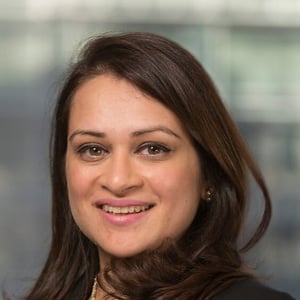
Research Fellow, CATO Institute
Sahar Khan is a defense and foreign policy research fellow at the Cato Institute. Her research interests include state‐sponsored militancy/terrorism, counterterrorism policies, anti‐terrorism legal regimes, and private military and security contractors. Khan focuses on U.S. foreign policy in South Asia and Africa. She is also the editor at Inkstick Media.
Khan holds a PhD in political science from the University of California, Irvine; an MPP from the Harris School of Public Policy at the University of Chicago; and a BA in economics, international studies, and politics and government from Ohio Wesleyan University.
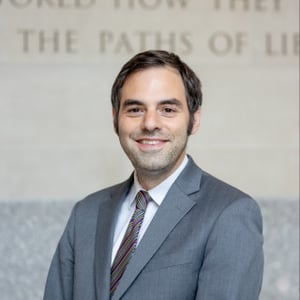
Director, South Asia Institute, Wilson Center
Michael Kugelman is the South Asia Institute Director at the Woodrow Wilson Center, where he is responsible for research, programming, and publications on the region. His main specialty is Pakistan, India, and Afghanistan and U.S. relations with each of them. Mr. Kugelman writes monthly columns for Foreign Policy’s South Asia Channel and monthly commentaries for War on the Rocks. He also contributes regular pieces to the Wall Street Journal’s Think Tank blog. He has published op-eds and commentaries in the New York Times, Los Angeles Times, Politico, CNN.com, Bloomberg View, The Diplomat, Al Jazeera, and The National Interest, among others. He has been interviewed by numerous major media outlets including the New York Times, Washington Post, Financial Times, Guardian, Christian Science Monitor, National Geographic, BBC, CNN, NPR, and Voice of America. He has also produced a number of longer publications on South Asia, including the edited volumes Pakistan’s Interminable Energy Crisis: Is There Any Way Out? (Wilson Center, 2015), Pakistan’s Runaway Urbanization: What Can Be Done? (Wilson Center, 2014), and India’s Contemporary Security Challenges (Wilson Center, 2013). He has published policy briefs, journal articles, and book chapters on issues ranging from Pakistani youth and social media to India’s energy security strategy and transboundary water management in South Asia.
Mr. Kugelman received his M.A. in law and diplomacy from the Fletcher School at Tufts University. He received his B.A. from American University’s School of International Service. Follow him on Twitter @michaelkugelman.
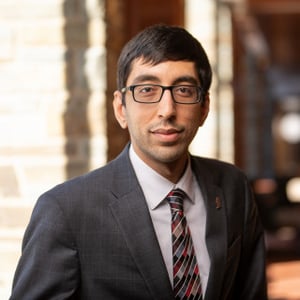
Judicial Law Clerk, U.S. District Court for the Southern District of Florida
Nitin is a recent graduate of Cornell Law School. Before his time in Ithaca, he majored in International Studies and Political Science at Johns Hopkins University and focused on power competition in South Asia during his graduate studies at the University of Oxford.
Research Fellow, CATO Institute
Sahar Khan is a defense and foreign policy research fellow at the Cato Institute. Her research interests include state‐sponsored militancy/terrorism, counterterrorism policies, anti‐terrorism legal regimes, and private military and security contractors. Khan focuses on U.S. foreign policy in South Asia and Africa. She is also the editor at Inkstick Media.
Khan holds a PhD in political science from the University of California, Irvine; an MPP from the Harris School of Public Policy at the University of Chicago; and a BA in economics, international studies, and politics and government from Ohio Wesleyan University.
Director, South Asia Institute, Wilson Center
Michael Kugelman is the South Asia Institute Director at the Woodrow Wilson Center, where he is responsible for research, programming, and publications on the region. His main specialty is Pakistan, India, and Afghanistan and U.S. relations with each of them. Mr. Kugelman writes monthly columns for Foreign Policy’s South Asia Channel and monthly commentaries for War on the Rocks. He also contributes regular pieces to the Wall Street Journal’s Think Tank blog. He has published op-eds and commentaries in the New York Times, Los Angeles Times, Politico, CNN.com, Bloomberg View, The Diplomat, Al Jazeera, and The National Interest, among others. He has been interviewed by numerous major media outlets including the New York Times, Washington Post, Financial Times, Guardian, Christian Science Monitor, National Geographic, BBC, CNN, NPR, and Voice of America. He has also produced a number of longer publications on South Asia, including the edited volumes Pakistan’s Interminable Energy Crisis: Is There Any Way Out? (Wilson Center, 2015), Pakistan’s Runaway Urbanization: What Can Be Done? (Wilson Center, 2014), and India’s Contemporary Security Challenges (Wilson Center, 2013). He has published policy briefs, journal articles, and book chapters on issues ranging from Pakistani youth and social media to India’s energy security strategy and transboundary water management in South Asia.
Mr. Kugelman received his M.A. in law and diplomacy from the Fletcher School at Tufts University. He received his B.A. from American University’s School of International Service. Follow him on Twitter @michaelkugelman.
Judicial Law Clerk, U.S. District Court for the Southern District of Florida
Nitin is a recent graduate of Cornell Law School. Before his time in Ithaca, he majored in International Studies and Political Science at Johns Hopkins University and focused on power competition in South Asia during his graduate studies at the University of Oxford.
Professor Emeritus of Political Science and Professor Emeritus of Public Policy, Univ. of Maryland Baltimore County
George R. La Noue is Professor Emeritus of Political Science and Professor Emeritus of Public Policy at the University of Maryland Baltimore County. He has served as a trial expert in twenty cases involving public procurement preferences. For thirty years, he was Director of the Project on Civil Rights and Public Contracts at UMBC which recently contributed 289 public contracting disparity studies to the Library of Congress. He has been a consultant to nine governments and trial expert in thirty cases where the validity of disparity studies was at issue.
Prof. La Noue can be reached by email at glanoue@umbc.edu.
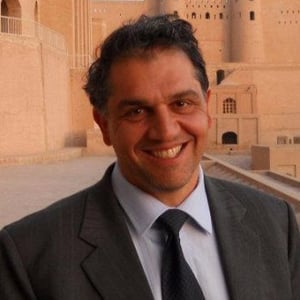
Senior Fellow, International Security Program, New America
As a Senior Fellow with the International Security Program at New America, Ioannis "Gianni" Koskinas focuses on foreign policy issues with an emphasis on Afghanistan, Pakistan, Iraq, and the Levant. He is the CEO of the Hoplite Group, a company focused on sustainable and innovative solutions to complex problems, in the most challenging environments and harshest conditions. Previously he was the Executive Vice President of the Asia Africa Projects Group and the President of the Global Initiatives Group, focusing on natural resources development and national security projects, respectively. Gianni retired from the U.S. Air Force in 2011 after a twenty-year career in Special Operations. He has a B.S. in Biology from the University of Connecticut, as well as three Master's degrees in Operational Art, Strategy, and International Relations. He is also a candidate for a Ph.D. in War Studies from King's College, London.
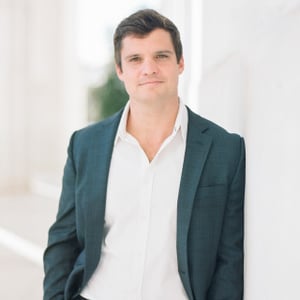
Managing Director, SCF Partners
Daniel G. West invests in energy services, equipment, and technology companies at SCF Partners in Houston, Texas. He provides equity capital and strategic growth assistance to entrepreneurs and leaders of both start-up ventures and established, growing businesses.
Prior to joining the private sector, Mr. West served as an infantry officer in the United States Marine Corps. As a platoon commander with the 22nd Marine Expeditionary Unit aboard the USS Mesa Verde, he led the Tactical Recovery of Aircraft and Personnel force in support of the NATO aerial campaign over Libya. He then served as executive officer of India Company, 3rd Battalion, 9th Marines as it mentored Afghan forces to assume lead security responsibility and executed counter-narcotics missions in Marjah, Helmand Province, Afghanistan. He also served as a clerk for Judge Laurence H. Silberman on the U.S. Court of Appeals for the D.C. Circuit.
Mr. West holds degrees in law, business administration, and economics from Harvard University, where he served as an editor of the Harvard Law Review and taught undergraduate courses in economics and government. He is a member of the Executive Committee of the International & National Security Law Practice Group of the Federalist Society and a term member of the Council on Foreign Relations.
Research Fellow, CATO Institute
Sahar Khan is a defense and foreign policy research fellow at the Cato Institute. Her research interests include state‐sponsored militancy/terrorism, counterterrorism policies, anti‐terrorism legal regimes, and private military and security contractors. Khan focuses on U.S. foreign policy in South Asia and Africa. She is also the editor at Inkstick Media.
Khan holds a PhD in political science from the University of California, Irvine; an MPP from the Harris School of Public Policy at the University of Chicago; and a BA in economics, international studies, and politics and government from Ohio Wesleyan University.
Director, South Asia Institute, Wilson Center
Michael Kugelman is the South Asia Institute Director at the Woodrow Wilson Center, where he is responsible for research, programming, and publications on the region. His main specialty is Pakistan, India, and Afghanistan and U.S. relations with each of them. Mr. Kugelman writes monthly columns for Foreign Policy’s South Asia Channel and monthly commentaries for War on the Rocks. He also contributes regular pieces to the Wall Street Journal’s Think Tank blog. He has published op-eds and commentaries in the New York Times, Los Angeles Times, Politico, CNN.com, Bloomberg View, The Diplomat, Al Jazeera, and The National Interest, among others. He has been interviewed by numerous major media outlets including the New York Times, Washington Post, Financial Times, Guardian, Christian Science Monitor, National Geographic, BBC, CNN, NPR, and Voice of America. He has also produced a number of longer publications on South Asia, including the edited volumes Pakistan’s Interminable Energy Crisis: Is There Any Way Out? (Wilson Center, 2015), Pakistan’s Runaway Urbanization: What Can Be Done? (Wilson Center, 2014), and India’s Contemporary Security Challenges (Wilson Center, 2013). He has published policy briefs, journal articles, and book chapters on issues ranging from Pakistani youth and social media to India’s energy security strategy and transboundary water management in South Asia.
Mr. Kugelman received his M.A. in law and diplomacy from the Fletcher School at Tufts University. He received his B.A. from American University’s School of International Service. Follow him on Twitter @michaelkugelman.
Judicial Law Clerk, U.S. District Court for the Southern District of Florida
Nitin is a recent graduate of Cornell Law School. Before his time in Ithaca, he majored in International Studies and Political Science at Johns Hopkins University and focused on power competition in South Asia during his graduate studies at the University of Oxford.

25 of 250 - The Echoes of 9/11 in Law, Policy, and Security Today
Darrell Blocker, Jonathan Fredman, Mary Habeck, Adam R. Pearlman
As America celebrates its 250th birthday, it also remembers the 25th anniversary of the September...
What Would the Founders Think of the War in Iran?
Sohan Dasgupta, Martin Flaherty, Jeremy A. Rabkin
In this Federalist Society America 250 series, experts analyze modern legal and policy debates through...
Cybercrime and AI: Emerging Dangers and Opportunities
Mark Cluse, Joseph V. DeMarco
Presented by the In-House Counsel Networkand DeMarco Law, PLLC Few topics dominate the news...
A Seat at the Sitting - February 2026
Jay R. Carson, Sam Gedge, Jeffrey S. Hobday, Mary Elizabeth Miller, Zack Smith, Jordan Von Bokern
Each month, a panel of constitutional experts convenes to discuss the Court’s upcoming docket sitting...
Pakistan at a Crossroads: Ports, Courts, and Power Games
Sahar Khan, Michael Kugelman, Nitin R. Nainani
Pakistan finds itself in yet another multi-faceted crisis. In response to numerous economic challenges, including...
Pakistan at a Crossroads: Ports, Courts, and Power Games
Sahar Khan, Michael Kugelman, Nitin R. Nainani
Pakistan finds itself in yet another multi-faceted crisis. In response to numerous economic challenges, including...
Pakistan at a Crossroads: Ports, Courts, and Power Games
The Race Card in ARPA’s Food Supply Deck
George R. La Noue
It is an old aphorism that a prudent person should not watch the making of...
Topics
Implications of the China-India Border Skirmishes
Kashmir is a remote, inhospitable region of the Himalayas. But for more than two centuries,...
The Stakes: Reinstating Afghanistan Withdrawal?
Ioannis "Gianni" Koskinas, Daniel G. West
Whether an Afghanistan “peace accord” process that includes negotiations with Taliban agents is resumed, or...