
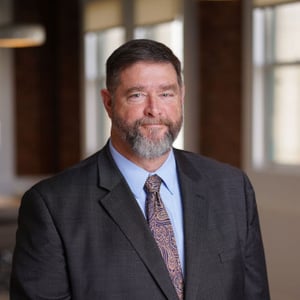
Partner, Briscoe Prows Kao Ivester & Bazel LLP
Tony Francois is experienced in Water and Real Property Law, Land Use and Zoning, Environmental Regulation, Natural Resources Development, Agricultural Law, and Constitutional Law. He has represented homeowners, builders, farmers and ranchers, trade associations, and water districts in administrative, civil, and criminal proceedings before state and federal administrative agencies and state and federal trial and appellate courts. He is a member of the California State Bar and the Northern, Eastern, and Central Districts of California and the Districts of New Mexico and North Dakota, and has litigated cases in federal courts in California, Oregon, Washington, Idaho, Montana, Nevada, Arizona, New Mexico, Colorado, North and South Dakota, Minnesota, Massachusetts, Maryland, South Carolina, and the District of Columbia, as well as the Sixth, Eighth, Ninth, and Tenth Circuit Courts of Appeals. He has appeared before the Supreme Courts of California, Idaho, Nevada, and the United States.
Prior to attending law school, he served as an infantry officer in the United States Army, and was stationed in the former West Germany during the fall of the Berlin Wall.
Tony was an Attorney at Pacific Legal Foundation from 2012 to 2021. He was a lobbyist for 10 years, first with California Farm Bureau Federation from 2003 to 2007, and then with KP Public Affairs from 2007 to 2012. He was an attorney at McQuaid, Bedford & Van Zandt in San Francisco from 1999 – 2003.
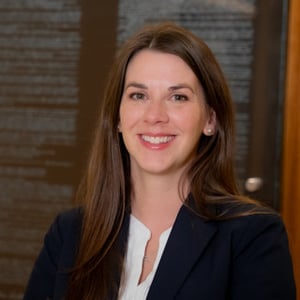
Vice President, Practice Groups, The Federalist Society
Vice President, Practice Groups, The Federalist Society
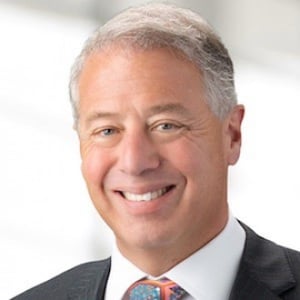
Founding and Managing Partner, Kabateck LLP
As a nationally recognized and respected consumer attorney, Brian Kabateck is a preeminent leader in the fight to ensure access to the justice system. He’s a powerful advocate in the courtroom and at the California State Capitol for consumers’ rights and protections. Formerly, Mr. Kabateck was President of the Consumer Attorneys of California and the Los Angeles County Bar Association.
Mr. Kabateck’s vigorous litigation on behalf of his clients has netted more than a billion dollars in recoveries. He has won many multi-million dollar verdicts, judgments and settlements in the areas of personal injury, insurance bad faith, pharmaceutical litigation, wrongful death, class action, mass torts and disaster litigation.
Because of his deep knowledge of the law and dynamic speaking style, Mr. Kabateck is a frequent analyst for national, local and legal media outlets. He makes regular appearances on CNN, MSNBC, CBS, NBC, ABC, FOX and CW stations. In addition to his television exposure, Mr. Kabateck often speaks at seminars, law schools and industry events.
As the former President of the Consumer Attorneys of California, Mr. Kabateck drew on his strong leadership abilities to bring change to some of the state’s most contentious problems. Under his direction, he brokered a consensus on issues including protecting patient safety and court funding. He has worked tirelessly with the California Legislature and California Department of Insurance to draft many laws for some of the state’s largest industries.
Mr. Kabateck’s ability to straddle the legal and political world has made him a strategic and outspoken advocate for consumer and patient rights. In November, voters will decide whether to overturn the decades old MICRA law which caps non-economic damages at $250,000. Mr. Kabateck is a leader in the fight to lift this outdated and misguided law that deprives the state’s most vulnerable victims from getting the compensation they deserve in medical malpractice cases.
Mr. Kabateck has extensive experience in all judicial forums throughout California. He has argued cases before the California State Supreme Court, California Court of Appeal, Ninth Circuit Court of Appeals, and the Federal Circuit Court of Appeals.

Senior Vice President for Legal Studies, Cato Institute
Clark Neily is senior vice president for legal studies at the Cato Institute. His areas of interest include constitutional law, overcriminalization, civil forfeiture, police accountability, and gun rights. Neily is the author of Terms of Engagement: How Our Courts Should Enforce the Constitution’s Promise of Limited Government. His writing has appeared in the Wall Street Journal, Forbes, and National Review Online, as well as various law reviews, including the Harvard Journal of Law and Public Policy, George Mason Law Review, Georgetown Journal of Law and Public Policy, NYU Journal of Law and Liberty, and Texas Review of Law and Politics. Neily is a frequent guest speaker and lecturer for the Federalist Society, Institute for Humane Studies, and American Constitution Society.
Before joining Cato in 2017, Neily was a senior attorney and constitutional litigator at the Institute for Justice and director of the Institute’s Center for Judicial Engagement. He is also an adjunct professor at the University of Texas School of Law, where he teaches constitutional litigation and public-interest law.
Neily served as co-counsel in District of Columbia v. Heller, the historic case in which the Supreme Court held for the first time that the Second Amendment protects an individual right to own a gun for self-defense.
Neily began his legal career as a law clerk to Judge Royce Lamberth on the U.S. District Court for the District of Columbia. After that he spent four years in the trial department of the Dallas-based firm Thompson & Knight. Neily received his undergraduate and law degrees from the University of Texas, where he was Chief Articles Editor of the Texas Law Review.
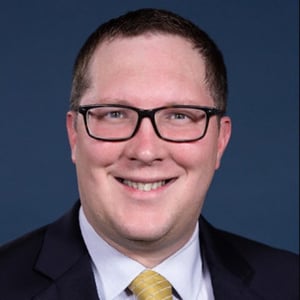
Attorney, Pacific Legal Foundation
Luke A. Wake is an attorney at the Pacific Legal Foundation. Prior to joining PLF, he was a senior staff attorney at the NFIB Small Business Legal Center.
Wake has particular expertise on environmental and land use issues, and has worked on numerous other constitutional issues and matters of importance to small business owners. He is an ardent defender of private property rights, which he believes are essential to the free enterprise system and the foundation of American liberty. As a strong advocate of individual rights and economic liberties, he has built his career defending small business interests.
Wake has focused on a whole host of issues, from employment law matters to regulatory compliance. In addition to serving as a resource for small business owners, Wake is committed to ensuring that the voice of small business is heard in the nation’s courts. As an appellate practitioner, Wake has focused particularly on informing the courts on matters of administrative law and on issues under the Fifth Amendment’s Takings Clause. He is also working to advance small business interests in law review articles, and was recently published in the Berkeley Journal of Law & Ecology. See R.S. Radford & Luke A. Wake, Deciphering and Extrapolating: Searching for Sense in Penn Central, 38 Ecology L.Q. 731, 746-747 (2011).
Before joining the Legal Center’s team, Wake completed a prestigious two-year fellowship as an attorney in the Pacific Legal Foundation’s College of Public Interest Law. Wake is a graduate of Case Western Reserve University School of Law in Cleveland Ohio, and is a member of the California Bar. He completed his undergraduate studies at Elon University in North Carolina in 2006 where he focused on political theory and corporate communications.
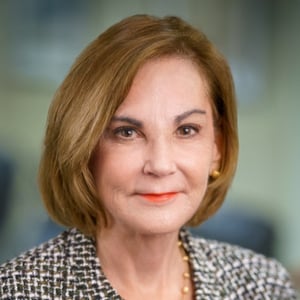
Partner, Marzulla Law
Ms. Marzulla served as an Attorney-Advisor and as a trial lawyer prosecuting employment violations in the Civil Rights Division at the U.S. Department of Justice. Later, Nancie joined the law firm of Verner, Liipfert (now DLA Piper), where she litigated complex airline and other civil matters. In 1991, She founded Defenders of Property Rights, where she was involved in high profile takings cases in the Supreme Court, federal courts of appeal, and trial courts. Ms. Marzulla also worked at the International Labor Organization in Geneva, Switzerland doing comparative legal research.
Nancie G. Marzulla is a founding partner of Marzulla Law, ranked as one of the nation’s “Best Law Firms,” and a “Tier One” environmental litigation firm by the U.S. News and World Report. Nancie’s litigation practice concentrates on water rights, takings, and contract claims in the U.S. Court of Federal Claims. She also has extensive experience in handling matters involving property, water, environmental law, Indian tribal claims, development, and natural resources in trial courts, courts of appeal, the Supreme Court, and in international tribunals. Nancie also represents corporate clients in enforcement or permitting disputes with federal regulatory agencies.
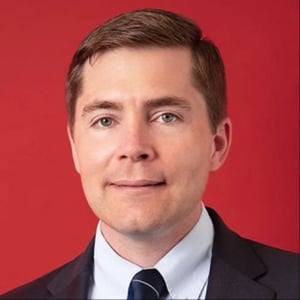
Senior Attorney, Pacific Legal Foundation
Damien Schiff is a senior attorney at Pacific Legal Foundation. He leads its environmental practice group, a unique initiative that draws broadly from PLF’s expertise and success in property rights and separation of powers litigation. Over the years, Damien has represented hundreds of landowners and property rights advocates to defend their liberties against heavy-handed and unwarranted environmental and land-use regulation. His litigation experience includes Sackett v. U.S. Environmental Protection Agency, a groundbreaking decision in which the U.S. Supreme Court upheld the right of landowners to challenge Clean Water Act compliance orders issued by EPA, and Contoski v. Norton, PLF’s successful effort to force the federal government to make good on its promise to delist the bald eagle from the Endangered Species Act.
Besides litigation, Damien has written academic articles on a variety of subjects, including the Endangered Species Act, the Clean Water Act, greenhouse gas torts, the duty to rescue, and international water law. He has appeared on a variety of television and radio programs and has been quoted in The New York Times, The Wall Street Journal, Harper’s Magazine, and The Economist, among other publications.
He obtained his law degree magna cum laude from the University of San Diego School of Law, and his undergraduate degree magna cum laude from Georgetown University. While at USD, he was a research assistant for Professor Bernard Siegan, a leading constitutional theorist and advocate for property rights and economic liberty. Immediately prior to joining PLF, Damien clerked for Judge (and former PLF attorney) Victor Wolski of the United States Court of Federal Claims. Damien credits the mentoring and examples of Professor Siegan and Judge Wolski for his decision to pursue a career in liberty-based public interest litigation.
Damien lives in Sacramento with his wife, two young sons, four chickens, and a cat named Princess. In his off hours he enjoys stamp collecting, Gregorian chant, and martinis—preferably at the same time.
Partner, Briscoe Prows Kao Ivester & Bazel LLP
Tony Francois is experienced in Water and Real Property Law, Land Use and Zoning, Environmental Regulation, Natural Resources Development, Agricultural Law, and Constitutional Law. He has represented homeowners, builders, farmers and ranchers, trade associations, and water districts in administrative, civil, and criminal proceedings before state and federal administrative agencies and state and federal trial and appellate courts. He is a member of the California State Bar and the Northern, Eastern, and Central Districts of California and the Districts of New Mexico and North Dakota, and has litigated cases in federal courts in California, Oregon, Washington, Idaho, Montana, Nevada, Arizona, New Mexico, Colorado, North and South Dakota, Minnesota, Massachusetts, Maryland, South Carolina, and the District of Columbia, as well as the Sixth, Eighth, Ninth, and Tenth Circuit Courts of Appeals. He has appeared before the Supreme Courts of California, Idaho, Nevada, and the United States.
Prior to attending law school, he served as an infantry officer in the United States Army, and was stationed in the former West Germany during the fall of the Berlin Wall.
Tony was an Attorney at Pacific Legal Foundation from 2012 to 2021. He was a lobbyist for 10 years, first with California Farm Bureau Federation from 2003 to 2007, and then with KP Public Affairs from 2007 to 2012. He was an attorney at McQuaid, Bedford & Van Zandt in San Francisco from 1999 – 2003.
Vice President, Practice Groups, The Federalist Society
Founding and Managing Partner, Kabateck LLP
As a nationally recognized and respected consumer attorney, Brian Kabateck is a preeminent leader in the fight to ensure access to the justice system. He’s a powerful advocate in the courtroom and at the California State Capitol for consumers’ rights and protections. Formerly, Mr. Kabateck was President of the Consumer Attorneys of California and the Los Angeles County Bar Association.
Mr. Kabateck’s vigorous litigation on behalf of his clients has netted more than a billion dollars in recoveries. He has won many multi-million dollar verdicts, judgments and settlements in the areas of personal injury, insurance bad faith, pharmaceutical litigation, wrongful death, class action, mass torts and disaster litigation.
Because of his deep knowledge of the law and dynamic speaking style, Mr. Kabateck is a frequent analyst for national, local and legal media outlets. He makes regular appearances on CNN, MSNBC, CBS, NBC, ABC, FOX and CW stations. In addition to his television exposure, Mr. Kabateck often speaks at seminars, law schools and industry events.
As the former President of the Consumer Attorneys of California, Mr. Kabateck drew on his strong leadership abilities to bring change to some of the state’s most contentious problems. Under his direction, he brokered a consensus on issues including protecting patient safety and court funding. He has worked tirelessly with the California Legislature and California Department of Insurance to draft many laws for some of the state’s largest industries.
Mr. Kabateck’s ability to straddle the legal and political world has made him a strategic and outspoken advocate for consumer and patient rights. In November, voters will decide whether to overturn the decades old MICRA law which caps non-economic damages at $250,000. Mr. Kabateck is a leader in the fight to lift this outdated and misguided law that deprives the state’s most vulnerable victims from getting the compensation they deserve in medical malpractice cases.
Mr. Kabateck has extensive experience in all judicial forums throughout California. He has argued cases before the California State Supreme Court, California Court of Appeal, Ninth Circuit Court of Appeals, and the Federal Circuit Court of Appeals.
Senior Vice President for Legal Studies, Cato Institute
Clark Neily is senior vice president for legal studies at the Cato Institute. His areas of interest include constitutional law, overcriminalization, civil forfeiture, police accountability, and gun rights. Neily is the author of Terms of Engagement: How Our Courts Should Enforce the Constitution’s Promise of Limited Government. His writing has appeared in the Wall Street Journal, Forbes, and National Review Online, as well as various law reviews, including the Harvard Journal of Law and Public Policy, George Mason Law Review, Georgetown Journal of Law and Public Policy, NYU Journal of Law and Liberty, and Texas Review of Law and Politics. Neily is a frequent guest speaker and lecturer for the Federalist Society, Institute for Humane Studies, and American Constitution Society.
Before joining Cato in 2017, Neily was a senior attorney and constitutional litigator at the Institute for Justice and director of the Institute’s Center for Judicial Engagement. He is also an adjunct professor at the University of Texas School of Law, where he teaches constitutional litigation and public-interest law.
Neily served as co-counsel in District of Columbia v. Heller, the historic case in which the Supreme Court held for the first time that the Second Amendment protects an individual right to own a gun for self-defense.
Neily began his legal career as a law clerk to Judge Royce Lamberth on the U.S. District Court for the District of Columbia. After that he spent four years in the trial department of the Dallas-based firm Thompson & Knight. Neily received his undergraduate and law degrees from the University of Texas, where he was Chief Articles Editor of the Texas Law Review.
Attorney, Pacific Legal Foundation
Luke A. Wake is an attorney at the Pacific Legal Foundation. Prior to joining PLF, he was a senior staff attorney at the NFIB Small Business Legal Center.
Wake has particular expertise on environmental and land use issues, and has worked on numerous other constitutional issues and matters of importance to small business owners. He is an ardent defender of private property rights, which he believes are essential to the free enterprise system and the foundation of American liberty. As a strong advocate of individual rights and economic liberties, he has built his career defending small business interests.
Wake has focused on a whole host of issues, from employment law matters to regulatory compliance. In addition to serving as a resource for small business owners, Wake is committed to ensuring that the voice of small business is heard in the nation’s courts. As an appellate practitioner, Wake has focused particularly on informing the courts on matters of administrative law and on issues under the Fifth Amendment’s Takings Clause. He is also working to advance small business interests in law review articles, and was recently published in the Berkeley Journal of Law & Ecology. See R.S. Radford & Luke A. Wake, Deciphering and Extrapolating: Searching for Sense in Penn Central, 38 Ecology L.Q. 731, 746-747 (2011).
Before joining the Legal Center’s team, Wake completed a prestigious two-year fellowship as an attorney in the Pacific Legal Foundation’s College of Public Interest Law. Wake is a graduate of Case Western Reserve University School of Law in Cleveland Ohio, and is a member of the California Bar. He completed his undergraduate studies at Elon University in North Carolina in 2006 where he focused on political theory and corporate communications.
Attorney, Pacific Legal Foundation
Luke A. Wake is an attorney at the Pacific Legal Foundation. Prior to joining PLF, he was a senior staff attorney at the NFIB Small Business Legal Center.
Wake has particular expertise on environmental and land use issues, and has worked on numerous other constitutional issues and matters of importance to small business owners. He is an ardent defender of private property rights, which he believes are essential to the free enterprise system and the foundation of American liberty. As a strong advocate of individual rights and economic liberties, he has built his career defending small business interests.
Wake has focused on a whole host of issues, from employment law matters to regulatory compliance. In addition to serving as a resource for small business owners, Wake is committed to ensuring that the voice of small business is heard in the nation’s courts. As an appellate practitioner, Wake has focused particularly on informing the courts on matters of administrative law and on issues under the Fifth Amendment’s Takings Clause. He is also working to advance small business interests in law review articles, and was recently published in the Berkeley Journal of Law & Ecology. See R.S. Radford & Luke A. Wake, Deciphering and Extrapolating: Searching for Sense in Penn Central, 38 Ecology L.Q. 731, 746-747 (2011).
Before joining the Legal Center’s team, Wake completed a prestigious two-year fellowship as an attorney in the Pacific Legal Foundation’s College of Public Interest Law. Wake is a graduate of Case Western Reserve University School of Law in Cleveland Ohio, and is a member of the California Bar. He completed his undergraduate studies at Elon University in North Carolina in 2006 where he focused on political theory and corporate communications.

Analyzing the EPA’s Draft Memorandum on Maui v. Hawaii Wildlife Fund
TeleforumCourthouse Steps Decision Teleforum: Texas v. New Mexico
Tony Francois
On December 14, 2020, the Supreme Court released its decision in Texas v. New Mexico....
Courthouse Steps Decision Teleforum: Texas v. New Mexico
TeleforumCourthouse Steps Oral Argument Teleforum: Mnuchin v. Collins
Elizabeth Slattery
The case of Mnuchin v. Collins will have oral arguments before the Supreme Court on December 9,...
Collins v. Mnuchin- Post-Argument SCOTUScast
Elizabeth Slattery
On December 9, 2020 the Supreme Court heard oral argument in Collins v. Mnuchin (consolidated...
Deep Dive Episode 150 – Regulating Business in the Age of COVID-19
Brian Kabateck, Clark Neily, Luke A. Wake
COVID-19 has presented unique challenges for state lawmakers as they attempt to address public health...
Courthouse Steps Oral Argument Teleforum: Mnuchin v. Collins
TeleforumDeep Dive Episode 150 – Regulating Business in the Age of COVID-19
A Regulatory Transparency Project Teleforum
TeleforumPublic Interest Litigation in Fresno County: Ghost Golf Inc., et al v. Newsom
Fresno Lawyers Chapter
U.S. Fish and Wildlife Services v. Sierra Club - Post-Argument SCOTUScast
Nancie G. Marzulla, Damien Michael Schiff
On November 2, 2020, the Supreme Court heard oral arguments in U.S. Fish and Wildlife...