
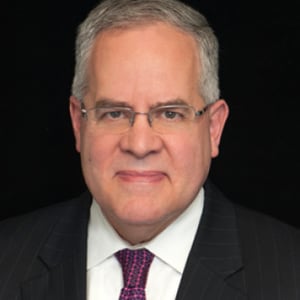
Advisory Board Member, Beacon Global Strategies LLC
Mr. Shedd was named Acting Director of the Defense Intelligence Agency in August 2014 following four years service as Deputy Director. Until January 2015 he led the Defense Intelligence Enterprise workforce comprised of more than 16,500 military and civilian employees worldwide. This workforce spans the Defense Intelligence Enterprise within the Department of Defense with an intelligence mission and/or function, plus all their stakeholders involved in creating, sustaining and enhancing mission capacity.
Mr. Shedd served from May 2007 to August 2010 as the Director of National Intelligence (DNI) Deputy Director for Policy, Plans, and Requirements, where he was responsible for overseeing the formulation and implementation of major Intelligence Community (IC) policies across the full spectrum of issues, from information sharing and IC authorities to analytic standards, among others. In particular, he led the review of Executive Order 12333, the foundational U.S. intelligence policy, which was revised by President George W. Bush in July 2008. Additionally, Mr. Shedd developed and implemented a National Intelligence Strategy, published in August 2009 for the IC and led all strategic planning efforts to determine future intelligence priorities for the Community and the Nation.
From May 2005 to April 2007, Mr. Shedd served as Chief of Staff and, later, Acting Director of the Intelligence Staff to the Director of National Intelligence. Prior to the creation of the Office of the Director of National Intelligence, Mr. Shedd held intelligence policy positions at the National Security Council (NSC) from February 2001 to May 2005. He served as the NSC’s Special Assistant to the President and Senior Director for Intelligence Programs and Reform. Mr. Shedd has been directly involved in the implementation of intelligence reform stemming from the 9/11 Commission report in July 2004, the Intelligence Reform and Terrorism Prevention Act of 2004, and the Weapons of Mass Destruction (WMD) Commission’s report to the President in March 2005.
Between 1984 and 1993, Mr. Shedd served overseas in the U.S. Embassies in Costa Rica and Mexico. Mr. Shedd has also held a variety of senior management assignments at the Central Intelligence Agency, including Chief of Congressional Liaison.
Mr. Shedd is also on the Government Advisory Board of Dataminr, a social media “big data” company that broadly services the Federal Government.
Mr. Shedd holds a B.A. from Geneva College in Beaver Falls, Pennsylvania and a M.A. from Georgetown University’s School of Foreign Service in Latin American Studies. Mr. Shedd was born in Bolivia and grew up in Latin America.

Executive Vice President, Chief Legal Officer, Gates Corporation
Matthew R. A. Heiman joined the Company in May 2026 and has served as the Company’s Chief Legal Officer and Corporate Secretary since June 2026. As Chief Legal Officer, Mr. Heiman is responsible for all legal functions for Gates, including securities and corporate governance, M&A, litigation, commercial, regulatory, compliance, patents and trademarks, real estate, employment and labor, sustainability and environmental matters. Prior to joining Gates, Mr. Heiman held senior legal leadership roles at Waystar, where he served as Chief Legal & Administrative Officer from 2023 to 2025 and as General Counsel and Corporate Secretary from 2020 to 2023. Prior to that, he was with Johnson Controls, where he served as Vice President, Corporate Secretary, and Associate General Counsel. Mr. Heiman has been a Senior Fellow for the National Security Institute at George Mason University’s Antonin Scalia School of Law since 2018.

David McIntosh is a leader for the principles of limited constitutional government and individual freedom. He is president of the Club for Growth, the leading advocate for economic liberty.
Former Congressman David McIntosh represented Indiana's 2nd Congressional District in the United States Congress from 1995-2001. As a Freshman, David chaired the Subcommittee on Regulatory Relief. He passed the Congressional Review Act and held extensive oversight and field hearings to build a record of public support for regulatory relief initiatives in energy, biotechnology, pharmaceutical, healthcare, transportation and technology sectors. Another issue that he championed was the elimination of the marriage penalty in the Federal Tax Code.
David served during the Reagan administration as special assistant to Attorney General Edwin Meese III, and as special assistant to President Reagan for Domestic Affairs. During the first Bush administration, he served as executive director of the President's Council on Competitiveness and assistant to the Vice President. The Competitiveness Council coordinated the cost/benefit review of major regulations and promoted legal reform measures.
David is a co-founder of the Federalist Society for Law and Public Policy and serves on the Board of Directors. He remains active with several free market and conservative think tanks and grassroots organizations. David has also had stints at the Hudson Institute and as a Professor of Economics at Ball State School of Business.
Prior to the Club for Growth, David was a partner at Mayer Brown, LLP in Washington, DC.
David graduated from the University of Chicago Law School in 1983, and Yale University, BA, cum laude, in 1980. He and his wife, Ruthie, are the proud parents of Ellie age 17 and Davey age 13.
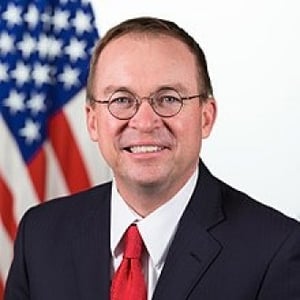
Co-Chair, Actum LLC; Former Director, Office of Management and Budget
Mick Mulvaney is a co-chair at Actum LLC, a global consultancy designed to solve diverse public and private sector challenges. Mulvaney previously served as Acting White House Chief of Staff from January 2019 until March 2020.
Mulvaney also served as director of the Office of Management and Budget (OMB). He was nominated to the post by President Donald J. Trump in December 2016 and confirmed by the Senate on February 16, 2017. Prior to his time as the director of OMB, he served the people of the 5th District of South Carolina as their Congressman where he was first elected in 2010, he is the first Republican member to hold the seat in 128 years.
A lifelong Carolinas resident, he attended Georgetown University, graduating with honors in International Economics, Commerce, and Finance and graduated as an Honor Scholar – the highest award given to students of the Georgetown School of Foreign Service.
After college, Mick received his law degree from the University of North Carolina at Chapel Hill on a full academic scholarship. He completed his formal education at Harvard Business School's OPM program in 2006.
In addition to practicing law and opening his own firm, he also ran the family real estate business, started a small homebuilding company, and became a minority shareholder in a local family restaurant franchise.
While in Congress, he served on the Budget Committee, Joint Economic Committee, Small Business Committee, Financial Services Committee, and the Oversight and Government Reform Committee.
He was a founding member of the Indian Land Rotary, a member of St. Philip Neri Catholic Church, and founding member of Our Lady of Grace Catholic Mission.
Mick and Pam were married in 1998, and are the proud parents of triplets: James, Caroline, and Finnegan, and two great danes: Guiness and Harper.

Wayne A. Abernathy, Wild Bells
Wayne A. Abernathy is a former U.S. Treasury Assistant Secretary for Financial Institutions under President George W. Bush, receiving the Alexander Hamilton Award in recognition of his service. In that office he was also a member of the Board of Directors of the Securities Investor Protection Corporation. Prior to his work at the Treasury, Mr. Abernathy served as Staff Director of the Senate Banking Committee, under Chairman Phil Gramm.
Following his service at the Treasury, Mr. Abernathy worked for 15 years on the staff of the American Bankers Association, as Executive Vice President for Financial Institutions Policy and Regulatory Affairs.
Previous experience with the Senate Banking Committee includes serving as Staff Director of the Subcommittee on Securities during 1995-1998. From 1989 until 1994, Mr. Abernathy was a Republican economist for the committee. He previously worked as a senior legislative assistant for Senator Gramm during 1987-1989 and as an economist for the Banking Committee’s Subcommittee on International Finance and Monetary Policy during 1981-1986, under Chairman Jake Garn.
Mr. Abernathy earned his bachelor’s degree in International Studies from The Johns Hopkins University in 1978. In 1980, he received a master’s degree in International Studies from the School of Advanced International Studies of The Johns Hopkins University.
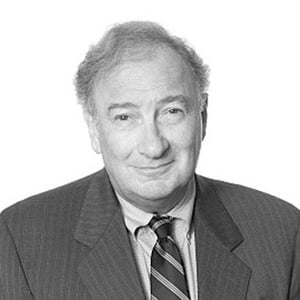
Retired, Winston & Strawn LLP
Jerry Loeser is of counsel in the Chicago office of Winston & Strawn, and his practice focuses on banking regulation. He has extensive experience in counseling financial services clients on, among other things, bank acquisitions, privacy, financial modernization, the USA PATRIOT Act, Basel II and III, lending limits, capital, trust, affiliate transactions, and Federal Reserve, OCC, FDIC, and CFPB regulations.
Prior to working at large corporate law firms, Jerry was chief regulatory and compliance counsel for Comerica Bank, where he also served as senior vice president and deputy general counsel and as general counsel of its retail bank division. Before that, he served as chief regulatory in-house counsel at Wells Fargo & Co. Jerry began his legal career advising the Board of Governors of the Federal Reserve System in Washington, D.C.
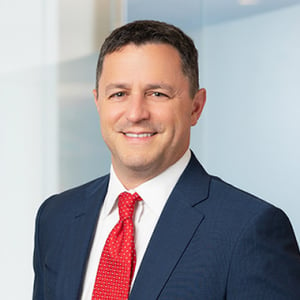
Partner, Dechert LLP
In a career spanning both private and public practice, Steven A. Engel is a leading litigator and counselor, acting as an advocate in high-profile trial and appellate matters and advising clients on their most sensitive and complex legal issues. Mr. Engel is the Chair of Dechert’s Appellate and Regulatory Litigation Group and has appeared in courts across the country, handling a wide range of civil litigation matters, including administrative law, commercial litigation, constitutional law and securities cases. He regularly counsels clients on challenges to agency regulations and in connection with government, congressional and internal investigations.
Until January 2021, Mr. Engel served as the Assistant Attorney General for the Department of Justice’s Office of Legal Counsel. As the head of the office, Mr. Engel served as the chief counsel to the Attorney General and the principal legal adviser to the Executive Branch, providing legal advice to the President and cabinet secretaries on the most critical constitutional and statutory questions, including matters pertaining to national security, administrative law, criminal law, congressional oversight, and executive orders. In December 2020, Mr. Engel was awarded the Department of Justice’s highest honor, the Edmund J. Randolph Award, for outstanding service to the Department.
Before his appointment as Assistant Attorney General in 2017, Mr. Engel had been a partner at Dechert since 2009 and previously served as Deputy Assistant Attorney General for the Department of Justice’s Office of Legal Counsel. Mr. Engel clerked on the U.S. Supreme Court for Associate Justice Anthony M. Kennedy and on the U.S. Court of Appeals for the Ninth Circuit for Judge Alex Kozinski.
Mr. Engel is a member of the Advisory Committee on Rules for the U.S. Court of Appeals for the District of Columbia Circuit and the Administrative Conference of the United States. He has been an Adjunct Professor at the Antonin Scalia School of Law at George Mason University and the Columbus School of Law at the Catholic University of America and was formerly the Chief Justice William H. Rehnquist Distinguished Practitioner in Residence at the C. Boyden Gray Center for the Study of the Administrative State. He has been nationally ranked as a leading lawyer in The Legal 500 USA and Benchmark Litigation. Mr. Engel has frequently commented on legal subjects in numerous publications, including The New York Times, The Washington Post, The Wall Street Journal and USA Today, and has appeared on national news programs as a legal analyst, including on MSNBC, CNN, Fox News Channel and the Fox Business Network. Mr. Engel has testified on several occasions before committees of the U.S. House of Representatives and the Senate.

Director of the Center on National Security, Fordham Law School
Professor Greenberg is a noted expert on national security, terrorism, and civil liberties. She is the author of Rogue Justice: The Making of the Security State, out on May 24, 2016. She is also the author of The Least Worst Place: Guantanamo’s First 100 Days (2009), which was selected as one of the best books of 2009 by The Washington Post and Slate.com. She is co-editor with Joshua L. Dratel of The Enemy Combatant Papers: American Justice, the Courts, and the War on Terror (2008) and The Torture Papers: The Road to Abu Ghraib (2005); editor of the books The Torture Debate in America (2006) and Al Qaeda Now (2005); and editor of the Terrorist Trial Report Card, 2001–2011. Her work has been featured in The New York Times, The Washington Post, The Los Angeles Times, The San Francisco Chronicle, The Nation, The National Interest, Mother Jones, TomDispatch.com, and on major news channels. She is a permanent member of the Council on Foreign Relations.

Professor of Law and Centennial Chair, South Texas College of Law Houston
Josh Blackman is a national thought leader on constitutional law and the United States Supreme Court. Josh’s work was quoted during two presidential impeachment trials. He has testified before Congress and advises federal and state lawmakers. Josh regularly appears on TV, including NBC, CBS, ABC, Fox, and the BBC. Josh is also a frequent guest on NPR and other syndicated radio programs. He has published commentaries in the New York Times, Wall Street Journal, Washington Post, and leading national publications.
Since 2012, Josh has served as a professor at the South Texas College of Law Houston. He holds the Centennial Chair of Constitutional Law. Josh is an Adjunct Fellow at the Manhattan Institute. Josh has written more than seven dozen law review articles that have been cited more than a thousand times. Josh was selected as the Jurist of the Year by the Texas Journal of Law & Public Policy, received the inaugural Meese III Originalism Award, and was awarded the Inaugural Joseph Story Award. Josh was selected by Forbes Magazine for the “30 Under 30” in Law and Policy. Josh is the President of the Harlan Institute, and founded FantasySCOTUS, the Internet’s Premier Supreme Court Fantasy League. He blogs at the Volokh Conspiracyand posts@JoshMBlackman.
Retired
Tom Gede retired in 2023 as a principal in Morgan Lewis Consulting LLC and of counsel to the firm. He currently consults on a variety of legal and policy matters for both public and private clients. Tom has a national reputation and distinguished background in federal Indian law. Prior to retirement, he represented clients in complex governmental matters in litigation, administrative and regulatory proceedings, including high-profile matters involving state governments. A former senior deputy in the California Attorney General’s office, Tom was amicus coordinator and Supreme Court counsel, and argued cases in the US Supreme Court, the California Supreme Court, and numerous state and federal appellate courts.
Tom also served as executive director of the Conference of Western Attorneys General (CWAG), coordinating activities on key legal and policy issues, such as federal Indian law, energy, environmental, public lands, financial services, and telecommunications, for the attorneys general of 18 western states and territories. In 2016, Tom was elected as a Member of the American Law Institute (ALI), and served as an Adviser on the Restatement of the Law Third - The Law of American Indians. Tom also taught federal Indian law as an adjunct law professor at the University of the Pacific - McGeorge School of Law. He served as an assistant editor for and the author of the Indian gaming chapter in CWAG’s American Indian Law Deskbook (2d & 3d eds.). He has been engaged in Indian gaming and Indian law matters for more than three decades, having focused on the gaming compacts with Indian tribes, as well as complex civil and criminal jurisdiction, land, natural resources, water and law enforcement issues in Indian country. He has testified before Congress on American Indian and Native Alaskan issues. In 2012 he was appointed by Speaker John Boehner to serve on the United States Indian Law and Order Commission, where he examined criminal justice issues in Indian country and Alaska, resulting in the issuance of an important report to the President and Congress.
Principal, Morgan Lewis Consulting; Of Counsel, Morgan, Lewis & Bockius LLP; and Former California Governor
Pete Wilson’s more than 30 years of dedicated public service as governor of California, US senator, mayor of San Diego, and California state assemblyman uniquely equip him to counsel and negotiate for clients at all levels of today’s activist regulatory environment. His deep knowledge of policies, people, and processes of government make him an ideal and effective advocate for Morgan Lewis Consulting’s philosophy that today’s successful business must understand and be understood and respected by governments — not only in Washington, DC — but on a state-by-state basis.
As governor of California from 1991 to 1999, Pete is credited with leading California from the depths of recession to prosperous economic recovery. Insisting on strict budget discipline and rehabilitation of the state’s then-hostile environment toward investment and job creation, Pete provided for market-based unsubsidized health coverage for employees of small businesses and obtained anti-fraud measures that drove down workers’ compensation premiums by 40 percent. Under his leadership, California also enacted sweeping welfare reforms and historic education reforms.
After leaving office, Pete spent two years as a managing director of Pacific Capital Group, a merchant bank based in Los Angeles. He serves as a director of the Irvine Company, U.S. Telepacific Corporation Inc., and National Information Consortium Inc. He has also served as a director of IDT Entertainment and as a member of the board of advisers of Thomas Weisel Partners, a San Francisco merchant bank. He was chairman of the Japan Task Force of the Pacific Council on International Policy, which produced an analysis of Japanese economic and national security prospects over the next decade titled “Can Japan Come Back?”
Senior Of Counsel, Covington & Burling LLP and Executive Chairma, The Chertoff Group
Michael Chertoff concentrates in the area of White Collar Defense and Investigations. In recent years, he has handled a series of federal investigations, including complex criminal and civil regulatory matters. He has advised major clients on SEC and Justice Department investigations and successfully served as the independent monitor of a major national healthcare company under criminal and civil investigation.
In addition to his legal work, Mr. Chertoff is Founder and Chairman of The Chertoff Group, a security and risk management firm, where he provides high-level strategic counsel to corporate and government leaders on a broad range of security issues, from risk identification and prevention to preparedness, response and recovery.
In April of 2012, Mr. Chertoff was elected as the new Chairman of the Board of Directors of BAE Systems, Inc. He also sits on the board of directors or board of advisors of a number of companies and nonprofits.
Previously, Mr. Chertoff served as Secretary of the Department of Homeland Security. As Secretary, he led a 218,000 person department with a budget of $50 billion. Mr. Chertoff developed and implemented border security and immigration policy; promulgated homeland security regulations; and spearheaded a national cyber security strategy. He also served periodically on the National Security Council and the Homeland Security Council, and on the Committee on Foreign Investment in the United States.
Prior to his appointment to the Cabinet, Mr. Chertoff served from 2003 to 2005 on the U.S. Court of Appeals for the Third Circuit. Before becoming a federal judge, Mr. Chertoff was the Assistant Attorney General for the Criminal Division of the U.S. Department of Justice. In that position, he oversaw the investigation of the 9/11 terrorist attacks, and formed the Enron Task Force, which produced more than 20 convictions, including those of CEOs Jeffrey Skilling and Kenneth Lay.
Mr. Chertoff’s career includes more than a decade as a federal prosecutor, including service as U.S. Attorney for the District of New Jersey, First Assistant U.S. Attorney for the District of New Jersey, and Assistant U.S. Attorney for the Southern District of New York. As a federal prosecutor, Mr. Chertoff investigated and personally prosecuted significant cases of political corruption, organized crime, and corporate fraud.
From 1994-2001, Mr. Chertoff represented major corporations and individuals in numerous white collar investigations and trials. Among other matters, he successfully represented the nation’s largest hospital company in a four year, multi-jurisdictional criminal and civil investigation, represented major corporations in corruption scandals, and obtained acquittals at trial for individual criminal defendants.
Mr. Chertoff has received numerous awards including the Department of Justice Henry E. Petersen Memorial Award (2006); the Department of Justice John Marshall Award for Trial of Litigation (1987); NAACP Benjamin L. Hooks Award for Distinguished Service (2007); European Institute Transatlantic Leadership Award (2008); and two honorary doctorates. His trial experiences have been featured in over half a dozen books and many news articles.
Executive Vice President and Strategic Counselor, Blacklake Group
Jim Haynes is Executive Vice President and Strategic Counselor of Blacklake Group (a privately held holding company) and concurrently advises several early and mid-stage privately held emerging technology companies, Nichols Law, and the Torridon Group.
Twice a partner in a major national law firm, Jim also previously served as a corporate executive at four public companies: General Dynamics Corporation (as Staff Vice President and Associate General Counsel from 1996-1999), Chevron Corporation (as Chief Corporate Counsel from 2008-2012); Siga Technologies, Inc. (as EVP & General Counsel from 2012-2016); and CSRA Inc. (as EVP, General Counsel & Corporate Secretary from 2016-2018, at the end of which the company was acquired for $9.7B.)
Jim has held two presidentially appointed offices requiring Senate confirmation: General Counsel of the Department of the Army from 1990-1993, and General Counsel of the Department of Defense from 2001-2008. Chief Legal Officer and Designated Agency Ethics Officer of both departments during highly consequential times, Jim also served as Director of the Defense Legal Services Agency from 2001-2008.
Jim earned degrees from Davidson College and Harvard Law School, and holds an honorary Doctor of Laws from Stetson Law School. After a judicial clerkship with Judge James B. McMillan (USDJ, WDNC), Jim served four years on active duty in the U.S. Army. He is the recipient of a significant number of awards and medals from the Departments of Defense, Justice, Army, Navy, and Air Force. Jim holds a patent issued in 2025: https://patents.justia.com/patent/12367458.
For several months in 1999, Jim worked in Almaty, Kazakhstan, volunteering assistance for Mercy Corps International in managing microcredit services across six countries in Central Asia. A former Eagle Scout, Jim served on the Board of Directors of the Greater New York City Councils of the Boy Scouts of America from 2013-2023. He has served as director or advisor on many other boards.
He currently is a director or trustee of three boards: Labrynth (labrynth.ai), the Supreme Court Historical Society, and the William T. Coleman, Jr. Foundation.

Former United States Attorney General
Michael B. Mukasey is the former Attorney General of the United States, the nation’s chief law enforcement officer. As Attorney General from November 2007 to January 2009, he oversaw the U.S. Department of Justice and advised on critical issues of domestic and international law.
From 1988 to 2006, Judge Mukasey served as a district judge in the United States District Court for the Southern District of New York, becoming Chief Judge in 2000.
From 1972 to 1976, Judge Mukasey served as an Assistant United States Attorney for the Southern District of New York, and as Chief of the Official Corruption Unit from 1975 to 1976. His practice consisted of criminal litigation on behalf of the government, including investigation and prosecution of narcotics, bank robbery, interstate theft, securities fraud, fraud on the government and bribery. From 1976 to 1987 and from 2006 to 2007 he was in private practice.
Judge Mukasey has received numerous honors, including the Federal Bar Council’s Learned Hand Medal for Excellence in Federal Jurisprudence. He served as Chairman of the Committee on Public Access to Information and Proceedings of the New York Bar Association from 1984 to 1987. He served on the Federal Courts Committee of the Association of the Bar of the City of New York from 1979 to 1982 and its Communications Law Committee from 1983 to 1986. Judge Mukasey was also a part-time lecturer at Columbia School of Law from January 1993 to May 2007, teaching trial advocacy.
He received his LL.B. from Yale Law School in 1967 and his B.A. from Columbia College in 1963.
Senior Counsel, Steptoe & Johnson LLP
John Rizzo is Senior Counsel in Steptoe's Washington office, where he is a member of the National and Homeland Security practice and the firm’s International Department.
Mr. Rizzo provides legal advice and policy counsel to clients on matters related to national security. His work includes advising companies on the business risks related to their international operations; counseling companies involved in international mergers and acquisitions on the foreign investment review process conducted by the Committee on Foreign Investment in the United States; and advising clients on the legal and policy-related aspects of working with the Intelligence Community.
Prior to joining Steptoe, Mr. Rizzo spent 34 years in the Office of General Counsel at the Central Intelligence Agency (CIA) where he provided legal counsel, policy guidance, and leadership on the most difficult and time sensitive national security issues facing the United States. From 2001 until 2002 and from 2004 to 2009, he served as the Chief Legal Officer at CIA and dealt with the most challenging legal issues in the post 9/11 era. During that time, he was responsible for all legal matters at CIA including national security and international law; administrative and contract law; and criminal and civil litigation. Also during his tenure, he served as the Deputy Director for the Office of Congressional Affairs and was the principal interlocutor with the House and Senate Congressional Committees investigating the Iran-Contra Affair. Early in his career, he was the principal drafter of the CIA regulations for the conduct of intelligence activities in the United States – regulations which remain in effect today.
He was the recipient of the Distinguished Career Intelligence Medal, the highest recognition accorded to a career CIA officer. In 1996, he was awarded the Thomas C. Clark Award from the Federal Bar Association as the most outstanding lawyer in government, to date he was the only Intelligence Community attorney to receive the award.
Mr. Rizzo is a Visiting Fellow at the Hoover Institution. He is a frequent speaker and has served as a guest lecturer at a number of law schools around the country.

President, George W. Bush Presidential Center
Margaret Spellings is the president of the George W. Bush Presidential Center. She oversees all aspects of Bush Center activities, including leadership of the George W. Bush Institute, management of Bush Center business operations, and collaboration with the National Archives and Records Administration, which operates the George W. Bush Presidential Library and Museum.
Previously Spellings was president and CEO of Margaret Spellings and Company, a Washington, D.C. consulting firm that provided strategic guidance to philanthropic and private sector organizations. She also served as a senior advisor to the U.S. Chamber of Commerce and was president of the U.S. Chamber of Commerce Foundation.
Prior to that, Spellings served in a variety of positions in the Bush Administration.
She served as U.S. Secretary of Education from 2005 to 2009. In that role, she oversaw an agency with a nearly $70 billion budget and more than 10,000 employees and contractors. As a member of the President’s Cabinet, she led the implementation of the No Child Left Behind Act (NCLB), a historic national initiative to provide enhanced accountability for the education of 50 million U.S. public school students.
In 2005, Spellings launched a higher education national policy debate and action plan to improve accessibility, affordability and accountability in our Nation’s colleges and universities. Spellings initiated international outreach and collaboration by leading delegations on behalf of the President of the United States as well as overseeing the development and implementation of international education agreements with such countries as China, Russia and the United Arab Emirates.
As White House Domestic Policy Advisor, from 2001 to 2005, she managed the development of the President’s domestic policy agenda. Her achievements include oversight of the development of the U.S. President’s Emergency Plan for AIDS Relief (PEPFAR), the development of a comprehensive immigration plan to ensure long-term economic stability and to secure U.S. borders, and numerous other initiatives on health and human services, transportation, labor, justice and housing.
Prior to her service in the White House, Spellings was senior advisor to then-Governor George W. Bush of Texas, led governmental and external relations for the Texas Association of School Boards, and has served in key positions at Austin Community College and with the Texas Legislature.
She graduated from the University of Houston with a bachelor's degree in political science.
John A. Sibley Professor in Corporate and Business Law, The University of Georgia School of Law
Larry D. Thompson has served on the University of Georgia School of Law’s faculty as the holder of the John A. Sibley Chair of Corporate and Business Law since 2011, noting he was on a leave of absence from June 2012 through 2014. He is presently a member of the Faculty Division of the law school's Dean Rusk International Law Center Council.
Thompson first retired from PepsiCo in May 2011. In June 2012, he rejoined the company as executive vice president, government affairs, general counsel and corporate secretary. His responsibilities included leading PepsiCo’s worldwide legal function, as well as its global government affairs and public policy group and its global citizenship and sustainability team. Thompson again retired from PepsiCo in December 2014.
Thompson has extensive leadership experience in both the public and private sectors. In 2001, Thompson was confirmed by the U.S. Senate as deputy attorney general of the United States. As deputy attorney general, Attorney General John Ashcroft named Thompson in 2002 to lead the Department of Justice’s National Security Coordination Council. Also in 2002, President George W. Bush named Thompson to head the government-wide Corporate Fraud Task Force.
From 1982 to 1986, he served as U.S. attorney for the Northern District of Georgia where he led major political corruption and drug trafficking prosecutions brought by the U.S. Attorney’s Office. As U.S. attorney, Thompson also led the Southeastern Organized Crime Drug Enforcement Task Force.
Thompson has held other significant leadership positions in the public sector. In 1995, he was named independent counsel for the Department of Housing and Urban Development Investigation. In 2000, he was selected by the U.S. Congress to chair the bi-partisan Judicial Review Commission on Foreign Asset Control.
In the private sector, in addition to his leadership roles at PepsiCo, Thompson was a partner in the Atlanta law firm of King & Spalding. He was the founding co-chair of the firm’s special matters and government investigations practice.
Thompson has received numerous awards for his professional achievements, including the Edmund Jennings Randolph Award for outstanding contributions to the accomplishment of the Department of Justice’s mission, the Outstanding Litigator Award from the Federal Bar Association and a Honorary Doctor of Laws degree from Pace University in New York. He has also been recognized by Atlanta’s Gate City Bar Association as a member of its hall of fame.
Thompson is an elected Fellow of the American Board of Criminal Lawyers. In 2014, Ethisphere magazine recognized him by noting that as “the outgoing General Counsel of one of the world’s most well-recognized corporations [Thompson] has set the bar high for GC’s everywhere. [His] background in both public and private sectors earned him the trust and respect of his peers worldwide as he demonstrated how ethics and integrity are essential components of business success.”
In 2004, Thompson served as a Senior Fellow with the Brookings Institution in Washington, D.C.
Thompson speaks and writes frequently on a number of legal topics. His recent publications include:
● “The Responsible Corporation: Its Historical Roots and Continuing Promise" in 29 Notre Dame Journal of Law, Ethics & Public Policy 199 (2015).
● “In-sourcing Corporate Responsibility for Enforcement of the Foreign Corrupt Practices Act" in 51 American Criminal Law Review 199 (2014).
● “Keynote Speech: The Reality of Overcriminalization” in 7 George Mason University Journal of Law, Economics and Policy 577 (2011).
Thompson holds a B.A. from Culver-Stockton College in Canton, Missouri, a M.A. from Michigan State University and a law degree from the University of Michigan.

Judge, United States Court of Appeals, Ninth Circuit
Judge Carlos Bea serves as a judge on the United States Court of Appeals for the Ninth Circuit. He received his Bachelor's Degree from Stanford University in 1956 and his J.D. from Stanford Law School in 1958. Judge Bea was born in San Sebastian, Spain, and immigrated with his family to Cuba in 1939. In 1952, he represented Cuba on the Cuban National basketball team in the Helsinki Olympics. Judge Bea became a naturalized citizen of the United States in 1958. He engaged in private practice in San Francisco, principally in the area of civil trials (jury and non-jury), from 1959-75 at Dunne, Phelps & Mills and from 1975-90 at Carlos Bea, A Law Corporation. He taught courses in civil litigation advocacy at Hastings College of Law and Stanford Law School. From 1990 to 2003, Judge Bea served as a judge of the San Francisco Superior Court. He was nominated by President George W. Bush to the United States Court of Appeals for the Ninth Circuit and was confirmed in 2003.
Judge Bea and his wife Louise reside in San Francisco, where they raised their four sons, Sebastian, Alexander, Nicholas, and Dominic.

Ronald Reagan Distinguished Fellow Emeritus, The Heritage Foundation
Edwin Meese III, the prominent conservative leader, thinker and elder statesman, continues a quarter-century formal association with The Heritage Foundation as the leading think tank’s Ronald Reagan Distinguished Fellow Emeritus.
In that capacity, Meese oversees special projects and acts as an ambassador for Heritage within the conservative movement.
Meese was chairman of Heritage’s Center for Legal and Judicial Studies from its founding in 2001 until what he calls his “semi-retirement” on Feb. 1, 2013.
He joined Heritage in 1988 as the think tank's first Ronald Reagan Distinguished Fellow -- the only policy chair in the country to be officially named for the 40th president. His work focused on keeping President Reagan’s legacy of conservative principles alive in public debate and discourse.
The legal center now bears his name, in recognition of Meese’s contributions to the rule of law and the nation’s understanding of constitutional law. Its mission is to educate government officials, the media and the public about the Constitution and legal principles -- and how they affect public policy.
Perhaps best known as U.S. attorney general during Reagan’s second term, Meese’s service to the conservative icon stretched from the California governor’s mansion in 1966 to the White House in 1981 before he went to the Department of Justice four years later.
His Heritage “hats” kept Meese among the major conservative voices in national policy debates at an age when most men and women enjoyed quiet retirements.
In 2006, for example, Meese was named to the Iraq Study Group, a special presidential commission dedicated to examining the best resolutions for America's involvement in Iraq. In the past few years he wrote and spoke about constitutional topics ranging from religious liberty to the responsibility of Supreme Court justices.
Immediately after Reagan's death in 2004, and in the years since, Meese often agreed to major media appearances to discuss the lasting impact of his old friend, mentor and boss. He has summarized the Reagan legacy in three accomplishments: Reagan cut taxes and kept them low. He worked to defeat and end the Soviet Union and its worldwide push for communism. And he restored America's faith in itself after years of failure and "malaise."
"I admired him as a leader and cherish his friendship," Meese wrote in a 2004 essay for Heritage members and supporters. "Ronald Reagan had strong convictions. He was committed to the principles that had led to the founding of our nation. And he had the courage to follow his convictions against all odds." <[>Edwin Meese III was born Dec. 2, 1931, to Edwin Jr. and Leone Meese in Oakland, Calif. He graduated from Yale University in 1953 and holds a law degree from the University of California-Berkeley.
Meese spent much of his adult life working for Reagan, first after the former actor, sports announcer and athlete was elected as California’s governor in 1966 and then when he sought and won the presidency in 1980.
Reagan never forgot Meese's loyalty and hard work. During a press conference at which reporters questioned Meese's actions at the Justice Department, Reagan replied: "If Ed Meese is not a good man, there are no good men."
During the Reagan governorship, Meese served as executive assistant and chief of staff from 1969 through 1974 and as legal affairs secretary from 1967 through 1968. He previously was deputy district attorney in Alameda County, Calif.
From January 1981 to February 1985, Meese held the position of counsellor to the president -- the senior job on the White House staff -- and functioned as Reagan's chief policy adviser. In 1985, he received Government Executive magazine's annual award for excellence in management.
Meese served as the 75th attorney general of the United States from February 1985 to August 1988. As the nation's chief law enforcement officer, he directed the Justice Department and led international efforts to combat terrorism, drug trafficking and organized crime.
Meese’s relationship with Heritage began when he met with senior management to discuss the think tank's landmark policy guide, Mandate for Leadership, prepared for the incoming administration. Meese later recalled that Reagan personally handed out copies of the 1,093-page book to members of his Cabinet and asked them to read it. Nearly two-thirds of Mandate's 2,000 recommendations would be adopted or attempted by the Reagan administration.
More than a decade after joining Heritage, Meese assumed the chairmanship of its Center for Legal and Judicial Studies. Under his guidance, the center counseled White House staffers, Justice Department officials and Senate Judiciary Committee members on the importance of filling judicial vacancies with qualified men and women who are committed to interpreting the Constitution according to the founding document's original meaning.
The center became known for hosting "moot court" practice sessions to sharpen the arguments of attorneys slated to bring important cases before the Supreme Court. Those cases addressed constitutional issues ranging from property rights to racial preferences in primary and secondary schools to restrictions on free speech in campaign finance law.
Meese headed the legal center's Advisory Board for the writing and editing of the best-selling book, The Heritage Guide to the Constitution (Regnery, 2005). In it, 109 experts walked readers through a clause-by-clause analysis of the Constitution. Sen. Tom Coburn (R-Okla.) was among those keeping the reference work handy during Judiciary Committee hearings on Supreme Court nominees.
Meese's other books include “Leadership, Ethics and Policing” (Prentice Hall, 2004); “Making America Safer” (Heritage, 1997); and “With Reagan: The Inside Story” (Regnery Gateway, 1992).He wrote the Introduction to a well-received 2010 book on the “overcriminalization” trend, “One Nation Under Arrest,” by Heritage veterans Paul Rosenzweig and Brian W. Walsh.
He also is a distinguished visiting fellow at the Hoover Institution at Stanford University in California and lectures, writes and consults throughout the United States on a variety of subjects.
As both attorney general and counsellor to Reagan, Meese was a member of the Cabinet and the National Security Council. He served as chairman of the Domestic Policy Council and the National Drug Policy Board. After Reagan won the White House in the 1980 election, Meese headed the transition team. During the campaign, he was the Reagan-Bush Committee's senior official.
Meese had a career outside government and politics. From 1977 to 1981, he was a law professor at the University of San Diego, where he also directed the Center for Criminal Justice Policy and Management.
He was an executive in the aerospace and transportation industry as vice president for administration of Rohr Industries Inc. in Chula Vista, Calif. He left Rohr to return to the practice of law, doing corporate and general work in San Diego County.
A retired colonel in the Army Reserve, Meese remains active in numerous civic and educational organizations.
He and his wife, Ursula, have two grown children and reside in McLean, Va.

Former President & CEO, The Federalist Society for Law and Public Policy Studies
Eugene B. Meyer, former President and CEO of the Federalist Society, has served as Executive Director, CEO, and/or President of the organization for more than 40 years. He is responsible for shepherding the organization from a small group of law students to a community of 90,000 lawyers, law students, academics, judges, and others interested in the rule of law. The Society now includes a Student Chapter at nearly every ABA-accredited law school in the country and Lawyers Chapters in 220 major cities across the nation. Gene earned his B.A. in history at Yale in 1975 and his M.A. in political science from the London School of Economics in 1976. Gene currently serves on the boards of the U.S. Chess Center, the Holman Foundation, the Sarah Scaife Foundation, and the advisory board of the Adam Smith Society. He holds the title of International Chess Master.

Topics
Rule of Law Is Not Rule of Lawyers
Over the last several months, as the leadership of the House of Representatives and its...
National Intelligence Reform - Podcast
David Shedd, Matthew R. A. Heiman
During the presidential campaign, there were calls for changes to the Office of the Director of National...
Keynote Address by Mick Mulvaney
David M. McIntosh, Mick Mulvaney
The Fifth Annual Executive Branch Review Conference will examine the changing and often convoluted relationship...
Consumer Financial Protection Bureau Update - January 2017 - Podcast
Wayne A. Abernathy, Julius L. Loeser
Members of the Federalist Society’s Financial Services & E-Commerce Practice Group Executive Committee will provide...
Crisis Management and the Presidency
Los Angeles, CaliforniaWhat is the Future of Guantanamo Bay? - Podcast
Steven A. Engel, Karen Greenberg
On his second day in office, President Obama declared that closing the Guantanamo Bay detention...
Take Care on Immigration: United States v. Texas - Podcast
Josh Blackman
On Monday, April 18, the United States Supreme Court heard oral arguments in United States v....
Keynote Address by Governor Pete Wilson
Thomas F. Gede, Pete Wilson
Former California Governor Pete Wilson delivered the Keynote Address at the 2016 Annual Western Chapters...
Welcome & Panel I: The War on Terror
Michael Chertoff, William J. Haynes, Michael B. Mukasey, John Rizzo, Margaret Spellings, Larry D. Thompson
On September 19, 2015, The Federalist Society hosted the 2015 Texas Chapters Conference at the George...
Luncheon Address: An Interview with Former U.S. Attorney General Ed Meese
Carlos T. Bea, Edwin Meese, Eugene B. Meyer
The Federalist Society's Lawyers Division hosted this interview with Former Attorney General Ed Meese on...