

Former United States Attorney General
Michael B. Mukasey is the former Attorney General of the United States, the nation’s chief law enforcement officer. As Attorney General from November 2007 to January 2009, he oversaw the U.S. Department of Justice and advised on critical issues of domestic and international law.
From 1988 to 2006, Judge Mukasey served as a district judge in the United States District Court for the Southern District of New York, becoming Chief Judge in 2000.
From 1972 to 1976, Judge Mukasey served as an Assistant United States Attorney for the Southern District of New York, and as Chief of the Official Corruption Unit from 1975 to 1976. His practice consisted of criminal litigation on behalf of the government, including investigation and prosecution of narcotics, bank robbery, interstate theft, securities fraud, fraud on the government and bribery. From 1976 to 1987 and from 2006 to 2007 he was in private practice.
Judge Mukasey has received numerous honors, including the Federal Bar Council’s Learned Hand Medal for Excellence in Federal Jurisprudence. He served as Chairman of the Committee on Public Access to Information and Proceedings of the New York Bar Association from 1984 to 1987. He served on the Federal Courts Committee of the Association of the Bar of the City of New York from 1979 to 1982 and its Communications Law Committee from 1983 to 1986. Judge Mukasey was also a part-time lecturer at Columbia School of Law from January 1993 to May 2007, teaching trial advocacy.
He received his LL.B. from Yale Law School in 1967 and his B.A. from Columbia College in 1963.

Partner, Gibson Dunn & Crutcher LLP
Theodore B. Olson is a Partner in Gibson, Dunn & Crutcher’s Washington, D.C. office; a founder of the Firm’s Crisis Management, Sports Law, and Appellate and Constitutional Law Practice Groups.
Mr. Olson was Solicitor General of the United States during the period 2001-2004. From 1981-1984, he was Assistant Attorney General in charge of the Office of Legal Counsel in the U.S. Department of Justice. Except for those two intervals, he has been a lawyer with Gibson, Dunn & Crutcher in Los Angeles and Washington, D.C. since 1965.
Selected by Time magazine in 2010 as one of the 100 most influential people in the world, Mr. Olson is one of the nation’s premier appellate and United States Supreme Court advocates. He has argued 65 cases in the Supreme Court and has prevailed in over 75% of those cases. These include the two Bush v Gore cases arising out of the 2000 presidential election; Citizens United v Federal Election Commission; Hollingsworth v Perry, the case affirming the overturning of California’s Proposition 8, banning same-sex marriages; Murphy v NCAA, overturning a federal law prohibiting states from authorizing sports betting; and U.S. Dept. of Homeland Security v Regents of the Univ. of Calif., challenging the Trump Administration’s rescission of the Deferred Action for Childhood Arrivals (“DACA”). Mr. Olson’s practice is concentrated on appellate and constitutional law, federal legislation, media and commercial disputes, and assisting clients with strategies for the containment, management and resolution of major legal crises. He has handled cases at all levels of state and federal court systems throughout the United States. Mr. Olson co-authored “Redeeming the Dream, the Case for Marriage Equality” with David Boies. Both were featured in HBO’s award-winning documentary, “The Case Against 8.”
Mr. Olson's Supreme Court arguments have included cases involving separation of powers; federalism; voting rights; the Tenth Amendment; the First Amendment; the Equal Protection and Due Process Clauses; jury trial rights; punitive damages; takings of property; the Commerce Clause; administrative law; taxation; criminal law; sports wagering; copyright, patent and antitrust; securities; campaign finance; foreign sovereign immunities; telecommunications; the environment; the internet; the Supremacy Clause; and other federal constitutional and statutory questions. As Solicitor General, during the presidency of George W. Bush, Mr. Olson was the Government's principal advocate in the United States Supreme Court, responsible for supervising and coordinating all appellate litigation of the United States, and a legal adviser to the President and the Attorney General. As Assistant Attorney General for the Office of Legal Counsel during the Reagan Administration, Mr. Olson was the Executive Branch's principal legal adviser, rendering legal guidance to the President and to the heads of the Executive Branch departments on a wide range of constitutional and federal statutory questions, and assisting in formulating and articulating the Executive Branch's position on constitutional issues.
Mr. Olson has served as private counsel to two Presidents, Ronald W. Reagan and George W. Bush, in addition to serving those two Presidents in high-level positions in the Department of Justice. He has twice been awarded the United States Department of Justice's Edmund J. Randolph Award, its highest award for public service and leadership, and also received the Department of Defense's Distinguished Public Service Award, its highest civilian award, for his advocacy in the courts of the United States, including the Supreme Court. He also received the American Bar Association Medal, its highest award for “exceptionally distinguished service by a lawyer or lawyers to the cause of American jurisprudence.” Mr. Olson is to receive the 2021 Jack Valenti Friend of the White House Fellows Award in the Fall of 2021 to be presented by the White House Fellows Foundation and Association.
Mr. Olson is a member of the Commission on White House Fellowships; a member of the Board of Trustees of the Ronald Reagan Presidential Foundation; a member of the Board of Visitors of the Federalist Society; the Board of Directors of the Knight First Amendment Institute at Columbia University; and the 9/11 Pentagon Memorial Foundation. He was a visiting scholar at the National Constitution Center in 2007. He served on the President's Privacy and Civil Liberties Oversight Board from 2006 to 2008; and of the Council of the Administrative Conference of the United States from 2010 to 2020. He was Co-Chair of the Knight Commission on the Information Needs of Communities in a Democracy from 2008-2009, and served two terms on the Board of Directors of the National Center for State Courts.
Mr. Olson is a Fellow of both the American College of Trial Lawyers and the American Academy of Appellate Lawyers. He has been repeatedly listed in legal publications as one of the nation’s leading appellate lawyers. The late New York Times columnist William Safire described Mr. Olson as his generation's "most persuasive advocate" before the Supreme Court and "the most effective Solicitor General in decades.”
Mr. Olson received his law degree in 1965 from the University of California at Berkeley (Boalt Hall) where he was a member of the California Law Review and Order of the Coif. He received his bachelor's degree from the University of the Pacific, where he was recognized as the outstanding graduating student in both forensics and journalism. He has written and lectured extensively on appellate advocacy, oral communication in the courtroom, civil justice reform, and constitutional and administrative law.
Former United States Attorney General
Michael B. Mukasey is the former Attorney General of the United States, the nation’s chief law enforcement officer. As Attorney General from November 2007 to January 2009, he oversaw the U.S. Department of Justice and advised on critical issues of domestic and international law.
From 1988 to 2006, Judge Mukasey served as a district judge in the United States District Court for the Southern District of New York, becoming Chief Judge in 2000.
From 1972 to 1976, Judge Mukasey served as an Assistant United States Attorney for the Southern District of New York, and as Chief of the Official Corruption Unit from 1975 to 1976. His practice consisted of criminal litigation on behalf of the government, including investigation and prosecution of narcotics, bank robbery, interstate theft, securities fraud, fraud on the government and bribery. From 1976 to 1987 and from 2006 to 2007 he was in private practice.
Judge Mukasey has received numerous honors, including the Federal Bar Council’s Learned Hand Medal for Excellence in Federal Jurisprudence. He served as Chairman of the Committee on Public Access to Information and Proceedings of the New York Bar Association from 1984 to 1987. He served on the Federal Courts Committee of the Association of the Bar of the City of New York from 1979 to 1982 and its Communications Law Committee from 1983 to 1986. Judge Mukasey was also a part-time lecturer at Columbia School of Law from January 1993 to May 2007, teaching trial advocacy.
He received his LL.B. from Yale Law School in 1967 and his B.A. from Columbia College in 1963.
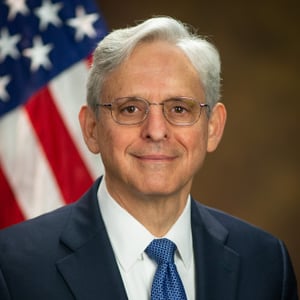
United States Attorney General
Attorney General Merrick B. Garland was sworn in as the 86th Attorney General of the United States on March 11, 2021. As the nation’s chief law enforcement officer, Attorney General Garland leads the Justice Department’s 115,000 employees, who work across the United States and in more than 50 countries worldwide. Under his leadership, the Department of Justice is dedicated to upholding the rule of law, keeping our country safe, and protecting the civil rights of all Americans.
Immediately preceding his confirmation as Attorney General, Attorney General Garland was a judge of the United States Court of Appeals for the District of Columbia Circuit. He was appointed to that position in 1997, served as Chief Judge of the Circuit from 2013-20, and served as Chair of the Executive Committee of the Judicial Conference of the United States from 2017-20. In 2016, President Obama nominated him for the position of Associate Justice of the United States Supreme Court.
Before becoming a federal judge, Attorney General Garland spent a substantial part of his professional life at the Department of Justice. He served in both career and non-career positions under five Attorneys General, including as Special Assistant to the Attorney General, Assistant United States Attorney, Deputy Assistant Attorney General in the Criminal Division, and Principal Associate Deputy Attorney General. In those roles, his responsibilities spanned the work of the Department, including criminal, civil, and national security matters. They also included direct supervision of investigations and prosecutions of national importance, including the Oklahoma City bombing, Unabomber, and Montana Freemen cases.
Earlier in his career, Attorney General Garland was a partner in the law firm of Arnold & Porter, where his practice involved civil and criminal litigation, antitrust, and administrative law. He also taught antitrust at Harvard Law School and published law review articles on both antitrust and administrative law.
Attorney General Garland graduated summa cum laude from Harvard College and magna cum laude from Harvard Law School. Following law school, he clerked for Judge Henry J. Friendly of the United States Court of Appeals for the Second Circuit, and for Justice William J. Brennan, Jr., of the United States Supreme Court.
Senior Counsel, Orrick, Herrington & Sutcliffe LLP
Michael J. Madigan is a litigation partner in Orrick's Washington, D.C., office. Mr. Madigan has more than 30 years of experience in white collar criminal investigations, congressional and corporate investigations, corporate governance issues and Washington, D.C., legislative and political issues. He began his legal career by serving as a federal prosecutor where he tried more than 100 jury trials. At age 30, he served as Counsel to Senator Howard Baker on the historic Senate Watergate Committee. In addition, Mr. Madigan has served as Chief Counsel for Senator Fred Thompson's Campaign Finance investigation, Counsel to the Church Committee and Minority Counsel of the Senate Intelligence Committee.
Mr. Madigan has successfully defended corporate and individual clients (including law firms and accounting firms) in a variety of complex criminal, civil and congressional investigations; conducted corporate internal investigations and counseled on corporate governance and Foreign Corrupt Practices Act issues.
Mr. Madigan has been elected to and/or been asked to serve on a variety of boards and has been involved in the major decision-making of each organization, including the Board of Governors of the D.C. Bar (elected to two three-year terms); the Board of Trustees of the District of Columbia Public Defender Service; the Boards of Directors of the Robert A. Shuker Scholarship Fund, Inc.; the Frederick B. Abramson Memorial Foundation, the D.C. Conference on Opportunities for Minorities in the Legal Profession, the Council for Court Excellence and the Bar Association of the District of Columbia (elected to two two-year terms).
Mr. Madigan has been appointed to serve on a number of commissions and committees, including the District of Columbia Federal Judicial Nominating Commission (federal judge selection), the Magistrate Judge Selection Committee (Vice Chairman), the D.C. Judicial Nomination Commission (local judge selection), the D.C. Circuit Judicial Conference and the Mayor's Corporation Counsel Advisory Committee. He has taught Trial Advocacy at the National Institute of Trial Advocacy for the past 20 years, where he received the "Justin Simon Award for Excellence in Teaching" and has been a Delegate to both the D.C. Circuit and D.C. Judicial Conferences for the last 15 years.
Mr. Madigan is a Fellow in the International Academy of Trial Lawyers and a "Master" in the Edward Bennett Williams Inn of Court. He is a Member of the Barristers, the Lawyers Club and the Cosmos Club.
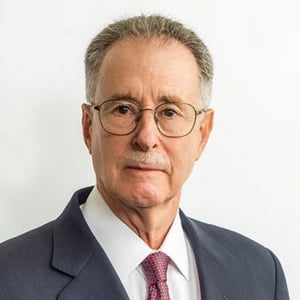
Wallace and Beverley Woodbury University Professor of Law; Co-director of the Litigation and Dispute Resolution Program, The George Washington University Law School
Stephen A. Saltzburg joined GW Law in 1990. Before that, he taught at the University of Virginia School of Law, and was named the first incumbent of the Class of 1962 Endowed Chair. In 1996, he founded and directed the master’s program in Litigation and Dispute Resolution at GW. He was named University Professor, the highest title a University can confer upon a faculty member, in 2004. The Chief Justice of the United States appointed him as reporter for, and then as a member of, the Advisory Committee on the Federal Rules of Criminal Procedure and as a member of the Advisory Committee on the Federal Rules of Evidence. He was the reporter for the Civil Justice Reform Act Committee for the D.C. District Court before he became chair. He has served as a special master in two class action cases in the D.C. District Court, and continues to serve as a mediator for the U.S. Court of Appeals for D.C. He has mediated a variety of disputes involving public agencies and private litigants; served as a sole arbitrator, panel chair, and panel member in domestic arbitrations; and served as an arbitrator for the International Chamber of Commerce.
Professor Saltzburg held the following governmental positions: associate independent counsel in the Iran-Contra investigation; deputy assistant attorney general in the Criminal Division of the U.S. Department of Justice, the Attorney General’s ex-officio representative on the U.S. Sentencing Commission; and director of the U.S. Treasury Department Tax Refund Fraud Task Force. He was chair of the ABA Criminal Justice Section from 2007 to 2008, and represents the section in the ABA House of Delegates. He was appointed to the ABA Task Force on Terrorism and the Law and to the ABA Task Force on Gatekeeper Regulation and the Profession in 2001, and to the ABA President’s Advisory Group on Citizen Detention and Enemy Combatant Issues in 2002. In 2001 he was appointed by Chief Judge Edward R. Becker of the U.S. Court of Appeals for the Third Circuit as co-chair of the Task Force on the Selection of Lead Counsel in Class Actions, which published its final report in 2002. Professor Saltzburg is the author of numerous books and articles on evidence, procedure, and litigation.

Partner, McGuireWoods LLP
George Terwilliger is co-head of the firm's white collar practice and leads the firm's Strategic Response and Crisis Management practice group. Following his fifteen years of public service in the US Department of Justice, where he began as a law clerk and concluded as Acting Attorney General, George has provided counsel in government and internal investigations, agency enforcement proceedings and in civil and criminal litigation. He has represented many of the nation's and the world's largest corporations, including major financial institutions, energy companies, public institutions as well as leading business and government officials, including members of the US Senate and House as well as cabinet officials. He has also represented lawyers and corporate legal departments in investigations. As a result of both his private sector work and government positions, George is called upon to provide counsel as well as commentary to government officials, Congress and private organizations on national security, homeland defense, terrorism, and other public policy and legal issues. George's work regularly involves providing counsel in the executive suites and boardrooms of major corporations.
In private practice for international law firms, George has represented national and international financial, energy, telecommunications, industrial and healthcare companies. He is a recognized expert in leading credible corporate internal investigations and his experience designing and executing both targeted and global legal compliance reviews has involved work in more than 60 countries around the globe. George is an expert on the Foreign Corrupt Practices Act and regularly provides counsel to companies addressing FCPA issues. No stranger to high stakes litigation and crisis events, George helped lead the Bush-Cheney legal team in the 2000 Florida vote recount, served as special outside counsel to a Senate committee investigating vote fraud allegations, served as counsel to an executive commission on gambling, and has represented many clients in politically charged election law and similar cases. He has guided corporations and individual through high stakes matters of intense public interest. He represented an incumbent president in First Amendment litigation concerning the right to have an inaugural prayer said in a public ceremony.
At the Department of Justice, George served for 10 years as a frontline federal prosecutor, handling hundreds of investigations, trials and appeals, including in white collar and national security cases. President Ronald Reagan appointed him as a U.S. attorney, and he next served as the deputy attorney general and as acting attorney general during the George H.W. Bush administration. As Deputy Attorney General, George ran the Justice Department's operations, overseeing all the nation's federal prosecutors, as well as the FBI and other law enforcement agencies. He also had leadership responsibility in several national and international crises, including a hostage-taking in a federal prison and the federal law enforcement response to domestic unrest in Los Angeles. In several instances, he personally handled negotiations of high-profile criminal and civil matters in the United States and abroad.

J.B. and Maurice C. Shapiro Professor of Public Interest Law, The George Washington University Law School
Jonathan Turley is a nationally recognized legal scholar who has written extensively in areas ranging from constitutional law to legal theory to tort law. After a stint at Tulane Law School, Professor Turley joined the GW Law faculty in 1990, and in 1998, became the youngest chaired professor in the university's history.
He is the founder and executive director of the Project for Older Prisoners (POPS). He has written more than three dozen academic articles that have appeared in a variety of leading law journals including those of Cornell, Duke, Georgetown, Harvard, and Northwestern Universities, among others. He most recently completed a three-part study of the historical and constitutional evolution of the military system.
Professor Turley has served as counsel in some of the most notable cases in the last two decades, including his representation of the Area 51 workers at a secret air base in Nevada; the nuclear couriers at Oak Ridge, Tennessee; the Rocky Flats grand jury in Colorado; Dr. Eric Foretich, the husband in the Elizabeth Morgan custody controversy; and four former U.S. Attorney Generals during the Clinton impeachment litigation. Professor Turley also has served as counsel in a variety of national security and terrorism cases, and has been ranked as one of the top 10 lawyers handling military cases.
He has served as a consultant on statutory and constitutional issues, and he has been a witness in over 100 hearings before the House and Senate, including the impeachments of Presidents Bill Clinton and Donald Trump. He also is a nationally recognized legal commentator; he ranked 38th in the top 100 most cited ‘public intellectuals’ in a recent study by Judge Richard Posner and was found to be the second most cited law professor in the country.
He is a member of the USA Today board of contributors and the recipient of the “2005 Single Issue Advocate of the Year” – the annual opinion award for the Aspen Institute and The Week magazine. Hundreds of his articles on legal and policy issues regularly appear in national newspapers. He also has worked as the legal analyst for four networks, CBS, NBC, BBC, and Fox. After 30 years as a columnist and commentator, the Washington Post called him the "Dean of Legal Analysts."
He is a best-selling author, including his latest New York Times bestseller "Rage and the Republic: The Unfinished Story of the American Revolution." (Simon & Schuster 2026). Turley's blog, Res Ipsa (www.jonathanturley.org), is one of the most read legal sites in the country.

U.S. Court of Appeals, Seventh Circuit
Frank H. Easterbrook is a judge of the United States Court of Appeals for the Seventh Circuit and a Senior Lecturer at the Law School of the University of Chicago. He was Chief Judge from 2006–2013. Before joining the court in 1985, he was the Lee andBrena Freeman Professor of Law at the University of Chicago, where he taught and wrote in antitrust, securities, corporate law, jurisprudence, and criminal procedure. He has published The Economic Structure of Corporate Law (with Daniel R. Fischel) and about 100 scholarly articles. He served as Co-Editor of the Journal of Law and Economics from 1982 to 1991 and as a member of the Judicial Conference’s Standing Committee on Rules of Practice and Procedure from 1991 to 1997. Before joining the faculty of the Law School in 1979, Judge Easterbrook was Deputy Solicitor General of the United States. He holds degrees from Swarthmore College (B.A. with high honors, 1970) and the University of Chicago (J.D. cum laude, 1973), and is a member of the American Academy of Arts and Sciences, the American Law Institute, the Mont Pelerin Society, Phi Beta Kappa, and the Order of the Coif.

Partner, Millbank LLP
Mr. Katyal, the former Acting Solicitor General of the United States, focuses on appellate and complex litigation. He has argued 54 cases before the Supreme Court of the United States.
He has extensive experience in matters of antitrust, corporate, constitutional, securities, technology, criminal, patent, copyright, trademark, ERISA, products liability, labor, employment and tribal law. In the 2022-23 Supreme Court term, he argued five separate cases (nearly 10% of the docket), including winning the landmark voting case Moore v. Harper, which Judge Michael Luttig described as “the most important case for American democracy in the almost two and a half centuries since America’s founding.” Judge Luttig also said Mr. Katyal’s argument “was the single best oral argument I have ever heard made in the Supreme Court of the United States.” His cases include successfully striking down the Guantanamo military tribunals, successfully defending the constitutionality of the Voting Rights Act and successfully defending the Peace Cross in Maryland. His 2017 win in Bristol Myers Squibb v. Superior Court was a landmark victory for personal jurisdiction law and his 2006 win in Hamdan v. Rumsfeld was described by former Acting Solicitor General Walter Dellinger as “simply the most important decision on presidential power and the rule of law ever. Ever.”
From 2010 to 2011, Mr. Katyal served as Acting Solicitor General of the United States, where he argued several major Supreme Court cases involving a variety of issues, such as his successful defense of the constitutionality of the Voting Rights Act of 1965, his victorious defense of former Attorney General John Ashcroft for alleged abuses in the war on terror, his unanimous victory against eight states who sued the nation's leading power plants for contributing to global warming, and a variety of other matters. As Acting Solicitor General, he was responsible for representing the federal government of the United States in all appellate matters before the US Supreme Court and the Courts of Appeals throughout the nation. He served as Counsel of Record hundreds of times in the US Supreme Court. He was also the only head of the Solicitor General's office to argue a case in the US Court of Appeals for the Federal Circuit, on the important question of whether certain aspects of the human genome were patentable.
After graduating from Yale Law School, Mr. Katyal clerked for The Honorable Guido Calabresi of the US Court of Appeals for the Second Circuit as well as for The Honorable Justice Stephen G. Breyer of the US Supreme Court. He also served in the Deputy Attorney General's Office at the Justice Department as National Security Advisor and as Special Assistant to the Deputy Attorney General during 1998-1999.
Mr. Katyal is a best-selling New York Times author and has published dozens of scholarly articles in law journals (including several in the Harvard Law Review and Yale Law Journal), as well as many op-ed articles in publications such as the New York Times and the Washington Post. He has testified numerous times before various committees of both the US House of Representatives and the US Senate.

Partner, Baker Hostetler LLP
David Rivkin is a member of the firm's litigation, international and environmental teams and is co-leader of the firm's national appellate practice. He has extensive experience in constitutional, administrative and international law litigation and has been involved in numerous high-profile cases. With his prior experience in the government sector, David draws on a wealth of knowledge when providing compliance advice to companies and handling enforcement proceedings before government agencies on issues arising out of multilateral and unilateral sanctions, the Foreign Corrupt Practices Act (FCPA), anti-boycott issues, bankruptcy and financial fraud matters, and environmental and energy issues.
David has developed and implemented legislative, regulatory and litigation initiatives for two presidential administrations. Over the years, he has published hundreds of articles, op-eds, book reviews and book chapters on a variety of international, legal, constitutional, defense, arms control, foreign policy, environmental and energy issues for various newspapers and magazines, including The Wall Street Journal, The Washington Post, The New York Times, USA Today and The Los Angeles Times, and has been a frequent commentator and guest on TV and radio shows including ABC, CBS, NBC, CNN, Fox News, NPR and PBS.
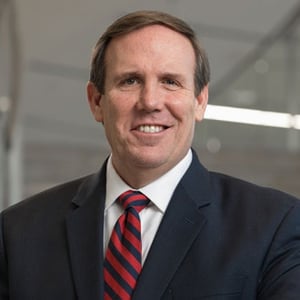
Provost & Chief Academic Officer, Bryant University
An acclaimed international law and national security expert experienced in academic, law, and government service settings, Provost Glenn M. Sulmasy brings a distinguished record of Higher Education leadership and academic achievement to his position as Bryant’s first university Provost and Chief Academic Officer.
Sulmasy previously served as Deputy University Counsel and later led the Humanities Department at the United States Coast Guard Academy (USCGA), in New London, CT. Additionally, he served as Professor of Law at USCGA and has been involved in higher education since 1997.
In addition to serving on the faculties of the Academy and the U.S. Naval War College, Sulmasy has lectured in the fields of International Law, U.S. Constitutional Law, and National Security at numerous universities and think tanks. He has also served as a National Security and Human Rights Fellow at the Carr Center for Human Rights Policy at the Harvard Kennedy School.
A former fellow in Homeland Security and National Security Law for the Center for National Policy in Washington D.C., Sulmasy lectures extensively on the law of armed conflict, international law, and national security matters. He is widely published internationally on national security matters, and as an expert has been featured in the LA Times, on CBS News Radio, National Public Radio, CNN International, US News & World Report, the New York Times and the San Francisco Chronicle, Al-Jazeera America, MSNBC, Fox News and numerous other national media outlets. He is the author of The National Security Court System – A Natural Evolution of Justice in an Age of Terror (Oxford University Press) and Co-Editor of International Law Challenges – Homeland Security and Combating Terrorism (2005).
Sulmasy was educated at the U.S. Coast Guard Academy, University of Baltimore School of Law (cum laude), UC Berkeley School of Law (Boalt Hall) and the Harvard Kennedy School.
Provost Sulmasy, his wife Marla, and seven children hail from Old Lyme, CT and Smithfield, RI.
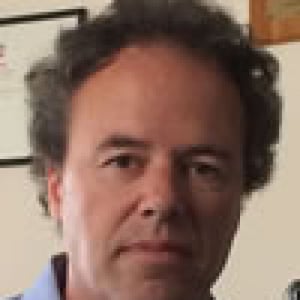
Professor of History, Brooklyn College and the CUNY Graduate Center
KC Johnson is professor of history at Brooklyn College and the CUNY Graduate Center, where he has taught since 1999. He has written 13 books on topics in U.S. political history, U.S. foreign policy, and legal and policy debates surrounding campus due process and civil liberties. His Duke lacrosse case blog, Durham-in-Wonderland, was named ABA Journal’s Best Ethics Blog in 2007; and he continues to blog on higher-ed matters at the blog Minding the Campus.

Executive Vice President and Senior Counselor to the President, The Federalist Society for Law and Public Policy Studies
B.A., Yale; J.D., University of Chicago. Lee Liberman Otis is the Executive Vice President and Senior Counselor to the President at the Federalist Society. She also serves as a member of the American Law Institute (ALI), a senior fellow of the Administrative Conference (ACUS), and as the co-chair of the National Constitution Center's Coalition of Freedom Advisory Board. She previously was a special assistant and an Associate Deputy Attorney General at the U.S. Department of Justice, General Counsel of the Department of Energy, an associate in the appellate section of Jones, Day, Reavis & Pogue, an associate counsel to President George H.W. Bush, and a law clerk to Associate Justice Antonin Scalia. She also served as an assistant professor of law at George Mason, where she taught legislation, federal jurisdiction, constitutional law, civil procedure, and appellate advocacy. Ms. Otis has been an important member of the Federalist Society team since the organization’s beginnings. Together with David McIntosh, she led the effort to start what became the Chicago chapter of the Society. She also helped organize the Society’s first conference at Yale, its second conference at Chicago, and its first Lawyers Division chapter in Washington DC, as well as the effort to incorporate the Society, recruit its permanent staff, and obtain its early funding. She was a Founding Director of the Federalist Society.

Clayton J. and Henry R. Barber Professor of Law, Northwestern University Pritzker School of Law and Co-Chairman, Board of Directors, The Federalist Society
STEVEN GOW CALABRESI is the Clayton J. & Henry R. Barber Professor at Northwestern Pritzker School of Law. He has also co-taught in the Fall semester at Yale Law School from 2013 to the present. Calabresi clerked for Justice Antonin Scalia and Judges Robert H. Bork and Ralph K. Winter. He was a Special Assistant to Attorney General Meese from 1985 to 1987 and worked with Ken Cribb as his deputy in 1987 on the second floor of the West Wing of the Reagan White House. Calabresi has written books on presidential power and comparative constitutional law and the origins of judicial review. He and Gary Lawson are the co-editors of a casebook on U.S. Constitutional Law, and Calabresi is also the co-editor of a casebook on comparative constitutional law. He has written over seventy law review articles since 1990.
Partner, Millbank LLP
Mr. Katyal, the former Acting Solicitor General of the United States, focuses on appellate and complex litigation. He has argued 54 cases before the Supreme Court of the United States.
He has extensive experience in matters of antitrust, corporate, constitutional, securities, technology, criminal, patent, copyright, trademark, ERISA, products liability, labor, employment and tribal law. In the 2022-23 Supreme Court term, he argued five separate cases (nearly 10% of the docket), including winning the landmark voting case Moore v. Harper, which Judge Michael Luttig described as “the most important case for American democracy in the almost two and a half centuries since America’s founding.” Judge Luttig also said Mr. Katyal’s argument “was the single best oral argument I have ever heard made in the Supreme Court of the United States.” His cases include successfully striking down the Guantanamo military tribunals, successfully defending the constitutionality of the Voting Rights Act and successfully defending the Peace Cross in Maryland. His 2017 win in Bristol Myers Squibb v. Superior Court was a landmark victory for personal jurisdiction law and his 2006 win in Hamdan v. Rumsfeld was described by former Acting Solicitor General Walter Dellinger as “simply the most important decision on presidential power and the rule of law ever. Ever.”
From 2010 to 2011, Mr. Katyal served as Acting Solicitor General of the United States, where he argued several major Supreme Court cases involving a variety of issues, such as his successful defense of the constitutionality of the Voting Rights Act of 1965, his victorious defense of former Attorney General John Ashcroft for alleged abuses in the war on terror, his unanimous victory against eight states who sued the nation's leading power plants for contributing to global warming, and a variety of other matters. As Acting Solicitor General, he was responsible for representing the federal government of the United States in all appellate matters before the US Supreme Court and the Courts of Appeals throughout the nation. He served as Counsel of Record hundreds of times in the US Supreme Court. He was also the only head of the Solicitor General's office to argue a case in the US Court of Appeals for the Federal Circuit, on the important question of whether certain aspects of the human genome were patentable.
After graduating from Yale Law School, Mr. Katyal clerked for The Honorable Guido Calabresi of the US Court of Appeals for the Second Circuit as well as for The Honorable Justice Stephen G. Breyer of the US Supreme Court. He also served in the Deputy Attorney General's Office at the Justice Department as National Security Advisor and as Special Assistant to the Deputy Attorney General during 1998-1999.
Mr. Katyal is a best-selling New York Times author and has published dozens of scholarly articles in law journals (including several in the Harvard Law Review and Yale Law Journal), as well as many op-ed articles in publications such as the New York Times and the Washington Post. He has testified numerous times before various committees of both the US House of Representatives and the US Senate.

Distinguished University Chair and Professor of Law, University of St. Thomas School of Law
Michael Stokes Paulsen is Distinguished University Chair & Professor of Law at the University of St. Thomas, where he has taught since 2007. Professor Paulsen was previously the McKnight Presidential Professor of Law & Public Policy and Associate Dean at the University of Minnesota Law School, where he taught from 1991-2007. He is a graduate of Northwestern University, Yale Law School, and Yale Divinity School. He has served as a federal prosecutor, as Attorney-Advisor in the Office of Legal Counsel of the U.S. Department of Justice, and as counsel for the Center for Law & Religious Freedom.
Paulsen has taught as a visiting professor at Princeton University, Pepperdine University, Georgetown University, Bethel University, Uppsala University (Sweden), Daystar University (Kenya), and University of the Andes (Chile). He has been a guest lecturer at universities around the nation, including Harvard, Yale, Columbia, Princeton, Penn, NYU, Georgetown, Virginia, Stanford, Berkeley, Michigan, University of Chicago, and Northwestern.
Professor Paulsen is the author of more than ninety scholarly articles and book chapters on a wide variety of constitutional law topics, published in law journals including the Harvard Law Review, the Yale Law Journal, the Stanford Law Review, the University of Chicago Law Review, the Michigan Law Review, the Georgetown Law Journal, and the Northwestern University Law Review. He is the author or co-author of three books, including The Constitution: An Introduction (Basic Books, 2015) (co-authored with Luke Paulsen) and the casebook The Constitution of the United States, now in its fifth edition with Foundation Press, co-authored with Michael McConnell, Samuel Bray, and Will Baude.
Partner, Baker Hostetler LLP
David Rivkin is a member of the firm's litigation, international and environmental teams and is co-leader of the firm's national appellate practice. He has extensive experience in constitutional, administrative and international law litigation and has been involved in numerous high-profile cases. With his prior experience in the government sector, David draws on a wealth of knowledge when providing compliance advice to companies and handling enforcement proceedings before government agencies on issues arising out of multilateral and unilateral sanctions, the Foreign Corrupt Practices Act (FCPA), anti-boycott issues, bankruptcy and financial fraud matters, and environmental and energy issues.
David has developed and implemented legislative, regulatory and litigation initiatives for two presidential administrations. Over the years, he has published hundreds of articles, op-eds, book reviews and book chapters on a variety of international, legal, constitutional, defense, arms control, foreign policy, environmental and energy issues for various newspapers and magazines, including The Wall Street Journal, The Washington Post, The New York Times, USA Today and The Los Angeles Times, and has been a frequent commentator and guest on TV and radio shows including ABC, CBS, NBC, CNN, Fox News, NPR and PBS.

John Marshall Harlan II Professor of Law Emerita, New York Law School; Former President, American Civil Liberties Union
Nadine Strossen, New York Law School Professor Emerita and Senior Fellow at FIRE (the Foundation for Individual Rights and Expression), was national President of the American Civil Liberties Union from 1991 to 2008. An internationally acclaimed free speech scholar and advocate, who regularly addresses diverse audiences and provides media commentary around the world, Strossen is also the Host and Project Consultant for Free To Speak, a 3-hour documentary film series distributed on public television in 2023. Her books about free speech include: Free Speech: What Everyone Needs to Know® (Oxford University Press 2023); HATE: Why We Should Resist It with Free Speech, Not Censorship (Oxford University Press 2018); and Defending Pornography: Free Speech, Sex, and the Fight for Women’s Rights (Scribner 1995), which was republished with a new Preface in 2024 as part of the NYU Classics Series. Her many honors and awards include the National Coalition Against Censorship’s Judy Blume Lifetime Achievement Award for Free Speech. She serves on the Advisory Boards of several organizations that do free speech work, including: ACLU, Academic Freedom Alliance, Foundation Against Intolerance and Racism (FAIR), Heterodox Academy, National Coalition Against Censorship, and the University of Austin.
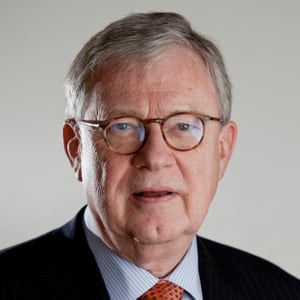
Senior Political Analyst, Washington Examiner
Michael Barone is a Senior Political Analyst for the Washington Examiner, where he writes a twice-weekly column and contributes to their Beltway Confidential blog. He is also a frequent contributor during Fox News Channel's election coverage.

Laurence A. Tisch Professor of Law and Director, Classical Liberal Institute, New York University School of Law; Senior Fellow, The Civitas Institute, University of Texas at Austin
Richard A. Epstein is the inaugural Laurence A. Tisch Professor of Law at NYU School of Law. Prior to his joining the faculty, he was a visiting law professor at NYU from 2007 through 2009. He served as the Peter and Kirstin Bedford Senior Fellow at the Hoover Institution from 2000 to 2024. Since 2024 to the present he is a senior lecturer at the Civitas Institute at the University of Texas—Austin. Epstein is also the James Parker Hall Distinguished Service Professor of Law Emeritus and a senior lecturer at the University of Chicago. His initial law school appointment was at the University of Southern California from 1968 to 1972. Epstein received an LL.D., h.c. from the University of Ghent, 2003. He has been a member of the American Academy of Arts and Sciences since 1985 and was a Senior Fellow of the Center for Clinical Medical Ethics at the University of Chicago Division of Biological Sciences, also from 1983. to 2022 He served as editor of the Journal of Legal Studies from 1981 to 1991, and of the Journal of Law and Economics from 1991-2001. From 2001 to 2010 he was a director of the John M. Olin Program in Law and Economics at the University of Chicago.
His newest book, The Myth of Birthright Citizenship: What the Fourteenth Amendment Really Says was published in 2026 (Encounter Books). Prior to that he has published many books including, The Dubious Morality of the Modern Administrative State (Roman & Littlefield 2020).Earlier he published th Classical Liberal Constitution: The Uncertain Quest for Limited Government (Harvard 2014) iHis previous books include Design for Liberty: Private Property, Public Administration and the Rule of Law (Harvard 2011); The Case Against the Employee Free Choice Act (Hoover 2009); Supreme Neglect: How to Revive the Constitutional Protection of Property Rights (Oxford 2008); Antitrust Decrees in Theory and Practice: Why Less is More (AEI 2007); Overdose: How Excessive Government Regulation Stifles Pharmaceutical Innovation (Yale University Press. 2006); How Progressives Rewrote the Constitution (Cato 2006); Cases and Materials on Torts (Aspen Law & Business; 8th ed. 2004); Skepticism and Freedom: A Modern Case for Classical Liberalism (University of Chicago, 2003); Torts (Aspen Law & Business 1999); Principles for a Free Society: Reconciling Individual Liberty with the Common Good (Perseus Books, 1998): Mortal Peril: Our Inalienable Rights to Health Care (Addison-Wesley, 1997); Simple Rules for a Complex World (Harvard, 1995); Bargaining With the State (Princeton, 1993); Forbidden Grounds: The Case Against Employment Discrimination Laws (Harvard , 1992); Takings: Private Property and the Power of Eminent Domain (Harvard, 1985); and Modern Products Liability Law (Greenwood Press, 1980). He has also edited(with Catherine M. Sharkey) Cases and Materials on the Law of Torts (10th edition 2012).
Professor Epstein has written numerous articles on a wide range of legal and interdisciplinary subjects. He has taught courses in administrative law, antitrust law, civil procedure, communications, constitutional law, contracts, corporations, criminal law, employment discrimination law, environmental law, food and drug law health law and policy, legal history, labor law, property, real estate development and finance, jurisprudence, labor law; land use planning, patents, individual, estate and corporate taxation, Roman Law; torts, and workers' compensation.
Professor Epstein also writes a regular column for Civitas Institute, which also sponsors his podcast, The Libertarian with Charles C.W. Cooke, and Law Talk, with Cooke and John Yoo. He also does a podcast with John Batchelor. And appears regularly on the Freedom File with Judge Andrew Napolitano.
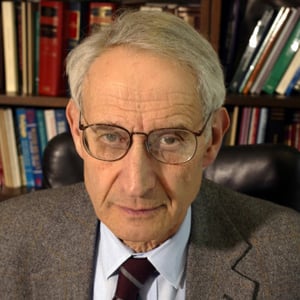
Beneficial Professor of Law, Harvard Law School
Educated at Princeton, Oxford and Columbia Law School, Charles Fried, the Beneficial Professor of Law, has been teaching at Harvard Law School since 1961. He was Solicitor General of the United States, 1985-89, and an Associate Justice of the Supreme Judicial Court of Massachusetts, 1995-99. His scholarly and teaching interests have been moved by the connection between normative theory and the concrete institutions of public and private law. During his career at Harvard he has taught Criminal Law, Commercial Law, Roman Law, Torts, Contracts, Labor Law, Constitutional Law and Federal Courts, Appellate and Supreme Court Advocacy. The author of many books and articles, his Anatomy of Values (1970), Right and Wrong (1978), and Modern Liberty (2006) develop themes in moral and political philosophy with applications to law. Contract as Promise (1980), Making Tort Law (2003, with David Rosenberg) and Saying What the Law Is: The Constitution in the Supreme Court (2004) are fundamental inquiries into broad legal institutions. Order & Law: Arguing the Reagan Revolution (1991) discusses major themes developed in Fried's time as Solicitor General. In recent years Fried has taught Constitutional Law and Contracts. During his time as a teacher he has also argued a number of major cases in state and federal courts, most notably Daubert v. Merrell Dow Pharmaceuticals, in which the Supreme Court established the standards for the use of expert and scientific evidence in federal courts.

United States Court of Appeals, Fourth Circuit
James Harvie Wilkinson III is an Article III federal judge on the United States Court of Appeals for the Fourth Circuit. He joined the Court in 1984 after being nominated by President Ronald Reagan.
Born in New York City, New York, Wilkinson graduated from Yale University with his Bachelor's degree in 1967. Wilkinson served in the United States Army from 1968 to 1969 and received his Juris Doctor degree from the University of Virginia School of Law in 1972.
On the recommendation of Virginia U.S. Senator John Warner, Wilkinson was nominated to the United States Court of Appeals for the Fourth Circuit by President Ronald Reagan on January 30, 1984 to a seat vacated by John Butzner, Jr.,. Wilkinson was confirmed by the Senate on August 9, 1984 on a Senate vote and received commission on August 13, 1984. Wilkinson served as the Chief Judge of the Court from 1996 to 2003.
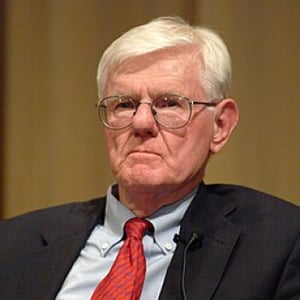
Gordon Stewart Wood is an American historian and professor at Brown University. He is a recipient of the 1993 Pulitzer Prize for History for The Radicalism of the American Revolution (1992). His book The Creation of the American Republic, 1776–1787 (1969) won the 1970 Bancroft Prize. In 2010, he was awarded the National Humanities Medal by President Barack Obama.
Laurence A. Tisch Professor of Law and Director, Classical Liberal Institute, New York University School of Law; Senior Fellow, The Civitas Institute, University of Texas at Austin
Richard A. Epstein is the inaugural Laurence A. Tisch Professor of Law at NYU School of Law. Prior to his joining the faculty, he was a visiting law professor at NYU from 2007 through 2009. He served as the Peter and Kirstin Bedford Senior Fellow at the Hoover Institution from 2000 to 2024. Since 2024 to the present he is a senior lecturer at the Civitas Institute at the University of Texas—Austin. Epstein is also the James Parker Hall Distinguished Service Professor of Law Emeritus and a senior lecturer at the University of Chicago. His initial law school appointment was at the University of Southern California from 1968 to 1972. Epstein received an LL.D., h.c. from the University of Ghent, 2003. He has been a member of the American Academy of Arts and Sciences since 1985 and was a Senior Fellow of the Center for Clinical Medical Ethics at the University of Chicago Division of Biological Sciences, also from 1983. to 2022 He served as editor of the Journal of Legal Studies from 1981 to 1991, and of the Journal of Law and Economics from 1991-2001. From 2001 to 2010 he was a director of the John M. Olin Program in Law and Economics at the University of Chicago.
His newest book, The Myth of Birthright Citizenship: What the Fourteenth Amendment Really Says was published in 2026 (Encounter Books). Prior to that he has published many books including, The Dubious Morality of the Modern Administrative State (Roman & Littlefield 2020).Earlier he published th Classical Liberal Constitution: The Uncertain Quest for Limited Government (Harvard 2014) iHis previous books include Design for Liberty: Private Property, Public Administration and the Rule of Law (Harvard 2011); The Case Against the Employee Free Choice Act (Hoover 2009); Supreme Neglect: How to Revive the Constitutional Protection of Property Rights (Oxford 2008); Antitrust Decrees in Theory and Practice: Why Less is More (AEI 2007); Overdose: How Excessive Government Regulation Stifles Pharmaceutical Innovation (Yale University Press. 2006); How Progressives Rewrote the Constitution (Cato 2006); Cases and Materials on Torts (Aspen Law & Business; 8th ed. 2004); Skepticism and Freedom: A Modern Case for Classical Liberalism (University of Chicago, 2003); Torts (Aspen Law & Business 1999); Principles for a Free Society: Reconciling Individual Liberty with the Common Good (Perseus Books, 1998): Mortal Peril: Our Inalienable Rights to Health Care (Addison-Wesley, 1997); Simple Rules for a Complex World (Harvard, 1995); Bargaining With the State (Princeton, 1993); Forbidden Grounds: The Case Against Employment Discrimination Laws (Harvard , 1992); Takings: Private Property and the Power of Eminent Domain (Harvard, 1985); and Modern Products Liability Law (Greenwood Press, 1980). He has also edited(with Catherine M. Sharkey) Cases and Materials on the Law of Torts (10th edition 2012).
Professor Epstein has written numerous articles on a wide range of legal and interdisciplinary subjects. He has taught courses in administrative law, antitrust law, civil procedure, communications, constitutional law, contracts, corporations, criminal law, employment discrimination law, environmental law, food and drug law health law and policy, legal history, labor law, property, real estate development and finance, jurisprudence, labor law; land use planning, patents, individual, estate and corporate taxation, Roman Law; torts, and workers' compensation.
Professor Epstein also writes a regular column for Civitas Institute, which also sponsors his podcast, The Libertarian with Charles C.W. Cooke, and Law Talk, with Cooke and John Yoo. He also does a podcast with John Batchelor. And appears regularly on the Freedom File with Judge Andrew Napolitano.

Professor of Law, Stanford Law School
Orin S. Kerr is a Professor of Law at Stanford Law School, where he teaches and writes in the areas of criminal procedure and computer crime law. Kerr earned mechanical engineering degrees from Princeton University and Stanford University before graduating with a J.D. from Harvard Law School. He is a former law clerk to Justice Anthony M. Kennedy at the United States Supreme Court and Judge Leonard I. Garth of the U.S. Court of Appeals for the Third Circuit.

Senior Fellow, National Review
Bestselling author Andrew C. McCarthy is a contributing editor at National Review, a senior fellow at National Review Institute, and a Fox News contributor. He is a former Chief Assistant United States Attorney in the Southern District of New York and led the terrorism prosecution against the “Blind Sheikh” (Omar Abdel Rahman) and eleven other jihadists for conducting a war of urban terrorism against the United States that included the 1993 World Trade Center bombing and a plot to bomb New York City landmarks. During is 20-year career as a prosecutor, he received numerous honors, including the Justice Department’s highest awards. Andy speaks and writes widely on law and national security, radical Islam, politics, and culture. He has testified before Congress as an expert on issues of constitutional law, counterterrorism, and law-enforcement. He is a columnist for The Hill, and his essays and book reviews appear frequently at The New Criterion. His most recent New York Times bestselling book is Ball of Collusion (Encounter Books, 2019), about the Russiagate controversy (an updated version was published in 2020). His other books include Willful Blindness (2008), The Grand Jihad (2010), Spring Fever: The Illusion of Islamic Democracy (2012), and Faithless Execution (2014). He has also written several pamphlets in the Broadside series published by Encounter Books, most recently Islam and Free Speech (2015).
President and Dean, Franklin Pierce Law Center
Dean Hutson was born in North Muskegon, Michigan. He was commissioned in the U.S. Navy upon graduation from Michigan State University in 1969. He graduated from the University of Minnesota Law School in 1972. Upon admission to the State Bar of Michigan, he attended the Naval Justice School in Newport, R.I. In 1973, he was assigned to the Law Center in Corpus Christi, TX, where he served as Chief Defense Counsel and Chief Trial Counsel. In 1975, he was transferred to Naval Air Station, Point Mugu, CA. He served as the Station legal officer for two years before returning to Newport to serve as an instructor at the Naval Justice School, where he taught Civil Law, Procedure, and Evidence.
In 1980, Dean Hutson attended Georgetown University Law Center where he earned a Master of Laws degree in labor law. He was then assigned as a legislative counsel in the first of three tours in the Office of Legislative Affairs for the Navy. In 1984, he was assigned to the Portsmouth Naval Shipyard in Kittery, ME, where he served both as Staff Judge Advocate and Administrative Officer.
Dean Hutson assumed duty as Executive Officer of the Naval Legal Service Office, Newport, RI, in 1987. In 1989, he returned to Washington, DC, to serve as Staff Judge Advocate and Executive Assistant to the Commander, Naval Investigative Command.
In August, 1989, Dean Hutson moved to the Office of Legislative Affairs as Director of Legislation. Between October, 1992, and November, 1993, he was assigned as the Executive Assistant to the Judge Advocate General of the Navy. In November, 1993, he resumed duty in the Office of Legislative Affairs.
In August, 1994, he assumed duty as Commanding Officer, Naval Legal Service Office, Europe and Southwest Asia, located in Naples, Italy. In July, 1996, Dean Hutson returned to the Naval Justice School as Commanding Officer. He was promoted to the rank of Rear Admiral, and assumed duties as the Judge Advocate General of the Navy in May, 1997. He also served as the DOD/JCS Representative for Ocean Policy.
Dean Hutson was awarded the Distinguished Service Medal, the Legion of Merit (with three gold stars), Meritorious Service Medal (with two gold stars), Navy Commendation Medal, and Navy Achievement Medal.
BA, Michigan State University
JD, Minnesota Law School
LLM, Georgetown University Law Center
Dean and Jesse H. Choper Distinguished Professor of Law, UC Berkeley School of Law
Erwin Chemerinsky became the 13th Dean of Berkeley Law on July 1, 2017, when he joined the faculty as the Jesse H. Choper Distinguished Professor of Law.
Prior to assuming this position, from 2008-2017, he was the founding Dean and Distinguished Professor of Law, and Raymond Pryke Professor of First Amendment Law, at University of California, Irvine School of Law, with a joint appointment in Political Science. Before that he was the Alston and Bird Professor of Law and Political Science at Duke University from 2004-2008, and from 1983-2004 was a professor at the University of Southern California Law School, including as the Sydney M. Irmas Professor of Public Interest Law, Legal Ethics, and Political Science. He also has taught at DePaul College of Law and UCLA Law School.
He is the author of eleven books, including leading casebooks and treatises about constitutional law, criminal procedure, and federal jurisdiction. His most recent books are, We the People: A Progressive Reading of the Constitution for the Twenty-First Century (Picador Macmillan) published in November 2018, and two books published by Yale University Press in 2017, Closing the Courthouse Doors: How Your Constitutional Rights Became Unenforceable and Free Speech on Campus (with Howard Gillman).
He also is the author of more than 200 law review articles. He writes a regular column for the Sacramento Bee, monthly columns for the ABA Journal and the Daily Journal, and frequent op-eds in newspapers across the country. He frequently argues appellate cases, including in the United States Supreme Court.
In 2016, he was named a fellow of the American Academy of Arts and Sciences. In 2017, National Jurist magazine again named Dean Chemerinsky as the most influential person in legal education in the United States.
Professor of Law; Co-director, National Security and U.S. Foreig, The George Washington University Law School
Gregory E. Maggs joined the George Washington University Law School faculty in 1993. He is a a Co-director of the law school’s National Security and U.S. Foreign Relations LLM program. He was the Interim Dean of the law school from 2010-2011 and from 2013-2014 and the Senior Associate Dean for Academic Affairs from 2008-2010. He teaches mainly in the areas of commercial law, constitutional law, contracts, and counter-terrorism law, and he has written extensively on these subjects. By vote of the graduating class, he received the law school’s Distinguished Faculty Service Award in 1997, 1998, 2004, 2005, 2011, 2012, 2013, and 2014. In 2012, the university gave him the George Washington Award for outstanding service.
Professor Maggs is a graduate of Harvard College and Harvard Law School. He was a law clerk for Justices Clarence Thomas (1991-1992) and Anthony M. Kennedy (1989-1990) of the U.S. Supreme Court and for the late Judge Joseph T. Sneed of the U.S. Court of Appeals for the Ninth Circuit (1988-1989). He also taught for two years as an assistant professor at the University of Texas School of Law. His other past experience includes service as a special master for the U.S. Supreme Court, a consultant to Independent Counsel Kenneth Starr in the Whitewater Investigation, and an assistant to Robert H. Bork in private practice and research. He is a member of the Advisory Board for the Heritage Foundation's Center for Legal and Judicial Studies and a member of the American Law Institute.
Professor Maggs is a colonel in the U.S. Army Reserve, Judge Advocate General’s Corps. He was commissioned in 1990, and has been assigned as a trial or appellate military judge since 2007. He is a graduate of U.S. Army War College, the Military Judge Course, the Command and General Staff Officer Course, the Judge Advocate Officer Advanced and Basic Courses, the Air Assault School, and the Infantry Weapons Specialist Course. He was called to active duty in 2007-2008. In 2002, he received the Judge Advocates Association's Outstanding Career Armed Services Attorney Award.

Professor Emeritus of Law, Antonin Scalia Law School, George Mason University
Jeremy A. Rabkin is a Professor Emeritus of Law at the Antonin Scalia Law School, George Mason University. Before joining the faculty in June 2007, he was for over two decades a professor in the Department of Government at Cornell University. Professor Rabkin serves on the board of directors of the Center for Individual Rights, a public interest law firm based in Washington, D.C. Previously he was a board member of the U.S. Institute of Peace and the board of academic advisors of the American Enterprise Institute.
Professor Rabkin’s books include Law Without Nations? (Princeton University Press, 2005). He authored “If You Need a Friend, Don’t Call a Cosmopolitan,” a chapter in Varieties of Sovereignty and Citizenship (Sigal R. Ben-Porath & Rogers M. Smith eds., University of Pennsylvania Press, 2012). His articles have appeared in major law reviews and political science journals and his journalistic contributions in a range of magazines and newspapers, including the Washington Post and the Wall Street Journal.
Partner, Baker Hostetler LLP
David Rivkin is a member of the firm's litigation, international and environmental teams and is co-leader of the firm's national appellate practice. He has extensive experience in constitutional, administrative and international law litigation and has been involved in numerous high-profile cases. With his prior experience in the government sector, David draws on a wealth of knowledge when providing compliance advice to companies and handling enforcement proceedings before government agencies on issues arising out of multilateral and unilateral sanctions, the Foreign Corrupt Practices Act (FCPA), anti-boycott issues, bankruptcy and financial fraud matters, and environmental and energy issues.
David has developed and implemented legislative, regulatory and litigation initiatives for two presidential administrations. Over the years, he has published hundreds of articles, op-eds, book reviews and book chapters on a variety of international, legal, constitutional, defense, arms control, foreign policy, environmental and energy issues for various newspapers and magazines, including The Wall Street Journal, The Washington Post, The New York Times, USA Today and The Los Angeles Times, and has been a frequent commentator and guest on TV and radio shows including ABC, CBS, NBC, CNN, Fox News, NPR and PBS.

Emanuel S. Heller Professor of Law, University of California at Berkeley; Thomas Smith Senior Research Fellow, The Civitas Institute, University of Texas at Austin
John Yoo is the Emanuel Heller Professor of Law at the University of California at Berkeley. He is also the Thomas Smith Senior Research Fellow, Civitas Institute, at the University of Texas at Austin. He is also a Nonresident Senior Fellow at the American Enterprise Institute.
His most recent book, The Politically Incorrect Guide to the Supreme Court, co-authored with Robert Delahunty, was published in 2023. Professor Yoo’s other books include Defender-in-Chief: Trump’s Fight for Presidential Power; Striking Power: How Cyber, Robots, and Space Weapons Change the Rules for War; Point of Attack: Preventive War, International Law, and Global Welfare; and Crisis and Command: A History of Executive Power from George Washington to George Bush.
He is a co-author of volumes 1 and 2 of R. Rossum, G. Tarr, V. Munoz & J. Yoo American Constitution Law (Routledge, 2026), and a co-editor of the eight-volume series on the 250th anniversary of the American Revolution, We Hold These Truths, with Yuval Levin and Adam White of the American Enterprise Institute.
Professor Yoo has published more than 100 articles in academic journals on subjects including national security, constitutional law, international law, and the Supreme Court. He also regularly contributes to the editorial pages of the Wall Street Journal, New York Times, Washington Post, Los Angeles Times, and National Review, among others.
Professor Yoo has served in all three branches of government. He was an official in the U.S. Department of Justice, where he worked on national security and terrorism issues after the 9/11 attacks. He served as general counsel of the U.S. Senate Judiciary Committee. He has been a law clerk for Supreme Court Justice Clarence Thomas and federal appeals Judge Laurence Silberman. He has been a visiting professor at the University of Texas at Austin’s School of Civic Leadership, Seoul National University, the Interdisciplinary Center Herzliya, Keio University, Trento University, the University of Chicago, and the Free University of Amsterdam.
Professor Yoo supervises the Public Law and Policy Program and the California Constitution Center. He also serves on the boards of Founding Forward, the Washington Legal Foundation, the Pacific Legal Foundation, the Ulysses Grant Institute, the Federalist Society’s Separation of Powers and Federalism Division, the Universidad Cientifica del Sur Law School, and the Asia-Pacific Law Institute at Seoul National University. He is a winner of the Federalist Society’s Paul Bator award and the Heritage Foundation’s Edwin Meese III Originalism Lectureship.
Professor Yoo graduated from Yale Law School and summa cum laude from Harvard College.
Herbert Wechsler Professor of Federal Jurisprudence, Columbia Law School
Philip C. Bobbitt is the Herbert Wechsler Professor of Federal Jurisprudence and director for the Center for National Security at Columbia Law School. He is one of the nation’s leading constitutional theorists. Bobbitt’s interests include not only constitutional law but also international security and the history of strategy.
The author of eight books, Bobbitt is a former trustee of Princeton University and a former member of the Oxford University Modern History Faculty and the War Studies Department of Kings College, London.
Bobbitt is a fellow of the American Academy of Arts & Sciences. He is a life member of the American Law Institute; a member of the Council on Foreign Relations; the Pacific Council on International Policy; and the International Institute for Strategic Studies (London). He is also a member of the Commission on the Continuity of Government.
He has served as law clerk to the Honorable Henry J. Friendly; associate counsel to the president; the counselor on international law at the State Department; legal counsel to the Senate Iran-Contra Committee; and senior director for Critical Infrastructure and senior director for strategic planning at the National Security Council.
Before joining the Law School’s faculty, Bobbitt was A.W. Walker Centennial Chair in Law at the University of Texas Law School.
He serves on the editorial board of Biosecurity and Bioterrorism. He was the Florence Rogatz Visiting Professor of Law at Yale Law School in 2014; the Samuel Rubin Visiting Professor of Law at Columbia Law School in 2007; and the James Barr Ames Visiting Professor of Law at Harvard Law School in 2005.
He serves as a distinguished senior lecturer at the University of Texas.
President and Dean, Franklin Pierce Law Center
Dean Hutson was born in North Muskegon, Michigan. He was commissioned in the U.S. Navy upon graduation from Michigan State University in 1969. He graduated from the University of Minnesota Law School in 1972. Upon admission to the State Bar of Michigan, he attended the Naval Justice School in Newport, R.I. In 1973, he was assigned to the Law Center in Corpus Christi, TX, where he served as Chief Defense Counsel and Chief Trial Counsel. In 1975, he was transferred to Naval Air Station, Point Mugu, CA. He served as the Station legal officer for two years before returning to Newport to serve as an instructor at the Naval Justice School, where he taught Civil Law, Procedure, and Evidence.
In 1980, Dean Hutson attended Georgetown University Law Center where he earned a Master of Laws degree in labor law. He was then assigned as a legislative counsel in the first of three tours in the Office of Legislative Affairs for the Navy. In 1984, he was assigned to the Portsmouth Naval Shipyard in Kittery, ME, where he served both as Staff Judge Advocate and Administrative Officer.
Dean Hutson assumed duty as Executive Officer of the Naval Legal Service Office, Newport, RI, in 1987. In 1989, he returned to Washington, DC, to serve as Staff Judge Advocate and Executive Assistant to the Commander, Naval Investigative Command.
In August, 1989, Dean Hutson moved to the Office of Legislative Affairs as Director of Legislation. Between October, 1992, and November, 1993, he was assigned as the Executive Assistant to the Judge Advocate General of the Navy. In November, 1993, he resumed duty in the Office of Legislative Affairs.
In August, 1994, he assumed duty as Commanding Officer, Naval Legal Service Office, Europe and Southwest Asia, located in Naples, Italy. In July, 1996, Dean Hutson returned to the Naval Justice School as Commanding Officer. He was promoted to the rank of Rear Admiral, and assumed duties as the Judge Advocate General of the Navy in May, 1997. He also served as the DOD/JCS Representative for Ocean Policy.
Dean Hutson was awarded the Distinguished Service Medal, the Legion of Merit (with three gold stars), Meritorious Service Medal (with two gold stars), Navy Commendation Medal, and Navy Achievement Medal.
BA, Michigan State University
JD, Minnesota Law School
LLM, Georgetown University Law Center
Retired Partner, Sullivan & Cromwell LLP
Upon his resignation as the Legal Adviser of the U.S. Department of State in January 1993, Mr. Williamson rejoined Sullivan & Cromwell's Washington, D.C. office. He originally joined the Firm in 1964 after graduating from New York University School of Law, where he was an editor of the Law Review. He became a partner of the Firm in 1971, moved to its London office in 1976, returned to its New York office in 1979, moved to its Washington, D.C. office in 1988 and became Of Counsel in 2007. In 2018, he retired from the firm.
At Sullivan & Cromwell, Mr. Williamson engaged in a broad and wide-ranging domestic and international financing and transactions practice, as well as advice with respect to corporate governance issues, the United States’ economic sanctions laws, the ethics rules applicable to government officials and the immunities of foreign sovereigns and international organizations.
Mr. Williamson has been an active participant on panels and other forums involving public international law and national security issues, such as the domestic and international bases for the use of force, the role of the United States with respect to the International Criminal Court, the law of the sea and the application of international legal principles in the war against terrorism.
Mr. Williamson is a member of the Council on Foreign Relations and a former member of the Executive Council of the American Society of International Law, the Executive Committees of the Business and Advisory Committee (BIAC) to the OECD and the U.S. Council for International Business, the United States Advisory Board of NTT DoCoMo, Inc. and the Board of Directors of Triton Oil & Gas Limited.
Mr. Williamson has served on the Boards of Regents and Trustees of the University of the South and as chair of the Board of Regents. He is currently a member of the Board of Directors of the American Council of Trustees and Alumni, a higher education watchdog.
Emanuel S. Heller Professor of Law, University of California at Berkeley; Thomas Smith Senior Research Fellow, The Civitas Institute, University of Texas at Austin
John Yoo is the Emanuel Heller Professor of Law at the University of California at Berkeley. He is also the Thomas Smith Senior Research Fellow, Civitas Institute, at the University of Texas at Austin. He is also a Nonresident Senior Fellow at the American Enterprise Institute.
His most recent book, The Politically Incorrect Guide to the Supreme Court, co-authored with Robert Delahunty, was published in 2023. Professor Yoo’s other books include Defender-in-Chief: Trump’s Fight for Presidential Power; Striking Power: How Cyber, Robots, and Space Weapons Change the Rules for War; Point of Attack: Preventive War, International Law, and Global Welfare; and Crisis and Command: A History of Executive Power from George Washington to George Bush.
He is a co-author of volumes 1 and 2 of R. Rossum, G. Tarr, V. Munoz & J. Yoo American Constitution Law (Routledge, 2026), and a co-editor of the eight-volume series on the 250th anniversary of the American Revolution, We Hold These Truths, with Yuval Levin and Adam White of the American Enterprise Institute.
Professor Yoo has published more than 100 articles in academic journals on subjects including national security, constitutional law, international law, and the Supreme Court. He also regularly contributes to the editorial pages of the Wall Street Journal, New York Times, Washington Post, Los Angeles Times, and National Review, among others.
Professor Yoo has served in all three branches of government. He was an official in the U.S. Department of Justice, where he worked on national security and terrorism issues after the 9/11 attacks. He served as general counsel of the U.S. Senate Judiciary Committee. He has been a law clerk for Supreme Court Justice Clarence Thomas and federal appeals Judge Laurence Silberman. He has been a visiting professor at the University of Texas at Austin’s School of Civic Leadership, Seoul National University, the Interdisciplinary Center Herzliya, Keio University, Trento University, the University of Chicago, and the Free University of Amsterdam.
Professor Yoo supervises the Public Law and Policy Program and the California Constitution Center. He also serves on the boards of Founding Forward, the Washington Legal Foundation, the Pacific Legal Foundation, the Ulysses Grant Institute, the Federalist Society’s Separation of Powers and Federalism Division, the Universidad Cientifica del Sur Law School, and the Asia-Pacific Law Institute at Seoul National University. He is a winner of the Federalist Society’s Paul Bator award and the Heritage Foundation’s Edwin Meese III Originalism Lectureship.
Professor Yoo graduated from Yale Law School and summa cum laude from Harvard College.
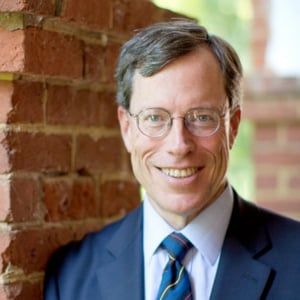
White Burkett Miller Professor of History and J. Wilson Newman Professor of Governance, University of Virginia
Philip Zelikow is the White Burkett Miller Professor of History and J. Wilson Newman Professor of Governance at the University of Virginia, where he has also served as dean of the Graduate School and director of the Miller Center of Public Affairs. His scholarly work has focused on critical episodes in American and world history.
He was a trial and appellate lawyer and then a career diplomat before taking academic positions at Harvard, then Virginia. Before and during his academic career, he has served at all levels of American government. His federal service during five administrations has included positions in the White House, State Department, and the Pentagon. His last full-time government position was as the Counselor of the Department of State, a deputy to Secretary Condoleezza Rice.
He directed a small and short-lived federal agency, the 9/11 Commission. He also directed an earlier bipartisan commission on election reform, chaired by former Presidents Carter and Ford, that led to successful passage of the Help America Vote Act of 2002. More recently he was managing director of “Rework America,” a landmark project on American economic opportunity in the digital age, organized by the Markle Foundation.
He is one of the few individuals ever to serve on the President’s Intelligence Advisory Boards for presidents of both parties, in the administrations of George W. Bush and Barack Obama. He has also been a member of the Defense Policy Board for Defense Secretary Ashton Carter and a member of the board of the Bill and Melinda Gates Foundation.

Lawyers Convention Annual Dinner Address by U.S. Attorney General Michael B. Mukasey
Michael B. Mukasey, Theodore B. Olson
United States Attorney General Michael Mukasey delivered this address during the Annual Dinner on Thursday,...
Keynote Address by U.S. Attorney General Michael B. Mukasey - Prepared Remarks
Michael B. Mukasey
Thank you for that introduction and for the opportunity to address this group. I have...
The Obstruction of Justice
Merrick B. Garland, Michael J. Madigan, Stephen A. Saltzburg, George J. Terwilliger, Jonathan R. Turley
Every few months, a highly visible public figure or government official becomes embroiled in a...
The War on Terrorism and Specialized Courts
Frank H. Easterbrook, Neal K. Katyal, Joseph Margulies, David B. Rivkin, Glenn M. Sulmasy
The legal framework for our counterterrorism efforts has consisted of a mix of the law...
Address: "The Duke Lacrosse Case & the Academy"
KC Johnson, Lee Liberman Otis
This address by Professor KC Johnson of Brooklyn College took place on January 4, 2008, at...
American Exceptionalism, the War on Terror and the Rule of Law in the Islamic World
Steven G. Calabresi, Neal K. Katyal, Michael Stokes Paulsen, David B. Rivkin, Nadine Strossen
Since at least the time of the American Revolution, America has been a revolutionary force...
Beacon of Freedom: Does America Have a Special Mission?
Michael Barone, Richard A. Epstein, Charles Fried, J. Harvie Wilkinson, Gordon S. Wood
This panel examines the question whether there is an American ideology of exceptionalism that is...
Al-Marri: Al-Qaeda Prisoner Dentention Case
Richard A. Epstein, Orin S. Kerr, Andrew McCarthy, John D. Hutson, Erwin Chemerinsky
On June 11, 2007, the Fourth Circuit Court of Appeals decided the case of al-Marri v. Wright....
International Law - Coercing Virtue: The Worldwide Rule of Judges
Gregory E. Maggs, Jeremy A. Rabkin, David B. Rivkin, John C. Yoo
Judge Bork has been a critic of the ascendancy of international law and its effect...
Are We Over-Lawyering International Affairs?
Philip C. Bobbitt, John D. Hutson, Edwin D. Williamson, John C. Yoo, Phillip D. Zelikow
The Federalist Society's International & National Security Law Practice Group presented this panel discussion at...