

Judge, Arizona Court of Appeals, Division One
The Honorable Jennifer M. Perkins began service on the Arizona Court of Appeals, Division One, on October 30, 2017. At the time of her appointment by Governor Douglas Ducey, Judge Perkins was Assistant Solicitor General for the State of Arizona.
Judge Perkins was born in Portales, New Mexico, and primarily raised in Albuquerque. She attended the prestigious Albuquerque Academy from 1988-1995, before moving to Washington D.C. to attend the Elliott School of International Affairs at the George Washington University as a National Merit Scholar. Therafter, she relocated again to Dallas, Texas, and earned her juris doctor from the SMU Dedman School of Law, graduating cum laude in 2002.
Judge Perkins started her career at the law firm of Browning & Peifer (now Peifer, Hanson, Mullins, and Baker) in Albuquerque, New Mexico. While there, she litigated complex commercial matters including class action plaintiff and defense work, and assisted with employment and contract litigation. In 2003, the judge accompanied the Honorable James O. Browning in transitioning to the federal district court bench, serving as his first law clerk.
After her clerkship, Judge Perkins moved to Arizona to work for the Institute for Justice, Arizona Chapter, a public interest law firm. She spent five years with IJ-AZ litigating civil rights cases in Arizona and across the country. In 2009, the judge became Disciplinary Counsel for the Arizona Commission on Judicial Conduct, where she reviewed and prosecuted ethics complaints against state court judges throughout Arizona. After five years serving the state in this capacity, Judge Perkins entered private practice by joining an appellate law firm in Phoenix. While there, she worked on state and federal appeals involving a wide range of legal subjects, including complex business disputes, property rights, judicial ethics, and personal injury matters.
In January 2015, Judge Perkins joined the Office of the Arizona Attorney General to serve as the first Assistant Solicitor General; in that capacity, she was responsible for oversight of Attorney General Opinions and served as ethics counsel to the entire office. In addition to these two primary roles, the judge assisted on a variety of matters including trial and appellate litigation of election-related matters; federal appellate litigation with the Federalism Unit; state criminal appeals; and drafting amicus briefs on behalf of Arizona in state and federal courts.
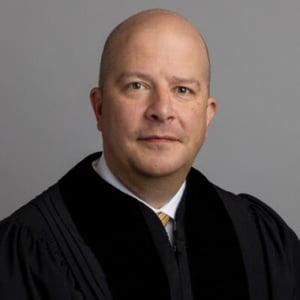
Chief Justice, Supreme Court of Georgia
Chief Justice Nels Peterson was appointed to the Georgia Supreme Court in 2016, and was elected to full six-year terms in 2018 and 2024. He previously served in a variety of other roles in Georgia state government, including as judge on the Georgia Court of Appeals, general counsel for the University System of Georgia, Georgia’s first solicitor general in the Attorney General’s Office, and executive counsel to the Governor.
Before entering state government, Nels practiced at King & Spalding LLP in Atlanta and clerked for Chief Judge William H. Pryor Jr. of the United States Court of Appeals for the Eleventh Circuit. He is a graduate of Kennesaw State University and Harvard Law School. Nels and his wife Jennifer have two children and live in Cobb County, where they teach adult Sunday school at Johnson Ferry Baptist Church.

Vice President for Legal Affairs, Goldwater Institute

Chief Judge, United States Court of Appeals, Sixth Circuit
JEFFREY S. SUTTON is the Chief Judge of the United States Court of Appeals for the Sixth Circuit. He has served as Chair of the Federal Judicial Conference Committee on Rules of Practice and Procedure, Chair of the Advisory Committee on Appellate Rules, and Chair of the Supreme Court Fellows Commission. He currently serves as Chair of the Executive Committee of the Judicial Conference of the United States. Since 1993, Chief Judge Sutton has been an adjunct professor at The Ohio State University College of Law, where he teaches seminars on State Constitutional Law, the United States Supreme Court, and Appellate Advocacy. He also teaches a class on State Constitutional Law at Harvard Law School. Among other publications, he is the author of Who Decides? States as Laboratories of Constitutional Experimentation and 51 Imperfect Solutions: States and the Making of American Constitutional Law. He is the co-author of a casebook, State Constitutional Law: The Modern Experience, as well as The Law of Judicial Precedent. He is also the co-editor of The Essential Scalia: On the Constitution, the Courts, and the Rule of Law. In 2006, Chief Judge Sutton was elected to the American Law Institute, and in 2017 he was elected to its Council.

Senior Counsel, First Liberty Institute
Stephanie N. Taub serves as Senior Counsel with First Liberty Institute, focusing on litigation, appellate advocacy, and legal education.
While at First Liberty, her article on the rights of faith-based organizations under Title VII of the Civil Rights Act of 1964 has been published in the Texas Review of Law and Politics. She has also authored pieces published in National Review, the Daily Signal, the Washington Times, the Des Moines Register, and the New York Daily News. In 2017, Taub was named one of 15 recipients of the James Wilson Fellowship in natural law.
Before joining First Liberty, Taub worked as a law clerk to the Honorable Reed O’Connor in the U.S. District Court of the Northern District of Texas.
Taub is a Harvard Law School graduate in the class of 2014 and a Blackstone Fellow in the class of 2012. During law school, she served as Co-President of the HLS Christian Fellowship and Managing Technical Editor of the Harvard Human Rights Journal. Taub spent her law school summers defending religious liberty in public interest law firms and clerking in the Texas Office of Solicitor General.
For her undergraduate studies at the University of Southern California, Taub graduated summa cum laude, majoring in Business Administration with a minor in Philosophy.
Attorney
Maya M. Noronha is a civil rights attorney.
As special counsel for external affairs at First Liberty Institute, Maya worked for the largest legal organization in the United States dedicated exclusively to defending religious liberty for all Americans.
Previously, Maya worked at the U.S. Department of Health and Human Services, as acting chief of staff of the Administration for Children and Families; principal advisor to the Commissioner of the Administration on Children, Youth, and Families; and senior advisor to the Director of the Office for Civil Rights and regulatory reform officer. She provided advice on federal civil rights laws that prohibit discrimination on the basis of conscience, religion, race, color, national origin, limited English proficiency, sex, disability, age, and health information in both health care and human services.
In the area of election law, Maya has advised officials elected to or candidates for President, U.S. Senate, U.S. House of Representatives, Governor, state legislature, city council, and magisterial district judge. She practiced law at Baker Hostetler LLP, where she was on the Political Law and Federal Advocacy Teams, advising clients on voting rights, redistricting, election integrity, campaign finance, financial reporting, ethics compliance, as well as conducting trial and appellate litigation. She also has delivered legislative testimony, planned continuing legal education conferences on election law, and published about voting rights and election administration.
In addition to addressing the Federalist Society, she has delivered remarks to the White House Initiative on Asian American Pacific Islanders, United States Senate, Women in Government Relations, Georgetown University, George Mason University School of Law, the Columbus School of Law at the Catholic University of America, and Arizona State University Cronkite School of Journalism.
Maya is in Phi Beta Kappa, a member of the Alpha Sigma Nu Jesuit Honor Society, and a John Carroll Scholar. Forbes Magazine recognized Maya as one of its 30 under 30 in Law and Public Policy.
She serves concurrently on the Federalist Society’s Free Speech & Election Law Executive Committee and the American Bar Association’s Standing Committee on Election Law.
Education
· J.D., Georgetown University Law Center, 2011
· A.B., Georgetown University, 2005
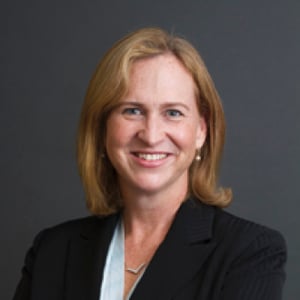
Anne Fleming Research Professor; Professor of Law, Georgetown Law
Laura K. Donohue is a Professor of Law at Georgetown Law, Director of Georgetown's Center on National Security and the Law, and Director of the Center on Privacy and Technology. She writes on constitutional law, legal history, emerging technologies, and national security law. Her most recent book, The Future of Foreign Intelligence: Privacy and Surveillance in a Digital Age (Oxford University Press, 2016), was awarded the 2016 IIT Chicago-Kent College of Law/Roy C. Palmer Civil Liberties Prize. She also has written The Cost of Counterterrorism: Power, Politics, and Liberty (Cambridge University Press, 2008); and Counterterrorist Law and Emergency Law in the United Kingdom 1922-2000 (Irish Academic Press, 2007).
Professor Donohue's articles have been published by California Law Review, University of Chicago Law Review, Stanford Law Review, University of Pennsylvania Law Review, Harvard Journal of Law and Public Policy, and other scholarly journals.
In November 2015, the U.S. Foreign Intelligence Surveillance Court appointed her as one of five amici curiae under the 2015 USA FREEDOM Act.
Professor Donohue is a Life Member of the Council on Foreign Relations; an Advisory Board Member of the Electronic Privacy Information Center; and a Member of the American Bar Association's Standing Committee on Law and National Security. She is a Senior Scholar at Georgetown Law's Center for the Constitution.
Donohue obtained her AB in Philosophy (with Honors) from Dartmouth College; her MA in Peace Studies (with Distinction) from the University of Ulster, Northern Ireland; her JD (with Distinction) from Stanford Law School; and her PhD in History from the University of Cambridge, England.
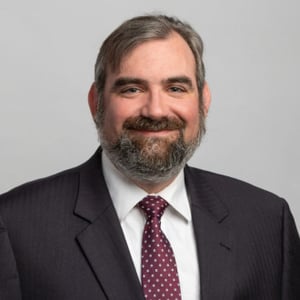
Senior Attorney, Institute for Justice
Robert Frommer serves as a senior attorney with the Institute for Justice. He joined the Institute in August 2008 and is currently litigating on behalf of SpeechNow.org, a group challenging the federal campaign finance laws regarding free speech.
Before joining IJ, Robert was an attorney with the Washington, D.C., office of Gibson, Dunn & Crutcher LLP, where he litigated both complex litigation and public-interest matters. He is a former law clerk to Judge Morris Sheppard Arnold of the U.S. Court of Appeals for the Eighth Circuit.
Robert received his law degree magna cum laude from the University of Michigan Law School in 2004, where he was elected to the Order of the Coif and served as both a book review editor for the Michigan Law Review and president of the Federalist Society student chapter. Before going to law school, Robert earned a master's degree in economics from George Mason University.
Adam Griffin is a graduate of the University of North Carolina School of Law. During law school, he served as a research assistant to Professor Stephen E. Sachs and UNC Law Dean Martin Brinkley. After law school, Adam spent two years litigating for liberty at the Institute for Justice as an inaugural Law and Liberty Fellow. He then served as a law clerk to Chief Judge Richard E. Myers in the United States District Court for the Eastern District of North Carolina, and previously worked at Pacific Legal Foundation and the Civil Rights Division of the Department of Justice.
Partner, King & Spalding LLP
Jim Vines specializes in environmental, health and safety, or EHS, matters and is head of our U.S. OSHA and international health & safety practice. A substantial portion of his practice is advising clients in response to industrial accidents resulting in serious injuries, fatalities and catastrophic damage to facilities. He has had leadership roles in such matters for over 25 years and has handled major industrial incident and crisis response in the U.S. and overseas with particular experience in the oil and gas, chemical, petro-chemical, automotive, and rubber/synthetic rubber industries. Jim also represents clients in other corporate crises situations involving high profile government investigation and enforcement actions addressing EHS and other regulatory compliance issues. A common characteristic of these matters is the need for privileged internal investigations to support response to numerous simultaneous government investigations involving civil and criminal scrutiny. Such matters also typically include challenges to the adequacy of corporate governance processes related to regulatory compliance.
Partner, DeMarco Law, PLLC
Joseph V. DeMarco is a partner at DeMarco Law, PLLC where he focuses on counseling clients on complex issues involving information privacy and security, theft of intellectual property, computer intrusions, on-line fraud, and the lawful use of new technology. His years of experience in private practice and in government handling the most difficult cybercrime investigations handled by the United States Attorney’s Office have made him one of the nation’s most sought-after lawyers on Internet crime and the law relating to emerging technologies. In addition to his counsel practice, Mr. DeMarco serves as an Arbitrator, resolving complex commercial and high-technology disputes between businesses. He is on the National Panel of Neutrals of the American Arbitration Association (AAA) and Federal Arbitration, Inc. (FedArb).
From 1997 to 2007, Mr. DeMarco served an Assistant United States Attorney for the Southern District of New York, where he founded and headed the Computer Hacking and Intellectual Property (CHIPs) Program, a group of five prosecutors dedicated to investigating and prosecuting violations of federal cybercrime laws and intellectual property offenses. Under his leadership, CHIPs prosecutions grew from a trickle in 1997 to a top priority of the United States Attorney’s Office, encompassing all forms of criminal activity affecting e-commerce and critical infrastructures including computer hacking crimes; transmission of Internet worms and viruses; electronic theft of trade secrets; illegal use of “spyware”; web-based frauds; unlawful Internet gambling; and criminal copyright and trademark infringement offenses. As a recognized thought leader in the field, Mr. DeMarco was frequently asked to counsel prosecutors and law enforcement agents regarding novel investigative and surveillance techniques and methodologies, and regularly provided advice to the United States Attorney concerning the Office’s most sensitive computer-related investigations. In 2001, Mr. DeMarco also served as a visiting Trial Attorney at the Department of Justice Computer Crimes and Intellectual Property Section in Washington, D.C., where he focused his work on Internet privacy, gaming, and theft of intellectual property.
Since 2002, Mr. DeMarco has served as an Adjunct Professor at Columbia Law School, where he teaches the upper-class Internet and Computer Crimes seminar. He has been invited to speak throughout the world on cybercrime, e-commerce, and IP enforcement. He has lectured on the subject of cybercrime at Harvard Law School, the Practicing Law Institute, the National Advocacy Center, and at the FBI Academy in Quantico, Virginia, and has served as an instructor on cybercrime to judges attending the New York State Judicial Institute.
Prior to joining the United States Attorney’s Office, Mr. DeMarco was a litigation associate at Cravath, Swaine & Moore in New York City, where he concentrated his work on intellectual property, antitrust, and securities law issues for various high-technology clients. Prior to that, Mr. DeMarco served as law clerk to the Honorable J. Daniel Mahoney, United States Circuit Judge for the Second Circuit Court of Appeals.
Mr. DeMarco holds a J.D. magna cum laude from New York University School of Law. At NYU he was a member of the NYU Law Review. He received his B.S.F.S. summa cum laude from the Edmund A. Walsh School of Foreign Service at Georgetown University.
Partner and Co-Chair, Public Policy Group, Shook Hardy & Bacon LLP
Mark Behrens co-chairs Shook's Washington, DC-based Public Policy Practice Group and is a leading national expert on civil justice issues with over thirty years of experience. A substantial part of his practice is working to improve the civil litigation environment through state and federal legislation; in the courts through amicus curiae briefs; through legal scholarship and judicial education; and in the court of public opinion.
Mark is actively involved in civil justice reform efforts at the federal and state levels. He has testified before the U.S. Congress and most state legislatures on behalf of business and civil justice organizations. Mark also has an active amicus brief practice specializing in tort liability and civil justice issues. He has authored or co-authored over 150 amicus briefs in cases before the United States Supreme Court and federal and state appellate courts on behalf of business, civil justice, and defense lawyer organizations. In addition, Mark routinely files comments on behalf of business, civil justice, and defense lawyer organizations regarding potential changes to federal and state court rules. He chairs the International Association of Defense Counsel’s (IADC) Civil Justice Response Committee and serves on the Board of Directors of Lawyers for Civil Justice (LCJ).
Mark is a member of the American Law Institute (ALI). He received his J.D. in 1990 from Vanderbilt University Law School, where he was a member of the Vanderbilt Law Review. He received his B.A. in economics from the University of Wisconsin in 1987.
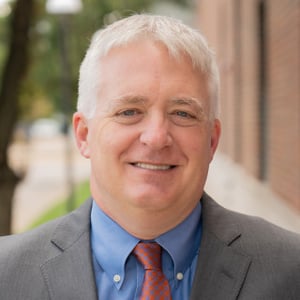
Vice President for Legal Affairs, Mackinac Center for Public Policy
Patrick Wright is Vice President for Legal Affairs at the Mackinac Center for Public Policy, where he directs the Mackinac Center Legal Foundation. He joined the Center in June 2005 after serving for three years as a Michigan Supreme Court commissioner, a post in which he made recommendations to the court concerning which state appeals court cases it should hear.
Prior to that, Wright spent four years as an assistant attorney general for the State of Michigan, where he gained significant litigation and appellate advocacy experience. He joined the state Attorney General’s Office after one year as a policy advisor in the Senate Majority Policy Office of the Michigan Senate. Wright also spent two years as a law clerk to Hon. H. Russell Holland, a United States district court judge in Alaska.
Wright received his law degree at George Washington University in Washington, D.C. He graduated with honors in 1994. He received his undergraduate degree in political science from the University of Michigan in 1990. In 2025, he was the first public interest attorney to receive the Federalist Society Michigan Lawyers Chapter Grano Award.
Aside from directly representing clients, Wright has filed numerous amicus briefs, including many to the United States Supreme Court. In 2018, the Supreme Court cited his brief on behalf of the Center in the Janus v. AFSCME decision. In addition to being featured in many state publications, he has been published nationally in The Wall Street Journal, The Washington Post, and The Hill. He has appeared on the Sean Hannity Show and was interviewed by Shepard Smith on Fox News.
Wright lives in Midland, Mich., with his wife and sons.
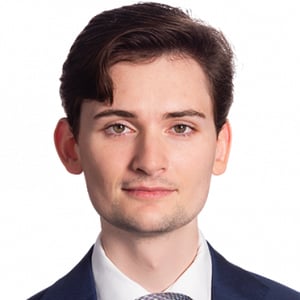
Principal Deputy Assistant Attorney General, Office of Legal Policy, United States Department of Justice
GianCarlo Canaparo serves as the Principal Deputy Assistant Attorney General in the Office of Legal Policy at the Department of Justice. He oversees the Office's regulatory work, assists the White House in the process of selecting nominees for federal judgeships and advises Department leadership on policy and legal matters.
Before joining the Department, Canaparo was a senior legal fellow at The Heritage Foundation’s Edwin Meese III Center for Legal and Judicial Studies where he researched constitutional law, administrative law, and civil rights.
Canaparo’s scholarship has appeared in various law reviews and periodicals. His research has been cited by Justice Neil Gorsuch and featured in the Wall Street Journal and Washington Post.
Canaparo co-hosted The Heritage Foundation’s SCOTUS 101 podcast, which followed the Supreme Court’s arguments and opinions and featured interviews with judges, advocates, and scholars.
After graduating Georgetown law, Canaparo spent three years at the law firm of Skadden, Arps, Slate, Meagher & Flom and two years as a federal law clerk. He earned his bachelor’s degree in economics from the University of California at Davis.
Canaparo is a classical pianist.
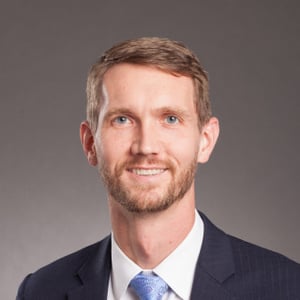
Senior Counsel for Environmental and Regulatory Affairs, Boeing
Adam Gustafson is a Senior Counsel for Environmental and Regulatory Affairs at Boeing.
Prior to joining Boeing, he served as Deputy General Counsel at the Environmental Protection Agency. Prior to that, he was a partner at Boyden Gray & Associates, where he represented States, federal judges, environmental groups, biofuel producers, agricultural interests, and public policy organizations, on such issues as the constitutional separation of powers, the First Amendment, automotive regulations, environmental computer models, healthcare regulation, and judicial deference to federal agencies.
Mr. Gustafson received his J.D. in 2009 from Yale Law School, where he was an editor of the Yale Law Journal, a managing editor of the Yale Journal of Law & the Humanities, and an executive editor of the symposium issue of the Harvard Journal of Law & Public Policy.
Mr. Gustafson served as a Vice President of the Yale Law School Federalist Society. He was a Coker Fellow, and his legal writing won the Joseph A. Chubb Competition Prize and the Edward D. Robbins Memorial Prize.
Mr. Gustafson graduated with high distinction in 2005 from the University of Virginia, where he was an Echols Scholar, a member of the Raven Society, a member of the rowing team, and a Lawn resident.
Before joining Boyden Gray & Associates, Mr. Gustafson was an associate at Cooper & Kirk, where he specialized in appellate litigation. Mr. Gustafson served as a law clerk to Judge Richard R. Clifton of the U.S. Court of Appeals for the Ninth Circuit, and to Judge Janice Rogers Brown of the U.S. Court of Appeals for the D.C. Circuit.

How Did State Constitutions Shape the American Founding?
Jennifer Perkins, Nels S.D. Peterson, Timothy Sandefur, Jeffrey S. Sutton
In this Federalist Society America 250 series, experts analyze modern legal and policy debates through...
Courthouse Steps Oral Argument Webinar: Kennedy v. Bremerton School District
Stephanie Taub
On April 25, 2022, the U.S. Supreme Court will hear oral argument in Kennedy v....
State Court Docket Watch: Whitehead v. Fagan
Maya Noronha
On December 3, 2021, the Oregon Supreme Court delivered a unanimous opinion in Whitehead v....
The Fourth Amendment at the High Court: Last Term in Review and the Future
Laura Donohue, Robert Frommer, Adam F. Griffin, James K. Vines
The Federalist Society's Criminal Law and Procedure and Environmental Law and Property Rights Practice Groups bring...
State Court Docket Watch: State of Oregon v. Pittman
Joseph V. DeMarco
Note from the Editor: The Federalist Society takes no positions on particular legal and public policy...
2020 Civil Justice Update
Mark A. Behrens
Note from the Editor: The Federalist Society takes no positions on particular legal and public...
Challenging Michigan Executive Orders Related to COVID
Patrick J. Wright
The case of Midwest Institute of Health, PLLC v. Whitmer concerns the state-law claims (brought...
State Docket Watch: Elkhorn Baptist Church v. Brown
GianCarlo Canaparo
On June 12, 2020, the Oregon Supreme Court struck down a preliminary injunction that had...
Litigation Update: Klein v. Oregon Bureau of Labor and Industries
Adam Gustafson
Melissa and Aaron Klein, of the Sweet Cakes by Melissa bakery in Oregon, were ordered...
Originalism in State Constitutional Interpretation
Portland Lawyers Chapter
Portland, OR