

AI Innovation and Law Fellow, University of Texas School of Law
Kevin Frazier is an AI Innovation and Law Fellow with University of Texas School of Law.

Head of AI Policy, Abundance Institute
Neil Chilson is the Head of AI Policy at the Abundance Institute. Prior to this position, he served as a Senior Research Fellow at the Center for Growth and Opportunity. Chilson is a lawyer, computer scientist, and author of the book “Getting Out of Control: Emergent Leadership in a Complex World.”
Chilson was previously the senior research fellow for Technology and Innovation at Stand Together, where he guided efforts to understand and promote the legal and cultural paradigms that best enable people to discover, innovate, and improve all our lives.
Before Stand Together, Chilson was the Chief Technologist at the Federal Trade Commission, where he focused on the economics of privacy and blockchain-related issues. Previously, he was an attorney advisor to Acting FTC Chairman Maureen K. Ohlhausen. In both roles he advised Chairman Ohlhausen and worked with staff on nearly every major technology-related case, report, workshop, or other FTC proceeding since January 2014. Neil joined the FTC from telecom firm Wilkinson Barker Knauer. Neil is frequently quoted by the press and his work has appeared in numerous news outlets, including The Wall Street Journal, The Washington Post, USAToday, and Newsweek. Neil has a J.D. from The George Washington Law School, a M.S. in computer science from University of Illinois, Urbana-Champaign, and a B.S. in computer science from Harding University.
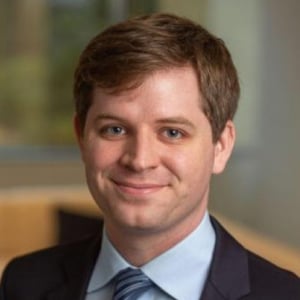
Senior Research Fellow, Institute for Law & AI
Charlie is a Senior Research Fellow on LawAI's U.S. Law and Policy team. He advises state and federal policy makers on AI governance topics and publishes research on legal questions with significant practical relevance to U.S. AI policy. His recent research examines issues including federal preemption of state AI laws, federal and state AI whistleblower protection legislation, and the likely consequences of the end of Chevron deference for the future of AI regulation. Charlie received his J.D. from Yale Law School, where he was an Editor for the Yale Journal on Regulation.
AI Innovation and Law Fellow, University of Texas School of Law
Kevin Frazier is an AI Innovation and Law Fellow with University of Texas School of Law.
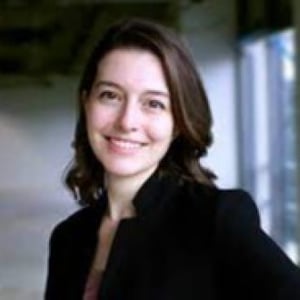
Executive Director, Engine
Kate has been at Engine since 2017 and has served as Engine’s Policy Director since 2019, working on privacy, intermediary liability, and telecommunications issues.
Prior to joining Engine, Kate worked on surveillance reform issues at the Electronic Frontier Foundation. Before joining the advocacy community, Kate spent years as a technology policy reporter in D.C., including at Politico, The Hill, and Communications Daily. She is a graduate of Hamilton College.
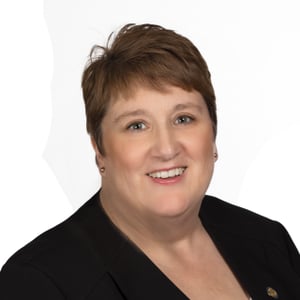
Senior Fellow, Platte Institute
Laura Ebke, Ph.D. is the Platte Institute’s Senior Fellow, assisting policymakers and the public as the Nebraska Legislature implements the new Occupational Board Reform Act. The Act is Nebraska’s first comprehensive review of the state’s job licensing laws, and is a law Laura sponsored as a Nebraska state senator.
Laura is a lifelong Nebraskan, growing up in Fairbury and graduating from the Class of 1980. She has resided in Crete for 26 years.
Laura holds a Ph.D. in Political Science from the University of Nebraska. In addition to serving as the chair of the Nebraska Legislature’s Judiciary Committee, she served for 12 years on the Crete Public Schools Board of Education.
As a lifetime member of the Girl Scouts, Laura has volunteered for the organization for over 20 years, including as a board member and Vice President of Homestead Council Girl Scouts. She is also a merit badge counselor for Cornhusker Council Boy Scouts.
She is married to her high school sweetheart, Russ Ebke, a U.S. Navy veteran and family physician in Crete. Laura and Russ have three children, Jennifer, Tasha, and Isaac, and one granddaughter, Tamzin.
The Ebke family pets include cats Molly and Daisy, and Pip the bearded dragon.
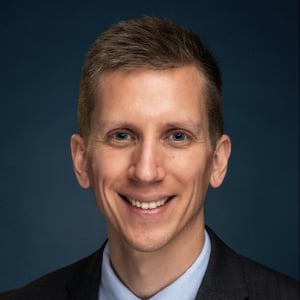
Deputy Counsel, Wisconsin Institute for Law & Liberty
Luke joined WILL from the Wisconsin Department of Justice where he served for nearly four years as a Deputy Solicitor General and Assistant Attorney General.
Berg has argued nine cases before the Wisconsin Supreme Court and four before the Seventh Circuit, including one en banc argument. He graduated from the University of Wisconsin – Madison (B.S.) and New York University (J.D.) and served as a law clerk for Judge Diane Sykes of the United States Court of Appeals for the Seventh Circuit. Prior to joining the Wisconsin DOJ in 2015, Berg worked as an attorney for the Office of the Comptroller of Currency in Washington D.C.
Berg resides in Madison with his wife and three boys.
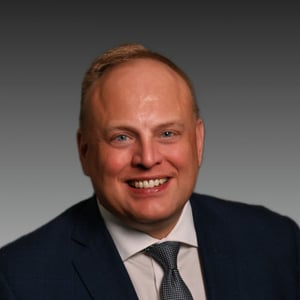
Executive Vice President and Director of Litigation, EdChoice Legal Advocates
Before founding a public interest law firm at EdChoice, Tom Fisher served as Indiana’s first Solicitor General from 2005-2023. Fisher has argued dozens of high-profile cases before both the Indiana Supreme Court and the Seventh Circuit U.S. Court of Appeals and five cases before the U.S. Supreme Court. A two-time recipient of the National Association of Attorneys General Best Brief Award, Fisher is a Fellow of the American Academy of Appellate Lawyers and a Sagamore of the Wabash. Fisher is a graduate of Wabash College and Indiana University Maurer School of Law, where he serves as an Adjunct Professor of Law.
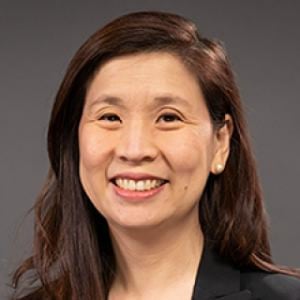
Senior Counsel, Vice President of Advocacy Strategy, Alliance Defending Freedom
Emilie Kao serves as senior counsel and vice president of advocacy strategy for Alliance Defending Freedom, where she is a member of the U.S. Legal Team. In this role, she supports ADF’s legal and legislative objectives through culture shaping initiatives.
Before joining ADF, Kao served as director of the DeVos Center for Religion and Civil Society at the Heritage Foundation. She led a team of experts who provided strategy, research, and policy recommendations on life, marriage, and religious freedom consistent with Constitutional principles. She convened coalitions of strategic partners to support the protection of religious freedom and launched the Promise to America’s Children, a movement dedicated to the protection of children and parental rights.
Kao also served as senior legal counsel at an international human rights law firm, East Asia team leader in the U.S. Department of State’s Office of International Human Rights, and director of international advocacy at the Becket Fund for Religious Liberty. She was an adjunct professor at Antonin Scalia Law School at George Mason University and is co-editor of the “First Principles on International Human Rights” essay series.
She has testified before the U.S. Congress and spoken at the United Nations in Geneva and New York. She has been interviewed and quoted extensively in the media, including The New York Times, The Washington Post, CNN, C-SPAN, and 60 Minutes+.
Kao earned her A.B. cum laude from Harvard University and her J.D. from Harvard Law School. She is a member of the state bars of California and the District of Columbia and is admitted to practice in the U.S. Supreme Court. She speaks Mandarin Chinese.
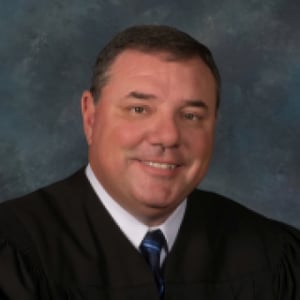
United States District Judge, Southern District of Ohio
Judge Matthew W. McFarland was born in Portsmouth, Scioto County, Ohio, and raised in Wheelersburg. He graduated from Wheelersburg High School in 1985, from Capital University in 1989 with a Bachelor of Arts degree in Political Science, and from the Capital University Law School in 1992, where he was inducted in the Order of the Barristers. He also served as a research assistant for Dean Rodney K. Smith. Judge McFarland first took the bench in 1999 as a Magistrate in the Scioto County Common Pleas Court. He was first elected to the Ohio Fourth District Court of Appeals in 2004 serving fourteen southeast Ohio counties. In 2010 and 2016 he was re-elected, and in 2016 by winning all fourteen counties. As an appellate judge, Judge McFarland authored over 1,000 opinions and made over 2,900 panel votes and served as the Presiding and Administrative Judge for multiple years. He has served as a visiting Judge on the Supreme Court of Ohio on four separate occasions allowing him to sit on each level of the Ohio Judiciary including the trial, appellate, and supreme court bench. The Ohio Chief Justice also appointed him to serve as a Commissioner on the Board of Grievances and Discipline and the Advisory Committee on Court Security and Emergency.
On October 10, 2018, President Donald J. Trump announced his intent to nominate Judge McFarland to a seat on the United States District Court for the Southern District of Ohio after being recommended by the Portman/Brown Bipartisan Federal Judicial Search Commission. The United States Senate received Judge McFarland’s nomination on November 13, 2018. At the sine die adjournment of the 115th Congress on January 3, 2019, the Senate returned Judge McFarland’s nomination to President Trump. President Trump then re-nominated Judge McFarland on January 23, 2019. The Senate Judiciary Committee held Judge McFarland’s confirmation hearing on June 26, 2019, and favorably voted his nomination to the full United States Senate on July 18, 2019. The United States Senate then confirmed Judge McFarland on December 18, 2019, and President Trump signed Judge McFarland’s Commission on December 31, 2019. With Judge McFarland’s confirmation, he is now only the second federal judge to serve the Southern District of Ohio from Scioto County. The first being Judge Albert Thompson, who served from 1898-1910. Judge McFarland succeeded Judge Thomas M. Rose who took senior status on June 30, 2017.
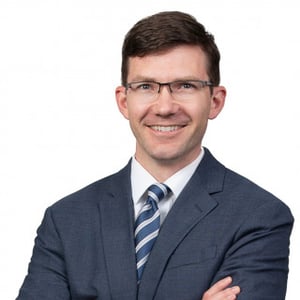
Partner, Nelson Mullins Riley & Scarborough LLP
Miles practices in the areas of appeals, business litigation, and First Amendment law. In addition to representing clients in complex civil and criminal litigation and appeals, Miles advises and represents public and private universities and serves as outside general counsel to several business and educational clients. He also represents and counsels private entities and government agencies and officials, including multiple current and former governors of South Carolina and members of Congress, on issues relating to the constitutional and statutory freedoms of speech, religion, and association. His First Amendment work has been cited by the United States Supreme Court.
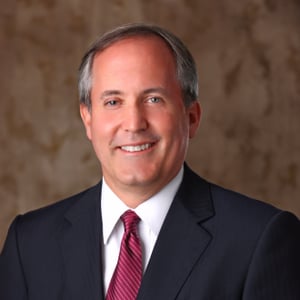
State Attorney General, Texas
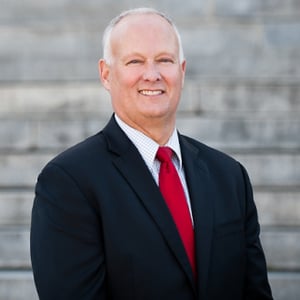
Attorney General, Nebraska
Elected as Nebraska’s 32nd Attorney General in 2014, Doug Peterson has dedicated his career to being an advocate for Nebraskans both in state and federal court.
Peterson was born in Columbus, Nebraska and grew up primarily in Lincoln. He graduated from the University of Nebraska with a business degree in 1981, and from Pepperdine University School of Law in 1985. Following law school, Mr. Peterson spent two years in North Platte, Nebraska, prosecuting both criminal and civil cases for the Lincoln County Attorney. From 1988 to 1990, he served as Assistant Attorney General to the Nebraska Attorney General’s office, representing the State in employment law matters and tort litigation. In 1990, Peterson entered private practice, where he had the opportunity to advise and advocate for both individuals and businesses.
In his role as Attorney General, Peterson works closely with law enforcement agencies across the State to ensure that Nebraska communities are safe. Peterson’s office has supported strengthened legislation and enforcement in the areas of human trafficking, prosecution of child sexual assault and abuse, and consumer protection laws to safeguard all Nebraskans.
Office Overview
The Nebraska Department of Justice/Office of the Attorney General operates, in many respects, as the “State’s law firm.” The office is headed by the Nebraska Attorney General, an independently-elected constitutional officer, and is a diverse organization of highly specialized attorneys and support staff. The Attorney General’s Office is the largest “law firm” in Nebraska outside of Omaha.
Major Duties
Attorney General, South Carolina
Alan Wilson was elected South Carolina’s Fifty-First Attorney General on November 2, 2010, and took office on January 12, 2011, becoming the nation’s youngest Attorney General.
This marks his third stint in the office. Previously, he served as a prosecution division intern under Charlie Condon and as an Assistant Attorney General under Henry McMaster.
As South Carolina’s Attorney General, Wilson is the state’s chief prosecutor, chief securities officer, and the state’s chief legal counsel. The office is comprised of more than two hundred employees and nearly seventy-five attorneys who manage nearly 8,000 active case files.
Wilson has focused on keeping our families safe and defending the Constitution.
He has assembled an unprecedented coalition consisting of the Attorney General’s office, the State Law Enforcement Division, every sheriff, the Police Chief’s Association, and all 16 solicitors. Together, they are actively advancing legislative priorities to ensure South Carolina is the safest place to live, work, and raise a family.
As Attorney General, Wilson has defended the Constitution and the laws of this state even if it means challenging the federal government. He has protected South Carolina’s right-to-work; helped lead the 26-state challenge to the federal health care mandate; and successfully safeguarded South Carolina’s voter identification and immigration laws in court.
Today, he is actively engaged in state and federal litigation to provide safe harbor to South Carolina’s ports, shield the state’s energy interests at Yucca Mountain, as well as a constitutional challenge of Dodd-Frank.
Prior to his election, Wilson served as an Assistant Solicitor and as an Assistant Attorney General before entering private practice with the Columbia firm of Willoughby & Hoefer, P.A. He began his legal career working for the late Judge Marc H. Westbrook.
Growing up, public service was paramount in the Wilson house. Alan and his three brothers have all achieved the rank of Eagle Scout. All four presently serve our nation in uniform.
Wilson joined the National Guard immediately after graduating from college. He was called to serve in Iraq where he led troops through enemy fire and earned the Combat Action Badge. Today, he continues his military service by providing legal support for soldiers and assisting in the prosecution of military crimes as a Lt. Colonel in the Judge Advocate General Corps.
He is a graduate of Francis Marion University and the University of South Carolina School of Law. Wilson and his wife, Jennifer, have two young children, Michael and Anna Grace.
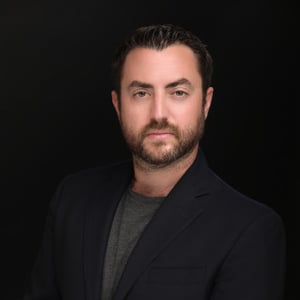
Newsweek Senior Editor-at-Large, Syndicated Columnist, Host of "The Josh Hammer Show," Article III Project Senior Counsel, Newsweek, Salem Media, Article III Project, David Horowitz Freedom Center
Josh Hammer is the senior editor-at-large of Newsweek and host of "The Josh Hammer Show," a podcast, a syndicated radio show, and TV program on Salem News Channel. A syndicated columnist through Creators Syndicate, Josh is a frequent pundit and essayist on political, legal, and cultural issues. He is also senior counsel for the Article III Project and Internet Accountability Project, as well as a Shillman Fellow with the David Horowitz Freedom Center and a fellow with the Palm Beach Freedom Institute.
An outspoken conservative, Josh opines on conservative intellectual trends, contemporary domestic and foreign policy debates, constitutional and legal issues, and the intersection of law, politics and culture. He has been published by many leading outlets, including the Los Angeles Times, the New York Post, Daily Mail, Newsweek, the Claremont Review of Books, National Affairs, American Affairs, The New Criterion, The National Interest, National Review, RealClearPolitics, First Things, City Journal, Public Discourse, Law & Liberty, Tablet Magazine, Deseret Magazine, Compact Magazine, Chronicles Magazine, The Spectator, The American Mind, The American Conservative, The European Conservative, American Greatness, American Compass, The Federalist, Blaze Media, TomKlingenstein.com, Townhall, The Daily Wire, The Daily Signal, The Daily Caller, The Epoch Times, Anchoring Truths, Fortune, Fox Business, The Jerusalem Post, The Times of Israel, The Forward, Jewish Telegraphic Agency and the Jewish Journal. He has also had legal scholarship published by the Harvard Journal of Law & Public Policy and the University of St. Thomas Law Journal.
Josh is a college campus speaker through Young America's Foundation and the Intercollegiate Studies Institute, and a law school campus speaker through the Federalist Society. Prior to Newsweek and The Daily Wire, where he was an editor, Josh worked at Kirkland & Ellis LLP and clerked for the Hon. James C. Ho on the U.S. Court of Appeals for the Fifth Circuit. Josh has also served as a John Marshall Fellow with the Claremont Institute and as a Fellow with the James Wilson Institute. He is the former host of "America on Trial with Josh Hammer," a one-season daily podcast with The First that covered the unique legal issues surrounding the 2024 presidential election.
Josh graduated from Duke University, where he majored in economics, and from the University of Chicago Law School. He lives in Florida, but remains an active member of the State Bar of Texas.
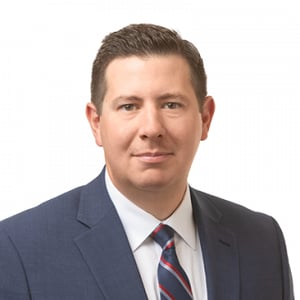
Senior Associate, Husch Blackwell
Dave guides clients through a wide range of complex public law litigation in state and federal courts.
Clients appreciate Dave’s experience serving in Nebraska’s Attorney General’s Office as Assistant Attorney General and as the state’s first Deputy Solicitor General; in the Civil Litigation Bureau; and in the Agriculture, Environment and Natural Resources Bureau. In these roles, he routinely handled high-profile matters at the trial and appellate levels in both state and federal courts including:
Dave maintains a robust appellate practice, counseling clients through all stages of appeals including briefing and oral argument. He has argued more than 20 civil appeals before the U.S. Court of Appeals for the Eighth Circuit, the Nebraska Supreme Court and the Nebraska Court of Appeals, obtaining favorable results in the overwhelming majority of those cases. He has a unique perspective on the importance of strategic amicus curiae support in the appellate process, having advised the Nebraska Attorney General on the state’s amicus participation and authorship in courts across the country.
He understands how regulatory agencies think – having helped develop and implement policy and guide governmental regulatory activities – and offers this insight to clients as they proactively approach compliance or navigate investigations.
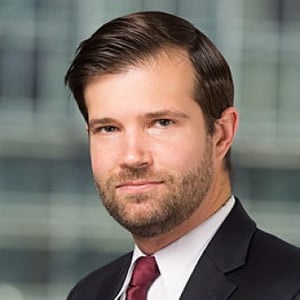
Research Fellow, CATO Institute
Jay Schweikert is a research fellow with the Cato Institute’s Project on Criminal Justice. His research and advocacy focuses on accountability for prosecutors and law enforcement, plea bargaining, Sixth Amendment trial rights, and the provision and structuring of indigent defense.
Before joining Cato, Schweikert spent four years doing civil and criminal litigation at Williams & Connolly LLP. He holds a JD from Harvard Law School, where he was an articles editor for the Harvard Law Review, and chaired the Harvard Federalist Society’s student colloquium program. Following law school, Schweikert clerked for Judge Diane Sykes of the U.S. Court of Appeals for the Seventh Circuit and Judge Laurence Silberman of the U.S. Court of Appeals for the DC Circuit.
He holds a BA in political science and economics from Yale University.
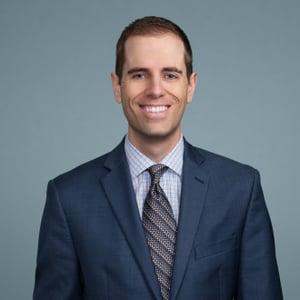
Senior Associate, Hilgers Graben PLLC
Trent represents sophisticated clients in civil litigation and appeals. His experience includes taking fact- and expert-witness depositions, assisting in fact development, document production, and witness preparation, and drafting and responding to a range of dispositive and non-dispositive motions. Besides his experience as an associate at two renowned law firms in Denver and Washington, D.C., Trent was a law clerk to The Honorable D. Brooks Smith on the U.S. Court of Appeals for the Third Circuit.
Trent lives in Lincoln with his wife and three children and enjoys cycling, trap shooting, and reading (especially American frontier novels).

Vice President, Edwin Meese III Institute for the Rule of Law, Advancing American Freedom
John G. Malcolm oversees Advancing American Freedom’s work to increase understanding of the Constitution and the rule of law as Vice President of the organization’s Edwin Meese III Institute for the Rule of Law. Malcolm brings to the challenge a wealth of legal expertise and experience in both the public and private sectors.
Prior to joining Advancing American Freedom in 2025, Malcolm was the Vice President of the Institute for Constitutional Government and the Director of the Meese Center for Legal and Judicial Studies at the Heritage Foundation. Prior to joining Heritage in 2012, Malcolm was general counsel at the U.S. Commission on International Religious Freedom, as well as a distinguished practitioner in residence at Pepperdine Law School. From 2004 to 2009, Malcolm was executive vice president and director of worldwide anti-piracy operations for the Motion Picture Association.
Malcolm served as a deputy assistant attorney general in the Department of Justice’s Criminal Division from 2001 to 2004, where he oversaw sections on computer crime and intellectual property, domestic security, child exploitation and obscenity, and special investigations. Immediately prior to that, he was a founding partner in the Atlanta law firm of Malcolm & Schroeder, LLP.
From 1990 to 1997, Malcolm was an assistant U.S. attorney in Atlanta, assigned to the fraud and public corruption section, and also an associate independent counsel, investigating fraud and abuse in the Department of Housing and Urban Development. He was honored with the Director’s Award for Superior Performance for his work in connection with the successful prosecution of Walter Leroy Moody Jr., who assassinated an 11th Circuit judge and the head of the Savannah chapter of the NAACP.
A graduate of Harvard Law School and Columbia College, Malcolm began his career as a law clerk to a federal district court judge and a federal appellate court judge, and as an associate at the Atlanta-based law firm of Sutherland, Asbill & Brennan (new Eversheds Sutherland).
Malcolm, who resides in Washington, D.C., serves on the Board of Trustees of the Washington National Opera and is a Senate-confirmed member of the Board of Directors of the Legal Services Corporation, the largest funder of civil legal aid in the United States.

Emanuel S. Heller Professor of Law, University of California at Berkeley; Thomas Smith Senior Research Fellow, The Civitas Institute, University of Texas at Austin
John Yoo is the Emanuel Heller Professor of Law at the University of California at Berkeley. He is also the Thomas Smith Senior Research Fellow, Civitas Institute, at the University of Texas at Austin. He is also a Nonresident Senior Fellow at the American Enterprise Institute.
His most recent book, The Politically Incorrect Guide to the Supreme Court, co-authored with Robert Delahunty, was published in 2023. Professor Yoo’s other books include Defender-in-Chief: Trump’s Fight for Presidential Power; Striking Power: How Cyber, Robots, and Space Weapons Change the Rules for War; Point of Attack: Preventive War, International Law, and Global Welfare; and Crisis and Command: A History of Executive Power from George Washington to George Bush.
He is a co-author of volumes 1 and 2 of R. Rossum, G. Tarr, V. Munoz & J. Yoo American Constitution Law (Routledge, 2026), and a co-editor of the eight-volume series on the 250th anniversary of the American Revolution, We Hold These Truths, with Yuval Levin and Adam White of the American Enterprise Institute.
Professor Yoo has published more than 100 articles in academic journals on subjects including national security, constitutional law, international law, and the Supreme Court. He also regularly contributes to the editorial pages of the Wall Street Journal, New York Times, Washington Post, Los Angeles Times, and National Review, among others.
Professor Yoo has served in all three branches of government. He was an official in the U.S. Department of Justice, where he worked on national security and terrorism issues after the 9/11 attacks. He served as general counsel of the U.S. Senate Judiciary Committee. He has been a law clerk for Supreme Court Justice Clarence Thomas and federal appeals Judge Laurence Silberman. He has been a visiting professor at the University of Texas at Austin’s School of Civic Leadership, Seoul National University, the Interdisciplinary Center Herzliya, Keio University, Trento University, the University of Chicago, and the Free University of Amsterdam.
Professor Yoo supervises the Public Law and Policy Program and the California Constitution Center. He also serves on the boards of Founding Forward, the Washington Legal Foundation, the Pacific Legal Foundation, the Ulysses Grant Institute, the Federalist Society’s Separation of Powers and Federalism Division, the Universidad Cientifica del Sur Law School, and the Asia-Pacific Law Institute at Seoul National University. He is a winner of the Federalist Society’s Paul Bator award and the Heritage Foundation’s Edwin Meese III Originalism Lectureship.
Professor Yoo graduated from Yale Law School and summa cum laude from Harvard College.

Founding Partner, Boyden Gray & Associates
Ambassador C. Boyden Gray is the founding partner of Boyden Gray & Associates, a law and strategy firm in Washington, D.C., focused on constitutional and regulatory issues.
Mr. Gray worked in the White House for twelve years, first as counsel to the Vice President during the Reagan administration and then as White House Counsel to President George H.W. Bush. In the Reagan administration, he was Counsel to the Presidential Task Force on Regulatory Relief, for which he wrote the original Executive Order 12291 requiring cost-benefit analysis and White House review of regulations (later renumbered as current EO 12866). In the George H.W. Bush Administration, Mr. Gray was in charge of judicial selection and was also instrumental in the enactment of the Clean Air Act Amendments of 1990, the Energy Policy Act of 1992, and a cap-and-trade system for acid rain emissions. In 1993, he received the Presidential Citizens Medal. Under President George W. Bush, Mr. Gray was U.S. Ambassador to the European Union and U.S. Special Envoy to Europe for Eurasian Energy.
Mr. Gray practiced law for 25 years at the law firm of Wilmer, Cutler & Pickering and was chairman of the Administrative Law and Regulatory Practice Section of the American Bar Association from 2000 to 2002. Early in his career, Mr. Gray helped to develop the Business Roundtable and served as its first counsel. He is an adjunct professor at Antonin Scalia Law School and a former adjunct professor at NYU Law School (teaching energy and environmental law). Mr. Gray is on the Board of Directors of the Atlantic Council, the Federalist Society, Reason Foundation, and the Trust for the National Mall.
Mr. Gray earned his A.B. magna cum laude from Harvard, where he was an editor of the Crimson, and his J.D. with high honors from the University of North Carolina at Chapel Hill, where he was editor-in-chief of the Law Review. Mr. Gray served in the United States Marine Corps, and after law school, he clerked for Earl Warren, Chief Justice of the United States Supreme Court.

David McIntosh is a leader for the principles of limited constitutional government and individual freedom. He is president of the Club for Growth, the leading advocate for economic liberty.
Former Congressman David McIntosh represented Indiana's 2nd Congressional District in the United States Congress from 1995-2001. As a Freshman, David chaired the Subcommittee on Regulatory Relief. He passed the Congressional Review Act and held extensive oversight and field hearings to build a record of public support for regulatory relief initiatives in energy, biotechnology, pharmaceutical, healthcare, transportation and technology sectors. Another issue that he championed was the elimination of the marriage penalty in the Federal Tax Code.
David served during the Reagan administration as special assistant to Attorney General Edwin Meese III, and as special assistant to President Reagan for Domestic Affairs. During the first Bush administration, he served as executive director of the President's Council on Competitiveness and assistant to the Vice President. The Competitiveness Council coordinated the cost/benefit review of major regulations and promoted legal reform measures.
David is a co-founder of the Federalist Society for Law and Public Policy and serves on the Board of Directors. He remains active with several free market and conservative think tanks and grassroots organizations. David has also had stints at the Hudson Institute and as a Professor of Economics at Ball State School of Business.
Prior to the Club for Growth, David was a partner at Mayer Brown, LLP in Washington, DC.
David graduated from the University of Chicago Law School in 1983, and Yale University, BA, cum laude, in 1980. He and his wife, Ruthie, are the proud parents of Ellie age 17 and Davey age 13.
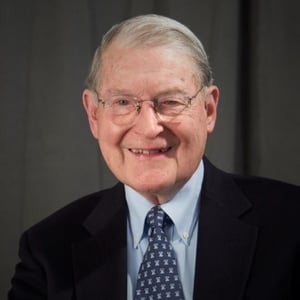
Chairman, Homeland Security Advisory Council
Judge William H. Webster is currently the Chairman of the Homeland Security Advisory Council (HSAC). Judge Webster was sworn in as director of the Central Intelligence Agency (CIA) on May 26, 1987. In this position he headed the United States intelligence community and directed the CIA until September 1991. Following his departure from the CIA, he joined the law firm of Milbank, Tweed, Hadley & McCloy, LLP in Washington, DC. Webster served as United States attorney for the Eastern District of Missouri from 1960 to 1961. In 1970, he was appointed a judge of the United States District Court for the Eastern District of Missouri and in 1973 was elevated to the United States Court of Appeals for the Eighth Circuit. During his service on the bench, Webster was chairman of the Judiciary Conference Advisory Committee on the Criminal Rules and was a member of the Ad Hoc Committee on Habeas Corpus and the Committee of Court Administration. He resigned on February 23, 1978 to become director of the Federal Bureau of Investigation, where he served for nearly a decade before moving on to lead all foreign intelligence agencies of the United States as CIA director.
On July 1, 1991 Judge Webster was presented the Distinguished Intelligence Medal and on July 25, 1991 he was awarded the Presidential Medal of Freedom and the National Security Medal. Webster earned bachelor’s degrees in history and political science, as well as an honorary Doctor of Laws degree, from Amherst College in Massachusetts. He received his law degree from Washington University, St. Louis, Missouri, in 1949. He served as a lieutenant in the United States Navy in World War II and again in the Korean War. He is a member of the Aspen Homeland Security Group.

Professor Emeritus, Paul M. Hebert Law Center, Louisiana State University
In memoriam
Dr. John Baker is Professor Emeritus of Law, and previously the Dale E. Bennett Professor of Law, at Louisiana State University Law School. He is currently Visiting Professor at Peking University School of Transnational Law (via Zoom) and has been Visiting Professor at The Center for the Constitution, Georgetown Law School (2013-2020). He has also been a Visiting Fellow at Oriel College, the University of Oxford (2012-2014) and taught at Blackfriars Hall, Oxford in 2014. Dr. Baker has also been an adjunct Fellow at the Heritage Foundation (Spring, 2008) and a Distinguished Scholar at the Catholic University of America Law School (2011-12). He has taught at Tulane Law School, George Mason Law School, Pepperdine Law School, New York Law School, Hong Kong University, and the University of Dallas, School of Management and also taught and/or lectured in 17 foreign countries. Notable among his foreign visits are the
following: Visiting Professor at the University of Lyon III (France) (1999-2011); Visiting Professor at the Universidad de los Andes, Chile (2012), as a Fulbright Specialist (2006); and a Fulbright Scholar at various universities in the Philippines. Dr. Baker received his J.D., with honors, from the University of Michigan Law School and his B.A., magna cum laude, from the University of Dallas. He also earned a Ph.D. in Political Thought from the University of London. Baker has taught over a dozen different subjects, mostly courses in public law. His main areas of interest are Constitutional Law (particularly federalism and separation of powers), Criminal Law, Anti-Terrorism Law, International Law, Health Care Law, Mediation, and Comparative Law.
In addition to law review articles and book chapters, Dr. Baker’s academic publications include Hall's Criminal Law: Cases and Materials (with Benson, Force and George; 5th ed. Michie, 1993); An Introduction to the Law of the United States (ed. with Levasseur; University Press of America, 1992). He has also published on Forbes.com, FoxNews.com, in The Washington Times, and a number of times in The Wall Street Journal. He argues in federal court, including two oral arguments in the U.S. Supreme Court. For many years, he co-taught courses for the Federalist Society on separation of powers with the late Supreme Court Justice Antonin Scalia. In September 2016, he co-taught a Supreme Court seminar in China with Justice Samuel Alito. Following law school, he served as a law clerk in federal district court and as an assistant district attorney in New Orleans before joining LSU in 1975. While a professor, he has been as a consultant to USAID, USIA (since rolled into the State Department), the Justice Department, the U.S. Senate Judiciary Subcommittee on Separation of Powers, and the Office of Planning in the White House. He served on an ABA Task Force which issued the report, The Federalization of Crime (1998) and later as a consultant to the “Bi-Partisan Task Force on the Over- federalization of Crime” (2012-2014) created by the U.S. House Judiciary Subcommittee on Crime. Dr. Baker was a co-founder of the first iteration (1995) of Stratfor Inc., a global intelligence agency. He co-authored its first book: The Intelligence Edge (with Friedman, Friedman and Chapman; Crown Books/Random House 1997). In 2022, he began a short, weekly video podcast available on YouTube and Rumble, The Baker Brief.
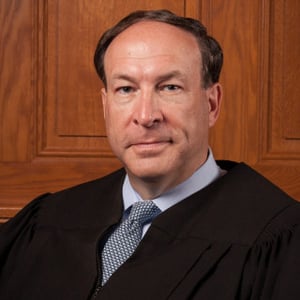
Judge, United States Court of Appeals, Seventh Circuit
Michael B. Brennan was confirmed and sworn in as a Circuit Judge for the U.S. Court of Appeals for the Seventh Circuit in May 2018.
He previously worked as a partner in the Milwaukee law firm of Gass Weber Mullins LLC, where he tried cases and handled appeals in federal and state courts, as a judge on the Milwaukee County Circuit, where he presided over a variety of criminal and civil calendars, and as an assistant district attorney in the Milwaukee County District Attorney’s office.
Brennan’s undergraduate degree is from the University of Notre Dame, and his law degree from Northwestern University School of Law, where he was an editor on the law review and the moot court champion. He served as a law clerk on the U.S. District Court for the Eastern District of Wisconsin and the U.S. Court of Appeals for the Seventh Circuit.

Dr. John Eastman is the former Henry Salvatori Professor of Law & Community Service and former Dean at Chapman University's Dale E. Fowler School of Law, where he had been a member of the faculty since 1999, specializing in Constitutional Law, Legal History, and Property. He is a founding director of the Center for Constitutional Jurisprudence, a public interest law firm affiliated with the Claremont Institute that he founded in 1999. He has a Ph.D. in Government from the Claremont Graduate School and a J.D. from the University of Chicago Law School, and a B.A. in Politics and Economics from the University of Dallas. He serves as the Chairman of the Board of the National Organization for Marriage.
Prior to joining the Chapman law faculty, Dr. Eastman served as a law clerk to the Honorable Clarence Thomas, Associate Justice, Supreme Court of the United States, and to the Honorable J. Michael Luttig, Judge, United States Court of Appeals for the Fourth Circuit and practiced law with the national law firm of Kirkland & Ellis. Dr. Eastman has also represented numerous clients in important constitutional law matters and has argued before the Supreme Court. On behalf of the Claremont Institute Center for Constitutional Jurisprudence, he has participated as amicus curiae before the Supreme Court of the United States, U.S. Courts of Appeals, and State Supreme Courts in more than one hundred cases of constitutional significance, including Boy Scouts of America v. Dale, Zelman v. Simmons-Harris (the school vouchers case), Kelo v. New London, Ct. (eminent domain), and Van Orden v. Perry (the 10 Commandments case). He has also appeared as an expert legal commentator on numerous television and radio programs, including C-SPAN, Fox News, PBS, NewsHour, and The O'Reilly Factor.
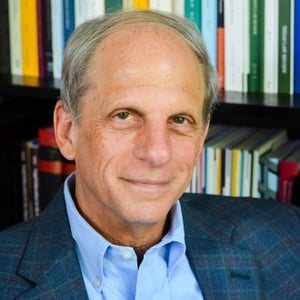
University Professor of Law and Political Science, Vanderbilt Law School
Edward Rubin is University Professor of Law and Political Science at Vanderbilt University. He specializes in administrative law, constitutional law and legal theory. He is the author of Soul, Self and Society: The New Morality and the Modern State (Oxford, 2015); Beyond Camelot: Rethinking Politics and Law for the Modern State (Princeton, 2005) and two books with Malcolm Feeley, Federalism: Political Identity and Tragic Compromise (Michigan, 2011) and Judicial Policy Making and the Modern State: How the Courts Reformed America's Prisons (Cambridge, 1998). In addition, he is the author of two casebooks, The Regulatory State (with Lisa Bressman and Kevin Stack) (3rd ed., 2019); The Payments System (with Robert Cooter) (West, 1990), three edited volumes (one forthcoming) and The Heatstroke Line (Sunbury, 2015) a science fiction novel about the fate of the United States if climate change is not brought under control. Professor Rubin joined Vanderbilt Law School as Dean and the first John Wade–Kent Syverud Professor of Law in July 2005, serving a four-year term that ended in June 2009. Previously, he taught at the University of Pennsylvania Law School from 1998 to 2005, and at the Berkeley School of Law from 1982 to 1998, where he served as an associate dean. Professor Rubin has been chair of the Association of American Law Schools' sections on Administrative Law and Socioeconomics and of its Committee on the Curriculum. He has served as a consultant to the People's Republic of China on administrative law and to the Russian Federation on payments law. He received his undergraduate degree from Princeton and his law degree from Yale.

Senior Fellow and Director of Constitutional Studies, Manhattan Institute
Ilya Shapiro is a senior fellow and director of constitutional studies at the Manhattan Institute and a contributing editor of City Journal. Previously he was executive director and senior lecturer at the Georgetown Center for the Constitution, and before that a vice president of the Cato Institute.
Shapiro is the author of Lawless: The Miseducation of America’s Elites (2025) and Supreme Disorder: Judicial Nominations and the Politics of America’s Highest Court (2020), coauthor of Religious Liberties for Corporations? (2014), and editor of 11 volumes of the Cato Supreme Court Review (2008-18). He has contributed to a variety of academic, popular, and professional publications, including the Wall Street Journal, Harvard Journal of Law & Public Policy, Washington Post, Los Angeles Times, USA Today, National Review, and Newsweek. He also regularly provides commentary for various media outlets, writes the Shapiro’s Gavel newsletter on Substack, and once appeared on the Colbert Report.
Shapiro has testified many times before Congress and state legislatures and has filed more than 500 amicus curiae “friend of the court” briefs in the Supreme Court. He lectures regularly on behalf of the Federalist Society, is a member of the board of fellows of the Jewish Policy Center, was an inaugural Washington Fellow at the National Review Institute, and has been an adjunct law professor at the George Washington University and University of Mississippi. He is also the chairman of the board of advisers of the Mississippi Justice Institute, a barrister in the Edward Coke Appellate Inn of Court, and a former member of the Virginia Advisory Committee to the U.S. Commission on Civil Rights.
Earlier in his career, Shapiro was a special assistant/adviser to the Multi-National Force in Iraq on rule-of-law issues and practiced at Patton Boggs and Cleary Gottlieb. Before entering private practice, he clerked for Judge E. Grady Jolly of the U.S. Court of Appeals for the Fifth Circuit. He holds an AB from Princeton University, an MSc from the London School of Economics, and a JD from the University of Chicago Law School.
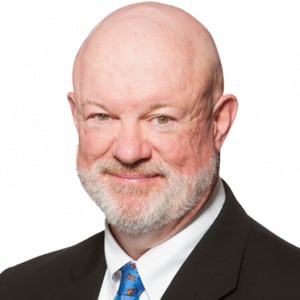
Senior Legal Fellow, the Meese Institute for the Rule of Law, Advancing American Freedom
Paul J. Larkin is a Senior Legal Fellow in the Meese Institute for the Rule of Law at Advancing American Freedom. Paul has held various positions in the federal and state governments throughout his career, such as being an attorney in the Organized Crime and Racketeering Section of the Criminal Division at the U.S. Department of Justice, an Assistant to the Solicitor General in the Office of the Solicitor General at the U.S. Department of Justice, Special Agent-in-Charge and Acting Director of the Criminal Investigation Division at the Environmental Protection Agency, and a member of the Parole Abolition and Sentencing Reform Commission and of the Juvenile Justice Reform Commission in the Office of Virginia Governor George Allen.
He has also worked at Verizon Communications and two law firms in Washington, D.C. His current research is principally in the fields of drug policy, criminal justice policy, and administrative law and policy. He has published numerous articles in law and public policy journals, both in print and online.

Chief Policy Counsel, Council on Criminal Justice and Senior Advisor, Right on Crime
Marc A. Levin is the Chief Policy Counsel for the Council on Criminal Justice (counciloncj.org) and Senior Advisor for Right on Crime.
An attorney and accomplished author on legal and public policy issues, Marc began the Foundation’s criminal justice program in 2005. This work contributed to nationally praised policy changes that have been followed by dramatic declines in crime and incarceration in Texas. Building on this success, in 2010, Levin developed the concept for the Right on Crime initiative, a TPPF project in partnership with Prison Fellowship and the American Conservative Union Foundation. Right on Crime has become the national clearinghouse for conservative criminal justice reforms and has contributed to the adoption of policies in dozens of states that fight crime, support victims, and protect taxpayers.
In 2014, Levin was named one of the “Politico 50” in the magazine’s annual “list of thinkers, doers, and dreamers who really matter in this age of gridlock and dysfunction.”
Marc has testified on criminal justice policy on four occasions before Congress and has testified before legislatures in states including Texas, Nevada, Kansas, Wisconsin, and California. He also has met personally with leaders such as U.S. Presidents, Speakers of the House, and the Justice Commtitee of the United Kingdom Parliament to share his ideas on criminal justice reform. In 2007, he was honored in a resolution unanimously passed by the Texas House of Representatives that stated, “Mr. Levin’s intellect is unparalleled and his research is impeccable.”
Since 2005, Marc has published dozens of policy papers on topics such as sentencing, probation, parole, reentry, and overcriminalization which are available on the TPPF website. Levin’s articles on law and public policy have been featured in publications such as the Wall Street Journal, USA Today, Texas Review of Law & Politics, National Law Journal, New York Daily News, Jerusalem Post, Toronto Star, Atlanta Journal-Constitution, Philadelphia Inquirer, San Francisco Chronicle, Washington Times, Los Angeles Daily Journal, Charlotte Observer, Dallas Morning News, Houston Chronicle, Austin American-Statesman, San Antonio Express-News and Reason Magazine.
In 1999, Marc graduated with honors from the University of Texas with a B.A. in Plan II Honors and Government. In 2002, Marc received his J.D. with honors from the University of Texas School of Law. Marc was a Charles G. Koch Summer Fellow in 1996. He served as a law clerk to Judge Will Garwood on the U.S. Court of Appeals for the Fifth Circuit and Staff Attorney at the Texas Supreme Court.
Senior Fellow and Director of Constitutional Studies, Manhattan Institute
Ilya Shapiro is a senior fellow and director of constitutional studies at the Manhattan Institute and a contributing editor of City Journal. Previously he was executive director and senior lecturer at the Georgetown Center for the Constitution, and before that a vice president of the Cato Institute.
Shapiro is the author of Lawless: The Miseducation of America’s Elites (2025) and Supreme Disorder: Judicial Nominations and the Politics of America’s Highest Court (2020), coauthor of Religious Liberties for Corporations? (2014), and editor of 11 volumes of the Cato Supreme Court Review (2008-18). He has contributed to a variety of academic, popular, and professional publications, including the Wall Street Journal, Harvard Journal of Law & Public Policy, Washington Post, Los Angeles Times, USA Today, National Review, and Newsweek. He also regularly provides commentary for various media outlets, writes the Shapiro’s Gavel newsletter on Substack, and once appeared on the Colbert Report.
Shapiro has testified many times before Congress and state legislatures and has filed more than 500 amicus curiae “friend of the court” briefs in the Supreme Court. He lectures regularly on behalf of the Federalist Society, is a member of the board of fellows of the Jewish Policy Center, was an inaugural Washington Fellow at the National Review Institute, and has been an adjunct law professor at the George Washington University and University of Mississippi. He is also the chairman of the board of advisers of the Mississippi Justice Institute, a barrister in the Edward Coke Appellate Inn of Court, and a former member of the Virginia Advisory Committee to the U.S. Commission on Civil Rights.
Earlier in his career, Shapiro was a special assistant/adviser to the Multi-National Force in Iraq on rule-of-law issues and practiced at Patton Boggs and Cleary Gottlieb. Before entering private practice, he clerked for Judge E. Grady Jolly of the U.S. Court of Appeals for the Fifth Circuit. He holds an AB from Princeton University, an MSc from the London School of Economics, and a JD from the University of Chicago Law School.

Tech Roundup Episode 29 - An AI Roundup of 2025 and What Lies Ahead for 2026
Kevin Frazier, Neil Chilson, Charlie Bullock
Join tech and legal experts Prof. Kevin Frazier (University of Texas School of Law), Neil...
Law for Little Tech: Part 6 - Does the Little Tech Agenda Work for Startups?
Kevin Frazier, Kate Tummarello
Startups often struggle to balance financial constraints with the pursuit of innovation, raising questions about...
There Is No Place Like Nebraska [The FedSoc Films Podcast]
Laura Ebke
In this episode of the FedSoc Films Podcast, Laura Ebke, a Senior Fellow at the...
Panel I: Recent Developments on Parental Rights
Luke Berg, Thomas M. Fisher, Emilie Kao, Matthew W. McFarland
Anxiety regarding parental rights in American healthcare and education is at an all time high. ...
States’ Attorneys General: Defenders of the Bulwarks of Federalism
Miles Coleman, Ken Paxton, Doug J. Peterson, Alan Wilson
On September 10, 2020, The Federalist Society's South Carolina, Nebraska, and Houston Lawyers Chapters hosted...
Qualified Immunity: A Debate
Josh Hammer, Dave A. Lopez, Jay R. Schweikert, Trenton D. Tanner
Created by the Supreme Court in 1967, the legal doctrine of qualified immunity shields government...
The Insurrection Act, Executive Authority, and More
John G. Malcolm, John C. Yoo
The Insurrection Act of 1807 empowers the President of the United States to deploy U.S....
Luncheon and Address by William H. Webster [Archive Collection]
C. Boyden Gray, David M. McIntosh, William H. Webster
On November 6-7, 1987, The Federalist Society held a symposium at the Grand Hyatt Hotel...
Horizontal Federalism: May States Project their Sovereignty Beyond Their Borders?
John S. Baker, Michael B. Brennan, John C. Eastman, Edward L. Rubin, Ilya Shapiro
On November 14, 2019, the Federalist Society's Federalism & Separation of Powers Practice Group hosted...
Justice Department and Marijuana Enforcement
Paul James Larkin, Marc Levin, Ilya Shapiro
On Thursday, January 4th, Attorney General Jeff Sessions withdrew a Justice Department memo issued in...