
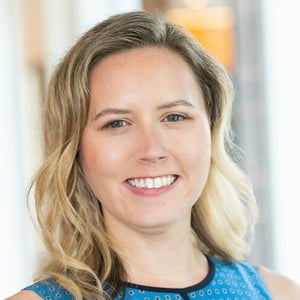
Senior Fellow, Technology Policy, Cato Institute
Jennifer’s research focuses on the intersection of emerging technology and law with a particular interest in the interactions between technology and the administrative state. Her work covers topics including judicial deference, liability protection for Internet platforms, autonomous vehicles and other disruptive transportation technologies, the regulation of data privacy, and the benefits of technology and innovation. Her work has appeared in USA Today, the Chicago Tribune, the New York Daily News, the Sacramento Bee, the Washington Times, Real Clear Policy, and U.S. News and World Report. Jennifer has a JD from the University of Alabama School of Law and a BA in political science at Wellesley College.
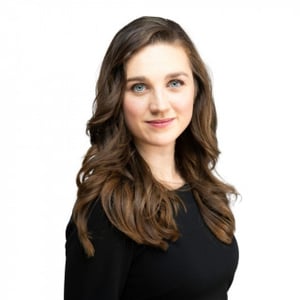
Fellow, Ethics and Public Policy Center
Clare Morell is a fellow at the Ethics and Public Policy Center, where she directs EPPC’s Technology and Human Flourishing Project. Prior to joining EPPC, Ms. Morell worked in both the White House Counsel’s Office and the Department of Justice, as well as in the private and non-profit sectors. She is also the author of the forthcoming book, The Tech Exit: A Practical Guide to Freeing Kids and Teens from Smartphones, which will be published by Penguin Random House.
At the Department of Justice, Ms. Morell worked as an Advisor to Attorney General Bill Barr. As part of her work for the Attorney General, she helped oversee the President’s Commission on Law Enforcement and the Administration of Justice and served as Editor of the Commission’s final report. A major focus of the Commission’s report was the challenges that Big Tech’s end-to-end encryption presents to law enforcement for gaining lawful access to crucial intelligence in criminal investigations, like domestic terrorism, as well as human and drug trafficking crimes. Ms. Morell also supported the Attorney General’s work on Section 230 reform as one of his main priorities.
Prior to her role with the Office of the Attorney General, Ms. Morell worked on judicial nominations for the White House Counsel’s office and monitored all nominations data to create high-level presentations for briefing White House leadership. From her experience, Ms. Morell brings an intimate knowledge and understanding of how policy is advanced within the Executive Branch of the federal government, particularly in the Department of Justice and the White House.
Ms. Morell has had opinion pieces published in the Wall Street Journal, Fox News, Newsweek, the Washington Examiner, National Review, American Affairs Journal, Deseret News, The Federalist, Public Discourse, WORLD Magazine, the Washington Times, and the Daily Signal.
Ms. Morell received a B.S.F.S. from Georgetown University’s Walsh School of Foreign Service, where she majored in Science, Technology, and International Affairs. She graduated summa cum laude and received the Edmund A. Walsh Award for academic achievement in international law. She also is proficient in Spanish.
Ms. Morell lives with her husband and three children in Washington, D.C.
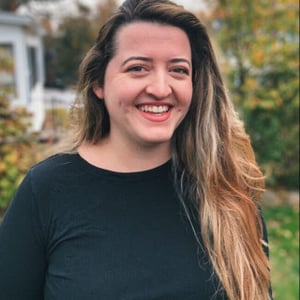
Deputy Director of U.S. Legislation, Future of Privacy Forum
Bailey Sanchez is Deputy Director with the Future of Privacy Forum’s U.S. Legislation Team. Bailey leads the team’s work analyzing legislative proposals that impact children and teens’ online privacy and safety. Bailey seeks to understand legislative and regulatory trends at the intersection of youth and technology and provide resources and expertise to stakeholders navigating the youth privacy landscape. Prior to joining FPF, Bailey was a legal extern at the International Association of Privacy Professionals.
Bailey holds a J.D. from the University of New Hampshire School of Law and a B.A. in Political Science from the University of Central Florida. While at UNH Law, she served as a research assistant to Professor Alexandra Roberts, a legal writing teaching assistant to Professors Jennifer Davis and Rachel Goldwasser, president of the Civic Engagement Society, and a student attorney in UNH Law’s Intellectual Property & Transaction Clinic.
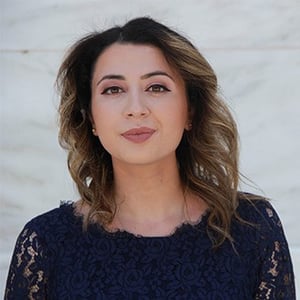
Senior Legal Fellow, The Future of Free Speech, Vanderbilt University
Ashkhen Kazaryan is a renowned expert in First Amendment law and technology policy, specializing in digital free speech, artificial intelligence, and the intersection of constitutional rights with emerging technologies. As a Senior Legal Fellow at the Future of Free Speech at Vanderbilt University, she leads initiatives to protect free expression and shape policies that uphold the First Amendment in the digital age.
Previously, Ashkhen was the lead for North and Latin America on the content regulation team at Meta, where she also served as the company’s policy lead on Section 230. She has also been a Senior Fellow at Stand Together and the Director of Civil Liberties at TechFreedom, where she worked extensively on platform liability, free speech, and internet governance. She is currently Fellow for the First Amendment at the Freedom Forum.
Ashkhen earned her specialist in law degree summa cum laude from Lomonosov Moscow State University in 2012 and later received a master of law degree from Yale Law School in 2016. During her time at Yale, she contributed as an articles editor for the Yale Journal of Law and Feminism, a senior editor for the Yale Law and Policy Review, and an editor for the Yale Journal of Law and Technology, while also serving as co-chair of the Public Interest Fellowship.
Professor of Law, Widener University Commonwealth Law School
Professor of Law, Widener University Commonwealth Law School
Crivello, Carlson & Mentkowski, S.C.

Partner, Schaerr | Jaffe LLP
Erik Jaffe has been involved in appeals on a broad range of legal issues, including First Amendment challenges to campaign finance reform, Commerce Clause challenges to Health Care Reform and other federal legislation, Equal Protection Clause challenges to affirmative action in education, First Amendment challenges to school vouchers, Fifth Amendment challenges to takings of property, Second Amendment challenges to restrictions on gun ownership, and a wide variety of cases involving patents, copyrights, ERISA, securities fraud, federal preemption, environmental regulation, and other state and federal constitutional and statutory matters. He has represented businesses and non-profit groups, Judges, Senators, former government officials, Nobel Prize winners, and a broad cross-section of private individuals. Mr. Jaffe has been involved in over 120 Supreme Court matters, including filing over 30 cert. petitions, representing half-a-dozen parties on the merits, and filing over 70 amicus briefs at both the cert. and merits stages.
A 1990 graduate of the Columbia University School of Law, Mr. Jaffe was a law clerk to Judge Douglas H. Ginsburg of the United States Court of Appeals for the District of Columbia Circuit from 1990 to 1991. Following that clerkship he spent five years in litigation practice with the Washington, D.C. law firm of Williams & Connolly. In the summer of 1996 he left Williams & Connolly to clerk for Supreme Court Justice Clarence Thomas. At the end of that clerkship he started his own practice, and he was a sole practitioner from 1997 to 2018. He joined the firm of Schaerr | Jaffe LLP in 2018.
Editor, The Weekly Standard
William Kristol is the editor of The Weekly Standard. He is also a regular panelist on Fox News Sunday, a contributor for the Fox News Channel, and a monthly columnist for the Washington Post. Before starting the Weekly Standard in 1995, Mr. Kristol led the Project for the Republican Future, where he helped shape the strategy that produced the 1994 Republican congressional victory. Prior to that, Mr. Kristol served as chief of staff to Vice President Dan Quayle during the first Bush Administration, and to Education Secretary William Bennett under President Reagan. Before coming to Washington in 1985, Mr. Kristol was on the faculty of Harvard University’s Kennedy School of Government and the Department of Political Science at the University of Pennsylvania.

Judge, United States Court of Appeals, D.C. Circuit
Judge Randolph was confirmed by the Senate and appointed to the United States Court of Appeals for the District of Columbia Circuit by President George H. W. Bush in July 1990.
Judge Randolph received his B.S. degree in 1966 from Drexel University, majoring in economics and basic engineering. At Drexel, he was president of the debate society, vice president of the Student Senate, and a member of the varsity wrestling squad. In 1969, he received his J.D. from the University of Pennsylvania, summa cum laude. Judge Randolph ranked first in his law school class all three years and was managing editor of the Law Review.
After graduation, Judge Randolph served as a law clerk to Judge Henry J. Friendly of the United States Court of Appeals for the Second Circuit in New York.
Admitted to the California Bar in 1970 (and to the District of Columbia bar in 1973), Judge Randolph worked as Assistant to the Solicitor General, U.S. Department of Justice, in Washington, D.C., 1970-1973.
After two years in private practice, Judge Randolph was named Deputy Solicitor General of the United States, a position he held from 1975-1977.
In 1979, Judge Randolph was appointed Special Counsel to the Committee on Standards of Official Conduct (the Ethics Committee) of the United States House of Representatives, remaining in this position until 1980.
In the 1980s, Judge Randolph held a number of positions while in private practice, including Special Assistant Attorney General for the states of New Mexico (1985 90), Utah (1986-1990) and Montana (1983-1990). He also served as a Member of the Advisory Panel of the Federal Courts Study Committee.
From 1971-1990, Judge Randolph argued 23 times in the United States Supreme Court, winning 20 of his cases.
As an Adjunct Professor of Law at Georgetown University Law Center from 1974-1978 he taught courses in civil procedure and injunctions. In 1992 he taught a course in constitutional law. He is a Distinguished Adjunct Professor of Law at George Mason School of Law and for the past ten years has been teaching First Amendment law. He also serves on the Judicial Advisory Board of the George Mason University Law and Economics Center.
From 1993 through 1995 Judge Randolph was a member of the Committee on Codes of Conduct of the Judicial Conference of the United States, and from 1995 to 1998 served as the Committee's chairman. He also served as the judicial liaison to the American Bar Association’s Administrative Law Section.
Judge Randolph is a member of the Board of Visitors at Drexel University Law School and was named to the “Drexel One Hundred” as a leading alumnus. In 2002 he was presented the James Wilson Award by the University of Pennsylvania Law School. In November 2005 he delivered the Fifth Annual Barbara K. Olson Memorial Lecture at the Annual Lawyers Convention of the Federalist Society. He has published numerous articles, the most recent of which is in the June 2006 issue of the Harvard Journal of Law and Public Policy.
Judge Randolph is married to the Honorable Eileen J. O’Connor, formerly Assistant Attorney General, Tax Division, U.S. Department of Justice. His son John Trevor Randolph is an investment banker in New York. His daughter Cynthia Lee Randolph is an artist living in San Francisco.

Partner, Supreme Court Attorney, Cabinet Briard LLP
François-Henri Briard is a Knight of the Legion of Honor, an Officer of the National Order of Merit and a Knight of the Palmes Académiques.
He was a member of the Governing Board of the Bar of the French Supreme Courts (2003-2005).
François-Henri Briard was a trustee of Sarah Lawrence College in New York for eight years. He is President of the Institut Vergennes, a member of the U.S. Supreme Court Historical Society and an honorary member of the Society of the Cincinnati and of the Sons of the American Revolution. He is also an expert with the Federalist Society, a U.S. think tank that focuses on constitutional and judicial issues.
He is a member of the Institute of Consulting Tax Attorneys (IACF) and an associate member of the Academy of Moral Sciences, Letters and Arts of Versailles and Ile de France.
He is a member of the French Navy civilian reserve with the rank of frigate captain and has been awarded a medal by the voluntary military services. On behalf of the Firm, he received the Military Reserve Prize (2011).

Tech Roundup Episode 28 - Privacy & Safety: Examining the FSC, Inc. v. Paxton Decision
Jennifer Huddleston, Clare Morell, Bailey Sanchez, Ashkhen Kazaryan
On June 27th, the Supreme Court ruled in Free Speech Coalition v. Paxton that Texas’s age-verification law...
Topics
Free Speech Coalition v. Paxton: Age Verification for Porn Sites Is Commonsense Policy and Constitutionally Sound
Age verification mandates are among society’s most widespread and prosaic legal obligations. States require age...
Topics
NRA v. Vullo: A Resounding Win for Free Speech, But Will It Endure?
The United States Supreme Court issued a major free speech decision expanding the protections for...
Mahanoy Area School District v. B.L. - Post-Decision SCOTUScast
Michael R. Dimino
On June 23rd, 2021 the Supreme Court decided Mahanoy Area School Dist. v. B. L.,...
Courthouse Steps Oral Argument Teleforum: Mahanoy Area School District v. B.L.
Michael R. Dimino
On April 28, 2021, the Supreme Court will hear oral argument in Mahanoy Area School...
Topics
The FCC's Legal Authority to Regulate Platforms as Common Carriers
In the net neutrality debate, there have been a wide array of articles outlining the...
FCC v. Fox - Post-Argument SCOTUScast
Patrick McKinley Brennan, Erik S. Jaffe
On January 10, 2012 the Supreme Court heard oral argument in FCC v. Fox. The question...
Violence is not Obscenity
Geoffrey Hymans
On September 17, 2007, the United States District Court for the Western District of Oklahoma...
Showcase Panel I: Limited Government and Spreading Democracy: Uneasy Cousins?
William Kristol, Tom G. Palmer, A. Raymond Randolph, François-Henri Briard
The Federalist Society presented this Showcase Panel at the 2006 Annual National Lawyers Convention on...