
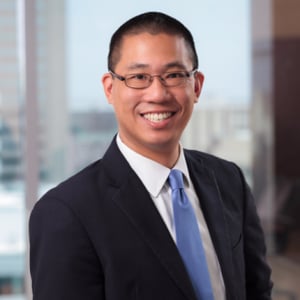
Chair, Issues & Appeals, Hunton Andrews Kurth LLP
The former Solicitor General of West Virginia, Mr. Lin has been on the front lines of many precedent-setting cases in appellate courts across the country, including in a US Supreme Court victory that George Will called “the court’s most severe rebuke of a president” since the Truman administration. Having argued more than 60 appeals, he brings to clients a well-honed ability to identify the most persuasive issues for appeal and a practiced understanding of how best to frame complex legal questions in appellate courts.
With experience in the private sector and multiple branches of government, Mr. Lin’s practice has spanned a wide range of issues, including major questions of constitutional and administrative law at the federal and state levels. On behalf of more than two dozen states, he won a stay from the US Supreme Court of the EPA’s Clean Power Plan. Described by the New York Times as an “unprecedented” order, the stay was the first time the Supreme Court had ever put a regulation on hold before review by a federal appeals court. In that same case, Elbert argued before the en banc DC Circuit in an historic proceeding that one commenter quoted in E&E News compared to “the NBA All-Star Game.” At the state level, Elbert led the effort that persuaded the West Virginia Supreme Court of Appeals to overturn an injunction of the state’s right-to-work law.
In 2013, Mr. Lin was appointed the Solicitor General of West Virginia. During his four-and-a-half year tenure, he served as a member of the Attorney General’s senior management team, oversaw all civil and criminal appeals, and argued nearly two dozen cases in federal and state appellate courts. He authored more than twenty-five briefs in the US Supreme Court and more than forty-five formal Opinions of the Attorney General.
Earlier in his career, Mr. Lin served as a trial attorney in the Federal Programs Branch of the US Department of Justice’s Civil Division, where he received a Special Service Award. He has also been a law clerk at all three levels of the federal judiciary: for Justice Clarence Thomas on the US Supreme Court; for Judge William H. Pryor Jr. on the US Court of Appeals for the Eleventh Circuit; and for Senior Judge Robert E. Keeton on the US District Court for the District of Massachusetts.
Mr. Lin speaks regularly on a wide variety of topics, including constitutional law, administrative law, environmental law, state and federal relations, the US Supreme Court, and appellate practice. He has testified before Congress, and has spoken at the national conventions of the American Bar Association, the Association of Corporate Counsel, the National Asian Pacific American Bar Association, the Federalist Society, Americans for Prosperity, and the American Legislative Exchange Council. He is an elected member of the American Law Institute, a public member of the Administrative Conference of the United States, and a fellow of the American Academy of Appellate Lawyers.
Mr. Lin is admitted to practice in the following federal courts: the Supreme Court of the United States; the First, Second, Third, Fourth, Fifth, Sixth, Seventh, Eighth, Ninth, Eleventh, D.C., and Federal Circuits; the District of Massachusetts; the Northern and Southern Districts of West Virginia; and the Eastern and Western Districts of Virginia.
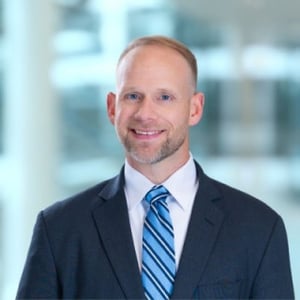
Partner, Holtzman Vogel Baran Torchinsky & Josefiak PLLC
Ed Wenger, a partner at Holtzman Vogel and Florida Bar board certified in appellate law, has successfully handled every stage of litigation, from the initial complaint-drafting stage all the way through United States Supreme Court review. Experienced in skills covering, among other things, state-court administrative hearings to expert-witness cross-examination, Ed has focused the bulk of his career on appellate and constitutional litigation, as well as critical motions practice.
His appellate experience began, first, as a law clerk for the Honorable Edward C. Prado of the United States Court of Appeals for the Fifth Circuit, and it continued as a law clerk for the Honorable Karen LeCraft Henderson of the United States Court of Appeals for the District of Columbia Circuit. He has since served as the Chief Deputy Solicitor General for the State of Florida (the number two appellate litigator for the State) and the General Counsel to the West Virginia Attorney General.
Drawing on the work ethic that once earned him a two-year stint as captain of FIU’s football team, Ed has presented oral argument in state and federal courts throughout the country, submitted scores of briefs in courts throughout the nation (and roughly two dozen with the Supreme Court of the United States), and represented, among others, the Office of Governor Ron DeSantis and Former United States Attorney General Edwin Meese III.
When Ed isn’t writing briefs, he can be found studying political philosophy and American statesmanship at Hillsdale College or boxing for charity (no wins yet, but we’re optimistic)!

Partner, HWG
Austin helps clients navigate the toughest challenges in technology and telecommunications law. As a regulatory strategist, she guides organizations and businesses through an evolving regulatory landscape by engaging policymakers and building coalitions. She has advised clients on regulatory actions at the FCC and other federal agencies, with a focus on internet regulation, spectrum issues, accessibility, and broadband. As a trusted advisor, Austin partners with product and engineering teams to confidently manage legal risks at the early stages of design — even when their technologies have outpaced the law. As an appellate advocate, shehas a proven track record of translating complex technical issues for judges.
Before returning to private practice, Austin held senior roles at the White House and the FCC. As Special Assistant to the President for Economic Policy and Deputy U.S. Chief Technology Officer for Policy, she spearheaded a wide range of White House initiatives on technology, telecommunications, and artificial intelligence – including the National Spectrum Strategy, communications security and reliability, national security issues, and competition. She also served as the inaugural Vice Chair of the Chief AI Officers Council and the Deputy Director of the National AI Initiative Office, aligning AI efforts across the federal government and facilitating transformative AI applications within federal agencies. At the FCC, Austin advised Commissioner Geoffrey Starks on wireline, public safety, and national security issues and served as his Acting Chief of Staff.
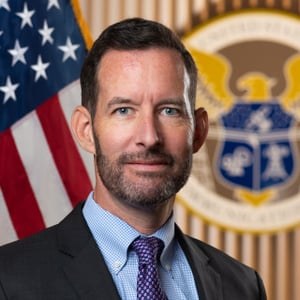
Chief of Staff, Federal Communications Commission (FCC)
Mr. Delacourt is Chief of Staff of the Federal Communications Commission. In this role, he manages the Chairman's policy agenda and strategic initiatives and serves as Chief Operating Officer for the Agency. He has a broad range of experience in telecommunications and technology law and policy spanning both the governmental and private sectors. Scott joined the FCC from Wiley Rein LLP where he served as Partner and Chair of the Wireless Practice Group. He previously served in leadership positions at the FCC, including Deputy Bureau Chief and Chief of Staff of the Wireless Bureau, Senior Counsel in the Office of General Counsel, and Legal Advisor to the Wireless Bureau Chief. Scott received his Law Degree, cum laude, from the University of Michigan Law School, and his Bachelor’s Degree, summa cum laude, from Georgetown University.
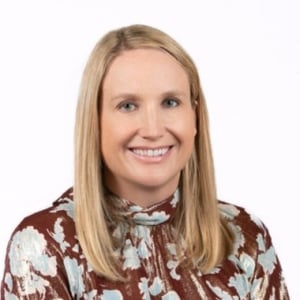
Chief of Staff, National Telecommunications and Information Administration (NTIA)
Brooke Donilon is Chief of Staff for the U.S. Department of Commerce’s National Telecommunications and Information Administration (NTIA).
Prior to NTIA, Donilon was Vice President of Government Relations for NCTA – The Internet & Television Association. She also served as Chief of Staff to Commissioner Michael O’Rielly at the Federal Communications Commission, Deputy Chief of Staff to Senator Ron Johnson, and Chief Counsel for the Senate Committee on Homeland Security & Governmental Affairs.
Donilon holds a J.D. from American University Washington College of Law and a B.A. in Journalism and Mass Communication and American Studies from the University of North Carolina at Chapel Hill.
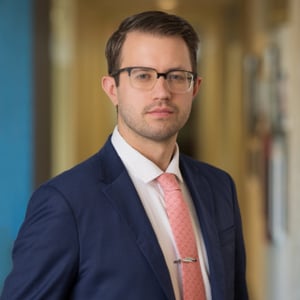
Legislative Counsel, Wilkinson Barker Knauer LLP
Slate joins WBK from his role as Counsel for the House Energy and Commerce Committee, where he represented the interests of Chairwoman Cathy McMorris Rodgers on the Communications and Technology Subcommittee.
During his tenure on the committee, he had primary responsibility over wireline and satellite communication policy and the National Telecommunications and Information Administration (NTIA). Slate played a role in drafting and revising legislation touching on a myriad of communications matters, including NTIA reauthorization, social media facing national security issues, cybersecurity, and satellite licensing. He also managed hearings discussing rural broadband deployment, administrative oversight of the NTIA, and the Broadband Equity, Access, and Deployment (BEAD) Program. Slate has also assisted in bipartisan, bicameral efforts to reform the FCC’s Universal Service Fund Program.
Prior to taking a position on Capitol Hill, Slate worked as an attorney advisor in NTIA’s Office of the Chief Counsel. In this position, he provided guidance on NTIA’s various grant programs, including the Connecting Minority Communities Program, the Broadband Infrastructure Program, the Tribal Broadband Connectivity Program, the Digital Equity Programs, and the BEAD Program. He also assisted in grant-related guidance surrounding the Infrastructure Investment and Jobs Act’s Build America, Buy America requirements.
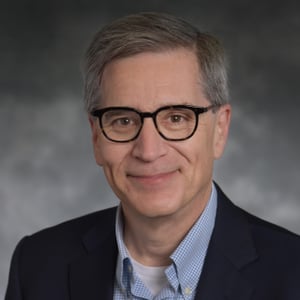
Affiliated Scholar, George Washington University Regulatory Studies Center
Roger Nober is a Professor of Practice at the Trachtenberg School of Public Policy and Public Administration. Nober served as director of the GW Regulatory Studies Center from 2024 to 2025. His career includes service as Executive Vice President and Chief Legal Officer at BNSF Railway, Chairman of the U.S. Surface Transportation Board and Chief Counsel of the Committee on Transportation and Infrastructure of the U.S. House of Representatives.
Nober retired from BNSF Railway Co. in December 2022, after 16 years as an Executive Vice President responsible for overseeing legal and regulatory matters, environmental claims, compliance, communications as well as state government and community affairs. He also served on the Board of BNSF Railway LLC. Prior to joining BNSF, Nober was a partner in the Washington office of Steptoe & Johnson LLP.
From 2002 to 2006, Nober was Chairman of the U.S. Surface Transportation Board. From 2001 to 2002, he served as Counselor to the Deputy Secretary at the U.S. Department of Transportation. From 1993 to 2001, he served in a variety of roles for the Committee on Transportation and Infrastructure of the U.S. House of Representatives, including serving as chief counsel from 1996 to 2001. He has a bachelor’s degree from Haverford College and a Juris Doctor from Harvard University School of Law.
He currently is an advisory board member at the Texas Transportation Institute at Texas A&M University, a member of the Business Advisory Council at Northwestern University Transportation Center, a member of the Texas Holocaust, Genocide, and Antisemitism Advisory Commission, and a past and current board member of a number of nonprofit organizations.
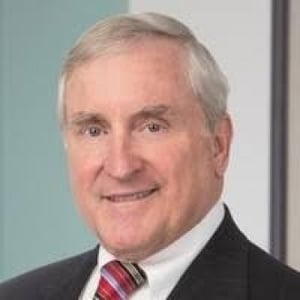
Senior Counsel, Caplin & Drysdale; Adjunct Professor of Law, Georgetown Law
Professor Carney is a Senior Counsel with Caplin & Drysdale, Cht’d. in Washington, D.C. He served as a Trial Attorney for the Tax Division of the U.S. Department of Justice for six years, and was in private (law firm) tax practice for many years, specializing in IRS administrative practice, tax controversies (audit and IRS Appeals Office), and tax litigation. He also advised clients in a similar capacity as a partner in the National Tax Office of Ernst & Young LLP in Washington. He is a member of the District of Columbia bar, as well as the bars of the U.S. Tax Court, U.S. Court of Federal Claims, U.S. District Court for the District of Columbia, and the U.S. Courts of Appeals for the Federal Circuit, D.C Circuit, and Eleventh Circuit.
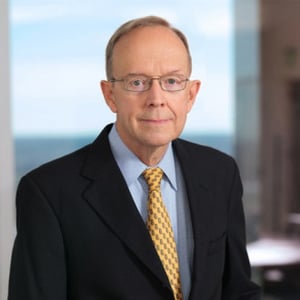
Former Deputy Attorney General for Virginia
Kennerly Davis has over forty years of experience in corporate management, public service, and the private practice of law. He has held senior executive positions in a Fortune 500 electric and gas company. He has served as Deputy Attorney General for the Commonwealth of Virginia, and as a legislative aide to a U.S. Senator and a U.S. Congressman. He practiced law for 25 years with Hunton Andrews Kurth LLP.
Davis is active in the Federalist Society as a member of the Regulatory Process Working Group of the Regulatory Transparency Project, and as a member of the Execuitve Committee of the Administrative Law and Regulation Practice Group. He is active in the national Alumni Free Speech Alliance, and involved in AFSA-chapter initiatives, including litigation, to publicize and correct the serious legal problems created by university Diversity, Equity, and Inclusion programs and the anonymous bias reporting systems used to enforce those DEI programs.
Davis writes and speaks on a wide variety of topics, including those related to the Founding of America, the natural rights foundation of our Republic, the constitutional rule of law, equal protection and free speech, DEI programs and bias reporting systems, capitalism, regulation and regulatory reform, and economic development. His articles have appeared in The Wall Street Journal, the Washington Examiner, the Richmond Times-Dispatch, The Federalist Society Review, the FedSoc Blog, Real Clear Energy, Townhall, the Daily Caller, reports of the Center for Strategic & International Studies, and other publications. He appears frequently on radio, podcasts, and television.
Davis graduated with honors from Cornell University with an A.B. degree in Government. He earned an M.A. degree from Pembroke College, Oxford, in Philosophy, Politics, and Economics. He was awarded a J.D. degree from Harvard Law School, and an M.B.A. degree from Virginia Commonwealth University.
Davis lives in Richmond, Virginia. He can be contacted by email: [email protected], and by phone: (804) 624-8525.
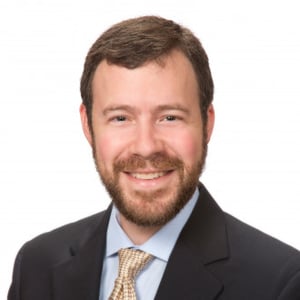
Director, Electricity Law Initiative, Harvard Law School
Ari Peskoe is the Director of the Electricity Law Initiative at the Harvard Law School Environmental and Energy Law Program. He has written extensively about electricity regulation, on issues ranging from Constitutional challenges to states’ energy laws to federal regulation of distributed energy resources. Prior to the Environmental and Energy Law Program, Ari was an associate at a law firm in Washington, D.C. where he litigated before the Federal Energy Regulatory Commission about the Western Energy Crisis. Before that, Ari was a Peace Corps Volunteer in Ghana and spent two years trying to bring the 2012 Olympics to New York. He received his J.D. from Harvard Law School and graduated from the University of Pennsylvania with degrees in electrical engineering and business.
Senior Counsel, Caplin & Drysdale; Adjunct Professor of Law, Georgetown Law
Professor Carney is a Senior Counsel with Caplin & Drysdale, Cht’d. in Washington, D.C. He served as a Trial Attorney for the Tax Division of the U.S. Department of Justice for six years, and was in private (law firm) tax practice for many years, specializing in IRS administrative practice, tax controversies (audit and IRS Appeals Office), and tax litigation. He also advised clients in a similar capacity as a partner in the National Tax Office of Ernst & Young LLP in Washington. He is a member of the District of Columbia bar, as well as the bars of the U.S. Tax Court, U.S. Court of Federal Claims, U.S. District Court for the District of Columbia, and the U.S. Courts of Appeals for the Federal Circuit, D.C Circuit, and Eleventh Circuit.
Former Deputy Attorney General for Virginia
Kennerly Davis has over forty years of experience in corporate management, public service, and the private practice of law. He has held senior executive positions in a Fortune 500 electric and gas company. He has served as Deputy Attorney General for the Commonwealth of Virginia, and as a legislative aide to a U.S. Senator and a U.S. Congressman. He practiced law for 25 years with Hunton Andrews Kurth LLP.
Davis is active in the Federalist Society as a member of the Regulatory Process Working Group of the Regulatory Transparency Project, and as a member of the Execuitve Committee of the Administrative Law and Regulation Practice Group. He is active in the national Alumni Free Speech Alliance, and involved in AFSA-chapter initiatives, including litigation, to publicize and correct the serious legal problems created by university Diversity, Equity, and Inclusion programs and the anonymous bias reporting systems used to enforce those DEI programs.
Davis writes and speaks on a wide variety of topics, including those related to the Founding of America, the natural rights foundation of our Republic, the constitutional rule of law, equal protection and free speech, DEI programs and bias reporting systems, capitalism, regulation and regulatory reform, and economic development. His articles have appeared in The Wall Street Journal, the Washington Examiner, the Richmond Times-Dispatch, The Federalist Society Review, the FedSoc Blog, Real Clear Energy, Townhall, the Daily Caller, reports of the Center for Strategic & International Studies, and other publications. He appears frequently on radio, podcasts, and television.
Davis graduated with honors from Cornell University with an A.B. degree in Government. He earned an M.A. degree from Pembroke College, Oxford, in Philosophy, Politics, and Economics. He was awarded a J.D. degree from Harvard Law School, and an M.B.A. degree from Virginia Commonwealth University.
Davis lives in Richmond, Virginia. He can be contacted by email: [email protected], and by phone: (804) 624-8525.
Director, Electricity Law Initiative, Harvard Law School
Ari Peskoe is the Director of the Electricity Law Initiative at the Harvard Law School Environmental and Energy Law Program. He has written extensively about electricity regulation, on issues ranging from Constitutional challenges to states’ energy laws to federal regulation of distributed energy resources. Prior to the Environmental and Energy Law Program, Ari was an associate at a law firm in Washington, D.C. where he litigated before the Federal Energy Regulatory Commission about the Western Energy Crisis. Before that, Ari was a Peace Corps Volunteer in Ghana and spent two years trying to bring the 2012 Olympics to New York. He received his J.D. from Harvard Law School and graduated from the University of Pennsylvania with degrees in electrical engineering and business.
Chair, Issues & Appeals, Hunton Andrews Kurth LLP
The former Solicitor General of West Virginia, Mr. Lin has been on the front lines of many precedent-setting cases in appellate courts across the country, including in a US Supreme Court victory that George Will called “the court’s most severe rebuke of a president” since the Truman administration. Having argued more than 60 appeals, he brings to clients a well-honed ability to identify the most persuasive issues for appeal and a practiced understanding of how best to frame complex legal questions in appellate courts.
With experience in the private sector and multiple branches of government, Mr. Lin’s practice has spanned a wide range of issues, including major questions of constitutional and administrative law at the federal and state levels. On behalf of more than two dozen states, he won a stay from the US Supreme Court of the EPA’s Clean Power Plan. Described by the New York Times as an “unprecedented” order, the stay was the first time the Supreme Court had ever put a regulation on hold before review by a federal appeals court. In that same case, Elbert argued before the en banc DC Circuit in an historic proceeding that one commenter quoted in E&E News compared to “the NBA All-Star Game.” At the state level, Elbert led the effort that persuaded the West Virginia Supreme Court of Appeals to overturn an injunction of the state’s right-to-work law.
In 2013, Mr. Lin was appointed the Solicitor General of West Virginia. During his four-and-a-half year tenure, he served as a member of the Attorney General’s senior management team, oversaw all civil and criminal appeals, and argued nearly two dozen cases in federal and state appellate courts. He authored more than twenty-five briefs in the US Supreme Court and more than forty-five formal Opinions of the Attorney General.
Earlier in his career, Mr. Lin served as a trial attorney in the Federal Programs Branch of the US Department of Justice’s Civil Division, where he received a Special Service Award. He has also been a law clerk at all three levels of the federal judiciary: for Justice Clarence Thomas on the US Supreme Court; for Judge William H. Pryor Jr. on the US Court of Appeals for the Eleventh Circuit; and for Senior Judge Robert E. Keeton on the US District Court for the District of Massachusetts.
Mr. Lin speaks regularly on a wide variety of topics, including constitutional law, administrative law, environmental law, state and federal relations, the US Supreme Court, and appellate practice. He has testified before Congress, and has spoken at the national conventions of the American Bar Association, the Association of Corporate Counsel, the National Asian Pacific American Bar Association, the Federalist Society, Americans for Prosperity, and the American Legislative Exchange Council. He is an elected member of the American Law Institute, a public member of the Administrative Conference of the United States, and a fellow of the American Academy of Appellate Lawyers.
Mr. Lin is admitted to practice in the following federal courts: the Supreme Court of the United States; the First, Second, Third, Fourth, Fifth, Sixth, Seventh, Eighth, Ninth, Eleventh, D.C., and Federal Circuits; the District of Massachusetts; the Northern and Southern Districts of West Virginia; and the Eastern and Western Districts of Virginia.
Partner, Holtzman Vogel Baran Torchinsky & Josefiak PLLC
Ed Wenger, a partner at Holtzman Vogel and Florida Bar board certified in appellate law, has successfully handled every stage of litigation, from the initial complaint-drafting stage all the way through United States Supreme Court review. Experienced in skills covering, among other things, state-court administrative hearings to expert-witness cross-examination, Ed has focused the bulk of his career on appellate and constitutional litigation, as well as critical motions practice.
His appellate experience began, first, as a law clerk for the Honorable Edward C. Prado of the United States Court of Appeals for the Fifth Circuit, and it continued as a law clerk for the Honorable Karen LeCraft Henderson of the United States Court of Appeals for the District of Columbia Circuit. He has since served as the Chief Deputy Solicitor General for the State of Florida (the number two appellate litigator for the State) and the General Counsel to the West Virginia Attorney General.
Drawing on the work ethic that once earned him a two-year stint as captain of FIU’s football team, Ed has presented oral argument in state and federal courts throughout the country, submitted scores of briefs in courts throughout the nation (and roughly two dozen with the Supreme Court of the United States), and represented, among others, the Office of Governor Ron DeSantis and Former United States Attorney General Edwin Meese III.
When Ed isn’t writing briefs, he can be found studying political philosophy and American statesmanship at Hillsdale College or boxing for charity (no wins yet, but we’re optimistic)!
Partner, HWG
Austin helps clients navigate the toughest challenges in technology and telecommunications law. As a regulatory strategist, she guides organizations and businesses through an evolving regulatory landscape by engaging policymakers and building coalitions. She has advised clients on regulatory actions at the FCC and other federal agencies, with a focus on internet regulation, spectrum issues, accessibility, and broadband. As a trusted advisor, Austin partners with product and engineering teams to confidently manage legal risks at the early stages of design — even when their technologies have outpaced the law. As an appellate advocate, shehas a proven track record of translating complex technical issues for judges.
Before returning to private practice, Austin held senior roles at the White House and the FCC. As Special Assistant to the President for Economic Policy and Deputy U.S. Chief Technology Officer for Policy, she spearheaded a wide range of White House initiatives on technology, telecommunications, and artificial intelligence – including the National Spectrum Strategy, communications security and reliability, national security issues, and competition. She also served as the inaugural Vice Chair of the Chief AI Officers Council and the Deputy Director of the National AI Initiative Office, aligning AI efforts across the federal government and facilitating transformative AI applications within federal agencies. At the FCC, Austin advised Commissioner Geoffrey Starks on wireline, public safety, and national security issues and served as his Acting Chief of Staff.
Chief of Staff, Federal Communications Commission (FCC)
Mr. Delacourt is Chief of Staff of the Federal Communications Commission. In this role, he manages the Chairman's policy agenda and strategic initiatives and serves as Chief Operating Officer for the Agency. He has a broad range of experience in telecommunications and technology law and policy spanning both the governmental and private sectors. Scott joined the FCC from Wiley Rein LLP where he served as Partner and Chair of the Wireless Practice Group. He previously served in leadership positions at the FCC, including Deputy Bureau Chief and Chief of Staff of the Wireless Bureau, Senior Counsel in the Office of General Counsel, and Legal Advisor to the Wireless Bureau Chief. Scott received his Law Degree, cum laude, from the University of Michigan Law School, and his Bachelor’s Degree, summa cum laude, from Georgetown University.
Chief of Staff, National Telecommunications and Information Administration (NTIA)
Brooke Donilon is Chief of Staff for the U.S. Department of Commerce’s National Telecommunications and Information Administration (NTIA).
Prior to NTIA, Donilon was Vice President of Government Relations for NCTA – The Internet & Television Association. She also served as Chief of Staff to Commissioner Michael O’Rielly at the Federal Communications Commission, Deputy Chief of Staff to Senator Ron Johnson, and Chief Counsel for the Senate Committee on Homeland Security & Governmental Affairs.
Donilon holds a J.D. from American University Washington College of Law and a B.A. in Journalism and Mass Communication and American Studies from the University of North Carolina at Chapel Hill.
Legislative Counsel, Wilkinson Barker Knauer LLP
Slate joins WBK from his role as Counsel for the House Energy and Commerce Committee, where he represented the interests of Chairwoman Cathy McMorris Rodgers on the Communications and Technology Subcommittee.
During his tenure on the committee, he had primary responsibility over wireline and satellite communication policy and the National Telecommunications and Information Administration (NTIA). Slate played a role in drafting and revising legislation touching on a myriad of communications matters, including NTIA reauthorization, social media facing national security issues, cybersecurity, and satellite licensing. He also managed hearings discussing rural broadband deployment, administrative oversight of the NTIA, and the Broadband Equity, Access, and Deployment (BEAD) Program. Slate has also assisted in bipartisan, bicameral efforts to reform the FCC’s Universal Service Fund Program.
Prior to taking a position on Capitol Hill, Slate worked as an attorney advisor in NTIA’s Office of the Chief Counsel. In this position, he provided guidance on NTIA’s various grant programs, including the Connecting Minority Communities Program, the Broadband Infrastructure Program, the Tribal Broadband Connectivity Program, the Digital Equity Programs, and the BEAD Program. He also assisted in grant-related guidance surrounding the Infrastructure Investment and Jobs Act’s Build America, Buy America requirements.
Affiliated Scholar, George Washington University Regulatory Studies Center
Roger Nober is a Professor of Practice at the Trachtenberg School of Public Policy and Public Administration. Nober served as director of the GW Regulatory Studies Center from 2024 to 2025. His career includes service as Executive Vice President and Chief Legal Officer at BNSF Railway, Chairman of the U.S. Surface Transportation Board and Chief Counsel of the Committee on Transportation and Infrastructure of the U.S. House of Representatives.
Nober retired from BNSF Railway Co. in December 2022, after 16 years as an Executive Vice President responsible for overseeing legal and regulatory matters, environmental claims, compliance, communications as well as state government and community affairs. He also served on the Board of BNSF Railway LLC. Prior to joining BNSF, Nober was a partner in the Washington office of Steptoe & Johnson LLP.
From 2002 to 2006, Nober was Chairman of the U.S. Surface Transportation Board. From 2001 to 2002, he served as Counselor to the Deputy Secretary at the U.S. Department of Transportation. From 1993 to 2001, he served in a variety of roles for the Committee on Transportation and Infrastructure of the U.S. House of Representatives, including serving as chief counsel from 1996 to 2001. He has a bachelor’s degree from Haverford College and a Juris Doctor from Harvard University School of Law.
He currently is an advisory board member at the Texas Transportation Institute at Texas A&M University, a member of the Business Advisory Council at Northwestern University Transportation Center, a member of the Texas Holocaust, Genocide, and Antisemitism Advisory Commission, and a past and current board member of a number of nonprofit organizations.
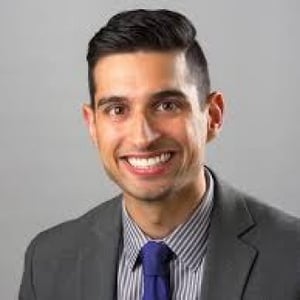
Solicitor General of Oklahoma
Mithun Mansinghani serves as Solicitor General for the State of Oklahoma. He was appointed by Attorney General Mike Hunter in 2017 after serving for the prior two years as Deputy Solicitor General. As Solicitor General, Mr. Mansinghani leads litigation on behalf of the State in appeals, constitutional matters, and relations with the federal government and other states. This includes representing the State in cases before the Oklahoma Supreme Court and the U.S. Supreme Court.
Prior to joining the Oklahoma Attorney General's Office, Mr. Mansinghani was a lawyer for Gibson, Dunn & Crutcher in Washington, D.C., specializing in appeals and administrative law cases. Mr. Mansinghani also served as a law clerk to the Honorable Jerry E. Smith on the United States Court of Appeals for the Fifth Circuit. He received his bachelor's degree magna cum laude in both political science and policy studies from Rice University and his law degree with honors from Harvard Law School, where he served as editor of the Harvard Law Review.

Senior Fellow and Director of Constitutional Studies, Manhattan Institute
Ilya Shapiro is a senior fellow and director of constitutional studies at the Manhattan Institute and a contributing editor of City Journal. Previously he was executive director and senior lecturer at the Georgetown Center for the Constitution, and before that a vice president of the Cato Institute.
Shapiro is the author of Lawless: The Miseducation of America’s Elites (2025) and Supreme Disorder: Judicial Nominations and the Politics of America’s Highest Court (2020), coauthor of Religious Liberties for Corporations? (2014), and editor of 11 volumes of the Cato Supreme Court Review (2008-18). He has contributed to a variety of academic, popular, and professional publications, including the Wall Street Journal, Harvard Journal of Law & Public Policy, Washington Post, Los Angeles Times, USA Today, National Review, and Newsweek. He also regularly provides commentary for various media outlets, writes the Shapiro’s Gavel newsletter on Substack, and once appeared on the Colbert Report.
Shapiro has testified many times before Congress and state legislatures and has filed more than 500 amicus curiae “friend of the court” briefs in the Supreme Court. He lectures regularly on behalf of the Federalist Society, is a member of the board of fellows of the Jewish Policy Center, was an inaugural Washington Fellow at the National Review Institute, and has been an adjunct law professor at the George Washington University and University of Mississippi. He is also the chairman of the board of advisers of the Mississippi Justice Institute, a barrister in the Edward Coke Appellate Inn of Court, and a former member of the Virginia Advisory Committee to the U.S. Commission on Civil Rights.
Earlier in his career, Shapiro was a special assistant/adviser to the Multi-National Force in Iraq on rule-of-law issues and practiced at Patton Boggs and Cleary Gottlieb. Before entering private practice, he clerked for Judge E. Grady Jolly of the U.S. Court of Appeals for the Fifth Circuit. He holds an AB from Princeton University, an MSc from the London School of Economics, and a JD from the University of Chicago Law School.
Senior Counsel, Caplin & Drysdale; Adjunct Professor of Law, Georgetown Law
Professor Carney is a Senior Counsel with Caplin & Drysdale, Cht’d. in Washington, D.C. He served as a Trial Attorney for the Tax Division of the U.S. Department of Justice for six years, and was in private (law firm) tax practice for many years, specializing in IRS administrative practice, tax controversies (audit and IRS Appeals Office), and tax litigation. He also advised clients in a similar capacity as a partner in the National Tax Office of Ernst & Young LLP in Washington. He is a member of the District of Columbia bar, as well as the bars of the U.S. Tax Court, U.S. Court of Federal Claims, U.S. District Court for the District of Columbia, and the U.S. Courts of Appeals for the Federal Circuit, D.C Circuit, and Eleventh Circuit.
Former Deputy Attorney General for Virginia
Kennerly Davis has over forty years of experience in corporate management, public service, and the private practice of law. He has held senior executive positions in a Fortune 500 electric and gas company. He has served as Deputy Attorney General for the Commonwealth of Virginia, and as a legislative aide to a U.S. Senator and a U.S. Congressman. He practiced law for 25 years with Hunton Andrews Kurth LLP.
Davis is active in the Federalist Society as a member of the Regulatory Process Working Group of the Regulatory Transparency Project, and as a member of the Execuitve Committee of the Administrative Law and Regulation Practice Group. He is active in the national Alumni Free Speech Alliance, and involved in AFSA-chapter initiatives, including litigation, to publicize and correct the serious legal problems created by university Diversity, Equity, and Inclusion programs and the anonymous bias reporting systems used to enforce those DEI programs.
Davis writes and speaks on a wide variety of topics, including those related to the Founding of America, the natural rights foundation of our Republic, the constitutional rule of law, equal protection and free speech, DEI programs and bias reporting systems, capitalism, regulation and regulatory reform, and economic development. His articles have appeared in The Wall Street Journal, the Washington Examiner, the Richmond Times-Dispatch, The Federalist Society Review, the FedSoc Blog, Real Clear Energy, Townhall, the Daily Caller, reports of the Center for Strategic & International Studies, and other publications. He appears frequently on radio, podcasts, and television.
Davis graduated with honors from Cornell University with an A.B. degree in Government. He earned an M.A. degree from Pembroke College, Oxford, in Philosophy, Politics, and Economics. He was awarded a J.D. degree from Harvard Law School, and an M.B.A. degree from Virginia Commonwealth University.
Davis lives in Richmond, Virginia. He can be contacted by email: [email protected], and by phone: (804) 624-8525.
Director, Electricity Law Initiative, Harvard Law School
Ari Peskoe is the Director of the Electricity Law Initiative at the Harvard Law School Environmental and Energy Law Program. He has written extensively about electricity regulation, on issues ranging from Constitutional challenges to states’ energy laws to federal regulation of distributed energy resources. Prior to the Environmental and Energy Law Program, Ari was an associate at a law firm in Washington, D.C. where he litigated before the Federal Energy Regulatory Commission about the Western Energy Crisis. Before that, Ari was a Peace Corps Volunteer in Ghana and spent two years trying to bring the 2012 Olympics to New York. He received his J.D. from Harvard Law School and graduated from the University of Pennsylvania with degrees in electrical engineering and business.
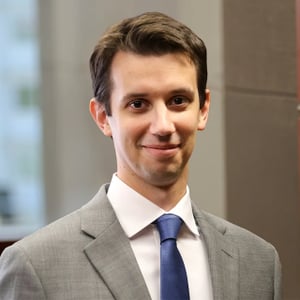
Partner, Jones Day
Stephen Petrany focuses on appellate litigation and critical motions practice. He briefs and argues cases before the U.S. Supreme Court, federal and state appellate courts, trial courts, and regulatory agencies.
Prior to rejoining Jones Day in 2026, Stephen served as the Solicitor General of Georgia, where he led the State's appellate and multistate litigation. In that role he briefed and argued multiple cases in the U.S. Supreme Court, dozens of cases in federal and state courts of appeal, and critical issues in trial courts. Some of the matters he oversaw include challenges to the U.S. president's asserted power over federal contractors and employees, defending against novel Title IX and employment discrimination claims, voter redistricting and elections challenges, campaign finance disclosure violations, and numerous challenges to EPA regulation.
Stephen's pro bono practice includes winning a D.C. Superior Court case to obtain a birth certificate for a minor after the city denied her application, as well as arguing numerous pro bono appeals in federal appellate courts. Stephen also has represented clients in matters involving immigration, asylum, religious liberty, and prisoner petitions.
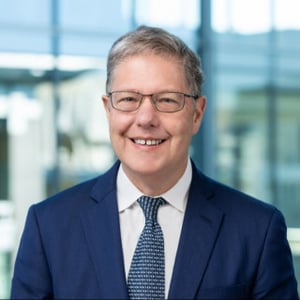
Partner, Harris, Wiltshire & Grannis LLP
Sean Lev, a former General Counsel of the FCC and acting General Counsel of the Department of Energy, advises and advocates in both courts and agencies for clients with complex regulatory problems in technology, energy, and other fields.
He serves as chair of HWG’s Energy Practice and co-chair of the Issues and Appeals Practice.
Sean has more than 30 years of experience helping clients in the public, private, and non-profit sector solve problems involving critical issues of administrative law. He has argued scores of cases in federal and state appellate and trial courts both supporting and challenging agency decisions and has advised Cabinet Secretaries, three FCC Chairs, sophisticated regulated companies, and numerous non-profits and individuals.
As General Counsel of the Federal Communications Commission, Sean was responsible for all legal advice provided to the FCC Chair and Commissioners and oversaw all FCC litigation. Sean was also heavily involved in the Commission’s review of major transactions and enforcement activity. Prior to being named General Counsel, Sean served as Deputy General Counsel and Senior Advisor to the Chairman.
Before joining the FCC, Sean was designated by President Obama to serve as the Acting General Counsel of the United States Department of Energy (DOE). In that role, he was the chief legal officer for the Department, and provided advice on the full range of issues relevant to its mission, including those involving energy efficiency standards, nuclear energy, oil and gas, environmental remediation, and national security. Sean also served as the Deputy General Counsel for Environment and Nuclear Programs at DOE. In that role, he led the agency’s litigation before the Nuclear Regulatory Commission and served as the lead agency lawyer in resolving major environmental and other disputes.
Sean most recently served as Legal Director of Democracy Forward, a public interest nonprofit dedicated to furthering the rule of law and fighting unlawful agency decision making. In this role, he oversaw a team of more than a dozen litigators and supervised numerous successful legal challenges against federal agencies and state and local governments.
Sean has significant experience advising clients in private practice, having spent more than fifteen years as a partner of a major Washington, DC based law firm. During that time, Sean had leading roles in numerous key cases involving technology law and policy and in advocating on regulatory and litigation issues raised by major industry transactions.
He started his legal career as an Honors Program attorney on the Civil Division, Appellate Staff at the United States Department of Justice and as a clerk to the Honorable Patricia M. Wald of the U.S. Court of Appeals for the District of Columbia Circuit.
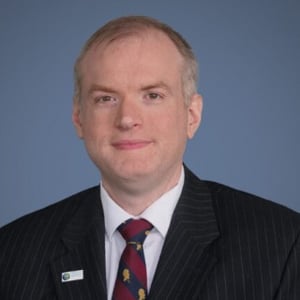
Attorney, Competitive Enterprise Institute
Devin Watkins is an attorney at the Competitive Enterprise Institute. Devin Watkins previously worked at the Cato Institute as a legal associate and interned at the Institute for Justice. At the Cato Institute, Watkins worked on a variety of Supreme Court cases, and one of the briefs he worked on was cited by the Court. His op-eds have appeared in National Review Online, The Hill, Time, and The Federalist among others.
Watkins holds a Juris Doctor cum laude from George Mason University's Antonin Scalia Law School, where he was the development editor on the Mason Law Review. Prior to his legal career Watkins was a senior software developer at Intel and WebMD. He graduated with a Bachelor of Science in Computer Science from Stevens Institute of Technology in Hoboken, New Jersey.
Watkins is a member of the Virginia State Bar, the District of Columbia Bar, the U.S. District Court for the District of Columbia Bar, and the U.S. Court of Appeals for the District of Columbia Circuit Bar.

Courthouse Steps Decision: Trump v. CASA, Inc.
Elbert Lin, Edward Mark Wenger
On January 20, 2025, President Trump issued an executive order effectively ending birthright citizenship for...
Courthouse Steps Decision: Trump v. CASA, Inc.
DOGE Unleashed: Trump Executive Orders and Their Impact on Telecommunications Regulation
Austin Bonner, Scott D. Delacourt, Brooke Donilon, Slate Herman, Roger Nober
Join the Federalist Society for a discussion on the impact of President Trump's Executive Orders...
DOGE Unleashed: Trump Executive Orders and Their Impact on Telecommunications Regulation
12th Annual Tulsa Supreme Court Round Up
Tulsa Lawyers Chapter
Tulsa, OKShould the Federal Government Rely on Competitive Markets to Price Electricity?
Robert T. Carney, John Kennerly Davis, Ari Peskoe
Over the past decade, electricity prices for consumers have risen by more than 22% on...
Should the Federal Government Rely on Competitive Markets to Price Electricity?
Robert T. Carney, John Kennerly Davis, Ari Peskoe
Over the past decade, electricity prices for consumers have risen by more than 22% on...
Should the Federal Government Rely on Competitive Markets to Price Electricity?
2024 Iowa Lawyers Chapter Supreme Court Term Review
Iowa Lawyers Chapter
Des Moines, IACourthouse Steps Decision: Federal Communications Commission v. Consumers’ Research