
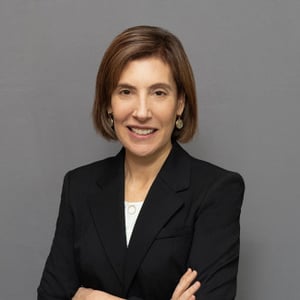
Partner, Williams & Connolly
Lisa Blatt serves as Chair of Williams & Connolly’s Supreme Court and Appellate practice. Lisa has argued 53 cases before the United States Supreme Court, prevailing in 86% of them. The National Law Journal has called her a "visionary" and one of "the 100 most influential lawyers in America." Bloomberg has described her as a "legendary high court litigator" while The National Journal likewise has referred to her as a "SCOTUS legend." In 2021, The American Lawyer recognized Lisa as the "Litigator of the Year." Lisa’s appellate work has been highlighted by multiple publications and has earned her rankings in Chambers USA, Benchmark Litigation, The Legal 500, and Washingtonian magazine. Lisa was selected as one of the “Top 10 Women in Litigation” in the United States by Benchmark Litigation in 2020 and 2021. Managing IP named her the 2021 “Practitioner of the Year (Appellate)” for her work as lead counsel to Booking.com before the Supreme Court. In 2021, Chambers USA reported that clients describe Lisa as “one of the best advocates today. She is extremely strong on her feet, connects with judges and has an unmatched win record,” and her “command of the case law and the way she presents is a work of art.”
Lisa has argued and briefed numerous appeals on a wide range of business law issues in federal and state courts of appeal. The American Lawyer Litigation Daily has twice named her "Litigator of the Week" – for her work in Price v. Philip Morris, Inc. in overturning reinstatement of a $10 billion verdict against client Philip Morris in a "light" cigarette case, and in SmithKline Beecham Corp. v. Abbott Laboratories, a landmark case on behalf of GlaxoSmithKline finding that the Equal Protection Clause bars peremptory challenges of jurors based on sexual orientation. Lisa also represented Marvin Gaye’s heirs in their copyright dispute over the hit songs “Got To Give It Up” and “Blurred Lines,” and the Washington Redskins football team in its dispute with the U.S. Patent and Trademark Office over the team's trademarks.
Lisa has substantial experience with trademark law and the pharmaceutical industry. Her Supreme Court cases also have addressed a broad range of issues, involving First Amendment, arbitration, antitrust, civil procedure, preemption, employment and ERISA, and bankruptcy.
Lisa began her career at Williams & Connolly as an associate before joining the general counsel’s office at the Department of Energy, followed by thirteen years in the Office of the Solicitor General.
Lisa received her J.D. summa cum laude from the University of Texas School of Law before clerking for The Honorable Ruth Bader Ginsburg on the U.S. Court of Appeals for the District of Columbia Circuit.
Lisa assists the U.S. Chamber of Commerce in selecting cases for amicus participation, and is on the Advisory Boards for Georgetown University Law Center's Supreme Court Institute and the Washington Legal Foundation. She also teaches at Georgetown University’s Law Center.

Partner, Clement & Murphy, PLLC
Paul served as the 43rd Solicitor General of the United States from June 2005 until June 2008. Before his confirmation as Solicitor General, he served as Acting Solicitor General for nearly a year and as Principal Deputy Solicitor General for over three years.
Paul has argued over 100 cases before the United States Supreme Court, including McConnell v. FEC, Tennessee v. Lane, United States v. Booker, MGM v. Grokster, Hobby Lobby v. Burwell, Epic Systems Corp. v. Lewis, Rucho v. Common Cause, Facebook v. Duguid, and TransUnion v. Ramirez. Paul has argued more Supreme Court cases since 2000 than any lawyer in or out of government. He has also argued many important cases in the lower courts, including Walker v. Cheney, United States v. Moussaoui and NFL v. Brady.
Paul’s practice focuses on appellate matters, constitutional litigation and strategic counseling. He represents a broad array of clients in the Supreme Court and in federal and state appellate courts. Last year, for example, he successfully argued Supreme Court cases involving significant issues of energy regulation, statutory interpretation, state sovereign immunity and Article III standing, and successfully argued a trademark appeal in the Fourth Circuit, and a constitutional appeal before the en banc Eleventh Circuit.
Paul focuses on high-stakes appeals. In recent years, he successfully defended a $1.2 billion jury verdict for clients in a Tenth Circuit case, while securing the reversal of an over $2 billion jury verdict for another client in the Seventh Circuit and the approval of a nearly $1 billion dollar class action settlement in the Third Circuit. He has initiated major administrative law challenges and constitutional litigation against the federal government, such as the successful challenge to the HHS drug-pricing rule and threatened challenges that led to the withdrawal of the Treasury Department’s proposed cryptocurrency regulations. He also counsels clients on a variety of strategic legal questions, whether arising from pending legislation, government inquiries or ongoing litigation.
Paul has undertaken substantial pro bono engagements in the Supreme Court, such as twice successfully representing the defendant in Bond v. United States and successfully representing the Omaha Tribe in Nebraska v. Parker, the guardian ad litem in Adoptive Couple v. Baby Girl, the defendant in Sekhar v. United States, a high school football coach in Kennedy v. Bremerton, and the Little Sisters of the Poor. Paul’s pro bono representation also precipitated the federal government’s confession of error in United States v. Rojas.
Following law school, Paul clerked for Judge Laurence H. Silberman of the U.S. Court of Appeals for the D.C. Circuit and for Associate Justice Antonin Scalia of the U.S. Supreme Court. After his clerkships, he went on to serve as Chief Counsel of the U.S. Senate Subcommittee on the Constitution, Federalism and Property Rights.
Paul is a Distinguished Lecturer in Law at the Georgetown University Law Center, where he has taught in various capacities since 1998. He also serves as a Senior Fellow of the Law Center’s Supreme Court Institute. He is the Justice Joseph Story Distinguished Practitioner in Residence at the Gray Center at Scalia Law School.
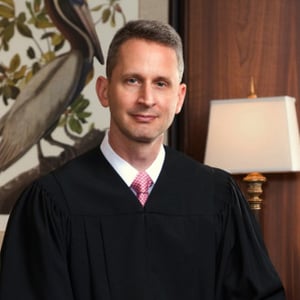
Judge, United States Court of Appeals, Fifth Circuit
Judge Duncan received his B.A. from Louisiana State University in 1994, his J.D. from the Paul M. Hebert Law Center at Louisiana State University in 1997, and his LL.M. from Columbia Law School in 2004.
After graduating from law school, he clerked for Louisiana-based Circuit Judge John Malcolm Duhé Jr. of the United States Court of Appeals for the Fifth Circuit.
From 2008–2012, Duncan served as Appellate Chief for Louisiana's Attorney General's office. From 2012–2014, he served as general counsel of the Becket Fund for Religious Liberty. From 2004-2008, he was an assistant professor of law at the University of Mississippi School of Law.
Before becoming a judge, Duncan practiced at the Washington, D.C. firm of Schaerr Duncan LLP, where he was a founding partner. He was appointed by President Trump to the United States Court of Appeals for the Fifth Circuit on May 1, 2018.
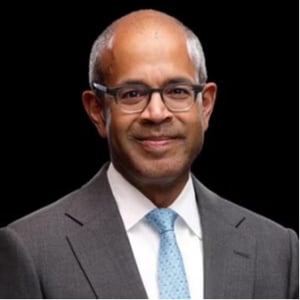
Partner, Davis Polk & Wardwell LLP
Kannon is the head of our Supreme Court & Appellate practice. He has argued 39 cases before the U.S. Supreme Court and has argued more than 150 appeals in courts across the country, including every federal court of appeals and numerous state courts.
Kannon is ranked as a “Star Individual” in appellate law by Chambers USA, where a client notes, “It’s hard to think of enough superlatives to describe his talent, his judgment, his ability, his experience – he is as good as it gets.” Legal 500 U.S. recognizes Kannon in its Hall of Fame for appellate work. A client shares, “His work is the best in the business, and he is a wonderful human being in addition to being a world-class appellate litigator.”
In 2024 and 2022, Kannon was a finalist for the American Lawyer’s “Litigator of the Year” award. He was named “Appellate Litigator of the Year” by Benchmark Litigation in 2021 and was a 2026 finalist for that recognition.
Before entering private practice, Kannon served as an Assistant to the Solicitor General at the U.S. Department of Justice.

Partner, WilmerHale and former United States Solicitor General
Universally considered to be among the country's premier Supreme Court and appellate advocates, Seth Waxman served as Solicitor General of the United States from 1997 through January 2001. In addition to leading the firm's appellate practice, Mr. Waxman engages in a broad litigation and counseling practice, with particular emphasis on complex challenges involving governments or public policy, intellectual property, regulatory, criminal and commercial issues.
A Fellow of the American College of Trial Lawyers, Mr. Waxman also is a widely respected trial litigator. In January 2016, The American Lawyer named him "Litigator of the Year." Mr. Waxman was also named Appellate/Litigation "Lawyer of the Year" for 2018, Litigation - Intellectual Property "Lawyer of the Year" for 2016 and Litigation - First Amendment Law and Regulatory Enforcement Law "Lawyer of the Year" for 2015 by Best Lawyers in America, and, in 2014, Super Lawyers deemed him the "number one" lawyer in Washington DC. Mr. Waxman has been accorded both "star" rating by Chambers USA and "leading lawyer" ranking in PLC's Global Counsel Handbook.
Mr. Waxman's practice spans both federal and state trial and appellate courts. He has delivered 80 oral arguments in the United States Supreme Court and many more in the lower federal and state courts. Mr. Waxman's clients range from financial institutions to technology, consumer, industrial and media companies, universities and Indian tribes, and he leads the firm's efforts to counsel tribal governments. He also represents a number of local, state and national governments and prominent business and government executives and professionals. The recipient of numerous professional awards and honors, Mr. Waxman is among a small handful of practicing attorneys elected to the American Academy of Arts and Sciences. He holds several honorary degrees, as well as the Jefferson Medal in Law, an honor awarded once a year and only rarely to an attorney in private practice. In recognition of exceptional service to law enforcement, Mr. Waxman holds the extraordinary status of permanent honorary Special Agent of the Federal Bureau of Investigation.
Partner, Williams & Connolly
Lisa Blatt serves as Chair of Williams & Connolly’s Supreme Court and Appellate practice. Lisa has argued 53 cases before the United States Supreme Court, prevailing in 86% of them. The National Law Journal has called her a "visionary" and one of "the 100 most influential lawyers in America." Bloomberg has described her as a "legendary high court litigator" while The National Journal likewise has referred to her as a "SCOTUS legend." In 2021, The American Lawyer recognized Lisa as the "Litigator of the Year." Lisa’s appellate work has been highlighted by multiple publications and has earned her rankings in Chambers USA, Benchmark Litigation, The Legal 500, and Washingtonian magazine. Lisa was selected as one of the “Top 10 Women in Litigation” in the United States by Benchmark Litigation in 2020 and 2021. Managing IP named her the 2021 “Practitioner of the Year (Appellate)” for her work as lead counsel to Booking.com before the Supreme Court. In 2021, Chambers USA reported that clients describe Lisa as “one of the best advocates today. She is extremely strong on her feet, connects with judges and has an unmatched win record,” and her “command of the case law and the way she presents is a work of art.”
Lisa has argued and briefed numerous appeals on a wide range of business law issues in federal and state courts of appeal. The American Lawyer Litigation Daily has twice named her "Litigator of the Week" – for her work in Price v. Philip Morris, Inc. in overturning reinstatement of a $10 billion verdict against client Philip Morris in a "light" cigarette case, and in SmithKline Beecham Corp. v. Abbott Laboratories, a landmark case on behalf of GlaxoSmithKline finding that the Equal Protection Clause bars peremptory challenges of jurors based on sexual orientation. Lisa also represented Marvin Gaye’s heirs in their copyright dispute over the hit songs “Got To Give It Up” and “Blurred Lines,” and the Washington Redskins football team in its dispute with the U.S. Patent and Trademark Office over the team's trademarks.
Lisa has substantial experience with trademark law and the pharmaceutical industry. Her Supreme Court cases also have addressed a broad range of issues, involving First Amendment, arbitration, antitrust, civil procedure, preemption, employment and ERISA, and bankruptcy.
Lisa began her career at Williams & Connolly as an associate before joining the general counsel’s office at the Department of Energy, followed by thirteen years in the Office of the Solicitor General.
Lisa received her J.D. summa cum laude from the University of Texas School of Law before clerking for The Honorable Ruth Bader Ginsburg on the U.S. Court of Appeals for the District of Columbia Circuit.
Lisa assists the U.S. Chamber of Commerce in selecting cases for amicus participation, and is on the Advisory Boards for Georgetown University Law Center's Supreme Court Institute and the Washington Legal Foundation. She also teaches at Georgetown University’s Law Center.
Partner, Clement & Murphy, PLLC
Paul served as the 43rd Solicitor General of the United States from June 2005 until June 2008. Before his confirmation as Solicitor General, he served as Acting Solicitor General for nearly a year and as Principal Deputy Solicitor General for over three years.
Paul has argued over 100 cases before the United States Supreme Court, including McConnell v. FEC, Tennessee v. Lane, United States v. Booker, MGM v. Grokster, Hobby Lobby v. Burwell, Epic Systems Corp. v. Lewis, Rucho v. Common Cause, Facebook v. Duguid, and TransUnion v. Ramirez. Paul has argued more Supreme Court cases since 2000 than any lawyer in or out of government. He has also argued many important cases in the lower courts, including Walker v. Cheney, United States v. Moussaoui and NFL v. Brady.
Paul’s practice focuses on appellate matters, constitutional litigation and strategic counseling. He represents a broad array of clients in the Supreme Court and in federal and state appellate courts. Last year, for example, he successfully argued Supreme Court cases involving significant issues of energy regulation, statutory interpretation, state sovereign immunity and Article III standing, and successfully argued a trademark appeal in the Fourth Circuit, and a constitutional appeal before the en banc Eleventh Circuit.
Paul focuses on high-stakes appeals. In recent years, he successfully defended a $1.2 billion jury verdict for clients in a Tenth Circuit case, while securing the reversal of an over $2 billion jury verdict for another client in the Seventh Circuit and the approval of a nearly $1 billion dollar class action settlement in the Third Circuit. He has initiated major administrative law challenges and constitutional litigation against the federal government, such as the successful challenge to the HHS drug-pricing rule and threatened challenges that led to the withdrawal of the Treasury Department’s proposed cryptocurrency regulations. He also counsels clients on a variety of strategic legal questions, whether arising from pending legislation, government inquiries or ongoing litigation.
Paul has undertaken substantial pro bono engagements in the Supreme Court, such as twice successfully representing the defendant in Bond v. United States and successfully representing the Omaha Tribe in Nebraska v. Parker, the guardian ad litem in Adoptive Couple v. Baby Girl, the defendant in Sekhar v. United States, a high school football coach in Kennedy v. Bremerton, and the Little Sisters of the Poor. Paul’s pro bono representation also precipitated the federal government’s confession of error in United States v. Rojas.
Following law school, Paul clerked for Judge Laurence H. Silberman of the U.S. Court of Appeals for the D.C. Circuit and for Associate Justice Antonin Scalia of the U.S. Supreme Court. After his clerkships, he went on to serve as Chief Counsel of the U.S. Senate Subcommittee on the Constitution, Federalism and Property Rights.
Paul is a Distinguished Lecturer in Law at the Georgetown University Law Center, where he has taught in various capacities since 1998. He also serves as a Senior Fellow of the Law Center’s Supreme Court Institute. He is the Justice Joseph Story Distinguished Practitioner in Residence at the Gray Center at Scalia Law School.
Judge, United States Court of Appeals, Fifth Circuit
Judge Duncan received his B.A. from Louisiana State University in 1994, his J.D. from the Paul M. Hebert Law Center at Louisiana State University in 1997, and his LL.M. from Columbia Law School in 2004.
After graduating from law school, he clerked for Louisiana-based Circuit Judge John Malcolm Duhé Jr. of the United States Court of Appeals for the Fifth Circuit.
From 2008–2012, Duncan served as Appellate Chief for Louisiana's Attorney General's office. From 2012–2014, he served as general counsel of the Becket Fund for Religious Liberty. From 2004-2008, he was an assistant professor of law at the University of Mississippi School of Law.
Before becoming a judge, Duncan practiced at the Washington, D.C. firm of Schaerr Duncan LLP, where he was a founding partner. He was appointed by President Trump to the United States Court of Appeals for the Fifth Circuit on May 1, 2018.
Partner, Davis Polk & Wardwell LLP
Kannon is the head of our Supreme Court & Appellate practice. He has argued 39 cases before the U.S. Supreme Court and has argued more than 150 appeals in courts across the country, including every federal court of appeals and numerous state courts.
Kannon is ranked as a “Star Individual” in appellate law by Chambers USA, where a client notes, “It’s hard to think of enough superlatives to describe his talent, his judgment, his ability, his experience – he is as good as it gets.” Legal 500 U.S. recognizes Kannon in its Hall of Fame for appellate work. A client shares, “His work is the best in the business, and he is a wonderful human being in addition to being a world-class appellate litigator.”
In 2024 and 2022, Kannon was a finalist for the American Lawyer’s “Litigator of the Year” award. He was named “Appellate Litigator of the Year” by Benchmark Litigation in 2021 and was a 2026 finalist for that recognition.
Before entering private practice, Kannon served as an Assistant to the Solicitor General at the U.S. Department of Justice.
Partner, WilmerHale and former United States Solicitor General
Universally considered to be among the country's premier Supreme Court and appellate advocates, Seth Waxman served as Solicitor General of the United States from 1997 through January 2001. In addition to leading the firm's appellate practice, Mr. Waxman engages in a broad litigation and counseling practice, with particular emphasis on complex challenges involving governments or public policy, intellectual property, regulatory, criminal and commercial issues.
A Fellow of the American College of Trial Lawyers, Mr. Waxman also is a widely respected trial litigator. In January 2016, The American Lawyer named him "Litigator of the Year." Mr. Waxman was also named Appellate/Litigation "Lawyer of the Year" for 2018, Litigation - Intellectual Property "Lawyer of the Year" for 2016 and Litigation - First Amendment Law and Regulatory Enforcement Law "Lawyer of the Year" for 2015 by Best Lawyers in America, and, in 2014, Super Lawyers deemed him the "number one" lawyer in Washington DC. Mr. Waxman has been accorded both "star" rating by Chambers USA and "leading lawyer" ranking in PLC's Global Counsel Handbook.
Mr. Waxman's practice spans both federal and state trial and appellate courts. He has delivered 80 oral arguments in the United States Supreme Court and many more in the lower federal and state courts. Mr. Waxman's clients range from financial institutions to technology, consumer, industrial and media companies, universities and Indian tribes, and he leads the firm's efforts to counsel tribal governments. He also represents a number of local, state and national governments and prominent business and government executives and professionals. The recipient of numerous professional awards and honors, Mr. Waxman is among a small handful of practicing attorneys elected to the American Academy of Arts and Sciences. He holds several honorary degrees, as well as the Jefferson Medal in Law, an honor awarded once a year and only rarely to an attorney in private practice. In recognition of exceptional service to law enforcement, Mr. Waxman holds the extraordinary status of permanent honorary Special Agent of the Federal Bureau of Investigation.
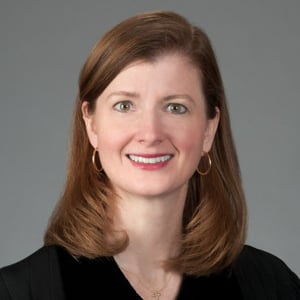
Judge, United States Court of Appeals, Eleventh Circuit
On March 20, 2018, Judge Elizabeth L. Branch (Lisa) was sworn in as a United States Circuit Judge for the Eleventh Circuit.
Judge Branch attended and graduated from Davidson College in North Carolina (B.A., cum laude, 1990), and Emory University School of Law (J.D., with distinction, 1994).
After graduating from law school, Judge Branch served as a federal law clerk to The Honorable J. Owen Forrester of the U.S. District Court for the Northern District of Georgia from 1994 to 1996. Following her clerkship, Judge Branch joined the litigation department of Smith, Gambrell & Russell, LLP in Atlanta as an associate and then a partner.
From 2004 to 2008, Judge Branch was a senior official in the Administration of President George W. Bush in Washington, D.C. She served first as the Associate General Counsel for Rules and Legislation at the U.S. Department of Homeland Security and then as the Counselor to the Administrator of the Office of Information and Regulatory Affairs at the U. S. Office of Management and Budget.
She returned to Smith Gambrell in 2008 as a litigation partner. Judge Branch then was appointed to the Court of Appeals of Georgia by Governor Nathan Deal, taking office on September 4, 2012, where she served until March 19, 2018.
Judge Branch is a member of the Board of Advisors of the Atlanta Lawyers Chapter for the Federalist Society for Law and Public Policy Studies.
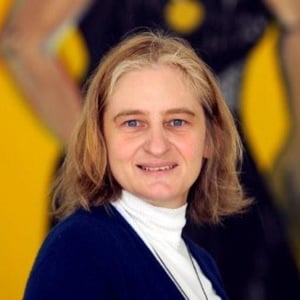
Arnold I. Shure Professor of Law, University of Chicago Law School
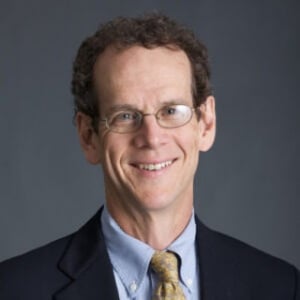
Hon. George J. Mitchell Professor in Law and Public Policy, Georgetown Law
David Cole is the Honorable George J. Mitchell Professor in Law and Public Policy and former National Legal Director of the American Civil Liberties Union (ACLU). He writes about and teaches constitutional law, freedom of speech, and constitutional criminal procedure. He is a regular contributor to The New York Review of Books and is the legal affairs correspondent for The Nation.
David has published widely in law journals and the popular press, including The Yale Law Journal, California Law Review, Stanford Law Review, The New York Times, The Washington Post, The New Yorker, The Atlantic, and The New Republic. He is the author or editor of ten books, several of which have won awards. Less Safe, Less Free: Why America Is Losing the War on Terror, published in 2007, and co-authored with Jules Lobel, won the Palmer Civil Liberties Prize for best book on national security and civil liberties. Enemy Aliens: Double Standards and Constitutional Freedoms in the War on Terrorism received the American Book Award in 2004. No Equal Justice: Race and Class in the American Criminal Justice System was named Best Non-Fiction Book of 1999 by the Boston Book Review and best book on an issue of national policy in1999 by the American Political Science Association.
David received his bachelor’s degree and law degree from Yale University. He worked as a staff attorney for the Center for Constitutional Rights from 1985 to 1990. He has continued to litigate as a professor and, from 2017 to 2024, as National Legal Director of the ACLU. He has litigated many significant constitutional cases at the Supreme Court, including Texas v. Johnson (1989), which extended First Amendment protection to flag burning; Bostock v. Clayton County (2020), which held that discrimination on the basis of sexual orientation and gender identity are prohibited forms of sex discrimination under Title VII; Mahanoy Area Sch. Dist. v. B.L. (2021), which protected student online speech from school discipline; and National Rifle Association v. Vullo (2024), which held that government officials violate the First Amendment when they use their regulatory authority to coerce private parties to blacklist a disfavored political group.
David has received two honorary degrees and numerous awards for his work, including the inaugural Norman Dorsen Presidential Prize from the ACLU for lifetime commitment to civil liberties. The late New York Times columnist Anthony Lewis called David “one of the country’s great legal voices for civil liberties today.” Nat Hentoff called him “a one-man Committee of Correspondence in the tradition of patriot Sam Adams.”
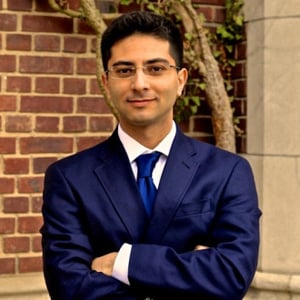
Associate Professor of Law, University of Notre Dame Law School
Sherif Girgis joined Notre Dame Law School in 2021. Prior to joining Notre Dame Law, Sherif practiced law at Jones Day in Washington, D.C., where he focused on appellate and complex civil litigation. Before that, Girgis served as a law clerk to Justice Samuel Alito, Jr., of the U.S. Supreme Court and Judge Thomas B. Griffith of the U.S. Court of Appeals for the D.C. Circuit. Now completing his Ph.D. in philosophy at Princeton, Girgis earned his J.D. at Yale Law School, where he served as an editor of the Yale Law Journal and won the Felix S. Cohen Prize for best paper in legal philosophy. Before law school, he earned a master's degree (B.Phil.) in philosophy from the University of Oxford as a Rhodes Scholar, and his bachelor's degree in philosophy from Princeton, Phi Beta Kappa and summa cum laude. Girgis is coauthor of What Is Marriage? Man and Woman: A Defense, cited in a dissent in United States v. Windsor, and Debating Religious Liberty and Discrimination, released by Oxford University Press in 2017. His work at the intersection of philosophy and law--including criminal law, constitutional liberties, and jurisprudence--has appeared in academic and popular venues including the Yale Law Journal, the Virginia Law Review, the University of Pennsylvania Law Review, the Harvard Journal of Law and Public Policy, the American Journal of Jurisprudence, the Cambridge Companion to Philosophy of Law, The New York Times, and The Wall Street Journal.
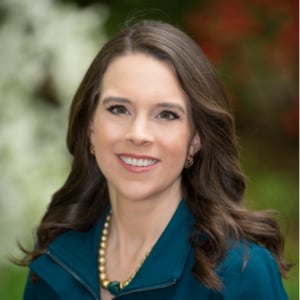
President, JCN
Carrie Campbell Severino is the president of the JCN, and co-author with Mollie Hemingway of the bestselling book Justice on Trial: The Kavanaugh Confirmation and the Future of the Court. As a go-to expert on the confirmation process, Mrs. Severino has been extensively quoted in the media. She regularly appears on television, including FOX, CNN, MSNBC, C-SPAN, and ABC’s This Week.
Severino writes and speaks on a wide range of judicial issues, including the constitutional limits on government, the federal nomination process, and state judicial selection. She has testified before Congress on constitutional questions and briefed Senators on judicial nominations, and regularly files briefs in high-profile Supreme Court cases. She was a law clerk to Supreme Court Justice Clarence Thomas and to Judge David B. Sentelle of the U.S. Court of Appeals for the D.C. Circuit, and is a graduate of Harvard Law School (J.D.), Duke University (B.A., Biology), and Michigan State University (M.A., Linguistics).
Judge, United States Court of Appeals, Eleventh Circuit
On March 20, 2018, Judge Elizabeth L. Branch (Lisa) was sworn in as a United States Circuit Judge for the Eleventh Circuit.
Judge Branch attended and graduated from Davidson College in North Carolina (B.A., cum laude, 1990), and Emory University School of Law (J.D., with distinction, 1994).
After graduating from law school, Judge Branch served as a federal law clerk to The Honorable J. Owen Forrester of the U.S. District Court for the Northern District of Georgia from 1994 to 1996. Following her clerkship, Judge Branch joined the litigation department of Smith, Gambrell & Russell, LLP in Atlanta as an associate and then a partner.
From 2004 to 2008, Judge Branch was a senior official in the Administration of President George W. Bush in Washington, D.C. She served first as the Associate General Counsel for Rules and Legislation at the U.S. Department of Homeland Security and then as the Counselor to the Administrator of the Office of Information and Regulatory Affairs at the U. S. Office of Management and Budget.
She returned to Smith Gambrell in 2008 as a litigation partner. Judge Branch then was appointed to the Court of Appeals of Georgia by Governor Nathan Deal, taking office on September 4, 2012, where she served until March 19, 2018.
Judge Branch is a member of the Board of Advisors of the Atlanta Lawyers Chapter for the Federalist Society for Law and Public Policy Studies.
Arnold I. Shure Professor of Law, University of Chicago Law School
Hon. George J. Mitchell Professor in Law and Public Policy, Georgetown Law
David Cole is the Honorable George J. Mitchell Professor in Law and Public Policy and former National Legal Director of the American Civil Liberties Union (ACLU). He writes about and teaches constitutional law, freedom of speech, and constitutional criminal procedure. He is a regular contributor to The New York Review of Books and is the legal affairs correspondent for The Nation.
David has published widely in law journals and the popular press, including The Yale Law Journal, California Law Review, Stanford Law Review, The New York Times, The Washington Post, The New Yorker, The Atlantic, and The New Republic. He is the author or editor of ten books, several of which have won awards. Less Safe, Less Free: Why America Is Losing the War on Terror, published in 2007, and co-authored with Jules Lobel, won the Palmer Civil Liberties Prize for best book on national security and civil liberties. Enemy Aliens: Double Standards and Constitutional Freedoms in the War on Terrorism received the American Book Award in 2004. No Equal Justice: Race and Class in the American Criminal Justice System was named Best Non-Fiction Book of 1999 by the Boston Book Review and best book on an issue of national policy in1999 by the American Political Science Association.
David received his bachelor’s degree and law degree from Yale University. He worked as a staff attorney for the Center for Constitutional Rights from 1985 to 1990. He has continued to litigate as a professor and, from 2017 to 2024, as National Legal Director of the ACLU. He has litigated many significant constitutional cases at the Supreme Court, including Texas v. Johnson (1989), which extended First Amendment protection to flag burning; Bostock v. Clayton County (2020), which held that discrimination on the basis of sexual orientation and gender identity are prohibited forms of sex discrimination under Title VII; Mahanoy Area Sch. Dist. v. B.L. (2021), which protected student online speech from school discipline; and National Rifle Association v. Vullo (2024), which held that government officials violate the First Amendment when they use their regulatory authority to coerce private parties to blacklist a disfavored political group.
David has received two honorary degrees and numerous awards for his work, including the inaugural Norman Dorsen Presidential Prize from the ACLU for lifetime commitment to civil liberties. The late New York Times columnist Anthony Lewis called David “one of the country’s great legal voices for civil liberties today.” Nat Hentoff called him “a one-man Committee of Correspondence in the tradition of patriot Sam Adams.”
Associate Professor of Law, University of Notre Dame Law School
Sherif Girgis joined Notre Dame Law School in 2021. Prior to joining Notre Dame Law, Sherif practiced law at Jones Day in Washington, D.C., where he focused on appellate and complex civil litigation. Before that, Girgis served as a law clerk to Justice Samuel Alito, Jr., of the U.S. Supreme Court and Judge Thomas B. Griffith of the U.S. Court of Appeals for the D.C. Circuit. Now completing his Ph.D. in philosophy at Princeton, Girgis earned his J.D. at Yale Law School, where he served as an editor of the Yale Law Journal and won the Felix S. Cohen Prize for best paper in legal philosophy. Before law school, he earned a master's degree (B.Phil.) in philosophy from the University of Oxford as a Rhodes Scholar, and his bachelor's degree in philosophy from Princeton, Phi Beta Kappa and summa cum laude. Girgis is coauthor of What Is Marriage? Man and Woman: A Defense, cited in a dissent in United States v. Windsor, and Debating Religious Liberty and Discrimination, released by Oxford University Press in 2017. His work at the intersection of philosophy and law--including criminal law, constitutional liberties, and jurisprudence--has appeared in academic and popular venues including the Yale Law Journal, the Virginia Law Review, the University of Pennsylvania Law Review, the Harvard Journal of Law and Public Policy, the American Journal of Jurisprudence, the Cambridge Companion to Philosophy of Law, The New York Times, and The Wall Street Journal.
President, JCN
Carrie Campbell Severino is the president of the JCN, and co-author with Mollie Hemingway of the bestselling book Justice on Trial: The Kavanaugh Confirmation and the Future of the Court. As a go-to expert on the confirmation process, Mrs. Severino has been extensively quoted in the media. She regularly appears on television, including FOX, CNN, MSNBC, C-SPAN, and ABC’s This Week.
Severino writes and speaks on a wide range of judicial issues, including the constitutional limits on government, the federal nomination process, and state judicial selection. She has testified before Congress on constitutional questions and briefed Senators on judicial nominations, and regularly files briefs in high-profile Supreme Court cases. She was a law clerk to Supreme Court Justice Clarence Thomas and to Judge David B. Sentelle of the U.S. Court of Appeals for the D.C. Circuit, and is a graduate of Harvard Law School (J.D.), Duke University (B.A., Biology), and Michigan State University (M.A., Linguistics).

CEO, The Rural Broadband Association
Shirley Bloomfield is chief executive officer of NTCA–The Rural Broadband Association, the premier association representing nearly 850 independent telecommunications companies that are leading innovation in rural and small-town America. With more than 30 years of experience representing the country’s smallest telecom operators, Bloomfield is an expert on the role of federal communications policies in sustaining the vitality of rural and remote communities and the benefits rural broadband networks bring to millions of American families and businesses and the national economy. Bloomfield has a strong track record of leadership in seeking synergies and aligning strategic partnerships among rural telecom companies, their larger counterparts, other rural utilities and local and federal governments, further expanding business opportunities for small communications providers. Under her leadership, NTCA has made broadband an integral part of policy conversations in Washington, D.C., and has secured billions of dollars in federal funding for rural service providers to expand build out and sustain networks and help close the digital divide. Bloomfield is a strong supporter of national efforts to improve the resilience and reliability of critical electric and telecommunications infrastructure and serves as a board member of NRTC and the Southeast Reliability Corporation (SERC).
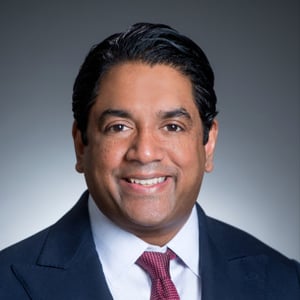
Executive Director, Connect LA
Veneeth is the first executive director for the state of Louisiana's broadband efforts (also known as ConnectLa). He is responsible for coordinating efforts among federal, state and local leaders to eliminate the digital divide in Louisiana by 2029.
He and his team are considered thought leaders in the broadband community for their rapid scale up and execution of federal dollars to impact the 1.5 million residents in Louisiana who lack high speed internet. Louisiana's efforts have been recognized and he is often asked to speak at local and national events by the Pew Charitable Trusts, National Governors Association, Former FCC officials, Fiber Broadband Association, National Conference of State Legislators, US Department of Commerce's SelectUSA Summit, National Digital Inclusion Alliance and other organizations.
ConnectLa's work has been featured in the Wall Street Journal, The Advocate, USA Today's network of newspapers and other leading telecom publications.
Their office has also been recognized nationally and among other states in the following ways:
From 2018-2021, he was the Assistant Chief Administrative Officer for East Baton Rouge Parish Mayor-President Sharon Weston-Broome. During, the parish saw the best year in history for economic development projects. His role included proactive outreach to executives from leading tech, pharmaceutical and healthcare companies, articulating the case for Baton Rouge as an investment destination. In addition, he was involved in the lifecycle of Economic Development deals and he led the administration's response in helping small business owners during the pandemic.
Veneeth was asked by Governor John Bel Edwards to co-chair his Resilient Louisiana Healthcare Task Force, which included the CEOs of Ochsner, Blue Cross Blue Shield of Louisiana and Franciscan Missionaries of Our Lady Health System. The task force recommended approaches to create an innovative healthcare economy given the challenges posed by the pandemic. Prior to his time as a public servant, Veneeth helped build the Venture Capital/Private Equity healthcare practice for Sage Growth Partners and worked in the Office of the Honorable Robert Mosbacher Jr., former CEO of the Overseas Private Investment Corporation under President George W. Bush.
Veneeth received the Johns Hopkins University Distinguished Alumni Award for Public Service in 2022, 2020 Leadership Louisiana Recipient by the Council for a Better Louisiana and 2018 Forty under 40 in Baton Rouge by the Greater Baton Rouge Business Report.
He is on Ochsner's Health State Advisory Board with the focus of significantly improving the healthcare rankings in the state, Board of Pennington Biomedical Research Foundation and Chairman for Innovation Catalyst, a non-profit evergreen investment based in Baton Rouge that has made more than a dozen investments startups.
He received his Master of Science in finance from Johns Hopkins University and his Bachelor of Science in economics from Purdue University. Veneeth grew up in Baton Rouge and attended Baton Rouge High School.
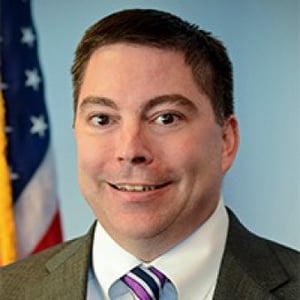
Visiting Fellow, Hudson Institute
Michael O’Rielly is a visiting fellow with Hudson Institute’s Center for the Economics of the Internet.
Comm. O'Rielly was nominated for a seat on the Federal Communications Commission by President Barack Obama on August 1, 2013 and was confirmed unanimously by the United States Senate on October 29, 2013. He was sworn into office on November 4, 2013. On January 29, 2015, he was sworn into office for a new term, following his re-nomination by the President and confirmation by the United States Senate and served through December 11, 2020.
Prior to joining the agency Commissioner O’Rielly served as a Policy Advisor in the Office of the Senate Republican Whip, led by U.S. Senator John Cornyn, since January 2013. He worked in the Republican Whip’s Office since 2010, as an Advisor from 2010 to 2012 and Deputy Chief of Staff and Policy Director from 2012 to 2013 for U.S. Senator Jon Kyl.
He previously worked for the Republican Policy Committee in the U.S. Senate as a Policy Analyst for Banking, Technology, Transportation, Trade, and Commerce issues from 2009 to 2010. Prior to this, Commissioner O’Rielly worked in the Office of U.S. Senator John Sununu, as Legislative Director from 2007 to 2009, and Senior Legislative Assistant from 2003 to 2007. Before his tenure as a Senate staffer, he served as a Professional Staff Member on the Committee on Energy and Commerce in the United States House of Representatives from 1998 to 2003, and Telecommunications Policy Analyst from 1995 to 1998.
He began his career as a Legislative Assistant to U.S. Congressman Tom Bliley from 1994 to 1995.
Commissioner O’Rielly received his B.A. from the University of Rochester.

Chief Judge, United States Court of Appeals, Sixth Circuit
JEFFREY S. SUTTON is the Chief Judge of the United States Court of Appeals for the Sixth Circuit. He has served as Chair of the Federal Judicial Conference Committee on Rules of Practice and Procedure, Chair of the Advisory Committee on Appellate Rules, and Chair of the Supreme Court Fellows Commission. He currently serves as Chair of the Executive Committee of the Judicial Conference of the United States. Since 1993, Chief Judge Sutton has been an adjunct professor at The Ohio State University College of Law, where he teaches seminars on State Constitutional Law, the United States Supreme Court, and Appellate Advocacy. He also teaches a class on State Constitutional Law at Harvard Law School. Among other publications, he is the author of Who Decides? States as Laboratories of Constitutional Experimentation and 51 Imperfect Solutions: States and the Making of American Constitutional Law. He is the co-author of a casebook, State Constitutional Law: The Modern Experience, as well as The Law of Judicial Precedent. He is also the co-editor of The Essential Scalia: On the Constitution, the Courts, and the Rule of Law. In 2006, Chief Judge Sutton was elected to the American Law Institute, and in 2017 he was elected to its Council.
CEO, The Rural Broadband Association
Shirley Bloomfield is chief executive officer of NTCA–The Rural Broadband Association, the premier association representing nearly 850 independent telecommunications companies that are leading innovation in rural and small-town America. With more than 30 years of experience representing the country’s smallest telecom operators, Bloomfield is an expert on the role of federal communications policies in sustaining the vitality of rural and remote communities and the benefits rural broadband networks bring to millions of American families and businesses and the national economy. Bloomfield has a strong track record of leadership in seeking synergies and aligning strategic partnerships among rural telecom companies, their larger counterparts, other rural utilities and local and federal governments, further expanding business opportunities for small communications providers. Under her leadership, NTCA has made broadband an integral part of policy conversations in Washington, D.C., and has secured billions of dollars in federal funding for rural service providers to expand build out and sustain networks and help close the digital divide. Bloomfield is a strong supporter of national efforts to improve the resilience and reliability of critical electric and telecommunications infrastructure and serves as a board member of NRTC and the Southeast Reliability Corporation (SERC).
Executive Director, Connect LA
Veneeth is the first executive director for the state of Louisiana's broadband efforts (also known as ConnectLa). He is responsible for coordinating efforts among federal, state and local leaders to eliminate the digital divide in Louisiana by 2029.
He and his team are considered thought leaders in the broadband community for their rapid scale up and execution of federal dollars to impact the 1.5 million residents in Louisiana who lack high speed internet. Louisiana's efforts have been recognized and he is often asked to speak at local and national events by the Pew Charitable Trusts, National Governors Association, Former FCC officials, Fiber Broadband Association, National Conference of State Legislators, US Department of Commerce's SelectUSA Summit, National Digital Inclusion Alliance and other organizations.
ConnectLa's work has been featured in the Wall Street Journal, The Advocate, USA Today's network of newspapers and other leading telecom publications.
Their office has also been recognized nationally and among other states in the following ways:
From 2018-2021, he was the Assistant Chief Administrative Officer for East Baton Rouge Parish Mayor-President Sharon Weston-Broome. During, the parish saw the best year in history for economic development projects. His role included proactive outreach to executives from leading tech, pharmaceutical and healthcare companies, articulating the case for Baton Rouge as an investment destination. In addition, he was involved in the lifecycle of Economic Development deals and he led the administration's response in helping small business owners during the pandemic.
Veneeth was asked by Governor John Bel Edwards to co-chair his Resilient Louisiana Healthcare Task Force, which included the CEOs of Ochsner, Blue Cross Blue Shield of Louisiana and Franciscan Missionaries of Our Lady Health System. The task force recommended approaches to create an innovative healthcare economy given the challenges posed by the pandemic. Prior to his time as a public servant, Veneeth helped build the Venture Capital/Private Equity healthcare practice for Sage Growth Partners and worked in the Office of the Honorable Robert Mosbacher Jr., former CEO of the Overseas Private Investment Corporation under President George W. Bush.
Veneeth received the Johns Hopkins University Distinguished Alumni Award for Public Service in 2022, 2020 Leadership Louisiana Recipient by the Council for a Better Louisiana and 2018 Forty under 40 in Baton Rouge by the Greater Baton Rouge Business Report.
He is on Ochsner's Health State Advisory Board with the focus of significantly improving the healthcare rankings in the state, Board of Pennington Biomedical Research Foundation and Chairman for Innovation Catalyst, a non-profit evergreen investment based in Baton Rouge that has made more than a dozen investments startups.
He received his Master of Science in finance from Johns Hopkins University and his Bachelor of Science in economics from Purdue University. Veneeth grew up in Baton Rouge and attended Baton Rouge High School.
Visiting Fellow, Hudson Institute
Michael O’Rielly is a visiting fellow with Hudson Institute’s Center for the Economics of the Internet.
Comm. O'Rielly was nominated for a seat on the Federal Communications Commission by President Barack Obama on August 1, 2013 and was confirmed unanimously by the United States Senate on October 29, 2013. He was sworn into office on November 4, 2013. On January 29, 2015, he was sworn into office for a new term, following his re-nomination by the President and confirmation by the United States Senate and served through December 11, 2020.
Prior to joining the agency Commissioner O’Rielly served as a Policy Advisor in the Office of the Senate Republican Whip, led by U.S. Senator John Cornyn, since January 2013. He worked in the Republican Whip’s Office since 2010, as an Advisor from 2010 to 2012 and Deputy Chief of Staff and Policy Director from 2012 to 2013 for U.S. Senator Jon Kyl.
He previously worked for the Republican Policy Committee in the U.S. Senate as a Policy Analyst for Banking, Technology, Transportation, Trade, and Commerce issues from 2009 to 2010. Prior to this, Commissioner O’Rielly worked in the Office of U.S. Senator John Sununu, as Legislative Director from 2007 to 2009, and Senior Legislative Assistant from 2003 to 2007. Before his tenure as a Senate staffer, he served as a Professional Staff Member on the Committee on Energy and Commerce in the United States House of Representatives from 1998 to 2003, and Telecommunications Policy Analyst from 1995 to 1998.
He began his career as a Legislative Assistant to U.S. Congressman Tom Bliley from 1994 to 1995.
Commissioner O’Rielly received his B.A. from the University of Rochester.
Chief Judge, United States Court of Appeals, Sixth Circuit
JEFFREY S. SUTTON is the Chief Judge of the United States Court of Appeals for the Sixth Circuit. He has served as Chair of the Federal Judicial Conference Committee on Rules of Practice and Procedure, Chair of the Advisory Committee on Appellate Rules, and Chair of the Supreme Court Fellows Commission. He currently serves as Chair of the Executive Committee of the Judicial Conference of the United States. Since 1993, Chief Judge Sutton has been an adjunct professor at The Ohio State University College of Law, where he teaches seminars on State Constitutional Law, the United States Supreme Court, and Appellate Advocacy. He also teaches a class on State Constitutional Law at Harvard Law School. Among other publications, he is the author of Who Decides? States as Laboratories of Constitutional Experimentation and 51 Imperfect Solutions: States and the Making of American Constitutional Law. He is the co-author of a casebook, State Constitutional Law: The Modern Experience, as well as The Law of Judicial Precedent. He is also the co-editor of The Essential Scalia: On the Constitution, the Courts, and the Rule of Law. In 2006, Chief Judge Sutton was elected to the American Law Institute, and in 2017 he was elected to its Council.
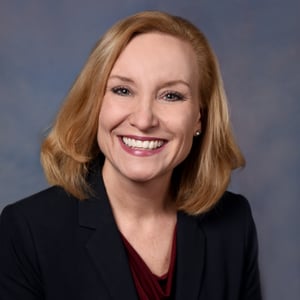
Judge, United States Court of Appeals, Sixth Circuit
The Honorable Joan L. Larsen is a judge of the United States Court of Appeals for the Sixth Circuit. She was nominated by the President on May 8, 2017 and confirmed by the Senate on November 1, 2017. Before her appointment to the federal bench, Judge Larsen served two terms as a Justice of the Michigan Supreme Court, where she was the court’s liaison to Michigan’s drug, sobriety, mental health and veteran’s courts.
Before becoming a judge, Judge Larsen was a faculty member at the University of Michigan Law School, where she was also Special Counsel to the Dean and received the L. Hart Wright Award for Excellence in Teaching. Judge Larsen's research and teaching interests included constitutional law, criminal procedure, statutory interpretation, and presidential power. Judge Larsen continues to assist the law school as the adviser to the Henry M. Campbell Moot Court Competition.
Judge Larsen began her legal career as a law clerk to the Hon. David B. Sentelle of the United States Court of Appeals for the D.C. Circuit and to Justice Antonin Scalia of the Supreme Court of the United States. Following her clerkships, she joined the law firm of Sidley Austin, where she was a member of the Constitutional, Criminal, and Civil Litigation Section. She later served as Deputy Assistant Attorney General in the United States Department of Justice, Office of Legal Counsel.
Judge Larsen graduated first in her class from Northwestern University School of Law, where she served as articles editor of the Northwestern University Law Review and earned the John Paul Stevens Award for Academic Excellence. She received her B.A., with highest honors, from the University of Northern Iowa.
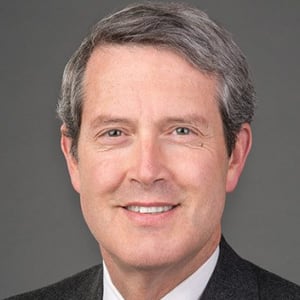
Chairman & Co-Founder, Cynosure Group
Randal Quarles is Chairman and co-founder of The Cynosure Group. Before founding Cynosure, Mr. Quarles was a long-time partner of the Carlyle Group, where he began the firm’s program of investments in the financial services industry during the 2008 financial crisis.
From October 2017 through October 2021, Mr. Quarles was Vice Chairman of the Federal Reserve System, serving as the system’s first Vice Chairman for Supervision, charged specifically with ensuring stability of the financial sector. He also served as the Chairman of the Financial Stability Board (“FSB”) from December 2018 until December 2021; a global body established after the Great Financial Crisis to coordinate international efforts to enhance financial stability. In both positions, he played a key role in crafting the US and international response to the economic and financial dislocations of COVID-19, successfully preventing widespread global disruption of the financial system. As FSB Chairman, he was a regular delegate to the finance ministers’ meetings of the G-7 and G20 Groups of nations and to the Summit meetings of the G20. As Fed Vice Chair, he was a permanent member of the Federal Open Market Committee, the body that sets monetary policy for the United States.
Earlier in his career, Mr. Quarles was Under Secretary of the U.S. Treasury, where he led the Department’s activities in financial sector and capital markets policy, including coordination of the President’s Working Group on Financial Markets.
Before serving as Under Secretary, Mr. Quarles was Assistant Secretary of the Treasury for International Affairs, where he had a key role in response to several international crises. Mr. Quarles was also the U.S. Executive Director of the International Monetary Fund, a member of the Air Transportation Stabilization Board, and board representative for the Pension Benefit Guaranty Corporation. In earlier public service, he was an integral member of the Treasury team in the George H. W. Bush Administration that developed the governmental response to the savings and loan crisis.
Between his tours of duty in public service, Mr. Quarles was a partner with the law firm of Davis Polk & Wardwell, working at various times in both the New York and London offices, where he was co-head of the firm’s financial institutions practice and advised on transactions that included a number of the largest financial sector mergers ever completed.
Mr. Quarles received an A.B. summa cum laude in philosophy and economics from Columbia in 1981 and a J.D. from the Yale Law School in 1984.
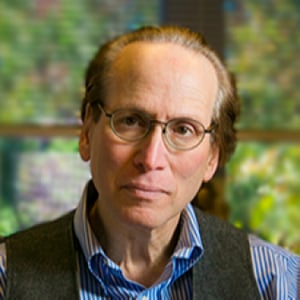
Duke University Law School, Stanley A. Star Distinguished Professor of Law & Business
Steven L. Schwarcz is the Stanley A. Star Distinguished Professor of Law & Business at Duke University and Founding Director of Duke’s interdisciplinary Global Capital Markets Center (now renamed the Global Financial Markets Center). His areas of research and scholarship include insolvency and bankruptcy law, international finance, capital markets, systemic risk, corporate governance, and commercial law. (Links to his scholarship are at http://law.duke.edu/fac/schwarcz/.) He holds a bachelor’s degree in aerospace engineering (summa cum laude) and a Juris Doctor from Columbia Law School. Prior to joining the Duke faculty, he was a partner at two of the world’s leading law firms and Visiting Lecturer at Yale Law School. He also helped to pioneer the field of asset securitization, and his book, Structured Finance, A Guide to the Principles of Asset Securitization (3d edition), is one of the most widely used texts in the field.
Professor Schwarcz has also been the Leverhulme Visiting Professor at the University of Oxford, Visiting Professor at the University of Geneva Faculty of Law, Lecturer in Law at Columbia Law School, Senior Fellow at The University of Melbourne Law School, Visiting Fellow at Ludwig-Maximilians-Universitat Munchen (LMU) Center for Advanced Studies, Guest Professor at Shanghai University of International Business and Economics, Distinguished Visiting Professor at University College London (UCL) Faculty of Laws, Distinguished Honorary Professor, University of Durham Law School, the MacCormick Fellow at The University of Edinburgh School of Law, the Liberty Fellow at the University of Leeds School of Law (scheduled for May-June 2020), and an adviser to the United Nations. He has given numerous endowed or distinguished public lectures, including at The University of Hong Kong, the University of Oxford (the Leverhulme Lectures 2010, available at http://www.law.ox.ac.uk/published/leverhulme2010.php), Georgetown University Law Center, National University of Singapore, University of Florence, Leiden University, Radboud University Nijmegen, Trinity College Dublin School of Law, and The National Assembly of the Republic of Korea. He has served as an expert at meetings of the World Economic Forum. He also has given numerous keynote speeches, including at annual conferences of the European Central Bank, the Corporate Law Teachers Association of Australia, New Zealand, and Asia-Pacific, the National Business Law Scholars Conference (at The University of Chicago Law School), Moody’s Corporation, and the Asian Securitisation Forum.
Additionally, Professor Schwarcz has testified before the U.S. Congress on topics including systemic risk, securitization, credit rating agencies, and financial regulation and has advised several U.S. and foreign governmental agencies on the financial crisis and shadow banking. His writings include Systemic Risk, 97 Georgetown Law Journal 193, the second most cited law review article of 2008; he also has been recognized as the world’s second most cited scholar, 2010-2014 and again 2013-2017, in commercial, contract, and bankruptcy law. He is also a Fellow of the American College of Bankruptcy, a Founding Member of the International Insolvency Institute, a Fellow of the American College of Commercial Finance Lawyers, Business Law Advisor to the American Bar Association Section on Business Law, a member of P.R.I.M.E. Finance’s Panel of Recognized International Market Experts in Finance, and Senior Fellow of The Centre for International Governance Innovation (CIGI).

George Mason University Foundation Professor of Law, Antonin Scalia Law School, George Mason University
TODD J. ZYWICKI is George Mason University Foundation Professor of Law at Antonin Scalia Law School at George Mason University and Research Fellow of the George Mason Law and Economics Center. During the Fall 2023 semester he served as the Visiting Scholar in Conservative Thought and Policy for the Bruce Benson Center for the Study of Western Civilization at the University of Colorado-Boulder. From 2020-2021 he was Chair of the Consumer Financial Protection Bureau Taskforce on Federal Consumer Financial Law. In 2021 he was inducted to the American College of Consumer Financial Services Lawyers. He is also a Senior Fellow of the F.A. Hayek Program for the Advanced Study of Politics, Philosophy, and Economics at George Mason University and a former Senior Fellow of the Cato Institute. From 2015-2017 he was Executive Director of the George Mason Law and Economics Center. He served as Co-Editor of the Supreme Court Economic Review from 2006-2017. From 2003-2004, Professor Zywicki served as the Director of the Office of Policy Planning at the Federal Trade Commission. He has also taught at Vanderbilt University Law School, Georgetown University Law Center, Boston College Law School, Mississippi College School of Law, and China University of Political Science and Law.
Professor Zywicki clerked for Judge Jerry E. Smith of the U.S. Court of Appeals for the Fifth Circuit and worked as an associate at Alston & Bird in Atlanta, Georgia, where he practiced bankruptcy and commercial law. He received his J.D. from the University of Virginia, where he was executive editor of the Virginia Tax Review and John M. Olin Scholar in Law and Economics. Professor Zywicki also received an M.A. in Economics from Clemson University and an A.B. cum Laude with high honors in his major from Dartmouth College.
Professor Zywicki is also a Lone Mountain Fellow of the Property and Environment Research Center, a Fellow of the International Centre for Economic Research in Turin, Italy, and a former Senior Fellow of the Goldwater Institute. During the Fall 2008 Semester Professor Zywicki was the Searle Fellow of the George Mason University School of Law and was a 2008-09 W. Glenn Campbell and Rita Ricardo-Campbell National Fellow and the Arch W. Shaw National Fellow at the Hoover Institution on War, Revolution and Peace. He has lectured and consulted with government officials around the world, including Iceland, Italy, Japan, and Guatemala. In 2006 Professor Zywicki served as a Member of the United States Department of Justice Study Group on “Identifying Fraud, Abuse and Errors in the United States Bankruptcy System.”
Professor Zywicki is the author of more than 130 articles in leading law reviews and peer-reviewed economics journals. He is one of the Top 10 most-cited law professors in the field of Commercial Law and one of the Top 25 law professors on Twitter as measured by engagement levels. He is one of the Top 50 Most Downloaded Law Authors at the Social Science Research Network. He has testified multiple times before Congress on issues of consumer bankruptcy law and consumer credit and is a frequent commentator on legal issues in the print and broadcast media, including the Wall Street Journal, New York Times, The Washington Post, The Washington Times, Nightline, The Newshour with Jim Lehrer, Neil Cavuto Show, Fox & Friends, Smerconish, Fox News @ Night with Shannon Bream, Fox Business, CNN, CNBC, Bloomberg News, BBC, The Diane Rehm Show, Lou Dobbs Show, Jerry Doyle Show, and The Laura Ingraham Show.
Professor Zywicki is former Chairman and a current member of the Board of Directors of the Competitive Enterprise Institute, and is a member of the Board of Directors of the Institute for Humane Studies, Bill of Rights Institute, the Executive Committee for the Federalist Society's Financial Institutions and E-Commerce Practice Group, the Board of Trustees of the Foundation for Research on Economics and the Environment. He formerly served on the Governing Board and the Advisory Council for the Financial Services Research Program at George Washington University School of Business. He is currently the Chair of the Academic Advisory Council for the following organizations: The Bill of Rights Institute, the film “We the People in IMAX,” and the McCormick-Tribune Foundation “Freedom Museum” in Chicago, Illinois. He is a member of the Board of Visitors of Ralston College and was a member of the Board of Trustees of Yorktown University. From 2005-2009 he served as an elected Alumni Trustee of the Dartmouth College Board of Trustees.
Judge, United States Court of Appeals, Sixth Circuit
The Honorable Joan L. Larsen is a judge of the United States Court of Appeals for the Sixth Circuit. She was nominated by the President on May 8, 2017 and confirmed by the Senate on November 1, 2017. Before her appointment to the federal bench, Judge Larsen served two terms as a Justice of the Michigan Supreme Court, where she was the court’s liaison to Michigan’s drug, sobriety, mental health and veteran’s courts.
Before becoming a judge, Judge Larsen was a faculty member at the University of Michigan Law School, where she was also Special Counsel to the Dean and received the L. Hart Wright Award for Excellence in Teaching. Judge Larsen's research and teaching interests included constitutional law, criminal procedure, statutory interpretation, and presidential power. Judge Larsen continues to assist the law school as the adviser to the Henry M. Campbell Moot Court Competition.
Judge Larsen began her legal career as a law clerk to the Hon. David B. Sentelle of the United States Court of Appeals for the D.C. Circuit and to Justice Antonin Scalia of the Supreme Court of the United States. Following her clerkships, she joined the law firm of Sidley Austin, where she was a member of the Constitutional, Criminal, and Civil Litigation Section. She later served as Deputy Assistant Attorney General in the United States Department of Justice, Office of Legal Counsel.
Judge Larsen graduated first in her class from Northwestern University School of Law, where she served as articles editor of the Northwestern University Law Review and earned the John Paul Stevens Award for Academic Excellence. She received her B.A., with highest honors, from the University of Northern Iowa.
Chairman & Co-Founder, Cynosure Group
Randal Quarles is Chairman and co-founder of The Cynosure Group. Before founding Cynosure, Mr. Quarles was a long-time partner of the Carlyle Group, where he began the firm’s program of investments in the financial services industry during the 2008 financial crisis.
From October 2017 through October 2021, Mr. Quarles was Vice Chairman of the Federal Reserve System, serving as the system’s first Vice Chairman for Supervision, charged specifically with ensuring stability of the financial sector. He also served as the Chairman of the Financial Stability Board (“FSB”) from December 2018 until December 2021; a global body established after the Great Financial Crisis to coordinate international efforts to enhance financial stability. In both positions, he played a key role in crafting the US and international response to the economic and financial dislocations of COVID-19, successfully preventing widespread global disruption of the financial system. As FSB Chairman, he was a regular delegate to the finance ministers’ meetings of the G-7 and G20 Groups of nations and to the Summit meetings of the G20. As Fed Vice Chair, he was a permanent member of the Federal Open Market Committee, the body that sets monetary policy for the United States.
Earlier in his career, Mr. Quarles was Under Secretary of the U.S. Treasury, where he led the Department’s activities in financial sector and capital markets policy, including coordination of the President’s Working Group on Financial Markets.
Before serving as Under Secretary, Mr. Quarles was Assistant Secretary of the Treasury for International Affairs, where he had a key role in response to several international crises. Mr. Quarles was also the U.S. Executive Director of the International Monetary Fund, a member of the Air Transportation Stabilization Board, and board representative for the Pension Benefit Guaranty Corporation. In earlier public service, he was an integral member of the Treasury team in the George H. W. Bush Administration that developed the governmental response to the savings and loan crisis.
Between his tours of duty in public service, Mr. Quarles was a partner with the law firm of Davis Polk & Wardwell, working at various times in both the New York and London offices, where he was co-head of the firm’s financial institutions practice and advised on transactions that included a number of the largest financial sector mergers ever completed.
Mr. Quarles received an A.B. summa cum laude in philosophy and economics from Columbia in 1981 and a J.D. from the Yale Law School in 1984.
Duke University Law School, Stanley A. Star Distinguished Professor of Law & Business
Steven L. Schwarcz is the Stanley A. Star Distinguished Professor of Law & Business at Duke University and Founding Director of Duke’s interdisciplinary Global Capital Markets Center (now renamed the Global Financial Markets Center). His areas of research and scholarship include insolvency and bankruptcy law, international finance, capital markets, systemic risk, corporate governance, and commercial law. (Links to his scholarship are at http://law.duke.edu/fac/schwarcz/.) He holds a bachelor’s degree in aerospace engineering (summa cum laude) and a Juris Doctor from Columbia Law School. Prior to joining the Duke faculty, he was a partner at two of the world’s leading law firms and Visiting Lecturer at Yale Law School. He also helped to pioneer the field of asset securitization, and his book, Structured Finance, A Guide to the Principles of Asset Securitization (3d edition), is one of the most widely used texts in the field.
Professor Schwarcz has also been the Leverhulme Visiting Professor at the University of Oxford, Visiting Professor at the University of Geneva Faculty of Law, Lecturer in Law at Columbia Law School, Senior Fellow at The University of Melbourne Law School, Visiting Fellow at Ludwig-Maximilians-Universitat Munchen (LMU) Center for Advanced Studies, Guest Professor at Shanghai University of International Business and Economics, Distinguished Visiting Professor at University College London (UCL) Faculty of Laws, Distinguished Honorary Professor, University of Durham Law School, the MacCormick Fellow at The University of Edinburgh School of Law, the Liberty Fellow at the University of Leeds School of Law (scheduled for May-June 2020), and an adviser to the United Nations. He has given numerous endowed or distinguished public lectures, including at The University of Hong Kong, the University of Oxford (the Leverhulme Lectures 2010, available at http://www.law.ox.ac.uk/published/leverhulme2010.php), Georgetown University Law Center, National University of Singapore, University of Florence, Leiden University, Radboud University Nijmegen, Trinity College Dublin School of Law, and The National Assembly of the Republic of Korea. He has served as an expert at meetings of the World Economic Forum. He also has given numerous keynote speeches, including at annual conferences of the European Central Bank, the Corporate Law Teachers Association of Australia, New Zealand, and Asia-Pacific, the National Business Law Scholars Conference (at The University of Chicago Law School), Moody’s Corporation, and the Asian Securitisation Forum.
Additionally, Professor Schwarcz has testified before the U.S. Congress on topics including systemic risk, securitization, credit rating agencies, and financial regulation and has advised several U.S. and foreign governmental agencies on the financial crisis and shadow banking. His writings include Systemic Risk, 97 Georgetown Law Journal 193, the second most cited law review article of 2008; he also has been recognized as the world’s second most cited scholar, 2010-2014 and again 2013-2017, in commercial, contract, and bankruptcy law. He is also a Fellow of the American College of Bankruptcy, a Founding Member of the International Insolvency Institute, a Fellow of the American College of Commercial Finance Lawyers, Business Law Advisor to the American Bar Association Section on Business Law, a member of P.R.I.M.E. Finance’s Panel of Recognized International Market Experts in Finance, and Senior Fellow of The Centre for International Governance Innovation (CIGI).
George Mason University Foundation Professor of Law, Antonin Scalia Law School, George Mason University
TODD J. ZYWICKI is George Mason University Foundation Professor of Law at Antonin Scalia Law School at George Mason University and Research Fellow of the George Mason Law and Economics Center. During the Fall 2023 semester he served as the Visiting Scholar in Conservative Thought and Policy for the Bruce Benson Center for the Study of Western Civilization at the University of Colorado-Boulder. From 2020-2021 he was Chair of the Consumer Financial Protection Bureau Taskforce on Federal Consumer Financial Law. In 2021 he was inducted to the American College of Consumer Financial Services Lawyers. He is also a Senior Fellow of the F.A. Hayek Program for the Advanced Study of Politics, Philosophy, and Economics at George Mason University and a former Senior Fellow of the Cato Institute. From 2015-2017 he was Executive Director of the George Mason Law and Economics Center. He served as Co-Editor of the Supreme Court Economic Review from 2006-2017. From 2003-2004, Professor Zywicki served as the Director of the Office of Policy Planning at the Federal Trade Commission. He has also taught at Vanderbilt University Law School, Georgetown University Law Center, Boston College Law School, Mississippi College School of Law, and China University of Political Science and Law.
Professor Zywicki clerked for Judge Jerry E. Smith of the U.S. Court of Appeals for the Fifth Circuit and worked as an associate at Alston & Bird in Atlanta, Georgia, where he practiced bankruptcy and commercial law. He received his J.D. from the University of Virginia, where he was executive editor of the Virginia Tax Review and John M. Olin Scholar in Law and Economics. Professor Zywicki also received an M.A. in Economics from Clemson University and an A.B. cum Laude with high honors in his major from Dartmouth College.
Professor Zywicki is also a Lone Mountain Fellow of the Property and Environment Research Center, a Fellow of the International Centre for Economic Research in Turin, Italy, and a former Senior Fellow of the Goldwater Institute. During the Fall 2008 Semester Professor Zywicki was the Searle Fellow of the George Mason University School of Law and was a 2008-09 W. Glenn Campbell and Rita Ricardo-Campbell National Fellow and the Arch W. Shaw National Fellow at the Hoover Institution on War, Revolution and Peace. He has lectured and consulted with government officials around the world, including Iceland, Italy, Japan, and Guatemala. In 2006 Professor Zywicki served as a Member of the United States Department of Justice Study Group on “Identifying Fraud, Abuse and Errors in the United States Bankruptcy System.”
Professor Zywicki is the author of more than 130 articles in leading law reviews and peer-reviewed economics journals. He is one of the Top 10 most-cited law professors in the field of Commercial Law and one of the Top 25 law professors on Twitter as measured by engagement levels. He is one of the Top 50 Most Downloaded Law Authors at the Social Science Research Network. He has testified multiple times before Congress on issues of consumer bankruptcy law and consumer credit and is a frequent commentator on legal issues in the print and broadcast media, including the Wall Street Journal, New York Times, The Washington Post, The Washington Times, Nightline, The Newshour with Jim Lehrer, Neil Cavuto Show, Fox & Friends, Smerconish, Fox News @ Night with Shannon Bream, Fox Business, CNN, CNBC, Bloomberg News, BBC, The Diane Rehm Show, Lou Dobbs Show, Jerry Doyle Show, and The Laura Ingraham Show.
Professor Zywicki is former Chairman and a current member of the Board of Directors of the Competitive Enterprise Institute, and is a member of the Board of Directors of the Institute for Humane Studies, Bill of Rights Institute, the Executive Committee for the Federalist Society's Financial Institutions and E-Commerce Practice Group, the Board of Trustees of the Foundation for Research on Economics and the Environment. He formerly served on the Governing Board and the Advisory Council for the Financial Services Research Program at George Washington University School of Business. He is currently the Chair of the Academic Advisory Council for the following organizations: The Bill of Rights Institute, the film “We the People in IMAX,” and the McCormick-Tribune Foundation “Freedom Museum” in Chicago, Illinois. He is a member of the Board of Visitors of Ralston College and was a member of the Board of Trustees of Yorktown University. From 2005-2009 he served as an elected Alumni Trustee of the Dartmouth College Board of Trustees.
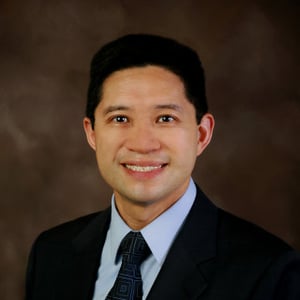
Founder, Original Jurisdiction
David Lat is a lawyer turned writer. He publishes Original Jurisdiction, a newsletter on Substack about law and legal affairs, and he writes for newspapers and magazines, including the New York Times, Washington Post, and Wall Street Journal. Prior to launching Original Jurisdiction, David founded Above the Law, one of the nation's most widely read legal news websites, and Underneath Their Robes, a popular blog about federal judges that he wrote under a pseudonym. He is also the author of a novel set in the world of the federal courts, Supreme Ambitions. Before entering the media world, David worked as a federal prosecutor in Newark, New Jersey; a litigation associate at Wachtell, Lipton, Rosen & Katz, in New York; and a law clerk to Judge Diarmuid F. O’Scannlain of the U.S. Court of Appeals for the Ninth Circuit. David graduated from Harvard College and Yale Law School, where he served as an editor of the Yale Law Journal.
Resident Fellow, American Enterprise Institute
Timothy P. Carney is a resident fellow at the American Enterprise Institute, where he works on economic competition, cronyism, civil society, localism, and religion in America. He is concurrently the commentary editor at the Washington Examiner.
Mr. Carney’s latest book, “Alienated America: Why Some Places Thrive While Others Collapse” (HarperCollins), was published in February 2019. His previous books include “Obamanomics: How Barack Obama Is Bankrupting You and Enriching His Wall Street Friends, Corporate Lobbyists, and Union Bosses” (Regnery Publishing, 2009) and “The Big Ripoff: How Big Business and Big Government Steal Your Money” (John Wiley & Sons, 2006), which was awarded the 2008 Culture of Enterprise award by the Intercollegiate Studies Institute.
In addition to his Washington Examiner columns, Mr. Carney’s work has been published in a variety of magazines, websites, and newspapers, including The Atlantic, New York Post, The New York Times, Reason Magazine, and The Wall Street Journal. His television appearances include CNBC, CNN, Fox News, MSNBC, and the “PBS NewsHour.”
Mr. Carney has a bachelor’s degree from St. John’s College in Annapolis.

Showcase Panel III: Lawyers, the Adversarial System, and Social Justice
Lisa S. Blatt, Paul D. Clement, Stuart Kyle Duncan, Kannon K. Shanmugam, Seth P. Waxman
ABA Model Rule of Professional Responsibility 1.2(b) states: “A lawyer's representation of a client, including...
Showcase Panel III: Lawyers, the Adversarial System, and Social Justice
Lisa S. Blatt, Paul D. Clement, Stuart Kyle Duncan, Kannon K. Shanmugam, Seth P. Waxman
ABA Model Rule of Professional Responsibility 1.2(b) states: “A lawyer's representation of a client, including...
Special Session I: Dobbs, Roe, Casey, and the Rule of Law
Lisa Branch, Mary Anne Case, David D. Cole, Sherif Girgis, Carrie Campbell Severino
On June 24, 2022, the U.S. Supreme Court released a 6-3 decision in Dobbs v....
Special Session I: Dobbs, Roe, Casey, and the Rule of Law
Lisa Branch, Mary Anne Case, David D. Cole, Sherif Girgis, Carrie Campbell Severino
On June 24, 2022, the U.S. Supreme Court released a 6-3 decision in Dobbs v....
Free Speech, Wokeness, and Cancel Culture in the Legal Profession
Milwaukee Lawyers Chapter
Milwaukee, WIAlienated America: Why Some Places Thrive While Others Collapse
Indianapolis Lawyers Chapter
Indianapolis, INThe Largest Ever Federal Infusion of Broadband Funding: Necessary Investment or Waste of Taxpayer Money?
Shirley Bloomfield, Veneeth Iyengar, Michael O'Rielly, Jeffrey S. Sutton
While many Americans take broadband access for granted, in certain predominantly rural areas broadband access...
The Largest Ever Federal Infusion of Broadband Funding: Necessary Investment or Waste of Taxpayer Money?
Shirley Bloomfield, Veneeth Iyengar, Michael O'Rielly, Jeffrey S. Sutton
While many Americans take broadband access for granted, in certain predominantly rural areas broadband access...
Central Bank Digital Currencies: A New Tool for Government Control?
Joan Larsen, Randal K. Quarles, Steven L. Schwarcz, Todd J. Zywicki
Central Bank Digital Currencies (CBDC) are the subject of global debate. While proponents see CBDC...
Central Bank Digital Currencies: A New Tool for Government Control?
Joan Larsen, Randal K. Quarles, Steven L. Schwarcz, Todd J. Zywicki
Central Bank Digital Currencies (CBDC) are the subject of global debate. While proponents see CBDC...