
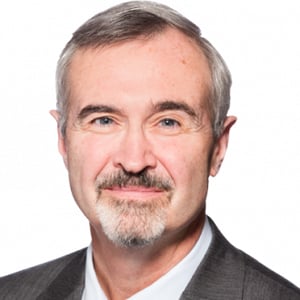
Vice President, Edwin Meese III Institute for the Rule of Law, Advancing American Freedom
John G. Malcolm oversees Advancing American Freedom’s work to increase understanding of the Constitution and the rule of law as Vice President of the organization’s Edwin Meese III Institute for the Rule of Law. Malcolm brings to the challenge a wealth of legal expertise and experience in both the public and private sectors.
Prior to joining Advancing American Freedom in 2025, Malcolm was the Vice President of the Institute for Constitutional Government and the Director of the Meese Center for Legal and Judicial Studies at the Heritage Foundation. Prior to joining Heritage in 2012, Malcolm was general counsel at the U.S. Commission on International Religious Freedom, as well as a distinguished practitioner in residence at Pepperdine Law School. From 2004 to 2009, Malcolm was executive vice president and director of worldwide anti-piracy operations for the Motion Picture Association.
Malcolm served as a deputy assistant attorney general in the Department of Justice’s Criminal Division from 2001 to 2004, where he oversaw sections on computer crime and intellectual property, domestic security, child exploitation and obscenity, and special investigations. Immediately prior to that, he was a founding partner in the Atlanta law firm of Malcolm & Schroeder, LLP.
From 1990 to 1997, Malcolm was an assistant U.S. attorney in Atlanta, assigned to the fraud and public corruption section, and also an associate independent counsel, investigating fraud and abuse in the Department of Housing and Urban Development. He was honored with the Director’s Award for Superior Performance for his work in connection with the successful prosecution of Walter Leroy Moody Jr., who assassinated an 11th Circuit judge and the head of the Savannah chapter of the NAACP.
A graduate of Harvard Law School and Columbia College, Malcolm began his career as a law clerk to a federal district court judge and a federal appellate court judge, and as an associate at the Atlanta-based law firm of Sutherland, Asbill & Brennan (new Eversheds Sutherland).
Malcolm, who resides in Washington, D.C., serves on the Board of Trustees of the Washington National Opera and is a Senate-confirmed member of the Board of Directors of the Legal Services Corporation, the largest funder of civil legal aid in the United States.

Emanuel S. Heller Professor of Law, University of California at Berkeley; Senior Research Fellow, School of Civic Leadership, Civitas Institute, University of Texas at Austin; Nonresident Senior Fellow, American Enterprise Institute
John Yoo is the Emanuel Heller Professor of Law. He is also Distinguished Visiting Scholar, School of Civic Leadership and Senior Research Fellow, Civitas Institute, at the University of Texas at Austin. He is also a Nonresident Senior Fellow at the American Enterprise Institute.
His most recent book, The Politically Incorrect Guide to the Supreme Court, co-authored with Robert Delahunty, was published in 2023. Professor Yoo’s other books include Defender-in-Chief: Trump’s Fight for Presidential Power; Striking Power: How Cyber, Robots, and Space Weapons Change the Rules for War, Point of Attack: Preventive War, International Law, and Global Welfare, and Crisis and Command: A History of Executive Power from George Washington to George Bush.
Professor Yoo has published more than 100 articles in academic journals on subjects including national security, constitutional law, international law, and the Supreme Court. He also regularly contributes to the editorial pages of the Wall Street Journal, New York Times, Washington Post, Los Angeles Times, and National Review, among others.
Professor Yoo has served in all three branches of government. He was an official in the U.S. Department of Justice, where he worked on national security and terrorism issues after the 9/11 attacks. He served as general counsel of the U.S. Senate Judiciary Committee. He has been a law clerk for Supreme Court Justice Clarence Thomas and federal appeals Judge Laurence Silberman. He has been a visiting professor at Seoul National University in South Korea, the Interdisciplinary Center in Israel, Keio University in Japan, Trento University in Italy, the University of Chicago, and the Free University of Amsterdam.
Professor Yoo supervises the Public Law and Policy Program and the California Constitution Center. He also serves on the boards of the Pacific Legal Foundation, the Federalist Society’s Separation of Powers and Federalism Division, the Universidad Cientifica del Sur Law School, and the Asia-Pacific Law Institute at Seoul National University. He is a winner of the Federalist Society’s Paul Bator award and been the Edwin Meese III Originalism Lecturer at the Heritage Foundation.
Professor Yoo graduated from Yale Law School and summa cum laude from Harvard College.
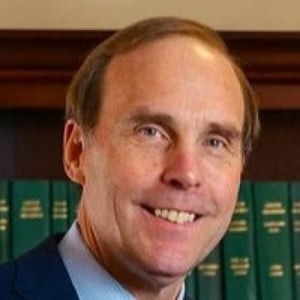
Distinguished Research Professor, Center for Citizenship and Constitutional Government, University of Notre Dame
Donald L. Drakeman is Distinguished Research Professor in the Center for Citizenship and Constitutional Government at the University of Notre Dame, and a Fellow of the Centre for Health Leadership and Enterprise at the University of Cambridge. His writings have been cited by the Supreme Courts of the United States and the Philippines. He has published seven books, including The Hollow Core of Constitutional Theory (Cambridge University Press, 2021), Why We Need the Humanities (Palgrave, 2016), and Church, State, and Original Intent (Cambridge University Press, 2010). He received an A.B. magna cum laude from Dartmouth College; a J.D. from Columbia Law School, where he was a Harlan Fiske Stone Scholar; and a Ph.D. from Princeton University. He is a Fellow of the Royal Historical Society, and he was the founding chair of the Advisory Council for the James Madison Program on American Ideals and Institutions at Princeton University.
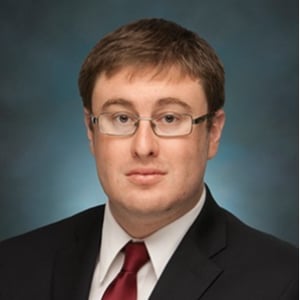
Staff Attorney, Goldwater Institute
John Thorpe is an attorney at the Goldwater Institute in Phoenix, Arizona, where he litigates in the areas of education, free speech, economic liberty, government transparency, regulatory reform, and property rights.
After graduating from the Sandra Day O’Connor College of Law at Arizona State University, John clerked for Judge Carolyn B. McHugh on the Tenth Circuit and for Judge Bridget S. Bade on the Ninth Circuit. John has also worked in private practice, focusing on appeals, complex commercial litigation, and Indian law. Prior to law school, John taught economics, Latin, and humanities at a charter school in Phoenix, where he saw first-hand how school choice can transform students’ lives. John is passionate about empowering families through school choice and academic transparency, as well as ensuring that schools are places for the pursuit of truth and the free exchange of ideas.

Legal Fellow, Edwin Meese III Center for Legal and Judicial Studies, The Heritage Foundation
Jack Fitzhenry is a Legal Fellow in the Edwin Meese III Center for Legal and Judicial Studies.
He previously served as a law clerk for the Hon. Madeline H. Haikala on the United States District Court for the Northern District of Alabama and for the Hon. Patrick E. Higginbotham on the United States Court of Appeals for the Fifth Circuit. Between clerkships, he litigated a variety of commercial disputes as an associate with Quinn Emanuel Urquhart & Sullivan LLP.
Fitzhenry received his law degree from the University of Michigan Law School and his bachelor’s degree in English Literature from Williams College.
Professor of History, Georgia Southern University
Johnathan O'Neill is Professor of History at Georgia Southern University. Professor O’Neill is the author of Originalism in American Law and Politics: A Constitutional History (2005) and Conservative Thought and American Constitutionalism Since the New Deal (2023).
Vice President, Edwin Meese III Institute for the Rule of Law, Advancing American Freedom
John G. Malcolm oversees Advancing American Freedom’s work to increase understanding of the Constitution and the rule of law as Vice President of the organization’s Edwin Meese III Institute for the Rule of Law. Malcolm brings to the challenge a wealth of legal expertise and experience in both the public and private sectors.
Prior to joining Advancing American Freedom in 2025, Malcolm was the Vice President of the Institute for Constitutional Government and the Director of the Meese Center for Legal and Judicial Studies at the Heritage Foundation. Prior to joining Heritage in 2012, Malcolm was general counsel at the U.S. Commission on International Religious Freedom, as well as a distinguished practitioner in residence at Pepperdine Law School. From 2004 to 2009, Malcolm was executive vice president and director of worldwide anti-piracy operations for the Motion Picture Association.
Malcolm served as a deputy assistant attorney general in the Department of Justice’s Criminal Division from 2001 to 2004, where he oversaw sections on computer crime and intellectual property, domestic security, child exploitation and obscenity, and special investigations. Immediately prior to that, he was a founding partner in the Atlanta law firm of Malcolm & Schroeder, LLP.
From 1990 to 1997, Malcolm was an assistant U.S. attorney in Atlanta, assigned to the fraud and public corruption section, and also an associate independent counsel, investigating fraud and abuse in the Department of Housing and Urban Development. He was honored with the Director’s Award for Superior Performance for his work in connection with the successful prosecution of Walter Leroy Moody Jr., who assassinated an 11th Circuit judge and the head of the Savannah chapter of the NAACP.
A graduate of Harvard Law School and Columbia College, Malcolm began his career as a law clerk to a federal district court judge and a federal appellate court judge, and as an associate at the Atlanta-based law firm of Sutherland, Asbill & Brennan (new Eversheds Sutherland).
Malcolm, who resides in Washington, D.C., serves on the Board of Trustees of the Washington National Opera and is a Senate-confirmed member of the Board of Directors of the Legal Services Corporation, the largest funder of civil legal aid in the United States.
Emanuel S. Heller Professor of Law, University of California at Berkeley; Senior Research Fellow, School of Civic Leadership, Civitas Institute, University of Texas at Austin; Nonresident Senior Fellow, American Enterprise Institute
John Yoo is the Emanuel Heller Professor of Law. He is also Distinguished Visiting Scholar, School of Civic Leadership and Senior Research Fellow, Civitas Institute, at the University of Texas at Austin. He is also a Nonresident Senior Fellow at the American Enterprise Institute.
His most recent book, The Politically Incorrect Guide to the Supreme Court, co-authored with Robert Delahunty, was published in 2023. Professor Yoo’s other books include Defender-in-Chief: Trump’s Fight for Presidential Power; Striking Power: How Cyber, Robots, and Space Weapons Change the Rules for War, Point of Attack: Preventive War, International Law, and Global Welfare, and Crisis and Command: A History of Executive Power from George Washington to George Bush.
Professor Yoo has published more than 100 articles in academic journals on subjects including national security, constitutional law, international law, and the Supreme Court. He also regularly contributes to the editorial pages of the Wall Street Journal, New York Times, Washington Post, Los Angeles Times, and National Review, among others.
Professor Yoo has served in all three branches of government. He was an official in the U.S. Department of Justice, where he worked on national security and terrorism issues after the 9/11 attacks. He served as general counsel of the U.S. Senate Judiciary Committee. He has been a law clerk for Supreme Court Justice Clarence Thomas and federal appeals Judge Laurence Silberman. He has been a visiting professor at Seoul National University in South Korea, the Interdisciplinary Center in Israel, Keio University in Japan, Trento University in Italy, the University of Chicago, and the Free University of Amsterdam.
Professor Yoo supervises the Public Law and Policy Program and the California Constitution Center. He also serves on the boards of the Pacific Legal Foundation, the Federalist Society’s Separation of Powers and Federalism Division, the Universidad Cientifica del Sur Law School, and the Asia-Pacific Law Institute at Seoul National University. He is a winner of the Federalist Society’s Paul Bator award and been the Edwin Meese III Originalism Lecturer at the Heritage Foundation.
Professor Yoo graduated from Yale Law School and summa cum laude from Harvard College.
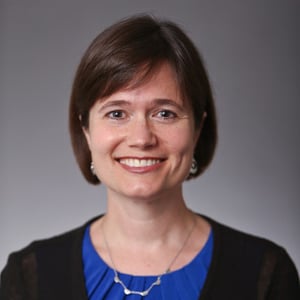
Senior Director, Liberty & National Security Program, Brennan Center for Justice at New York University Law School
Elizabeth (Liza) Goitein is senior director of the Brennan Center for Justice’s Liberty & National Security Program.
Goitein is a nationally-recognized expert on presidential emergency powers, government surveillance, and government secrecy. Her writing has been featured in major newspapers and magazines including the New York Times, Washington Post, Wall Street Journal, USA Today, Los Angeles Times, The Atlantic Magazine, and The New Republic, and she has appeared frequently on MSNBC, CNN, and NPR. She has testified on several occasions before the Senate and House Judiciary Committees.
Before coming to the Brennan Center, Goitein served as counsel to Senator Russ Feingold, chairman of the Constitution Subcommittee of the Senate Judiciary Committee, and as a trial attorney in the Federal Programs Branch of the Civil Division of the Department of Justice. Goitein graduated from Yale Law School and clerked for the Honorable Michael Daly Hawkins on the U.S. Court of Appeals for the Ninth Circuit. In 2021–22, she was a member of the inaugural class of Senior Practitioner Fellows at the University of Chicago’s Center for Effective Government.

Chief Legal + Administrative Officer, Waystar Health
Matthew R. A. Heiman leads all legal and corporate governance matters for Waystar. Over the last two decades, he has worked in corporate and government sectors, gaining deep experience in the areas of corporate governance, litigation, risk management, security, and compliance.
Most recently, Matthew was Vice President, Corporate Secretary & Associate General Counsel at Johnson Controls where he helped establish a new corporate secretary department and led the integration of legal departments following the company’s merger with Tyco International. Prior to its merger with Johnson Controls, Matthew held a number of positions with Tyco International including Vice President, Chief Compliance & Audit Officer. Before Tyco, Matthew was a lawyer with the National Security Division at the U.S Department of Justice. He was a legal advisor to the Coalition Provisional Authority in Baghdad, Iraq and practiced as a trial lawyer with the law firm of McGuireWoods.
Matthew holds a BA and JD from Indiana University and is a member of the International Institute for Strategic Studies. He is a Senior Fellow at George Mason University’s National Security Institute.
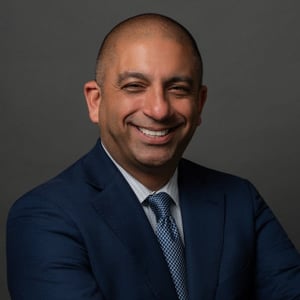
Founder and Executive Director, National Security Institute; Assistant Professor of Law, Antonin Scalia Law School, George Mason University
Jamil N. Jaffer is the Founder and Executive Director of the National Security Institute at the Antonin Scalia Law School at George Mason University where he also serves as an Assistant Professor of Law, Director of the National Security Law and Policy Program, and Director of the Cyber, Intelligence, and National Security LLM Program. Jamil also teaches classes on counterterrorism, intelligence, surveillance, cybersecurity, and other national security matters, as well as a summer course held abroad with U.S. Supreme Court Justice Neil M. Gorsuch. Jamil is also affiliated with Stanford University’s Center for International Security and Cooperation and previously served as a Visiting Fellow at the Hoover Institution from 2016 to 2019.
Jamil is also a Venture Partner with Paladin Capital Group, where he assists the firm with investments across the full range of its themes and theses, including a focus on dual-use national security technologies. Jamil also serves on the board of directors of RangeForce, a cybersecurity training and readiness platform startup and Tozny, a digital identity startup, and on the advisory boards of U.S. Strategic Metals, North America’s largest primary producer of cobalt, a critical mineral used in EV batteries, aerospace, and other national security applications; and Constella Intelligence, a deep and dark web intelligence startup. Jamil also serves as an advisor to Beacon Global Strategies, a strategic advisory firm and Duco, a technology platform startup that connects corporations with geopolitical and international business experts. Jamil is also the managing director of Trigraph Caveat Capital, a private investment vehicle.
Among other things, Jamil currently serves on the Board of Directors for the Greater Washington Board of Trade, the Board of Advisors for the Global Cyber Alliance, and the Advisory Board of the Foundation for the Defense of Democracies’ Center on Cyber and Tech Innovation, the Executive Committee of the Reagan Institute Strategy Group. Jamil is also a Fellow at the Academy for Judaic, Christian, and Islamic Studies, an advisor to the Concordia Summit, and is a member of the Board of Directors for the Center for Intelligence Policy, the Board of Directors of Speech First, and the Executive Committee of the International Law and National Security Practice Group of the Federalist Society.
Immediately prior to his current positions, from 2015-2021, Jamil served as a senior business leader at IronNet Cybersecurity, helping take the company from a bootstrapped first-year technology products startup through two rounds of venture capital fundraising, growing from 40 employees to over 300, and through its listing on New York Stock Exchange. In his role as IronNet's Senior Vice President for Strategy, Partnerships & Corporate Development, Jamil worked directly for the co-CEOs of the company, Gen (ret.) Keith B. Alexander, the former Director of the National Security Agency and Founding Commander of U.S. Cyber Command, and Bill Welch, the former COO of Zscaler and Duo; in that role, Jamil led all of the company’s strategic and technology partnership efforts, including developing go-to-market and technology integration plans with some of the largest cloud platforms and cybersecurity companies in the market, evaluating potential acquisition targets, and developing overall corporate strategy and thought leadership around collective security and collaborative defense in the cyber arena.
Prior to his time at IronNet, Jamil served on the leadership team of the Senate Foreign Relations Committee as Chief Counsel and Senior Advisor under Chairman Bob Corker (R-TN), where he worked on key national security and foreign policy issues, including leading the drafting of the proposed Authorization for the Use of Military Force against ISIS in 2014 and 2015, the AUMF against Syria in 2013, and revisions to the 9/11 AUMF against al Qaeda. Jamil was also the lead architect of the Iran Nuclear Agreement Review Act and two sanctions laws against Russia for its first intervention in Ukraine.
Prior to joining SFRC, Jamil served as Senior Counsel to the House Permanent Select Committee on Intelligence under Chairman Mike Rogers (R-MI) where he led the committee’s oversight of NSA surveillance, NRO intelligence issues, and NGA analytic and collection matters, as well as intelligence community-wide counterterrorism issues. Jamil was also the lead architect of the Cyber Intelligence Sharing and Protection Act, the nation’s first cyber threat intelligence sharing legislation that was signed into law in 2015.
In the Bush Administration, Jamil served in the White House as an Associate Counsel to the President, handling Defense Department, State Department, and intelligence community matters, and serving as one of the White House Counsel’s primary representatives to the National Security Council Deputies Committee.
Prior to the White House, Jamil served on the leadership team of the Justice Department’s National Security Division as Counsel to the Assistant Attorney General for National Security, where he focused on counterterrorism and intelligence matters. At NSD, Jamil helped lead the division’s work on In re: Directives, the first ever two-party litigated matter in the FISA Court and the second case before the FISA Court of Review in its 30-year history. Jamil also led NSD’s efforts on the President’s Comprehensive National Cybersecurity Initiative (CNCI), including the drafting of NSPD-54/HSPD-23, and related classified matters, and advised the National Security Agency (NSA) and U.S. Cyber Command’s predecessor organization, the Joint Function Component Command for Network Warfare (JFCC-NW), on matters related to cyber intelligence collection and offensive cyber activities. For his work on these matters, Jamil was awarded the Assistant Attorney General’s Award for Special Initiative and was among the group of lawyers awarded the Director of National Intelligence’s 2008 Legal Award (Team of the Year – Cyber Legal).
Jamil also served in other positions in the Justice Department, including in the Office of Legal Policy, where he worked on the confirmations of Chief Justice John G. Roberts, Jr. and Justice Samuel A. Alito, Jr. to the United States Supreme Court.
Jamil also served as a lawyer in private practice at Kellogg Huber, a Washington, DC-based litigation boutique, as a policy advisor to Congressman Bob Goodlatte (R-VA), and as a staff member or senior advisor on a number of political campaigns, including two presidential campaigns and a presidential transition team. While in law school, Jamil was a member of the University of Chicago Law Review, managing editor of the Chicago Journal of International Law, and National Symposium Editor of the Harvard Journal of Law & Public Policy. Following law school, Jamil served as a law clerk to Judge Edith H. Jones of the United States Court of Appeals for the Fifth Circuit and, later in his career, as a law clerk to then-Judge Neil M. Gorsuch when he first joined the United States Court of Appeals for the Tenth Circuit as well as a law clerk to Justice Neil Gorsuch when he joined the U.S. Supreme Court.
Jamil has published multiple op-eds and academic articles on national security, foreign policy, cybersecurity, counterterrorism, encryption, and intelligence matters, and is the co-author of a book chapter with former NSA Director Gen. (Ret.) Keith B. Alexander on national security and the press in National Security, Leaks, and the Freedom of the Press: The Pentagon Papers Fifty Years On (2021) and a book chapter with former CIA Director Gen. (ret.) Mike Hayden on ISIS, al Qaeda, and other international terrorist groups in Choosing to Lead: American Foreign Policy for a Disordered World (2015). Jamil has also written book chapters on cybersecurity and surveillance, as well as op-eds and policy papers with former Attorney General Michael B. Mukasey, former National Counterterrorism Center Director Matt Olsen, and Congressman Mike Waltz (R-FL), among others.
Jamil has previously taught graduate-level courses in intelligence law and policy at George Washington University’s Elliott School of International Affairs and the National Intelligence University, served an outside advisor to the Cyberspace Solarium Commission, and has recently testified before committees of the U.S. Senate and House of Representatives on China, cybersecurity, counterterrorism, and other national security matters. Jamil has also recently appeared on a range of national television and radio outlets including CNN, Fox News, Fox Business, MSNBC, Bloomberg, PBS, Voice of America, and National Public Radio, and in various print and online publications, including the Wall Street Journal, New York Times, and the Washington Post on a range of national security matters including cybersecurity, counterterrorism, surveillance, encryption, privacy, and foreign policy issues.
Jamil holds degrees from UCLA (BA, cum laude), the University of Chicago Law School (JD, with honors), and the United States Naval War College (MA, with distinction).
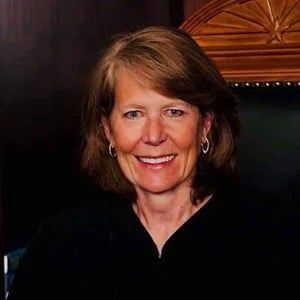
Presiding Disciplinary Judge, Arizona Supreme Court
Margaret H. Downie is the Presiding Disciplinary Judge for the Arizona Supreme Court — presiding over formal attorney discipline, disability, and reinstatement proceedings. Judge Downie previously served as Executive Director of the Arizona Commission on Judicial Conduct and Staff Director of the Arizona Supreme Court’s Judicial Ethics Advisory Committee. From 2008 to 2017, Judge Downie was a judge on the Arizona Court of Appeals, Division One. Prior to that, she spent 11 years on the Maricopa County Superior Court, where she was Associate Presiding Judge and Civil Presiding Judge.
Judge Downie graduated with a B.A. degree, magna cum laude, from the University of Arkansas at Little Rock. She received her J.D. degree, magna cum laude, from Georgetown University in Washington, D.C. After law school, Judge Downie worked in the civil litigation department of Jennings, Strouss & Salmon in Phoenix. Thereafter, she spent almost ten years in the lawyer regulation department of the State Bar of Arizona, ultimately serving as Chief Bar Counsel.
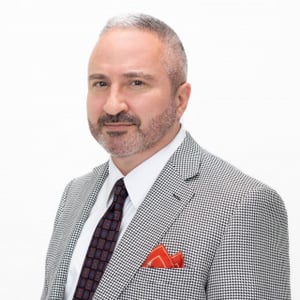
Shareholder, Greenberg Traurig
Greenberg Traurig Phoenix Litigation chair Andy Halaby advises clients on professional responsibility and related matters, including discipline defense, disqualification, and lawyer liability matters, as well as issues and opportunities arising from Arizona’s Alternative Business Structure (ABS) law. He has served on the Arizona Supreme Court's Task Forces on Lawyer Ethics, Professionalism, and the Unauthorized Practice of Law, and Judicial Performance Review, and chaired the State Bar of Arizona's Conflict Case Committee. Andy also practices extensively in intellectual property litigation. A former professional engineer registered with the United States Patent and Trademark Office, Andy has served as lead counsel in dozens of patent infringement and other IP matters. His published work has been cited in, among other things, treatises on intellectual property law, remedies, evidence, professional responsibility and the First Amendment, as well as in numerous scholarly articles. He has taught multiple semesters of Professional Responsibility, Patent Litigation, and other courses at the Sandra Day O’Connor College of Law at Arizona State University.
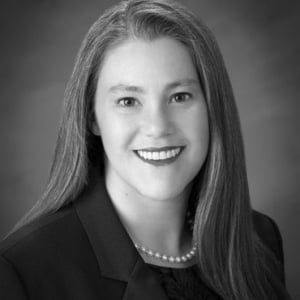
Judge, Arizona Court of Appeals, Division One
The Honorable Jennifer M. Perkins began service on the Arizona Court of Appeals, Division One, on October 30, 2017. At the time of her appointment by Governor Douglas Ducey, Judge Perkins was Assistant Solicitor General for the State of Arizona.
Judge Perkins was born in Portales, New Mexico, and primarily raised in Albuquerque. She attended the prestigious Albuquerque Academy from 1988-1995, before moving to Washington D.C. to attend the Elliott School of International Affairs at the George Washington University as a National Merit Scholar. Therafter, she relocated again to Dallas, Texas, and earned her juris doctor from the SMU Dedman School of Law, graduating cum laude in 2002.
Judge Perkins started her career at the law firm of Browning & Peifer (now Peifer, Hanson, Mullins, and Baker) in Albuquerque, New Mexico. While there, she litigated complex commercial matters including class action plaintiff and defense work, and assisted with employment and contract litigation. In 2003, the judge accompanied the Honorable James O. Browning in transitioning to the federal district court bench, serving as his first law clerk.
After her clerkship, Judge Perkins moved to Arizona to work for the Institute for Justice, Arizona Chapter, a public interest law firm. She spent five years with IJ-AZ litigating civil rights cases in Arizona and across the country. In 2009, the judge became Disciplinary Counsel for the Arizona Commission on Judicial Conduct, where she reviewed and prosecuted ethics complaints against state court judges throughout Arizona. After five years serving the state in this capacity, Judge Perkins entered private practice by joining an appellate law firm in Phoenix. While there, she worked on state and federal appeals involving a wide range of legal subjects, including complex business disputes, property rights, judicial ethics, and personal injury matters.
In January 2015, Judge Perkins joined the Office of the Arizona Attorney General to serve as the first Assistant Solicitor General; in that capacity, she was responsible for oversight of Attorney General Opinions and served as ethics counsel to the entire office. In addition to these two primary roles, the judge assisted on a variety of matters including trial and appellate litigation of election-related matters; federal appellate litigation with the Federalism Unit; state criminal appeals; and drafting amicus briefs on behalf of Arizona in state and federal courts.

Conservatives Talk Presidential Power: End of Year Update on Trials, Impeachment, and Immunities
John G. Malcolm, John C. Yoo
As 2023 comes to a close, John Malcolm and John Yoo continue their discussion of...
Conservatives Talk Presidential Power: End of Year Update on Trials, Impeachment, and Immunities
Establishing an Agreement to Disagree About Church and State
Donald L. Drakeman
A review of Nathan Chapman & Michael McConnell, Agreeing to Disagree: How the Establishment Clause...
Can a Respondeat Superior Claim Survive Dismissal of the Underlying Negligence Claim? Arizona Supreme Court Reverses Course.
John Thorpe
For nearly eighty years, Arizona courts have held that if a negligence claim against an...
Georgia Supreme Court Carves Its Own Path on Due Process to Strike Down Occupational Licensing Law
Jack Fitzhenry
A unanimous Georgia Supreme Court held in Raffensperger v. Jackson that an occupational licensing law...
Reauthorizing Section 702: Secure Surveillance or an Invasion of Privacy?
TeleforumA Deeper Originalism: From Court-Centered Jurisprudence to Constitutional Self-Government
Johnathan O'Neill
Originalism has substantially reoriented constitutional discourse since it first reemerged in response to the Warren...
Ethics CLE 2023: Recent Developments in Legal Ethics & Professional Responsibility
Topics
2023 National Lawyers Convention: Insurrection & the 14th Amendment
Editor's Note: On December 19th, 2023 the Colorado Supreme Court ruled that Former President Donald...
Topics
ADA Testers Can Keep Testing . . . For Now
On December 5, the Supreme Court issued a unanimous opinion by Justice Amy Coney Barrett...