
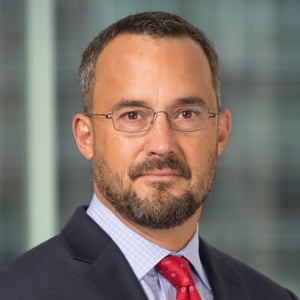
Senior Vice President for Legal Studies, Cato Institute
Clark Neily is senior vice president for legal studies at the Cato Institute. His areas of interest include constitutional law, overcriminalization, civil forfeiture, police accountability, and gun rights. Neily is the author of Terms of Engagement: How Our Courts Should Enforce the Constitution’s Promise of Limited Government. His writing has appeared in the Wall Street Journal, Forbes, and National Review Online, as well as various law reviews, including the Harvard Journal of Law and Public Policy, George Mason Law Review, Georgetown Journal of Law and Public Policy, NYU Journal of Law and Liberty, and Texas Review of Law and Politics. Neily is a frequent guest speaker and lecturer for the Federalist Society, Institute for Humane Studies, and American Constitution Society.
Before joining Cato in 2017, Neily was a senior attorney and constitutional litigator at the Institute for Justice and director of the Institute’s Center for Judicial Engagement. He is also an adjunct professor at the University of Texas School of Law, where he teaches constitutional litigation and public-interest law.
Neily served as co-counsel in District of Columbia v. Heller, the historic case in which the Supreme Court held for the first time that the Second Amendment protects an individual right to own a gun for self-defense.
Neily began his legal career as a law clerk to Judge Royce Lamberth on the U.S. District Court for the District of Columbia. After that he spent four years in the trial department of the Dallas-based firm Thompson & Knight. Neily received his undergraduate and law degrees from the University of Texas, where he was Chief Articles Editor of the Texas Law Review.
Of Counsel, Squire
George Kendall’s practice focuses primarily on pro bono matters. George handles capital, criminal and civil rights cases around the United States at trial, on appeal and in post-conviction proceedings including in the United States Supreme Court, where he has represented clients for more than 25 years. He also regularly consults with capital defense lawyers nationwide. George has worked with the Defender Services Division of the Administrative Office of the US Courts in improving the quality of legal representation in federal criminal cases and has also worked closely with The Innocence Project and the National Association for the Advancement of Colored People (NAACP) Legal Defense Fund (LDF) on policy initiatives. While at the LDF he was editor of the newsletter Race Notes, which identifies arguments and strategies citizens can use to lessen the influence of racial bias in the criminal justice system.
He is a former staff attorney for the American Civil Liberties Union Eleventh Circuit Capital Litigation Project. George has taught courses on criminal justice issues at several law schools including Yale Law School, Florida State University College of Law and St. John’s School of Law.
George is the recipient of numerous awards including the Life in the Balance Achievement Award from the National Legal Aid and Defender Association in 1999, the New York State Defenders Association Service of Justice Award in 1997, ACLU of Georgia Bill of Rights Award in 1987 and the Stuart Still Memorial Award in 1987.
George frequently appears as a panelist or keynote speaker at capital litigation seminars. He is a board member of the Death Penalty Information Center and Southern Public Defender Training Center. George is also a member of the Advisory Group for the Georgetown University Law Center Supreme Court Institute.
In 2010 George was the recipient of the Equal Justice Champion Award from the Equal Justice Initiative for assistance in juvenile life without parole cases and other matters, and the Constitutional Champion Award from the Constitution Project, a highly respected DC-based organization that assembles bipartisan commissions to work toward sensible policy solutions to some of our toughest legal issues.
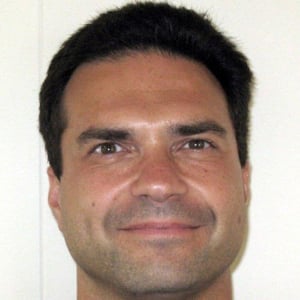
Assistant Attorney General & Senior Trial Counsel to the Criminal Bureau, Massachusetts Attorney General
Chairman, Cato Institute
Robert A. Levy is chairman of the Cato Institute's board of directors. He joined Cato as senior fellow in constitutional studies in 1997 after 25 years in business. He also sits on boards of the Institute for Justice, the Federalist Society, and the George Mason University School of Law. He founded CDA Investment Technologies, a major provider of financial information and software, and was its CEO until 1991. Levy clerked for Judge Royce C. Lamberth on the U.S. District Court in Washington, D.C., and for Judge Douglas H. Ginsburg on the U.S. Court of Appeals for the D.C. Circuit. From 1997 until 2004, Levy was an adjunct professor of law at Georgetown University. He has written numerous articles on investments, law, and public policy. His writing has appeared in the New York Times, Wall Street Journal, USA Today,Washington Post, National Review, and many other publications. Levy has also discussed public policy on national radio and TV programs, including ABC's Nightline, CNN's Crossfire, Fox's The O'Reilly Factor, MSNBC's Hardball, and NBC's Today Show. His latest book, co-authored with William Mellor, is The Dirty Dozen: How Twelve Supreme Court Cases Radically Expanded Government and Eroded Freedom. Levy received his Ph.D. in business from the American University and his J.D. degree from the George Mason University School of Law.
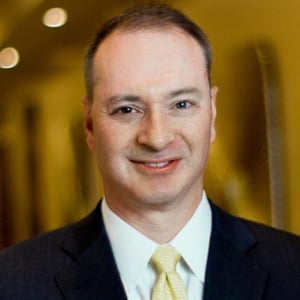
Managing Shareholder, Saltzman Mugan Dushoff, PLLC
Over the course of his twenty-plus years as an attorney in Las Vegas, Mr. Saltzman has developed a corporate law practice focused on financial institution and liquor law. He assists businesses in their formation, licensing and governance matters; he also counsels businesses on corporate mergers and acquisition matters. He assists highly regulated financial institutions and captive insurance companies in corporate and regulatory compliance matters and he has testified before the Nevada legislature as an expert on trust company legislation and drafted portions of Nevada law relating to the chartering and operation of Nevada trust companies. He has counseled trust companies and financial service firms on Blockchain and cryptocurrency related legal compliance matters.
Mr. Saltzman has developed and managed the firm’s liquor law practice into Nevada’s largest alcohol beverage specialty law practice group. He and his team of attorneys and paralegals assist a wide range of liquor retailers, wholesalers and suppliers in licensing and compliance matters in all Nevada jurisdictions. More information on Mr. Saltzman’s liquor law practice can be found at his blog: www.nvliquorlaw.com
Matthew Saltzman received a Bachelor of Arts degree in Economics and Philosophy from University of Wisconsin, Madison in 1987. In 1993, he received his Juris Doctor from University of Pittsburgh School of Law, where he was also Executive Editor of the University of Pittsburgh Law Review and served as teaching assistant for the Legal Research and Writing course.
Chairman, Cato Institute
Robert A. Levy is chairman of the Cato Institute's board of directors. He joined Cato as senior fellow in constitutional studies in 1997 after 25 years in business. He also sits on boards of the Institute for Justice, the Federalist Society, and the George Mason University School of Law. He founded CDA Investment Technologies, a major provider of financial information and software, and was its CEO until 1991. Levy clerked for Judge Royce C. Lamberth on the U.S. District Court in Washington, D.C., and for Judge Douglas H. Ginsburg on the U.S. Court of Appeals for the D.C. Circuit. From 1997 until 2004, Levy was an adjunct professor of law at Georgetown University. He has written numerous articles on investments, law, and public policy. His writing has appeared in the New York Times, Wall Street Journal, USA Today,Washington Post, National Review, and many other publications. Levy has also discussed public policy on national radio and TV programs, including ABC's Nightline, CNN's Crossfire, Fox's The O'Reilly Factor, MSNBC's Hardball, and NBC's Today Show. His latest book, co-authored with William Mellor, is The Dirty Dozen: How Twelve Supreme Court Cases Radically Expanded Government and Eroded Freedom. Levy received his Ph.D. in business from the American University and his J.D. degree from the George Mason University School of Law.
Managing Shareholder, Saltzman Mugan Dushoff, PLLC
Over the course of his twenty-plus years as an attorney in Las Vegas, Mr. Saltzman has developed a corporate law practice focused on financial institution and liquor law. He assists businesses in their formation, licensing and governance matters; he also counsels businesses on corporate mergers and acquisition matters. He assists highly regulated financial institutions and captive insurance companies in corporate and regulatory compliance matters and he has testified before the Nevada legislature as an expert on trust company legislation and drafted portions of Nevada law relating to the chartering and operation of Nevada trust companies. He has counseled trust companies and financial service firms on Blockchain and cryptocurrency related legal compliance matters.
Mr. Saltzman has developed and managed the firm’s liquor law practice into Nevada’s largest alcohol beverage specialty law practice group. He and his team of attorneys and paralegals assist a wide range of liquor retailers, wholesalers and suppliers in licensing and compliance matters in all Nevada jurisdictions. More information on Mr. Saltzman’s liquor law practice can be found at his blog: www.nvliquorlaw.com
Matthew Saltzman received a Bachelor of Arts degree in Economics and Philosophy from University of Wisconsin, Madison in 1987. In 1993, he received his Juris Doctor from University of Pittsburgh School of Law, where he was also Executive Editor of the University of Pittsburgh Law Review and served as teaching assistant for the Legal Research and Writing course.
Chairman, Cato Institute
Robert A. Levy is chairman of the Cato Institute's board of directors. He joined Cato as senior fellow in constitutional studies in 1997 after 25 years in business. He also sits on boards of the Institute for Justice, the Federalist Society, and the George Mason University School of Law. He founded CDA Investment Technologies, a major provider of financial information and software, and was its CEO until 1991. Levy clerked for Judge Royce C. Lamberth on the U.S. District Court in Washington, D.C., and for Judge Douglas H. Ginsburg on the U.S. Court of Appeals for the D.C. Circuit. From 1997 until 2004, Levy was an adjunct professor of law at Georgetown University. He has written numerous articles on investments, law, and public policy. His writing has appeared in the New York Times, Wall Street Journal, USA Today,Washington Post, National Review, and many other publications. Levy has also discussed public policy on national radio and TV programs, including ABC's Nightline, CNN's Crossfire, Fox's The O'Reilly Factor, MSNBC's Hardball, and NBC's Today Show. His latest book, co-authored with William Mellor, is The Dirty Dozen: How Twelve Supreme Court Cases Radically Expanded Government and Eroded Freedom. Levy received his Ph.D. in business from the American University and his J.D. degree from the George Mason University School of Law.
Managing Shareholder, Saltzman Mugan Dushoff, PLLC
Over the course of his twenty-plus years as an attorney in Las Vegas, Mr. Saltzman has developed a corporate law practice focused on financial institution and liquor law. He assists businesses in their formation, licensing and governance matters; he also counsels businesses on corporate mergers and acquisition matters. He assists highly regulated financial institutions and captive insurance companies in corporate and regulatory compliance matters and he has testified before the Nevada legislature as an expert on trust company legislation and drafted portions of Nevada law relating to the chartering and operation of Nevada trust companies. He has counseled trust companies and financial service firms on Blockchain and cryptocurrency related legal compliance matters.
Mr. Saltzman has developed and managed the firm’s liquor law practice into Nevada’s largest alcohol beverage specialty law practice group. He and his team of attorneys and paralegals assist a wide range of liquor retailers, wholesalers and suppliers in licensing and compliance matters in all Nevada jurisdictions. More information on Mr. Saltzman’s liquor law practice can be found at his blog: www.nvliquorlaw.com
Matthew Saltzman received a Bachelor of Arts degree in Economics and Philosophy from University of Wisconsin, Madison in 1987. In 1993, he received his Juris Doctor from University of Pittsburgh School of Law, where he was also Executive Editor of the University of Pittsburgh Law Review and served as teaching assistant for the Legal Research and Writing course.
Senior Attorney, Sensient Technologies Corporation
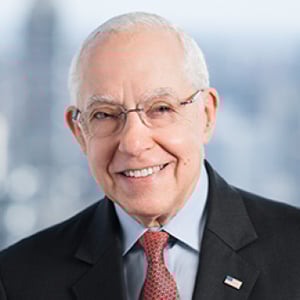
Former United States Attorney General
Michael B. Mukasey is the former Attorney General of the United States, the nation’s chief law enforcement officer. As Attorney General from November 2007 to January 2009, he oversaw the U.S. Department of Justice and advised on critical issues of domestic and international law.
From 1988 to 2006, Judge Mukasey served as a district judge in the United States District Court for the Southern District of New York, becoming Chief Judge in 2000.
From 1972 to 1976, Judge Mukasey served as an Assistant United States Attorney for the Southern District of New York, and as Chief of the Official Corruption Unit from 1975 to 1976. His practice consisted of criminal litigation on behalf of the government, including investigation and prosecution of narcotics, bank robbery, interstate theft, securities fraud, fraud on the government and bribery. From 1976 to 1987 and from 2006 to 2007 he was in private practice.
Judge Mukasey has received numerous honors, including the Federal Bar Council’s Learned Hand Medal for Excellence in Federal Jurisprudence. He served as Chairman of the Committee on Public Access to Information and Proceedings of the New York Bar Association from 1984 to 1987. He served on the Federal Courts Committee of the Association of the Bar of the City of New York from 1979 to 1982 and its Communications Law Committee from 1983 to 1986. Judge Mukasey was also a part-time lecturer at Columbia School of Law from January 1993 to May 2007, teaching trial advocacy.
He received his LL.B. from Yale Law School in 1967 and his B.A. from Columbia College in 1963.
Associate Professor of Law, William and Mary Law School

How Governor Carr Fought for the Rights of the Japanese During WWII
Visible Children: How Do We Make Education Better in America?
The Supreme Court and Access to Effective Counsel
How the Supreme Court Has Subverted the Constitution
Robert A. Levy, Matthew Saltzman
The Supreme Court has endorsed an exponential growth in federal government power, often at the...
How the Supreme Court Has Subverted the Constitution
Robert A. Levy, Matthew Saltzman
The Supreme Court has endorsed an exponential growth in federal government power, often at the...
How the Supreme Court Has Subverted the Constitution
Las Vegas Lawyers Chapter
Las Vegas, NVCan Someone Please Turn on the Lights? Bringing Transparency to the Foreign Corrupt Practices Act
James C. Dunlop, Michael B. Mukasey
Note from the Editor: This paper assesses the Department of Justice’s authority under the Foreign...
Legal Lazarus: How the Law Helped Build My Business, Buried It, and Brought It Back to Life Again
Rehabilitating Lochner: Defending Individual Rights against Progressive Reform
Sester v. U.S. - Post-Decision SCOTUScast
Allison Orr Larsen
On March 28, 2012, the Supreme Court announced its decision in Sester v. U.S. The question...