
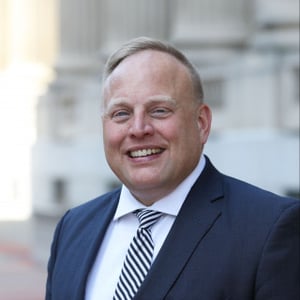
Vice President and Director of Litigation, EdChoice
Thomas M. Fisher served as a Deputy Attorney General for 22 years and as Indiana’s first Solicitor General from 2005-2023. In that role he handled high profile litigation for the State, defended state statutes against constitutional attack, advised the Attorney General on a range of legal policy issues, and managed the State’s U.S. Supreme Court docket. A two-time recipient of the National Association of Attorneys General Best Brief Award, Fisher has argued five times before the High Court.
His U.S. Supreme Court experience also includes authorship of dozens of cert-stage and merits-stage amicus curiae briefs on a wide range of issues. In addition, Fisher has argued dozens of important and high-profile cases before both the Indiana Supreme Court and the Seventh Circuit U.S. Court of Appeals. Fisher is a Fellow of the American Academy of Appellate Lawyers and was recently named a Sagamore of the Wabash by Governor Eric Holcomb.
A native Hoosier, Fisher is a graduate of Wabash College and Indiana University Maurer School of Law, where he serves as an Adjunct Professor of Law.
United States Court of Appeals, Seventh Circuit
David Frank Hamilton is a United States federal judge, currently serving on the United States Court of Appeals for the Seventh Circuit. He previously was the Chief Judge of the United States District Court for the Southern District of Indiana.
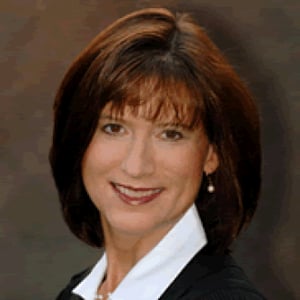
Judge, United States Court of Appeals, Seventh Circuit
Judge Sykes was nominated to the Seventh Circuit by President George W. Bush and confirmed by the Senate in 2004. Prior to her appointment to the federal bench, Judge Sykes served as a justice on the Wisconsin Supreme Court. Governor Tommy G. Thompson appointed her in September 1999 to fill a mid-term vacancy on the state supreme court, and she was elected to a full ten-year term in April 2000. From 1992-1999, Judge Sykes served on the state trial bench in Milwaukee County (elected in 1992 and re-elected in 1998). From 1985-1992, Judge Sykes practiced law with the Milwaukee firm of Whyte & Hirschboeck, S.C., and from 1984-1985, was a law clerk to Federal Judge Terence T. Evans.
Born and raised in the Milwaukee area, Judge Sykes earned a bachelor’s degree in journalism from Northwestern University in 1980 and a law degree from Marquette University Law School in 1984. Between college and law school, Judge Sykes worked as a reporter for The Milwaukee Journal.
Judge Sykes has two sons.
Vice President and Director of Litigation, EdChoice
Thomas M. Fisher served as a Deputy Attorney General for 22 years and as Indiana’s first Solicitor General from 2005-2023. In that role he handled high profile litigation for the State, defended state statutes against constitutional attack, advised the Attorney General on a range of legal policy issues, and managed the State’s U.S. Supreme Court docket. A two-time recipient of the National Association of Attorneys General Best Brief Award, Fisher has argued five times before the High Court.
His U.S. Supreme Court experience also includes authorship of dozens of cert-stage and merits-stage amicus curiae briefs on a wide range of issues. In addition, Fisher has argued dozens of important and high-profile cases before both the Indiana Supreme Court and the Seventh Circuit U.S. Court of Appeals. Fisher is a Fellow of the American Academy of Appellate Lawyers and was recently named a Sagamore of the Wabash by Governor Eric Holcomb.
A native Hoosier, Fisher is a graduate of Wabash College and Indiana University Maurer School of Law, where he serves as an Adjunct Professor of Law.
United States Court of Appeals, Seventh Circuit
David Frank Hamilton is a United States federal judge, currently serving on the United States Court of Appeals for the Seventh Circuit. He previously was the Chief Judge of the United States District Court for the Southern District of Indiana.
Judge, United States Court of Appeals, Seventh Circuit
Judge Sykes was nominated to the Seventh Circuit by President George W. Bush and confirmed by the Senate in 2004. Prior to her appointment to the federal bench, Judge Sykes served as a justice on the Wisconsin Supreme Court. Governor Tommy G. Thompson appointed her in September 1999 to fill a mid-term vacancy on the state supreme court, and she was elected to a full ten-year term in April 2000. From 1992-1999, Judge Sykes served on the state trial bench in Milwaukee County (elected in 1992 and re-elected in 1998). From 1985-1992, Judge Sykes practiced law with the Milwaukee firm of Whyte & Hirschboeck, S.C., and from 1984-1985, was a law clerk to Federal Judge Terence T. Evans.
Born and raised in the Milwaukee area, Judge Sykes earned a bachelor’s degree in journalism from Northwestern University in 1980 and a law degree from Marquette University Law School in 1984. Between college and law school, Judge Sykes worked as a reporter for The Milwaukee Journal.
Judge Sykes has two sons.
Associate, Clark & Sauer, LLC
Ms. Weinberg is an associate attorney with Clark Law Firm, LLC in St. Louis, Missouri, concentrating in complex commercial litigation and state constitutional litigation.
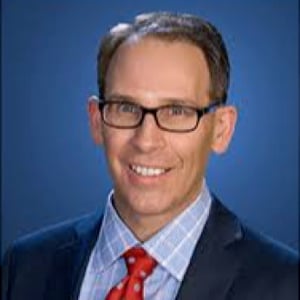
Judge, United States District Court, Eastern District of Missouri
Stephen R. Clark the chief United States district judge for the Eastern District of Missouri. He was appointed to the bench by President Trump in 2018 and became the chief judge in 2022. Prior to serving on the court, Judge Clark was the founder and managing partner of the Runnymede Law Group in St. Louis, Missouri, from 2008 to 2019. He also served as the president of the Federalist Society’s St. Louis Lawyers Chapter.
Associate, Bopp, Coleson & Bostrom, Terre Haute, Indiana; B.A. (honors), Calvin College, 2001; J.D., Valparaiso University School of Law, 2004.
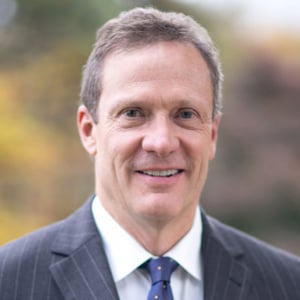
Henry L. and Grace Doherty Charitable Foundation Professor of Law; Armistead M. Dobie Professor of Law; and Director, John M. Olin Program in Law and Economics, University of Virginia School of Law
Law and economics expert Jason Scott Johnston joined the Virginia Law faculty in 2010 and serves as the Henry L. and Grace Doherty Charitable Foundation Professor of Law. He formerly served as the Nicholas E. Chimicles Research Professor in Business Law and Regulation at Virginia Law, and the Robert G. Fuller, Jr. Professor of Law and director of the Program on Law, Environment and Economy at the University of Pennsylvania Law School.
Johnston’s scholarship has examined subjects ranging from natural resources law to torts and contracts. He has published dozens of articles in law journals, such as the Yale Law Journal, and in peer-reviewed economics journals, such as the Journal of Law, Economics and Organization. He is currently working on a book that critically analyzes the foundations of global warming law and policy, a series of articles on the economics of regulatory science and another series of articles on various aspects of the law and economics of consumer protection. He has served on the Board of Directors of the American Law and Economics Association, on the National Science Foundation’s Law and Social Science grant review panel, and on the Board of the Searle Civil Justice Institute. He won Penn Law’s Robert A. Gorman Award for Teaching Excellence in 2003.
After earning his A.B. from Dartmouth College and both his J.D. and Ph.D. (economics) from the University of Michigan, Johnston clerked for Judge Gilbert S. Merritt on the U.S. Court of Appeals for the Sixth Circuit. He then taught at Vermont Law School and Vanderbilt Law School before joining Penn’s faculty. He has been a visiting professor or held fellowship appointments at Yale Law School, the University of Southern California Gould School of Law, the American Academy in Berlin and the Property and Environment Research Center.
*Mr. Callen is an attorney who practice in Kansas City, Mo.
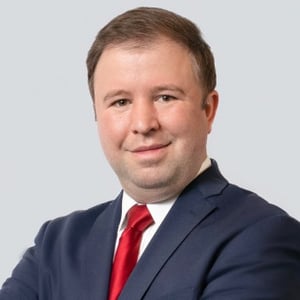
Partner, Wiley Rein LLP
Tom has over 15 years’ experience in private practice and public service at the federal and state levels representing clients in high-stakes appellate and regulatory litigation matters. Tom has argued appeals in the Fourth, Fifth, Ninth, D.C. and Federal Circuits, and the West Virginia Supreme Court of Appeals.
Prior to joining Wiley, Tom was the General Counsel at the Federal Communications Commission (FCC), where he served as the agency’s chief legal officer and briefed dozens of appeals – personally arguing two – in the federal courts of appeals in constitutional and administrative law challenges to the FCC’s orders. Tom managed a team of over 70 attorneys and staff and provided consultation and advice on a wide range of practice areas relating to the FCC’s work, including administrative law, appellate and trial litigation, bankruptcy, ethics, fiscal law, fraud, labor and employment, and public records requests. He has spent his career advising clients on all stages of federal agency rulemaking, adjudication, and litigation, in fields ranging from communications to environmental law to securities to labor and employment. He frequently speaks and writes on legal issues and his articles have appeared in the Wall Street Journal, Washington Post, National Review, Forbes, and Newark Star-Ledger.
Associate, Clark & Sauer, LLC
Ms. Weinberg is an associate attorney with Clark Law Firm, LLC in St. Louis, Missouri, concentrating in complex commercial litigation and state constitutional litigation.
Judge, United States District Court, Eastern District of Missouri
Stephen R. Clark the chief United States district judge for the Eastern District of Missouri. He was appointed to the bench by President Trump in 2018 and became the chief judge in 2022. Prior to serving on the court, Judge Clark was the founder and managing partner of the Runnymede Law Group in St. Louis, Missouri, from 2008 to 2019. He also served as the president of the Federalist Society’s St. Louis Lawyers Chapter.

Patrick Hotung Professor of Constitutional Law, Georgetown University Law Center
Randy Barnett is the Patrick Hotung Professor of Constitutional Law at Georgetown University Law Center. He has argued before the United States Supreme Court, tried murder cases to juries as a prosecutor in Chicago, and appeared as a prosecutor in the feature film Inalienable. He is the author of numerous books, including Restoring the Lost Constitution, The Structure of Liberty, Our Republican Constitution, and The Original Meaning of the Fourteenth Amendment. He has published two memoirs, A Life for Liberty: The Making of an American Originalist, and Felony Review: Tales of True Crime and Corruption in Chicago. He is currently working on a new book, Freedom and Flourishing: Libertarianism for the Real World.
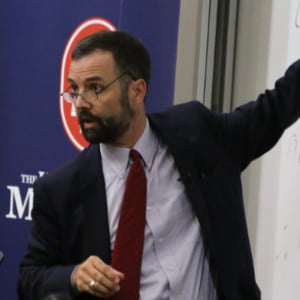
Professor of Law and Jamie L. Whitten Chair in Law and Government, University of Mississippi School of Law
Christopher Green (https://law.olemiss.edu/faculty-directory/christopher-green/) is Professor of Law and Jamie L. Whitten Chair in Law and Government at the University of Mississippi, where he has taught since 2006. He is a graduate of Princeton University and Yale Law School, and has a PhD in philosophy from the University of Notre Dame. He clerked for Judge Rhesa H. Barksdale on the Fifth Circuit and is the author of Equal Citizenship, Civil Rights, and the Constitution: The Original Sense of the Privileges or Immunities Clause (2015) and a large number of articles and essays on constitutional theory and the Fourteenth Amendment, including the two-part Original Sense of the (Equal) Protection Clause and Clarity and Reasonable Doubt in Early State-Constitutional Judicial Review. He is an affiliated scholar with the University of San Diego Center for the Study of Constitutional Originalism.
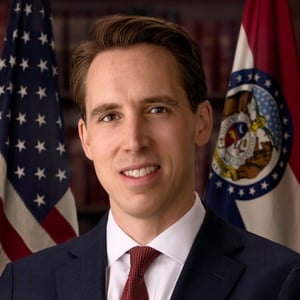
United States Senator, Missouri
U.S. SENATOR JOSH HAWLEY TOOK OFFICE IN JANUARY 2019.
Raised in rural Missouri, U.S. Senator Josh Hawley previously served as Missouri’s Attorney General. There he earned a reputation for taking on the big and the powerful to protect Missouri workers and families. He has battled big government and big business, special interests, organized crime, and anyone who would threaten the well-being of Missourians.
A native of small town Lexington, Missouri in rural Lafayette County, Senator Hawley graduated from Rockhurst High School in Kansas City. After graduating from Stanford University in 2002 and Yale Law School in 2006, he moved back home to mid-Missouri with his wife, Erin, where they started a family. They are the proud parents of two young boys, Elijah and Blaise.
Senator Hawley is recognized as one of the nation’s leading constitutional lawyers. He has litigated at the Supreme Court of the United States, the federal courts of appeals, and in state court, fighting for the people’s liberties. He previously fought Obamacare at the Supreme Court — and won — as one of the lead attorneys in the landmark Hobby Lobby case. He was also a lead attorney in the Hosanna-Tabor case at the Supreme Court, protecting the rights of churches.
As Attorney General, he fought the Washington overreach threatening farms and family businesses, including the Waters of the United States Rule and the Clean Power Plan. Senator Hawley has also taken on big opioid manufacturers, challenging their unethical marketing practices that helped create an epidemic of opioid abuse. He cracked down on human trafficking in Missouri, leading the largest anti-trafficking bust in Missouri history. And he stood up to big tech, launching investigations of the most powerful companies in the world—Google and Facebook—to protect Missourians, their data, and the First Amendment.
The youngest Senator in America, Senator Hawley serves on the Senate Committees on the Judiciary; Armed Services; Homeland Security and Governmental Affairs; Small Business and Entrepreneurship; and the Special Committee on Aging.

George C. Dix Professor in Constitutional Law, Northwestern University Pritzker School of Law
John O. McGinnis is a graduate of Harvard College and Harvard Law School where he was an editor of the Harvard Law Review. He also has an MA degree from Balliol College, Oxford, in philosophy and theology. Professor McGinnis clerked on the U.S. Court of Appeals for the District of Columbia. From 1987 to 1991, he was deputy assistant attorney general in the Office of Legal Counsel at the Department of Justice. He is the author of Accelerating Democracy: Transforming Government Through Technology (Princeton 2013) and Originalism and the Good Constitution (Harvard 2013) (with M. Rappaport). He is a past winner of the Paul Bator award given by the Federalist Society to an outstanding academic under 40. He has been listed by the United States on the roster of panelists who may be called upon to decide World Trade Organization Disputes.
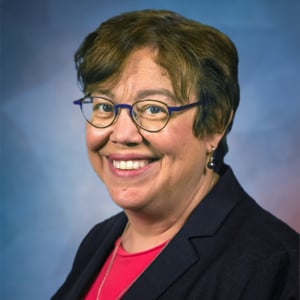
Executive Vice President and Senior Counselor to the President, The Federalist Society for Law and Public Policy Studies
B.A., Yale; J.D., University of Chicago. Lee Liberman Otis is the Executive Vice President and Senior Counselor to the President at the Federalist Society. She also serves as a member of the American Law Institute (ALI), a senior fellow of the Administrative Conference (ACUS), and as the co-chair of the National Constitution Center's Coalition of Freedom Advisory Board. She previously was a special assistant and an Associate Deputy Attorney General at the U.S. Department of Justice, General Counsel of the Department of Energy, an associate in the appellate section of Jones, Day, Reavis & Pogue, an associate counsel to President George H.W. Bush, and a law clerk to Associate Justice Antonin Scalia. She also served as an assistant professor of law at George Mason, where she taught legislation, federal jurisdiction, constitutional law, civil procedure, and appellate advocacy. Ms. Otis has been an important member of the Federalist Society team since the organization’s beginnings. Together with David McIntosh, she led the effort to start what became the Chicago chapter of the Society. She also helped organize the Society’s first conference at Yale, its second conference at Chicago, and its first Lawyers Division chapter in Washington DC, as well as the effort to incorporate the Society, recruit its permanent staff, and obtain its early funding. She was a Founding Director of the Federalist Society.
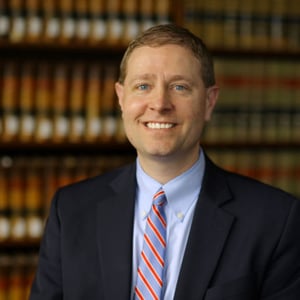
Executive Director, Salmon P. Chase Center for Civics, Culture, and Society, The Ohio State University
Professor Lee J. Strang serves as the inaugural executive director of the Salmon P. Chase Center for Civics, Culture, and Society at The Ohio State University.
Initiated in 2023 by the state of Ohio, the Chase Center will be an academic home at Ohio State for teaching, research, and programing on the foundations of the American constitutional order and its impact on society. As executive director, Professor Strang is responsible for organizing the center, overseeing the hiring and appointment of the center’s faculty, developing curriculum, and delivering student and academic programming. He also holds a faculty appointment in the Moritz College of Law at Ohio State.
Professor Strang is a nationally recognized legal scholar who has published dozens of articles in leading journals in the fields of constitutional law and interpretation, property law, and religion and the First Amendment. He co-edits the textbook Federal Constitutional Law, and his most recent book, Originalism’s Promise: A Natural Law Account of the American Constitution is the first book-length, natural law justification for originalism. He currently is writing on civic thought and leadership, and he is finalizing a book on the history of American Catholic legal education (with John M. Breen).
Before joining Ohio State, Professor Strang served as the inaugural director of the University of Toledo’s Institute of American Constitutional Thought & Leadership. He joined the Toledo College of Law faculty in 2008, was granted tenure in 2010, and was named John W. Stoepler Professor of Law & Values in 2015. The University of Toledo awarded Professor Strang its Outstanding Faculty Research and Scholarship Award in 2017. Before that, he was a visiting professor at Michigan State University College of Law. A graduate of the University of Iowa, where he was articles editor of the Iowa Law Review and Order of the Coif, Professor Strang holds an LL.M. degree from Harvard Law School.
Professor Strang has been a visiting scholar at the Georgetown Center for the Constitution and a visiting fellow at the James Madison Program at Princeton University. In 2016, he was appointed to the Ohio Advisory Committee of the U.S. Commission on Civil Rights and reappointed as chair in 2023.
Prior to teaching, Professor Strang served as a judicial clerk for Judge Alice M. Batchelder of the U.S. Court of Appeals for the Sixth Circuit. He was also an associate for Jenner & Block LLP in Chicago, where he practiced in general and appellate litigation.
Professor Strang is a frequent presenter at scholarly conferences. He is the president of the Board of Trustees of Northwest Ohio Classical Academy, Ohio’s first classical charter school. He is also a regular participant in debates at law schools across the country, a contributor to the media, and a speaker to political, civic, and religious groups.
George C. Dix Professor in Constitutional Law, Northwestern University Pritzker School of Law
John O. McGinnis is a graduate of Harvard College and Harvard Law School where he was an editor of the Harvard Law Review. He also has an MA degree from Balliol College, Oxford, in philosophy and theology. Professor McGinnis clerked on the U.S. Court of Appeals for the District of Columbia. From 1987 to 1991, he was deputy assistant attorney general in the Office of Legal Counsel at the Department of Justice. He is the author of Accelerating Democracy: Transforming Government Through Technology (Princeton 2013) and Originalism and the Good Constitution (Harvard 2013) (with M. Rappaport). He is a past winner of the Paul Bator award given by the Federalist Society to an outstanding academic under 40. He has been listed by the United States on the roster of panelists who may be called upon to decide World Trade Organization Disputes.
Executive Vice President and Senior Counselor to the President, The Federalist Society for Law and Public Policy Studies
B.A., Yale; J.D., University of Chicago. Lee Liberman Otis is the Executive Vice President and Senior Counselor to the President at the Federalist Society. She also serves as a member of the American Law Institute (ALI), a senior fellow of the Administrative Conference (ACUS), and as the co-chair of the National Constitution Center's Coalition of Freedom Advisory Board. She previously was a special assistant and an Associate Deputy Attorney General at the U.S. Department of Justice, General Counsel of the Department of Energy, an associate in the appellate section of Jones, Day, Reavis & Pogue, an associate counsel to President George H.W. Bush, and a law clerk to Associate Justice Antonin Scalia. She also served as an assistant professor of law at George Mason, where she taught legislation, federal jurisdiction, constitutional law, civil procedure, and appellate advocacy. Ms. Otis has been an important member of the Federalist Society team since the organization’s beginnings. Together with David McIntosh, she led the effort to start what became the Chicago chapter of the Society. She also helped organize the Society’s first conference at Yale, its second conference at Chicago, and its first Lawyers Division chapter in Washington DC, as well as the effort to incorporate the Society, recruit its permanent staff, and obtain its early funding. She was a Founding Director of the Federalist Society.

The Death of Jurisprudence?
Thomas M. Fisher, David Hamilton, Diane S. Sykes
The Indianapolis Lawyers Chapter hosted this discussion on Judge J. Harvie Wilkinson III's book, Cosmic...
The Death of Jurisprudence?
Thomas M. Fisher, David Hamilton, Diane S. Sykes
The Indianapolis Lawyers Chapter hosted this discussion on Judge J. Harvie Wilkinson III's book, Cosmic...
Declining to Follow Its Neighbor Missouri, the Kansas Supreme Court Holds Noneconomic Damages Cap in Medical Malpractice Cases Constitutional
Kristin Weinberg, Stephen R. Clark
The Kansas Supreme Court, in Miller v. Johnson,1 recently upheld Kansas’ statutory cap on non-economic...
Pennsylvania High Court Hears Challenge to Voter ID Law
Anita Y. Woudenberg
Voter ID laws, defined as laws requiring photo evidence of identification at the polls, are...
Virginia Supreme Court Limits Insurer's Duty to Defend in Climate Change Lawsuits
Jason Johnston
AES Corp. v. Steadfast Insurance Co.,1 was a closely watched Virginia Supreme Court case that,...
Tenth Circuit Rejects Challenge to the Judicial Merit Selection Process in Kansas
Clayton Callen, Justin Whitworth
The U.S. Court of Appeals for the Tenth Circuit has become the latest federal appellate...
New Jersey Voters Overwhelmingly Approve Constitutional Amendment to Overturn Judicial Pensions Case
Thomas M. Johnson
On Election Day 2012, New Jersey voters overwhelmingly approved the New Jersey Judicial Salary...
Missouri Supreme Court Overrules 20 Years of Precedent in Holding Noneconomic Damages Cap Unconstitutional
Kristin Weinberg, Stephen R. Clark
Overruling its own twenty-year precedent in Adams By and Through Adams v. Children’s Mercy Hospital1...
Panel 1: Roundtable on Judicial Deference v. Judicial Engagement
15th Annual Faculty Conference
New Orleans, LATribute to Judge Robert Bork by John McGinnis
15th Annual Faculty Conference
New Orleans, LA