
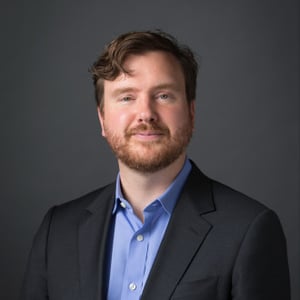
President and CEO, Foundation for Individual Rights in Education (FIRE)
Greg Lukianoff is an attorney, New York Times best-selling author, and the President and CEO of the Foundation for Individual Rights in Education (FIRE). He is the author of Unlearning Liberty: Campus Censorship and the End of American Debate, Freedom From Speech, and FIRE’s Guide to Free Speech on Campus. Most recently, he co-authored The Coddling of the American Mind: How Good Intentions and Bad Ideas Are Setting Up a Generation for Failure with Jonathan Haidt. This New York Times best-seller expands on their September 2015 Atlantic cover story of the same name. Greg is also an Executive Producer of Can We Take a Joke? (2015), a feature-length documentary that explores the collision between comedy, censorship, and outrage culture, both on and off campus, and of Mighty Ira: A Civil Liberties Story (2020), a feature-length film about the life and career of former ACLU Executive Director Ira Glasser.
Greg has been published in The New York Times, The Wall Street Journal, The Washington Post, Los Angeles Times, The Boston Globe, and numerous other publications. He frequently appears on TV shows and radio programs, including the CBS Evening News, The Today Show, and NPR’s Morning Edition. In 2008, he became the first-ever recipient of the Playboy Foundation’s Freedom of Expression Award, and he has testified before both the U.S. Senate and the House of Representatives about free speech issues on America’s college campuses.
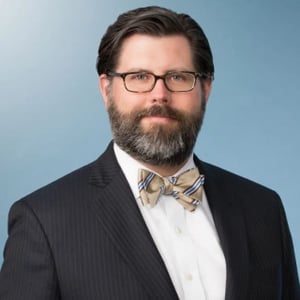
Partner, Faegre Drinker Biddle & Reath LLP
Brian J. Paul is an appellate lawyer and leads law teams in high-stakes commercial litigation. He has briefed and argued everything from weighty abstract constitutional issues to dollars-and-cents business issues and everything in-between, both on appeal and in trial courts around the country. A member of the American Law Institute, recent past-president of the Seventh Circuit Bar Association and top-tier ranked Chambers appellate lawyer, Brian had one client say about him: “Brian is one of the most respected and skilled appellate lawyers, not only in Indianapolis but across the country. He is trusted to deliver timely guidance on complex issues.” Another said: “He is excellent. I enjoyed working with him. He is able to put things into layman’s terms and explains things really well. His written and oral advocacy are short, crisp and to the point.”
Clients hire Brian to digest the complex, and make the complex simple and compelling for busy, generalist judges. In his writing, he strives to cut through jargon and legalese, and distill things down to what’s important. In his oral advocacy, by intense preparation, he strives to be the advocate whom judges trust for the right answers. In the dozens of cases he has argued, Brian has helped clients win on both sides of the “v.” His recent representations include:
Assistant General Counsel, Government Affairs, Altria Client Services Inc.
Wesley Bizzell serves as Assistant General Counsel, Government Affairs for Altria Client Services Inc. (“ALCS”). Mr. Bizzell provides in-house legal counsel on matters relating to the political, legislative, and lobbying activities of Altria Group, Inc., its services companies, including ALCS, and its operating companies, including Philip Morris USA Inc., U.S. Smokeless Tobacco Co. LLC, John Middleton Co., and Ste. Michelle Wine Estates Ltd.
In this role, Mr. Bizzell is responsible for ensuring that Altria and its companies comply with all laws and regulations regarding federal, state, local, and Canadian campaign finance, government ethics, gifts to government officials, lobbying disclosure and reporting, and charitable giving. Overseeing a comprehensive compliance system covering the regulation of government affairs, Mr. Bizzell provides advice and guidance on political law compliance for more than 65 jurisdictions. Mr. Bizzell also supports Altria’s lobbying efforts by providing services related to legislative and regulatory drafting and interpretation. Mr. Bizzell is a member of Altria’s Compliance Leadership Team.
Previously, Mr. Bizzell was an attorney in Winston & Strawn LLP’s Federal Government Relations and Regulatory Affairs Practice Group. His career also includes more than six years on Capitol Hill, where he served as an aide to Arkansas Senators David Pryor and Dale Bumpers and handled matters involving the Federal Bureau of Prisons, Social Security Administration, Department of Education, and Department of Labor. Additionally, he has served in the Office of General Counsel and the Privatization and Special Projects Branch of the Federal Bureau of Prisons, Department of Justice, where he focused on a myriad of issues involving privatization and government procurement.
While at Winston & Strawn, Mr. Bizzell provided significant representation on political compliance, government affairs, legislative, and regulatory matters to Fortune 500 companies in the corrections, automotive, banking, pharmaceutical, agricultural, and technology-oriented industries, as well as trade associations, nonprofit organizations, and local and territorial governments. He has served as outside ethics counsel to the Abraham Lincoln Bicentennial Commission, provided legal counsel to the election campaigns of gubernatorial and congressional candidates, represented a corporate client in an enforcement action before the Federal Election Commission, and conducted internal investigations related to corporate political activities.
Mr. Bizzell graduated with a B.A. in justice, magna cum laude, from the American University in Washington, D.C. and received a Master of Social Work with a focus in public policy from the Catholic University of America. He received his J.D., magna cum laude, from Georgetown University Law Center, where he was elected to the Order of the Coif and served as an editor for the Georgetown Law Journal.
Mr. Bizzell is a frequent author and speaker on political compliance law. He serves on the Publications Committee for the Council on Governmental Ethics Laws (“COGEL”), a professional organization of government officials with responsibilities or interests in governmental ethics, elections, campaign finance, and lobby laws, and served on the advisory board for the Minority Corporate Counsel Association’s 2011 CLE Expo. Mr. Bizzell also lectures on political compliance law issues at many venues, including the Society of Corporate Compliance and Ethics’ Corporate Compliance Institute, the COGEL Annual Conference, the American Conference Institute’s National Forum on Corporate Lobbying and Political Activities, and the Practicing Law Institute’s annual Corporate Political Activities conference. Mr. Bizzell’s articles on the topics of political compliance law and lobbying have appeared in Corporate Counsel, Corrections Today, American Jails, the COGEL Guardian, Corrections.Com, and Metropolitan Corporate Counsel. He is a member of the Maryland and District of Columbia bars.
Managing Member, Political Law Group
Doug Chalmers practices in the area of federal and state political law and litigation. Before establishing the Political Law Group, he was a partner in the political law and litigation practice groups at McKenna, Long & Aldridge LLP. Doug has twice been recognized in Chambers USA: America's Leading Lawyers for Business as one of the leading political law attorneys in the nation. Politics magazine has also identified him as one of the most influential Republicans in Georgia.
Doug advises businesses, nonprofit organizations, chambers of commerce, trade associations, political action committees, elected officials, candidates, political parties, lobbyists and government agencies on the federal and state laws that govern involvement in political activities. This includes election law, campaign finance, lobbying, Federal Communications Commission regulations, government contracts, pay-to-play rules and government ethics. He advises on compliance and handles litigation and administrative law proceedings involving these issues. He also has experience in civil litigation involving libel and defamation, wrongful death, insurance coverage, contract disputes, class action consumer fraud, and other matters.
As part of his practice, Doug has successfully defended clients in numerous high-profile cases. His clients have included a former Speaker of the U.S. House of Representatives; Georgia's former Governor; a Senate President Pro Tempore and two Speakers of the Georgia House of Representatives; the Senate and House Majority Leaders; Justices of the Georgia Supreme Court; Judges on the Georgia Court of Appeals; the Georgia Republican Party, and the Georgia House Republican Caucus. He was the chief lawyer in Georgia for the 2008 McCain presidential campaign, served as Chairman of Lawyers for Rudy Giuliani in the southeastern United States, and was a Co-Chair of Georgia Lawyers for Romney-Ryan. He is also the Chairman of the Political Activities Subcommittee of the Nonprofit Law Section of the State Bar of Georgia.
Doug is also a frequent speaker in the area of political law, and he has addressed CLE seminars around the country. He has testified before legislative committees concerning government ethics and ethics reform, and is regularly contacted by the media on these issues. Law & Politics and Atlanta Magazine have recognized Doug as a Georgia Super Lawyer Rising Star.
Doug is also active in the community and in civic affairs. He was appointed by Governor Sonny Perdue to the Board of Directors of the Georgia Department of Driver Services, and he served as Vice-Chair of the Board. He is on the Board of Governors of the Republican National Lawyers Association, and is the immediate past chairman of the RNLA's Georgia chapter. He is active in the Federalist Society, serving on the Executive Committees of the Atlanta Lawyers Chapter and the Free Speech and Election Law Practice Group. He is an Assistant Scoutmaster of Boy Scout Troop 27 in Johns Creek.
Doug received his undergraduate and law degrees from Duke University. He was an editor of the Duke Law Journal and a member of the Moot Court Board, and he received the James S. Bidlake Award for Superior Achievement in Legal Research and Writing. He clerked for Judge Diarmuid O’Scannlain of the U.S. Court of Appeals for the Ninth Circuit.
Doug is admitted in Georgia and the District of Columbia.
Partner, Holtzman Vogel Baran Torchinsky & Josefiak PLLC
Jason Torchinsky is a partner at Holtzman Vogel Josefiak PLLC, specializing in campaign finance, election law, lobbying disclosure and issue advocacy groups. Politico recently named him one of the “50 Politicos to Watch,” and in 2007, Campaigns and Elections Magazine named him a “Rising Star of Politics.”
In addition to his practice counseling clients on compliance with campaign finance, ethics laws, lobbying disclosure and election laws, Mr. Torchinsky has served as lead counsel in a number of litigation matters. Representative matters in the redistricting area include Louisiana House of Representatives v. Holder (D.D.C.) (Section 5 pre-clearance action), City of Sandy Springs v. Holder (D.D.C.) (Section 5 bailout action), and Fletcher v. Lamone (D. Md.) (challenging Maryland’s Congressional Districting map). In the campaign finance context, he is currently representing clients in Alliance for America’s Future v. State (Nevada Supreme Court) and Van Hollen v. Federal Election Commission (D.D.C.) (Representing intervenor defendants). He has also represented Virginia candidates in recounts and voter registration challenges before various Virginia Circuit Courts.
Mr. Torchinsky frequently lectures on campaign finance redistricting and ethics related subjects and provides commentary to the media on election related matters.
Prior to joining the firm, Mr. Torchinsky was Counsel to the Assistant Attorney General for the Civil Rights Division at the United States Department of Justice. During the 2004 election cycle, he served as Deputy General Counsel to Bush-Cheney ’04 and Deputy General Counsel to the 2005 Presidential Inaugural Committee.
He holds a B.A. in Government and Public Policy from the College of William and Mary and a J.D. from the College of William and Mary School of Law. He is a member of the Virginia Bar, the District of Columbia Bar, the Republican National Lawyers Association and the Federalist Society.

Senior Fellow and Director of Constitutional Studies, Manhattan Institute
Ilya Shapiro is a senior fellow and director of constitutional studies at the Manhattan Institute and a contributing editor of City Journal. Previously he was executive director and senior lecturer at the Georgetown Center for the Constitution, and before that a vice president of the Cato Institute.
Shapiro is the author of Lawless: The Miseducation of America’s Elites (2025) and Supreme Disorder: Judicial Nominations and the Politics of America’s Highest Court (2020), coauthor of Religious Liberties for Corporations? (2014), and editor of 11 volumes of the Cato Supreme Court Review (2008-18). He has contributed to a variety of academic, popular, and professional publications, including the Wall Street Journal, Harvard Journal of Law & Public Policy, Washington Post, Los Angeles Times, USA Today, National Review, and Newsweek. He also regularly provides commentary for various media outlets, writes the Shapiro’s Gavel newsletter on Substack, and once appeared on the Colbert Report.
Shapiro has testified many times before Congress and state legislatures and has filed more than 500 amicus curiae “friend of the court” briefs in the Supreme Court. He lectures regularly on behalf of the Federalist Society, is a member of the board of fellows of the Jewish Policy Center, was an inaugural Washington Fellow at the National Review Institute, and has been an adjunct law professor at the George Washington University and University of Mississippi. He is also the chairman of the board of advisers of the Mississippi Justice Institute, a barrister in the Edward Coke Appellate Inn of Court, and a former member of the Virginia Advisory Committee to the U.S. Commission on Civil Rights.
Earlier in his career, Shapiro was a special assistant/adviser to the Multi-National Force in Iraq on rule-of-law issues and practiced at Patton Boggs and Cleary Gottlieb. Before entering private practice, he clerked for Judge E. Grady Jolly of the U.S. Court of Appeals for the Fifth Circuit. He holds an AB from Princeton University, an MSc from the London School of Economics, and a JD from the University of Chicago Law School.
Justice, Supreme Court of Arizona
Clint Bolick was appointed by Governor Doug Ducey in January 2016 to serve on the Arizona Supreme Court and was retained by the voters in 2018 and 2024.
Prior to joining the Court, Justice Bolick litigated constitutional cases in state and federal courts from coast to coast, including the U.S. Supreme Court. Among other positions, he served as Vice President for Litigation at the Goldwater Institute and as Co-founder and Vice President for Litigation at the Institute for Justice. He has litigated in support of school choice, freedom of enterprise, private property rights, freedom of speech, and federalism, and against racial classifications and government subsidies.
Justice Bolick received his Juris Doctor degree from the University of California at Davis, where he has been recognized as a distinguished alumnus, and his Bachelor of Arts degree magna cum laude from Drew University. He serves as a research fellow with the Hoover Institution. Among other honors, he was named one of the 90 Greatest DC Lawyers in the Last 30 Years by Legal Times in 2008, received a Bradley Prize in 2006, and was recognized as one of the nation’s three lawyers of the year by American Lawyer in 2002 for his successful defense of school vouchers in Zelman v. Simmons-Harris.
Justice Bolick is a prolific author of a dozen books and hundreds of articles. Among his most recent books are Unshackled: Freeing America’s K-12 Education System: Immigration Wars: Forging an American Solution, co-authored with former Florida Governor Jeb Bush; and David’s Hammer: The Case for an Activist Judiciary. Bolick serves as an adjunct professor of constitutional law at Arizona State University’s Sandra Day O’Connor School of Law and has served as a lecturer at Harvard University’s John F. Kennedy School of Government.
Journalist & Legal Expert
Tim O’Brien is an attorney and an award winning journalist whose achievements include covering the U.S. Supreme Court for ABC News for more than twenty-two years. He is a recognized expert on the Court, its Justices and on the development of a generation of constitutional law.
O’Brien’s reporting has received the highest accolades of both the legal and journalism professions. The National Academy of Arts and Sciences awarded Mr. O’Brien an Emmy for his contributions to CNN’s coverage of the September 11thterrorism attacks. His television documentaries on the criminal justice system received the American Bar Association’s highest award (The Silver Gavel Award) as well as a Columbia-DuPont Award for Excellence in journalism. He also received a Columbia-DuPont Award for Human Rights Reporting for “Escape From Justice—Nazi War Criminals in America,” an ABC News documentary.
O’Brien’s reporting on the death penalty and alternative dispute resolution have also been recognized by the American Bar Association for journalism excellence. He is currently a contributing correspondent to the PBS Broadcast, “Religion and Ethics Newsweekly.” His opinions on issues ranging from the death penalty to broadcast coverage of the U.S. Supreme Court have appeared on the Op Ed pages of The New York Times, The Washington Post and other major newspapers around the U.S.
O’Brien is a member of the District of Columbia Bar and the Bar of the Supreme Court of the U.S. Active in the Washington legal community, he is an elected member of the American Law Institute, a former Director of the American Judicature Society and a current board member of the National Legal Center for the Public Interest.
O’Brien is a Distinguished Visiting Professor of Law at Nova Southeastern University in Ft. Lauderdale, Florida and has held similar positions at Loyola University School of Law in New Orleans (2003, 2005), St. Thomas University School of Law in Miami (2001) and Hofstra University School of Law, Hempstead, NY. (2000)
He is a “Distinguished Alumnus” of Michigan State University and a member of the Board of Visitors of the Loyola University School of Law in New Orleans. A frequent lecturer on the Supreme Court and legal issues generally, he was the keynote speaker at the D.C. Judicial Circuit Conference for the U.S. Court of Appeals for the District of Columbia meeting at Williamsburg, Virginia in 2002. In 2009, he was the keynote speaker for annual meetings of the state bar associations of Michigan and Kentucky.
Assistant Professor of Law, Marquette University Law School
Professor Bruce Boyden teaches and writes in the areas of copyright, Internet law, privacy, legal history, and civil procedure. His scholarship focuses on the ways in which law adapts to turbulence caused by sudden changes in the technological, social, or economic landscape. Recent articles includeGames and Other Uncopyrightable Systems, 18 Geo. Mason L. Rev. 439 (2011), and Constitutional Safety Valve: The Privileges or Immunities Clause and Status Regimes in a Federalist System, 62 Ala. L. Rev. 111 (2011).
Prior to joining the faculty at Marquette, Professor Boyden was a visiting professor at Washington & Lee University School of Law and at Michigan State University College of Law. Before that, he was in private practice for several years with the law firm Proskauer Rose LLP, where his practice focused on copyright, digital rights management, privacy, and Internet law. Professor Boyden is a graduate of Yale Law School, where he served as Notes Editor of the Yale Law Journal and as an Editor of the Yale Journal of Law & Feminism. He received his M.A. in history from Northwestern University and his B.A.,summa cum laude, from the University of Arkansas in history and philosophy. His current research focuses on the interaction between copyright and changing technology.

Professor of Law, Antonin Scalia Law School, George Mason University
Adam Mossoff is Professor of Law at Antonin Scalia Law School, George Mason University. He has published extensively on why patents, copyrights, and other intellectual property rights have been—and should be—legally secured to innovators and creators as property rights. His scholarship has been relied on by the United States Supreme Court, by lower federal courts, and by U.S. federal agencies. He has been invited to testify numerous times before the U.S. Senate and the House of Representatives on intellectual property legislation. His writings on intellectual property policy have also appeared in the Wall Street Journal, New York Times, Forbes, Investors Business Daily, and in other media outlets. His journal articles can be downloaded here.
Professor Mossoff is a longstanding member of the Executive Committee of the Intellectual Property Practice Group of the Federalist Society, on which he served as Chairperson from 2016-2018, and he is Chair of the Intellectual Property Working Group of the Regulatory Transparency Project of the Federalist Society. He is a Senior Fellow and Chair of the Forum for Intellectual Property at the Hudson Institute, a Visiting Intellectual Property Fellow at the Heritage Foundation, and a member of the Board of Directors of the Center for Intellectual Property Understanding. He is a member of the Intellectual Property Rights Policy Committee of ANSI and he has served as Chair and Vice-Chair of the Intellectual Property Committee of the IEEE-USA, on which he remains a member in good standing.
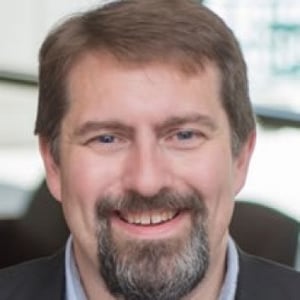
Professor of Law, Southern Illinois University School of Law
Professor Mark F. Schultz joined the faculty in 2003. He teaches and writes primarily in the area of intellectual property.
Professor Schultz is a frequent author and speaker known for his work on the law and economics of the global intellectual property system. In one of his most influential projects, he worked with the Organization for Economic Cooperation and Development (OECD) to construct a groundbreaking global trade secret protection index (the TSPI). The TSPI is influencing policy discussions on this cutting-edge topic in capitals around the world. Other recent projects have included an empirical study that quantified for the first time the backlogs in patent offices worldwide, a report on how patented innovation is meeting global health challenges, and the construction of a new global index of copyright strength.
Professor Schultz is an influential voice in public policy debates regarding intellectual property. He has testified before the U.S. Congress on copyright law at the invitation of the House Judiciary Committee and has briefed the staff of the U.S. Senate Judiciary Committee on trade secret legislation. He speaks frequently around the world about the connection between secure and effective intellectual property rights and flourishing national economies and individual lives, with invitations from the U.S. Patent and Trademark Office, the U.S. Trade Representative, and the U.S. Copyright Office, as well as numerous academic institutions, think tanks, and industry groups. He served as an NGO delegate to the World Intellectual Property Organization (WIPO) for several years during the WIPO Development Agenda talks. He is also one of the organizers of an ongoing multilateral diplomatic dialogue on best practices in national trade secret laws, and is co-founder of the Center for Protection of Intellectual Property (CPIP) at George Mason University in Washington, D.C.
Among the awards and recognition he has received for his scholarship was the School of Law's Outstanding Scholar of the Year award in 2008. He has been a distinguished visiting scholar at the University of Botswana and a visiting professor at DePaul University College of Law.
Professor Schultz graduated with honors from the George Washington University School of Law. Following law school, he was a judicial clerk for the Hon. Daniel M. Friedman of the United States Court of Appeals for the Federal Circuit in Washington, D.C., and the Hon. Eric G. Bruggink of the United States Court of Federal Claims. Prior to joining academia, he practiced law for a decade, serving as outside general counsel to several tech startups and helping technology companies to expand their businesses and commercialize their intellectual property in dozens of countries. He holds a B.A. in International Economics from George Washington University and has done PhD level coursework in development economics at Southern Illinois University.
He is active in leadership roles in local and national organizations. He has served as chair of the Federalist Society's Intellectual Property Practice Group and the AALS Section on Internet and Computer Law. He is an officer of the American Bar Association's International IP Committee of the International Law Section and the American Intellectual Property Law Association’s Trade Secret Law Committee. He currently is chair of the Academic Advisory Board of the Copyright Alliance.
Professor Schultz teaches Copyright Law, Trade Secret Law, Trademark Law, and a senior seminar on Intellectual Property and Global Development. He established and directs both the Specialization in Intellectual Property Law and the IP Semester in Practice Externship Program. He also co-founded a Legal Globalization Class, offered every other year, that takes students to South Africa and Botswana after spending a semester learning about the legal system, culture, history, and politics of southern Africa. The popular course is a once-in-a-lifetime experience that introduces students to leading lawyers, judges, government officials, and human rights advocates, taking them from Cape Town to Johannesburg to Gaborone as well as many popular destinations including game reserves, national parks, the Cape of Good Hope, and the Cradle of Humankind.
CoFounder, RightsClick
Steven’s extensive background in IP law and policy began as an attorney for the U.S. Senate Judiciary Committee, after which, he served as senior counsel for Policy and International Affairs at the U.S. Copyright Office and then as Chief Intellectual Property Counsel for the Global Intellectual Property Center of the U.S. Chamber of Commerce. Before co-founding RightsClick, he started the IP consultancy Sentinel Worldwide, and teaches copyright law at George Washington University Law School.

Thomas M. Siebel Senior Fellow, The Hoover Institution, Stanford University; Gary T. Schwartz Distinguished Professor of Law Emeritus, UCLA School of Law
Eugene Volokh is the Thomas M. Siebel Senior Fellow at the Hoover Institution (Stanford), as well as the Gary T. Schwartz Distinguished Professor of Law Emeritus and Distinguished Research Professor at UCLA School of Law. He recently retired from teaching at UCLA, after 30 years there, and is now focusing on research.
Volokh is the author of the textbooks The First Amendment and Related Statutes (8th ed. 2023), and Academic Legal Writing (5th ed. 2016), as well as over 100 academic law journal articles, mostly on First Amendment law. He is a member of The American Law Institute; the editor-in-chief of the Journal of Free Speech Law; and the creator and coauthor of The Volokh Conspiracy, a leading legal blog founded in 2002 (hosted at the Washington Post from 2014 to 2017 and now at Reason Magazine).
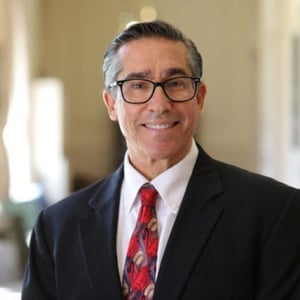
Professor of Philosophy & Church-Studies at Baylor University
Francis J. Beckwith is Professor of Philosophy & Church-State Studies at Baylor University, where he also serves as Associate Director of Graduate Studies in Philosophy. Writing and teaching in the areas of law and religion, jurisprudence, and politics, his over one dozen books include Taking Rites Seriously: Law, Politics, and the Reasonableness of Faith (Cambridge University Press, 2015), A Second Look at First Things: A Case for Conservative Politics (St. Augustine Press, 2013), Politics for Christians: Statecraft as Soulcraft (InterVarsity Press, 2010), Defending Life: A Moral and Legal Case Against Abortion Choice (Cambridge University Press, 2007), and Relativism: Feet Firmly Planted in Mid-Air (Baker Books, 1998). His articles have appeared in a wide-range of journals including Harvard Journal of Law & Public Policy, American Journal of Jurisprudence, Journal of Law & Religion, Notre Dame Journal of Law, Ethics & Public Policy, Nevada Law Journal, International Philosophical Quarterly, Journal of Medicine & Philosophy, San Diego Law Review, Liberty University Law Review, Ratio Juris, Christian Bioethics, Journal of Law, Medicine & Ethics, Journal of Medical Ethics, Philosophia Christi, Catholic Social Science Review, Journal of Church & State, Hastings Constitutional Law Quarterly, Chapman Law Review, Journal of Social Philosophy, Human Life Review, and Social Theory and Practice.

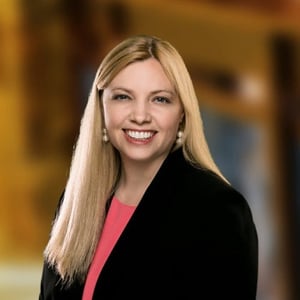
Florida Supreme Court Upholds Legislature’s Changes to State Pension System
Christine Kimberly Pratt
On January 17, 2013, in Scott v. Williams, 2013 FL 520 (Fla. 2013), the Florida...
Impact of Regulations and Export Controls on Technology Companies
Corporate Disclosure After Citizens United: Legislation, Regulation, and Shareholder Resolutions
TeleforumThe Supreme Court and Same Sex Marriage
Immigration Wars: Forging an American Solution
San Francisco, CaliforniaUnlearning Liberty: Campus Censorship and the End of American Debate
Greg Lukianoff, Brian J. Paul
On April 11, 2013, the Indianapolis Lawyers Chapter of the Federalist Society hosted an event...
April 2013 DC Luncheon with Tim O'Brien
What’s Next for Copyright Enforcement? Rogue Sites and Other Challenges
Intellectual Property Practice Group and George Mason University School of Law's Center for the Protection of Intellectual Property Teleforum
TeleforumMechanisms of the Slippery Slope
The Court of Disbelief: The Constitution’s Article VI Religious Test Prohibition and the Judiciary’s Religious Motive Analysis
Birmingham, Alabama