
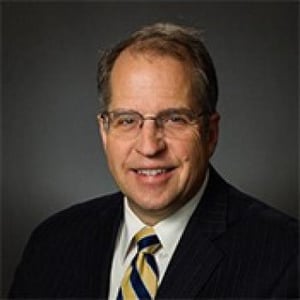
Senior Counsel and Director of Strategic Engagement, Alliance Defending Freedom
Jordan Lorence serves as senior counsel and director of strategic engagement with Alliance Defending Freedom, where he plays a key role with the Strategic Relations & Training Team. His work has encompassed a broad range of litigation, with a primary focus on religious liberty, free speech, student privacy, conscience rights of creative professionals, and the First Amendment freedoms of public university students and professors.
Lorence argued before the U.S. Supreme Court in the precedent-setting Southworth v. Board of Regents of the University of Wisconsin System case in 1999, challenging the university’s requirement that forced unwilling students to contribute to campus activist groups. He led the challenge to New York City’s ban on private worship services after hours in vacant public school buildings in the long-running Bronx Household of Faith v. Board of Education of the City of New York case. Lorence also defended the right of conscience in Elane Photography v. Willock at the New Mexico Supreme Court.
Lorence has made media appearances on television and radio shows including Fox News, NBC’s Today Show, and National Public Radio’s All Things Considered. His commentary has also appeared in The Wall Street Journal, USA Today, The New York Daily News, The New York Post, The Philadelphia Inquirer, The Washington Times, The Hill, and National Review.
Before officially joining the organization in 2001, Lorence was a productive allied attorney for many years, actively involved in significant litigation for ADF. He has also worked for the Home School Legal Defense Association, Concerned Women for America, and the American Center for Law and Justice. Lorence earned a J.D. from the University of Minnesota Law School and received a B.A. in journalism from Stanford University. He is admitted to the bar in Minnesota, Virginia, the District of Columbia, the U.S. Supreme Court, and multiple federal appellate and district courts.

Professor of Law and Assistant Director, Criminal Justice Center, University of Florida Levin College of Law
Professor Stinneford teaches and writes about legal ethics, criminal law, criminal procedure, and constitutional law. His work has been cited by the United States Supreme Court, several state supreme courts and federal courts of appeal, and numerous scholars. It has published in numerous scholarly journals including the Georgetown Law Journal, the Northwestern University Law Review, the Virginia Law Review, the Notre Dame Law Review, and the William & Mary Law Review. The Stanford-Yale Junior faculty forum selected one of his articles as the best paper in the category of Constitutional History, and the AALS Criminal Justice Section named another article as the best paper in its Junior Scholars Paper Competition. In the fall of 2015, he was a Visiting Scholar at the Georgetown Law Center, Center for the Constitution.
Before joining the Florida faculty in 2009, Stinneford clerked for the Hon. James Moran of the United States District Court for the Northern District of Illinois, served as an Assistant United States Attorney, and practiced law with Winston & Strawn in Chicago. Stinneford teaches first-year courses in Criminal Law and Constitutional Law, and upper-level courses in Professional Responsibility, Criminal Procedure, Federal Criminal Law, Law & Literature, and White Collar Crime.

Professor of Law, South Texas College of Law Houston
Josh Blackman is a national thought leader on constitutional law and the United States Supreme Court. Josh’s work was quoted during two presidential impeachment trials. He has testified before Congress and advises federal and state lawmakers. Josh regularly appears on TV, including NBC, CBS, ABC, Fox, and the BBC. Josh is also a frequent guest on NPR and other syndicated radio programs. He has published commentaries in the New York Times, Wall Street Journal, Washington Post, and leading national publications.
Since 2012, Josh has served as a professor at the South Texas College of Law Houston. He holds the Centennial Chair of Constitutional Law. Josh is an Adjunct Fellow at the Manhattan Institute. Josh has written more than seven dozen law review articles that have been cited more than a thousand times. Josh was selected as the Jurist of the Year by the Texas Journal of Law & Public Policy, received the inaugural Meese III Originalism Award, and was awarded the Inaugural Joseph Story Award. Josh was selected by Forbes Magazine for the “30 Under 30” in Law and Policy. Josh is the President of the Harlan Institute, and founded FantasySCOTUS, the Internet’s Premier Supreme Court Fantasy League. He blogs at the Volokh Conspiracyand posts@JoshMBlackman.
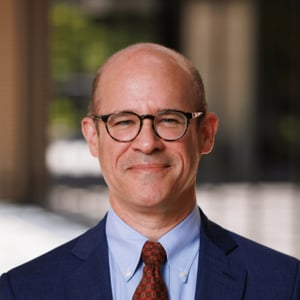
Professor of Law, Stanford Law School
Orin S. Kerr is a Professor of Law at Stanford Law School, where he teaches and writes in the areas of criminal procedure and computer crime law. Kerr earned mechanical engineering degrees from Princeton University and Stanford University before graduating with a J.D. from Harvard Law School. He is a former law clerk to Justice Anthony M. Kennedy at the United States Supreme Court and Judge Leonard I. Garth of the U.S. Court of Appeals for the Third Circuit.
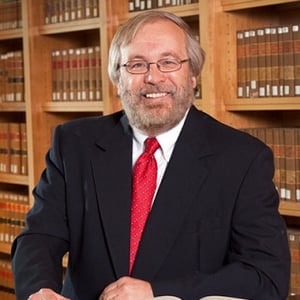
Welpton & Wise Professor of Law, University of Nebraska College of Law
Professor Rick Duncan is the Welpton & Wise Professor of Law at the University Of Nebraska College Of Law. He is a graduate of the Cornell Law School and served as an editor of the Cornell Law Review. He teaches Constitutional Law with a special emphasis on the law of religious freedom, free speech, and federalism. Duncan has written numerous books, articles, and commentaries on a wide variety of legal topics. His recent publications include an article on Justice Scalia’s legacy, another on Kermit Gosnell and Roe v. Wade, a piece on the Electoral College and Federalism, a 2019 piece on Masterpiece Cakeshop and the First Amendment, and three recent articles on the “no compelled speech” doctrine as a First Amendment defense against authoritarianism and tyranny. His most recent article, on School Choice and the First Amendment, will be published in 2023 in Case Western Law Review. He is also the co-author of a book on Secured Transactions under Article 9 of the UCC. He served as Chairman of the Nebraska Advisory Committee to the U.S. Commission on Civil Rights during the Reagan Administration. He also loves to speak at Federalist Society meetings around the country on life, liberty, and the pursuit of federalism.
Duncan has five children, five grandchildren, and a wonderful wife who help him pursue happiness. He loves lifting weights (particularly going heavy on the incline bench press), attending Broadway musicals and plays, including Hamilton: An American Musical which he has seen 12 times (possibly a Nebraska record). He regularly reads both the Bible and the New York Times because it is important to keep up with what both sides have to say. He loves following major league baseball, especially the San Diego Padres. And his favorite legal aphorism is “first come rights then comes government to secure those rights.”
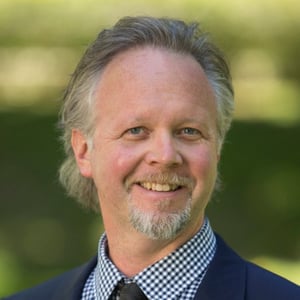
Senior Attorney, Pacific Legal Foundation
Brian Hodges is a Senior Attorney at PLF’s Pacific Northwest office in Bellevue, Washington. Brian focuses his practice on defending of the right of individuals to make reasonable use of their property, free of unnecessary and oppressive regulations.
In 2013, Brian second-chaired Koontz v. St. Johns River Water Management District before the U.S. Supreme Court, a case that placed constitutional limits on the government’s common practice of demanding that landowners fund unrelated public projects in exchange for a permit approval. And in the 2008 case, Citizens’ Alliance for Property Rights v. Sims, Brian successfully challenged a Seattle-area ordinance that required all rural property owners to dedicate at least half their land as conservation areas as a mandatory condition of any new development without any showing that rural development would impact the environment.
Brian graduated from Seattle University of Law in 2001 with honors. After which, he served as a judicial clerk at the Washington State Court of Appeals, then entered private practice where he focused on appellate advocacy for several years before joining PLF in 2006.
Brian came to the liberty movement by an uncommon route: the arts. Brian played guitar and keyboards in several Seattle-area bands before eventually studying music composition and literature at the University of Washington—earning two Bachelor’s Degrees and a Master of Arts. Through that experience, he came to firmly believe that the goal of art—indeed, the goal of any creative ambition—is to maximize individual freedom and expression, tempered by personal responsibility and ownership, rather than outside oversight or arbitrary restriction. Carrying that philosophy into law school naturally led him to fight for individual rights.
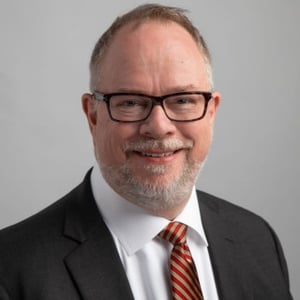
Managing Attorney of the Washington Office, Institute for Justice
William R. Maurer is the Managing Attorney of the Washington state office of the Institute for Justice, which engages in litigation in the areas of economic liberty, private property rights, educational choice, & freedom of speech.
Maurer is an advocate against the criminalization of poverty and the governmental use of the criminal and civil enforcement systems to raise revenue. He was lead counsel in a class action challenging the use of tickets to raise revenue in the city of Pagedale, Missouri. The suit resulted in a federal consent decree that reformed the city’s ticketing and municipal court system. He regularly speaks, teaches, and writes about the abuse of fines and fees in the criminal justice system. He was a participant in summits on taxation by citation put on by the White House and Department of Justice during the Obama Administration. His work on the issue includes serving as an advisory board member of the Fines and Fees Justice Center.
In addition to his work on criminal and civil justice reform, Maurer is a First Amendment litigator. In 2011, he successfully argued before the U.S. Supreme Court that Arizona’s punitive campaign financing regime was unconstitutional. Before the Washington Supreme Court, he successfully argued against efforts to classify radio commentary as a contribution under the state’s campaign finance law.
His cases and advocacy have been covered in the Washington Post, the New York Times, the Economist, the Wall Street Journal, and other major media outlets.
Maurer was named a “Washington Superlawyer” by Washington Law & Politics Magazine for several years. He is a chapter author in numerous legal reference works and has written several articles for law reviews and legal publications across the country.
Prior to joining IJ-WA, Maurer clerked for Washington Supreme Court Justice Richard Sanders and then practiced law at Perkins Coie LLP. Maurer received his law degree in 1994 from the University of Wisconsin – Madison, where he was an editor of the Wisconsin Law Review. He received his BA from Bard College in 1989.
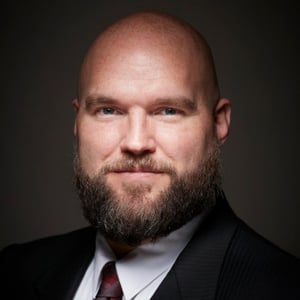
Dave Roland is the Director of Litigation and co-founder of the Freedom Center of Missouri; he also serves as the Secretary for the Freedom Center’s Board of Directors. Dave earned undergraduate degrees in Political Science and Biblical Studies at Abilene Christian University before studying law and religion at Vanderbilt University, where he received his law degree and a Master’s in Theology in 2004. While at Vanderbilt, Dave wrote a series of essays for the Freedom Forum’s First Amendment Center about the First Amendment and public education, and he clerked for the Becket Fund for Religious Liberty in Washington, DC. Following law school, Dave spent more than three years in the nation’s capital as an attorney with the Institute for Justice, where he litigated school choice, economic liberty, and property rights cases in state and federal courts. His work has been discussed in the Wall Street Journal, the New York Times, the Washington Post, USAToday, the Huffington Post, on Fox News and MSNBC, and other major media outlets nationwide. Since moving to Missouri in 2007, Dave has become a familiar presence on television news broadcasts, radio shows, and in newspapers across the state. He travels widely throughout the state, speaking to elected officials, student groups at colleges and law schools, Federalist Society chapters, and community groups about education, property rights, health care reform, constitutional protections for liberty, and the American Founders’ conception of virtue. Dave has also established himself as one of the preeminent election attorneys in Missouri, having won groundbreaking, precedent-setting victories in Wright-Jones v. Nasheed, Vowell v. Kander, and Franks v. Hubbard. Prior to founding the Freedom Center, he spent three years working as an attorney and policy analyst for the Show-Me Institute. Dave also previously served as the Director of the Theodore L. Stiles Center for Liberty at the Freedom Foundation in Olympia, Washington. He has been admitted to practice law in the District of Columbia, Missouri, Tennessee, and Washington, as well as before the U.S. District Courts for the Eastern District of Missouri, the Western District of Missouri, the Western District of Washington, the Eighth Circuit Court of Appeals, and the U.S. Supreme Court. He lives in Mexico, Missouri, with his wife, Jenifer, and their three children. Dave can be reached at [email protected].
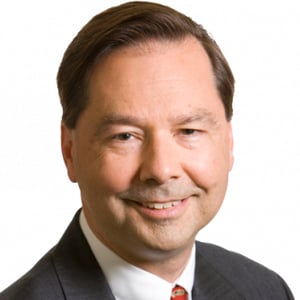
Senior Legal Fellow, Edwin Meese III Institute for the Rule of Law, Advancing American Freedom

Judge, United States Court of Appeals, Eighth Circuit
David Stras became a judge on the United States Court of Appeals for the Eighth Circuit on January 31, 2018. Before serving on the Eighth Circuit, Judge Stras was an Associate Justice of the Minnesota Supreme Court, a position he occupied from July 1, 2010 until his appointment to the Eighth Circuit.
Prior to becoming a judge, Stras was a member of the faculty of the University of Minnesota Law School from 2004 through 2010. He taught and wrote in the areas of federal courts and jurisdiction, constitutional law, criminal law, and law and politics.
Judge Stras received his Bachelor of Arts degree, with highest distinction, in 1995 and his Master of Business Administration in 1999, both from the University of Kansas. He also received his law degree from the University of Kansas School of Law in 1999, where he served as Editor-in-Chief of the Criminal Procedure Edition of the Kansas Law Review.
Following law school, Stras clerked for The Honorable Melvin Brunetti of the United States Court of Appeals for the Ninth Circuit and then for The Honorable J. Michael Luttig of the United States Court of Appeals for the Fourth Circuit.
From 2001 to 2002, he practiced white-collar criminal and appellate litigation with the Washington, D.C., office of Sidley Austin Brown & Wood. Following his year in practice, he clerked for The Honorable Clarence Thomas of the Supreme Court of the United States.

Chief Judge, United States Court of Appeals, Eleventh Circuit
William H. Pryor Jr. serves as Chief Circuit Judge on the United States Court of Appeals for the Eleventh Circuit.
In 2013–18, he served on the United States Sentencing Commission and, in 2017–18, served as Acting Chair.
He has taught as a visiting professor at the University of Alabama School of Law and previously taught as an adjunct professor at the Cumberland School of Law of Samford University.
He served as the 45th Attorney General of Alabama from 1997 to 2004. When he took office, he was the youngest attorney general in the nation. In his reelection, he received the highest percentage of votes of any statewide candidate.
He graduated magna cum laude from Tulane Law School where he finished first in the common-law curriculum and was editor in chief of the Tulane Law Review. He then served as a law clerk for Judge John Minor Wisdom of the U.S. Court of Appeals for the Fifth Circuit.
He is a member of The American Law Institute and an Adviser for the RESTATEMENT OF THE LAW THIRD, CONFLICT OF LAWS. He is a coauthor with Bryan Garner, Justices Gorsuch and Kavanaugh, and several other judges of a treatise, THE LAW OF JUDICIAL PRECEDENT. He has published in the Yale Law Journal, Columbia Law Review, Virginia Law Review, Notre Dame Law Review, Harvard Journal of Law & Public Policy, Yale Law & Policy Review, George Mason Law Review, Florida Law Review, Alabama Law Review, Case Western Reserve Law Review, and Tulane Law Review. He has published op-eds in The Wall Street Journal, The New York Times, National Review, and USA Today. He has debated at National Lawyers’ Conventions of the Federalist Society (including on National Public Radio) and at the Oxford Union in the United Kingdom. And he is listed among several “widely admired judicial writers” in Bryan Garner’s The Redbook: A Manual on Legal Style.
He is a member of the Tulane Law School Hall of Fame and has received the Defender of the Constitution Award from the Heritage Foundation, the Jurist of the Year Award from the Texas Review of Law & Politics, and the St. Thomas More Award from the St. Thomas More Society of Atlanta. Judge Pryor is also a proud member of the National Society of the Sons of the American Revolution.
John Tamny is editor of RealClearMarkets and Forbes Opinions, a senior economic adviser to H.C. Wainwright Economics, and a senior economic adviser to Toreador Research and Trading (www.trtadvisors.com).

Supreme Court Preview
San Diego, CaliforniaBronx Household of Faith
The United States Constitution
Unprecedented: The Inside Story of the Constitutional Challenge to Obamacare
Originalism v. the Living Constitution: Suppose Both Are Right?
Panel for Non-Profit Conservative/Libertarian Opportunitie
McCutcheon v. FEC
Supreme Court Round Up
The Unbearable Rightness of Marbury v. Madison: Its Real Lessons and Irrepressible Myths
HoustonBook Review: Bad History, Worse Policy: How a False Narrative about the Financial Crisis Led to the Dodd-Frank Act
John Tamny
Related Links: Financial Crisis Inquiry Commission, Final Report of the National Commission on the Causes...