
Faculty Advisor, Northern Illinois University College of Law
Faculty Advisor, Northern Illinois University College of Law
The Ethics and Justice Center
Prof. Jack Kress
Director, Ethics and Justice Center
Jack Kress has published more than 15 books and 70 articles on various issues of justice and ethics. He is perhaps best known for his early work co-originating the very concept of sentencing guidelines and directing the research projects that developed and implemented the first sentencing guidelines systems in America; he has been called the "father of sentencing guidelines" by ABC News. He helped establish the sentencing guidelines systems now in place in more than half the states, and also worked with Congress and the Department of Justice in first bringing the United States Sentencing Commission into existence. An elected life member of the American Law Institute, Professor Kress lectures broadly on criminal justice and sentencing reform; he is presently consulting with the ALI's Reporter in revising the Model Penal Code's sentencing provisions.
Professor Jack Kress holds degrees from Columbia University and Cambridge University; he has been tenured and taught at several law and other graduate schools. A former Manhattan Assistant District Attorney, his more recent work has been in ethics and bioethics.
In 1990, Professor Kress was named Special Counsel for Ethics and Designated Agency Ethics Official for the United States Department of Health and Human Services, where he worked with the Office of White House Counsel and the U. S. Office of Government Ethics in formulating the federal government's ethics policies; he concurrently directed the largest federal ethics and bioethics program, encompassing all components of HHS, including the National Institutes of Health, the Food and Drug Administration, and the Center for Medicare and Medicaid Services. In 2001, Jack Kress was selected as the first Executive Director of the HHS Advisory Committee on Organ Transplantation, and led that group in promulgating and implementing more than forty recommendations for reform in America’s donation and transplantation system, including the establishment of the national breakthrough collaborative. From 2004-2009, Professor Kress was a core faculty member of the Alden March Bioethics Institute at Albany Medical College. His most recent peer-reviewed article was published in the prestigious American Journal of Transplantation. He presently directs the Ethics and Justice Center in Saratoga Springs, New York. See www.ethicsandjustice.org
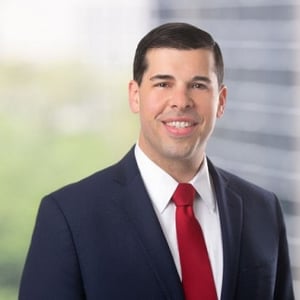
Partner, Boies Schiller Flexner LLP
Jesse, the former third-ranking official at the U.S. Department of Justice, helps clients with their most difficult litigation and regulatory issues─whether that means defending against an enforcement action, pursuing high-stakes litigation and appeals, navigating regulatory thickets at federal and state agencies, or crafting a comprehensive strategy to manage a crisis. He approaches these problems with the knowledge gained both from his broad private-practice experience and from having served at the highest levels of federal and state government.
Jesse has experience across a range of substantive and regulatory areas. He has sued the federal government and has also been one of its top law-enforcement officials; he has represented states and has also navigated their regulatory agencies on behalf of clients; and he has represented companies in business disputes, both as defendants and plaintiffs.
Before joining the firm, Jesse was the Acting Associate Attorney General at the United States Department of Justice. In that role, he oversaw the civil and criminal work of the Antitrust, Civil, Civil Rights, Environment and Natural Resources, and Tax Divisions. During Jesse’s tenure, the Associate’s office closely managed the Department’s most significant litigation, including matters involving large financial institutions, healthcare companies, automakers, energy companies, and state and local governments. In addition, Jesse served as Chair of DOJ’s Regulatory Reform Task Force and Vice Chair of DOJ’s Task Force on Market Integrity and Consumer Fraud. Jesse regularly provided legal and strategic advice to the highest-level decision makers in the federal government, including the Attorney General and Deputy Attorney General, general counsels across the spectrum of federal agencies, and White House officials.
Jesse served for three years as the secretary of Florida’s labor, economic-development, and land-use agency, the Florida Department of Economic Opportunity. Before that, he served as Governor (now Senator) Rick Scott’s general counsel.
Jesse maintains offices in both Washington D.C. and Florida. From Washington, he focuses on federal litigation and crisis management. In Florida, in addition to federal litigation, Jesse employs his knowledge of state government and regulation to help clients in courts across the state, from trial through the Florida Supreme Court.
Jesse currently serves on the Florida Supreme Court Judicial Nominating Commission, the body that provides the governor with nominees for appointment to the Florida Supreme Court. Jesse is also a fellow at the Center for the Study of the Administrative State at the Scalia Law School at George Mason University, where he writes and speaks about administrative law.

Senior Vice President for Legal Studies, Cato Institute
Clark Neily is senior vice president for legal studies at the Cato Institute. His areas of interest include constitutional law, overcriminalization, civil forfeiture, police accountability, and gun rights. Neily is the author of Terms of Engagement: How Our Courts Should Enforce the Constitution’s Promise of Limited Government. His writing has appeared in the Wall Street Journal, Forbes, and National Review Online, as well as various law reviews, including the Harvard Journal of Law and Public Policy, George Mason Law Review, Georgetown Journal of Law and Public Policy, NYU Journal of Law and Liberty, and Texas Review of Law and Politics. Neily is a frequent guest speaker and lecturer for the Federalist Society, Institute for Humane Studies, and American Constitution Society.
Before joining Cato in 2017, Neily was a senior attorney and constitutional litigator at the Institute for Justice and director of the Institute’s Center for Judicial Engagement. He is also an adjunct professor at the University of Texas School of Law, where he teaches constitutional litigation and public-interest law.
Neily served as co-counsel in District of Columbia v. Heller, the historic case in which the Supreme Court held for the first time that the Second Amendment protects an individual right to own a gun for self-defense.
Neily began his legal career as a law clerk to Judge Royce Lamberth on the U.S. District Court for the District of Columbia. After that he spent four years in the trial department of the Dallas-based firm Thompson & Knight. Neily received his undergraduate and law degrees from the University of Texas, where he was Chief Articles Editor of the Texas Law Review.
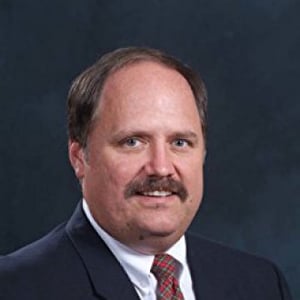
Distinguished Professor of Law, Jamie L. Whitten Chair of Law and Government, University of Mississippi School of Law
Professor Ronald J. Rychlak is the Jamie L. Whitten Chair of Law and Government and Distinguished Professor of Law at the University of Mississippi. He is a legal advisor to the Holy See’s delegation to the United Nations and chair of the Mississippi Advisory Committee to the U.S. Civil Rights Commission. He serves as the university’s Faculty Athletic Representative and is on the executive committee of the Southeastern Conference (SEC). In 2019 he received the university’s highest research and publication recognition, the “Distinguished Research and Creative Achievement Award” based upon his reputation for scholarly activity and leadership roles in professional societies. In 2023, he received the Algernon Sydney Sullivan Award, the University’s highest award in honor of service, for “placing service to others and the community before oneself, while embodying the qualities of honesty, morality, ethics, integrity, responsibility, determination, courage, and compassion.” In 2024, he was voted “Outstanding Law Professor” by the law school student body.
Ron is the author, co-author, or editor of twelve books and over 100 articles. The Congregation for the Causes of Saints at the Vatican called his book, Hitler, the War, and the Pope “definitive” in its response to charges made against the leader of the Catholic Church during World War II. He has been published in Notre Dame Law Review, UCLA Law Review, The Washington Post, The Wall Street Journal, and numerous other periodicals and journals. Media appearances include CNN, ABC, Fox News, The National Geographic TV Network, The Military Channel, C-SPAN, and more.
Ron and his wife Claire are proud of their six children, two sons-in-law, one daughter-in-law, and three granddaughters. They live in Oxford, Mississippi.
Former Inspector General of the Corporation for National and Community Service
Gerald Walpin, the new Inspector General of the Corporation for National and Community Service, has vowed a vigorous effort to investigate and prosecute all persons who betray the public’s trust by defrauding the Corporation and its programs.
A prominent New York attorney, Walpin was nominated by President George W. Bush, confirmed by the U.S. Senate and sworn into office on January 8, 2007. He leads the Office of Inspector General (OIG), an independent Federal agency charged with oversight over the taxpayer-supported Corporation and its service programs, including AmeriCorps, Volunteers in Service to America (VISTA)and Senior Corps.
“My major objective is to expand upon the good work of this office by preventing, detecting and prosecuting all thefts and frauds,” said Walpin. “The reality is that such misconduct takes precious resources away from deserving people, the same way the theft of a welfare check hurts a single mother who needs that money to buy milk for her children. For that reason, this office will seek out and ensure sanctions for all wrongdoing involving Corporation funds.”
Walpin said his other major goal is to “assist the Corporation in making its services efficient and accessible for all national service stakeholders.”
A New York City native, Walpin graduated from College of the City of New York in 1952. He earnedhis law degree, cum laude, in 1955 from Yale Law School, where he was managing editor of the Yale Law Journal. From 1957-60, he served as a lieutenant in the United States Air Force Judge Advocate General.
His career included a five-year stint as Chief of Prosecutions for the United States Attorney for the Southern District of New York, where he successfully prosecuted a number of high-profile cases. He spent more than 40 years as senior partner and, more recently, of counsel to New York-based Katten Muchin Rosenman LLP.
Mr. Walpin has represented a wide range of clients, including large public corporations, securities brokerage firms, accounting firms, law firms, banks in lender liability claims, and individuals, both American and foreign, in securities litigations, employment litigations, criminal prosecutions, and investigations by the United States Securities and Exchange Commission. Both as an Assistant U.S. Attorney and in his law firm, he was frequently called upon to investigate fraudulent conduct.
Included in the published compilation “The Best Lawyers in America,” Mr. Walpin served from 2002-2004 as president of the Federal Bar Council, the association of attorneys practicing in the Second Circuit Federal courts. In 2003, he was honored with the American Inns of Court Professionalism Award for outstanding professionalism as an attorney and for mentoring younger lawyers.
Walpin and his wife Sheila, married for almost 50 years, have three children and six grandchildren.
Inspector General of the Corporation for National and Community Service
Chief of Prosecutions in the New York U.S. Attorney's Office.
President of the Federal Bar council
Senior Partner of and Council to Katten Muchin Rosenman LLP
Chief of Prosectutions for the US Attornery for the Southern District of New York
Lieutenant in the US Air Force Judge Advocate General
B.A., College of the City of New York, 1952
J.D., Yale Law School
The Ethics and Justice Center
Prof. Jack Kress
Director, Ethics and Justice Center
Jack Kress has published more than 15 books and 70 articles on various issues of justice and ethics. He is perhaps best known for his early work co-originating the very concept of sentencing guidelines and directing the research projects that developed and implemented the first sentencing guidelines systems in America; he has been called the "father of sentencing guidelines" by ABC News. He helped establish the sentencing guidelines systems now in place in more than half the states, and also worked with Congress and the Department of Justice in first bringing the United States Sentencing Commission into existence. An elected life member of the American Law Institute, Professor Kress lectures broadly on criminal justice and sentencing reform; he is presently consulting with the ALI's Reporter in revising the Model Penal Code's sentencing provisions.
Professor Jack Kress holds degrees from Columbia University and Cambridge University; he has been tenured and taught at several law and other graduate schools. A former Manhattan Assistant District Attorney, his more recent work has been in ethics and bioethics.
In 1990, Professor Kress was named Special Counsel for Ethics and Designated Agency Ethics Official for the United States Department of Health and Human Services, where he worked with the Office of White House Counsel and the U. S. Office of Government Ethics in formulating the federal government's ethics policies; he concurrently directed the largest federal ethics and bioethics program, encompassing all components of HHS, including the National Institutes of Health, the Food and Drug Administration, and the Center for Medicare and Medicaid Services. In 2001, Jack Kress was selected as the first Executive Director of the HHS Advisory Committee on Organ Transplantation, and led that group in promulgating and implementing more than forty recommendations for reform in America’s donation and transplantation system, including the establishment of the national breakthrough collaborative. From 2004-2009, Professor Kress was a core faculty member of the Alden March Bioethics Institute at Albany Medical College. His most recent peer-reviewed article was published in the prestigious American Journal of Transplantation. He presently directs the Ethics and Justice Center in Saratoga Springs, New York. See www.ethicsandjustice.org

Entrepreneurship and the Law
Entrepreneurship and the Law
Criminal Procedure and the NYPD Police Training Videos
The Separation of Powers in Florida
Resolved: The Rational Basis Test is a Big Fat Fraud
To Polygraph or not to Polygraph?: The Use of Polygraph Examinations in Criminal Investigations and Court Proceedings
Gambling in Oklahoma: The Benefit and Cost of Casinos & Lotteries
The Constitution: A Living Changing Document or Fixed By Its Authors?
Police Use of Deadly Force: An Interactive Experience
American Founding Son: John Bingham and the Invention of the Fourteenth Amendment