
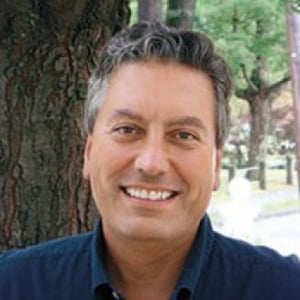
Carroll and Milton Petrie Professor of Law, Harvard Law School
Einer Elhauge is the Petrie Professor of Law at Harvard Law School and Founding Director of the Petrie-Flom Center for Health Law Policy, Biotechnology and Bioethics. He served as Chairman of the Antitrust Advisory Committee to the Obama Campaign. He teaches a gamut of courses ranging from Antitrust, Contracts, Corporations, Legislation, and Health Care Law. Before coming to Harvard, he was a Professor of Law at the University of California at Berkeley, and clerked for Judge Norris on the 9th Circuit and Justice Brennan on the Supreme Court. He received both his A.B. and his J.D. from Harvard, graduating first in his law school class.
He is an author of numerous pieces on range of topics even broader than he teaches, including antitrust, public law, corporate law, patents, the legal profession, and health law policy. His most recent books include: Obamacare on Trial (2012), available at www.amazon.com; Research Handbook on the Economics of Antitrust Law (Edward Elgar Publishing Ltd. 2013); The Fragmentation of U.S. Health Care: Causes and Solutions (Oxford University Press 2010); Statutory Default Rules (Harvard University Press 2008); U.S. Antitrust Law and Economics (Foundation Press 2011); Global. Antitrust Law and Economics (Foundation Press 2011); and Global Competition Law and Economics (Hart Publishing 2011). For his website and publications, see http://www.law.harvard.edu/faculty/elhauge/.

Thomas M. Siebel Senior Fellow, The Hoover Institution, Stanford University; Gary T. Schwartz Distinguished Professor of Law Emeritus, UCLA School of Law
Eugene Volokh is the Thomas M. Siebel Senior Fellow at the Hoover Institution (Stanford), as well as the Gary T. Schwartz Distinguished Professor of Law Emeritus and Distinguished Research Professor at UCLA School of Law. He recently retired from teaching at UCLA, after 30 years there, and is now focusing on research.
Volokh is the author of the textbooks The First Amendment and Related Statutes (8th ed. 2023), and Academic Legal Writing (5th ed. 2016), as well as over 100 academic law journal articles, mostly on First Amendment law. He is a member of The American Law Institute; the editor-in-chief of the Journal of Free Speech Law; and the creator and coauthor of The Volokh Conspiracy, a leading legal blog founded in 2002 (hosted at the Washington Post from 2014 to 2017 and now at Reason Magazine).
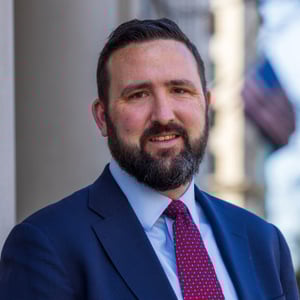
Partner, First & Fourteenth PLLC
Michael Francisco is a public and commercial litigator with extensive appellate experience who often serves as a strategic advisor to clients facing acute legal challenges. He has represented clients nationally for public impact litigation, bet-the-company lawsuits, and in defense of constitutional rights. Michael served as a law clerk to Supreme Court Justice Neil Gorsuch and Judge Timothy Tymkovich of the United States Court of Appeals for the Tenth Circuit.
Michael regularly takes on challenging matters where citizens must rely on the judiciary to vindicate their rights. His experience runs the gambit from successfully seeking injunctive relief, winning critical legal motions, defending judgments on appeal, overturning multi-million-dollar judgments, and obtaining discretionary high court review. He relishes the opportunity to develop a well-crafted legal strategy to solve the most novel and complex problems that may arise.
Michael has deep experience with political litigation representing candidates, voters, political parties, and advocacy organizations for ballot access, election administration, campaign finance, and for the unfortunate trend of criminalization of political activity.
After deciding to pursue a legal career to defend religious liberty, Michael has regularly engaged in constitutional litigation under the religion clauses and the free speech clause. He has been involved in many recent U.S. Supreme Court cases involving these core freedoms, including Groff v. DeJoy, 303 Creative v. Elenis, Masterpiece Cakeshop v. Colorado Civil Rights Commission, National Institute of Family & Life Advocates v. Becerra, Trinity Lutheran Church v. Pauley, and similar cases in lower courts on topics ranging from the ministerial exception, church property disputes, to religious land use disputes.
As an appellate advocate Michael frequently handles matters before the U.S. Supreme Court, federal courts of appeals, and Colorado appellate courts. He has argued four times before the Colorado Supreme Court and briefed 19 cases before the U.S. Supreme Court.
Michael also frequently advises clients on strategic public matters challenging federal government authority and overreach. He has regularly litigated business disputes, employment matters, as well as represented clients before state and federal administrative agencies or arbitration panels.
Prior to joining First & Fourteenth, Michael was a partner at McGuireWoods, LLP in Washington D.C., representing litigation, white collar, and government investigation clients.
At home Michael is married with four children and he enjoys many outdoor activities, ranging from competitive shooting to fixing his jeep.

Partner, Jackson Walker
Arthur offers clients a winning combination of trial and appellate experience gained as a federal prosecutor and more than 20 years of experience in handling patent, copyright, trademark, and trade secrets litigation.
While his practice concentrates on intellectual property litigation, Arthur also has significant experience in internal investigations, False Claims Act suits, partnership and breach of fiduciary duty, breach of contract, and employment litigation. Arthur also has represented clients testifying before Congressional committees.
Arthur writes and speaks frequently on topics ranging from the case against Boston bomber Dzhokhar Tsarnaev to patent litigation reform.
Prior to joining Michael Best, Arthur served as an Assistant United States Attorney in the Southern District of New York, where he was the lead prosecutor in criminal trials, including federal intellectual property crimes. He also argued numerous appeals.
Associate Dean for Administration and Professor of Law, Chapman University School of Law
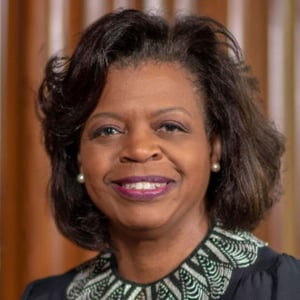
Fmr. Chief Justice, North Carolina Supreme Court
Chief Justice Cheri Beasley has spent more than 20 years dedicated to the rule of law. She began her judicial career as a district court judge in Cumberland County, where she served for a decade before being elected to the North Carolina Court of Appeals in 2008. She served as an associate justice on the Supreme Court of North Carolina for seven years before being appointed by Governor Roy Cooper to lead the Supreme Court and North Carolina's third branch of government, the Judicial Branch. She is the first African-American woman in the Supreme Court’s 200-year history to serve as Chief Justice.
Chief Justice Beasley has spent her entire career advocating for courts that are independent, fair, and accessible, and that serve every person with dignity and respect. As Chief Justice, she is advocating for a court system that not only solves legal disputes, but also helps people better their lives. By engaging local judges, educators and law enforcement, she is helping to reform discipline in our schools and keeping kids out of our courtrooms. She is committed to expanding specialized treatment courts that better serve the needs of North Carolina’s children and families. She is also working to leverage the power of technology to make sure our courts are efficient and accessible.
She has lectured extensively to promote the administration of justice, the importance of an independent judiciary, and fair judicial selection. She is active in her community through leadership in her church, First Baptist of Raleigh, her support of hunger relief efforts, and her mentoring of students from elementary school to law school. She is a graduate of Douglass College of Rutgers University, the University of Tennessee College of Law, and Duke University School of Law where she obtained her LL.M. She and her husband, Curtis Owens, are the proud parents of twin sons, Thomas and Matthew.
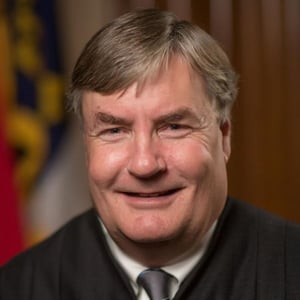
North Carolina Court of Appeals
Sam J. Ervin, IV, was born in Morganton, North Carolina, on November 18, 1955. He attended the public schools in Burke County, North Carolina, graduating from Freedom High School in 1974. In 1978, Judge Ervin was awarded an A.B., magna cum laude, from Davidson College. After graduating from Davidson, he attended Harvard Law School, from which he received a J.D., cum laude, in 1981.
From 1981 until 1999, Judge Ervin practiced law with the Morganton, North Carolina firm of Byrd, Byrd, Ervin, Whisnant, McMahon, P.A., and its predecessors. While in private practice, Judge Ervin handled a wide variety of civil, criminal, and administrative matters, including many appeals to the North Carolina Court of Appeals and the Supreme Court of North Carolina.
In 1999, Judge Ervin was nominated for a seat on the North Carolina Utilities Commission by Governor James B. Hunt, Jr. He was nominated for a second term on the Utilities Commission by Governor Michael F. Easley in 2007. Both appointments were confirmed by the General Assembly. The Utilities Commission is a quasi-judicial body that is responsible for regulating electric, natural gas, telecommunications, water and sewer, and certain types of transportation service provided to retail customers in North Carolina by privately-owned entities. During his service as a member of the Utilities Commission, Judge Ervin was involved in deciding many important regulatory matters, including, but not limited to, electric and natural gas rate proceedings, electric and natural gas business combination proceedings, proceedings involving applications by electric utilities for authority to construct new generation and transmission facilities, proceedings involving the approval of telecommunications price regulation plans, proceedings arbitrating or otherwise examining the terms and conditions under which competitive telecommunications providers were allowed to interconnect with incumbents, and proceedings addressing issues relating to the adequacy of water and sewer service in certain specific locations.
In addition, Judge Ervin was extensively involved in the activities of the National Association of Regulatory Utility Commissioners (NARUC), having served as Chairman of that organization's Subcommittee on Nuclear Issues and Waste Disposal from 2002 until 2005; as Chairman of that organization's Committee on Electricity from 2004 until 2007; and as a member of its Task Force on Climate Policy from 2007 through 2008. As part of his involvement in NARUC, Judge Ervin supervised its participation in the process that led to the implementation of the Energy Policy Act of 2005. While a member of the Utilities Commission, Judge Ervin testified on two different occasions before the Subcommittee on Energy and Air Quality of the Committee on Commerce of the United States House of Representatives. Judge Ervin was a regular speaker at energy-related conferences and seminars during his service as a Utilities Commissioner.
Judge Ervin has also been, at various times, involved in a wide variety of church-related, bar-related, and charitable activities. He is married to Mary Temple Ervin and has two children and two step-children.
Judge Ervin was elected to the North Carolina Court of Appeals at the November 4, 2008, general election. His term as a member of the Court of Appeals commenced on January 1, 2009, and extends until December 31, 2017.

Sr Corporate Counsel, Cisco Systems, Inc.
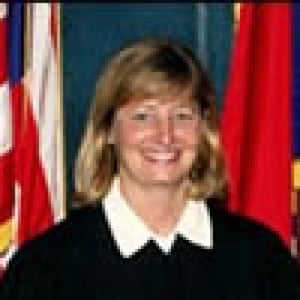
Associate Justice, North Carolina Supreme Court
Early Years
Born in DeKalb County, Georgia in 1952, Robin E. Hudson moved to Greensboro, NC with her family in 1966.
Professional Background
Admitted to the North Carolina Bar in 1976 and practiced law in Raleigh and Durham until her election to the Court of Appeals in November 2000. She is the first North Carolina woman elected to the appellate court division without having been appointed first. She served on the NC Court of Appeals from January 2001 until December 2006. During that time, she helped organize and coordinate the Court of Appeals voluntary mediation program. She began her 8-year term on the Supreme Court in January 2007.
Except for 3 years as assistant appellant defender in the mid-1980's, she practiced law in the private sector and handled a variety of trials and appeals, but concentrated on workers' compensation and tort litigation, with particular emphasis on occupational diseases and products liability. She practiced extensively before the Industrial Commission, as well as in State and Federal courts. Since 1994, she has been certified to mediate cases from Superior Court and the Industrial Commission.
Graduate of Page Senior High School, Greensboro, 1969. Graduated from Yale University in 1973 with a BA degree in philosophy and psychology. Received J.D. from the University of North Carolina School of Law in 1976.
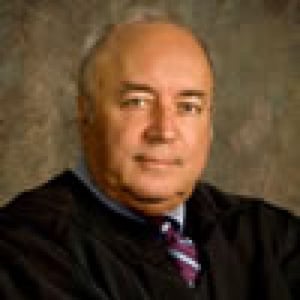
Associate Justice, North Carolina Supreme Court
Early Years
Personal Information
Married to Susan Awbrey Hunter. One son, Robert Neal Hunter III; two step-sons, Chris Awbrey Steele and Alan Baret Steel; two grandchildren; Member of First Presbyterian Church, Greensboro, North Carolina
Seventh Division of the Superior Court, North Carolina
Judge Eric Levinson joined the District Attorney’s Office in Cabarrus and Rowan Counties, N.C. as a felony prosecutor following law school, and he prosecuted drug, property, sexual assault, and homicide offenders.
Judge Eric Levinson was elected to the N.C. judiciary in 1996 as a District and Family Court Judge in Charlotte, N.C. In this role, he was recognized for implementing best-practices in our criminal and child support enforcement courts and became a N.C. Certified Juvenile Court Judge.
Judge Eric Levinson was elected statewide in 2002 as one of fifteen members of the N.C. Court of Appeals in Raleigh, N.C., where he served as an Associate Judge and the Court’s youngest member. He authored hundreds of legal opinions in disputes and lawsuits concerning criminal, civil and administrative matters.
Judge Eric Levinson was appointed by the Bush Administration in 2007 as the Justice Attache to Iraq for the U.S. Department of Justice. As Justice Attache, Levinson managed the U.S. government’s diplomatic relationship with the Iraqi judiciary and its Chief Justice, Medhat al Mahmoud, and advanced the establishment of Major Crimes Courts where terrorists were prosecuted.
Judge Eric Levinson worked in Kabul, Afghanistan as a Rule of Law and Courts Advisor in 2008. In this role, he collaborated with members of the Supreme Court of Afghanistan and helped draft and advance guidelines to establish commercial courts to adjudicate business, contract and related civil conflicts.
Judge Eric Levinson was appointed to the N.C. Superior Court in 2009 after a bipartisan group of Republican and Democratic lawmakers, business professionals, attorneys and community stakeholders endorsed his appointment. Levinson presently holds court in counties all across western, central and eastern N.C. and presides over violent crimes against persons (homicide, sexual assault, armed robbery, serious assault) as well as civil conflicts (complex business disputes, class action, property).
Judge Eric Levinson gained his Juris Doctorate from the University of North Carolina at Chapel Hill School of Law where he was President of the Student Bar Association. He obtained a BBA in Finance,cum laude, at the University of Georgia, where he was an Honors Program student. Levinson also completed the Institute on Comparative Political and Economic Systems through the Fund for American Studies in Washington, D.C. and Georgetown University, and completed a program in International Finance hosted by the University of London, England. He is a certified Superior Court mediator, and is a N.C. Certified Juvenile Court Judge.
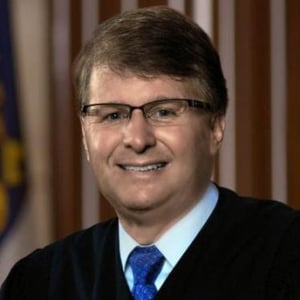
Founding Dean & Professor, Kenneth F. Kahn School of Law at High Point University
Hon. Mark Martin is the founding dean and professor of law at the Kenneth F. Kahn School of Law at High Point University.
Mark served as Chief Justice of the North Carolina Supreme Court from 2014-2019. He also served on that Court as an Associate Justice, on the North Carolina Court of Appeals, and on a North Carolina Superior Court.
The Chief Justice of the United States appointed Mark to the Committee on Federal-State Jurisdiction of the United States Judicial Conference. He also served on the board of directors of the Conference of Chief Justices.
Mark chairs the Thomson Reuters Judicial Advisory Council. He is a member of the American Law Institute, where he assists with the Third Restatement, Conflict of Laws, and serves on the Region 15 Advisory Committee.
Mark has served on the adjunct faculties of Duke University, North Carolina Central University, and the University of North Carolina law schools. Mark co-taught a course on the various modes of constitutional interpretation with Associate Justice Samuel A. Alito, Jr. of the United States Supreme Court from 2020-2022.

Partner, Robinson & Lawing, LLP
When Mike Robinson was six years old, he wrote a brief essay in school about what he wanted to be when he grew up. While the other kids in his class wanted to be firemen, cowboys, ballerinas and football players, Mike knew he wanted to be a lawyer and one day a judge. Since that time, he never wavered from those goals. Today, Mike has a distinguished law career and recently announced his candidacy for the Supreme Court of North Carolina.
For over 33 years, Mike has practiced law in North Carolina. In 1997, he was one of nine lawyers who formed, Robinson & Lawing, LLP. For the past six years he has served as one of its managing partners. Mike has concentrated his practice on matters involving complex civil litigation, medical malpractice defense, insurance defense, intellectual property matters, and corporate litigation planning and loss prevention. Mike is admitted to practice in North Carolina State Courts, the three U.S. District Courts in North Carolina, the Fourth Circuit Court of Appeals and the U.S. Supreme Court.
In addition to his professional accomplishments, Mike has served in numerous volunteer capacities with a number of charitable and civic organizations within the community.
Mike is a conservative who believes that judges do not make laws, but rather should enforce them. If elected to the North Carolina Supreme Court, Mike will be tough but fair and will apply the law as written by the state legislature. He will work hard to examine every case that comes before him and take a level-headed approach to his work.
Mike received his undergraduate degree from Davidson College and his juris doctor degree with honors from the University of North Carolina at Chapel Hill.
Mike and his wife Wynn have lived in Winston-Salem for the past 33 years. They have four grown children (three sons and a daughter), two daughters-in-law and two granddaughters.
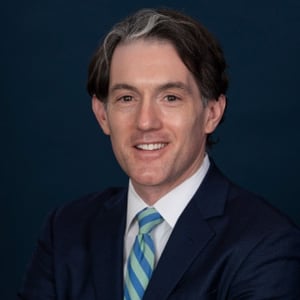
Chief Economist, U.S. Chamber of Commerce
Curtis Dubay is the Chief Economist at the U.S. Chamber of Commerce. He tracks the condition of the economy, analyzes the impact of public policy on economic growth, and runs the Chamber’s Chief Economists Committee. Previously, he was senior economist at the American Bankers Association and a research fellow in tax and economic policy at The Heritage Foundation. He also worked at the accounting firm PricewaterhouseCoopers (PwC) and at the Tax Foundation.
Dubay has researched and published frequently on a wide range of tax and economic issues. He isregularly quoted by the press and has appeared often in the media, including on CNBC, Fox Business, Fox News, and C-SPAN. He has testified before Congress several times and been cited in newspapers such as The Wall Street Journal, The New York Times, The Washington Post, USA Today, and Politico.
Dubay received his master’s degree in economics from the University of Connecticut and his bachelor’s degree in economics and leadership studies from the University of Richmond. He resides in Washington, D.C., with his wife and three sons.
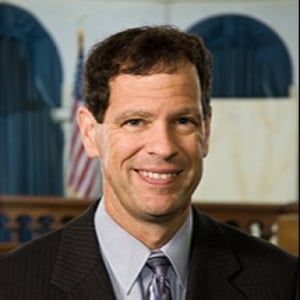
Warren Distinguished Professor of Law, University of San Diego School of Law
Michael D. Ramsey is Warren Distinguished Professor of Law at the University of San Diego School of Law, where he teaches and writes in the areas of Constitutional Law, Foreign Relations Law and International Law. He is the author of The Constitution’s Text in Foreign Affairs (Harvard University Press), co-editor of International Law in the U.S. Supreme Court: Continuity and Change (Cambridge University Press), and co-author of two casebooks, Transnational Law and Practice (2d ed., Aspen) and International Business Transactions: A Problem-Oriented Coursebook (14th ed., West). His scholarly articles have appeared in publications such as the Yale Law Journal, the University of Chicago Law Review, the Georgetown Law Journal and the American Journal of International Law. He received his B.A. magna cum laude from Dartmouth College and his J.D. summa cum laude from Stanford Law School. Prior to teaching, he served as a judicial clerk for Judge J. Clifford Wallace of the United States Court of Appeals for the Ninth Circuit and for Justice Antonin Scalia of the United States Supreme Court, and practiced law with the law firm of Latham & Watkins, where he specialized in international finance and investment. He has taught as a visiting professor at the University of California, San Diego, in the Department of Political Science and at the University of Paris – Sorbonne, in the Department of Comparative Law.

Professor of Law, South Texas College of Law Houston
Josh Blackman is a national thought leader on constitutional law and the United States Supreme Court. Josh’s work was quoted during two presidential impeachment trials. He has testified before Congress and advises federal and state lawmakers. Josh regularly appears on TV, including NBC, CBS, ABC, Fox, and the BBC. Josh is also a frequent guest on NPR and other syndicated radio programs. He has published commentaries in the New York Times, Wall Street Journal, Washington Post, and leading national publications.
Since 2012, Josh has served as a professor at the South Texas College of Law Houston. He holds the Centennial Chair of Constitutional Law. Josh is an Adjunct Fellow at the Manhattan Institute. Josh has written more than seven dozen law review articles that have been cited more than a thousand times. Josh was selected as the Jurist of the Year by the Texas Journal of Law & Public Policy, received the inaugural Meese III Originalism Award, and was awarded the Inaugural Joseph Story Award. Josh was selected by Forbes Magazine for the “30 Under 30” in Law and Policy. Josh is the President of the Harlan Institute, and founded FantasySCOTUS, the Internet’s Premier Supreme Court Fantasy League. He blogs at the Volokh Conspiracyand posts@JoshMBlackman.
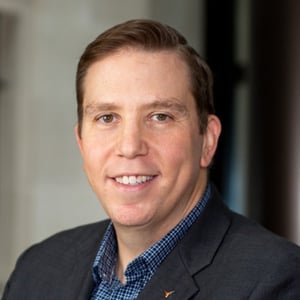
Agnes Williams Sesquicentennial Professor of Federal Courts, Georgetown Law
Stephen I. Vladeck is a professor of law at the Georgetown University Law Center, and is a nationally recognized expert on the federal courts; the Supreme Court; national security law; and military justice.
Vladeck is author of the New York Times bestselling book, “The Shadow Docket: How the Supreme Court Uses Stealth Rulings to Amass Power and Undermine the Republic,” which won the 2023 Writers’ League of Texas Book Award for Non-Fiction and was a finalist for the 2024 ABA Silver Gavel Award for Media and the Arts. Vladeck is also a highly regarded appellate advocate, having argued three cases before the U.S. Supreme Court and over a dozen before various lower federal civilian and military courts. He has received numerous awards for his influential and widely cited legal scholarship, his prolific popular writing, his teaching, and his service to the legal profession—including the 2024 University of Texas President’s Research Impact Award and his selection by the Order of the Coif to serve as its Distinguished Visiting Professor for 2025.
Vladeck is CNN’s Supreme Court analyst and editor and author of “One First,” a popular weekly newsletter about the Supreme Court. Together with Bobby Chesney, Vladeck co-hosts the popular and award-winning “National Security Law Podcast.” He is also a co-author of Aspen Publishers’ leading national security law and counterterrorism law casebooks. And he is a member of the Board of Trustees of EarthJustice—the nation’s premier nonprofit public interest environmental law organization.
Vladeck graduated from Yale Law School in 2004—where he was executive editor of the Yale Law Journal and won the Harlan Fiske Stone Prize for outstanding moot court oralist and shared the Potter Stewart Prize for best moot court team performance. After law school, he clerked for the Honorable Marsha S. Berzon on the U.S. Court of Appeals for the Ninth Circuit and the Honorable Rosemary Barkett on the U.S. Court of Appeals for the Eleventh Circuit. He earned a B.A. summa cum laude with Highest Distinction in History and Mathematics from Amherst College in 2001—where he wrote his senior thesis on “Leipzig’s Shadow: The War Crimes Trials of the First World War and Their Implications from Nuremberg to the Present.” A native New Yorker and hopeless Mets fan, Vladeck lives in the District with his wife, Karen (Founder and Managing Partner of Risepoint Search Partners); their daughters, Madeleine and Sydney; and their eleven-year-old pug, Roxanna.
Former District Attorney, Clatsop County, Oregon

Mechanisms of the Slippery Slope
Cambridge, MassachusettsColorado, Marijuana, & Federalism
2014 Patent Reform in Congress and the Courts
Austin Lawyers Chapter
Austin, TXMaking and Taking Life in the Brave New World: Human Cloning, Embryonic Stem Cell Research, Gestational Surrogacy and Eugenic Abortion
The Politically Correct University
2014 Supreme Court Candidate Forum
Raleigh, North CarolinaRaising the Minimum Wage
Supreme Court Roundup
San Diego, CaliforniaSeparation of Powers
Washington, District of ColumbiaDeath Penalty Debate
Tennessee Student Chapter
Knoxville, TN