
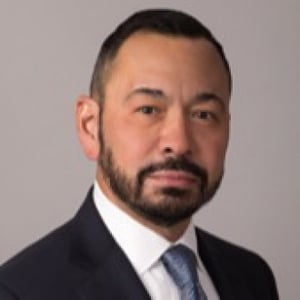
Partner, Gibson Dunn & Crutcher LLP
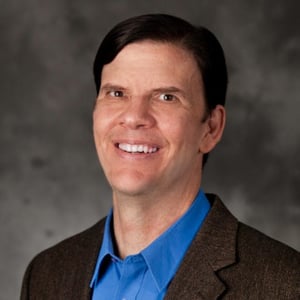
Miguel A. Estrada is a partner in the Washington, D.C. office of Gibson, Dunn & Crutcher.
Mr. Estrada has represented clients before federal and state courts throughout the country in a broad range of matters. He has argued 24 cases before the United States Supreme Court, and briefed many others. He has also argued dozens of appeals in the lower federal courts.
Best Lawyers® recognized Mr. Estrada as a 2020 Lawyer of the Year in Intellectual Property Litigation and as a Lawyer of the Year in Appellate Practice. He has been recognized by Benchmark Litigation as a 2020 U.S. Appellate Litigation “Star”. In 2014, The American Lawyer named Mr. Estrada a “Litigator of the Year,” praising his “brains and tenacity” and noting he is the lawyer to call for “a tough, potentially unwinnable case.” From 2014-2021, Chambers & Partners has named him as one of a handful of attorneys that it ranked in the top tier among the nation’s leading appellate lawyers. Chambers & Partners noted that “clients are impressed by his intellect and ability, with one saying, ‘His papers are just blindingly clear in what they say and devastating in how they marshal the arguments.’” The Atlantic described his oral argument in a 2014 high-profile separation-of-powers case as “one of the most dazzling arguments the marble chamber has heard in many years.”
Mr. Estrada was selected by his peers for inclusion in the 2020 edition of The Best Lawyers in America® in the area of Appellate Law, in addition to previous recognition by the publication in the specialties of Bet-the-Company Litigation, Commercial Litigation and Criminal Defense: White Collar, Intellectual Property Litigation, and Regulatory Enforcement Litigation in the areas of SEC, Telecom, and Energy. In 2017, he was elected as a member of the American Law Institute. In 2021, Mr. Estrada was named among the Lawdragon 500 Leading Lawyers in America. In 2004, Legal Times named him one of the top 12 appellate litigators in the D.C. area, noting that “people who follow appellate practice in Washington have known for several years that Estrada . . . is one of the best around.” Also in 2004, Washingtonian Magazine named him one of the top constitutional law lawyers “who could become one of the legends of the Supreme Court bar.”
Mr. Estrada joined Gibson Dunn in 1997, after serving for five years as Assistant to the Solicitor General of the United States. He previously served as Assistant U.S. Attorney and Deputy Chief of the Appellate Section, U.S. Attorney’s Office, Southern District of New York. In those capacities, Mr. Estrada represented the government in numerous jury trials and in many appeals before the U.S. Court of Appeals for the Second Circuit. Before joining the U.S. Attorney’s Office, Mr. Estrada practiced corporate law in New York with Wachtell, Lipton, Rosen & Katz.
Mr. Estrada is a Trustee of the Supreme Court Historical Society. He was formerly a member of the Board of Visitors of Harvard Law School.
Mr. Estrada served as a law clerk to the Honorable Anthony M. Kennedy in the U.S. Supreme Court from 1988 to 1989 and to the Honorable Amalya L. Kearse in the U.S. Court of Appeals for the Second Circuit from 1986 to 1987. He received a J.D. degree magna cum laude in 1986 from Harvard Law School, where he was editor of the Harvard Law Review. Mr. Estrada graduated with an A.B. degree magna cum laude and Phi Beta Kappa in 1983 from Columbia College, New York. He is fluent in Spanish and proficient in French.
Representative Supreme Court matters include:
In 2011, the Supreme Court appointed Mr. Estrada to brief and argue two criminal cases –Dorsey v. United States and Hill v. United States – in which the Solicitor General declined to defend the judgments of the court of appeals. Mr. Estrada was appointed to argue the position that the Solicitor General had declined to defend.
Mr. Estrada was also part of the team that successfully presented then Governor Bush’s position to the Supreme Court in Bush v. Gore (2000). Other cases that Mr. Estrada handled in the Supreme Court include Granholm v. Heald (2005) (dormant Commerce Clause and Twenty-First Amendment), Vermont Agency of Natural Resources v. United States ex rel. Stevens (2000) (False Claims Act, Article III standing and Eleventh Amendment immunity), Old Chief v. United States (1997) (rules of evidence), United States v. Mezzanatto (1995) (evidence and plea bargaining), United States v. Robertson (1995) (constitutional limits on Congress’s Commerce Clause powers), Citizens Bank of Maryland v. Strumpf (1995) (bankruptcy law), and NOW, Inc. v. Scheidler (1994) (RICO).
Recent Court of Appeals matters include:
In addition, Mr. Estrada is lead appellate counsel to Vivendi S.A. in two securities-fraud appeals from jury verdicts that are currently pending in the Second Circuit, and to the National Association of Broadcasters in a challenge to certain procedures promulgated by the FCC in connection with the upcoming Spectrum Auction. Mr. Estrada also recently presented argument before the D.C. Circuit on behalf of the tobacco industry in a first amendment challenge to certain compelled disclosures that were imposed as part of the government’s long-running civil RICO case against the industry.
Other matters:
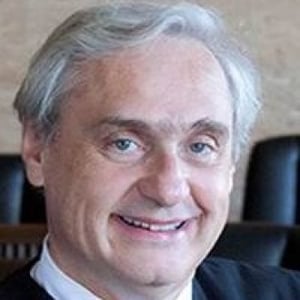
Former Judge, United States Court of Appeals, Ninth Circuit
Judge Kozinski served as a United States Circuit Judge for the Ninth Circuit from November 1985 until December 2017. He served as Chief Judge from 2007 to 2014. He graduated from UCLA, receiving an A.B. degree in 1972, and from UCLA Law School, receiving a J.D. degree in 1975.
Prior to his appointment to the appellate bench, Judge Kozinski served as Chief Judge of the United States Claims Court, 1982-85; Special Counsel, Merit Systems Protection Board, 1981-82; Assistant Counsel, Office of Counsel to the President, 1981; Deputy Legal Counsel, Office of President-Elect Reagan, 1980-81; Attorney, Covington & Burling, 1979-81; Attorney, Forry Golbert Singer & Gelles, 1977-79; Law Clerk to Chief Justice Warren E. Burger, 1976-77; and Law Clerk to Circuit Judge Anthony M. Kennedy, 1975-76.
Judge Kozinski is married to Marcy Jane Tiffany and has three children: Yale, Wyatt and Clayton, and three grandchildren: Quinn, Owen and Anna.
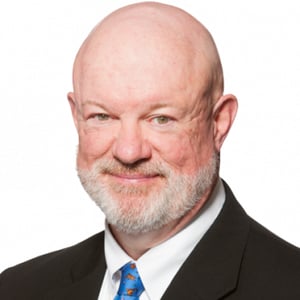
Senior Legal Fellow, the Meese Institute for the Rule of Law, Advancing American Freedom
Paul J. Larkin is a Senior Legal Fellow in the Meese Institute for the Rule of Law at Advancing American Freedom. Paul has held various positions in the federal and state governments throughout his career, such as being an attorney in the Organized Crime and Racketeering Section of the Criminal Division at the U.S. Department of Justice, an Assistant to the Solicitor General in the Office of the Solicitor General at the U.S. Department of Justice, Special Agent-in-Charge and Acting Director of the Criminal Investigation Division at the Environmental Protection Agency, and a member of the Parole Abolition and Sentencing Reform Commission and of the Juvenile Justice Reform Commission in the Office of Virginia Governor George Allen.
He has also worked at Verizon Communications and two law firms in Washington, D.C. His current research is principally in the fields of drug policy, criminal justice policy, and administrative law and policy. He has published numerous articles in law and public policy journals, both in print and online.
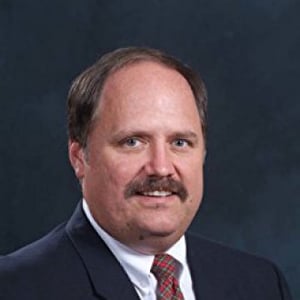
Distinguished Professor of Law, Jamie L. Whitten Chair of Law and Government, University of Mississippi School of Law
Professor Ronald J. Rychlak is the Jamie L. Whitten Chair of Law and Government and Distinguished Professor of Law at the University of Mississippi. He is a legal advisor to the Holy See’s delegation to the United Nations and chair of the Mississippi Advisory Committee to the U.S. Civil Rights Commission. He serves as the university’s Faculty Athletic Representative and is on the executive committee of the Southeastern Conference (SEC). In 2019 he received the university’s highest research and publication recognition, the “Distinguished Research and Creative Achievement Award” based upon his reputation for scholarly activity and leadership roles in professional societies. In 2023, he received the Algernon Sydney Sullivan Award, the University’s highest award in honor of service, for “placing service to others and the community before oneself, while embodying the qualities of honesty, morality, ethics, integrity, responsibility, determination, courage, and compassion.” In 2024, he was voted “Outstanding Law Professor” by the law school student body.
Ron is the author, co-author, or editor of twelve books and over 100 articles. The Congregation for the Causes of Saints at the Vatican called his book, Hitler, the War, and the Pope “definitive” in its response to charges made against the leader of the Catholic Church during World War II. He has been published in Notre Dame Law Review, UCLA Law Review, The Washington Post, The Wall Street Journal, and numerous other periodicals and journals. Media appearances include CNN, ABC, Fox News, The National Geographic TV Network, The Military Channel, C-SPAN, and more.
Ron and his wife Claire are proud of their six children, two sons-in-law, one daughter-in-law, and three granddaughters. They live in Oxford, Mississippi.
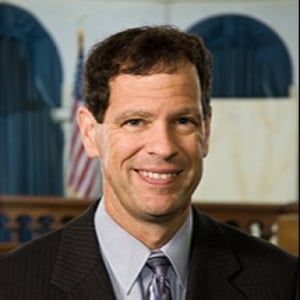
Warren Distinguished Professor of Law, University of San Diego School of Law
Michael D. Ramsey is Warren Distinguished Professor of Law at the University of San Diego School of Law, where he teaches and writes in the areas of Constitutional Law, Foreign Relations Law and International Law. He is the author of The Constitution’s Text in Foreign Affairs (Harvard University Press), co-editor of International Law in the U.S. Supreme Court: Continuity and Change (Cambridge University Press), and co-author of two casebooks, Transnational Law and Practice (2d ed., Aspen) and International Business Transactions: A Problem-Oriented Coursebook (14th ed., West). His scholarly articles have appeared in publications such as the Yale Law Journal, the University of Chicago Law Review, the Georgetown Law Journal and the American Journal of International Law. He received his B.A. magna cum laude from Dartmouth College and his J.D. summa cum laude from Stanford Law School. Prior to teaching, he served as a judicial clerk for Judge J. Clifford Wallace of the United States Court of Appeals for the Ninth Circuit and for Justice Antonin Scalia of the United States Supreme Court, and practiced law with the law firm of Latham & Watkins, where he specialized in international finance and investment. He has taught as a visiting professor at the University of California, San Diego, in the Department of Political Science and at the University of Paris – Sorbonne, in the Department of Comparative Law.
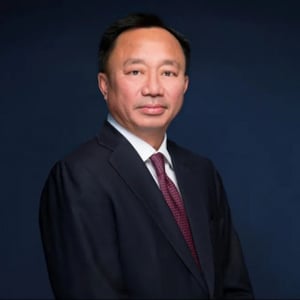
Principal, Palanquin Companies
Viet D. Dinh is Principal of the Palanquin Companies, including Palanquin Advisors LLC and Palanquin Capital LLC. He was a senior executive of Fox Corporation, serving as Chief Legal and Policy officer from September 2018 to December 2023 and Special Advisor from January 2024 to December 2025. Before that, Viet was a partner at two leading law firms, Kirkland & Ellis LLP and Bancroft PLLC, the latter of which he founded. Viet was a professor at Georgetown University Law Center for 20 years, and was appointed U.S. Assistant Attorney General for Legal Policy from 2001 to 2003. He currently serves on the Boards of Wonder, Inc., Strategic Education, Inc., and Kingspan Group Plc; and previously of Twenty-First Century Fox, the News Corporation, Revlon Inc., and LPL Financial Holdings, among other public companies. Viet graduated from Harvard College and Harvard Law School, and clerked for Judge Laurence H. Silberman and Justice Sandra Day O’Connor.
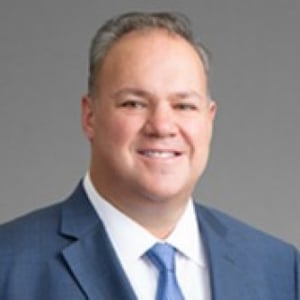
Costa is a partner in Gibson Dunn’s Houston office and co-chair of the firm’s Trials Practice Group. Mr. Costa offers clients a unique perspective as the only former federal trial and appellate judge trying cases and leading investigations. His broad experience—having handled complex civil and criminal matters, at trial and on appeal, as advocate and judge—allows him to offer invaluable skills and strategic insights.
Before joining Gibson Dunn, Mr. Costa served for more than ten years as a federal trial and appellate judge. He served on the U.S. Court of Appeals for the Fifth Circuit from 2014 to 2022. After his nomination by President Obama, the Senate confirmed him by a vote of 97-0. No federal appellate judge nominated since has received more votes. Mr. Costa first served as a district judge for the Southern District of Texas from 2012 to 2014. When appointed to the bench, he was the youngest-sitting federal judge at age 39. Mr. Costa presided over thirty federal trials in four different venues (he continued handling district court matters while serving on the court of appeals). He wrote precedential opinions in almost every area of the law, including antitrust, intellectual property, class actions, international arbitration, securities fraud, bankruptcy, conflicts of law, labor and employment, oil and gas, False Claims Act, administrative law, constitutional law, and criminal law. In press accounts of his tenure, he was described as an “exceptionally gifted jurist” with a “towering intellect” who was “respected by all sides.” The Federal Judicial Center invited Mr. Costa on multiple occasions to teach new federal district judges.
Before taking the bench, Mr. Costa was an Assistant U.S. Attorney in Houston from 2005 to 2012. As a prosecutor, he tried more than 15 jury trials, including serving as a lead prosecutor of Allen Stanford, the head of Stanford Financial Group, for orchestrating a multibillion-dollar international fraud scheme. Mr. Costa is featured in a documentary about the case, The Man Who Bought Cricket. A Reuters article about the trial quotes a victim who said that Mr. Costa’s closing argument “brought her to tears.” For his work on the Stanford case, Mr. Costa received the John Marshall Award for Trial of Litigation and the Assistant Attorney General’s Award for Exceptional Service. He also prosecuted cases involving kickbacks in the energy industry, public corruption, the Foreign Corrupt Practices Act, securities fraud, internet fraud, and counterfeit technology products. During his time as a federal prosecutor, Mr. Costa served as the Southern District of Texas’s Deputy International Affairs Coordinator, during which he assisted with investigations in more than a dozen countries.
Mr. Costa is a frequent speaker and author on legal topis, including writing for the ABA’s Litigation Journal on various trial-related issues. He also taught Federal Jurisdiction at the University of Houston Law Center, where he was named an Honorary Alumnus.
After college, Mr. Costa taught elementary school for two years in the Mississippi Delta through Teach for America. He has remained involved in the Delta and in education, launching a nonprofit in Mississippi, serving on the board of the Houston Urban Debate League, and helping teach Government at a Houston‑area charter school.

Professor of Law, South Texas College of Law Houston
Josh Blackman is a national thought leader on constitutional law and the United States Supreme Court. Josh’s work was quoted during two presidential impeachment trials. He has testified before Congress and advises federal and state lawmakers. Josh regularly appears on TV, including NBC, CBS, ABC, Fox, and the BBC. Josh is also a frequent guest on NPR and other syndicated radio programs. He has published commentaries in the New York Times, Wall Street Journal, Washington Post, and leading national publications.
Since 2012, Josh has served as a professor at the South Texas College of Law Houston. He holds the Centennial Chair of Constitutional Law. Josh is an Adjunct Fellow at the Manhattan Institute. Josh has written more than seven dozen law review articles that have been cited more than a thousand times. Josh was selected as the Jurist of the Year by the Texas Journal of Law & Public Policy, received the inaugural Meese III Originalism Award, and was awarded the Inaugural Joseph Story Award. Josh was selected by Forbes Magazine for the “30 Under 30” in Law and Policy. Josh is the President of the Harlan Institute, and founded FantasySCOTUS, the Internet’s Premier Supreme Court Fantasy League. He blogs at the Volokh Conspiracyand posts@JoshMBlackman.
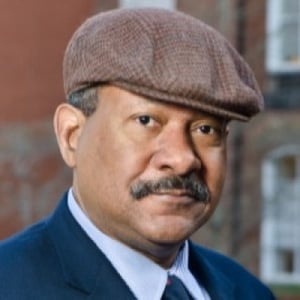
Harold Paul Green Research Professor of Law, George Washington University School of Law
Robert J. Cottrol joined the law school faculty in 1995 as a visiting professor of law of legal history. Previously, he taught at Rutgers University and Boston College, and had visited at the University of Virginia. As well as specializing in American legal history, Professor Cottrol has also taught torts and criminal law. His writings on law and history have appeared in the Yale Law Journal, Georgetown Law Journal, American Journal of Legal History, Law and Society Review, Slavery and Abolition: A Journal of Slave and Post-Slave Studies and American Quarterly, among others.
He is the author of The Afro-Yankees: Providence’s Black Community in the Antebellum Era (selected by Choice as an outstanding academic book for 1983), editor of Gun Control and the Constitution: Sources and Explorations on the Second Amendment (Book of the Month selection by the History Book Club), and From African to Yankee: Narratives of Slavery and Freedom in Antebellum New England (1998). Professor Cottrol’s book Brown v. Board of Education: Caste, Culture and the Constitution (2003) won the Langum Project Prize for Historical Literature in 2003 and was a “Book-of-the-Month” selection of the History Book Club. Most recently, he has authored The Long, Lingering Shadow: Slavery, Race, and Law in the American Hemisphere (2013).
He is currently doing research contrasting the role of law in the development of systems of slavery and racial hierarchy in the United States and Latin America. He has lectured on American law at the Federal Universities of Santa Catarina and Rio Grande do Sul in Brazil and the University of Buenos Aires and La Universidad del Museo Social in Argentina.

Professor of Law and Director of the Center for Intellectual Property Law, Maurice A. Deane School of Law at Hofstra University
Professor Manta teaches intellectual property law subjects. Her research examines the intersection between intellectual property law and social science, with a focus on psychology. She has most recently written about the hedonic value of trademarks and its legal implications, the problem of cognitive bias in copyright infringement litigation, price discrimination through software licensing in the age of the Internet of Things, and the role of criminal sanctions in intellectual property. Professor Manta has published or has forthcoming work in the Emory Law Journal, William & Mary Law Review, Iowa Law Review, Alabama Law Review, Boston College Law Review, Ohio State Law Journal, Washington and Lee Law Review, Harvard Journal of Law & Technology, Stanford Technology Law Review, Florida Law Review, Arizona Law Review, and Cornell Law Review Online, among others. She is also a co-author for a forthcoming textbook on criminal law issues in intellectual property. Professor Manta has further been a guest blogger for PrawfsBlawg and for Concurring Opinions. In 2014, she received the Lawrence A. Stessin Prize for Outstanding Scholarly Publications, which is awarded to two junior faculty members across all disciplines at Hofstra University.
Before joining the law school faculty in 2012, Professor Manta was an Assistant Professor of Law at the Case Western Reserve University School of Law. She was a Bigelow Teaching Fellow and Lecturer in Law at the University of Chicago Law School from 2007 to 2009. Professor Manta has also served on the faculties of Brooklyn Law School, The George Washington University School of Law, and the University of Arkansas at Little Rock William H. Bowen School of Law. She clerked for Judge Morris S. Arnold on the U.S. Court of Appeals for the Eighth Circuit for the 2006-2007 term.
While earning her J.D. at Yale Law School, Professor Manta was the grand prize winner of the Foley & Lardner LLP Intellectual Property Writing Competition. She also served as tributes editor of the Yale Law Journal, articles editor of the Yale Law & Policy Review, and editor of the Yale Journal on Regulation. She graduated magna cum laude from Yale University with a B.A. in psychology.

Third Annual Miguel Estrada Supreme Court Round Up
Coral Gables, FloridaMagna Carta: An Enduring Legacy
St. Paul, MinnesotaTopics
Reform Criminal Justice for Justice, Not Political Expediency
It’s good to see President Obama and members of Congress take an interest in criminal justice reform, but their...
Criminal Law 2.0
New York, New YorkThe 800th Anniversary of the Magna Carta
2015 Supreme Court Preview
San Diego, CaliforniaIs Your Email Private? The Microsoft Warrant Case and Emerging Issues In Online Privacy
The United States Constitution
Houston, TexasFirst & Second Amendment Challenges to Bans on 3-D Printed Guns
Why IP is Like Property and Property is Not What You Think