
Senior Fellow, Cato Institute
Doug Bandow is a senior fellow at the Cato Institute, specializing in foreign policy and civil liberties. He worked as special assistant to President Reagan and editor of the political magazine Inquiry. He writes regularly for leading publications such as Fortune magazine, National Interest, Wall Street Journal, and Washington Times. Bandow speaks frequently at academic conferences, on college campuses, and to business groups. Bandow has been a regular commentator on ABC, CBS, NBC, CNN, Fox News Channel, and MSNBC. He holds a J.D. from Stanford University.
Author of "The Nixon Conspiracy" (2021) and "The Real Watergate Scandal" (2015)
Geoff Shepard worked on President Nixon’s White House staff for five years, including serving as deputy counsel on his Watergate defense team. He testified as a government chain-of-custody witness in the Plumbers Trial and was subpoenaed for the same purpose in the Cover-up Trial. He possesses a “clearance letter” from the special prosecutor, stating he was never the object of an investigation by that office. Geoff has spent much of the past fifteen year researching and writing about the Watergate scandal. He has published three books, authored dozens of essays and made over fifty presentations challenging Watergate’s conventional narrative. Much of his work is based on recently uncovered internal files of the Watergate Special Prosecution Force, including their infamous “Road Map” that was the basis for the grand jury naming Nixon a cover-up co-conspirator and for the House Judiciary Committee urging his impeachment.
Senior Fellow, National Review
Bestselling author Andrew C. McCarthy is a contributing editor at National Review, a senior fellow at National Review Institute, and a Fox News contributor. He is a former Chief Assistant United States Attorney in the Southern District of New York and led the terrorism prosecution against the “Blind Sheikh” (Omar Abdel Rahman) and eleven other jihadists for conducting a war of urban terrorism against the United States that included the 1993 World Trade Center bombing and a plot to bomb New York City landmarks. During is 20-year career as a prosecutor, he received numerous honors, including the Justice Department’s highest awards. Andy speaks and writes widely on law and national security, radical Islam, politics, and culture. He has testified before Congress as an expert on issues of constitutional law, counterterrorism, and law-enforcement. He is a columnist for The Hill, and his essays and book reviews appear frequently at The New Criterion. His most recent New York Times bestselling book is Ball of Collusion (Encounter Books, 2019), about the Russiagate controversy (an updated version was published in 2020). His other books include Willful Blindness (2008), The Grand Jihad (2010), Spring Fever: The Illusion of Islamic Democracy (2012), and Faithless Execution (2014). He has also written several pamphlets in the Broadside series published by Encounter Books, most recently Islam and Free Speech (2015).
Partner, Wiley
Lee served as Chairman and Commissioner of the Federal Election Commission (FEC), where he successfully led the rulemaking to conform the agency's regulations to the Supreme Court's Citizens United and McCutcheon decisions and championed free speech on the Internet and free press rights. He previously had served as legal counsel and policy advisor to the Governor of Virginia and Attorney General of Virginia, associate general counsel of the University of Virginia, and general counsel to numerous political organizations. His experience covers a broad range of policy-oriented subjects, including federal and state campaign finance and ethics laws, First Amendment rights of political speech and association, political action on the Internet, taxation of the Internet, interstate regulation, and academic freedom. He has extensive experience in all aspects of election administration, having litigated state, local and congressional recounts, election contests, ballot access, voting rights, late poll openings, and delegate credentials.
He has been named a "Top Campaign & Elections Lawyer" by Washingtonian magazine. The Washington Examiner called Lee “a leading voice among conservative regulators in Washington” (2016) and “a tireless voice for First Amendment rights on the Internet” (2018); the Richmond Times-Dispatch dubbed him a “free-speech champion” (2018); The Hill labeled him “a happy warrior for the First Amendment” (2018); and the Washington Post called him a “sharp policy wonk” (1999). He is a frequent lecturer at law schools, universities, civic organizations, and continuing legal education programs. He has authored numerous articles on election law and a chapter on regulation of political speech on the Internet in Law and Election Politics: The Rules of the Game (Routledge 2013), and his writings have appeared in The Wall Street Journal, Richmond Times-Dispatch, Washington Examiner, Washington Times, Politico and other publications. He has served on the boards of several educational, cultural, and political non-profit organizations.

Professor of Law, Georgetown University Law Center
Nicholas Quinn Rosenkranz teaches constitutional law and federal jurisdiction, and he writes articles for the Harvard Law Review and the Stanford Law Review.
He is currently developing a new theory of constitutional interpretation and judicial review. The first installment, entitledThe Subjects of the Constitution, was published in the Stanford Law Review in May of 2010, and it is among the most downloaded articles about constitutional interpretation, judicial review, and/or federal courts in the history of SSRN. The second installment, The Objects of the Constitution, was published in May of 2011, also in the Stanford Law Review. And the comprehensive version is forthcoming as a book by Oxford University Press.
Rosenkranz has served and advised the federal government in a variety of capacities. He clerked for Judge Frank H. Easterbrook on the U.S. Court of Appeals for the Seventh Circuit (1999-2000) and for Justice Anthony M. Kennedy at the U.S. Supreme Court (October Term 2001). He served as an Attorney-Advisor at the Office of Legal Counsel in the U.S. Department of Justice (November 2002 - July 2004). He often testifies before Congress as a constitutional expert—most recently before the House Financial Services Oversight Subcommittee, regarding the Obama Administration's use of bank settlement agreements to circumvent the Appropriations Clause. He has also filed briefs and presented oral argument before the U.S. Supreme Court. His most recent Supreme Court brief, in Los Angeles v. Patel, was cited by Justice Alito in dissent.
Rosenkranz is a member of the New York Bar and the U.S. Supreme Court Bar. He is a Senior Fellow at the Cato Institute. He serves on the Board of Directors of the Foundation for Individual Rights in Education (FIRE). He is a founding member of Heterodox Academy and a member of its Executive Committee. He also serves on the Board of Directors of the Federalist Society and as the faculty advisor to the Georgetown chapter.
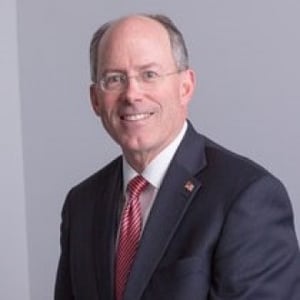
Chief Legal Officer, Pacem Solutions International
Prior to his current position as the Chief Legal Officer for PACEM Solutions, Mr. Schmitz served as a foreign policy/national security advisor to Donald J. Trump from March 2016 through the November 2016 election. His government service includes service as the 5th Senate-confirmed Inspector General of the Department of Defense from April 2002 to September 2005. For his service as Inspector General, Mr. Schmitz was awarded the Department of Defense Medal for Distinguished Public Service, the highest honorary award presented by the Secretary of Defense to non-career federal employees.
In 2013, Mr. Schmitz published “The Inspector General Handbook: Fraud, Waste, Abuse, and Other Constitutional ‘Enemies, Foreign and Domestic’,” the first-ever handbook for the inspector general profession – written also for those who work with inspectors general. Mr. Schmitz has extensive anti-corruption experience in overseeing compliance with various international and security-related laws, including but not limited to the Inspector General Act, Intelligence Oversight laws, the Posse Comitatus Act, the Foreign Corrupt Practices Act (FCPA), the International Traffic in Arms Regulations (ITAR), and laws administered by the Office of Foreign Assets Control (OFAC) and the Office to Monitor and Combat Trafficking in Persons.
Prior to his service as Inspector General of the Department of Defense, Mr. Schmitz was a Partner in the international law firm of Patton Boggs LLP, serving as head of the Aviation Practice Group, and at the same time a Captain in the United States Naval Reserves, serving as Inspector General of the Naval Reserve Intelligence Command. After his Inspector General service, Mr. Schmitz served as Chief Operating Officer and General Counsel of the Prince Group in McLean, Virginia, after which he served as Managing Director in the Washington D.C. Office of Freeh Group International. His pre-Inspector General public service included: twenty-seven years of naval service, first on active duty and then as a reserve officer; law clerk to the Honorable James L. Buckley, Circuit Judge, U.S. Court of Appeals for the D.C. Circuit; and Special Assistant to the Attorney General of the United States, the Honorable Edwin Meese III.
Mr. Schmitz has published numerous articles and has testified as a constitutional expert before U.S. Senate committees, and before various state legislature committees. From 1995 until 2002, he was an Adjunct Professor of Law at Georgetown University Law Center, where he developed and taught a seminar on advanced Constitutional Law.
Mr. Schmitz graduated with distinction from the U.S. Naval Academy in 1978, and received his Doctor of Jurisprudence from Stanford University in 1986. He is a Senior Fellow for the Center for Security Policy, and a regular Newsmax “Insider” on constitutional issues under the banner, “Support and Defend.” In 2013, Mr. Schmitz was inducted into the National Wrestling Hall of Fame (Virginia Chapter) as an “Outstanding American.” Joe and his wife of 40 years, Mollie, have raised six sons and two daughters.
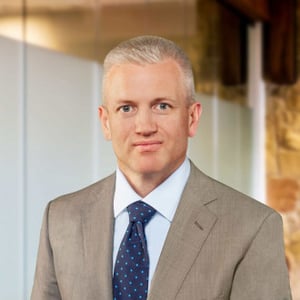
Executive General Counsel, First Liberty Institute
Hiram Sasser is Executive General Counsel for First Liberty Institute, where he oversees First Liberty’s litigation and media efforts. Sasser’s practice focuses on First Amendment and other constitutional and civil rights issues relating to religious liberty. Sasser served as co-counsel in seven victories before the United States Supreme Court, including Groff v. DeJoy (landmark case overturning the “de minimis cost” test for Title VII in place almost 50 years), Kennedy v. Bremerton (landmark case overturning 50 years of Establishment Clause precedent), Carson v. Makin (overturning 40 years of Maine’s discrimination against parents choosing faith-based schools), American Legion v. American Humanist Association (landmark case ending Establishment Clause attacks on veterans’ memorials with religious imagery), Klein v. Oregon Bureau of Labor and Industries (granted, vacated, and remanded (twice) in religious wedding service case), and Sause v. Bauer (summary reversal revoking qualified immunity for police who ordered a citizen not to pray in her own home).
In addition to his legal duties, Sasser develops, coordinates, and implements successful media strategies on behalf of his clients. This includes numerous appearances on ABC, NBC, CBS, Fox News, CNN, and the BBC as well as being heard on various radio stations throughout the United States, Asia, Africa, and Europe.
In 2016, Sasser took a leave of absence to serve a temporary assignment as the Chief of Staff for the Attorney General of Texas. He currently serves as an Adjunct Professor of Law at both The University of Texas at Austin School of Law (teaching Religious Liberty) and Oklahoma City University School of Law (teaching Civil Rights Procedure).
Robert S. Kerr, Sr. Professor of Constitutional Law, Oklahoma City University School of Law
From 2005-2006 Professor Spiropoulos was the Senior Counselor to the Speaker of the Oklahoma House of Representatives, where his duties included serving as chief policy advisor and negotiator. Professor Spiropoulos clerked for Judge Danny Boggs of the United States Court of Appeals for the Sixth Circuit and practiced law with the Chicago firm of Gardner, Carton & Douglas before joining the faculty. He has been a Heritage Foundation Salvatori Fellow and, from 2011 to 2023, was the Milton Friedman Fellow at the the Oklahoma Council of Public Affairs. He was the reporter for the Uniform Interstate Enforcement of Domestic-Violence Protection Orders Act.
Professor Spiropoulos received his B.A. degree from Carleton College and his M.A. and J.D. degrees from the University of Chicago (Phi Beta Kappa). He teaches Constitutional Law, Legislation & Regulation, State and Local Government, and Constitutional Theory.
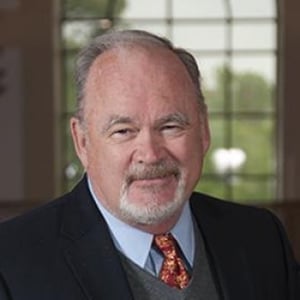
Floyd & Irma Calvert Chair of Law and Liberty and Professor of Law, University of Oklahoma College of Law
Rick Tepker is the first member of the OU law faculty to appear, argue and win a case before the United States Supreme Court. In 1987, the Court appointed Tepker as counsel for petitioner, an indigent juvenile sentenced to death. Thompson v. Oklahoma, 487 U.S. 815 (1988). It was the first case in which an American court overturned a death sentence on constitutional grounds because the condemned was too young at the time of the crime.
Professor Tepker has had a wide range of university and professional service, including: chair of the university Faculty Senate; two-time chair of the campus Tenure Committee; secretary for the American Bar Association Section on Labor and Employment Law; historian of the Tenth Circuit Historical Society; and professor-in-residence for the U.S. Equal Employment Opportunity Commission. During his tenure with the EEOC, he represented the agency in U.S. Supreme Court cases concerning university academic freedom in Title VII cases (Univ. of Pennsylvania v. EEOC, 493 U.S. 182 (1990)) and pension benefit plans under the federal age discrimination statute (Public Employee Retirement System v. Betts, 492 U.S. 158 (1989)).
Tepker is author of many law review articles and has earned numerous university teaching awards, including the University of Oklahoma Regents Award for Superior Teaching and the Merrick Foundation Award. In September 1998, the Regents of The University of Oklahoma named Professor Tepker as the first Calvert Chair of Law and Liberty. He teaches courses in the areas of constitutional law, employment law and equal employment opportunity.
Professor Tepker is a 1973 graduate of Claremont Men's College. He earned his law degree in 1976 from Duke University. He is a member of the Order of the Coif, Phi Beta Kappa, and the American Bar Association. Prior to joining the OU faculty, he practiced law for five years, specializing in labor and employment issues, as an associate with the Los Angeles firm of Gibson, Dunn & Crutcher.

Foreign Affairs
The Real Watergate Scandal
Debunking the War on Women
Andrew McCarthy Event: Faithless Execution - Building the Political Case for Obama's Impeachment
Mobile, AlabamaBanks Want to Want Your Deposits
In a development that is of little surprise, banks are shedding deposits. They are not doing...
Money in Politics: The Delicate Balance Between Free Speech & Regulation
San Diego, CaliforniaPatel v. City of LA and the Fourth Amendment
Topics
Two Takes on Criminal Sentencing Reform
The Sentencing Reform and Corrections Act of 2015, a bill currently under consideration by the...
Human Trafficking
Protected Freedom? Constitutional Violation"