

Senior Vice President for Legal Studies, Cato Institute
Clark Neily is senior vice president for legal studies at the Cato Institute. His areas of interest include constitutional law, overcriminalization, civil forfeiture, police accountability, and gun rights. Neily is the author of Terms of Engagement: How Our Courts Should Enforce the Constitution’s Promise of Limited Government. His writing has appeared in the Wall Street Journal, Forbes, and National Review Online, as well as various law reviews, including the Harvard Journal of Law and Public Policy, George Mason Law Review, Georgetown Journal of Law and Public Policy, NYU Journal of Law and Liberty, and Texas Review of Law and Politics. Neily is a frequent guest speaker and lecturer for the Federalist Society, Institute for Humane Studies, and American Constitution Society.
Before joining Cato in 2017, Neily was a senior attorney and constitutional litigator at the Institute for Justice and director of the Institute’s Center for Judicial Engagement. He is also an adjunct professor at the University of Texas School of Law, where he teaches constitutional litigation and public-interest law.
Neily served as co-counsel in District of Columbia v. Heller, the historic case in which the Supreme Court held for the first time that the Second Amendment protects an individual right to own a gun for self-defense.
Neily began his legal career as a law clerk to Judge Royce Lamberth on the U.S. District Court for the District of Columbia. After that he spent four years in the trial department of the Dallas-based firm Thompson & Knight. Neily received his undergraduate and law degrees from the University of Texas, where he was Chief Articles Editor of the Texas Law Review.
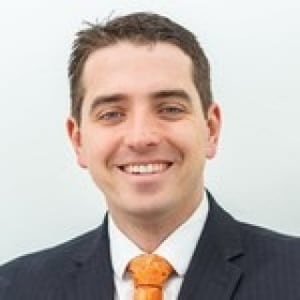
President and Chairman of the Board, Judicial Education Institute
James Heilpern is President and Chairman of the Board of the Judicial Education Institute, a
501(c)(3) organization that provides high quality judicial education seminars to judges
nationwide. He specializes in helping judges harness new technology to improve the
interpretive process. In the last three years alone, he has trained approximately 250 judges
from at least 50 different jurisdictions, as well as hundreds of practicing attorneys, on
topics related artificial intelligence, corpus linguistics, and statutory interpretation. He also
serves as counsel at the law firm Schaerr-Jaffe, where he regularly represents clients at all
three levels of the federal judiciary, as well as before state supreme courts. He was part of
the team the represented the state of Georgia in Texas v. Pennsylvania, et. al., successfully
persuading the Supreme Court to dismiss Texas’ last-ditch effort to overturn the results of
the 2020 presidential election. Heilpern’s scholarship has been cited by the Second
Circuit, the DDC, and the Virginia Supreme Court, as well as dozens of times in the merits
and amicus briefs of Trump v. Anderson. He is a Research Fellow at the Georgetown Center
for the Constitution, and previously served as a Senior Fellow at the BYU Law School; as
General Counsel of an ed-tech start up; and as a strategic advisor to an artificial
intelligence company. He graduated magna cum laude from the BYU Law School and with
highest honors and with distinction from the University of North Carolina at Chapel Hill. He
previously clerked from Judge Edith Clement on the U.S. Court of Appeals for the Fifth
Circuit and Judge Robert H. Cleland on the U.S. District Court for the Eastern District of
Michigan.

Executive Director, State and Local Legal Center
Lisa Soronen is the Executive Director of the SLLC. Prior to joining the SLLC, Lisa worked for the National School Boards Association, the Wisconsin Association of School Boards, and clerked for the Wisconsin Court of Appeals. She earned her J.D. at the University of Wisconsin Law School and is a graduate of Central Michigan University.
Olin-Darling Fellow, Stanford Law School
Lance Sorenson is currently the Olin-Darling Fellow at Stanford Law School.. He has a law degree from Pepperdine University and is a PhD candidate in Legal History at the University of Nevada Las Vegas. He is interested in legal systems and structures, particularly in the American West. His dissertation analyzes iterations of United States’ federalism as part of westward expansion.

Janet Galeria is Senior Counsel for Litigation for the U.S. Chamber Litigation Center at the U.S. Chamber of Commerce. She also practiced law with the law firm of Sullivan & Cromwell, LLP. Ms. Galeria graduated from U.C. Berkeley School of Law before clerking for Judge Griffith of the United States Court of Appeals for the D.C. Circuit and Associate Justice Thomas on the Supreme Court of the United States.
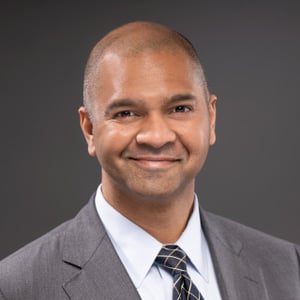
Senior Fellow, Stand Together Trust
Vikrant Reddy is a senior fellow at Stand Together Trust, specializing in the area of criminal justice reform. Reddy previously served as a senior policy analyst at the Texas Public Policy Foundation (TPPF), where he managed the launch of TPPF’s national Right on Crime initiative in 2010. He has worked as a research assistant at the Cato Institute, as a judicial clerk to the Hon. Gina M. Benavides in Texas, and as an attorney in private practice. He is a member of the State Bar of Texas, and he serves on the Executive Committee of the Criminal Law Practice Group of the Federalist Society. He is also an appointee to the U.S. Commission on Civil Rights Texas State Advisory Committee.
Reddy’s research and scholarly opinions have appeared in a range of national media outlets, including USA Today, National Review, The Federalist, and others.
Reddy earned his law degree from the Southern Methodist University School of Law. He received his undergraduate degree from the University of Texas at Austin.
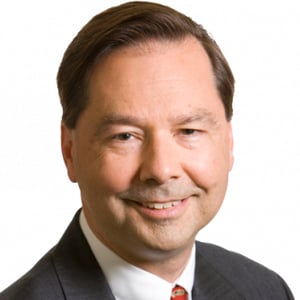
Senior Legal Fellow, Edwin Meese III Institute for the Rule of Law, Advancing American Freedom
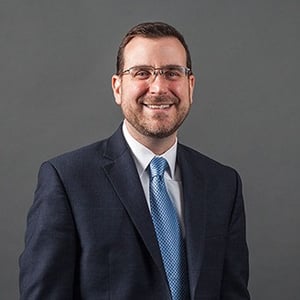
Professor of Law, Antonin Scalia Law School, George Mason University
Adam Mossoff is Professor of Law at Antonin Scalia Law School, George Mason University. He has published extensively on why patents, copyrights, and other intellectual property rights have been—and should be—legally secured to innovators and creators as property rights. His scholarship has been relied on by the United States Supreme Court, by lower federal courts, and by U.S. federal agencies. He has been invited to testify numerous times before the U.S. Senate and the House of Representatives on intellectual property legislation. His writings on intellectual property policy have also appeared in the Wall Street Journal, New York Times, Forbes, Investors Business Daily, and in other media outlets. His journal articles can be downloaded here.
Professor Mossoff is a longstanding member of the Executive Committee of the Intellectual Property Practice Group of the Federalist Society, on which he served as Chairperson from 2016-2018, and he is Chair of the Intellectual Property Working Group of the Regulatory Transparency Project of the Federalist Society. He is a Senior Fellow and Chair of the Forum for Intellectual Property at the Hudson Institute, a Visiting Intellectual Property Fellow at the Heritage Foundation, and a member of the Board of Directors of the Center for Intellectual Property Understanding. He is a member of the Intellectual Property Rights Policy Committee of ANSI and he has served as Chair and Vice-Chair of the Intellectual Property Committee of the IEEE-USA, on which he remains a member in good standing.

Senior Fellow and Director of Constitutional Studies, Manhattan Institute
Ilya Shapiro is a senior fellow and director of constitutional studies at the Manhattan Institute and a contributing editor of City Journal. Previously he was executive director and senior lecturer at the Georgetown Center for the Constitution, and before that a vice president of the Cato Institute.
Shapiro is the author of Lawless: The Miseducation of America’s Elites (2025) and Supreme Disorder: Judicial Nominations and the Politics of America’s Highest Court (2020), coauthor of Religious Liberties for Corporations? (2014), and editor of 11 volumes of the Cato Supreme Court Review (2008-18). He has contributed to a variety of academic, popular, and professional publications, including the Wall Street Journal, Harvard Journal of Law & Public Policy, Washington Post, Los Angeles Times, USA Today, National Review, and Newsweek. He also regularly provides commentary for various media outlets, writes the Shapiro’s Gavel newsletter on Substack, and once appeared on the Colbert Report.
Shapiro has testified many times before Congress and state legislatures and has filed more than 500 amicus curiae “friend of the court” briefs in the Supreme Court. He lectures regularly on behalf of the Federalist Society, is a member of the board of fellows of the Jewish Policy Center, was an inaugural Washington Fellow at the National Review Institute, and has been an adjunct law professor at the George Washington University and University of Mississippi. He is also the chairman of the board of advisers of the Mississippi Justice Institute, a barrister in the Edward Coke Appellate Inn of Court, and a former member of the Virginia Advisory Committee to the U.S. Commission on Civil Rights.
Earlier in his career, Shapiro was a special assistant/adviser to the Multi-National Force in Iraq on rule-of-law issues and practiced at Patton Boggs and Cleary Gottlieb. Before entering private practice, he clerked for Judge E. Grady Jolly of the U.S. Court of Appeals for the Fifth Circuit. He holds an AB from Princeton University, an MSc from the London School of Economics, and a JD from the University of Chicago Law School.

Gamble v. United States - Post-Decision SCOTUScast
Clark Neily
On June 17, 2019, the Supreme Court decided Gamble v. United States, a case challenging...
Rimini Street Inc. v. Oracle USA Inc. - Post-Decision SCOTUScast
James Heilpern
On March 4, 2019, the Supreme Court decided Rimini Street Inc v. Oracle USA Inc.,...
Lozman v. City of Riviera Beach, FL - Post-Decision SCOTUScast
Lisa Soronen
On June 18, 2018, the Supreme Court decided Lozman v. City of Riviera Beach, FL,...
Washington v. United States - Post-Decision SCOTUScast
Lance Sorenson
On June 11, 2018, the Supreme Court decided Washington v. United States, a case considering...
Kokesh v. Securities and Exchange Commission - Post-Decision SCOTUScast
Janet Galeria
On June 5, 2017, the Supreme Court decided Kokesh v. Securities and Exchange Commission. In...
TC Heartland LLC v. Kraft Foods Group Brands LLC - Post-Decision SCOTUScast
J Hartline
On May 22, 2017, the Supreme Court decided TC Heartland LLC v. Kraft Foods Group...
Maslenjak v. United States - Post-Decision SCOTUScast
Vikrant P. Reddy
On June 22, 2017, the Supreme Court decided Maslenjak v. United States. At the close...
Cooper v. Harris - Post-Decision SCOTUScast
Hans A. Von Spakovsky
On May 22, 2017, the Supreme Court decided Cooper v. Harris, formerly known as McCrory...
Impression Products, Inc. v. Lexmark International, Inc. - Post-Decision SCOTUScast
Adam Mossoff
On May 30, 2017, the Supreme Court decided Impression Products, Inc. v. Lexmark International, Inc....
Packingham v. North Carolina - Post-Decision SCOTUScast
Ilya Shapiro
On June 19, 2017, the Supreme Court decided Packingham v. North Carolina. Lester Packingham was...