


Laurence A. Tisch Professor of Law and Director, Classical Liberal Institute, New York University School of Law; Director, Classical Liberal Institute, Civitas Institute University of Texas at Austin
Richard A. Epstein is the inaugural Laurence A. Tisch Professor of Law at NYU School of Law. Prior to his joining the faculty, he was a visiting law professor at NYU from 2007 through 2009. He served as the Peter and Kirstin Bedford Senior Fellow at the Hoover Institution from 2000 to 2024. Since 2024 to the present he is a senior lecturer at the Civitas Institute at the University of Texas—Austin. Epstein is also the James Parker Hall Distinguished Service Professor of Law Emeritus and a senior lecturer at the University of Chicago. His initial law school appointment was at the University of Southern California from 1968 to 1972. Epstein received an LL.D., h.c. from the University of Ghent, 2003. He has been a member of the American Academy of Arts and Sciences since 1985 and was a Senior Fellow of the Center for Clinical Medical Ethics at the University of Chicago Division of Biological Sciences, also from 1983. to 2022 He served as editor of the Journal of Legal Studies from 1981 to 1991, and of the Journal of Law and Economics from 1991-2001. From 2001 to 2010 he was a director of the John M. Olin Program in Law and Economics at the University of Chicago.
His newest book, The Myth of Birthright Citizenship: What the Fourteenth Amendment Really Says was published in 2026 (Encounter Books). Prior to that he has published many books including, The Dubious Morality of the Modern Administrative State (Roman & Littlefield 2020).Earlier he published th Classical Liberal Constitution: The Uncertain Quest for Limited Government (Harvard 2014) iHis previous books include Design for Liberty: Private Property, Public Administration and the Rule of Law (Harvard 2011); The Case Against the Employee Free Choice Act (Hoover 2009); Supreme Neglect: How to Revive the Constitutional Protection of Property Rights (Oxford 2008); Antitrust Decrees in Theory and Practice: Why Less is More (AEI 2007); Overdose: How Excessive Government Regulation Stifles Pharmaceutical Innovation (Yale University Press. 2006); How Progressives Rewrote the Constitution (Cato 2006); Cases and Materials on Torts (Aspen Law & Business; 8th ed. 2004); Skepticism and Freedom: A Modern Case for Classical Liberalism (University of Chicago, 2003); Torts (Aspen Law & Business 1999); Principles for a Free Society: Reconciling Individual Liberty with the Common Good (Perseus Books, 1998): Mortal Peril: Our Inalienable Rights to Health Care (Addison-Wesley, 1997); Simple Rules for a Complex World (Harvard, 1995); Bargaining With the State (Princeton, 1993); Forbidden Grounds: The Case Against Employment Discrimination Laws (Harvard , 1992); Takings: Private Property and the Power of Eminent Domain (Harvard, 1985); and Modern Products Liability Law (Greenwood Press, 1980). He has also edited(with Catherine M. Sharkey) Cases and Materials on the Law of Torts (10th edition 2012).
Professor Epstein has written numerous articles on a wide range of legal and interdisciplinary subjects. He has taught courses in administrative law, antitrust law, civil procedure, communications, constitutional law, contracts, corporations, criminal law, employment discrimination law, environmental law, food and drug law health law and policy, legal history, labor law, property, real estate development and finance, jurisprudence, labor law; land use planning, patents, individual, estate and corporate taxation, Roman Law; torts, and workers' compensation.
Professor Epstein also writes a regular column for Civitas Institute, which also sponsors his podcast, The Libertarian with Charles C.W. Cooke, and Law Talk, with Cooke and John Yoo. He also does a podcast with John Batchelor. And appears regularly on the Freedom File with Judge Andrew Napolitano.
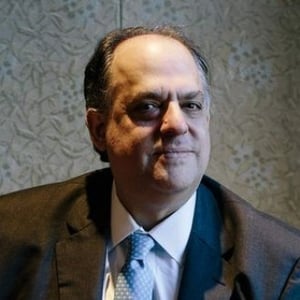
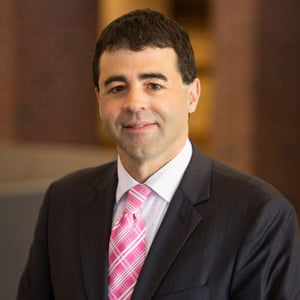
Director of Litigation and Senior Attorney, Hamilton Lincoln Law Institute
Theodore H. Frank is director at the Hamilton Lincoln Law Institute and the Center for Class Action Fairness. Frank founded and ran CCAF as a non-profit, public interest law firm in 2009.
Frank has won several landmark appeals and tens of millions of dollars for consumers and other plaintiffs through his class action work. Adam Liptak of The New York Times calls Frank “the leading critic of abusive class action settlements” and the American Lawyer Litigation Daily referred to him as “the indefatigable scourge of underwhelming class action settlements.”
Previously, Frank clerked for the Honorable Frank H. Easterbrook on the Seventh Circuit Court of Appeals, and was a litigator at firms in Washington and Los Angeles and a resident fellow at the American Enterprise Institute. Frank is a frequent public speaker and has testified before Congress multiple times on legal issues. He has been profiled by The Wall Street Journal, Forbes, GQ, and the ABA Journal, among other publications.
In 2008, Frank was elected to membership in the American Law Institute. He also serves on the Executive Committee of the Federalist Society Litigation Practice Group. Frank graduated from The University of Chicago Law School in 1994 with high honors and as a member of the Order of the Coif and the Law Review. He is a member of the District of Columbia Bar and the state bars of California and Illinois.
Senior Fellow, Manhattan Institute's Center for Legal Policy
 Marie Gryphon is a Senior Fellow with the Center for Legal Policy. As an attorney in private practice, she worked on ERISA, securities, class action, commercial contract, legal malpractice, and constitutional law cases. She has also been a legal and policy analyst with the Cato Institute, working on issues related to education policy.
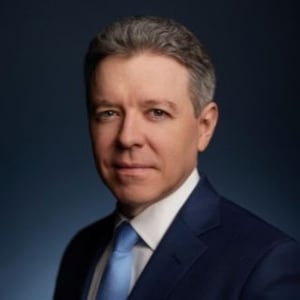
Former Solicitor General of Texas
Jonathan F. Mitchell is Principal at Mitchell Law PLLC. He received his law degree with high honors from the University of Chicago Law School, where he was an articles editor of The University of Chicago Law Review and a member of the Order of the Coif.
After graduating from law school, Mr. Mitchell clerked for Judge J. Michael Luttig of the U.S. Court of Appeals for the Fourth Circuit and for Justice Antonin Scalia of the Supreme Court of the United States. He then served as an Attorney-Adviser in the Office of Legal Counsel of the United States Department of Justice from 2003 through 2006. After leaving the Department of Justice, Mr. Mitchell served as a Visiting Researcher at Georgetown University Law Center, a Visiting Assistant Professor at the University of Chicago Law School from 2006 through 2008, and an Assistant Professor of Law at George Mason University from 2008 through 2010.
In 2010, Mr. Mitchell was appointed Solicitor General of Texas, a position he held until January 2015. After leaving the Texas Solicitor General’s office, Mr. Mitchell served as the Searle Visiting Professor of Law at the University of Texas School of Law before joining the Hoover Institution as a Visiting Fellow from 2015 to 2016. Mr. Mitchell also served as a Visiting Professor of Law at Stanford Law School before opening his own law firm in 2018.
Mr. Mitchell has published numerous works of scholarship in top-10 law journals, and he has written articles on textualism, national-security law, criminal law and procedure, judicial review and judicial federalism, and the legality of stare decisis in constitutional adjudication.
Mr. Mitchell has argued eight times before the Supreme Court of the United States, and more than 20 times in the federal courts of appeals. He has also argued before Supreme Court of Texas and in numerous trial courts. Mr. Mitchell has authored the principal merits brief in 11 Supreme Court cases, and has written and submitted more than 20 amicus curiae briefs in the Supreme Court.
Mr. Mitchell devised the novel enforcement mechanism in the Texas Heartbeat Act, also known as Senate Bill 8, which avoids pre-enforcement judicial review by prohibiting government officials from enforcing the statute and empowering private citizens to bring lawsuits against those who violate it. This produced an end-run around Roe v. Wade and allowed Texas and other states to impose pre-viability abortion bans despite the continued existence of Roe.
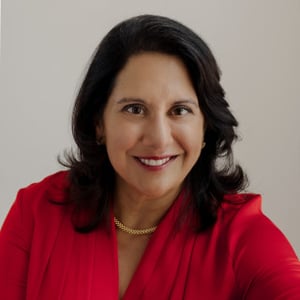
Judge, United States Court of Appeals, District of Columbia Circuit
Judge Rao was appointed to the United States Court of Appeals for the District of Columbia Circuit in March 2019. She graduated from Yale College in 1995 and the University of Chicago Law School in 1999. Following graduation, she served as a law clerk to Judge J. Harvie Wilkinson III of the U.S. Court of Appeals for the Fourth Circuit and, in the 2001 October Term, as law clerk to Justice Clarence Thomas of the U.S. Supreme Court. Between her clerkships, Judge Rao served as counsel for nominations and constitutional law to the U.S. Senate Committee on the Judiciary. In 2002, she joined the international arbitration group of Clifford Chance LLP in London, England. From 2005-2006, she served as Special Assistant and Associate White House Counsel to President George W. Bush. From 2006 to 2017, Judge Rao was a professor at the Antonin Scalia Law School at George Mason University, where she taught constitutional law, legislation and statutory interpretation, and the history and foundations of the administrative state. In 2014, she founded the Center for the Study of the Administrative State, a non-profit Center that promotes academic scholarship and public policy debates about administrative law. In July 2017, she was appointed to serve as the Administrator of the Office of Information and Regulatory Affairs in the Office of Management Budget. She served in this position until her appointment to the D.C. Circuit.
Laurence A. Tisch Professor of Law and Director, Classical Liberal Institute, New York University School of Law; Director, Classical Liberal Institute, Civitas Institute University of Texas at Austin
Richard A. Epstein is the inaugural Laurence A. Tisch Professor of Law at NYU School of Law. Prior to his joining the faculty, he was a visiting law professor at NYU from 2007 through 2009. He served as the Peter and Kirstin Bedford Senior Fellow at the Hoover Institution from 2000 to 2024. Since 2024 to the present he is a senior lecturer at the Civitas Institute at the University of Texas—Austin. Epstein is also the James Parker Hall Distinguished Service Professor of Law Emeritus and a senior lecturer at the University of Chicago. His initial law school appointment was at the University of Southern California from 1968 to 1972. Epstein received an LL.D., h.c. from the University of Ghent, 2003. He has been a member of the American Academy of Arts and Sciences since 1985 and was a Senior Fellow of the Center for Clinical Medical Ethics at the University of Chicago Division of Biological Sciences, also from 1983. to 2022 He served as editor of the Journal of Legal Studies from 1981 to 1991, and of the Journal of Law and Economics from 1991-2001. From 2001 to 2010 he was a director of the John M. Olin Program in Law and Economics at the University of Chicago.
His newest book, The Myth of Birthright Citizenship: What the Fourteenth Amendment Really Says was published in 2026 (Encounter Books). Prior to that he has published many books including, The Dubious Morality of the Modern Administrative State (Roman & Littlefield 2020).Earlier he published th Classical Liberal Constitution: The Uncertain Quest for Limited Government (Harvard 2014) iHis previous books include Design for Liberty: Private Property, Public Administration and the Rule of Law (Harvard 2011); The Case Against the Employee Free Choice Act (Hoover 2009); Supreme Neglect: How to Revive the Constitutional Protection of Property Rights (Oxford 2008); Antitrust Decrees in Theory and Practice: Why Less is More (AEI 2007); Overdose: How Excessive Government Regulation Stifles Pharmaceutical Innovation (Yale University Press. 2006); How Progressives Rewrote the Constitution (Cato 2006); Cases and Materials on Torts (Aspen Law & Business; 8th ed. 2004); Skepticism and Freedom: A Modern Case for Classical Liberalism (University of Chicago, 2003); Torts (Aspen Law & Business 1999); Principles for a Free Society: Reconciling Individual Liberty with the Common Good (Perseus Books, 1998): Mortal Peril: Our Inalienable Rights to Health Care (Addison-Wesley, 1997); Simple Rules for a Complex World (Harvard, 1995); Bargaining With the State (Princeton, 1993); Forbidden Grounds: The Case Against Employment Discrimination Laws (Harvard , 1992); Takings: Private Property and the Power of Eminent Domain (Harvard, 1985); and Modern Products Liability Law (Greenwood Press, 1980). He has also edited(with Catherine M. Sharkey) Cases and Materials on the Law of Torts (10th edition 2012).
Professor Epstein has written numerous articles on a wide range of legal and interdisciplinary subjects. He has taught courses in administrative law, antitrust law, civil procedure, communications, constitutional law, contracts, corporations, criminal law, employment discrimination law, environmental law, food and drug law health law and policy, legal history, labor law, property, real estate development and finance, jurisprudence, labor law; land use planning, patents, individual, estate and corporate taxation, Roman Law; torts, and workers' compensation.
Professor Epstein also writes a regular column for Civitas Institute, which also sponsors his podcast, The Libertarian with Charles C.W. Cooke, and Law Talk, with Cooke and John Yoo. He also does a podcast with John Batchelor. And appears regularly on the Freedom File with Judge Andrew Napolitano.
Director of Litigation and Senior Attorney, Hamilton Lincoln Law Institute
Theodore H. Frank is director at the Hamilton Lincoln Law Institute and the Center for Class Action Fairness. Frank founded and ran CCAF as a non-profit, public interest law firm in 2009.
Frank has won several landmark appeals and tens of millions of dollars for consumers and other plaintiffs through his class action work. Adam Liptak of The New York Times calls Frank “the leading critic of abusive class action settlements” and the American Lawyer Litigation Daily referred to him as “the indefatigable scourge of underwhelming class action settlements.”
Previously, Frank clerked for the Honorable Frank H. Easterbrook on the Seventh Circuit Court of Appeals, and was a litigator at firms in Washington and Los Angeles and a resident fellow at the American Enterprise Institute. Frank is a frequent public speaker and has testified before Congress multiple times on legal issues. He has been profiled by The Wall Street Journal, Forbes, GQ, and the ABA Journal, among other publications.
In 2008, Frank was elected to membership in the American Law Institute. He also serves on the Executive Committee of the Federalist Society Litigation Practice Group. Frank graduated from The University of Chicago Law School in 1994 with high honors and as a member of the Order of the Coif and the Law Review. He is a member of the District of Columbia Bar and the state bars of California and Illinois.
Senior Fellow, Manhattan Institute's Center for Legal Policy
Marie Gryphon is a Senior Fellow with the Center for Legal Policy. As an attorney in private practice, she worked on ERISA, securities, class action, commercial contract, legal malpractice, and constitutional law cases. She has also been a legal and policy analyst with the Cato Institute, working on issues related to education policy.
Former Solicitor General of Texas
Jonathan F. Mitchell is Principal at Mitchell Law PLLC. He received his law degree with high honors from the University of Chicago Law School, where he was an articles editor of The University of Chicago Law Review and a member of the Order of the Coif.
After graduating from law school, Mr. Mitchell clerked for Judge J. Michael Luttig of the U.S. Court of Appeals for the Fourth Circuit and for Justice Antonin Scalia of the Supreme Court of the United States. He then served as an Attorney-Adviser in the Office of Legal Counsel of the United States Department of Justice from 2003 through 2006. After leaving the Department of Justice, Mr. Mitchell served as a Visiting Researcher at Georgetown University Law Center, a Visiting Assistant Professor at the University of Chicago Law School from 2006 through 2008, and an Assistant Professor of Law at George Mason University from 2008 through 2010.
In 2010, Mr. Mitchell was appointed Solicitor General of Texas, a position he held until January 2015. After leaving the Texas Solicitor General’s office, Mr. Mitchell served as the Searle Visiting Professor of Law at the University of Texas School of Law before joining the Hoover Institution as a Visiting Fellow from 2015 to 2016. Mr. Mitchell also served as a Visiting Professor of Law at Stanford Law School before opening his own law firm in 2018.
Mr. Mitchell has published numerous works of scholarship in top-10 law journals, and he has written articles on textualism, national-security law, criminal law and procedure, judicial review and judicial federalism, and the legality of stare decisis in constitutional adjudication.
Mr. Mitchell has argued eight times before the Supreme Court of the United States, and more than 20 times in the federal courts of appeals. He has also argued before Supreme Court of Texas and in numerous trial courts. Mr. Mitchell has authored the principal merits brief in 11 Supreme Court cases, and has written and submitted more than 20 amicus curiae briefs in the Supreme Court.
Mr. Mitchell devised the novel enforcement mechanism in the Texas Heartbeat Act, also known as Senate Bill 8, which avoids pre-enforcement judicial review by prohibiting government officials from enforcing the statute and empowering private citizens to bring lawsuits against those who violate it. This produced an end-run around Roe v. Wade and allowed Texas and other states to impose pre-viability abortion bans despite the continued existence of Roe.
Judge, United States Court of Appeals, District of Columbia Circuit
Judge Rao was appointed to the United States Court of Appeals for the District of Columbia Circuit in March 2019. She graduated from Yale College in 1995 and the University of Chicago Law School in 1999. Following graduation, she served as a law clerk to Judge J. Harvie Wilkinson III of the U.S. Court of Appeals for the Fourth Circuit and, in the 2001 October Term, as law clerk to Justice Clarence Thomas of the U.S. Supreme Court. Between her clerkships, Judge Rao served as counsel for nominations and constitutional law to the U.S. Senate Committee on the Judiciary. In 2002, she joined the international arbitration group of Clifford Chance LLP in London, England. From 2005-2006, she served as Special Assistant and Associate White House Counsel to President George W. Bush. From 2006 to 2017, Judge Rao was a professor at the Antonin Scalia Law School at George Mason University, where she taught constitutional law, legislation and statutory interpretation, and the history and foundations of the administrative state. In 2014, she founded the Center for the Study of the Administrative State, a non-profit Center that promotes academic scholarship and public policy debates about administrative law. In July 2017, she was appointed to serve as the Administrator of the Office of Information and Regulatory Affairs in the Office of Management Budget. She served in this position until her appointment to the D.C. Circuit.
Laurence A. Tisch Professor of Law and Director, Classical Liberal Institute, New York University School of Law; Director, Classical Liberal Institute, Civitas Institute University of Texas at Austin
Richard A. Epstein is the inaugural Laurence A. Tisch Professor of Law at NYU School of Law. Prior to his joining the faculty, he was a visiting law professor at NYU from 2007 through 2009. He served as the Peter and Kirstin Bedford Senior Fellow at the Hoover Institution from 2000 to 2024. Since 2024 to the present he is a senior lecturer at the Civitas Institute at the University of Texas—Austin. Epstein is also the James Parker Hall Distinguished Service Professor of Law Emeritus and a senior lecturer at the University of Chicago. His initial law school appointment was at the University of Southern California from 1968 to 1972. Epstein received an LL.D., h.c. from the University of Ghent, 2003. He has been a member of the American Academy of Arts and Sciences since 1985 and was a Senior Fellow of the Center for Clinical Medical Ethics at the University of Chicago Division of Biological Sciences, also from 1983. to 2022 He served as editor of the Journal of Legal Studies from 1981 to 1991, and of the Journal of Law and Economics from 1991-2001. From 2001 to 2010 he was a director of the John M. Olin Program in Law and Economics at the University of Chicago.
His newest book, The Myth of Birthright Citizenship: What the Fourteenth Amendment Really Says was published in 2026 (Encounter Books). Prior to that he has published many books including, The Dubious Morality of the Modern Administrative State (Roman & Littlefield 2020).Earlier he published th Classical Liberal Constitution: The Uncertain Quest for Limited Government (Harvard 2014) iHis previous books include Design for Liberty: Private Property, Public Administration and the Rule of Law (Harvard 2011); The Case Against the Employee Free Choice Act (Hoover 2009); Supreme Neglect: How to Revive the Constitutional Protection of Property Rights (Oxford 2008); Antitrust Decrees in Theory and Practice: Why Less is More (AEI 2007); Overdose: How Excessive Government Regulation Stifles Pharmaceutical Innovation (Yale University Press. 2006); How Progressives Rewrote the Constitution (Cato 2006); Cases and Materials on Torts (Aspen Law & Business; 8th ed. 2004); Skepticism and Freedom: A Modern Case for Classical Liberalism (University of Chicago, 2003); Torts (Aspen Law & Business 1999); Principles for a Free Society: Reconciling Individual Liberty with the Common Good (Perseus Books, 1998): Mortal Peril: Our Inalienable Rights to Health Care (Addison-Wesley, 1997); Simple Rules for a Complex World (Harvard, 1995); Bargaining With the State (Princeton, 1993); Forbidden Grounds: The Case Against Employment Discrimination Laws (Harvard , 1992); Takings: Private Property and the Power of Eminent Domain (Harvard, 1985); and Modern Products Liability Law (Greenwood Press, 1980). He has also edited(with Catherine M. Sharkey) Cases and Materials on the Law of Torts (10th edition 2012).
Professor Epstein has written numerous articles on a wide range of legal and interdisciplinary subjects. He has taught courses in administrative law, antitrust law, civil procedure, communications, constitutional law, contracts, corporations, criminal law, employment discrimination law, environmental law, food and drug law health law and policy, legal history, labor law, property, real estate development and finance, jurisprudence, labor law; land use planning, patents, individual, estate and corporate taxation, Roman Law; torts, and workers' compensation.
Professor Epstein also writes a regular column for Civitas Institute, which also sponsors his podcast, The Libertarian with Charles C.W. Cooke, and Law Talk, with Cooke and John Yoo. He also does a podcast with John Batchelor. And appears regularly on the Freedom File with Judge Andrew Napolitano.
Director of Litigation and Senior Attorney, Hamilton Lincoln Law Institute
Theodore H. Frank is director at the Hamilton Lincoln Law Institute and the Center for Class Action Fairness. Frank founded and ran CCAF as a non-profit, public interest law firm in 2009.
Frank has won several landmark appeals and tens of millions of dollars for consumers and other plaintiffs through his class action work. Adam Liptak of The New York Times calls Frank “the leading critic of abusive class action settlements” and the American Lawyer Litigation Daily referred to him as “the indefatigable scourge of underwhelming class action settlements.”
Previously, Frank clerked for the Honorable Frank H. Easterbrook on the Seventh Circuit Court of Appeals, and was a litigator at firms in Washington and Los Angeles and a resident fellow at the American Enterprise Institute. Frank is a frequent public speaker and has testified before Congress multiple times on legal issues. He has been profiled by The Wall Street Journal, Forbes, GQ, and the ABA Journal, among other publications.
In 2008, Frank was elected to membership in the American Law Institute. He also serves on the Executive Committee of the Federalist Society Litigation Practice Group. Frank graduated from The University of Chicago Law School in 1994 with high honors and as a member of the Order of the Coif and the Law Review. He is a member of the District of Columbia Bar and the state bars of California and Illinois.
Senior Fellow, Manhattan Institute's Center for Legal Policy
Marie Gryphon is a Senior Fellow with the Center for Legal Policy. As an attorney in private practice, she worked on ERISA, securities, class action, commercial contract, legal malpractice, and constitutional law cases. She has also been a legal and policy analyst with the Cato Institute, working on issues related to education policy.
Former Solicitor General of Texas
Jonathan F. Mitchell is Principal at Mitchell Law PLLC. He received his law degree with high honors from the University of Chicago Law School, where he was an articles editor of The University of Chicago Law Review and a member of the Order of the Coif.
After graduating from law school, Mr. Mitchell clerked for Judge J. Michael Luttig of the U.S. Court of Appeals for the Fourth Circuit and for Justice Antonin Scalia of the Supreme Court of the United States. He then served as an Attorney-Adviser in the Office of Legal Counsel of the United States Department of Justice from 2003 through 2006. After leaving the Department of Justice, Mr. Mitchell served as a Visiting Researcher at Georgetown University Law Center, a Visiting Assistant Professor at the University of Chicago Law School from 2006 through 2008, and an Assistant Professor of Law at George Mason University from 2008 through 2010.
In 2010, Mr. Mitchell was appointed Solicitor General of Texas, a position he held until January 2015. After leaving the Texas Solicitor General’s office, Mr. Mitchell served as the Searle Visiting Professor of Law at the University of Texas School of Law before joining the Hoover Institution as a Visiting Fellow from 2015 to 2016. Mr. Mitchell also served as a Visiting Professor of Law at Stanford Law School before opening his own law firm in 2018.
Mr. Mitchell has published numerous works of scholarship in top-10 law journals, and he has written articles on textualism, national-security law, criminal law and procedure, judicial review and judicial federalism, and the legality of stare decisis in constitutional adjudication.
Mr. Mitchell has argued eight times before the Supreme Court of the United States, and more than 20 times in the federal courts of appeals. He has also argued before Supreme Court of Texas and in numerous trial courts. Mr. Mitchell has authored the principal merits brief in 11 Supreme Court cases, and has written and submitted more than 20 amicus curiae briefs in the Supreme Court.
Mr. Mitchell devised the novel enforcement mechanism in the Texas Heartbeat Act, also known as Senate Bill 8, which avoids pre-enforcement judicial review by prohibiting government officials from enforcing the statute and empowering private citizens to bring lawsuits against those who violate it. This produced an end-run around Roe v. Wade and allowed Texas and other states to impose pre-viability abortion bans despite the continued existence of Roe.
Judge, United States Court of Appeals, District of Columbia Circuit
Judge Rao was appointed to the United States Court of Appeals for the District of Columbia Circuit in March 2019. She graduated from Yale College in 1995 and the University of Chicago Law School in 1999. Following graduation, she served as a law clerk to Judge J. Harvie Wilkinson III of the U.S. Court of Appeals for the Fourth Circuit and, in the 2001 October Term, as law clerk to Justice Clarence Thomas of the U.S. Supreme Court. Between her clerkships, Judge Rao served as counsel for nominations and constitutional law to the U.S. Senate Committee on the Judiciary. In 2002, she joined the international arbitration group of Clifford Chance LLP in London, England. From 2005-2006, she served as Special Assistant and Associate White House Counsel to President George W. Bush. From 2006 to 2017, Judge Rao was a professor at the Antonin Scalia Law School at George Mason University, where she taught constitutional law, legislation and statutory interpretation, and the history and foundations of the administrative state. In 2014, she founded the Center for the Study of the Administrative State, a non-profit Center that promotes academic scholarship and public policy debates about administrative law. In July 2017, she was appointed to serve as the Administrator of the Office of Information and Regulatory Affairs in the Office of Management Budget. She served in this position until her appointment to the D.C. Circuit.

Free Will & the Law
The Role of Neuroscience in Criminal Law
Young Legal Scholars Paper Presentations
Miriam Baer, Richard A. Epstein, Nita Farahany, Theodore "Ted" Frank, Marie Gryphon, Jason Mazzone, Jonathan Mitchell, Neomi Rao
Prof. Miriam Baer, Brooklyn Law School “Cooperation’s Cost” Mr. Theodore Frank, Center for Class Action...
Young Legal Scholars Paper Presentations
Miriam Baer, Richard A. Epstein, Nita Farahany, Theodore "Ted" Frank, Marie Gryphon, Jason Mazzone, Jonathan Mitchell, Neomi Rao
Prof. Miriam Baer, Brooklyn Law School “Cooperation’s Cost” Mr. Theodore Frank, Center for Class Action...
Young Legal Scholars Paper Presentations
12th Annual Faculty Conference
New Orleans, LA