

Laurence A. Tisch Professor of Law and Director, Classical Liberal Institute, New York University School of Law; Director, Classical Liberal Institute, Civitas Institute University of Texas at Austin
Richard A. Epstein is the Laurence A. Tisch Professor of Law, at New York University, a senior research fellow at the Civitas Institute at the University of Texas Austin, and a senior Lecturer, the University of Chicago. He received an LL.D., h.c . from the University of Ghent, 2003 , and an LLD h.c . from the University of Siegen in 2018 and the Bradley Prize in 2011. He has been a member of the American Academy of Arts and Sciences since 1985. He has edited both the Journal of Legal Studies (1981-1991) and the Journal of Law and Economics (1991-2001). He is also a founder and director of the Classical Liberal Institute at NYU Law School. His most recent book is The Classical Liberal Constitution: The Uncertain Quest for Limited Government (2014). His other books include Takings: Private Property and the Power of Eminent Domain ( 1985); Bargaining with the State (1993); Simple Rules for a Complex World (1995); Principles for a Free Society: Reconciling Individual Liberty and the Common Good (1998); Skepticism and Freedom: A Modern Theory of Classical Liberalism (2003); Design for Liberty: Private Property, Public Administration and the Rule of Law (2011), and most recently, The Myth of Birthright citizenship—and Beyond (2026). He has taught courses in , administrative law, antitrust, constitutional, contracts, environmental law, land use planning; real property, torts and water law. He has written and spoken extensively on a wide range of topics, and is writes a regular column for Defining Ideas.
Laurence A. Tisch Professor of Law and Director, Classical Liberal Institute, New York University School of Law; Director, Classical Liberal Institute, Civitas Institute University of Texas at Austin
Richard A. Epstein is the Laurence A. Tisch Professor of Law, at New York University, a senior research fellow at the Civitas Institute at the University of Texas Austin, and a senior Lecturer, the University of Chicago. He received an LL.D., h.c . from the University of Ghent, 2003 , and an LLD h.c . from the University of Siegen in 2018 and the Bradley Prize in 2011. He has been a member of the American Academy of Arts and Sciences since 1985. He has edited both the Journal of Legal Studies (1981-1991) and the Journal of Law and Economics (1991-2001). He is also a founder and director of the Classical Liberal Institute at NYU Law School. His most recent book is The Classical Liberal Constitution: The Uncertain Quest for Limited Government (2014). His other books include Takings: Private Property and the Power of Eminent Domain ( 1985); Bargaining with the State (1993); Simple Rules for a Complex World (1995); Principles for a Free Society: Reconciling Individual Liberty and the Common Good (1998); Skepticism and Freedom: A Modern Theory of Classical Liberalism (2003); Design for Liberty: Private Property, Public Administration and the Rule of Law (2011), and most recently, The Myth of Birthright citizenship—and Beyond (2026). He has taught courses in , administrative law, antitrust, constitutional, contracts, environmental law, land use planning; real property, torts and water law. He has written and spoken extensively on a wide range of topics, and is writes a regular column for Defining Ideas.
Associate Professor of Law, Southwestern Law School
Combining his training in law and medicine, Ryan Abbott has served as a consultant on health care policy and regulation, intellectual property, health care financing, and clinical research design for international organizations, academic institutions and private enterprises including the World Health Organization, World Intellectual Property Organization and University of California, Los Angeles. A licensed physician, attorney, patent agent and acupuncturist, he has considerable experience in the fields of public health, food and drug law, as well as technology transfer and development. Beginning with the Fall 2012 academic year, he brings that expertise to the Southwestern faculty.
After earning both his undergraduate and Master of Traditional Oriental Medicine degrees, summa cum laude, Professor Abbott went on to complete his M.D. degree at the University of California, San Diego School of Medicine, where he received the Weiss Medical Research Scholarship for research in Preventive Medicine. He also pursued his law degree at Yale Law School, where he was Editor and Submissions Editor of Yale Journal of Law and Technology and Yale Journal of Health Policy, Law, and Ethics, and the recipient of the Kirby Simon Fellowship for International Human Rights Work.
Just prior to joining Southwestern, Professor Abbott was a Resident Physician in Internal Medicine at Santa Clara Valley Medical Center, and recently served as Director of Research and Project Management at Nova Worldwide Consulting, a firm specializing in technical assistance and advice to governments and international organizations on the design and implementation of legislation and programs with respect to international trade, industrial development and intellectual property rights, and as Principal Investigator of biomedical research studies at UCLA.
Professor Abbott enjoys sharing his experience with his students. "As someone with a background in both law and medicine, I hope to provide students with a multidisciplinary approach to considering the complex issues they will face as attorneys," Professor Abbott explains. "This will help students to consider client issues from a variety of perspectives. Health care law is an important subject for lawyers; health care spending now makes up more than 18 percent of GDP, and a growing number of attorneys are finding health care related employment."
Professor Abbott has published widely on issues associated with health care law and intellectual property protection in legal, medical and scientific peer-reviewed journals. His current research is in the field of Bioinformatics, focused on the intellectual property implications of innovations related to human biological processes.
Laurence A. Tisch Professor of Law and Director, Classical Liberal Institute, New York University School of Law; Director, Classical Liberal Institute, Civitas Institute University of Texas at Austin
Richard A. Epstein is the Laurence A. Tisch Professor of Law, at New York University, a senior research fellow at the Civitas Institute at the University of Texas Austin, and a senior Lecturer, the University of Chicago. He received an LL.D., h.c . from the University of Ghent, 2003 , and an LLD h.c . from the University of Siegen in 2018 and the Bradley Prize in 2011. He has been a member of the American Academy of Arts and Sciences since 1985. He has edited both the Journal of Legal Studies (1981-1991) and the Journal of Law and Economics (1991-2001). He is also a founder and director of the Classical Liberal Institute at NYU Law School. His most recent book is The Classical Liberal Constitution: The Uncertain Quest for Limited Government (2014). His other books include Takings: Private Property and the Power of Eminent Domain ( 1985); Bargaining with the State (1993); Simple Rules for a Complex World (1995); Principles for a Free Society: Reconciling Individual Liberty and the Common Good (1998); Skepticism and Freedom: A Modern Theory of Classical Liberalism (2003); Design for Liberty: Private Property, Public Administration and the Rule of Law (2011), and most recently, The Myth of Birthright citizenship—and Beyond (2026). He has taught courses in , administrative law, antitrust, constitutional, contracts, environmental law, land use planning; real property, torts and water law. He has written and spoken extensively on a wide range of topics, and is writes a regular column for Defining Ideas.
Dean and CEO, Southwestern Law School
A legal education trailblazer many times over, Susan Westerberg Prager is Southwestern's 11th Dean and Chief Executive Officer, and the first woman in the history of the law school to serve in the post. She joined Southwestern in Fall 2013 following five years as Executive Director and Chief Executive Officer of the Association of American Law Schools (AALS). Dean Prager previously served in several leadership positions in higher education, including 16 years as Dean of UCLA School of Law.
"Southwestern is a remarkable place, with a rich tradition of making a difference in the futures of its students," Dean Prager said. "The law school's innovative and collaborative spirit is part of its DNA. The faculty and countless graduates are committed to helping today's students contribute to the complex and challenging worlds they will occupy as professionals. I feel privileged to have been asked to lead Southwestern Law School at this challenging and exciting time in legal education."
Early in her career, Dean Prager worked for California's senior U.S. Senator and minority whip Thomas Kuchel, Congressman Pete McCloskey, and California Assemblyman John Veneman from Modesto. She went on to complete her J.D. degree at UCLA School of Law, where she served as Editor-in-Chief of theUCLA Law Review.
Dean Prager practiced law in North Carolina and then returned to her alma mater in 1972 as a member of the UCLA law faculty, teaching in the areas of community property, family law, wills and trusts, and historic preservation. When she was named Dean a decade later, she was the first female law dean in the University of California system and one of only two women serving in that capacity in the entire country. She served from 1982 to 1998, the longest tenure of any law dean in UCLA history, and was also the first UCLA graduate to serve in the post.
Dean Prager worked with the UCLA law faculty and university administration to strengthen the intellectual environment and operation of the law school. She cultivated a culture of excellence in both research and teaching, furthered diversity within the student body, and oversaw the appointment of dynamic new faculty and endowed chair holders. She enhanced the curriculum in areas such as international, environmental, public interest, entertainment and corporate law, and spearheaded the expansion of the clinical program. Her legacy includes two major building projects, the Clinical Wing and the Hugh & Hazel Darling Law Library, as well as major advancements in technology, the launch of the law school's first major fundraising efforts, and the successful completion of one of the University of California's first major building project public-private partnerships. Upon her departure from the deanship, the law school established a named faculty chair in her honor.
While at UCLA, Dean Prager became the second woman ever elected as President of the AALS, and also served on the governing boards of the Law School Admission Council and the Council of the American Bar Association Section of Legal Education and Admissions to the Bar.
In 1999, Dean Prager left the legal academy to pursue other opportunities in higher education, serving as Provost of Dartmouth College and as President of Occidental College in Los Angeles. In 2008, she was named Executive Director and Chief Executive Officer of the AALS, the nation's principal representative of America's law schools and the scholarly society of the law teaching profession. As the top administrator of the organization, she worked with the volunteer executive board and faculty committees in evaluating schools for membership and providing programs designed to enhance law deans, faculty and administrators' effectiveness, including the AALS Annual Meeting, the largest gathering of law professors in the world. Under her leadership, the AALS furthered its core values; brought issues of importance to law schools before legislative bodies, courts and administrative agencies; and influenced the debate over the standards for law school accreditation.
Dean Prager was a trustee of Stanford University for 14 years, and has been a member of the Board of Directors of the Pacific Mutual Holding Company (Pacific Life) since 1979, the Access Group (non-profit student loan corporation) and the American Council on Legal Education, and was a member of the California Commission on Campaign Financing and the California Community Colleges Commission on Innovation. An outspoken advocate for intellectual and racial diversity throughout her career, Dean Prager has counseled community groups and legislators and testified before congressional subcommittees in the affirmative action debate.
The recipient of the Los Angeles Mexican American Legal Defense and Education Fund's (MALDEF) 1997 Legal Services Award, Dean Prager was honored with the Los Angeles Israel Cancer Research Fund's Women of Action Award (1996), and the Madrina Award of the UCLA Latino Alumni Association (1998). On the occasion of the conclusion of her tenure as Dean, the UCLA Law Alumni Association presented her with its first Lifetime Achievement Award. She later received The Edward A. Dickson Award, the highest award of the greater UCLA Alumni Association.
Adjunct Professor of Law, Fordham University School of Law
Michael Baur is an Associate Professor of Philosophy at Fordham University and Adjunct Professor at Fordham Law School in Manhattan, where he teaches a course each fall on natural law. Prof. Baur was born and raised in Los Angeles, California, where he grew up with five siblings (two brother and three sisters). After graduating from Loyola Marymount University in L.A. in 1985, he moved from Los Angeles to Toronto, Canada, in order to pursue graduate studies in philosophy (which he completed in 1991). Prof. Baur then taught philosophy for four years (1991-1995) at The Catholic University of America in Washington, DC, where he fell in love with Christine O'Connell, who later became his wife. From 1995 to 1998, Prof. Baur lived in Cambridge, Mass., where he attended Harvard Law School and earned a J.D. degree. Prof. Baur began teaching at Fordham University in September of 1998.
Professor of Law, Antonin Scalia Law School, George Mason University
Eric R. Claeys is Professor of Law at the Antonin Scalia Law School, George Mason University. He has written widely in the fields of property, private law, and constitutional law. Professor Claeys’s current research interests focus on flourishing- and labor-based natural rights justifications for property—in American property theory, in intellectual property, and in contemporary regulation of shale gas exploration and hydraulic fracturing. He is a member of the American Law Institute, he serves on the ALI’s Members’ Consultative Group for the first Restatement of Copyright, and he also serves as an adviser to the Restatement (Fourth) of the Law of Property.
Professor Claeys received his JD from the University of Southern California Gould School of Law. He received his AB from Princeton University, and he is a former visiting fellow and current member of Princeton’s Politics Department’s James Madison Program in American Ideals and Institutions. After law school, Professor Claeys clerked for the Hon. Melvin Brunetti, U.S. Court of Appeals for the Ninth Circuit, and the Hon. William H. Rehnquist, Chief Justice of the United States.
Professor Claeys’s main teaching interests include Property, Torts, Jurisprudence, and Intellectual Property. In recent years, he has also taught Water Law, Remedies, Estates and Trusts, Trade Secrecy, Constitutional Law, Torts, and Oil and Gas law. Spring 2018, he is teaching Torts and Jurisprudence as a Visiting Professor at Harvard Law School.
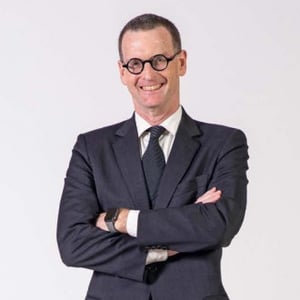
William T. Comfort, III Professor of Law, New York University School of Law
Roderick Hills teaches and writes in public law areas, including constitutional law, local government law, land-use regulation, administrative law, and statutory interpretation. His focus in each area is on the rules and policies governing division of powers between central and subcentral governments. He holds bachelor’s and law degrees from Yale University. Following law school, he served as a law clerk for Judge Patrick Higginbotham of the US Court of Appeals for the Fifth Circuit and practiced law in Colorado. Hills previously taught at the University of Michigan Law School from 1994 to 2006. He is a member of the state bar of New York and the U.S. Supreme Court.
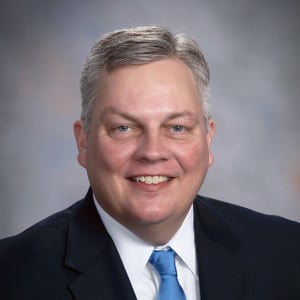
University Professor of Law and Religion and Director of the Eleanor H. McCullen Center for Law, Religion and Public Policy, Villanova University Charles Widger School of Law
Michael P. Moreland was appointed University Professor of Law and Religion and Director of the Eleanor H. McCullen Center for Law, Religion and Public Policy at Villanova University in 2017. Professor Moreland joined the Villanova faculty in 2006 and served as Vice Dean from 2012 to 2015. His research is primarily in the areas of torts, law and religion, constitutional law, and Catholic social thought, and he regularly teaches Torts, First Amendment, seminars in law and religion, and undergraduate courses in ethics.
Professor Moreland is the co-editor of Christianity and Private Law (Routledge, 2021), and his most recent publications include: “The Authority of Tradition: John Henry Newman and Legal Theory” in Christianity and the Making of Irish Law (Routledge, 2025); “Christianity and Torts” in The Oxford Handbook on Christianity and Law, (Oxford University Press, 2023); “Germaneness and Religious Liberty” in the Notre Dame Law Review (2023); “Contingency and Contestation in Christianity and Liberalism” in the Notre Dame Law Review (2023); “Friendship as the Primary Purpose of Law” in The American Journal of Jurisprudence 279 (2022); and “The Moral of Torts” (with Jeffrey Pojanowski) in Christianity and Private Law (Routledge, 2021).
Professor Moreland was a Visiting Professor of Law at the University of Notre Dame and the Mary Ann Remick Senior Visiting Fellow at the Notre Dame Center for Ethics and Culture from 2015 to 2017. He was the Forbes Visiting Fellow at Princeton University in the James Madison Program during academic year 2010-11. He has served as the project leader for grants from the John Templeton Foundation and the Charles Koch Foundation. He serves as the Chair of the Federalist Society’s Religious Liberties Practice Group Executive Committee and the Chair of the Board of Trustees of the Institute for Advanced Catholic Studies at the University of Southern California.
Professor Moreland received his BA in philosophy from the University of Notre Dame, his MA and PhD in theological ethics from Boston College, and his JD from the University of Michigan Law School. Following law school, Professor Moreland clerked for the Honorable Paul J. Kelly Jr., of the United States Court of Appeals for the Tenth Circuit and was an associate at Williams & Connolly LLP in Washington, DC, where he represented clients in First Amendment, professional liability, and products liability matters. Before coming to Villanova, he served as Associate Director for Domestic Policy at the White House under President George W. Bush, where he worked on a range of legal policy issues, including criminal justice, immigration, civil rights, and liability reform.

Professor Emeritus of Law, Antonin Scalia Law School, George Mason University
Jeremy A. Rabkin is a Professor Emeritus of Law at the Antonin Scalia Law School, George Mason University. Before joining the faculty in June 2007, he was for over two decades a professor in the Department of Government at Cornell University. Professor Rabkin serves on the board of directors of the Center for Individual Rights, a public interest law firm based in Washington, D.C. Previously he was a board member of the U.S. Institute of Peace and the board of academic advisors of the American Enterprise Institute.
Professor Rabkin’s books include Law Without Nations? (Princeton University Press, 2005). He authored “If You Need a Friend, Don’t Call a Cosmopolitan,” a chapter in Varieties of Sovereignty and Citizenship (Sigal R. Ben-Porath & Rogers M. Smith eds., University of Pennsylvania Press, 2012). His articles have appeared in major law reviews and political science journals and his journalistic contributions in a range of magazines and newspapers, including the Washington Post and the Wall Street Journal.
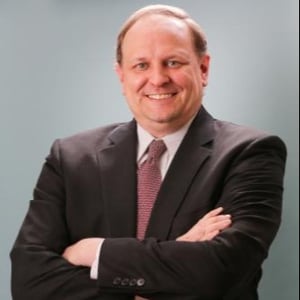
Director, Center for Legal Policy, Manhattan Institute for Policy Research
James R. Copland is a senior fellow at the Manhattan Institute and director of Legal Policy. In those roles, he develops and communicates novel, sound ideas on how to improve America’s civil- and criminal-justice systems. His forthcoming book, The Unelected: How an Unaccountable Elite is Governing America (Encounter Books) will be released on September 8, 2020. He has testified before Congress as well as state and municipal legislatures; and has authored many policy briefs, book chapters, articles and opinion pieces in a variety of publications, including the Harvard Business Law Review and Yale Journal on Regulation, the Wall Street Journal, National Law Journal, and USA Today. Copland speaks regularly on civil- and criminal-justice issues; has made hundreds of media appearances in such outlets as PBS, Fox News, MSNBC, CNBC, Fox Business, Bloomberg, C-Span, and NPR; and is frequently cited in news articles in the New York Times, Washington Post, The Economist, and Forbes. In 2011 and 2012, he was named to the National Association of Corporate Directors “Directorship 100” list, which designates the individuals most influential over U.S. corporate governance.
Prior to joining MI, Copland was a management consultant with McKinsey and Company in New York. Earlier, he was a law clerk for Ralph K. Winter on the U.S. Court of Appeals for the Second Circuit. Copland has been a director of two privately held manufacturing companies since 1997 and has served on many public and nonprofit boards. He holds a J.D. and an M.B.A. from Yale, where he was an Olin Fellow in Law and Economics; an M.Sc. in the politics of the world economy from the London School of Economics; and a B.A. in economics from the University of North Carolina at Chapel Hill, where he was a Morehead Scholar.
Taft, Stettinius & Hollister Professor of Law, University of Minnesota Law School
Professor Thomas F. Cotter joined the University of Minnesota Law School faculty in 2006. He received his B.S. and M.S. degrees in economics from the University of Wisconsin-Madison, and in 1987 graduated magna cum laude from the University of Wisconsin Law School, where he served as Senior Articles Editor of the Wisconsin Law Review and was elected to the Order of the Coif.
From 1987-89, Professor Cotter clerked for the Honorable Lawrence W. Pierce, United States Court of Appeals for the Second Circuit. He practiced law at Cravath, Swaine & Moore in New York City from 1988-90, and at Jenner & Block in Chicago from 1990-94. From 1994-2005, he taught at the University of Florida College of Law, where he held a University of Florida Research Foundation Professorship and directed the school's Intellectual Property Law Program. From 2005-06, he was a Professor of Law at Washington and Lee University School of Law.
Professor Cotter's principal research and teaching interests are in the fields of domestic and international intellectual property law, antitrust, and law and economics. He is the author of three books—Comparative Patent Remedies: A Legal and Economic Analysis (Oxford University Press); Trademarks, Unfair Competition, and Business Torts (coauthored with Barton Beebe, Mark A. Lemley, Peter S. Menell, and Robert P. Merges) (Aspen Publishers 2011); and Intellectual Property: Economic and Legal Dimensions of Rights and Remedies (coauthored with Roger D. Blair) (Cambridge University Press 2005)—and has recently agreed to coauthor (with Jeffrey L. Harrison) a fourth, Law and Economics: Positive, Normative, and Behavioral Perspectives (3d ed., Thomson West). Altogether he has authored or coauthored over 40 other scholarly works, including articles in the California Law Review, the Georgetown Law Journal, the Iowa Law Review, the Minnesota Law Review, and the University of Illinois Law Review.
Laurence A. Tisch Professor of Law and Director, Classical Liberal Institute, New York University School of Law; Director, Classical Liberal Institute, Civitas Institute University of Texas at Austin
Richard A. Epstein is the Laurence A. Tisch Professor of Law, at New York University, a senior research fellow at the Civitas Institute at the University of Texas Austin, and a senior Lecturer, the University of Chicago. He received an LL.D., h.c . from the University of Ghent, 2003 , and an LLD h.c . from the University of Siegen in 2018 and the Bradley Prize in 2011. He has been a member of the American Academy of Arts and Sciences since 1985. He has edited both the Journal of Legal Studies (1981-1991) and the Journal of Law and Economics (1991-2001). He is also a founder and director of the Classical Liberal Institute at NYU Law School. His most recent book is The Classical Liberal Constitution: The Uncertain Quest for Limited Government (2014). His other books include Takings: Private Property and the Power of Eminent Domain ( 1985); Bargaining with the State (1993); Simple Rules for a Complex World (1995); Principles for a Free Society: Reconciling Individual Liberty and the Common Good (1998); Skepticism and Freedom: A Modern Theory of Classical Liberalism (2003); Design for Liberty: Private Property, Public Administration and the Rule of Law (2011), and most recently, The Myth of Birthright citizenship—and Beyond (2026). He has taught courses in , administrative law, antitrust, constitutional, contracts, environmental law, land use planning; real property, torts and water law. He has written and spoken extensively on a wide range of topics, and is writes a regular column for Defining Ideas.
Laurence A. Tisch Professor of Law and Director, Classical Liberal Institute, New York University School of Law; Director, Classical Liberal Institute, Civitas Institute University of Texas at Austin
Richard A. Epstein is the Laurence A. Tisch Professor of Law, at New York University, a senior research fellow at the Civitas Institute at the University of Texas Austin, and a senior Lecturer, the University of Chicago. He received an LL.D., h.c . from the University of Ghent, 2003 , and an LLD h.c . from the University of Siegen in 2018 and the Bradley Prize in 2011. He has been a member of the American Academy of Arts and Sciences since 1985. He has edited both the Journal of Legal Studies (1981-1991) and the Journal of Law and Economics (1991-2001). He is also a founder and director of the Classical Liberal Institute at NYU Law School. His most recent book is The Classical Liberal Constitution: The Uncertain Quest for Limited Government (2014). His other books include Takings: Private Property and the Power of Eminent Domain ( 1985); Bargaining with the State (1993); Simple Rules for a Complex World (1995); Principles for a Free Society: Reconciling Individual Liberty and the Common Good (1998); Skepticism and Freedom: A Modern Theory of Classical Liberalism (2003); Design for Liberty: Private Property, Public Administration and the Rule of Law (2011), and most recently, The Myth of Birthright citizenship—and Beyond (2026). He has taught courses in , administrative law, antitrust, constitutional, contracts, environmental law, land use planning; real property, torts and water law. He has written and spoken extensively on a wide range of topics, and is writes a regular column for Defining Ideas.
Adjunct Professor of Law, Fordham University School of Law
Michael Baur is an Associate Professor of Philosophy at Fordham University and Adjunct Professor at Fordham Law School in Manhattan, where he teaches a course each fall on natural law. Prof. Baur was born and raised in Los Angeles, California, where he grew up with five siblings (two brother and three sisters). After graduating from Loyola Marymount University in L.A. in 1985, he moved from Los Angeles to Toronto, Canada, in order to pursue graduate studies in philosophy (which he completed in 1991). Prof. Baur then taught philosophy for four years (1991-1995) at The Catholic University of America in Washington, DC, where he fell in love with Christine O'Connell, who later became his wife. From 1995 to 1998, Prof. Baur lived in Cambridge, Mass., where he attended Harvard Law School and earned a J.D. degree. Prof. Baur began teaching at Fordham University in September of 1998.
Professor of Law, Antonin Scalia Law School, George Mason University
Eric R. Claeys is Professor of Law at the Antonin Scalia Law School, George Mason University. He has written widely in the fields of property, private law, and constitutional law. Professor Claeys’s current research interests focus on flourishing- and labor-based natural rights justifications for property—in American property theory, in intellectual property, and in contemporary regulation of shale gas exploration and hydraulic fracturing. He is a member of the American Law Institute, he serves on the ALI’s Members’ Consultative Group for the first Restatement of Copyright, and he also serves as an adviser to the Restatement (Fourth) of the Law of Property.
Professor Claeys received his JD from the University of Southern California Gould School of Law. He received his AB from Princeton University, and he is a former visiting fellow and current member of Princeton’s Politics Department’s James Madison Program in American Ideals and Institutions. After law school, Professor Claeys clerked for the Hon. Melvin Brunetti, U.S. Court of Appeals for the Ninth Circuit, and the Hon. William H. Rehnquist, Chief Justice of the United States.
Professor Claeys’s main teaching interests include Property, Torts, Jurisprudence, and Intellectual Property. In recent years, he has also taught Water Law, Remedies, Estates and Trusts, Trade Secrecy, Constitutional Law, Torts, and Oil and Gas law. Spring 2018, he is teaching Torts and Jurisprudence as a Visiting Professor at Harvard Law School.
William T. Comfort, III Professor of Law, New York University School of Law
Roderick Hills teaches and writes in public law areas, including constitutional law, local government law, land-use regulation, administrative law, and statutory interpretation. His focus in each area is on the rules and policies governing division of powers between central and subcentral governments. He holds bachelor’s and law degrees from Yale University. Following law school, he served as a law clerk for Judge Patrick Higginbotham of the US Court of Appeals for the Fifth Circuit and practiced law in Colorado. Hills previously taught at the University of Michigan Law School from 1994 to 2006. He is a member of the state bar of New York and the U.S. Supreme Court.
University Professor of Law and Religion and Director of the Eleanor H. McCullen Center for Law, Religion and Public Policy, Villanova University Charles Widger School of Law
Michael P. Moreland was appointed University Professor of Law and Religion and Director of the Eleanor H. McCullen Center for Law, Religion and Public Policy at Villanova University in 2017. Professor Moreland joined the Villanova faculty in 2006 and served as Vice Dean from 2012 to 2015. His research is primarily in the areas of torts, law and religion, constitutional law, and Catholic social thought, and he regularly teaches Torts, First Amendment, seminars in law and religion, and undergraduate courses in ethics.
Professor Moreland is the co-editor of Christianity and Private Law (Routledge, 2021), and his most recent publications include: “The Authority of Tradition: John Henry Newman and Legal Theory” in Christianity and the Making of Irish Law (Routledge, 2025); “Christianity and Torts” in The Oxford Handbook on Christianity and Law, (Oxford University Press, 2023); “Germaneness and Religious Liberty” in the Notre Dame Law Review (2023); “Contingency and Contestation in Christianity and Liberalism” in the Notre Dame Law Review (2023); “Friendship as the Primary Purpose of Law” in The American Journal of Jurisprudence 279 (2022); and “The Moral of Torts” (with Jeffrey Pojanowski) in Christianity and Private Law (Routledge, 2021).
Professor Moreland was a Visiting Professor of Law at the University of Notre Dame and the Mary Ann Remick Senior Visiting Fellow at the Notre Dame Center for Ethics and Culture from 2015 to 2017. He was the Forbes Visiting Fellow at Princeton University in the James Madison Program during academic year 2010-11. He has served as the project leader for grants from the John Templeton Foundation and the Charles Koch Foundation. He serves as the Chair of the Federalist Society’s Religious Liberties Practice Group Executive Committee and the Chair of the Board of Trustees of the Institute for Advanced Catholic Studies at the University of Southern California.
Professor Moreland received his BA in philosophy from the University of Notre Dame, his MA and PhD in theological ethics from Boston College, and his JD from the University of Michigan Law School. Following law school, Professor Moreland clerked for the Honorable Paul J. Kelly Jr., of the United States Court of Appeals for the Tenth Circuit and was an associate at Williams & Connolly LLP in Washington, DC, where he represented clients in First Amendment, professional liability, and products liability matters. Before coming to Villanova, he served as Associate Director for Domestic Policy at the White House under President George W. Bush, where he worked on a range of legal policy issues, including criminal justice, immigration, civil rights, and liability reform.
Professor Emeritus of Law, Antonin Scalia Law School, George Mason University
Jeremy A. Rabkin is a Professor Emeritus of Law at the Antonin Scalia Law School, George Mason University. Before joining the faculty in June 2007, he was for over two decades a professor in the Department of Government at Cornell University. Professor Rabkin serves on the board of directors of the Center for Individual Rights, a public interest law firm based in Washington, D.C. Previously he was a board member of the U.S. Institute of Peace and the board of academic advisors of the American Enterprise Institute.
Professor Rabkin’s books include Law Without Nations? (Princeton University Press, 2005). He authored “If You Need a Friend, Don’t Call a Cosmopolitan,” a chapter in Varieties of Sovereignty and Citizenship (Sigal R. Ben-Porath & Rogers M. Smith eds., University of Pennsylvania Press, 2012). His articles have appeared in major law reviews and political science journals and his journalistic contributions in a range of magazines and newspapers, including the Washington Post and the Wall Street Journal.
Adjunct Professor of Law, Fordham University School of Law
Michael Baur is an Associate Professor of Philosophy at Fordham University and Adjunct Professor at Fordham Law School in Manhattan, where he teaches a course each fall on natural law. Prof. Baur was born and raised in Los Angeles, California, where he grew up with five siblings (two brother and three sisters). After graduating from Loyola Marymount University in L.A. in 1985, he moved from Los Angeles to Toronto, Canada, in order to pursue graduate studies in philosophy (which he completed in 1991). Prof. Baur then taught philosophy for four years (1991-1995) at The Catholic University of America in Washington, DC, where he fell in love with Christine O'Connell, who later became his wife. From 1995 to 1998, Prof. Baur lived in Cambridge, Mass., where he attended Harvard Law School and earned a J.D. degree. Prof. Baur began teaching at Fordham University in September of 1998.
Professor of Law, Antonin Scalia Law School, George Mason University
Eric R. Claeys is Professor of Law at the Antonin Scalia Law School, George Mason University. He has written widely in the fields of property, private law, and constitutional law. Professor Claeys’s current research interests focus on flourishing- and labor-based natural rights justifications for property—in American property theory, in intellectual property, and in contemporary regulation of shale gas exploration and hydraulic fracturing. He is a member of the American Law Institute, he serves on the ALI’s Members’ Consultative Group for the first Restatement of Copyright, and he also serves as an adviser to the Restatement (Fourth) of the Law of Property.
Professor Claeys received his JD from the University of Southern California Gould School of Law. He received his AB from Princeton University, and he is a former visiting fellow and current member of Princeton’s Politics Department’s James Madison Program in American Ideals and Institutions. After law school, Professor Claeys clerked for the Hon. Melvin Brunetti, U.S. Court of Appeals for the Ninth Circuit, and the Hon. William H. Rehnquist, Chief Justice of the United States.
Professor Claeys’s main teaching interests include Property, Torts, Jurisprudence, and Intellectual Property. In recent years, he has also taught Water Law, Remedies, Estates and Trusts, Trade Secrecy, Constitutional Law, Torts, and Oil and Gas law. Spring 2018, he is teaching Torts and Jurisprudence as a Visiting Professor at Harvard Law School.
William T. Comfort, III Professor of Law, New York University School of Law
Roderick Hills teaches and writes in public law areas, including constitutional law, local government law, land-use regulation, administrative law, and statutory interpretation. His focus in each area is on the rules and policies governing division of powers between central and subcentral governments. He holds bachelor’s and law degrees from Yale University. Following law school, he served as a law clerk for Judge Patrick Higginbotham of the US Court of Appeals for the Fifth Circuit and practiced law in Colorado. Hills previously taught at the University of Michigan Law School from 1994 to 2006. He is a member of the state bar of New York and the U.S. Supreme Court.
University Professor of Law and Religion and Director of the Eleanor H. McCullen Center for Law, Religion and Public Policy, Villanova University Charles Widger School of Law
Michael P. Moreland was appointed University Professor of Law and Religion and Director of the Eleanor H. McCullen Center for Law, Religion and Public Policy at Villanova University in 2017. Professor Moreland joined the Villanova faculty in 2006 and served as Vice Dean from 2012 to 2015. His research is primarily in the areas of torts, law and religion, constitutional law, and Catholic social thought, and he regularly teaches Torts, First Amendment, seminars in law and religion, and undergraduate courses in ethics.
Professor Moreland is the co-editor of Christianity and Private Law (Routledge, 2021), and his most recent publications include: “The Authority of Tradition: John Henry Newman and Legal Theory” in Christianity and the Making of Irish Law (Routledge, 2025); “Christianity and Torts” in The Oxford Handbook on Christianity and Law, (Oxford University Press, 2023); “Germaneness and Religious Liberty” in the Notre Dame Law Review (2023); “Contingency and Contestation in Christianity and Liberalism” in the Notre Dame Law Review (2023); “Friendship as the Primary Purpose of Law” in The American Journal of Jurisprudence 279 (2022); and “The Moral of Torts” (with Jeffrey Pojanowski) in Christianity and Private Law (Routledge, 2021).
Professor Moreland was a Visiting Professor of Law at the University of Notre Dame and the Mary Ann Remick Senior Visiting Fellow at the Notre Dame Center for Ethics and Culture from 2015 to 2017. He was the Forbes Visiting Fellow at Princeton University in the James Madison Program during academic year 2010-11. He has served as the project leader for grants from the John Templeton Foundation and the Charles Koch Foundation. He serves as the Chair of the Federalist Society’s Religious Liberties Practice Group Executive Committee and the Chair of the Board of Trustees of the Institute for Advanced Catholic Studies at the University of Southern California.
Professor Moreland received his BA in philosophy from the University of Notre Dame, his MA and PhD in theological ethics from Boston College, and his JD from the University of Michigan Law School. Following law school, Professor Moreland clerked for the Honorable Paul J. Kelly Jr., of the United States Court of Appeals for the Tenth Circuit and was an associate at Williams & Connolly LLP in Washington, DC, where he represented clients in First Amendment, professional liability, and products liability matters. Before coming to Villanova, he served as Associate Director for Domestic Policy at the White House under President George W. Bush, where he worked on a range of legal policy issues, including criminal justice, immigration, civil rights, and liability reform.
Professor Emeritus of Law, Antonin Scalia Law School, George Mason University
Jeremy A. Rabkin is a Professor Emeritus of Law at the Antonin Scalia Law School, George Mason University. Before joining the faculty in June 2007, he was for over two decades a professor in the Department of Government at Cornell University. Professor Rabkin serves on the board of directors of the Center for Individual Rights, a public interest law firm based in Washington, D.C. Previously he was a board member of the U.S. Institute of Peace and the board of academic advisors of the American Enterprise Institute.
Professor Rabkin’s books include Law Without Nations? (Princeton University Press, 2005). He authored “If You Need a Friend, Don’t Call a Cosmopolitan,” a chapter in Varieties of Sovereignty and Citizenship (Sigal R. Ben-Porath & Rogers M. Smith eds., University of Pennsylvania Press, 2012). His articles have appeared in major law reviews and political science journals and his journalistic contributions in a range of magazines and newspapers, including the Washington Post and the Wall Street Journal.
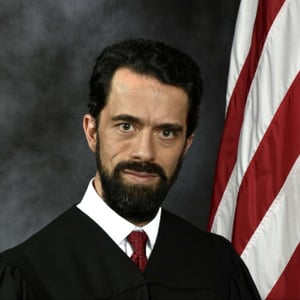
Judge, United States Court of Appeals, Third Circuit
Stephanos Bibas is a judge on the U.S. Court of Appeals for the Third Circuit. Judge Bibas was previously a professor of law and criminology at the University of Pennsylvania Law School. As director of the Penn Law Supreme Court Clinic, he argued six cases before the Supreme Court of the United States and filed briefs in dozens of others. He graduated summa cum laude and Phi Beta Kappa from Columbia University in 1989 with a B.A. in political theory and from Oxford University in 1991 with a B.A. in jurisprudence. He then earned his J.D. from Yale Law School in 1994.
After graduating from Yale Law, Judge Bibas clerked for Judge Patrick Higginbotham of the U.S. Court of Appeals for the Fifth Circuit and Justice Anthony Kennedy on the Supreme Court and was a litigation associate at Covington & Burling LLP in Washington, D.C. Thereafter, Judge Bibas served as an Assistant U.S. Attorney in the Southern District of New York, where he successfully prosecuted the world’s leading expert in Tiffany stained glass for hiring a grave robber to steal priceless Tiffany windows from cemeteries. Before his tenure at Penn Law, Judge Bibas taught at the University of Chicago Law School and the University of Iowa College of Law and was a research fellow at Yale Law School. He has published two books and seventy scholarly articles.
Laurence A. Tisch Professor of Law and Director, Classical Liberal Institute, New York University School of Law; Director, Classical Liberal Institute, Civitas Institute University of Texas at Austin
Richard A. Epstein is the Laurence A. Tisch Professor of Law, at New York University, a senior research fellow at the Civitas Institute at the University of Texas Austin, and a senior Lecturer, the University of Chicago. He received an LL.D., h.c . from the University of Ghent, 2003 , and an LLD h.c . from the University of Siegen in 2018 and the Bradley Prize in 2011. He has been a member of the American Academy of Arts and Sciences since 1985. He has edited both the Journal of Legal Studies (1981-1991) and the Journal of Law and Economics (1991-2001). He is also a founder and director of the Classical Liberal Institute at NYU Law School. His most recent book is The Classical Liberal Constitution: The Uncertain Quest for Limited Government (2014). His other books include Takings: Private Property and the Power of Eminent Domain ( 1985); Bargaining with the State (1993); Simple Rules for a Complex World (1995); Principles for a Free Society: Reconciling Individual Liberty and the Common Good (1998); Skepticism and Freedom: A Modern Theory of Classical Liberalism (2003); Design for Liberty: Private Property, Public Administration and the Rule of Law (2011), and most recently, The Myth of Birthright citizenship—and Beyond (2026). He has taught courses in , administrative law, antitrust, constitutional, contracts, environmental law, land use planning; real property, torts and water law. He has written and spoken extensively on a wide range of topics, and is writes a regular column for Defining Ideas.

Judge, United States Court of Appeals, Third Circuit
Judge Hardiman was appointed to the United States Court of Appeals for the Third Circuit on January 9, 2007 and was confirmed by the Senate (95-0) on March 15, 2007. Prior to becoming an appellate judge, Judge Hardiman served as a trial judge on the United States District Court for the Western District of Pennsylvania as of November 1, 2003. In 2008, Chief Justice John Roberts appointed Judge Hardiman to the Information Technology Committee of the Judicial Conference of the United States. Judge Hardiman was appointed Chairman of the IT Committee in 2013 and served in that capacity until September 2021. In 2021 he was appointed by the Director of the Administrative Office of the United States Courts to serve as Chair of the Judiciary IT Security Task Force, which completed its work in fall 2023. Chief Justice Roberts appointed Judge Hardiman to the Board of the Federal Judicial Center to serve from March 2020 until March 2024. As part of his work with the Center, Judge Hardiman now serves as Editor in Chief for the Manual for Complex Civil Litigation, Fifth.
Before entering judicial service, Judge Hardiman handled a wide variety of litigation matters in state and federal trial and appellate courts as a partner at Reed Smith LLP (1999-2003), a partner at Titus & McConomy LLP (1996-1999), and as an associate with its predecessor firm, Cindrich & Titus (1992-1996). Judge Hardiman began his legal career as an associate in the Washington, D.C. office of Skadden, Arps, Slate, Meagher & Flom (1990-1992).
A 1987 honors graduate of the University of Notre Dame, Judge Hardiman received his law degree in 1990 from the Georgetown University Law Center, where he served as a Notes and Comments Editor on the Georgetown Law Journal. In 2012, Judge Hardiman was elected as a member of the American Law Institute and was elected to its Council in 2019 and its Executive Committee in 2025. Judge Hardiman regularly teaches a seminar on Advanced Constitutional Law at Duquesne University School of Law and a one-week course entitled “Constitutional Law: the First and Second Amendments” at Georgetown University Law Center.
A native of Waltham, Massachusetts, Judge Hardiman has chambers in Pittsburgh, Pennsylvania. He and his wife Lori married in 1992 and have three children.

Professor of Law, Georgetown University Law Center
Nicholas Quinn Rosenkranz teaches constitutional law and federal jurisdiction, and he writes articles for the Harvard Law Review and the Stanford Law Review.
He is currently developing a new theory of constitutional interpretation and judicial review. The first installment, entitledThe Subjects of the Constitution, was published in the Stanford Law Review in May of 2010, and it is among the most downloaded articles about constitutional interpretation, judicial review, and/or federal courts in the history of SSRN. The second installment, The Objects of the Constitution, was published in May of 2011, also in the Stanford Law Review. And the comprehensive version is forthcoming as a book by Oxford University Press.
Rosenkranz has served and advised the federal government in a variety of capacities. He clerked for Judge Frank H. Easterbrook on the U.S. Court of Appeals for the Seventh Circuit (1999-2000) and for Justice Anthony M. Kennedy at the U.S. Supreme Court (October Term 2001). He served as an Attorney-Advisor at the Office of Legal Counsel in the U.S. Department of Justice (November 2002 - July 2004). He often testifies before Congress as a constitutional expert—most recently before the House Financial Services Oversight Subcommittee, regarding the Obama Administration's use of bank settlement agreements to circumvent the Appropriations Clause. He has also filed briefs and presented oral argument before the U.S. Supreme Court. His most recent Supreme Court brief, in Los Angeles v. Patel, was cited by Justice Alito in dissent.
Rosenkranz is a member of the New York Bar and the U.S. Supreme Court Bar. He is a Senior Fellow at the Cato Institute. He serves on the Board of Directors of the Foundation for Individual Rights in Education (FIRE). He is a founding member of Heterodox Academy and a member of its Executive Committee. He also serves on the Board of Directors of the Federalist Society and as the faculty advisor to the Georgetown chapter.
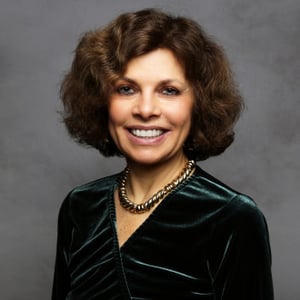
John Marshall Harlan II Professor of Law Emerita, New York Law School; Former President, American Civil Liberties Union
Nadine Strossen, New York Law School Professor Emerita and Senior Fellow at FIRE (the Foundation for Individual Rights and Expression), was national President of the American Civil Liberties Union from 1991 to 2008. An internationally acclaimed free speech scholar and advocate, who regularly addresses diverse audiences and provides media commentary around the world, Strossen is also the Host and Project Consultant for Free To Speak, a 3-hour documentary film series distributed on public television in 2023. Her books about free speech include: Free Speech: What Everyone Needs to Know® (Oxford University Press 2023); HATE: Why We Should Resist It with Free Speech, Not Censorship (Oxford University Press 2018); and Defending Pornography: Free Speech, Sex, and the Fight for Women’s Rights (Scribner 1995), which was republished with a new Preface in 2024 as part of the NYU Classics Series. Her many honors and awards include the National Coalition Against Censorship’s Judy Blume Lifetime Achievement Award for Free Speech. She serves on the Advisory Boards of several organizations that do free speech work, including: ACLU, Academic Freedom Alliance, Foundation Against Intolerance and Racism (FAIR), Heterodox Academy, National Coalition Against Censorship, and the University of Austin.

Thomas M. Siebel Senior Fellow, The Hoover Institution, Stanford University; Gary T. Schwartz Distinguished Professor of Law Emeritus, UCLA School of Law
Eugene Volokh is the Thomas M. Siebel Senior Fellow at the Hoover Institution (Stanford), as well as the Gary T. Schwartz Distinguished Professor of Law Emeritus and Distinguished Research Professor at UCLA School of Law. He recently retired from teaching at UCLA, after 30 years there, and is now focusing on research.
Volokh is the author of the textbooks The First Amendment and Related Statutes (8th ed. 2023), and Academic Legal Writing (5th ed. 2016), as well as over 100 academic law journal articles, mostly on First Amendment law. He is a member of The American Law Institute; the editor-in-chief of the Journal of Free Speech Law; and the creator and coauthor of The Volokh Conspiracy, a leading legal blog founded in 2002 (hosted at the Washington Post from 2014 to 2017 and now at Reason Magazine).
Judge, United States Court of Appeals, Third Circuit
Stephanos Bibas is a judge on the U.S. Court of Appeals for the Third Circuit. Judge Bibas was previously a professor of law and criminology at the University of Pennsylvania Law School. As director of the Penn Law Supreme Court Clinic, he argued six cases before the Supreme Court of the United States and filed briefs in dozens of others. He graduated summa cum laude and Phi Beta Kappa from Columbia University in 1989 with a B.A. in political theory and from Oxford University in 1991 with a B.A. in jurisprudence. He then earned his J.D. from Yale Law School in 1994.
After graduating from Yale Law, Judge Bibas clerked for Judge Patrick Higginbotham of the U.S. Court of Appeals for the Fifth Circuit and Justice Anthony Kennedy on the Supreme Court and was a litigation associate at Covington & Burling LLP in Washington, D.C. Thereafter, Judge Bibas served as an Assistant U.S. Attorney in the Southern District of New York, where he successfully prosecuted the world’s leading expert in Tiffany stained glass for hiring a grave robber to steal priceless Tiffany windows from cemeteries. Before his tenure at Penn Law, Judge Bibas taught at the University of Chicago Law School and the University of Iowa College of Law and was a research fellow at Yale Law School. He has published two books and seventy scholarly articles.
Laurence A. Tisch Professor of Law and Director, Classical Liberal Institute, New York University School of Law; Director, Classical Liberal Institute, Civitas Institute University of Texas at Austin
Richard A. Epstein is the Laurence A. Tisch Professor of Law, at New York University, a senior research fellow at the Civitas Institute at the University of Texas Austin, and a senior Lecturer, the University of Chicago. He received an LL.D., h.c . from the University of Ghent, 2003 , and an LLD h.c . from the University of Siegen in 2018 and the Bradley Prize in 2011. He has been a member of the American Academy of Arts and Sciences since 1985. He has edited both the Journal of Legal Studies (1981-1991) and the Journal of Law and Economics (1991-2001). He is also a founder and director of the Classical Liberal Institute at NYU Law School. His most recent book is The Classical Liberal Constitution: The Uncertain Quest for Limited Government (2014). His other books include Takings: Private Property and the Power of Eminent Domain ( 1985); Bargaining with the State (1993); Simple Rules for a Complex World (1995); Principles for a Free Society: Reconciling Individual Liberty and the Common Good (1998); Skepticism and Freedom: A Modern Theory of Classical Liberalism (2003); Design for Liberty: Private Property, Public Administration and the Rule of Law (2011), and most recently, The Myth of Birthright citizenship—and Beyond (2026). He has taught courses in , administrative law, antitrust, constitutional, contracts, environmental law, land use planning; real property, torts and water law. He has written and spoken extensively on a wide range of topics, and is writes a regular column for Defining Ideas.
Judge, United States Court of Appeals, Third Circuit
Judge Hardiman was appointed to the United States Court of Appeals for the Third Circuit on January 9, 2007 and was confirmed by the Senate (95-0) on March 15, 2007. Prior to becoming an appellate judge, Judge Hardiman served as a trial judge on the United States District Court for the Western District of Pennsylvania as of November 1, 2003. In 2008, Chief Justice John Roberts appointed Judge Hardiman to the Information Technology Committee of the Judicial Conference of the United States. Judge Hardiman was appointed Chairman of the IT Committee in 2013 and served in that capacity until September 2021. In 2021 he was appointed by the Director of the Administrative Office of the United States Courts to serve as Chair of the Judiciary IT Security Task Force, which completed its work in fall 2023. Chief Justice Roberts appointed Judge Hardiman to the Board of the Federal Judicial Center to serve from March 2020 until March 2024. As part of his work with the Center, Judge Hardiman now serves as Editor in Chief for the Manual for Complex Civil Litigation, Fifth.
Before entering judicial service, Judge Hardiman handled a wide variety of litigation matters in state and federal trial and appellate courts as a partner at Reed Smith LLP (1999-2003), a partner at Titus & McConomy LLP (1996-1999), and as an associate with its predecessor firm, Cindrich & Titus (1992-1996). Judge Hardiman began his legal career as an associate in the Washington, D.C. office of Skadden, Arps, Slate, Meagher & Flom (1990-1992).
A 1987 honors graduate of the University of Notre Dame, Judge Hardiman received his law degree in 1990 from the Georgetown University Law Center, where he served as a Notes and Comments Editor on the Georgetown Law Journal. In 2012, Judge Hardiman was elected as a member of the American Law Institute and was elected to its Council in 2019 and its Executive Committee in 2025. Judge Hardiman regularly teaches a seminar on Advanced Constitutional Law at Duquesne University School of Law and a one-week course entitled “Constitutional Law: the First and Second Amendments” at Georgetown University Law Center.
A native of Waltham, Massachusetts, Judge Hardiman has chambers in Pittsburgh, Pennsylvania. He and his wife Lori married in 1992 and have three children.
Professor of Law, Georgetown University Law Center
Nicholas Quinn Rosenkranz teaches constitutional law and federal jurisdiction, and he writes articles for the Harvard Law Review and the Stanford Law Review.
He is currently developing a new theory of constitutional interpretation and judicial review. The first installment, entitledThe Subjects of the Constitution, was published in the Stanford Law Review in May of 2010, and it is among the most downloaded articles about constitutional interpretation, judicial review, and/or federal courts in the history of SSRN. The second installment, The Objects of the Constitution, was published in May of 2011, also in the Stanford Law Review. And the comprehensive version is forthcoming as a book by Oxford University Press.
Rosenkranz has served and advised the federal government in a variety of capacities. He clerked for Judge Frank H. Easterbrook on the U.S. Court of Appeals for the Seventh Circuit (1999-2000) and for Justice Anthony M. Kennedy at the U.S. Supreme Court (October Term 2001). He served as an Attorney-Advisor at the Office of Legal Counsel in the U.S. Department of Justice (November 2002 - July 2004). He often testifies before Congress as a constitutional expert—most recently before the House Financial Services Oversight Subcommittee, regarding the Obama Administration's use of bank settlement agreements to circumvent the Appropriations Clause. He has also filed briefs and presented oral argument before the U.S. Supreme Court. His most recent Supreme Court brief, in Los Angeles v. Patel, was cited by Justice Alito in dissent.
Rosenkranz is a member of the New York Bar and the U.S. Supreme Court Bar. He is a Senior Fellow at the Cato Institute. He serves on the Board of Directors of the Foundation for Individual Rights in Education (FIRE). He is a founding member of Heterodox Academy and a member of its Executive Committee. He also serves on the Board of Directors of the Federalist Society and as the faculty advisor to the Georgetown chapter.
John Marshall Harlan II Professor of Law Emerita, New York Law School; Former President, American Civil Liberties Union
Nadine Strossen, New York Law School Professor Emerita and Senior Fellow at FIRE (the Foundation for Individual Rights and Expression), was national President of the American Civil Liberties Union from 1991 to 2008. An internationally acclaimed free speech scholar and advocate, who regularly addresses diverse audiences and provides media commentary around the world, Strossen is also the Host and Project Consultant for Free To Speak, a 3-hour documentary film series distributed on public television in 2023. Her books about free speech include: Free Speech: What Everyone Needs to Know® (Oxford University Press 2023); HATE: Why We Should Resist It with Free Speech, Not Censorship (Oxford University Press 2018); and Defending Pornography: Free Speech, Sex, and the Fight for Women’s Rights (Scribner 1995), which was republished with a new Preface in 2024 as part of the NYU Classics Series. Her many honors and awards include the National Coalition Against Censorship’s Judy Blume Lifetime Achievement Award for Free Speech. She serves on the Advisory Boards of several organizations that do free speech work, including: ACLU, Academic Freedom Alliance, Foundation Against Intolerance and Racism (FAIR), Heterodox Academy, National Coalition Against Censorship, and the University of Austin.
Thomas M. Siebel Senior Fellow, The Hoover Institution, Stanford University; Gary T. Schwartz Distinguished Professor of Law Emeritus, UCLA School of Law
Eugene Volokh is the Thomas M. Siebel Senior Fellow at the Hoover Institution (Stanford), as well as the Gary T. Schwartz Distinguished Professor of Law Emeritus and Distinguished Research Professor at UCLA School of Law. He recently retired from teaching at UCLA, after 30 years there, and is now focusing on research.
Volokh is the author of the textbooks The First Amendment and Related Statutes (8th ed. 2023), and Academic Legal Writing (5th ed. 2016), as well as over 100 academic law journal articles, mostly on First Amendment law. He is a member of The American Law Institute; the editor-in-chief of the Journal of Free Speech Law; and the creator and coauthor of The Volokh Conspiracy, a leading legal blog founded in 2002 (hosted at the Washington Post from 2014 to 2017 and now at Reason Magazine).

Religious Liberty
Freedom of Speech in the Public Commons
Marvin M. Brandt Revocable Trust v. United States Post-Argument SCOTUScast
Richard A. Epstein
On January 14, 2014, the Supreme Court heard oral argument in Marvin M. Brandt Revocable...
FDA Involvement in Off-Label Drug Use
Southwestern Student Chapter
Los Angeles, CAPanel III: Natural Law and Natural Rights
Michael Baur, Brian Bengs, Eric R. Claeys, Roderick M. Hills, Michael P. Moreland, Jeremy A. Rabkin
The Federalist Society's Faculty Division hosted this panel discussion on "Natural Law and Natural Rights" on Saturday,...
Panel III: Natural Law and Natural Rights
Michael Baur, Brian Bengs, Eric R. Claeys, Roderick M. Hills, Michael P. Moreland, Jeremy A. Rabkin
The Federalist Society's Faculty Division hosted this panel discussion on "Natural Law and Natural Rights" on Saturday,...
Panel III: Natural Law and Natural Rights
16th Annual Faculty Conference
New York, NYShowcase Panel I: Textualism and the Bill of Rights
Stephanos Bibas, Richard A. Epstein, Thomas M. Hardiman, Nicholas Quinn Rosenkranz, Nadine Strossen, Eugene Volokh
The new textualism has had a big impact on interpretation of the Bill of Rights....
Showcase Panel I: Textualism and the Bill of Rights
Stephanos Bibas, Richard A. Epstein, Thomas M. Hardiman, Nicholas Quinn Rosenkranz, Nadine Strossen, Eugene Volokh
The new textualism has had a big impact on interpretation of the Bill of Rights....
Patent Re-Reform in Congress
Teleforum