

Professor of Law, South Texas College of Law Houston
Josh Blackman is a national thought leader on constitutional law and the United States Supreme Court. Josh’s work was quoted during two presidential impeachment trials. He has testified before Congress and advises federal and state lawmakers. Josh regularly appears on TV, including NBC, CBS, ABC, Fox, and the BBC. Josh is also a frequent guest on NPR and other syndicated radio programs. He has published commentaries in the New York Times, Wall Street Journal, Washington Post, and leading national publications.
Since 2012, Josh has served as a professor at the South Texas College of Law Houston. He holds the Centennial Chair of Constitutional Law. Josh is an Adjunct Fellow at the Manhattan Institute. Josh has written more than seven dozen law review articles that have been cited more than a thousand times. Josh was selected as the Jurist of the Year by the Texas Journal of Law & Public Policy, received the inaugural Meese III Originalism Award, and was awarded the Inaugural Joseph Story Award. Josh was selected by Forbes Magazine for the “30 Under 30” in Law and Policy. Josh is the President of the Harlan Institute, and founded FantasySCOTUS, the Internet’s Premier Supreme Court Fantasy League. He blogs at the Volokh Conspiracyand posts@JoshMBlackman.
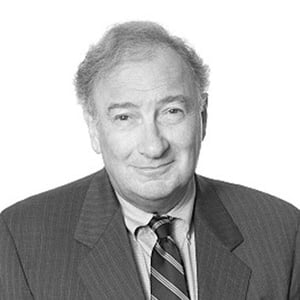
Retired, Winston & Strawn LLP
Jerry Loeser is of counsel in the Chicago office of Winston & Strawn, and his practice focuses on banking regulation. He has extensive experience in counseling financial services clients on, among other things, bank acquisitions, privacy, financial modernization, the USA PATRIOT Act, Basel II and III, lending limits, capital, trust, affiliate transactions, and Federal Reserve, OCC, FDIC, and CFPB regulations.
Prior to working at large corporate law firms, Jerry was chief regulatory and compliance counsel for Comerica Bank, where he also served as senior vice president and deputy general counsel and as general counsel of its retail bank division. Before that, he served as chief regulatory in-house counsel at Wells Fargo & Co. Jerry began his legal career advising the Board of Governors of the Federal Reserve System in Washington, D.C.
Staff Attorney, Pacific Legal Foundation
Jennifer F. Thompson is a staff attorney in PLF’s property rights practice group. She advocates for landowners’ constitutional rights to the productive use and enjoyment of property.
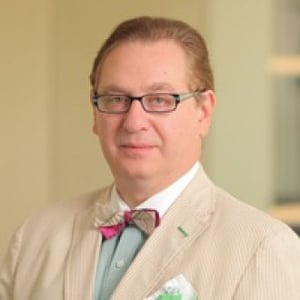
Partner, Baker Hostetler LLP
David Rivkin is a member of the firm's litigation, international and environmental teams and is co-leader of the firm's national appellate practice. He has extensive experience in constitutional, administrative and international law litigation and has been involved in numerous high-profile cases. With his prior experience in the government sector, David draws on a wealth of knowledge when providing compliance advice to companies and handling enforcement proceedings before government agencies on issues arising out of multilateral and unilateral sanctions, the Foreign Corrupt Practices Act (FCPA), anti-boycott issues, bankruptcy and financial fraud matters, and environmental and energy issues.
David has developed and implemented legislative, regulatory and litigation initiatives for two presidential administrations. Over the years, he has published hundreds of articles, op-eds, book reviews and book chapters on a variety of international, legal, constitutional, defense, arms control, foreign policy, environmental and energy issues for various newspapers and magazines, including The Wall Street Journal, The Washington Post, The New York Times, USA Today and The Los Angeles Times, and has been a frequent commentator and guest on TV and radio shows including ABC, CBS, NBC, CNN, Fox News, NPR and PBS.
Shareholder and Director, GableGotwals
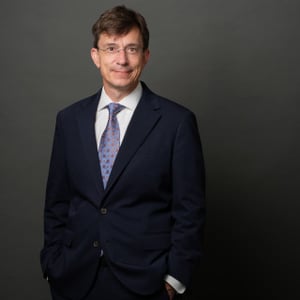
Professor of Law and Executive Director, Law and Economics Center, Antonin Scalia Law School, George Mason University
Donald Kochan is Professor of Law and Executive Director of the Law & Economics Center (LEC). Professor Kochan is an elected member of the American Law Institute (ALI) and serves as an Adviser to ALI's Restatement of the Law Fourth, Property project. Professor Kochan is a Nonresident Scholar at the Center for the Constitution at Georgetown University Law Center, where he was a Visiting Scholar in residence during Fall 2018. Before joining the Antonin Scalia Law School faculty, he was the Parker S. Kennedy Professor in Law at Chapman University’s Dale E. Fowler School of Law from 2004 to 2020. From 2003 to 2004, Professor Kochan was an Olin Fellow at the University of Virginia School of Law. During 2002-2003, he was a Visiting Assistant Professor of Law at George Mason’s Scalia Law School.
Professor Kochan’s scholarship focuses on areas of property law, constitutional law, administrative law, local government law, natural resources and environmental law, and law & economics. He has published several books and more than 50 scholarly articles and essays in well-regarded law journals. His work has been cited in more than a dozen state and federal court opinions, in more than 75 briefs filed in state and federal courts including more than 25 filed in the U.S. Supreme Court, in dozens of books and treatises, and in more than 800 scholarly articles.
Professor Kochan received his JD from Cornell Law School, where he was a John M. Olin Scholar in Law and Economics and managing editor of the Cornell International Law Journal. During law school, he also served as editor and executive editor of the Harvard Journal of Law & Public Policy symposium issues in 1997 and 1998. He received his BA from Western Michigan University, magna cum laude, with majors in both political science and philosophy, where he studied as the John W. Gill Medallion Scholar and was honored as the Presidential Scholar (awarded to the top graduate in the political science department).
After graduating from law school, Professor Kochan was a law clerk to The Honorable Richard F. Suhrheinrich of the United States Court of Appeals for the Sixth Circuit. Following his clerkship, Professor Kochan was an associate with the firm of Crowell & Moring LLP in Washington, D.C., where he specialized in natural resources & environmental law as well as tort, products, and consumer civil litigation & legislative affairs.

Staff Attorney, Southern Utah Wilderness Alliance
David Garbett is a staff attorney with the Southern Utah Wilderness Alliance in Salt Lake City, Utah. His practice focuses on public lands law, principally as it relates to the Bureau of Land Management. His litigation and administrative work has involved oil and gas leasing and development, air quality issues, wilderness identification and management, rights of way claims, and resource management planning. Mr. Garbett earned his J.D. from Harvard Law School in 2006. He also holds an M.S. in economics from Utah State University and a B.A. in history from Brigham Young University.
Justice, Supreme Court of Alabama (Retired); Professor of Law, Belmont University College of Law?
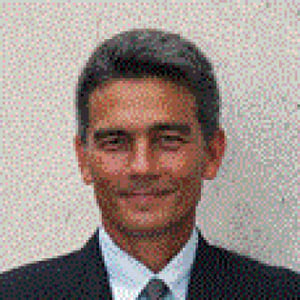
William Gardiner Hammond Professor of Law, Washington University Law
Professor Brian Z. Tamanaha is a renowned jurisprudence scholar and the author of eight books and numerous scholarly articles, including his groundbreaking book, Beyond the Formalist–Realist Divide: The Role of Politics in Judging. His articles have appeared in a variety of leading journals, and his publications have been translated into eight languages. Also an expert in law and society, he has delivered lectures in Brazil, Indonesia, Japan, France, the Netherlands, Colombia, Singapore, Australia, Canada, and the United Kingdom. He spent a year in residence as a Member of the Institute for Advanced Study in Princeton. Professor Tamanaha is the recipient of several book prizes and awards, including Professor of the Year, and a frequent speaker and lecturer at legal conferences throughout the United States and abroad. His professional affiliations include serving as a past member of the Board of Trustees of the Law and Society Association. Before becoming a law professor, he clerked for the Hon. Walter E. Hoffman, U.S. District Court for the Eastern District of Virginia. He also practiced law in Hawaii and Micronesia, where he served as legal counsel for the Micronesian Constitutional Convention, Assistant Attorney General for the Yap State, and Assistant Federal Public Defender for the District of Hawaii. He then earned a doctorate of juridical science at Harvard Law School.?
His latest book, Failing Law Schools, is available at http://www.amazon.com/Failing-Schools-Chicago-Series-Society/dp/0226923614. ?
Staff Attorney, Southern Utah Wilderness Alliance
David Garbett is a staff attorney with the Southern Utah Wilderness Alliance in Salt Lake City, Utah. His practice focuses on public lands law, principally as it relates to the Bureau of Land Management. His litigation and administrative work has involved oil and gas leasing and development, air quality issues, wilderness identification and management, rights of way claims, and resource management planning. Mr. Garbett earned his J.D. from Harvard Law School in 2006. He also holds an M.S. in economics from Utah State University and a B.A. in history from Brigham Young University.
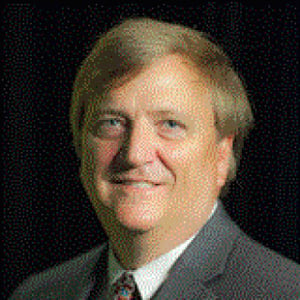
Director, Center for Self-Government in the West, Sutherland Institute
Carl Graham is director of The Center for Self-Government in the West at the Sutherland Institute. Mr. Graham retired from U.S. Navy service in July 2004 and served as CEO of the Montana Policy Institute from 2008 to 2013. He was an adjunct professor of aviation science at Montana State University, a flight instructor, and a member of the Montana State Advisory Committee for the U.S. Commission on Civil Rights. A Montana native, Carl graduated from Montana State University and is a 20-year Navy veteran, where he amassed nearly 500 carrier landings and more than 2,000 hours in the A-6 Intruder and F-14 Tomcat while serving as a Naval Flight Officer. Also during his naval career, Carl earned a master’s degree in National Security Affairs and served as special assistant and congressional liaison officer for the Commander of U.S. Strategic Command in Omaha, Neb. Carl and his wife Cyndi reside in Salt Lake City.
Professor of Law and Executive Director, Law and Economics Center, Antonin Scalia Law School, George Mason University
Donald Kochan is Professor of Law and Executive Director of the Law & Economics Center (LEC). Professor Kochan is an elected member of the American Law Institute (ALI) and serves as an Adviser to ALI's Restatement of the Law Fourth, Property project. Professor Kochan is a Nonresident Scholar at the Center for the Constitution at Georgetown University Law Center, where he was a Visiting Scholar in residence during Fall 2018. Before joining the Antonin Scalia Law School faculty, he was the Parker S. Kennedy Professor in Law at Chapman University’s Dale E. Fowler School of Law from 2004 to 2020. From 2003 to 2004, Professor Kochan was an Olin Fellow at the University of Virginia School of Law. During 2002-2003, he was a Visiting Assistant Professor of Law at George Mason’s Scalia Law School.
Professor Kochan’s scholarship focuses on areas of property law, constitutional law, administrative law, local government law, natural resources and environmental law, and law & economics. He has published several books and more than 50 scholarly articles and essays in well-regarded law journals. His work has been cited in more than a dozen state and federal court opinions, in more than 75 briefs filed in state and federal courts including more than 25 filed in the U.S. Supreme Court, in dozens of books and treatises, and in more than 800 scholarly articles.
Professor Kochan received his JD from Cornell Law School, where he was a John M. Olin Scholar in Law and Economics and managing editor of the Cornell International Law Journal. During law school, he also served as editor and executive editor of the Harvard Journal of Law & Public Policy symposium issues in 1997 and 1998. He received his BA from Western Michigan University, magna cum laude, with majors in both political science and philosophy, where he studied as the John W. Gill Medallion Scholar and was honored as the Presidential Scholar (awarded to the top graduate in the political science department).
After graduating from law school, Professor Kochan was a law clerk to The Honorable Richard F. Suhrheinrich of the United States Court of Appeals for the Sixth Circuit. Following his clerkship, Professor Kochan was an associate with the firm of Crowell & Moring LLP in Washington, D.C., where he specialized in natural resources & environmental law as well as tort, products, and consumer civil litigation & legislative affairs.
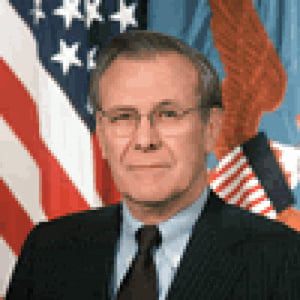
Former United States Secretary of Defense
Donald H. Rumsfeld was sworn in as the 21st Secretary of Defense on January 20, 2001, and served until December 18, 2006. A former Navy pilot, Secretary Rumsfeld has also served as the 13th Secretary of Defense, White House Chief of Staff, U.S. Ambassador to NATO, U.S. Congressman and chief executive officer of two Fortune 500 companies.
Secretary Rumsfeld was responsible for directing the actions of the Defense Department in response to the terrorist attacks on September 11, 2001, to include Operation Enduring Freedom in Afghanistan and Operation Iraqi Freedom. He did so while overseeing the reform and transformation of America's military to better address the threats of the 21st Century. Secretary Rumsfeld proposed and the President approved a significant reorganization of the worldwide command structure, known as the Unified Command Plan, that resulted in the establishment of the U.S. Northern Command and the U.S. Strategic Command. Under Secretary Rumsfeld's leadership, the Department initiated the most significant change of the military's global posture in a generation -- away from a static, defensive Cold War posture to more flexible arrangements that enable U.S. forces to respond to any contingency.
The Department also refocused its space capabilities and fashioned a new concept of strategic deterrence that increases security while reducing strategic nuclear weapons. To help strengthen the deterrent, the missile defense research and testing program was reorganized and revitalized, free of the restraints of the ABM treaty.
Mr. Rumsfeld attended Princeton University on academic and NROTC scholarships (A.B., 1954) and served in the U.S. Navy (1954-57) as an aviator and flight instructor. In 1957, he transferred to the Ready Reserve and continued his Naval service in flying and administrative assignments as a drilling reservist until 1975. He transferred to the Standby Reserve when he became Secretary of Defense in 1975 and to the Retired Reserve with the rank of Captain in 1989.
In 1957, he came to Washington, DC to serve as Administrative Assistant to a Congressman. After a stint with an investment banking firm, he was elected to the U.S. House of Representatives from Illinois in 1962, at the age of 30, and was re-elected in 1964, 1966, and 1968.
Mr. Rumsfeld resigned from Congress in 1969 during his fourth term to join the President's Cabinet. From 1969 to 1970, he served as Director of the Office of Economic Opportunity and Assistant to the President. From 1971 to 1972, he was Counsellor to the President and Director of the Economic Stabilization Program. In 1973, he left Washington, DC, to serve as U.S. Ambassador to the North Atlantic Treaty Organization (NATO) in Brussels, Belgium (1973-1974).
In August 1974, he was called back to Washington, DC, to serve as Chairman of the transition to the Presidency of Gerald R. Ford. He then became Chief of Staff of the White House and a member of the President's Cabinet (1974-1975). He served as the 13th U.S. Secretary of Defense, the youngest in the country's history (1975-1977).
From 1977 to 1985 he served as Chief Executive Officer, President, and then Chairman of G.D. Searle & Co., a worldwide pharmaceutical company. The successful turnaround there earned him awards as the Outstanding Chief Executive Officer in the Pharmaceutical Industry from the Wall Street Transcript (1980) and Financial World (1981). From 1985 to 1990 he was in private business.
Mr. Rumsfeld served as Chairman and Chief Executive Officer of General Instrument Corporation from 1990 to 1993. General Instrument Corporation was a leader in broadband transmission, distribution, and access control technologies. Until being sworn in as the 21st Secretary of Defense, Mr. Rumsfeld served as Chairman of the Board of Gilead Sciences, Inc., a pharmaceutical company.
Before returning for his second tour as Secretary of Defense, Mr. Rumsfeld chaired the bipartisan U.S. Ballistic Missile Threat Commission, in 1998, and the U.S. Commission to Assess National Security Space Management and Organization, in 2000.
During his business career, Mr. Rumsfeld continued his public service in a variety of Federal posts, including:
While in the private sector, Mr. Rumsfeld's civic activities included service as a member of the National Academy of Public Administration and a member of the boards of trustees of the Gerald R. Ford Foundation, the Hoover Institution at Stanford University, and the National Park Foundation, and as Chairman of the Eisenhower Exchange Fellowships, Inc.
In 1977, Mr. Rumsfeld was awarded the nation's highest civilian award, the Presidential Medal of Freedom.
Rumsfeld resigned as Secretary of Defense in 2006.

Civil Forfeiture: 3 Recent Cases (Part 1)
Civil forfeiture is a powerful tool for dismantling criminal enterprises. Eliminating the profit from crime...
Topics
But What About the Bakers?
Same-sex marriage is now the law of the land—and that’s a good thing. While Justice...
The Legality of Executive Action after King v. Burwell
Josh Blackman
Note from the Editor: This article discusses the legality of possible executive actions if the...
Developments at the Consumer Financial Protection Bureau April 8, 2015 – May 11, 2015
Julius L. Loeser
Developments at the Consumer Financial Protection Bureau April 8, 2015 – May 11, 2015 Julius...
New Mexico Supreme Court Eliminates Foreseeability from Tort Duty Analysis
Jennifer F. Thompson, Deborah Fetra
On May 8, 2014, the New Mexico Supreme Court significantly altered the state’s tort law...
Do Sue and Settle Practices Undermine Congressional Intent for Cooperative Federalism on Environmental Matters?
David B. Rivkin, Adam Carl Doverspike
Note from the Editor: This article is about whether sue and settle practices undermine congressional...
Public Land Controversy: The States v. The Federal Government - Podcast
Donald J. Kochan, David Garbett
Controversies over jurisdiction and management of public lands are building. Whether grazing rights disputes in...
Public Land Controversy: The States v. The Federal Government
TeleforumBreakfast & Book Signing with Donald Rumsfeld
Washington, District of ColumbiaAre American Law Schools Failing?: An Exchange Between Brian Tamanaha & Harold See
Harold F. See, Brian Z. Tamanaha
The Collapsing Economics of Legal Education Brian Z. Tamanaha* Introduction Many law schools around the...