
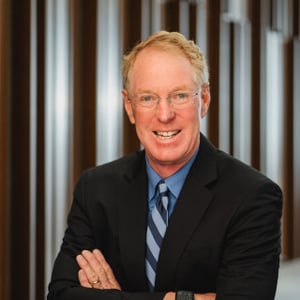
Ronald N. Boyce Presidential Professor of Criminal Law and University Distinguished Professor of Law, The University of Utah College of Law
Paul G. Cassell is an internationally recognized legal scholar on criminal and civil justice, crime victims' rights, constitutional law, evidence, judicial process, and other legal issues. Cassell received a B.A. (1981) and a J.D. (1984) from Stanford University, where he graduated Order of the Coif and was President of the Stanford Law Review. He clerked for then-Judge Antonin Scalia when Scalia was on the U.S. Court of Appeals for the D.C. Circuit (1984-85) and for Chief Justice Warren Burger of the United States Supreme Court (1985-86). Cassell then served as an Associate Deputy Attorney General with the U.S. Justice Department (1986-88) and as an Assistant U.S. Attorney for the Eastern District of Virginia (1988 to 1991). Cassell joined the faculty at the College of Law in 1992, where he taught full-time until he was sworn in as a U.S. District Court Judge for the District of Utah in July 2002. In November 2007, he resigned his judgeship to return full-time to the College of Law to teach, write, and litigate concerning issues relating to crime victims' rights and criminal and civil justice reform. Professor Cassell has also published numerous law review articles in journals such as the Stanford Law Review, the Michigan Law Review, the Harvard Journal of Law and Public Policy, and the Journal of Criminal Law and Criminology. He is a co-author of the nation's only law school textbook on crime victims' rights, Victims in Criminal Procedure (various editions, most recently in its fifth edition published in 2025). Professor Cassell has argued pro bono cases relating to criminal procedure and crime victims' rights before the United States Supreme Court, the 2nd, 4th, 5th, 6th, 7th, 8th, 9th, 10th, 11th, and D.C. Circuits (including the 5th and 11th Circuits en banc), several U.S. District Courts, the Utah Supreme Court, and the Arizona Supreme Court. In 2020, Cassell received the Ronald Wilson Reagan Public Policy Award - National Crime Victims' Service Award from the U.S. Department of Justice. Cassell is a member of the American Law Institute, a fellow of the American Bar Foundation, and an inaugural member of the Council on Criminal Justice. He is also an occasional blogger at The Volokh Conspiracy.
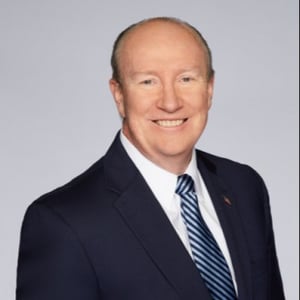
Senior Fellow, National Review
Bestselling author Andrew C. McCarthy is a contributing editor at National Review, a senior fellow at National Review Institute, and a Fox News contributor. He is a former Chief Assistant United States Attorney in the Southern District of New York and led the terrorism prosecution against the “Blind Sheikh” (Omar Abdel Rahman) and eleven other jihadists for conducting a war of urban terrorism against the United States that included the 1993 World Trade Center bombing and a plot to bomb New York City landmarks. During is 20-year career as a prosecutor, he received numerous honors, including the Justice Department’s highest awards. Andy speaks and writes widely on law and national security, radical Islam, politics, and culture. He has testified before Congress as an expert on issues of constitutional law, counterterrorism, and law-enforcement. He is a columnist for The Hill, and his essays and book reviews appear frequently at The New Criterion. His most recent New York Times bestselling book is Ball of Collusion (Encounter Books, 2019), about the Russiagate controversy (an updated version was published in 2020). His other books include Willful Blindness (2008), The Grand Jihad (2010), Spring Fever: The Illusion of Islamic Democracy (2012), and Faithless Execution (2014). He has also written several pamphlets in the Broadside series published by Encounter Books, most recently Islam and Free Speech (2015).
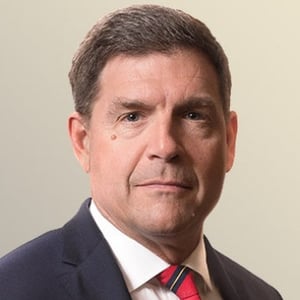
Partner, King & Spalding
John Richter is a trial and investigations partner in the Special Matters and Investigations Practice Group, and represents and defends companies, Boards of Directors, Board committees, and individuals facing a variety of white-collar criminal and regulatory enforcement matters, parallel civil litigation, and internal corporate investigations. John previously served as the Acting Assistant Attorney General in charge of the Criminal Division at the U.S. Department of Justice and as the U.S. Attorney for the Western District of Oklahoma, having been nominated by President George W. Bush and confirmed by unanimous consent of the U.S. Senate.
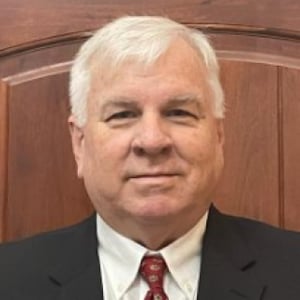
Founder, Law Offices of William L. Shipley & Associates
Bill’s legal career spanning more than 32 years has been built in the courtroom, not in the office.
After starting out his career with four years in private practice, In 1992 Bill joined the United States Attorney’s Office for the Eastern District of California where he initially represented the United States in civil litigation – including cases involving millions of dollars in dispute.
The desire to handle trials in front of juries led him to move to the Criminal Division of the US Attorney’s Office, where he served as a criminal prosecutor from 1995 to 2002 in California, and from 2003 until 2013 in the United States Attorney’s Office for the District of Hawaii.
Bill was the lead federal prosecutor in every federal criminal trial he was involved in except for his very first one. He was responsible for overseeing and prosecuting cases involving organized crime, white-collar crime, drug crimes, violent crimes, environmental crimes, contract and commercial fraud, tax fraud, and health care fraud. Over the course of his career, he handled more than 1000 cases, took more than 60 jury trials to verdict as lead counsel, handled dozens of appeals, and appeared nearly 20 times before the Ninth Circuit Court of Appeals as counsel for the United States.
He received national recognition and awards from the Department of Justice and his peers in law enforcement for his successful prosecutions of individuals and companies trafficking in chemicals used to manufacture methamphetamine.
In private practice, he has taken all his experience and training as a prosecutor and used it on behalf of his clients to ensure no one is wrongfully accused or convicted. He understands the power and resources the government can employ against his clients, and that his skills and tenacity are the weapons that he can employ on behalf of his clients to defend themselves.
Since starting his private law practice in 2013, Bill has represented defendants in federal criminal cases, as well as plaintiffs in civil fraud cases, employment matters, trade secrets cases, civil rights claims, probate disputes, and medical malpractice matters. He has tried cases in state and federal court, as well as appearing again before the U.S. Ninth Circuit Court of Appeals, and has argued twice before the D.C. Circuit.
Beginning in the fall of 2021, Bill began representing individuals charged in connection with the riot on Capitol Hill on January 6, 2021. Over the course of three years he represented approximately 90 defendants, with 12 of those chosing to take their cases to trial. He represented two different Oath Keeper members in separate trials, one of whom was the only January 6 defendant to be acquitted by a jury on all the felony counts against him. He was also the first defense attorney to obtain an acquittal in a bench trial on the controversial 18 U.S.C. Sec. 1512(c)(2) charge that was later ruled inapplicable to the January 6 riot by the Supreme Court in Fischer v. United States.
Bill is a graduate of UCLA, where he obtained undergraduate degrees in both Political Science and Sociology. He received his law degree from the Antonin Scalia School of Law at George Mason University in Virginia.
Ronald N. Boyce Presidential Professor of Criminal Law and University Distinguished Professor of Law, The University of Utah College of Law
Paul G. Cassell is an internationally recognized legal scholar on criminal and civil justice, crime victims' rights, constitutional law, evidence, judicial process, and other legal issues. Cassell received a B.A. (1981) and a J.D. (1984) from Stanford University, where he graduated Order of the Coif and was President of the Stanford Law Review. He clerked for then-Judge Antonin Scalia when Scalia was on the U.S. Court of Appeals for the D.C. Circuit (1984-85) and for Chief Justice Warren Burger of the United States Supreme Court (1985-86). Cassell then served as an Associate Deputy Attorney General with the U.S. Justice Department (1986-88) and as an Assistant U.S. Attorney for the Eastern District of Virginia (1988 to 1991). Cassell joined the faculty at the College of Law in 1992, where he taught full-time until he was sworn in as a U.S. District Court Judge for the District of Utah in July 2002. In November 2007, he resigned his judgeship to return full-time to the College of Law to teach, write, and litigate concerning issues relating to crime victims' rights and criminal and civil justice reform. Professor Cassell has also published numerous law review articles in journals such as the Stanford Law Review, the Michigan Law Review, the Harvard Journal of Law and Public Policy, and the Journal of Criminal Law and Criminology. He is a co-author of the nation's only law school textbook on crime victims' rights, Victims in Criminal Procedure (various editions, most recently in its fifth edition published in 2025). Professor Cassell has argued pro bono cases relating to criminal procedure and crime victims' rights before the United States Supreme Court, the 2nd, 4th, 5th, 6th, 7th, 8th, 9th, 10th, 11th, and D.C. Circuits (including the 5th and 11th Circuits en banc), several U.S. District Courts, the Utah Supreme Court, and the Arizona Supreme Court. In 2020, Cassell received the Ronald Wilson Reagan Public Policy Award - National Crime Victims' Service Award from the U.S. Department of Justice. Cassell is a member of the American Law Institute, a fellow of the American Bar Foundation, and an inaugural member of the Council on Criminal Justice. He is also an occasional blogger at The Volokh Conspiracy.
Senior Fellow, National Review
Bestselling author Andrew C. McCarthy is a contributing editor at National Review, a senior fellow at National Review Institute, and a Fox News contributor. He is a former Chief Assistant United States Attorney in the Southern District of New York and led the terrorism prosecution against the “Blind Sheikh” (Omar Abdel Rahman) and eleven other jihadists for conducting a war of urban terrorism against the United States that included the 1993 World Trade Center bombing and a plot to bomb New York City landmarks. During is 20-year career as a prosecutor, he received numerous honors, including the Justice Department’s highest awards. Andy speaks and writes widely on law and national security, radical Islam, politics, and culture. He has testified before Congress as an expert on issues of constitutional law, counterterrorism, and law-enforcement. He is a columnist for The Hill, and his essays and book reviews appear frequently at The New Criterion. His most recent New York Times bestselling book is Ball of Collusion (Encounter Books, 2019), about the Russiagate controversy (an updated version was published in 2020). His other books include Willful Blindness (2008), The Grand Jihad (2010), Spring Fever: The Illusion of Islamic Democracy (2012), and Faithless Execution (2014). He has also written several pamphlets in the Broadside series published by Encounter Books, most recently Islam and Free Speech (2015).
Partner, King & Spalding
John Richter is a trial and investigations partner in the Special Matters and Investigations Practice Group, and represents and defends companies, Boards of Directors, Board committees, and individuals facing a variety of white-collar criminal and regulatory enforcement matters, parallel civil litigation, and internal corporate investigations. John previously served as the Acting Assistant Attorney General in charge of the Criminal Division at the U.S. Department of Justice and as the U.S. Attorney for the Western District of Oklahoma, having been nominated by President George W. Bush and confirmed by unanimous consent of the U.S. Senate.
Founder, Law Offices of William L. Shipley & Associates
Bill’s legal career spanning more than 32 years has been built in the courtroom, not in the office.
After starting out his career with four years in private practice, In 1992 Bill joined the United States Attorney’s Office for the Eastern District of California where he initially represented the United States in civil litigation – including cases involving millions of dollars in dispute.
The desire to handle trials in front of juries led him to move to the Criminal Division of the US Attorney’s Office, where he served as a criminal prosecutor from 1995 to 2002 in California, and from 2003 until 2013 in the United States Attorney’s Office for the District of Hawaii.
Bill was the lead federal prosecutor in every federal criminal trial he was involved in except for his very first one. He was responsible for overseeing and prosecuting cases involving organized crime, white-collar crime, drug crimes, violent crimes, environmental crimes, contract and commercial fraud, tax fraud, and health care fraud. Over the course of his career, he handled more than 1000 cases, took more than 60 jury trials to verdict as lead counsel, handled dozens of appeals, and appeared nearly 20 times before the Ninth Circuit Court of Appeals as counsel for the United States.
He received national recognition and awards from the Department of Justice and his peers in law enforcement for his successful prosecutions of individuals and companies trafficking in chemicals used to manufacture methamphetamine.
In private practice, he has taken all his experience and training as a prosecutor and used it on behalf of his clients to ensure no one is wrongfully accused or convicted. He understands the power and resources the government can employ against his clients, and that his skills and tenacity are the weapons that he can employ on behalf of his clients to defend themselves.
Since starting his private law practice in 2013, Bill has represented defendants in federal criminal cases, as well as plaintiffs in civil fraud cases, employment matters, trade secrets cases, civil rights claims, probate disputes, and medical malpractice matters. He has tried cases in state and federal court, as well as appearing again before the U.S. Ninth Circuit Court of Appeals, and has argued twice before the D.C. Circuit.
Beginning in the fall of 2021, Bill began representing individuals charged in connection with the riot on Capitol Hill on January 6, 2021. Over the course of three years he represented approximately 90 defendants, with 12 of those chosing to take their cases to trial. He represented two different Oath Keeper members in separate trials, one of whom was the only January 6 defendant to be acquitted by a jury on all the felony counts against him. He was also the first defense attorney to obtain an acquittal in a bench trial on the controversial 18 U.S.C. Sec. 1512(c)(2) charge that was later ruled inapplicable to the January 6 riot by the Supreme Court in Fischer v. United States.
Bill is a graduate of UCLA, where he obtained undergraduate degrees in both Political Science and Sociology. He received his law degree from the Antonin Scalia School of Law at George Mason University in Virginia.
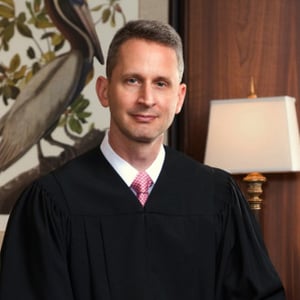
Judge, United States Court of Appeals, Fifth Circuit
Judge Duncan received his B.A. from Louisiana State University in 1994, his J.D. from the Paul M. Hebert Law Center at Louisiana State University in 1997, and his LL.M. from Columbia Law School in 2004.
After graduating from law school, he clerked for Louisiana-based Circuit Judge John Malcolm Duhé Jr. of the United States Court of Appeals for the Fifth Circuit.
From 2008–2012, Duncan served as Appellate Chief for Louisiana's Attorney General's office. From 2012–2014, he served as general counsel of the Becket Fund for Religious Liberty. From 2004-2008, he was an assistant professor of law at the University of Mississippi School of Law.
Before becoming a judge, Duncan practiced at the Washington, D.C. firm of Schaerr Duncan LLP, where he was a founding partner. He was appointed by President Trump to the United States Court of Appeals for the Fifth Circuit on May 1, 2018.
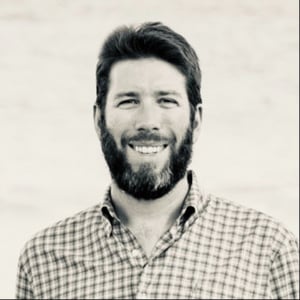
Senior Editor, National Review
Charles C. W. Cooke is a senior editor at National Review and the former editor of National Review Online. He is a graduate of the University of Oxford, at which he studied modern history and politics. His work has focused especially on Anglo-American history, British liberty, free speech, the Second Amendment, and American exceptionalism. He is the co-host of the Mad Dogs and Englishmen podcast, and is a regular guest on HBO's (Real Time with Bill Maher). He has written for the New York Times, the Washington Post, and the Los Angeles Times.

Senior Fellow and Director of Constitutional Studies, Manhattan Institute
Ilya Shapiro is a senior fellow and director of constitutional studies at the Manhattan Institute and a contributing editor of City Journal. Previously he was executive director and senior lecturer at the Georgetown Center for the Constitution, and before that a vice president of the Cato Institute.
Shapiro is the author of Lawless: The Miseducation of America’s Elites (2025) and Supreme Disorder: Judicial Nominations and the Politics of America’s Highest Court (2020), coauthor of Religious Liberties for Corporations? (2014), and editor of 11 volumes of the Cato Supreme Court Review (2008-18). He has contributed to a variety of academic, popular, and professional publications, including the Wall Street Journal, Harvard Journal of Law & Public Policy, Washington Post, Los Angeles Times, USA Today, National Review, and Newsweek. He also regularly provides commentary for various media outlets, writes the Shapiro’s Gavel newsletter on Substack, and once appeared on the Colbert Report.
Shapiro has testified many times before Congress and state legislatures and has filed more than 500 amicus curiae “friend of the court” briefs in the Supreme Court. He lectures regularly on behalf of the Federalist Society, is a member of the board of fellows of the Jewish Policy Center, was an inaugural Washington Fellow at the National Review Institute, and has been an adjunct law professor at the George Washington University and University of Mississippi. He is also the chairman of the board of advisers of the Mississippi Justice Institute, a barrister in the Edward Coke Appellate Inn of Court, and a former member of the Virginia Advisory Committee to the U.S. Commission on Civil Rights.
Earlier in his career, Shapiro was a special assistant/adviser to the Multi-National Force in Iraq on rule-of-law issues and practiced at Patton Boggs and Cleary Gottlieb. Before entering private practice, he clerked for Judge E. Grady Jolly of the U.S. Court of Appeals for the Fifth Circuit. He holds an AB from Princeton University, an MSc from the London School of Economics, and a JD from the University of Chicago Law School.
Ronald N. Boyce Presidential Professor of Criminal Law and University Distinguished Professor of Law, The University of Utah College of Law
Paul G. Cassell is an internationally recognized legal scholar on criminal and civil justice, crime victims' rights, constitutional law, evidence, judicial process, and other legal issues. Cassell received a B.A. (1981) and a J.D. (1984) from Stanford University, where he graduated Order of the Coif and was President of the Stanford Law Review. He clerked for then-Judge Antonin Scalia when Scalia was on the U.S. Court of Appeals for the D.C. Circuit (1984-85) and for Chief Justice Warren Burger of the United States Supreme Court (1985-86). Cassell then served as an Associate Deputy Attorney General with the U.S. Justice Department (1986-88) and as an Assistant U.S. Attorney for the Eastern District of Virginia (1988 to 1991). Cassell joined the faculty at the College of Law in 1992, where he taught full-time until he was sworn in as a U.S. District Court Judge for the District of Utah in July 2002. In November 2007, he resigned his judgeship to return full-time to the College of Law to teach, write, and litigate concerning issues relating to crime victims' rights and criminal and civil justice reform. Professor Cassell has also published numerous law review articles in journals such as the Stanford Law Review, the Michigan Law Review, the Harvard Journal of Law and Public Policy, and the Journal of Criminal Law and Criminology. He is a co-author of the nation's only law school textbook on crime victims' rights, Victims in Criminal Procedure (various editions, most recently in its fifth edition published in 2025). Professor Cassell has argued pro bono cases relating to criminal procedure and crime victims' rights before the United States Supreme Court, the 2nd, 4th, 5th, 6th, 7th, 8th, 9th, 10th, 11th, and D.C. Circuits (including the 5th and 11th Circuits en banc), several U.S. District Courts, the Utah Supreme Court, and the Arizona Supreme Court. In 2020, Cassell received the Ronald Wilson Reagan Public Policy Award - National Crime Victims' Service Award from the U.S. Department of Justice. Cassell is a member of the American Law Institute, a fellow of the American Bar Foundation, and an inaugural member of the Council on Criminal Justice. He is also an occasional blogger at The Volokh Conspiracy.
Senior Fellow, National Review
Bestselling author Andrew C. McCarthy is a contributing editor at National Review, a senior fellow at National Review Institute, and a Fox News contributor. He is a former Chief Assistant United States Attorney in the Southern District of New York and led the terrorism prosecution against the “Blind Sheikh” (Omar Abdel Rahman) and eleven other jihadists for conducting a war of urban terrorism against the United States that included the 1993 World Trade Center bombing and a plot to bomb New York City landmarks. During is 20-year career as a prosecutor, he received numerous honors, including the Justice Department’s highest awards. Andy speaks and writes widely on law and national security, radical Islam, politics, and culture. He has testified before Congress as an expert on issues of constitutional law, counterterrorism, and law-enforcement. He is a columnist for The Hill, and his essays and book reviews appear frequently at The New Criterion. His most recent New York Times bestselling book is Ball of Collusion (Encounter Books, 2019), about the Russiagate controversy (an updated version was published in 2020). His other books include Willful Blindness (2008), The Grand Jihad (2010), Spring Fever: The Illusion of Islamic Democracy (2012), and Faithless Execution (2014). He has also written several pamphlets in the Broadside series published by Encounter Books, most recently Islam and Free Speech (2015).
Partner, King & Spalding
John Richter is a trial and investigations partner in the Special Matters and Investigations Practice Group, and represents and defends companies, Boards of Directors, Board committees, and individuals facing a variety of white-collar criminal and regulatory enforcement matters, parallel civil litigation, and internal corporate investigations. John previously served as the Acting Assistant Attorney General in charge of the Criminal Division at the U.S. Department of Justice and as the U.S. Attorney for the Western District of Oklahoma, having been nominated by President George W. Bush and confirmed by unanimous consent of the U.S. Senate.
Founder, Law Offices of William L. Shipley & Associates
Bill’s legal career spanning more than 32 years has been built in the courtroom, not in the office.
After starting out his career with four years in private practice, In 1992 Bill joined the United States Attorney’s Office for the Eastern District of California where he initially represented the United States in civil litigation – including cases involving millions of dollars in dispute.
The desire to handle trials in front of juries led him to move to the Criminal Division of the US Attorney’s Office, where he served as a criminal prosecutor from 1995 to 2002 in California, and from 2003 until 2013 in the United States Attorney’s Office for the District of Hawaii.
Bill was the lead federal prosecutor in every federal criminal trial he was involved in except for his very first one. He was responsible for overseeing and prosecuting cases involving organized crime, white-collar crime, drug crimes, violent crimes, environmental crimes, contract and commercial fraud, tax fraud, and health care fraud. Over the course of his career, he handled more than 1000 cases, took more than 60 jury trials to verdict as lead counsel, handled dozens of appeals, and appeared nearly 20 times before the Ninth Circuit Court of Appeals as counsel for the United States.
He received national recognition and awards from the Department of Justice and his peers in law enforcement for his successful prosecutions of individuals and companies trafficking in chemicals used to manufacture methamphetamine.
In private practice, he has taken all his experience and training as a prosecutor and used it on behalf of his clients to ensure no one is wrongfully accused or convicted. He understands the power and resources the government can employ against his clients, and that his skills and tenacity are the weapons that he can employ on behalf of his clients to defend themselves.
Since starting his private law practice in 2013, Bill has represented defendants in federal criminal cases, as well as plaintiffs in civil fraud cases, employment matters, trade secrets cases, civil rights claims, probate disputes, and medical malpractice matters. He has tried cases in state and federal court, as well as appearing again before the U.S. Ninth Circuit Court of Appeals, and has argued twice before the D.C. Circuit.
Beginning in the fall of 2021, Bill began representing individuals charged in connection with the riot on Capitol Hill on January 6, 2021. Over the course of three years he represented approximately 90 defendants, with 12 of those chosing to take their cases to trial. He represented two different Oath Keeper members in separate trials, one of whom was the only January 6 defendant to be acquitted by a jury on all the felony counts against him. He was also the first defense attorney to obtain an acquittal in a bench trial on the controversial 18 U.S.C. Sec. 1512(c)(2) charge that was later ruled inapplicable to the January 6 riot by the Supreme Court in Fischer v. United States.
Bill is a graduate of UCLA, where he obtained undergraduate degrees in both Political Science and Sociology. He received his law degree from the Antonin Scalia School of Law at George Mason University in Virginia.

Topics
DOGE and the Future of Environmental Law
Since Inauguration Day, President Trump and his Cabinet have taken a range of important executive...
Who is the Prosecutor Here?: Rule 48(a) and the Michael Flynn, January 6, and Eric Adams Cases
Paul G. Cassell, Andrew McCarthy, John C. Richter, William L. Shipley
The Federal Rule of Criminal Procedure 48(a) reads, “The government may, with leave of court,...
Who is the Prosecutor Here?: Rule 48(a) and the Michael Flynn, January 6, and Eric Adams Cases
Paul G. Cassell, Andrew McCarthy, John C. Richter, William L. Shipley
The Federal Rule of Criminal Procedure 48(a) reads, “The government may, with leave of court,...
Who is the Prosecutor Here?: Rule 48(a) and the Michael Flynn, January 6, and Eric Adams Cases
The Corruption of Law Schools and the Health of Our Democracy
Stuart Kyle Duncan
A review of Ilya Shapiro, Lawless: The Miseducation of America’s Elites (2025) The legal scholar...
Topics
Is “Sectoral Bargaining” a Good Idea?
Sectoral collective bargaining is a system in which labor unions bargain collective agreements that cover all...
2024 Election Post Mortem
Long Island Lawyers Chapter
Mineola, NYTopics
United States v. Pheasant: Oral Argument Held In Important Nondelegation Challenge
A Ninth Circuit panel (Judges Bea, Bennett, and Miller) recently heard oral argument in United...
Topics
The Future of Article III Standing
Is it “too easy” to show Article III standing, particularly in environmental cases? That is...
An Armchair Conversation on the State of Civil Rights on Campus
Charles C. W. Cooke, Ilya Shapiro
The Manhattan Institute’s Director of Constitutional Studies Ilya Shapiro and Senior Editor at National Review...