
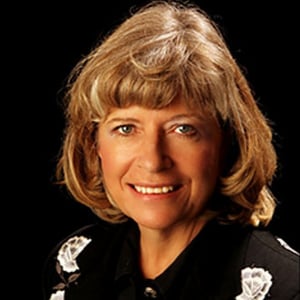
Deputy Solicitor, Parks and Wildlife, U.S. Department of the Interior
Biography of Karen Budd-Falen
Deputy Solicitor – Parks and Wildlife – Department of the Interior, Washington D.C.
Karen Budd-Falen was appointed by the Secretary of the Interior (DOI) as the Deputy Solicitor for Parks and Wildlife in November, 2018. Prior to her current appointment, Karen served for three years in the Reagan Administration, U.S. Department of the Interior, Washington, D.C., as a Special Assistant to the Assistant Secretary for Land and Minerals Management. She later served as a law clerk to the Assistant Solicitor for Water and Power. In between her stints in Washington D.C., she, along with her husband Frank Falen, were the owners of a private law firm located in Cheyenne, Wyoming. Karen has also worked as an attorney at Mountain States Legal Foundation, a public interest legal foundation in Denver, Colorado.
At DOI, Karen works on issues relating to the Endangered Species Act, national wildlife refuges and National parks. While she was in private practice, Karen represented private property owners, ranching and farming organizations, and local governments. Karen has assisted local governments in asserting their rights of consistency review, cooperation and coordination in federal agency decisions; private property owners in protecting their Constitutionally guaranteed property rights, other multiple users in supporting grazing and multiple use on federal/public lands; exposing the amount of fees paid by the taxpayers under the attorney fee shifting statutes.
Some of Karen's publications include The Right to Graze Livestock on the Federal Lands: The Historical Development of Western Grazing Rights, Idaho Law Review, Spring, 1994; Protecting Community Stability and Local Economies: Opportunities for County Government Influence in Federal Decision and Policy Making Processes, Whitman College, 1996; and Counterpoint: Opportunities Lost and Opportunities Gained: Separating Truth from Myth in the Western Ranching Debate, Karen Budd-Falen editor, Lewis and Clark Law School Environmental Law, 2006.
Karen was featured in Newsweek Magazine's "Who's Who: 20 for the Future" for her work on property rights issues (September 30, 1991). Karen was awarded Wyoming’s Outstanding Ag Citizen in 2001; the “Always There Helping” award from the New Mexico Stock Growers Association in 2003; the “Bud’s Contract” award from the New Mexico Public Lands Council in 2006 and the Individual of the Year award from the Arizona/New Mexico Counties for Stable Economic Growth in 2011.
Karen has presented testimony before the U.S. House of Representatives, Subcommittee on Forest Health; the U.S. House of Representatives Committee on Resources; the U.S. House of Representatives Committee on Resources relating to the National Environmental Policy Act; the U.S. House of Representatives Full Committee on Natural Resources; and the Committee on Oversight and Government Reform. Karen has also testified before committees of the Wyoming Legislature.
Karen is an active volunteer and coach for Future Farmers of America (“FFA”). Karen grew up as a fifth generation rancher on a family-owned ranch in Big Piney, Wyoming. She received her undergraduate degrees and her law degree from the University of Wyoming. Karen and Frank have two children, Isaac (wife Reva Falen) and Sarah and grandson, Wesley.

Attorney, Kazmarek Mowrey Cloud Laseter LLP
Leland Frost is an attorney in private practice and handles a broad range of environmental matters including litigation and appeals, transactions, enforcement, risk assessment, investigations, and regulatory counseling. His experience covers water, air, and climate change issues, as well as Superfund, Occupational Safety and Health Administration (OSHA), and Consumer Product Safety Commission (CPSC) compliance.
Previously, Leland was associate general counsel for the National Association of Manufacturers (NAM), where he managed a robust litigation and amicus curiae portfolio including environmental, international, product liability, class actions, technology, constitutional rights, labor and employment, intellectual property, and securities issues. Leland’s NAM experience spanned all levels of the judiciary, including briefs in a dozen state courts, more than four dozen U.S. Supreme Court briefs, and work in international tribunals.
Leland earned his B.A., cum laude, from Furman University and his J.D. from Vanderbilt University Law School, where he served as editor in chief of the Vanderbilt Journal of Transnational Law and as an editor on the Environmental Law and Policy Annual Review.

Vice President, Energy & Resources Policy, The National Association of Manufacturers (NAM)
Rachel Jones is vice president of energy and resources policy at the National Association of Manufacturers (NAM). Ms. Jones oversees the NAM’s energy and environmental policy work and has expertise on issues ranging from energy production and use to air and water quality, climate change, energy efficiency and environmental regulation. She is a key voice for manufacturing on Capitol Hill, at federal agencies and across all forms of media.
Before joining the NAM, Jones was the environment and energy counsel for the U.S. House of Representatives Committee on Science, Space, and Technology, where she advised the Committee on EPA, Department of Energy, Department of the Interior, FERC, NASA, NOAA and the White House Office of Science and Technology activities. She served as a legal fellow for the U.S. Senate Committee on Environment and Public Works and as executive student notes and comments editor for the Energy Law Journal.
Ms. Jones’s relentless drive has made her a powerful advocate for our members and a respected voice on the Hill and in the Administration on issues ranging from environmental policy to energy production to infrastructure and regulatory issues.
Ms. Jones has a B.A. from Oklahoma Baptist University and a J.D. from University of Tulsa College of Law.
Corporate Director of Regulatory Affairs, Continental Resources, Inc.
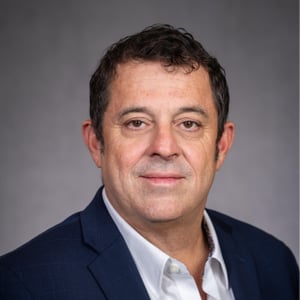
Senior Fellow for Law, Economics, and Technology, The Heritage Foundation; Professor, Florida International University
Mario Loyola is a Senior Fellow for Law, Economics, and Technology at The Heritage Foundation.
Loyola served in the Trump Administration as Associate Director for Regulatory Reform at the White House Council on Environmental Quality. In that role, he was one of the principal drafters of the One Federal Decision policy, which helped to streamline the permitting and environmental review of large infrastructure projects. While at CEQ, he was a member of the U.S. delegation to the USMCA free trade negotiations with Mexico and Canada, as well as the United Nations conference on biodiversity on the high seas. Loyola initially joined the White House in February 2017 as a Presidential Speechwriter, employing his expertise in many areas of foreign and domestic policy.
After beginning his career in M&A and corporate finance law, Loyola served in the Bush 43 Administration as a special assistant to the Undersecretary of Defense for Policy. He left that position to start writing on national defense issues in magazines such as National Review and The Weekly Standard, reporting from the front lines of the war on terrorism in Lebanon, Israel, and Iraq. He finished the Bush Administration as Foreign and Defense Counsel to the U.S. Senate Republican Policy Committee, then under the chairmanship of Senator Kay Bailey Hutchison of Texas. He subsequently moved to Texas and joined the Texas Public Policy Foundation, where he specialized in energy, environment, and federalism.
Loyola is a frequent contributor to The Wall Street Journal, National Review, and The Atlantic, among others. He teaches environmental and administrative law at Florida International University, where he is Founding Director of the Environmental Finance and Risk Management program in FIU’s prestigious Institute of Environment. He received a bachelor’s degree in European history from the University of Wisconsin–Madison and a J.D. from Washington University School of Law.

Laurence A. Tisch Professor of Law and Director, Classical Liberal Institute, New York University School of Law; Director, Classical Liberal Institute, Civitas Institute University of Texas at Austin
Richard A. Epstein is the Laurence A. Tisch Professor of Law, at New York University, a senior research fellow at the Civitas Institute at the University of Texas Austin, and a senior Lecturer, the University of Chicago. He received an LL.D., h.c . from the University of Ghent, 2003 , and an LLD h.c . from the University of Siegen in 2018 and the Bradley Prize in 2011. He has been a member of the American Academy of Arts and Sciences since 1985. He has edited both the Journal of Legal Studies (1981-1991) and the Journal of Law and Economics (1991-2001). He is also a founder and director of the Classical Liberal Institute at NYU Law School. His most recent book is The Classical Liberal Constitution: The Uncertain Quest for Limited Government (2014). His other books include Takings: Private Property and the Power of Eminent Domain ( 1985); Bargaining with the State (1993); Simple Rules for a Complex World (1995); Principles for a Free Society: Reconciling Individual Liberty and the Common Good (1998); Skepticism and Freedom: A Modern Theory of Classical Liberalism (2003); Design for Liberty: Private Property, Public Administration and the Rule of Law (2011), and most recently, The Myth of Birthright citizenship—and Beyond (2026). He has taught courses in , administrative law, antitrust, constitutional, contracts, environmental law, land use planning; real property, torts and water law. He has written and spoken extensively on a wide range of topics, and is writes a regular column for Defining Ideas.
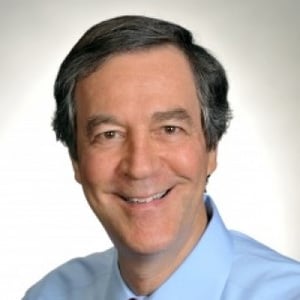
J. B. and Maurice C. Shapiro Professor of Environmental Law, George Washington University Law School
Robert L. Glicksman is a nationally and internationally recognized expert on environmental, natural resources, and administrative law issues. A graduate of the Cornell Law School, his areas of expertise include environmental, natural resources, administrative, and property law. Before joining the law school faculty in 2009, Professor Glicksman taught at the University of Kansas School of Law, where he joined the faculty in 1982 and was named the holder of the Robert W. Wagstaff Distinguished Professor of Law in 1995. Professor Glicksman has practiced with law firms in DC and New Jersey before joining and while on leave from academia, focusing on environmental, energy, and administrative law issues. He has consulted on various environmental and natural resources law issues, including work for the Secretariat of the Commission for Environmental Cooperation in Montreal, Canada.
Professor Glicksman has extensive publications in his areas of expertise. He is co-author of two law school casebooks, Environmental Protection: Law and Policy (6th ed. Aspen Publishers) and Administrative Law: Agency Action in Legal Context (Foundation Press); the four-volume treatise, Public Natural Resources Law (2d ed. Thomson/West); two monographs, Risk Regulation at Risk: A Pragmatic Approach, and Pollution Limits and Polluters’ Efforts to Comply: The Role of Government Monitoring and Enforcement, both published by Stanford University Press); and Modern Public Land Law in a Nutshell (3d ed. West). He has written numerous book chapters and articles on a variety of environmental and natural resources law topics, concentrating recently on topics such as climate change, federalism issues in environmental law, the challenges facing the federal land management agencies, and environmental enforcement. His articles have been published in law reviews and journals that include the Texas Law Review, Pennsylvania Law Review, the Northwestern University Law Review, the Duke Law Journal, the Vanderbilt Law Review, the Wake Forest Law Review, the Indiana Law Journal, the Stanford Environmental Law Journal, the Virginia Environmental Law Journal, and the Administrative Law Review.
Professor Glicksman has been a member scholar for the Center for Progressive Reform since 2002 and a member of the Center’s Board of Directors since 2008.
Senior Fellow for Law, Economics, and Technology, The Heritage Foundation; Professor, Florida International University
Mario Loyola is a Senior Fellow for Law, Economics, and Technology at The Heritage Foundation.
Loyola served in the Trump Administration as Associate Director for Regulatory Reform at the White House Council on Environmental Quality. In that role, he was one of the principal drafters of the One Federal Decision policy, which helped to streamline the permitting and environmental review of large infrastructure projects. While at CEQ, he was a member of the U.S. delegation to the USMCA free trade negotiations with Mexico and Canada, as well as the United Nations conference on biodiversity on the high seas. Loyola initially joined the White House in February 2017 as a Presidential Speechwriter, employing his expertise in many areas of foreign and domestic policy.
After beginning his career in M&A and corporate finance law, Loyola served in the Bush 43 Administration as a special assistant to the Undersecretary of Defense for Policy. He left that position to start writing on national defense issues in magazines such as National Review and The Weekly Standard, reporting from the front lines of the war on terrorism in Lebanon, Israel, and Iraq. He finished the Bush Administration as Foreign and Defense Counsel to the U.S. Senate Republican Policy Committee, then under the chairmanship of Senator Kay Bailey Hutchison of Texas. He subsequently moved to Texas and joined the Texas Public Policy Foundation, where he specialized in energy, environment, and federalism.
Loyola is a frequent contributor to The Wall Street Journal, National Review, and The Atlantic, among others. He teaches environmental and administrative law at Florida International University, where he is Founding Director of the Environmental Finance and Risk Management program in FIU’s prestigious Institute of Environment. He received a bachelor’s degree in European history from the University of Wisconsin–Madison and a J.D. from Washington University School of Law.
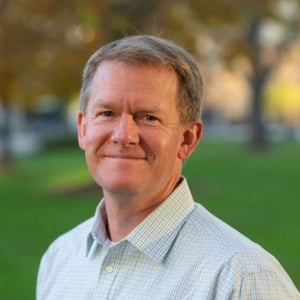
Executive Director, Environmental Policy Innovation Center
Tim leads the Environmental Policy Innovation Center, a fiscally-sponsored project of Sand County Foundation. Tim has 15 years of experience working on national policies that create more innovative, effective, and incentive-focused approaches to wildlife conservation, drought response, finance for water supplies and quality, and agricultural stewardship. His experience includes two years as Associate Director for Conservation at the White House Council on Environmental Quality from 2014 to 2017. A scientist by training, Tim is also a former city council member.
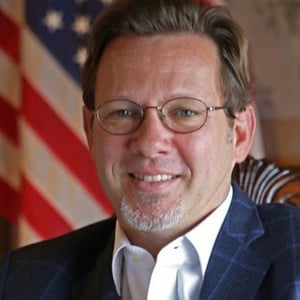
Chairman and Partner, Earth & Water Law Group
Earth & Water Group Founder, Brent Fewell, has over 25 years of experience in public policy, advocacy, and environmental law.
As an environmental lawyer and former corporate executive and senior U.S. EPA official in EPA’s Offices of Water and Congressional and Intergovernmental Relations, Brent brings a wealth of knowledge and unique perspective to his clients in navigating the regulatory and political arenas in Washington DC. As a highly regarded thought leader on environmental policy and governance matters, his counsel and opinions are sought out by corporate and government leaders around the globe. Brent brings unparalleled energy and passion to the issues in a way that few do to help his clients navigate in an increasingly complex and nuanced regulatory environment.
Brent received his B.S. in Wildlife Management from the University of Maine (high distinction), a Masters in Environmental Management from Duke University, and J.D. from Duquesne University School of Law. (Licensed in PA and DC)
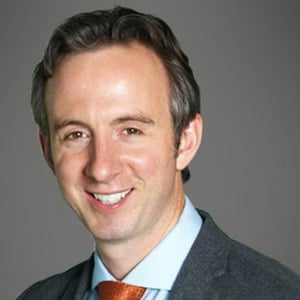
Professor of Law, University of Minnesota Law School
Professor James W. Coleman is a scholar of energy law. He specializes in North American energy infrastructure, transport, and trade. He is also a nonresident senior fellow at the American Enterprise Institute focused on energy policy.
Professor Coleman has testified before Congress on steps to speed up energy infrastructure permits. He also worked with a team of experts as part of Alberta's Royalty Review to revise the Canadian province's management of its vast oil and gas resources.
Before joining Minnesota, Professor Coleman taught at Southern Methodist University's Dedman School of Law, the University of Calgary’s law and business schools, and Harvard Law School. Earlier, he practiced environmental and appellate law at Sidley Austin in Washington, D.C., and clerked for the Honorable Steven M. Colloton of the U.S. Court of Appeals for the Eighth Circuit.
Professor Coleman received two degrees from Harvard University—a J.D. (cum laude) and B.A. in biology (magna cum laude with highest honors in the field). As a result of his undergraduate thesis on butterfly genetics, which required fieldwork in Central Asia, a species of lycaenid butterfly was named after him—Agrodiaetus ripartii colemani.
Deputy Solicitor, Parks and Wildlife, U.S. Department of the Interior
Biography of Karen Budd-Falen
Deputy Solicitor – Parks and Wildlife – Department of the Interior, Washington D.C.
Karen Budd-Falen was appointed by the Secretary of the Interior (DOI) as the Deputy Solicitor for Parks and Wildlife in November, 2018. Prior to her current appointment, Karen served for three years in the Reagan Administration, U.S. Department of the Interior, Washington, D.C., as a Special Assistant to the Assistant Secretary for Land and Minerals Management. She later served as a law clerk to the Assistant Solicitor for Water and Power. In between her stints in Washington D.C., she, along with her husband Frank Falen, were the owners of a private law firm located in Cheyenne, Wyoming. Karen has also worked as an attorney at Mountain States Legal Foundation, a public interest legal foundation in Denver, Colorado.
At DOI, Karen works on issues relating to the Endangered Species Act, national wildlife refuges and National parks. While she was in private practice, Karen represented private property owners, ranching and farming organizations, and local governments. Karen has assisted local governments in asserting their rights of consistency review, cooperation and coordination in federal agency decisions; private property owners in protecting their Constitutionally guaranteed property rights, other multiple users in supporting grazing and multiple use on federal/public lands; exposing the amount of fees paid by the taxpayers under the attorney fee shifting statutes.
Some of Karen's publications include The Right to Graze Livestock on the Federal Lands: The Historical Development of Western Grazing Rights, Idaho Law Review, Spring, 1994; Protecting Community Stability and Local Economies: Opportunities for County Government Influence in Federal Decision and Policy Making Processes, Whitman College, 1996; and Counterpoint: Opportunities Lost and Opportunities Gained: Separating Truth from Myth in the Western Ranching Debate, Karen Budd-Falen editor, Lewis and Clark Law School Environmental Law, 2006.
Karen was featured in Newsweek Magazine's "Who's Who: 20 for the Future" for her work on property rights issues (September 30, 1991). Karen was awarded Wyoming’s Outstanding Ag Citizen in 2001; the “Always There Helping” award from the New Mexico Stock Growers Association in 2003; the “Bud’s Contract” award from the New Mexico Public Lands Council in 2006 and the Individual of the Year award from the Arizona/New Mexico Counties for Stable Economic Growth in 2011.
Karen has presented testimony before the U.S. House of Representatives, Subcommittee on Forest Health; the U.S. House of Representatives Committee on Resources; the U.S. House of Representatives Committee on Resources relating to the National Environmental Policy Act; the U.S. House of Representatives Full Committee on Natural Resources; and the Committee on Oversight and Government Reform. Karen has also testified before committees of the Wyoming Legislature.
Karen is an active volunteer and coach for Future Farmers of America (“FFA”). Karen grew up as a fifth generation rancher on a family-owned ranch in Big Piney, Wyoming. She received her undergraduate degrees and her law degree from the University of Wyoming. Karen and Frank have two children, Isaac (wife Reva Falen) and Sarah and grandson, Wesley.
Attorney, Kazmarek Mowrey Cloud Laseter LLP
Leland Frost is an attorney in private practice and handles a broad range of environmental matters including litigation and appeals, transactions, enforcement, risk assessment, investigations, and regulatory counseling. His experience covers water, air, and climate change issues, as well as Superfund, Occupational Safety and Health Administration (OSHA), and Consumer Product Safety Commission (CPSC) compliance.
Previously, Leland was associate general counsel for the National Association of Manufacturers (NAM), where he managed a robust litigation and amicus curiae portfolio including environmental, international, product liability, class actions, technology, constitutional rights, labor and employment, intellectual property, and securities issues. Leland’s NAM experience spanned all levels of the judiciary, including briefs in a dozen state courts, more than four dozen U.S. Supreme Court briefs, and work in international tribunals.
Leland earned his B.A., cum laude, from Furman University and his J.D. from Vanderbilt University Law School, where he served as editor in chief of the Vanderbilt Journal of Transnational Law and as an editor on the Environmental Law and Policy Annual Review.
Vice President, Energy & Resources Policy, The National Association of Manufacturers (NAM)
Rachel Jones is vice president of energy and resources policy at the National Association of Manufacturers (NAM). Ms. Jones oversees the NAM’s energy and environmental policy work and has expertise on issues ranging from energy production and use to air and water quality, climate change, energy efficiency and environmental regulation. She is a key voice for manufacturing on Capitol Hill, at federal agencies and across all forms of media.
Before joining the NAM, Jones was the environment and energy counsel for the U.S. House of Representatives Committee on Science, Space, and Technology, where she advised the Committee on EPA, Department of Energy, Department of the Interior, FERC, NASA, NOAA and the White House Office of Science and Technology activities. She served as a legal fellow for the U.S. Senate Committee on Environment and Public Works and as executive student notes and comments editor for the Energy Law Journal.
Ms. Jones’s relentless drive has made her a powerful advocate for our members and a respected voice on the Hill and in the Administration on issues ranging from environmental policy to energy production to infrastructure and regulatory issues.
Ms. Jones has a B.A. from Oklahoma Baptist University and a J.D. from University of Tulsa College of Law.
Corporate Director of Regulatory Affairs, Continental Resources, Inc.
Senior Fellow for Law, Economics, and Technology, The Heritage Foundation; Professor, Florida International University
Mario Loyola is a Senior Fellow for Law, Economics, and Technology at The Heritage Foundation.
Loyola served in the Trump Administration as Associate Director for Regulatory Reform at the White House Council on Environmental Quality. In that role, he was one of the principal drafters of the One Federal Decision policy, which helped to streamline the permitting and environmental review of large infrastructure projects. While at CEQ, he was a member of the U.S. delegation to the USMCA free trade negotiations with Mexico and Canada, as well as the United Nations conference on biodiversity on the high seas. Loyola initially joined the White House in February 2017 as a Presidential Speechwriter, employing his expertise in many areas of foreign and domestic policy.
After beginning his career in M&A and corporate finance law, Loyola served in the Bush 43 Administration as a special assistant to the Undersecretary of Defense for Policy. He left that position to start writing on national defense issues in magazines such as National Review and The Weekly Standard, reporting from the front lines of the war on terrorism in Lebanon, Israel, and Iraq. He finished the Bush Administration as Foreign and Defense Counsel to the U.S. Senate Republican Policy Committee, then under the chairmanship of Senator Kay Bailey Hutchison of Texas. He subsequently moved to Texas and joined the Texas Public Policy Foundation, where he specialized in energy, environment, and federalism.
Loyola is a frequent contributor to The Wall Street Journal, National Review, and The Atlantic, among others. He teaches environmental and administrative law at Florida International University, where he is Founding Director of the Environmental Finance and Risk Management program in FIU’s prestigious Institute of Environment. He received a bachelor’s degree in European history from the University of Wisconsin–Madison and a J.D. from Washington University School of Law.
Laurence A. Tisch Professor of Law and Director, Classical Liberal Institute, New York University School of Law; Director, Classical Liberal Institute, Civitas Institute University of Texas at Austin
Richard A. Epstein is the Laurence A. Tisch Professor of Law, at New York University, a senior research fellow at the Civitas Institute at the University of Texas Austin, and a senior Lecturer, the University of Chicago. He received an LL.D., h.c . from the University of Ghent, 2003 , and an LLD h.c . from the University of Siegen in 2018 and the Bradley Prize in 2011. He has been a member of the American Academy of Arts and Sciences since 1985. He has edited both the Journal of Legal Studies (1981-1991) and the Journal of Law and Economics (1991-2001). He is also a founder and director of the Classical Liberal Institute at NYU Law School. His most recent book is The Classical Liberal Constitution: The Uncertain Quest for Limited Government (2014). His other books include Takings: Private Property and the Power of Eminent Domain ( 1985); Bargaining with the State (1993); Simple Rules for a Complex World (1995); Principles for a Free Society: Reconciling Individual Liberty and the Common Good (1998); Skepticism and Freedom: A Modern Theory of Classical Liberalism (2003); Design for Liberty: Private Property, Public Administration and the Rule of Law (2011), and most recently, The Myth of Birthright citizenship—and Beyond (2026). He has taught courses in , administrative law, antitrust, constitutional, contracts, environmental law, land use planning; real property, torts and water law. He has written and spoken extensively on a wide range of topics, and is writes a regular column for Defining Ideas.
Chairman and Partner, Earth & Water Law Group
Earth & Water Group Founder, Brent Fewell, has over 25 years of experience in public policy, advocacy, and environmental law.
As an environmental lawyer and former corporate executive and senior U.S. EPA official in EPA’s Offices of Water and Congressional and Intergovernmental Relations, Brent brings a wealth of knowledge and unique perspective to his clients in navigating the regulatory and political arenas in Washington DC. As a highly regarded thought leader on environmental policy and governance matters, his counsel and opinions are sought out by corporate and government leaders around the globe. Brent brings unparalleled energy and passion to the issues in a way that few do to help his clients navigate in an increasingly complex and nuanced regulatory environment.
Brent received his B.S. in Wildlife Management from the University of Maine (high distinction), a Masters in Environmental Management from Duke University, and J.D. from Duquesne University School of Law. (Licensed in PA and DC)
J. B. and Maurice C. Shapiro Professor of Environmental Law, George Washington University Law School
Robert L. Glicksman is a nationally and internationally recognized expert on environmental, natural resources, and administrative law issues. A graduate of the Cornell Law School, his areas of expertise include environmental, natural resources, administrative, and property law. Before joining the law school faculty in 2009, Professor Glicksman taught at the University of Kansas School of Law, where he joined the faculty in 1982 and was named the holder of the Robert W. Wagstaff Distinguished Professor of Law in 1995. Professor Glicksman has practiced with law firms in DC and New Jersey before joining and while on leave from academia, focusing on environmental, energy, and administrative law issues. He has consulted on various environmental and natural resources law issues, including work for the Secretariat of the Commission for Environmental Cooperation in Montreal, Canada.
Professor Glicksman has extensive publications in his areas of expertise. He is co-author of two law school casebooks, Environmental Protection: Law and Policy (6th ed. Aspen Publishers) and Administrative Law: Agency Action in Legal Context (Foundation Press); the four-volume treatise, Public Natural Resources Law (2d ed. Thomson/West); two monographs, Risk Regulation at Risk: A Pragmatic Approach, and Pollution Limits and Polluters’ Efforts to Comply: The Role of Government Monitoring and Enforcement, both published by Stanford University Press); and Modern Public Land Law in a Nutshell (3d ed. West). He has written numerous book chapters and articles on a variety of environmental and natural resources law topics, concentrating recently on topics such as climate change, federalism issues in environmental law, the challenges facing the federal land management agencies, and environmental enforcement. His articles have been published in law reviews and journals that include the Texas Law Review, Pennsylvania Law Review, the Northwestern University Law Review, the Duke Law Journal, the Vanderbilt Law Review, the Wake Forest Law Review, the Indiana Law Journal, the Stanford Environmental Law Journal, the Virginia Environmental Law Journal, and the Administrative Law Review.
Professor Glicksman has been a member scholar for the Center for Progressive Reform since 2002 and a member of the Center’s Board of Directors since 2008.
Senior Fellow for Law, Economics, and Technology, The Heritage Foundation; Professor, Florida International University
Mario Loyola is a Senior Fellow for Law, Economics, and Technology at The Heritage Foundation.
Loyola served in the Trump Administration as Associate Director for Regulatory Reform at the White House Council on Environmental Quality. In that role, he was one of the principal drafters of the One Federal Decision policy, which helped to streamline the permitting and environmental review of large infrastructure projects. While at CEQ, he was a member of the U.S. delegation to the USMCA free trade negotiations with Mexico and Canada, as well as the United Nations conference on biodiversity on the high seas. Loyola initially joined the White House in February 2017 as a Presidential Speechwriter, employing his expertise in many areas of foreign and domestic policy.
After beginning his career in M&A and corporate finance law, Loyola served in the Bush 43 Administration as a special assistant to the Undersecretary of Defense for Policy. He left that position to start writing on national defense issues in magazines such as National Review and The Weekly Standard, reporting from the front lines of the war on terrorism in Lebanon, Israel, and Iraq. He finished the Bush Administration as Foreign and Defense Counsel to the U.S. Senate Republican Policy Committee, then under the chairmanship of Senator Kay Bailey Hutchison of Texas. He subsequently moved to Texas and joined the Texas Public Policy Foundation, where he specialized in energy, environment, and federalism.
Loyola is a frequent contributor to The Wall Street Journal, National Review, and The Atlantic, among others. He teaches environmental and administrative law at Florida International University, where he is Founding Director of the Environmental Finance and Risk Management program in FIU’s prestigious Institute of Environment. He received a bachelor’s degree in European history from the University of Wisconsin–Madison and a J.D. from Washington University School of Law.
Executive Director, Environmental Policy Innovation Center
Tim leads the Environmental Policy Innovation Center, a fiscally-sponsored project of Sand County Foundation. Tim has 15 years of experience working on national policies that create more innovative, effective, and incentive-focused approaches to wildlife conservation, drought response, finance for water supplies and quality, and agricultural stewardship. His experience includes two years as Associate Director for Conservation at the White House Council on Environmental Quality from 2014 to 2017. A scientist by training, Tim is also a former city council member.
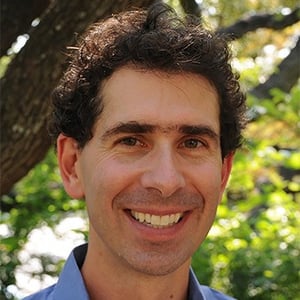
Harry Reasoner Regents Chair in Law, The University of Texas at Austin School of Law
David Adelman teaches and writes in the areas of environmental law, intellectual property law, and climate change policy. Professor Adelman’s research focuses on the many interfaces between law and science. His articles have addressed such topics as the implications of emerging genomic technologies for toxics regulation, the tensions between legal and scientific evidentiary standards in regulatory decision making, and development of effective policies for promoting innovation relevant to addressing climate change. Professor Adelman clerked for the Honorable Samuel Conti of the United States District Court for the Northern District of California. Before entering academia, he was an associate with the law firm Covington & Burling in Washington, D.C., where he litigated patent disputes and provided counsel on environmental regulatory matters, and a Senior Attorney with the Natural Resources Defense Council also in Washington, D.C. Professor Adelman was an Associate Professor of Law at the University of Arizona Rogers College of Law from 2001 to 2009.
Professor of Law, University of Minnesota Law School
Professor James W. Coleman is a scholar of energy law. He specializes in North American energy infrastructure, transport, and trade. He is also a nonresident senior fellow at the American Enterprise Institute focused on energy policy.
Professor Coleman has testified before Congress on steps to speed up energy infrastructure permits. He also worked with a team of experts as part of Alberta's Royalty Review to revise the Canadian province's management of its vast oil and gas resources.
Before joining Minnesota, Professor Coleman taught at Southern Methodist University's Dedman School of Law, the University of Calgary’s law and business schools, and Harvard Law School. Earlier, he practiced environmental and appellate law at Sidley Austin in Washington, D.C., and clerked for the Honorable Steven M. Colloton of the U.S. Court of Appeals for the Eighth Circuit.
Professor Coleman received two degrees from Harvard University—a J.D. (cum laude) and B.A. in biology (magna cum laude with highest honors in the field). As a result of his undergraduate thesis on butterfly genetics, which required fieldwork in Central Asia, a species of lycaenid butterfly was named after him—Agrodiaetus ripartii colemani.

Topics
Litigation Update: Dakota Access Pipeline Case Gives Supreme Court Chance for Major NEPA Ruling
The Dakota Access Pipeline is the main conduit through which North Dakota’s rich oil reserves...
Effectiveness of the Revised National Environmental Policy Act (NEPA)
Karen Budd-Falen, Leland Frost, Rachel Jones, J. Roger Kelley
The National Environmental Policy Act (NEPA) requires agencies to assess major actions that could significantly...
Effectiveness of the Revised National Environmental Policy Act (NEPA)
Teleforum40 Years Later: NEPA Regulation Update
Mario Loyola
On July 16, 2020, the White House Council on Environmental Quality published the long-awaited revision...
40 Years Later: NEPA Regulation Update
TeleforumTopics
EPA’s Section 401 Rule Respects Federalism While Addressing State Abuses
A central feature of the Clean Water Act (CWA) is cooperative federalism. In fact, right...
Updating the National Environmental Policy Act (NEPA)
TeleforumUpdating the National Environmental Policy Act (NEPA)
Richard A. Epstein, Robert Glicksman, Mario Loyola, Tim Male, Brent A. Fewell
On January 10, the White House Council on Environmental Quality (CEQ) proposed revisions to its regulations for implementing the...
Does Federal Permitting Under the National Environmental Policy Act Need Reform?
James W. Coleman
The National Environmental Policy Act (NEPA) was designed to regulate federal infrastructure projects to minimize...
Deep Dive Episode 93 – The Future of the National Environmental Policy Act
Regulatory Transparency Project's Fourth Branch Podcast
Teleforum