

Managing Director, BGR Group
Sean Cooksey, a former senior official in the Trump administration and on Capitol Hill, works as a Managing Director with BGR Group’s Commerce and Infrastructure Practice. He brings a wealth of executive branch, legislative, and private sector experience to his work with clients on issues ranging from congressional oversight and investigations, competition and antitrust matters, intellectual property and technology policy, and litigation support.
Prior to joining the BGR team, Sean was Counsel to Vice President JD Vance. In this role, he served as the Vice President’s chief legal adviser and a senior policy staffer within the White House. As part of the Trump-Vance administration, he regularly advised the Vice President and senior White House staff on constitutional law, domestic policy, ethics, and executive and judicial nominations.
Previously, Sean was a member of the Federal Election Commission, after being nominated by President Trump in 2020. Sean served on the FEC for four years and was elected Chairman for the 2024 presidential election year, overseeing an agency of 300 staff to administer federal campaign-finance law.
Sean began his political career in the United States Senate, where he served as General Counsel for Senator Josh Hawley (R-MO) and Deputy Chief Counsel for Senator Ted Cruz (R-TX). During his tenure in both offices, Sean worked on the Senate’s Committee on the Judiciary on some of the Senate’s most high-stakes matters, including major legislation and two Supreme Court confirmations.
Prior to his Senate service, Sean worked at an international law firm in Washington, D.C., where his practice focused on appeals and constitutional law. He also served as a law clerk for Judge Jerry E. Smith of the United States Court of Appeals for the Fifth Circuit in Houston, Texas.
Sean has appeared on television, on radio, and in print in outlets such as The Ingraham Angle, Varney & Co., Morning Edition, The New York Times, The Wall Street Journal, The Washington Post, Axios, and Politico. He speaks regularly at major conferences, including the Republican National Lawyers Association and the National Association of Business PACs.

Founder and Executive Director, National Security Institute; Assistant Professor of Law, Antonin Scalia Law School, George Mason University
Jamil N. Jaffer is the Founder and Executive Director of the National Security Institute at the Antonin Scalia Law School at George Mason University where he also serves as an Assistant Professor of Law, Director of the National Security Law and Policy Program, and Director of the Cyber, Intelligence, and National Security LLM Program. Jamil also teaches classes on counterterrorism, intelligence, surveillance, cybersecurity, and other national security matters, as well as a summer course held abroad with U.S. Supreme Court Justice Neil M. Gorsuch. Jamil is also affiliated with Stanford University’s Center for International Security and Cooperation and previously served as a Visiting Fellow at the Hoover Institution from 2016 to 2019.
Jamil is also a Venture Partner with Paladin Capital Group, where he assists the firm with investments across the full range of its themes and theses, including a focus on dual-use national security technologies. Jamil also serves on the board of directors of RangeForce, a cybersecurity training and readiness platform startup and Tozny, a digital identity startup, and on the advisory boards of U.S. Strategic Metals, North America’s largest primary producer of cobalt, a critical mineral used in EV batteries, aerospace, and other national security applications; and Constella Intelligence, a deep and dark web intelligence startup. Jamil also serves as an advisor to Beacon Global Strategies, a strategic advisory firm and Duco, a technology platform startup that connects corporations with geopolitical and international business experts. Jamil is also the managing director of Trigraph Caveat Capital, a private investment vehicle.
Among other things, Jamil currently serves on the Board of Directors for the Greater Washington Board of Trade, the Board of Advisors for the Global Cyber Alliance, and the Advisory Board of the Foundation for the Defense of Democracies’ Center on Cyber and Tech Innovation, the Executive Committee of the Reagan Institute Strategy Group. Jamil is also a Fellow at the Academy for Judaic, Christian, and Islamic Studies, an advisor to the Concordia Summit, and is a member of the Board of Directors for the Center for Intelligence Policy, the Board of Directors of Speech First, and the Executive Committee of the International Law and National Security Practice Group of the Federalist Society.
Immediately prior to his current positions, from 2015-2021, Jamil served as a senior business leader at IronNet Cybersecurity, helping take the company from a bootstrapped first-year technology products startup through two rounds of venture capital fundraising, growing from 40 employees to over 300, and through its listing on New York Stock Exchange. In his role as IronNet's Senior Vice President for Strategy, Partnerships & Corporate Development, Jamil worked directly for the co-CEOs of the company, Gen (ret.) Keith B. Alexander, the former Director of the National Security Agency and Founding Commander of U.S. Cyber Command, and Bill Welch, the former COO of Zscaler and Duo; in that role, Jamil led all of the company’s strategic and technology partnership efforts, including developing go-to-market and technology integration plans with some of the largest cloud platforms and cybersecurity companies in the market, evaluating potential acquisition targets, and developing overall corporate strategy and thought leadership around collective security and collaborative defense in the cyber arena.
Prior to his time at IronNet, Jamil served on the leadership team of the Senate Foreign Relations Committee as Chief Counsel and Senior Advisor under Chairman Bob Corker (R-TN), where he worked on key national security and foreign policy issues, including leading the drafting of the proposed Authorization for the Use of Military Force against ISIS in 2014 and 2015, the AUMF against Syria in 2013, and revisions to the 9/11 AUMF against al Qaeda. Jamil was also the lead architect of the Iran Nuclear Agreement Review Act and two sanctions laws against Russia for its first intervention in Ukraine.
Prior to joining SFRC, Jamil served as Senior Counsel to the House Permanent Select Committee on Intelligence under Chairman Mike Rogers (R-MI) where he led the committee’s oversight of NSA surveillance, NRO intelligence issues, and NGA analytic and collection matters, as well as intelligence community-wide counterterrorism issues. Jamil was also the lead architect of the Cyber Intelligence Sharing and Protection Act, the nation’s first cyber threat intelligence sharing legislation that was signed into law in 2015.
In the Bush Administration, Jamil served in the White House as an Associate Counsel to the President, handling Defense Department, State Department, and intelligence community matters, and serving as one of the White House Counsel’s primary representatives to the National Security Council Deputies Committee.
Prior to the White House, Jamil served on the leadership team of the Justice Department’s National Security Division as Counsel to the Assistant Attorney General for National Security, where he focused on counterterrorism and intelligence matters. At NSD, Jamil helped lead the division’s work on In re: Directives, the first ever two-party litigated matter in the FISA Court and the second case before the FISA Court of Review in its 30-year history. Jamil also led NSD’s efforts on the President’s Comprehensive National Cybersecurity Initiative (CNCI), including the drafting of NSPD-54/HSPD-23, and related classified matters, and advised the National Security Agency (NSA) and U.S. Cyber Command’s predecessor organization, the Joint Function Component Command for Network Warfare (JFCC-NW), on matters related to cyber intelligence collection and offensive cyber activities. For his work on these matters, Jamil was awarded the Assistant Attorney General’s Award for Special Initiative and was among the group of lawyers awarded the Director of National Intelligence’s 2008 Legal Award (Team of the Year – Cyber Legal).
Jamil also served in other positions in the Justice Department, including in the Office of Legal Policy, where he worked on the confirmations of Chief Justice John G. Roberts, Jr. and Justice Samuel A. Alito, Jr. to the United States Supreme Court.
Jamil also served as a lawyer in private practice at Kellogg Huber, a Washington, DC-based litigation boutique, as a policy advisor to Congressman Bob Goodlatte (R-VA), and as a staff member or senior advisor on a number of political campaigns, including two presidential campaigns and a presidential transition team. While in law school, Jamil was a member of the University of Chicago Law Review, managing editor of the Chicago Journal of International Law, and National Symposium Editor of the Harvard Journal of Law & Public Policy. Following law school, Jamil served as a law clerk to Judge Edith H. Jones of the United States Court of Appeals for the Fifth Circuit and, later in his career, as a law clerk to then-Judge Neil M. Gorsuch when he first joined the United States Court of Appeals for the Tenth Circuit as well as a law clerk to Justice Neil Gorsuch when he joined the U.S. Supreme Court.
Jamil has published multiple op-eds and academic articles on national security, foreign policy, cybersecurity, counterterrorism, encryption, and intelligence matters, and is the co-author of a book chapter with former NSA Director Gen. (Ret.) Keith B. Alexander on national security and the press in National Security, Leaks, and the Freedom of the Press: The Pentagon Papers Fifty Years On (2021) and a book chapter with former CIA Director Gen. (ret.) Mike Hayden on ISIS, al Qaeda, and other international terrorist groups in Choosing to Lead: American Foreign Policy for a Disordered World (2015). Jamil has also written book chapters on cybersecurity and surveillance, as well as op-eds and policy papers with former Attorney General Michael B. Mukasey, former National Counterterrorism Center Director Matt Olsen, and Congressman Mike Waltz (R-FL), among others.
Jamil has previously taught graduate-level courses in intelligence law and policy at George Washington University’s Elliott School of International Affairs and the National Intelligence University, served an outside advisor to the Cyberspace Solarium Commission, and has recently testified before committees of the U.S. Senate and House of Representatives on China, cybersecurity, counterterrorism, and other national security matters. Jamil has also recently appeared on a range of national television and radio outlets including CNN, Fox News, Fox Business, MSNBC, Bloomberg, PBS, Voice of America, and National Public Radio, and in various print and online publications, including the Wall Street Journal, New York Times, and the Washington Post on a range of national security matters including cybersecurity, counterterrorism, surveillance, encryption, privacy, and foreign policy issues.
Jamil holds degrees from UCLA (BA, cum laude), the University of Chicago Law School (JD, with honors), and the United States Naval War College (MA, with distinction).

Professor of Cyber Security and Policy, Tufts University
Susan Landau is Professor of Cyber Security and Policy in the Department of Computer Science, Tufts University. Earlier, as Bridge Professor of Cyber Security and Policy at the Fletcher School and School of Engineering, she founded Tufts's innovative MS degree in Cybersecurity and Public Policy. Prior to Tufts, Landau was Senior Staff Privacy Analyst at Google, Distinguished Engineer at Sun Microsystems, and faculty member at Worcester Polytechnic Institute, the University of Massachusetts Amherst, and Wesleyan University.
An interdisciplinary scholar, Landau works at the intersection of privacy, surveillance, cybersecurity, and the law. She has testified before Congress and briefed US and European policymakers on encryption, Landau and Whitfield Diffie won the McGannon Book Award for Social and Ethical Relevance in Communication Policy Research for Privacy on the Line: The Politics of Wiretapping and Encryption. She received the Surveillance Studies Book Prize for Surveillance or Security? The Risks Posed by New Wiretapping Technologies, the USENIX Lifetime Achievement Award, shared with Steven Bellovin and Matt Blaze, and the American Mathematical Society's Bertrand Russell Prize. Landau has served on committees of the National Academies of Sciences, Engineering, and Medicine, on the National Science Foundation Computer and Information Science Engineering Advisory Board, the National Institute of Standards and Technology Information Security and Privacy Advisory Board, and on mathematics and computer science journal editorial boards. Landau received her BA from Princeton, MS from Cornell, and PhD from MIT.

Strategic Council, Silverado Policy Accelerator; former Republican Deputy Staff Director, U.S. Senate Select Committee on Intelligence
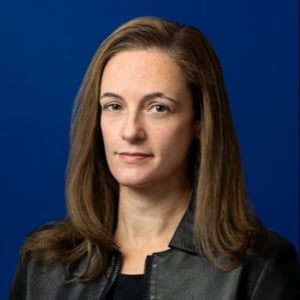
Tara Caroselli McFeely is a senior national security executive with expertise spanning defense, intelligence, and technology policy, political, and budgetary domains. She serves on the Strategic Council at Silverado Policy Accelerator, advising on innovative, data-driven national security policy initiatives, and is an Adjunct Professor in the Master of Science in Foreign Service program at Georgetown University’s Edmund A. Walsh School of Foreign Service.
In government, she most recently served as the Republican Deputy Staff Director on the U.S. Senate Select Committee on Intelligence (SSCI) driving the national security and intelligence policy and Executive Branch oversight strategic direction. She also co-led the professional staff oversight functions of the policies and programs of the U.S. intelligence enterprise spanning six Departments: Defense, Energy, Homeland Security, Justice, Treasury, State; and two independent agencies: the Central Intelligence Agency and the Office of the Director of National Intelligence. Prior to this role she served as the SSCI Budget Director, leading the staff oversight of the Intelligence Community (IC) and Defense Intelligence Enterprise annual $100.0+ billion budget and programs. Formerly, she was the SSCI Chairman’s Senior Advisor for Counterterrorism and the Federal Bureau of Investigation’s intelligence programs.
In the research domain, Ms. McFeely was the Deputy Director of the Intelligence Analyses Division at the Institute for Defense Analyses. In this role she led a large team of senior social sciences and STEM researchers on complex multidisciplinary research and analysis projects.
At Booz Allen Hamilton, she was a senior advisor for multiple IC and Department of Defense clients. She also led numerous multifaceted contracts across the U.S. Government landscape globally, including multilateral counter-Biological Weapons (BW) program initiatives.
Ms. McFeely began her career serving globally in the U.S. Navy, initially as a Surface Warfare Officer conducting U.S. 2nd Fleet and NATO operations across the Atlantic, and subsequently as a Naval Intelligence Officer supporting operations in the Balkans and the Global War on Terror.
Ms. McFeely has a Bachelor of Science in Political Science from the U.S. Naval Academy where she was a letterwoman on the Women’s Varsity Basketball Team. She also has a Master of Arts in Law and Diplomacy (MALD) from The Fletcher School of Law and Diplomacy, Tufts University.

Partner, Steptoe LLP
Shannen W. Coffin is a partner in Steptoe’s Washington office, where co-chairs the firm’s appellate practice and is a member of the regulatory litigation practice group. He frequently represents clients in trial and appellate courts in matters involving constitutional and administrative law challenges to state and federal government regulatory action.
Mr. Coffin previously served as a senior lawyer in the Executive Branch. He was Counsel to Vice President Cheney in the Office of the Vice President of the United States, where, among other things, he served on the White House’s judicial selection committee. Before that, Mr. Coffin served as Deputy Assistant Attorney General in the US Justice Department’s Civil Division, where he was responsible for overseeing and coordinating trial litigation on behalf of the federal government for constitutional challenges to federal statutes, statutory and constitutional challenges to agency programs, and defense of national security and anti-terrorism programs.
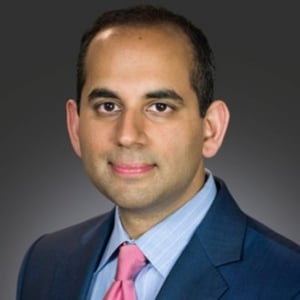
General Counsel, TRM Labs
Sujit Raman joined Sidley Austin after nearly a dozen years as a federal prosecutor, culminating in his service as Associate Deputy Attorney General at the U.S. Department of Justice (DOJ). In that role, he personally advised the Attorney General and Deputy Attorney General in their oversight of the nation’s cyber-related criminal and national security investigations and prosecutions. Sujit also led DOJ’s policy formulation in a number of critical areas, including cybersecurity, cross-border data transfers and protection, 5G/supply chain security, and emerging technologies such as facial recognition, cryptocurrency, and encryption. He brings clients a deep understanding of substantive and procedural issues involved in white collar defense, corporate internal investigations, cyber/data protection, and national security matters.
Sujit was a lead U.S. representative in high-profile international data-sharing negotiations with the United Kingdom, Australia, and the European Union. He also coordinated DOJ’s response to the Schrems II decision of the EU Court of Justice and, from 2018–2020, chaired the Attorney General’s Cyber-Digital Task Force, leading formulation of DOJ’s policy and operational response to transnational cybercrime, nation-state-sponsored malign cyber activity, and online foreign influence operations. Sujit was instrumental in drafting the legislation for the Clarifying Lawful Overseas Use of Data (CLOUD) Act and led the team that worked with industry and Capitol Hill to secure the legislation’s bipartisan passage.
In addition to his extensive experience in cybersecurity, data protection, and national security issues, Sujit served for over eight years as an Assistant United States Attorney in Maryland where he led numerous complex white collar fraud and public corruption investigations, and tried six cases to jury verdict. He also served as the office’s chief of appeals, supervising the appellate work of over 80 federal prosecutors across the spectrum of federal criminal law, arguing 20 cases in the federal court of appeals, and personally litigating matters of first impression in areas as diverse as export control and economic sanctions compliance; the RICO statute; the border search doctrine and the third-party doctrine as they apply to electronic evidence; and other leading issues at the intersection of law, technology, and privacy.
Sujit is a sought-after speaker and thinker on international regulatory and geopolitical issues and has appeared in national media and testified before the U.S. Senate on these topics. His professional achievements and service to the legal community have earned him public recognition, including the “Attorney General’s Award for Distinguished Service” (2018), the National Asian Pacific American Bar Association “Best Lawyers Under 40” Award (2015), the National South Asian Bar Association “Cornerstone Award” (2015), and the U.S. Secret Service “Director’s Award” (2013).
A term member of the Council on Foreign Relations, Sujit is a graduate of Harvard College, Harvard Law School, and the University of Bristol (UK), where he studied as a Marshall Scholar and served as head coach of the women’s varsity rowing program.

Head of Risk, cLabs
Jai Ramaswamy is the Head of Risk, Compliance and Regulatory Policy at cLabs, working on Celo, an open source, distributed ledger protocol designed to support the global development of financial tools to create a more accessible financial system. Before joining cLabs, Jai was the Head of Enterprise Risk Management at Capital One and the Global Head of AML Compliance Risk Management at Bank of America/Merrill Lynch.
Jai served in the United States Department of Justice for over a decade before moving to the private sector, most recently as the Chief of the Asset Forfeiture and Money Laundering Section in the Criminal Division. In that role, he oversaw the criminal enforcement of the Bank Secrecy Act and federal money laundering laws. He also investigated and prosecuted complex white collar crime as the Assistant United States Attorney in the Southern District of New York and pursued cybercriminal syndicates and supported the government's critical infrastructure protection efforts with DOJ's Computer Crime and Intellectual Property Section.
Jai has an undergraduate degree in government and economics from Harvard University, a law degree from the University of Pennsylvania Law School and a doctorate in social and political science from Cambridge University, U.K.

Partner, Fusion Law, PLLC
Paul is the founding partner of Fusion Law, PLLC. He has extensive experience with state, federal, and global regulators building coalitions and implementing policies to promote innovation in financial services. He is responsible for designing and implementing the first state (Arizona) and federal (CFPB) FinTech sandboxes in the United States. He also designed the CFPB no-action letter and trial disclosure policies. He helped found the first global regulatory innovation coalition (Global Financial Innovation Network) and led the founding of the first U.S. regulatory innovation coalition (American Consumer Financial Innovation Network). He served on the Financial Stability Oversight Council subcommittee on digital assets. He also has drafted state-level laws on blockchain and utility tokens.
Paul also has significant enforcement and litigation experience. He led many multi-state consumer protection enforcement matters as Civil Litigation Division Chief at the Arizona Attorney General’s Office.
Prior to his government service, Paul practiced law in the areas of securities litigation and transactional work for approximately six years at two well-known law firms. He also clerked on the U.S. Court of Appeals for the Fourth Circuit.
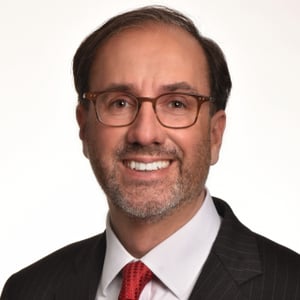
President and CEO, The Buckeye Institute
Robert Alt is the President and Chief Executive Officer of The Buckeye Institute where he has catalyzed exponential growth since he took the organization’s helm in 2012. He has since founded Buckeye’s renowned Economic Research Center and established its impactful Legal Center.
Alt is a distinguished scholar and attorney with particular expertise in legal policy, criminal justice, national security, and constitutional law. He previously worked for former U.S. Attorney General Edwin Meese III, regularly provides commentary on television and radio programs, and his writings have appeared in countless outlets.
In 2004, Alt spent five months in Iraq as an embedded war correspondent.
Alt has testified before Congress multiple times—including at the confirmation hearings for U.S. Supreme Court Justice Elena Kagan—the Federal Election Commission regarding matters of constitutional and administrative law, and numerous state legislatures.
Alt serves as an officer on the boards of The Philadelphia Society and the Federalist Society’s Columbus Lawyers Chapter. He taught national security law, criminal law, and legislation at Case Western Reserve University School of Law, as well as constitutional law and political parties and interest groups at Ashland University.
Alt earned his Doctor of Law degree from The University of Chicago Law School, where he was Symposium Editor and the winner of the Mulroy Prize for Excellence in Appellate Advocacy as well as research assistant to Professor Richard Epstein. Following law school, he clerked for Judge Alice Batchelder on the U.S. Court of Appeals for the Sixth Circuit. Alt graduated with his Bachelor of Arts in philosophy and political science magna cum laude from Azusa Pacific University where he also won the Outstanding Senior Award in Political Science.
Alt is an accomplished high-altitude alpinist and endurance athlete who has successfully climbed 6.75 of the famed Seven Summits of the World including Mount Everest. He is the creator of PROFOUND CLIMBING™ and a frequent speaker across the country and around the world on legal and public policy topics as well as effective leadership, management, decision-making, and teamwork in contexts ranging from extraordinary life/death situations to ordinary professional/business settings.
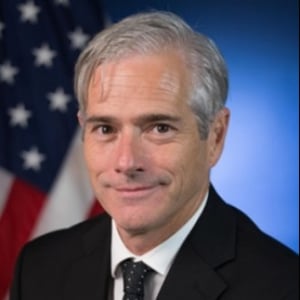
United States Attorney, Southern District of Ohio
David DeVillers is the United States Attorney for the Southern District of Ohio since November 1, 2019. Prior to that he was an Assistant United States Attorney. He also served as Director of the Organized Crime/Gang Unit for the Franklin County Prosecutor’s Office in Columbus.
As an Assistant United States Attorney (AUSA) DeVillers has lead numerous task forces involving the FBI, ATF, DEA, IRS and the Columbus Division of Police in investigating and prosecuting organized crime. He also prosecuted numerous cases under federal murder statutes, including all seven murder trials prosecuted in the Southern District of Ohio since 2002.
In 2016, DeVillers prosecuted the largest federal murder case in Ohio’s history, charging 20 members of the Short North Posse with RICO and 14 separate murders. After a two-and-half month trial, each defendant was convicted of all counts.
DeVillers was sent to Iraq by the Department of Justice as a Prosecutor Advisor to Iraqi High Tribunal for the Anfal (Kurdish Genocide) trial of Saddam Hussein and other members of former Iraqi Regime from 2006 through 2007. He also investigated additional crimes against humanity perpetrated by the former Iraqi Regime while in Iraq.
DeVillers was sent to Iraq in 2004 by the Department of Justice to investigate a Foreign Terrorist Organization.
DeVillers continued his work overseas, most notably the Department of Justice’s Resident Legal Advisor to the Republic of Georgia, living in the capital city of Tbilisi from 2010 to 2012. He worked closely with the Georgian Ministry of Justice to combat trans-national crime, corruption and international money laundering. He also assisted in the drafting of Georgia’s Criminal Code and the introduction of jury trials in murder cases.
DeVillers has also traveled for the Department of Justice to countries including Ukraine, Albania, Bangladesh, Kyrgyzstan and Azerbaijan to combat terrorism, transnational crime and corruption.
DeVillers received the Mark Losey Distinguished Service Award by the Ohio Attorney General in 2018. He was awarded the J. Michael Bradford Memorial Award for the Nation’s Most Outstanding Assistant United States Attorney by The National Association of Former United States Attorneys in 2008. He was voted the Outstanding Assistant Prosecutor of the Year for 1999 by the Ohio Prosecuting Attorney’s Association.

Judge, United States Court of Appeals, Sixth Circuit
Judge Readler earned his undergraduate and law degrees from the University of Michigan. After graduating, he served as a law clerk to Judge Alan Norris of the United States Court of Appeals for the Sixth Circuit. Judge Readler then began practicing law in the Columbus office of the international law firm Jones Day, eventually spending ten years as a partner in the firm’s Issues and Appeals Practice Group. While at Jones Day, Judge Readler appeared in state and federal trial and appellate courts around the country, most frequently the Supreme Court of Ohio and the Sixth Circuit. Judge Readler also successfully argued before the United States Supreme Court in McQuiggin v. Perkins on behalf of an inmate claiming actual innocence. His other pro bono representations include representing capital defendants before the Tenth Circuit and the Supreme Court of Ohio, as well as representing defendants sentenced to life in prison before the Sixth Circuit. While at Jones Day, Judge Readler traveled to Nairobi with Lawyers Without Borders to train Kenyan lawyers in prosecuting domestic violence cases, and he was also a recipient of the American Marshall Memorial Fellowship awarded by the German Marshall Fund of the United States. Following his career in private practice, Judge Readler served as Acting Assistant Attorney General for the Civil Division of the United States Department of Justice from 2017 to 2019. In that role, Judge Readler led and supervised over 1,000 lawyers in the Department’s largest litigating division, briefing and arguing several cases on behalf of the United States in federal courts across the country, including high-profile cases significant to the Administration and the Department. In March 2019, Judge Readler was confirmed to serve as a Circuit Judge on the Sixth Circuit. He resides in Columbus.

Partner, Arnold & Porter
John Elwood is the head of Arnold & Porter’s Appellate and Supreme Court practice. He has argued before the Supreme Court nine times, and appeared before most of the federal courts of appeals. He has successfully argued cases across a broad cross-section of subjects, with particular experience in environmental law, the False Claims Act, government contracting, and federal criminal law
Mr. Elwood’s work has earned him recognition as one of Washington’s top Supreme Court lawyers (Washingtonian, 2013), as one of “a small group of lawyers” with an “outsized influence at the U.S. Supreme Court” (Reuters, 2014), and as one of the country’s most innovative lawyers (Financial Times, 2014). Chambers USA reports that “[t]he much-admired John Elwood is praised for his advocacy skills” (2013), and describes Mr. Elwood as “phenomenal” (2014), “incredibly talented” (2012), and “a much-loved and widely respected lawyer who is quick on his feet” (2010).
Before joining the firm, Mr. Elwood served in senior-level positions in the U.S. Department of Justice. Beginning as an Assistant to the Solicitor General, and continuing with the firm, he has briefed more than 20 merits cases before the Supreme Court of the United States, and has briefed approximately 135 cases at the certiorari stage. As the senior Deputy in the Office of Legal Counsel, he advised the White House and federal agencies on a range of constitutional, statutory, and regulatory issues.
Founder and Executive Director, National Security Institute; Assistant Professor of Law, Antonin Scalia Law School, George Mason University
Jamil N. Jaffer is the Founder and Executive Director of the National Security Institute at the Antonin Scalia Law School at George Mason University where he also serves as an Assistant Professor of Law, Director of the National Security Law and Policy Program, and Director of the Cyber, Intelligence, and National Security LLM Program. Jamil also teaches classes on counterterrorism, intelligence, surveillance, cybersecurity, and other national security matters, as well as a summer course held abroad with U.S. Supreme Court Justice Neil M. Gorsuch. Jamil is also affiliated with Stanford University’s Center for International Security and Cooperation and previously served as a Visiting Fellow at the Hoover Institution from 2016 to 2019.
Jamil is also a Venture Partner with Paladin Capital Group, where he assists the firm with investments across the full range of its themes and theses, including a focus on dual-use national security technologies. Jamil also serves on the board of directors of RangeForce, a cybersecurity training and readiness platform startup and Tozny, a digital identity startup, and on the advisory boards of U.S. Strategic Metals, North America’s largest primary producer of cobalt, a critical mineral used in EV batteries, aerospace, and other national security applications; and Constella Intelligence, a deep and dark web intelligence startup. Jamil also serves as an advisor to Beacon Global Strategies, a strategic advisory firm and Duco, a technology platform startup that connects corporations with geopolitical and international business experts. Jamil is also the managing director of Trigraph Caveat Capital, a private investment vehicle.
Among other things, Jamil currently serves on the Board of Directors for the Greater Washington Board of Trade, the Board of Advisors for the Global Cyber Alliance, and the Advisory Board of the Foundation for the Defense of Democracies’ Center on Cyber and Tech Innovation, the Executive Committee of the Reagan Institute Strategy Group. Jamil is also a Fellow at the Academy for Judaic, Christian, and Islamic Studies, an advisor to the Concordia Summit, and is a member of the Board of Directors for the Center for Intelligence Policy, the Board of Directors of Speech First, and the Executive Committee of the International Law and National Security Practice Group of the Federalist Society.
Immediately prior to his current positions, from 2015-2021, Jamil served as a senior business leader at IronNet Cybersecurity, helping take the company from a bootstrapped first-year technology products startup through two rounds of venture capital fundraising, growing from 40 employees to over 300, and through its listing on New York Stock Exchange. In his role as IronNet's Senior Vice President for Strategy, Partnerships & Corporate Development, Jamil worked directly for the co-CEOs of the company, Gen (ret.) Keith B. Alexander, the former Director of the National Security Agency and Founding Commander of U.S. Cyber Command, and Bill Welch, the former COO of Zscaler and Duo; in that role, Jamil led all of the company’s strategic and technology partnership efforts, including developing go-to-market and technology integration plans with some of the largest cloud platforms and cybersecurity companies in the market, evaluating potential acquisition targets, and developing overall corporate strategy and thought leadership around collective security and collaborative defense in the cyber arena.
Prior to his time at IronNet, Jamil served on the leadership team of the Senate Foreign Relations Committee as Chief Counsel and Senior Advisor under Chairman Bob Corker (R-TN), where he worked on key national security and foreign policy issues, including leading the drafting of the proposed Authorization for the Use of Military Force against ISIS in 2014 and 2015, the AUMF against Syria in 2013, and revisions to the 9/11 AUMF against al Qaeda. Jamil was also the lead architect of the Iran Nuclear Agreement Review Act and two sanctions laws against Russia for its first intervention in Ukraine.
Prior to joining SFRC, Jamil served as Senior Counsel to the House Permanent Select Committee on Intelligence under Chairman Mike Rogers (R-MI) where he led the committee’s oversight of NSA surveillance, NRO intelligence issues, and NGA analytic and collection matters, as well as intelligence community-wide counterterrorism issues. Jamil was also the lead architect of the Cyber Intelligence Sharing and Protection Act, the nation’s first cyber threat intelligence sharing legislation that was signed into law in 2015.
In the Bush Administration, Jamil served in the White House as an Associate Counsel to the President, handling Defense Department, State Department, and intelligence community matters, and serving as one of the White House Counsel’s primary representatives to the National Security Council Deputies Committee.
Prior to the White House, Jamil served on the leadership team of the Justice Department’s National Security Division as Counsel to the Assistant Attorney General for National Security, where he focused on counterterrorism and intelligence matters. At NSD, Jamil helped lead the division’s work on In re: Directives, the first ever two-party litigated matter in the FISA Court and the second case before the FISA Court of Review in its 30-year history. Jamil also led NSD’s efforts on the President’s Comprehensive National Cybersecurity Initiative (CNCI), including the drafting of NSPD-54/HSPD-23, and related classified matters, and advised the National Security Agency (NSA) and U.S. Cyber Command’s predecessor organization, the Joint Function Component Command for Network Warfare (JFCC-NW), on matters related to cyber intelligence collection and offensive cyber activities. For his work on these matters, Jamil was awarded the Assistant Attorney General’s Award for Special Initiative and was among the group of lawyers awarded the Director of National Intelligence’s 2008 Legal Award (Team of the Year – Cyber Legal).
Jamil also served in other positions in the Justice Department, including in the Office of Legal Policy, where he worked on the confirmations of Chief Justice John G. Roberts, Jr. and Justice Samuel A. Alito, Jr. to the United States Supreme Court.
Jamil also served as a lawyer in private practice at Kellogg Huber, a Washington, DC-based litigation boutique, as a policy advisor to Congressman Bob Goodlatte (R-VA), and as a staff member or senior advisor on a number of political campaigns, including two presidential campaigns and a presidential transition team. While in law school, Jamil was a member of the University of Chicago Law Review, managing editor of the Chicago Journal of International Law, and National Symposium Editor of the Harvard Journal of Law & Public Policy. Following law school, Jamil served as a law clerk to Judge Edith H. Jones of the United States Court of Appeals for the Fifth Circuit and, later in his career, as a law clerk to then-Judge Neil M. Gorsuch when he first joined the United States Court of Appeals for the Tenth Circuit as well as a law clerk to Justice Neil Gorsuch when he joined the U.S. Supreme Court.
Jamil has published multiple op-eds and academic articles on national security, foreign policy, cybersecurity, counterterrorism, encryption, and intelligence matters, and is the co-author of a book chapter with former NSA Director Gen. (Ret.) Keith B. Alexander on national security and the press in National Security, Leaks, and the Freedom of the Press: The Pentagon Papers Fifty Years On (2021) and a book chapter with former CIA Director Gen. (ret.) Mike Hayden on ISIS, al Qaeda, and other international terrorist groups in Choosing to Lead: American Foreign Policy for a Disordered World (2015). Jamil has also written book chapters on cybersecurity and surveillance, as well as op-eds and policy papers with former Attorney General Michael B. Mukasey, former National Counterterrorism Center Director Matt Olsen, and Congressman Mike Waltz (R-FL), among others.
Jamil has previously taught graduate-level courses in intelligence law and policy at George Washington University’s Elliott School of International Affairs and the National Intelligence University, served an outside advisor to the Cyberspace Solarium Commission, and has recently testified before committees of the U.S. Senate and House of Representatives on China, cybersecurity, counterterrorism, and other national security matters. Jamil has also recently appeared on a range of national television and radio outlets including CNN, Fox News, Fox Business, MSNBC, Bloomberg, PBS, Voice of America, and National Public Radio, and in various print and online publications, including the Wall Street Journal, New York Times, and the Washington Post on a range of national security matters including cybersecurity, counterterrorism, surveillance, encryption, privacy, and foreign policy issues.
Jamil holds degrees from UCLA (BA, cum laude), the University of Chicago Law School (JD, with honors), and the United States Naval War College (MA, with distinction).

Foreign State Actors, Security, and Privacy: What is the Future of End-to-End Encryption?
Sean Cooksey, Jamil N. Jaffer, Susan Landau, Tara C. McFeely
The 2015 terrorist attack in San Bernardino, California kicked off a debate over whether U.S....
Preliminary Thoughts on Legal Issues Relating to the Maduro Seizure
Prof. Roger Alford, Professor of Law, Notre Dame Law School Prof. Soledad Bertelsen, Assistant Professor...
United States v. Zubaydah - Post-Argument SCOTUScast
Kate Comerford Todd
On October 6th, the Court heard oral argument in United States v. Zubaydah, a case...
Virtual Currencies and the Rule of Law
Shannen W. Coffin, Sujit Raman, Jaikumar Ramaswamy, Paul N. Watkins
During the last weeks of the Trump Administration’s Treasury Department, the Financial Crimes Enforcement Network...
An Inside Look at the Department of Justice
Robert Alt, David DeVillers, Chad A. Readler
On January 21, 2021, the Federalist Society's Columbus, Cincinnati, and Cleveland lawyers chapters hosted a...
Courthouse Steps: U.S. v. Microsoft
John P. Elwood
The Stored Communications Act of 1986 authorizes federal, state, and local law enforcement officers to...
Topics
Congress Should Write the Laws Before the Courts Do - United States v. Microsoft Corp.
In 2013, the United States issued a search warrant for emails in the possession of...
Topics
Old Law, New Technology, and the Congressional Need To Update ECPA
Last week, witnesses before the Senate Judiciary Committee faced much more amicable questions than then-Judge...
Searching: The Limits of Warrants Under ECPA - Podcast
Jamil N. Jaffer
The case of In the Matter of a Warrant to Search a Certain E-mail Account...
Topics
Second Circuit Issues Landmark Decision Regarding Electronic Privacy And The Territorial Scope Of U.S. Law
On July 14, 2016, the U.S. Court of Appeals for the Second Circuit issued a...