
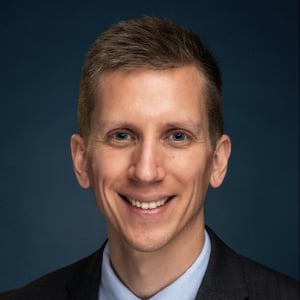
Deputy Counsel, Wisconsin Institute for Law & Liberty
Luke joined WILL from the Wisconsin Department of Justice where he served for nearly four years as a Deputy Solicitor General and Assistant Attorney General.
Berg has argued nine cases before the Wisconsin Supreme Court and four before the Seventh Circuit, including one en banc argument. He graduated from the University of Wisconsin – Madison (B.S.) and New York University (J.D.) and served as a law clerk for Judge Diane Sykes of the United States Court of Appeals for the Seventh Circuit. Prior to joining the Wisconsin DOJ in 2015, Berg worked as an attorney for the Office of the Comptroller of Currency in Washington D.C.
Berg resides in Madison with his wife and three boys.
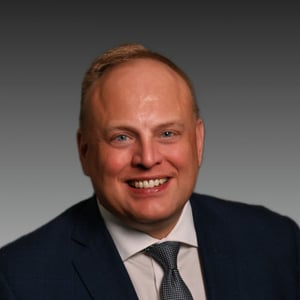
Executive Vice President and Director of Litigation, EdChoice Legal Advocates
Before founding a public interest law firm at EdChoice, Tom Fisher served as Indiana’s first Solicitor General from 2005-2023. Fisher has argued dozens of high-profile cases before both the Indiana Supreme Court and the Seventh Circuit U.S. Court of Appeals and five cases before the U.S. Supreme Court. A two-time recipient of the National Association of Attorneys General Best Brief Award, Fisher is a Fellow of the American Academy of Appellate Lawyers and a Sagamore of the Wabash. Fisher is a graduate of Wabash College and Indiana University Maurer School of Law, where he serves as an Adjunct Professor of Law.
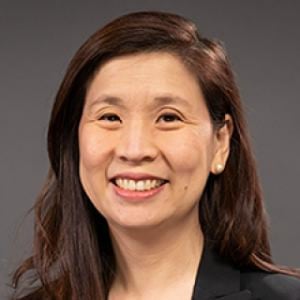
Senior Counsel, Vice President of Advocacy Strategy, Alliance Defending Freedom
Emilie Kao serves as senior counsel and vice president of advocacy strategy for Alliance Defending Freedom, where she is a member of the U.S. Legal Team. In this role, she supports ADF’s legal and legislative objectives through culture shaping initiatives.
Before joining ADF, Kao served as director of the DeVos Center for Religion and Civil Society at the Heritage Foundation. She led a team of experts who provided strategy, research, and policy recommendations on life, marriage, and religious freedom consistent with Constitutional principles. She convened coalitions of strategic partners to support the protection of religious freedom and launched the Promise to America’s Children, a movement dedicated to the protection of children and parental rights.
Kao also served as senior legal counsel at an international human rights law firm, East Asia team leader in the U.S. Department of State’s Office of International Human Rights, and director of international advocacy at the Becket Fund for Religious Liberty. She was an adjunct professor at Antonin Scalia Law School at George Mason University and is co-editor of the “First Principles on International Human Rights” essay series.
She has testified before the U.S. Congress and spoken at the United Nations in Geneva and New York. She has been interviewed and quoted extensively in the media, including The New York Times, The Washington Post, CNN, C-SPAN, and 60 Minutes+.
Kao earned her A.B. cum laude from Harvard University and her J.D. from Harvard Law School. She is a member of the state bars of California and the District of Columbia and is admitted to practice in the U.S. Supreme Court. She speaks Mandarin Chinese.
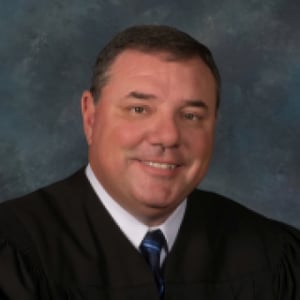
United States District Judge, Southern District of Ohio
Judge Matthew W. McFarland was born in Portsmouth, Scioto County, Ohio, and raised in Wheelersburg. He graduated from Wheelersburg High School in 1985, from Capital University in 1989 with a Bachelor of Arts degree in Political Science, and from the Capital University Law School in 1992, where he was inducted in the Order of the Barristers. He also served as a research assistant for Dean Rodney K. Smith. Judge McFarland first took the bench in 1999 as a Magistrate in the Scioto County Common Pleas Court. He was first elected to the Ohio Fourth District Court of Appeals in 2004 serving fourteen southeast Ohio counties. In 2010 and 2016 he was re-elected, and in 2016 by winning all fourteen counties. As an appellate judge, Judge McFarland authored over 1,000 opinions and made over 2,900 panel votes and served as the Presiding and Administrative Judge for multiple years. He has served as a visiting Judge on the Supreme Court of Ohio on four separate occasions allowing him to sit on each level of the Ohio Judiciary including the trial, appellate, and supreme court bench. The Ohio Chief Justice also appointed him to serve as a Commissioner on the Board of Grievances and Discipline and the Advisory Committee on Court Security and Emergency.
On October 10, 2018, President Donald J. Trump announced his intent to nominate Judge McFarland to a seat on the United States District Court for the Southern District of Ohio after being recommended by the Portman/Brown Bipartisan Federal Judicial Search Commission. The United States Senate received Judge McFarland’s nomination on November 13, 2018. At the sine die adjournment of the 115th Congress on January 3, 2019, the Senate returned Judge McFarland’s nomination to President Trump. President Trump then re-nominated Judge McFarland on January 23, 2019. The Senate Judiciary Committee held Judge McFarland’s confirmation hearing on June 26, 2019, and favorably voted his nomination to the full United States Senate on July 18, 2019. The United States Senate then confirmed Judge McFarland on December 18, 2019, and President Trump signed Judge McFarland’s Commission on December 31, 2019. With Judge McFarland’s confirmation, he is now only the second federal judge to serve the Southern District of Ohio from Scioto County. The first being Judge Albert Thompson, who served from 1898-1910. Judge McFarland succeeded Judge Thomas M. Rose who took senior status on June 30, 2017.
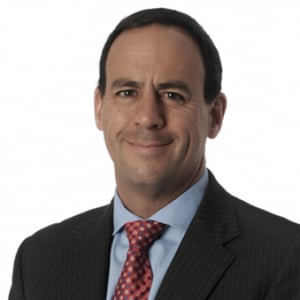
Shareholder, Greenberg Traurig LLP
Troy A. Eid focuses his litigation, mediation and transactional practice on government enforcement, investigations and compliance, environmental law, energy and natural resource development, and Federal Indian law and Native American and Alaska Native tribal law. Troy is a trusted advocate and mediator in the Rocky Mountain West and in federal, state and tribal trial and appellate courtrooms across the country.
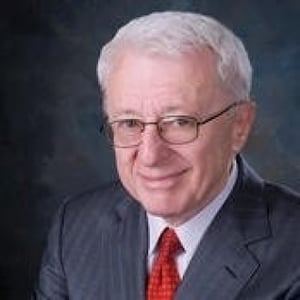
Director, Project for International Religious Liberty, Hudson Institute
Michael J. Horowitz is director of Hudson Institute's Project for Civil Justice Reform and Project for International Religious Liberty. He served as general counsel for the Office of Management and Budget (OMB) under the Reagan Administration, and has taught law at the University of Mississippi and Georgetown. He has also practiced private law as a partner at national law firms. Horowitz joined Hudson Institute as a Senior Fellow where he has put together left-right coalitions on a wide variety of foreign and domestic issues. He has written frequently and is regularly called to testify and consult with Congress.

United States Court of Appeals, Fourth Circuit
James Harvie Wilkinson III is an Article III federal judge on the United States Court of Appeals for the Fourth Circuit. He joined the Court in 1984 after being nominated by President Ronald Reagan.
Born in New York City, New York, Wilkinson graduated from Yale University with his Bachelor's degree in 1967. Wilkinson served in the United States Army from 1968 to 1969 and received his Juris Doctor degree from the University of Virginia School of Law in 1972.
On the recommendation of Virginia U.S. Senator John Warner, Wilkinson was nominated to the United States Court of Appeals for the Fourth Circuit by President Ronald Reagan on January 30, 1984 to a seat vacated by John Butzner, Jr.,. Wilkinson was confirmed by the Senate on August 9, 1984 on a Senate vote and received commission on August 13, 1984. Wilkinson served as the Chief Judge of the Court from 1996 to 2003.

Justice, Supreme Court of Arizona
Clint Bolick was appointed by Governor Doug Ducey in January 2016 to serve on the Arizona Supreme Court and was retained by the voters in 2018 and 2024.
Prior to joining the Court, Justice Bolick litigated constitutional cases in state and federal courts from coast to coast, including the U.S. Supreme Court. Among other positions, he served as Vice President for Litigation at the Goldwater Institute and as Co-founder and Vice President for Litigation at the Institute for Justice. He has litigated in support of school choice, freedom of enterprise, private property rights, freedom of speech, and federalism, and against racial classifications and government subsidies.
Justice Bolick received his Juris Doctor degree from the University of California at Davis, where he has been recognized as a distinguished alumnus, and his Bachelor of Arts degree magna cum laude from Drew University. He serves as a research fellow with the Hoover Institution. Among other honors, he was named one of the 90 Greatest DC Lawyers in the Last 30 Years by Legal Times in 2008, received a Bradley Prize in 2006, and was recognized as one of the nation’s three lawyers of the year by American Lawyer in 2002 for his successful defense of school vouchers in Zelman v. Simmons-Harris.
Justice Bolick is a prolific author of a dozen books and hundreds of articles. Among his most recent books are Unshackled: Freeing America’s K-12 Education System: Immigration Wars: Forging an American Solution, co-authored with former Florida Governor Jeb Bush; and David’s Hammer: The Case for an Activist Judiciary. Bolick serves as an adjunct professor of constitutional law at Arizona State University’s Sandra Day O’Connor School of Law and has served as a lecturer at Harvard University’s John F. Kennedy School of Government.

United States Senator, Texas
Ted Cruz represents 28 million Texans in the U.S. Senate as a passionate fighter for limited government and economic growth. He has authored 39 legislative measures signed into law. Recent victories include expanding 529 college savings accounts to allow parents to save for K–12 public, private, and religious education, leading the effort to repeal Obamacare’s individual mandate, imposing sanctions on terrorists who use civilians as human shields, designating North Korea as a state sponsor of terrorism, reauthorizing and reforming NASA, ensuring the availability of additional records to help solve civil rights cold cases, supporting thousands of Texas jobs, and leading the fight to confirm principled constitutionalists to our courts.
Senator Cruz is a graduate of Princeton University and Harvard Law School, a former law clerk to Chief Justice William Rehnquist, and former solicitor general of Texas. He has argued nine cases before the Supreme Court. In November of 2018, he was re-elected to the Senate by the people of Texas.
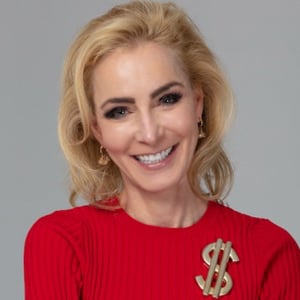
Jennifer Anju Grossman -- JAG-- became the CEO of the Atlas Society in March of 2016. She shifted the organization's focus to the engagement of young people with the ideas of Ayn Rand in creative ways, like animated videos, graphic novels, and social media, and through the expansion into international markets.
Prior to joining The Atlas Society, she served as Senior Vice President of Dole Food Company, launching the Dole Nutrition Institute — a research and education organization— at the behest of Dole Chairman David H. Murdock. Previously Grossman served as Director of Education at the Cato Institute, and worked closely with the late philanthropist Theodore J. Forstmann to launch the Children's Scholarship Fund. A speechwriter for President George H. W. Bush, Grossman has written for both national and local publications. She graduated with honors from Harvard College.
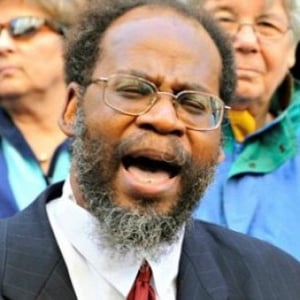
Executive Director, New York Civil Rights Coalition
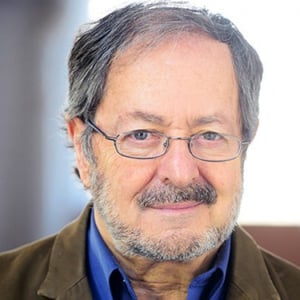
Professor of Public Policy, Hunter College, CUNY
Joseph P. Viteritti is the Thomas Hunter Professor of Public Policy and Chair of the Urban Policy and Planning Department at Hunter. He was the founding faculty chair of the Public Policy Program at Hunter’s Roosevelt House Public Policy Institute, and is a member of the doctoral faculty in education policy at the CUNY Graduate Center.
He is recently the author of The Pragmatist: Bill de Blasio’s Quest to Save the Soul of New York (Oxford University Press, 2017), which chronicles the political career and tenure of the incumbent mayor. Written from a historical perspective, the book traces mayoral leadership through the rise, fall and regeneration of progressivism in New York City since the time of Fiorello La Guardia.
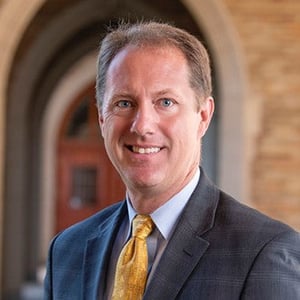
Professor of Law, Notre Dame University
Roger P. Alford joined the Notre Dame Law faculty in January 2012. Alford teaches and writes in a wide range of subject-matter areas, including international trade, international arbitration, international antitrust, and comparative law.
Alford earned his B.A. with Honors from Baylor in 1985, his J.D. with Honors from New York University, and his LL.M. from Edinburgh University. Before entering the legal academy, he served as a law clerk to Judge James Buckley of the United States Court of Appeals for the D.C. Circuit, and Judge Richard Allison of the Iran-United States Claims Tribunal in The Hague, Netherlands. He practiced law with Hogan & Hartson (now Hogan Lovells) in Washington, D.C., and was also a senior legal advisor to the Claims Resolution Tribunal for Dormant Activities in Zurich, Switzerland.
In addition to publishing widely in leading law reviews and journals, Alford is the general editor of Kluwer Arbitration Blog and on the Executive Committee of the Institute for Transnational Arbitration.
He is Concurrent Professor at the Keough School of Global Affairs, a Faculty Fellow at the Kellogg Institute for International Studies, and a Faculty Fellow at the Nanovic Institute for European Studies. He was the Academic Director of the London Global Gateway from 2016-2017 and Associate Dean for Graduate and International Programs from 2013-2017.
He served as the Deputy Assistant Attorney General for International Affairs with the Antitrust Division of the U.S. Department of Justice from 2017-2019.
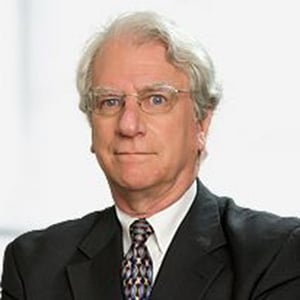
Partner, Labaton Sucharow LLP
Jay Himes is a partner in the New York office of Labaton Sucharow LLP and co-chair of the Firm's Antitrust and Competition Litigation Practice. With more than 40 years of experience, Jay is experienced in all facets of antitrust and complex litigation generally. He focuses on representing plaintiffs in price-fixing class action cases and protecting businesses from anticompetitive activities.
A past recipient of the New York State Bar Association’s William T. Lifland Service Award for distinguished service, Jay has been described by Chambers USA as “a walking encyclopedia of case law…thoughtful, well read and a first-rate lawyer," and The Legal 500 called him "a very solid and highly experienced antitrust lawyer."
Jay was appointed by United States District Judge Orrick to serve as the monitoring trustee under the final judgment in United States of America v. Bazaarvoice, Inc. Upon completion of the four-year appointment, the Court thanked him for having “diligently and effectively monitored the defendant’s compliance,” and for having “worked through innumerable complex issues . . . with obvious skill and sensitivity.”
A regular speaker at conferences focusing on such subjects as antitrust, class actions, international litigation and arbitration, trade law and data protection, Jay has authored many conference papers and published articles. He has lectured annually on U.S. cartel and private action enforcement at the Zurich University of Applied Science's international competition and compliance programs, offered in Geneva, Winterthur and Zurich, Switzerland, to foreign competition law officials and practitioners. He also has presented at conferences in Europe (Amsterdam, Berlin, Dublin, Krakow, Lisbon, Paris, Stockholm, Vienna, Winterthur, and Zurich), Latin America (Antigua and Sao Paolo), and the Far East (Hanoi, Seoul, and Tokyo), as well as in Montreal and the United States.
Prior to joining Labaton Sucharow, Jay served for nearly eight years as the Antitrust Bureau Chief in the New York Attorney General's office. In that role, he was the States’ principal representative in the marathon 2001 negotiations that led to settlement of the governments’ landmark monopolization case against Microsoft. Thereafter, Jay partnered with US DOJ officials to lead the Microsoft judgment monitoring and enforcement effort, an activity that continued throughout his time at the Attorney General's office.
During his tenure as New York's chief antitrust official, Jay also led significant, high-profile antitrust investigations and enforcement actions. These cases included: In re Buspirone Antitrust Litigation ($100 million settlement); In re Cardizem CD Antitrust Litigation ($80 million settlement); and In re Compact Disc Antitrust Litigation ($67 million settlement). Under Jay's leadership, the New York Bureau secured the two largest antitrust civil penalties recoveries ever achieved under the State's antitrust statute.
Before serving in the Attorney General's office, Jay practiced complex litigation for 25 years at Paul, Weiss, Rifkind, Wharton & Garrison LLP. There, he represented the 12 Federal Reserve Banks as plaintiffs in a price-fixing case against the nation's leading armored car companies, and defended a Revlon healthcare company in a series of price-fixing cases that spanned nearly a decade. Additionally, Jay handled a wide range of litigation, including securities class actions as well as contract, construction, constitutional, entertainment, environmental, real property, and tax litigation. Active in pro bono matters, Jay worked with the New York Civil Liberties Union, NAACP, and National Coalition for the Homeless, while also representing inmate and immigration asylum clients.
Jay is a member of the American Antitrust Institute advisory board, the U.S. advisory board of the Loyola University Chicago School of Law's Institute of Consumer Antitrust Studies, the MLex advisory board, the editorial advisory group of the Antitrust Chronicle, the steering committee of the American Economic Liberties Project, and the board of the Lawyers’ Committee for Civil Rights Under Law.
Effective June 1, 2020, Jay will chair the New York State Bar Association’s (NYSBA’s) International Section, which has more than 2,000 members worldwide. Jay is a representative to NYSBA’s sections caucus, and co-chairs the antitrust committees of both the State Bar's Commercial and Federal Litigation and International sections. Jay is also a member of antitrust, litigation, and intellectual property groups in the American Bar Association. He also is a past chair of NYSBA’s Antitrust Section, and served a four-year term as the Section's delegate to the House of Delegates.
Jay earned his Juris Doctor, magna cum laude, from the University of Wisconsin Law School, where he served as the Articles Editor of the Wisconsin Law Review. Following law school, he pursued independent study at the University of Oxford in England.
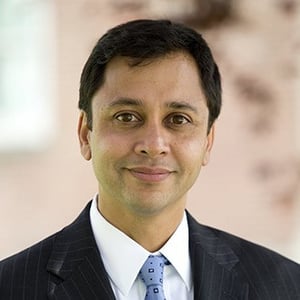
Charles Klein Professor of Law and Government, Director of the LL.M. in Asian Law, Temple University School of Law
Professor Salil Mehra joined the Temple Law faculty in 2000. His research focuses on antitrust/competition law and technology. A sample of Professor Mehra’s publications can be found below and on his publications page.
Professor Mehra is a past Chair of the AALS Section on Antitrust and Economic Regulation, and is a nongovernmental advisor to the International Competition Network. He is a former Abe Fellow of Japan’s Center for Global Partnership and the Social Science Research Center.
Prior to his career with Temple Law, Professor Mehra clerked for Chief Judge Juan R. Torruella of the U.S. Court of Appeals for the First Circuit, and then worked at the Antitrust Division of the Department of Justice, and then subsequently at the New York law firm of Wachtell, Lipton, Rosen & Katz, where his practice included antitrust, first amendment, and takeover defense litigation.
Professor Mehra graduated with honors, Order of the Coif, from the University of Chicago Law School, where he was on the law review and was named an Olin Student Fellow. In 2016, Professor Mehra won the University Lindback Award for Distinguished Teaching.
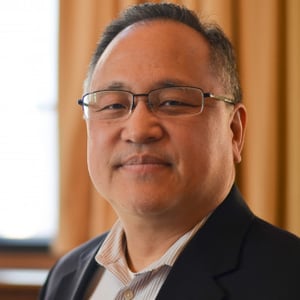
John H. Chestnut Professor of Law, Communication, and Computer & Information Science; Founding Director, Center for Technology, Innovation and Competition, University of Pennsylvania Law School
Christopher S. Yoo is the John H. Chestnut Professor of Law and a Professor at the Annenberg School for Communication and in the Computer & Information Science Department of School of Engineering and Applied Science at the University of Pennsylvania, where he is also the Founding Director of the Center for Technology, Innovation and Competition. He is the author of over one hundred scholarly works and has taught at over a dozen universities around the world. Professor Yoo received his A.B. from Harvard, his M.B.A. from UCLA, and his J.D. from Northwestern University. Before entering the academy, Professor Yoo clerked for Justice Anthony M. Kennedy of the Supreme Court of the United States and practiced law with the predecessor firm to Hogan Lovells under the supervision of now-Chief Justice John G. Roberts, Jr. Before joining the University of Pennsylvania, he taught for eight years at the Vanderbilt Law School. He is frequently called to testify before the U.S. Congress, Federal Trade Commission, Department of Justice Antitrust Division, Federal Communications Commission, foreign governments, and international organizations.
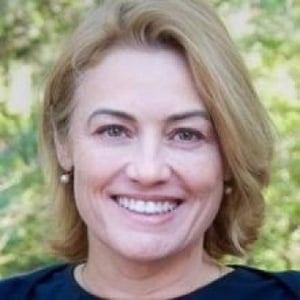
Professor of the Practice of Economics, Duke University
Michelle P. Connolly is Professor of the Practice in the Economics Department at Duke University. She was the Economics Director of Duke in New York: Financial Markets and Institutions Program for 2007-2009 and the Director of EcoTeach for several years. She currently serves as the Director of the Honors Program in Economics and a member of the Duke Alumni Association Board.
In 2011, Professor Connolly won the Howard D. Johnson Trinity College Teaching Prize and was named among the top five percent of Duke University Undergraduate Instructors in 2009, 2010 and 2011.
Professor Connolly previously served as Chief Economist of the Federal Communications Commission in 2006-2007 and 2008-2009, and as an Economist for the International Research Function for the Federal Reserve Bank of New York from 1996 to 1997. She graduated Phi Beta Kappa and Summa Cum Laude from Yale University in 1990, and went on to earn her M.A. and M.Phil in economics. Professor Connolly received her Ph.D. in economics from Yale University in 1996.
Professor Connolly’s research and teaching focus specifically on international trade, telecommunications policy, media policy, education, growth, and development. She has received funding for her research from the National Science Foundation, the Duke Arts and Sciences Research Council Grants, the Spencer Grant, and the Teagle Grant.
Professor Connolly has published in numerous journals, including the American Economic Review, the American Economic Journal: Macroeconomics, the Journal of Development Economics, the Journal of Economic History, the Journal of Economic Growth, the Review of Industrial Organization, and Current Issues in Economics and Finance.
In 2011, Professor Connolly testified before Congress and participated in a White House panel on Spectrum Issues. She has been presenting her work at university seminars and international conferences since 1996. Some of her appearances were at the ACLP Advanced Communications 2009 Summit, where she was a panelist and moderator, at the conference on “Wireless Technologies: Enabling Innovation and Economic Growth”, where she served as a keynote panelist, and at the Martin H. Crego Lecture in Economics, an all college Lecture at Vassar College. In 2013 Professor Connolly was awarded a National Science Foundation Secure and Trustworthy Cyberspace Grant, “Dollars for Hertz: Making Trustworthy Spectrum Sharing Technically and Economically Viable.”

Senior Vice President for Legal Studies, Cato Institute
Clark Neily is senior vice president for legal studies at the Cato Institute. His areas of interest include constitutional law, overcriminalization, civil forfeiture, police accountability, and gun rights. Neily is the author of Terms of Engagement: How Our Courts Should Enforce the Constitution’s Promise of Limited Government. His writing has appeared in the Wall Street Journal, Forbes, and National Review Online, as well as various law reviews, including the Harvard Journal of Law and Public Policy, George Mason Law Review, Georgetown Journal of Law and Public Policy, NYU Journal of Law and Liberty, and Texas Review of Law and Politics. Neily is a frequent guest speaker and lecturer for the Federalist Society, Institute for Humane Studies, and American Constitution Society.
Before joining Cato in 2017, Neily was a senior attorney and constitutional litigator at the Institute for Justice and director of the Institute’s Center for Judicial Engagement. He is also an adjunct professor at the University of Texas School of Law, where he teaches constitutional litigation and public-interest law.
Neily served as co-counsel in District of Columbia v. Heller, the historic case in which the Supreme Court held for the first time that the Second Amendment protects an individual right to own a gun for self-defense.
Neily began his legal career as a law clerk to Judge Royce Lamberth on the U.S. District Court for the District of Columbia. After that he spent four years in the trial department of the Dallas-based firm Thompson & Knight. Neily received his undergraduate and law degrees from the University of Texas, where he was Chief Articles Editor of the Texas Law Review.

Partner, Antitrust and Competition, Wilson Sonsini Goodrich & Rosati
Maureen Ohlhausen is a partner in the Washington, D.C., office of Wilson Sonsini Goodrich & Rosati, where she advises industry-leading clients on complex antitrust and litigation matters, with a focus on high-profile cases. Sought after for her depth of experience on antitrust and Federal Trade Commission (FTC)-related issues, Maureen is known for her relationships with officials in the U.S. and abroad.
After finishing law school and clerking at the U.S. Court of Appeals for the D.C. Circuit, Maureen joined the FTC in 1997. She held a series of roles at the agency over the next 12 years, rising to the position of Director of the FTC Office of Policy Planning, where she led the agency’s work on e-commerce and headed the FTC’s Internet Access Task Force, which produced an influential report analyzing competition and consumer protection legal issues in the broadband and internet sectors. She then went into private practice at a leading telecommunications law firm, where she headed the FTC practice group.
In 2012, Maureen was confirmed by the Senate as a Commissioner of the FTC and was appointed Acting Chairman in January 2017, a role she held until May 2018. As Acting Chairman, Maureen directed all aspects of the agency’s antitrust work, including merger review, conduct enforcement, and all consumer protection enforcement, with an emphasis on privacy and technology issues. Under her leadership, the FTC won several influential merger challenges in court and reached a number of key digital privacy settlements.
To date, Maureen is the only FTC Commissioner to have received the Robert Pitofsky Lifetime Achievement Award in recognition of her contributions to the FTC.
Following the end of her term at the FTC, and immediately prior to joining Wilson Sonsini, Maureen was chair of the global antitrust and competition practice at Baker Botts, based in that firm’s Washington, D.C., office.
A recognized thought leader, Maureen is a frequent author and speaker, and is often quoted by leading print and broadcast media on antitrust, FTC, and privacy and data security matters. She has published dozens of articles on antitrust, privacy, intellectual property, regulation, FTC litigation, telecommunications, and international law issues in prestigious publications. During her tenure at the FTC and in private practice, she testified more than two dozen times before Congress, including before the Senate Commerce Committee and the House Energy and Commerce Antitrust Sub-Committee. She also testified before the Antitrust Modernization Commission.

Executive Vice President, The Federalist Society
Dean Reuter is Executive Vice President at the Federalist Society for Law and Public Policy Studies. He has served in two federal government agency Offices of the Inspector General, as Counsel to the Inspector General and Deputy Inspector General, responsible for policing the use of federal funds granted and contracted through those agencies. As such, he helped conduct and oversee criminal investigations across the country. He is the principal author of the non-fiction book, The Hidden Nazi: The Untold Story of America's Deal with the Devil, and editor of Liberty’s Nemesis: The Unchecked Expansion of the State and Confronting Terror: 9/11 and the Future of American National Security. He was appointed by the President and served as Vice-Chairman of the Board of Directors of the Corporation for National and Community Service, and recently served as an appointee on the U.S. Commission on Presidential Scholars. He is a graduate of Hood College (BA with Honors) and the University of Maryland School of Law.
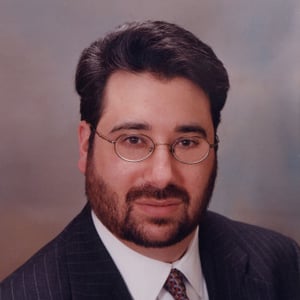
President, Phoenix Center for Advanced Legal and Economic Public Policy Studies
Lawrence J. Spiwak is President of the Phoenix Center for Advanced Legal & Economic Public Policy Studies, a non-profit 501(c)(3) organization that studies broad public-policy issues related to governance, social and economic conditions, with a particular emphasis on the law and economics of the digital age. Mr. Spiwak is a prolific scholar whose work is frequently cited by policymakers, major news media and academic journals around the world, and is in the top 1.3%of authors downloaded on the Social Science Research Network. Mr. Spiwak currently serves as the co-chair of the Federal Communications Bar Association’s (FCBA) committee responsible for overseeing the FEDERAL COMMUNICATIONS LAW JOURNAL and is a member of the program committee of the Telecommunications Policy Research Conference (“TPRC”). Mr. Spiwak is also the recipient of the FCBA’s Distinguished Service Award. Prior to joining the Phoenix Center, Mr. Spiwak was a Senior Attorney with the Competition Division in the FCC’s Office of General Counsel from 1994-1998. While in college, Mr. Spiwak was accepted into the Presidential Stay-In School program where he was responsible for delivering classified and confidential material among senior White House and Reagan Administration officials and received a full FBI security clearance. Mr. Spiwak received his B.A. with Special Honors from the George Washington University and his J.D. from the Benjamin N. Cardozo School of Law. Mr. Spiwak is a member in good standing of the bars of New York, Massachusetts, the District of Columbia, and the U.S. Court of Appeals for the D.C. Circuit.
Professor of Law, Georgetown University Law Center
Sheryll Cashin, Professor of Law at Georgetown University, teaches Administrative Law, Constitutional Law, and Race and American Law among other subjects. She writes about race relations, government and inequality in America. Her new book, Place Not Race: A New Vision of Opportunity in America (Beacon Press, 2014), argues that affirmative action as currently practiced does little to help disadvantaged people and offers a new framework for true inclusion. Her book, The Failures of Integration (PublicAffairs, 2004) was an Editors' Choice in the New York Times Book Review. Cashin is also a two-time nominee for the Hurston/Wright Legacy Award for non-fiction (2005 and 2009). She has published widely in academic journals and written commentaries for several periodicals, including the L.A. Times, Washington Post, and Education Week.
Professor Cashin is an active member of the Poverty and Race Research Action Council (PRRAC) and Building ONE America, an emerging national network of state and regional coalitions promoting sustainable growth and social inclusion. She worked in the Clinton White House as an advisor on urban and economic policy, particularly concerning community development in inner-city neighborhoods. She was law clerk to U.S. Supreme Court Justice Thurgood Marshall and Judge Abner Mikva of the U.S. Court of Appeals for the District of Columbia Circuit. She graduated summa cum laude from Vanderbilt University with a bachelor's degree in electrical engineering. As a Marshall Scholar, she went on to receive a masters in English Law with honors from Oxford University and a J.D. with honors from Harvard Law School where she was a member of the Harvard Law Review. Cashin was born and raised in Huntsville, Alabama, where her parents were political activists. She is married to Marque Chambliss and the mother of twin boys, Logan and Langston.

Board Member, Center for Equal Opportunity
Roger Clegg is a Board Member at and former President and General Counsel of the Center for Equal Opportunity. He focuses on legal issues arising from civil rights laws--including the regulatory impact on business and the problems in higher education created by affirmative action. A former Deputy Assistant Attorney General in the Reagan and Bush administrations, Clegg held the second highest positions in both the Civil Rights Division (1987-91) and in the Environment and Natural Resources Division (1991-93). He has held several other positions at the U.S. Justice Department, including Assistant to the Solicitor General (1985-87), Associate Deputy Attorney General (1984-85), and Acting Assistant Attorney General in the Office of Legal Policy (1984). Clegg is a graduate of Yale University Law School (1981).
United States Court of Appeals, Fourth Circuit
James Harvie Wilkinson III is an Article III federal judge on the United States Court of Appeals for the Fourth Circuit. He joined the Court in 1984 after being nominated by President Ronald Reagan.
Born in New York City, New York, Wilkinson graduated from Yale University with his Bachelor's degree in 1967. Wilkinson served in the United States Army from 1968 to 1969 and received his Juris Doctor degree from the University of Virginia School of Law in 1972.
On the recommendation of Virginia U.S. Senator John Warner, Wilkinson was nominated to the United States Court of Appeals for the Fourth Circuit by President Ronald Reagan on January 30, 1984 to a seat vacated by John Butzner, Jr.,. Wilkinson was confirmed by the Senate on August 9, 1984 on a Senate vote and received commission on August 13, 1984. Wilkinson served as the Chief Judge of the Court from 1996 to 2003.
Director, Project for International Religious Liberty, Hudson Institute
Michael J. Horowitz is director of Hudson Institute's Project for Civil Justice Reform and Project for International Religious Liberty. He served as general counsel for the Office of Management and Budget (OMB) under the Reagan Administration, and has taught law at the University of Mississippi and Georgetown. He has also practiced private law as a partner at national law firms. Horowitz joined Hudson Institute as a Senior Fellow where he has put together left-right coalitions on a wide variety of foreign and domestic issues. He has written frequently and is regularly called to testify and consult with Congress.
Shareholder, Greenberg Traurig LLP
Troy A. Eid focuses his litigation, mediation and transactional practice on government enforcement, investigations and compliance, environmental law, energy and natural resource development, and Federal Indian law and Native American and Alaska Native tribal law. Troy is a trusted advocate and mediator in the Rocky Mountain West and in federal, state and tribal trial and appellate courtrooms across the country.

Panel I: Recent Developments on Parental Rights
Luke Berg, Thomas M. Fisher, Emilie Kao, Matthew W. McFarland
Anxiety regarding parental rights in American healthcare and education is at an all time high. ...
Did the Law Cause Columbine? [Archive Collection]
Ann Beeson, Troy A. Eid, Michael J. Horowitz, William F. Kilpatrick, George Nicholson, James Rapp, J. Harvie Wilkinson
On August 13, 1999, the Federalist Society's Criminal Law & Procedure Practice Group sponsored a...
Panel Three: School Choice: The Next Civil Rights Crusade? [Archive Collection]
Clint Bolick, Ted Cruz, Jennifer A. Grossman, Michael Meyers, Joseph Viteritti
On March 26, 1999, the Federalist Society co-sponsored the Stranahan National Issues Forum with the...
Do We Need to Rethink Antitrust for Big Tech?
Roger P. Alford, Jay Himes, Salil Mehra, Christopher S. Yoo
On March 4, 2020, the Regulatory Transparency Project sponsored a symposium with the University of...
The Role of Economic Liberty in the United States
Michelle P. Connolly, Clark Neily, Maureen K. Ohlhausen, Dean Reuter, Lawrence J. Spiwak
The Federalist Society hosted a lunch and discussion on the role of Economic Liberty in...
Place, Not Race: A New Vision of Opportunity in America - Podcast
Sheryll D. Cashin, Roger B. Clegg
Race-based affirmative action had been declining as a factor in university admissions even before the...
Did the Law Cause Columbine?
George Nicholson, Ann Beeson, William F. Kilpatrick, J. Harvie Wilkinson, Michael J. Horowitz, James Rapp, Troy A. Eid
APPEARANCES:JUDGE GEORGE NICHOLSON (Court of Appeals, State of California)PANELISTS:MR. TROY EID (Discussion Leader) (Chief Counsel...