

Partner, Sullivan & Cromwell LLP
Andrei Iancu is a partner at Sullivan & Cromwell and one of the leading voices in intellectual property law and innovation policy. He is a former Undersecretary of Commerce for Intellectual Property and Director of the U.S. Patent and Trademark Office (USPTO), a position to which he was confirmed unanimously by the Senate. Andrei has decades of experience representing plaintiffs and defendants in IP matters across the technical and scientific spectra, including medical devices, genetic testing, therapeutics, the Internet, telephony, TV broadcasting, video game systems and computer peripherals. He represents clients in litigation and trials before the district courts, the U.S. International Trade Commission and the USPTO, the Federal Circuit and U.S. Supreme Court, and also counsels clients on obtaining, licensing, enforcing and defending against IP rights globally.
Executive Director, High Tech Inventors Alliance
David W. Jones is the Executive Director of the High Tech Inventors Alliance. Prior to HTIA, David was Assistant General Counsel for Patent Policy at Microsoft, where he spent more than a decade handling both domestic and international patent issues. He previously held multiple positions on Capitol Hill, most recently as antitrust and IP counsel to Senator Orrin Hatch on the Senate Judiciary Committee. David clerked for Chief Judge Sharon Prost on the Federal Circuit and Judge Will Garwood on the Fifth Circuit and is a graduate of the University of Virginia School of Law.
Principal, Clear IP, LLC
Joseph Matal is the Principal at Clear IP, LLC.
Joe has served as both the U.S. Patent and Trademark’s Acting Director and Acting Solicitor. As Acting Solicitor, he defended the agency in intellectual property cases before the U.S. Court of Appeals for the Federal Circuit and U.S. Supreme Court. In his role in the Solicitor’s Office, he participated in briefing almost every major case involving PTAB trials that has come before the Federal Circuit, including cases that have defined the Board’s powers and the evidence that it may consider, the content of final decisions, and the burdens and scope of motions to amend. Recent cases include Uniloc v. Hulu, Thryv v. Click-to-Call, and Aqua Products v. Matal. Previously, Joe served in senior legal roles for more than a decade for the U.S. Senate Judiciary Committee. In that capacity, he negotiated and drafted many of the key provisions of the America Invents Act.
In his roles at the USPTO, Joe briefed and argued numerous appeals of patent and trademark decisions before the Federal Circuit; oversaw the management of the USPTO and its 13,000 employees; and advised the U.S. Solicitor General’s Office in key IP cases before the Supreme Court.
Dinsmore & Shohl LLP, Partner
Brian is chair of Dinsmore’s IP Transactions and Licensing Group. He is a past president of the Licensing Executives Society (USA and Canada), Inc. (LES), the leading professional society devoted to commercial transactions and licensing of intangible property. He continues to serve LES as senior vice president for public policy. He has extensive experience in a wide variety of commercial transactions involving intangible property, and is known for creative licensing strategies to promote collaboration and resolve IP-related disputes.
He is a registered patent attorney with more than 30 years of experience before the U.S. Patent and Trademark Office and in structuring global IP portfolios and strategies. He has extensive experience in contested proceedings before the USPTO Patent Trial and Appeal Board (interferences, Inter Partes Reviews and Post Grant Reviews), as well as contested matters in federal courts and the International Trade Commission. His wide-ranging experience affords a broad, informed perspective and facilitates creative approaches to intellectual property management, licensing, and enforcement.
In addition to his leadership of LES, Brian served on the LES Board of Directors 2007 – 2018. In his ongoing role as senior vice president for public policy he is responsible for coordinating the society’s public policy positions, amicus briefs, and congressional outreach. He works with legislators, the executive branch, and the courts toward consistent, reliable, and prudent IP laws and policies that advance innovation and economic development. He has also served LES as trustee for education, and has long served as an author, editor, and faculty member of LES educational programs focusing on best practices in IP licensing.
He is also active in the global society, LES International (LESI). Among his various roles in LESI, he has served as co-chair of the External Relations Committee, coordinating public policy and advocacy for effective IP laws and policies among the 33 regional LES societies, and with various non-governmental organizations such as WIPO and EPO. In 2019, he received the LES International President’s Service Recognition Award.
Brian also serves as Chair of the Board of Directors of the Bayh Dole Coalition, a 501(c)(4) corporation dedicated to promoting and preserving the Bayh Dole Act. He is a member of the Founding Board of Directors of the United States Intellectual Property Alliance (USIPA), an organization dedicated to raising public awareness of, and appreciation for, the role of IP in fostering innovation for the public good; and he has served on the DC Bar Intellectual Property Section Steering Committee (2013 – 2016).
In 2016, Brian testified before the U.S. Senate Committee on Small Business and Entrepreneurship on the effects of the America Invents Act on small business and entrepreneurs in a hearing entitled “An Examination of Changes to the U.S. Patent System & Impacts on America's Small Businesses.”
With his longstanding and diverse patent practice, in both private practice and in-house, Brian advises corporate leaders and entrepreneurs in effective IP procurement practices, and in maximizing value from IP assets. He has been retained as a testifying witness in IP and licensing disputes by the U.S. Department of Justice, the U.S. Department of the Treasury, and by various private enterprises.
Brian has been acknowledged by IAM magazine as among its “IAM Strategy 300”, the world’s leading IP strategists, and among “The World's Leading Patent and Technology Licensing Lawyers.”
He earned B.S. and M.S. degrees from the Department of Chemistry, Rochester Institute of Technology, Rochester, NY; and Juris Doctor from Syracuse University, College of Law, Syracuse, NY (1986).
Brian has served his alma mater as president of the RIT Alumni Association 2005 – 2009; and now serves on the RIT Board of Trustees as a member of its Executive Committee, chair of its Student Life Committee, and vice-chair of its Committee on Trustees. In 2013, Brian was awarded RIT’s Outstanding Alumnus Award, and in 2005 he was awarded the Distinguished Alumnus Award by RIT’s College of Science.
Partner, Patrick Doerr
Mr. Rando has represented clients in matters involving computer hardware and software, silicon chip manufacturing, biotechnology, medical devices, pharmaceuticals, chemical compounds, food additives, alternative energy, AI, autonomous vehicles, blockchain, consumer electronics, communications, internet, and e-commerce. He has appeared in courts across the country, including the Southern and Eastern Districts of New York and multiple U.S. Courts of Appeals.
As appellate counsel, Mr. Rando has served as counsel of record or co-counsel in more than 30 amicus briefs filed before the U.S. Supreme Court and Federal Circuit on issues of patent law, statutory interpretation, separation of powers, and constitutional law. Noteworthy filings include eBay Inc. v. MercExchange (2006), Oil States v. Greene’s Energy (2017), American Axle v. Neapco (2021), Amgen v. Sanofi (2023), and Cellect v. Vidal (2024).
Mr. Rando is a Fellow of the Academy of Court-Appointed Masters, having served by judicial appointment as Special Master in numerous complex patent cases, including multi-day Markman hearings and post-discovery proceedings. He also serves as a court-appointed Mediator and Neutral in both patent and commercial disputes.
He has played an active role in judicial and legislative engagement. Mr. Rando co-developed and conducted lecture series for the SDNY and EDNY Patent Pilot Program Judges and Clerks, covering the America Invents Act and Section 101 eligibility post-Alice and Mayo. He represented both the Federal Bar Association (FBA) and New York Intellectual Property Law Association (NYIPLA) at the Tillis/Coons Section 101 Patent Reform Roundtable, and submitted written testimony to the U.S. Senate Judiciary Committee in 2019.
Mr. Rando is a former president of the NYIPLA (2023–2024) and has held nearly every leadership position in the organization. He also served as Chair of the FBA’s Intellectual Property Law Section and was a founding member and president of the FBA’s EDNY Chapter. He is a founding member of the Association of Amicus Counsel, and an active contributor to the Federalist Society IP Practice Group Executive Committee.
He frequently lectures at CLE programs, universities, and legal associations on IP, constitutional law, and appellate advocacy. He has been quoted extensively in publications such as Law360, Bloomberg Law, WIPR, and National Law Journal. His scholarly publications include articles in The Federal Lawyer, Touro Law Review, and IPWatchdog.

Partner, Jackson Walker
Arthur offers clients a winning combination of trial and appellate experience gained as a federal prosecutor and more than 20 years of experience in handling patent, copyright, trademark, and trade secrets litigation.
While his practice concentrates on intellectual property litigation, Arthur also has significant experience in internal investigations, False Claims Act suits, partnership and breach of fiduciary duty, breach of contract, and employment litigation. Arthur also has represented clients testifying before Congressional committees.
Arthur writes and speaks frequently on topics ranging from the case against Boston bomber Dzhokhar Tsarnaev to patent litigation reform.
Prior to joining Michael Best, Arthur served as an Assistant United States Attorney in the Southern District of New York, where he was the lead prosecutor in criminal trials, including federal intellectual property crimes. He also argued numerous appeals.
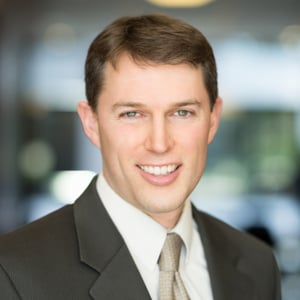
Partner, Knobbe Martens
Philip Nelson counsels clients in all stages of growth, from startups to established public companies. To jump-start young portfolios, Mr. Nelson pioneered use of special programs to cut through red tape for rapid patent allowance. For those wanting to preserve options at minimal cost, he has a tested protocol. He especially enjoys laying sophisticated patent minefields, protecting core assets with an eye to the future concept and product pipeline. No matter when he joins the team, he quickly grasps the technology and points to the best options to support the business.
Mr. Nelson builds value for investment and acquisition by working with company visionaries and scientists to describe and protect their ideas. Although the patent office likes to say “no,” he works through the objections, often speaking to patent examiners in person to negotiate for better claims. Collegial persistence and technical tutorials tend to persuade examiners, getting them to “yes.”
Mr. Nelson drafts and negotiates technology agreements and advises on big-picture strategy. When opposing diligence counsel is just pasting in a pat phrase from a template, he uses his experience from the trenches (prosecuting, negotiating, and litigating) to correct the meaning and serve his clients.
Mr. Nelson advises on contested matters, drafts litigation briefs, and works closely with litigator colleagues. He negotiates with his clients’ adversaries to avoid suit or improve litigation positions. When a competitor claimed to own his client’s invention in chemistry lab instruments, he won two patent office “interferences”—and a Federal Circuit appeal—to preserve his client’s ownership rights. He handles complex patent office trials such as interferences, derivations, and inter-partes reviews. He did reexaminations and inter-partes reexaminations back before they were cool (before the America Invents Act popularized Board proceedings).
His physics background and widely varied experience at a top intellectual property boutique for almost 20 years has created a sophisticated advocate for his clients. Mr. Nelson looks forward to helping you assess the field, build your defenses, close your deal, and rain fire on your IP problems and adversaries.
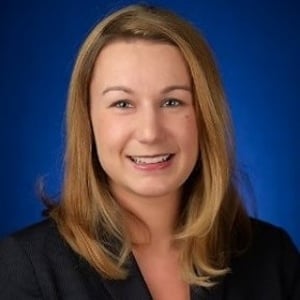
Chief Policy Officer and Counsel, The Council for Innovation Promotion
Jamie Simpson is Chief Policy Officer and Counsel for The Council for Innovation Promotion (c4IP), which is a bipartisan coalition dedicated to promoting strong and effective intellectual property rights that drive innovation, boost economic competitiveness, and improve lives everywhere.
Simpson has almost 20 years of experience in policy and a specific focus on IP-related issues. She previously served as Chief Counsel on the House Judiciary Subcommittee on Courts, IP, and the Internet; Counsel to the Senate Judiciary Committee while on detail from the U.S. Patent and Trademark Office; and Associate Solicitor at the USPTO.
A graduate of Harvard Law School and, previously, a law clerk at the United States Court of Appeals for the Federal Circuit, Simpson has extensive expertise in intellectual property law and policy, as well as an earlier background of working on patent litigation and licensing disputes.
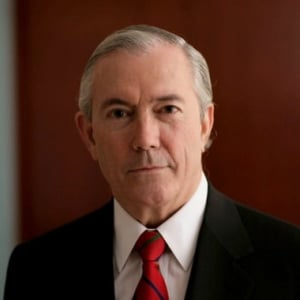
Founder and Owner, RPT Legal Strategies PC
Bob Taylor is the founder and owner of RPT Legal Strategies PC in San Francisco and Palo Alto, providing legal and business advice to companies and investors with respect to all aspects of intellectual property and related fields of endeavor. He also serves as a Venture Advisor to New Enterprise Associates and as a patent law expert for the National Venture Capital Association.
He is a Fellow of the American College of Trial Lawyers, a former chair of the Antitrust Section of American Bar Association, and a Lifetime Member of the American Law Institute.
Bob has written and lectured extensively on the business and legal problems associated with both intellectual property protection and the laws related to competition.
Bob holds a J.D degree from Georgetown University Law Center and was a member of the editorial board of the Georgetown Law Journal. He holds a B.S.E.E degree from the University of Arizona.
Partner, Jackson Walker
Arthur offers clients a winning combination of trial and appellate experience gained as a federal prosecutor and more than 20 years of experience in handling patent, copyright, trademark, and trade secrets litigation.
While his practice concentrates on intellectual property litigation, Arthur also has significant experience in internal investigations, False Claims Act suits, partnership and breach of fiduciary duty, breach of contract, and employment litigation. Arthur also has represented clients testifying before Congressional committees.
Arthur writes and speaks frequently on topics ranging from the case against Boston bomber Dzhokhar Tsarnaev to patent litigation reform.
Prior to joining Michael Best, Arthur served as an Assistant United States Attorney in the Southern District of New York, where he was the lead prosecutor in criminal trials, including federal intellectual property crimes. He also argued numerous appeals.
Partner, Knobbe Martens
Philip Nelson counsels clients in all stages of growth, from startups to established public companies. To jump-start young portfolios, Mr. Nelson pioneered use of special programs to cut through red tape for rapid patent allowance. For those wanting to preserve options at minimal cost, he has a tested protocol. He especially enjoys laying sophisticated patent minefields, protecting core assets with an eye to the future concept and product pipeline. No matter when he joins the team, he quickly grasps the technology and points to the best options to support the business.
Mr. Nelson builds value for investment and acquisition by working with company visionaries and scientists to describe and protect their ideas. Although the patent office likes to say “no,” he works through the objections, often speaking to patent examiners in person to negotiate for better claims. Collegial persistence and technical tutorials tend to persuade examiners, getting them to “yes.”
Mr. Nelson drafts and negotiates technology agreements and advises on big-picture strategy. When opposing diligence counsel is just pasting in a pat phrase from a template, he uses his experience from the trenches (prosecuting, negotiating, and litigating) to correct the meaning and serve his clients.
Mr. Nelson advises on contested matters, drafts litigation briefs, and works closely with litigator colleagues. He negotiates with his clients’ adversaries to avoid suit or improve litigation positions. When a competitor claimed to own his client’s invention in chemistry lab instruments, he won two patent office “interferences”—and a Federal Circuit appeal—to preserve his client’s ownership rights. He handles complex patent office trials such as interferences, derivations, and inter-partes reviews. He did reexaminations and inter-partes reexaminations back before they were cool (before the America Invents Act popularized Board proceedings).
His physics background and widely varied experience at a top intellectual property boutique for almost 20 years has created a sophisticated advocate for his clients. Mr. Nelson looks forward to helping you assess the field, build your defenses, close your deal, and rain fire on your IP problems and adversaries.
Chief Policy Officer and Counsel, The Council for Innovation Promotion
Jamie Simpson is Chief Policy Officer and Counsel for The Council for Innovation Promotion (c4IP), which is a bipartisan coalition dedicated to promoting strong and effective intellectual property rights that drive innovation, boost economic competitiveness, and improve lives everywhere.
Simpson has almost 20 years of experience in policy and a specific focus on IP-related issues. She previously served as Chief Counsel on the House Judiciary Subcommittee on Courts, IP, and the Internet; Counsel to the Senate Judiciary Committee while on detail from the U.S. Patent and Trademark Office; and Associate Solicitor at the USPTO.
A graduate of Harvard Law School and, previously, a law clerk at the United States Court of Appeals for the Federal Circuit, Simpson has extensive expertise in intellectual property law and policy, as well as an earlier background of working on patent litigation and licensing disputes.
Founder and Owner, RPT Legal Strategies PC
Bob Taylor is the founder and owner of RPT Legal Strategies PC in San Francisco and Palo Alto, providing legal and business advice to companies and investors with respect to all aspects of intellectual property and related fields of endeavor. He also serves as a Venture Advisor to New Enterprise Associates and as a patent law expert for the National Venture Capital Association.
He is a Fellow of the American College of Trial Lawyers, a former chair of the Antitrust Section of American Bar Association, and a Lifetime Member of the American Law Institute.
Bob has written and lectured extensively on the business and legal problems associated with both intellectual property protection and the laws related to competition.
Bob holds a J.D degree from Georgetown University Law Center and was a member of the editorial board of the Georgetown Law Journal. He holds a B.S.E.E degree from the University of Arizona.
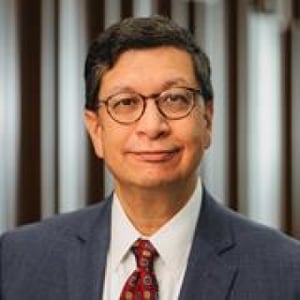
James T. Jensen Endowed Professor for Transactional Law & Director of the Program on Intellectual Property and Technology Law, University of Utah S.J. Quinney College of Law
Jorge L. Contreras is a Distinguished University Professor, the James T. Jensen Endowed Professor for Transactional Law and Director of the Program on Intellectual Property and Technology Law. He teaches and researches in the areas of intellectual property, property law, technical standardization, antitrust and science policy. In 2020 he received the University of Utah's Distinguished Research Award and is an elected member of the American Law Institute. He has testified before the U.S. Senate and House Subcommittees on Intellectual Property, and was awarded the Rossman Memorial Award by the Patent & Trademark Office Society in 2022.
Professor Contreras has written or edited fourteen books and published more than 150 scholarly articles and chapters. His book, The Genome Defense: Inside the Epic Legal Battle to Determine Who Owns Your DNA (NY: Hachette/Algonquin, 2021), has been praised by the NY Times, Wall St. Journal, Nature and numerous other outlets, and was named "Best Patent Law Book of the Year" by the international IPKat blog. His scholarly articles have appeared in leading scientific, legal and policy journals including Science, Nature, NYU Law Review, Georgetown Law Journal, Iowa Law Review and Antitrust Law Journal. He has been quoted by media outlets around the world including the New York Times, Wall Street Journal, Economist, Bloomberg, Washington Post, Korea Times and has been featured on C-SPAN, NPR, PRI and BBC shows and a range of podcasts and online news programs.
Professor Contreras currently serves Co-Chair of the Interdisciplinary Division of the ABA's Section of Science & Technology Law and a member of the Advisory Board of the American Antitrust Institute. He has previously served as Co-Chair of the National Conference of Lawyers and Scientists, a member of the National Academy of Sciences (NAS) Committee on Intellectual Property Management in Standard-Setting Processes, the National Institutes of Health (NIH) Council of Councils, the Advisory Council of NIH's National Center for the Advancement of Translational Sciences (NCATS), the National Advisory Council for Human Genome Research, and the Intellectual Property Rights Policy Committee of the American National Standards Institute (ANSI). In 2021 he served as Chair of the Art Law Section of the Association of American Law Schools (AALS) and currently serves as Chair of the AALS Remedies Section.
Professor Contreras has previously taught at American University Washington College of Law and Washington University in St. Louis. Prior to entering academia he was a partner at the international law firm Wilmer Cutler Pickering Hale and Dorr LLP, where he practiced transactional and intellectual property law in Boston, London and Washington DC. He is a cum laude graduate of Harvard Law School (JD) and Rice University (BA, BSEE) and clerked for Chief Justice Thomas R. Philips of the Texas Supreme Court.

Professor of Law, Antonin Scalia Law School, George Mason University
Adam Mossoff is Professor of Law at Antonin Scalia Law School, George Mason University. He has published extensively on why patents, copyrights, and other intellectual property rights have been—and should be—legally secured to innovators and creators as property rights. His scholarship has been relied on by the United States Supreme Court, by lower federal courts, and by U.S. federal agencies. He has been invited to testify numerous times before the U.S. Senate and the House of Representatives on intellectual property legislation. His writings on intellectual property policy have also appeared in the Wall Street Journal, New York Times, Forbes, Investors Business Daily, and in other media outlets. His journal articles can be downloaded here.
Professor Mossoff is a longstanding member of the Executive Committee of the Intellectual Property Practice Group of the Federalist Society, on which he served as Chairperson from 2016-2018, and he is Chair of the Intellectual Property Working Group of the Regulatory Transparency Project of the Federalist Society. He is a Senior Fellow and Chair of the Forum for Intellectual Property at the Hudson Institute, a Visiting Intellectual Property Fellow at the Heritage Foundation, and a member of the Board of Directors of the Center for Intellectual Property Understanding. He is a member of the Intellectual Property Rights Policy Committee of ANSI and he has served as Chair and Vice-Chair of the Intellectual Property Committee of the IEEE-USA, on which he remains a member in good standing.

Founder and Principal Solicitor, Opie International Technology Lawyers
Elisabeth Opie BA LLB(Hons) LLM GAICD has almost 20 years’ international experience in the global innovation system. Holding senior legal and executive positions, Elisabeth has worked with industry, spin-offs, research organisations and government. She has extensive experience in international business transactions, policy advice, negotiation and alternative dispute resolution. Her legal and executive experience has been developed across sectors such as IT, automotive, aerospace, health and energy. Elisabeth has experience in both non-contentious and contentious matters.
Elisabeth has received a number of awards in the field of international science and technology, including Business and Strategy Excellence Awards, and was the inaugural Global Research Alliance Fellow. She has appeared in the IAM Strategy 300 Global Leaders since 2020 and the IAM Patent 1000 since 2019.
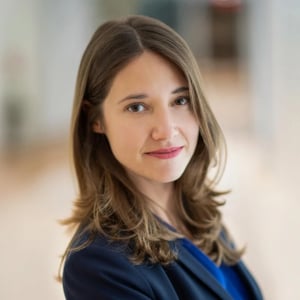
Senior Fellow, Hudson Institute
Urška Petrovčič is a senior fellow at Hudson Institute and director of economic strategy at Qualcomm. Her work focuses on antitrust and intellectual property.
Since 2017, Dr. Petrovčič has acted as the European Commission’s non-governmental adviser for the Unilateral Conduct Working Group of the International Competition Network. She has been a visiting scholar at the University of California, Berkeley and the University of Oslo. She was chosen as the inaugural scholar of the American Bar Association’s International Scholar-in-Residence Program, which enabled her to conduct research in cooperation with the Office of Policy Planning of the US Federal Trade Commission on antitrust enforcement concerning SEPs.
Dr. Petrovčič previously worked in the Brussels office of the law firm Skadden, Arps, Slate, Meagher & Flom LLP and was a stagiaire at the Directorate-General for Competition of the European Commission.
Her publications on the enforcement of standard-essential patents (SEPs) include a book, Competition Law and Standard Essential Patents: A Transatlantic Perspective (Wolters Kluwer 2014), and articles in the Common Market Law Review and other journals.
She holds a BA in law from the University of Ljubljana, a master of law and economics from Erasmus University Rotterdam, and an LLM and a PhD in law from the European University Institute.

Professor of Law, Northwestern University Pritzker School of Law
Joshua Kleinfeld teaches and writes about political, legal, and moral philosophy, criminal law, and criminal procedure. He also practices law in Northwestern's Juvenile Criminal Defense Clinic. He is a full professor with tenure at the Northwestern Pritzker School of the Law and (by courtesy) in Northwestern’s philosophy department. In 2017-18, he was a visiting professor at Harvard and Stanford Law Schools. He is the recipient of the Bator Award, given annually to one American law professor under the age of 40 who has demonstrated "excellence in legal scholarship, a commitment to teaching, a concern for students, and who has made a significant public impact."
In philosophy, Kleinfeld's research focuses on the idea of "embodied ethical life," as developed in the socio-theoretic tradition of Hegel, Weber, and Durkheim. This tradition aims to understand and critique social life by bringing to light the normative ideas implicit in social practices and institutions. In law, this means that the most interesting philosophical concepts are often those reflected or actualized in legal practice – in the law as judges and lawyers think of it and wield it.
In criminal law and procedure, Kleinfeld has developed a theory known as "reconstructivism," which holds that the chief office of criminal law is not to dole out retributive justice, nor to optimize crime and cost control, but to reconstruct a violated normative order in the wake of a crime. This work, which draws on the thought of Hegel, Durkheim, Jean Hampton, and Antony Duff, develops an alternative to retributive and utilitarian theories of criminal law by focusing on the distinctive social function and sense of justice at work in the criminal system.
Kleinfeld is also involved in practical criminal justice reform. In this vein, he defends children accused of homicide in the Northwestern Juvenile Criminal Defense clinic and assists in litigation efforts meant to reform American criminal law through the courts. He has also developed a view of criminal justice reform known as "democratization," which holds that the root of the American criminal justice crisis is a set of bureaucratic attitudes, structures, and incentives divorced from the American public’s concerns and sense of justice, and that the primary solution is to make criminal justice more community-focused and responsive to lay influences. Working with others, he has developed a number of policy proposals meant to reform American criminal justice in a democratic direction.
Kleinfeld holds a JD from Yale Law School, a PhD in philosophy from the Goethe University of Frankfurt (supervised by Axel Honneth, Klaus Günther, and Rainer Forst), and a BA in philosophy from Yale College. He clerked for Judge J. Harvie Wilkinson on the United States Court of Appeals for the Fourth Circuit; Judge Janice Rogers Brown on the United States Court of Appeals for the D.C. Circuit; and President (chief justice) Aharon Barak of the Supreme Court of Israel. He worked as an Associate at Debevoise & Plimpton LLP in Frankfurt, Germany, in the area of corporate criminal law. Before law school, he worked as a Senior Research Analyst at the White House’s Council on Bioethics.

Director of Research, American Economic Liberties Project
Matt Stoller is a public intellectual who writes about the American anti-monopoly
tradition. He is the author of the Simon and Schuster book Goliath: The Hundred Year
War Between Monopoly Power and Democracy. Stoller is the Director of Research at
the American Economic Liberties Project. He publishes an email newsletter called BIG.
Stoller is a former policy advisor to the Senate Budget Committee, and worked in the House of Representatives on the Dodd–Frank Wall Street Reform Act.
He has lectured on competition policy and media at Columbia University, Harvard Law, Duke Law, Bertelsmann Foundation, Vrije Universiteit Brussel, West Point and the National Communications Commission of Taiwan. His writing has appeared in the Washington Post, the New York Times, Fast Company, Foreign Policy, the Guardian, Vice, The American Conservative, and the Baffler.
He has also produced for MSNBC and starred in a short-lived television show on FX called Brand X with Russell Brand.
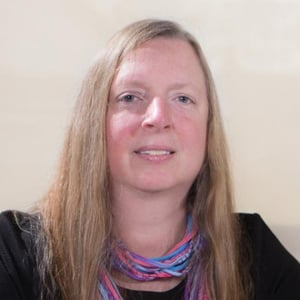
Professor, UNH Franklin Pierce School of Law
Ann Bartow joined the UNH Franklin Pierce School of Law in 2015. She previously held tenured faculty appointments at Pace Law School and the University of South Carolina School of Law. During the 2011-2012 academic year, Professor Bartow was a Fulbright Scholar at Tongji University in Shanghai, China. She teaches Copyright Law, Trademark Law, Survey of Intellectual Property Law, Art Law and Torts. She is a graduate of Cornell University and the University of Pennsylvania Law School. Her scholarship focuses on the intersection between intellectual property laws and public policy concerns, privacy and technology law, and feminist legal theory, and she has published numerous articles and book chapters on these subjects.
Professor Bartow has served as chair and a past advisory board member of the American Association of Law Schools Executive Committee of the Defamation and Privacy Section, and also a past chair and past advisory board member the Intellectual Property Law Section. She is also a member of the Advisory Board of the Electronic Privacy Information Center (EPIC), and also a member of the American Law Institute.
Prior to entering the academy in 1995, Professor Bartow practiced law at McCutchen, Doyle, Brown & Enersen (later known as Bingham McCutchen LLP and now merged with Morgan, Lewis & Bockius) in San Francisco. She began her teaching career as an Honorable Abraham L. Freedman Teaching Fellow at Temple University School of Law, where she also received an LL.M. in Legal Education and later served as a visiting professor. Professor Bartow has also taught as a visitor at the University of Florida School of Law, American University Washington College of Law, the University of Dayton School of Law and the University of Idaho College of Law.
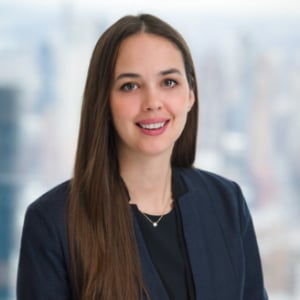
Associate, McKool Smith PC
Eliza Beeney is an Associate in McKool Smith’s New York office. She focuses her practice on intellectual property litigation, including patents, copyrights, and trademarks. Prior to joining the firm, Eliza clerked for the Honorable Margo K. Brodie of the U.S. District Court for the Eastern District of New York where she assisted in civil and criminal matters in all stages of litigation, including trial. Prior to her clerkship, Eliza was a litigation associate at Davis Polk & Wardwell.
Eliza attended Cornell Law School where she was an editor for the Cornell Law Review, Executive Vice Chancellor of the Moot Court Board and a member of the Cornell Women’s Law Coalition. She also worked in Cornell’s Capital Punishment Clinic and authored a note selected for publication in the Law Review.
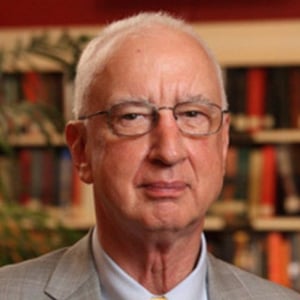
Former Chief Judge, United States Court of Appeals for the Federal Circuit
Judge Michel served for more than 22 years on the Federal Circuit, retiring on May 31, 2010. From December 25, 2004 until his retirement, he also discharged the duties of Chief Judge of this national court, serving simultaneously on the U.S. Judicial Conference -- the Judiciary's governing body -- and by appointment of the Chief Justice on its seven-judge Executive Committee.
He judged several thousand appeals and authored more than 800 opinions, one third concerning intellectual property law. Intellectual Asset Management magazine inducted him into its Hall of Fame and he was designated one of the 50 most influential leaders in intellectual property law in the world. His contributions were also recognized by lifetime achievement and similar awards by the American Intellectual Property Law Association (AIPLA); Intellectual Property Owners Education Foundation (IPO); the American Bar Association's Intellectual Property Section; Managing Intellectual Property magazine; the Sedona Conference; the Patent and Trademark Office Society (PTOS); the New York, Chicago, Philadelphia, and Los Angeles Intellectual Property Law Associations; and the William C. Connor, the Giles S. Rich, and the Richard Linn Intellectual Property American Inns of Court. In 2010 the Los Angeles IP Inn was renamed in his honor as the Paul R. Michel IP Inn.
Judge Michel received the Jefferson Medal, the Eli Whitney Award, and the Katz-Kiley Prize as well as Honorary Doctor of Law degrees from the Catholic University of America and the John Marshall Law School. He is a lifetime Member of Honore of FICPI, the international association of private practitioners of intellectual property law. Williams College granted him the Kellogg Award for "outstanding leadership in law and public service."
Judge Michel has written numerous articles on patent law and advocacy, taught related courses and master classes at George Washington University, the University of Akron, and John Marshall law schools, serving as well on their IP advisory boards and on counterpart boards at the universities of California (Berkley), Washington, and Maryland. He co-authored a casebook, Patent Litigation and Strategy (West, 1999) and an August 2010 editorial in the New York Times on strengthening the patent system to promote prosperity and create new jobs.
A frequent speaker at conferences and law schools during his judicial tenure and since, he retired from a lifetime appointment to be free to speak out on the national need for better patent policy and protection of intellectual property and the vital, unmet resource needs of the courts, the PTO, the International Trade Commission, and other IP-related agencies. He was appointed Distinguished Scholar in Residence by IPO, following his retirement. Judge Michel also consults for law firms and their clients in intellectual property litigations, conducting moot courts, mock trials, case evaluations, editing briefs, advising on strategy and providing mediation and arbitration services.
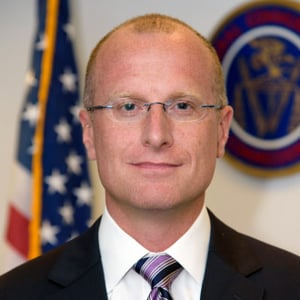
Chairman, Federal Communications Commission
Brendan Carr is the Chairman of the Federal Communications Commission. He previously served as the senior Republican Commissioner and as the FCC’s General Counsel. Nominated by both President Trump and President Biden, Carr has been confirmed unanimously by the Senate three times.
Described by Axios as “the FCC’s 5G crusader,” Carr has led the FCC’s work to modernize its infrastructure rules and accelerate the buildout of high-speed networks. His reforms cut billions of dollars in red tape, enabled the private sector to construct high-speed networks in communities across the country, and extended America’s global leadership in 5G.
Chairman Carr is also focused on expanding America’s skilled workforce—the tower climbers and construction crews needed to build next-gen networks. His jobs initiative promotes community colleges and apprenticeships as a pipeline for good-paying 5G jobs. He is recognizing America’s talented tower crews through a series of “5G Ready” Hard Hat presentations.
Chairman Carr leads a groundbreaking telehealth initiative at the FCC. The Connected Care Pilot Program supports the delivery of high-quality care to low-income Americans and veterans.
Chairman Carr’s time outside of Washington helps inform his approach to the job. He regularly hits the road to hear directly from community members and learn how changes in federal policies could help improve their lives.
Chairman Carr brings nearly 20 years of private and public sector experience in communications and tech policy to his position. Before joining the FCC as a staffer back in 2012, he worked as an attorney at Wiley Rein LLP in the firm’s appellate, litigation, and telecom practices. Previously, Chairman Carr clerked on the U.S. Court of Appeals for the Fourth Circuit for Judge Dennis Shedd. After attending Georgetown University for his undergrad, Chairman Carr earned his J.D. magna cum laude from the Catholic University of America’s Columbus School of Law where he served as an editor of the Catholic University Law Review.
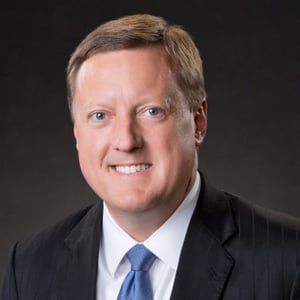
Senator and Chairman, Indiana Senate Utilities Committee, Indiana State Senate
An 8th generation Hoosier, Eric grew up on a grain and livestock farm, where he learned the value of hard work and experienced the risk and rewards of the commodity markets.
He earned a Bachelor’s Degree from Georgetown University and worked on President Ronald Reagan’s re-election campaign in the Office of Political Affairs at the Reagan-Bush ’84 Committee.
While earning his Juris Doctorate at the Indiana University School of Law, he clerked at the Bloomington law firm of McDonald, Barrett & Dakich.
He has been engaged in the private practice of law with offices in Bloomington since 1989 and Bedford since 2003. He is a member of the Monroe and Lawrence County Bar Associations, the Indiana State Bar Association, the Million Dollar Advocates Forum, the Multi-Million Dollar Advocates Forum, and founded and served as the first President of the Indiana Creditors Bar Association.
In 2002, he was elected to the Indiana House of Representatives, where he served until being elected to the Indiana State Senate in 2016. His legislative service has been recognized by, among others, the Indiana Judges Association (Champion of Justice Award), the Indiana Trial Lawyers Association (Legislator of the Year 2008 and 2015), the Indiana Pro Bono Commission (Randall T. Shepard Award), Kentucky Governor Ernie Fletcher (Kentucky Colonel), and Indiana Governor Mike Pence (Sagamore of the Wabash).
He currently serves as Chairman of the Senate Utilities Committee, Ranking Member of the Senate Judiciary and Commerce & Technology Committees, and as a member of the Senate Corrections & Criminal Law, Elections, and Family & Children Committees.
A nationally-recognized leader in energy policy, he serves as co-chairman of the Energy Supply Task Force of the National Conference of State Legislatures, as a member of the Executive Committee of the National Council on Electricity Policy, and holds a graduate certificate in Energy Policy Planning from the University of Idaho. He also serves as a member of the Federal Communication Commission Consumer Advisory Committee. He focuses on energy, telecommunications, and water policy interactions in Indiana and nationally.
He has served as a member of the Indiana Commission on Courts (2007—2011), the Indiana Probate Code Study Commission (2005—2007, 2013—2014, 2019—present), the Indiana Military Base Planning Council (2005—2019), the Board of Trustees of the Indiana Criminal Justice Institute (2006—2011), and the Indiana Public Defender Commission (2017—present). He represents Indiana as a Commissioner on The National Conference of Commissioners on Uniform State Laws (2018—present). As a member of the Indiana Supreme Court's Commercial Courts Committee (2019—present), he provides guidance to Indiana's Commercial Courts. He was appointed by the Indiana Supreme Court to serve on its Innovation Initiative (2019—present) to advise the Supreme Court on opportunities to increase efficiency and accessibility through innovative technology and case management, analysis of court reform, and development and testing of pilot programs related to court reform.
Eric frequently serves as a faculty member teaching continuing legal education courses, including for the Indiana State Bar Association and the Indiana Continuing Legal Education Forum. He enjoys teaching lawyers about new developments in the law and sharing his insights into the legislative process.
He is a registered civil mediator, having earned a civil mediation certificate from the Indiana University McKinney School of Law, studying under ADR expert John Krauss. Eric enjoys using the combination of his mediation skills and litigation experience to help parties settle cases and resolve disputes.
Eric is frequently appointed by judges to serve as a court-appointed fiduciary with responsibilities such as a trustee, federal multidistrict litigation plaintiffs’ steering committee member, special administrator, and personal representative.
A licensed Indiana title insurance producer, he founded Indiana Title Insurance Company in 2015 and serves as its President. His business experience also includes real estate, as President of White River Properties, Inc.; agriculture, as a partner in Koch Farms; and healthcare, as a former board member and Chairman of the Board of Dunn Memorial Hospital and St. Vincent Dunn Hospital.
He is a member of the Boards of Directors of Mid-Southern Savings Bank, FSB and its holding company Mid-Southern Bancorp, Inc. (NASDAQ: MSVB).
His leadership in the non-profit sector has included service as a member of the Board of Governors of the Society of Indiana Pioneers, as a member of the Executive Board of the Hoosier Trails Council of the Boy Scouts of America, as a member of the Mitchell Urban Enterprise Association Board, and as a member of the Georgetown University Alumni Admissions Committee.
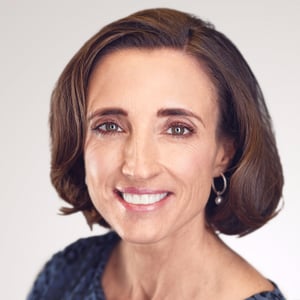
Senior Vice President, Strand Consult
Roslyn Layton, PhD is a leading international expert on technology policy. She is Senior Vice President of Strand Consult, an independent consultancy serving the global mobile telecom industry. She is also a Visiting Researcher at Aalborg University Copenhagen where she earned a doctoral thesis on network neutrality by measuring the outcome of the policy across 53 countries over 5 years. She served on the Presidential Transition Team for the Federal Communications Commission (FCC), and her work was critical to the FCC’s defense for the Restoring Internet Freedom Order. She has testified to the United States Senate and House on multiple topics including spectrum, broadband, mobile mergers, competition, and privacy. She founded the think tank China Tech Threat to study the problems of technology produced by the People’s Republic of China. She serves as the Program Chair for the Telecom Policy Research Conference, the leading interdisciplinary academic gathering. Her recent paper on rural broadband describes the empirical case for policy reform to recover network infrastructure costs from streaming video entertainment providers. She is a Senior Contributor to Forbes.

Judge, United States Court of Appeals, Second Circuit
Judge Menashi was appointed to the U.S. Court of Appeals for the Second Circuit on November 14, 2019. Previously, he served as special assistant and associate counsel to the President in the White House and as acting general counsel at the U.S. Department of Education. He was assistant professor of law at Scalia Law School, George Mason University, where he taught administrative law and civil procedure, and a research fellow at New York University School of Law and Georgetown University Law Center. He was also a partner at Kirkland & Ellis LLP in New York, where he practiced appellate and commercial litigation, and served as a law clerk to Justice Samuel Alito on the Supreme Court of the United States and to Judge Douglas Ginsburg on the U.S. Court of Appeals for the District of Columbia Circuit. He graduated from Stanford Law School, where he was elected to Order of the Coif and served as senior articles editor of the Stanford Law Review, and from Dartmouth College, where he was elected to Phi Beta Kappa.

Senior Fellow, R Street Institute
Prior to R Street, Adam spent 12 years as a senior fellow at the Mercatus Center at George Mason University. Before the Mercatus Center, he served as the president of the Progress and Freedom Foundation. Adam has also worked for the Adam Smith Institute, the Heritage Foundation and the Cato Institute.
Adam has published 10 books on a wide range of topics, including online child safety, internet governance, intellectual property, telecommunications policy, media regulation and federalism.
In 2008, Adam received the Family Online Safety Institute’s “Award for Outstanding Achievement.”
Partner, Jackson Walker
Arthur offers clients a winning combination of trial and appellate experience gained as a federal prosecutor and more than 20 years of experience in handling patent, copyright, trademark, and trade secrets litigation.
While his practice concentrates on intellectual property litigation, Arthur also has significant experience in internal investigations, False Claims Act suits, partnership and breach of fiduciary duty, breach of contract, and employment litigation. Arthur also has represented clients testifying before Congressional committees.
Arthur writes and speaks frequently on topics ranging from the case against Boston bomber Dzhokhar Tsarnaev to patent litigation reform.
Prior to joining Michael Best, Arthur served as an Assistant United States Attorney in the Southern District of New York, where he was the lead prosecutor in criminal trials, including federal intellectual property crimes. He also argued numerous appeals.
Partner, Knobbe Martens
Philip Nelson counsels clients in all stages of growth, from startups to established public companies. To jump-start young portfolios, Mr. Nelson pioneered use of special programs to cut through red tape for rapid patent allowance. For those wanting to preserve options at minimal cost, he has a tested protocol. He especially enjoys laying sophisticated patent minefields, protecting core assets with an eye to the future concept and product pipeline. No matter when he joins the team, he quickly grasps the technology and points to the best options to support the business.
Mr. Nelson builds value for investment and acquisition by working with company visionaries and scientists to describe and protect their ideas. Although the patent office likes to say “no,” he works through the objections, often speaking to patent examiners in person to negotiate for better claims. Collegial persistence and technical tutorials tend to persuade examiners, getting them to “yes.”
Mr. Nelson drafts and negotiates technology agreements and advises on big-picture strategy. When opposing diligence counsel is just pasting in a pat phrase from a template, he uses his experience from the trenches (prosecuting, negotiating, and litigating) to correct the meaning and serve his clients.
Mr. Nelson advises on contested matters, drafts litigation briefs, and works closely with litigator colleagues. He negotiates with his clients’ adversaries to avoid suit or improve litigation positions. When a competitor claimed to own his client’s invention in chemistry lab instruments, he won two patent office “interferences”—and a Federal Circuit appeal—to preserve his client’s ownership rights. He handles complex patent office trials such as interferences, derivations, and inter-partes reviews. He did reexaminations and inter-partes reexaminations back before they were cool (before the America Invents Act popularized Board proceedings).
His physics background and widely varied experience at a top intellectual property boutique for almost 20 years has created a sophisticated advocate for his clients. Mr. Nelson looks forward to helping you assess the field, build your defenses, close your deal, and rain fire on your IP problems and adversaries.
Chief Policy Officer and Counsel, The Council for Innovation Promotion
Jamie Simpson is Chief Policy Officer and Counsel for The Council for Innovation Promotion (c4IP), which is a bipartisan coalition dedicated to promoting strong and effective intellectual property rights that drive innovation, boost economic competitiveness, and improve lives everywhere.
Simpson has almost 20 years of experience in policy and a specific focus on IP-related issues. She previously served as Chief Counsel on the House Judiciary Subcommittee on Courts, IP, and the Internet; Counsel to the Senate Judiciary Committee while on detail from the U.S. Patent and Trademark Office; and Associate Solicitor at the USPTO.
A graduate of Harvard Law School and, previously, a law clerk at the United States Court of Appeals for the Federal Circuit, Simpson has extensive expertise in intellectual property law and policy, as well as an earlier background of working on patent litigation and licensing disputes.
Founder and Owner, RPT Legal Strategies PC
Bob Taylor is the founder and owner of RPT Legal Strategies PC in San Francisco and Palo Alto, providing legal and business advice to companies and investors with respect to all aspects of intellectual property and related fields of endeavor. He also serves as a Venture Advisor to New Enterprise Associates and as a patent law expert for the National Venture Capital Association.
He is a Fellow of the American College of Trial Lawyers, a former chair of the Antitrust Section of American Bar Association, and a Lifetime Member of the American Law Institute.
Bob has written and lectured extensively on the business and legal problems associated with both intellectual property protection and the laws related to competition.
Bob holds a J.D degree from Georgetown University Law Center and was a member of the editorial board of the Georgetown Law Journal. He holds a B.S.E.E degree from the University of Arizona.


Which Path for Patent Challenges? The USPTO's "One-Challenge" NPRM for Inter Partes Review
Andrei Iancu, David Jones, Joseph Matal, Brian O'Shaughnessy, Robert J. Rando
Join us for a timely webinar examining the United States Patent and Trademark Office’s Notice...
SAP, Motorola, and the Future of PTAB Reform
Arthur Gollwitzer, Philip M. Nelson, Jamie Simpson, Robert P. Taylor
The Patent Trial and Appeal Board (PTAB), created under the America Invents Act (AIA) of...
SAP, Motorola, and the Future of PTAB Reform
Arthur Gollwitzer, Philip M. Nelson, Jamie Simpson, Robert P. Taylor
The Patent Trial and Appeal Board (PTAB), created under the America Invents Act (AIA) of...
SAP, Motorola, and the Future of PTAB Reform
Topics
Trump 2.0 Antitrust Policy: The First Major Test
In less than two months, the Trump administration has reversed Biden-era policies across nearly every...
The EU’s Proposed Regulations of SEP Licensing and Litigation: A Solution or Setback for the Global Innovation Economy?
Jorge L. Contreras, Adam Mossoff, Elisabeth Opie, Ur?ka Petrov?i?
The European Union is considering adopting a wide-ranging regulatory regime for the licensing and litigation...
Open Minds: What Sparked the Fascination With Economics and Government? Part 1
Joshua Kleinfeld, Matt Stoller
In Part 1 of Open Minds with Matt Stoller, we hear about how Matt's formative...
The (Mis)Use of Anti-Suit Injunctions in International IP Litigation: Can foreign courts enjoin enforcement of US patent rights?
Steve Akerley, Ann Bartow, Eliza Beeney, Paul Redmond Michel
The propriety of anti-suit injunctions—that is, orders issued in one jurisdiction prohibiting a party from...
Federalism and Broadband Spending: Finding the Right Approach
Brendan Carr, Eric Allan Koch, Roslyn Layton, Steven J. Menashi
The 2021 National Lawyers Convention took place November 11-13, 2021 at the Mayflower Hotel in...
Regulating Big Tech: Lessons from the “Hall of Fallen Giants”
Adam Thierer
In recent years, concerns about "Big Tech" have sparked debate about competition and monopolies. Are...