

Partner, O’Melveny & Myers
Brian P. Brooks is the Managing Partner of Valor Capital Group. He has served as CEO of the Bitfury Group and CEO of digital asset exchange and marketplace Binance.US.
Mr. Brooks became Acting Comptroller of the Currency upon the resignation of the 31st Comptroller of the Currency Joseph M. Otting as a result of his designation as First Deputy Comptroller by Treasury Secretary Steven T. Mnuchin pursuant to his authority under 12 USC § 4.
As Acting Comptroller of the Currency, Mr. Brooks was the administrator of the federal banking system and chief officer of the Office of the Comptroller of the Currency (OCC). The OCC supervises nearly 1,200 national banks, federal savings associations, and federal branches and agencies of foreign banks that conduct approximately 70% of all banking business in the United States. The mission of the OCC is to ensure that national banks and federal savings associations operate in a safe and sound manner, provide fair access to financial services, treat customers fairly, and comply with applicable laws and regulations.
The Comptroller also serves as a director of the Federal Deposit Insurance Corporation and a member of the Financial Stability Oversight Council and the Federal Financial Institutions Examination Council.
Prior to becoming Acting Comptroller, Mr. Brooks served as Senior Deputy Comptroller and Chief Operating Officer. In this role, he oversaw OCC bank supervision, bank supervision policy, economics, supervisory system and analytical support, systemic risk identification support and specialty supervision, and innovation. He also served as a member of the OCC's Executive Committee and was the Chair of the Technology and Systems Subcommittee, since joining the agency in April 2020.
Prior to joining the OCC, Mr. Brooks served as Chief Legal Officer of Coinbase Global, Inc., where he headed the legal, compliance, audit, investigations, and government relations functions for the company, which served 20 million customers. He held this position since September 2018.
From 2014-2018, Mr. Brooks served as Executive Vice President, General Counsel, and Corporate Secretary of the $3.2 trillion Fannie Mae. Prior to joining Fannie Mae, he served as a Vice Chairman of OneWest Bank, N.A., from 2011 to 2014. Prior to joining OneWest, he served managing partner of the Washington, D.C. office of the global law firm O'Melveny & Myers LLP, where he also served as chair of the firm's financial services practice group. Prior to joining the OCC, Mr. Brooks also served on the Boards of Directors of Avant, Inc. and Fannie Mae, and also served as an advisor to a number of technology startups.
Mr. Brooks holds a bachelor’s degree from Harvard University in government and a law degree from the University of Chicago.
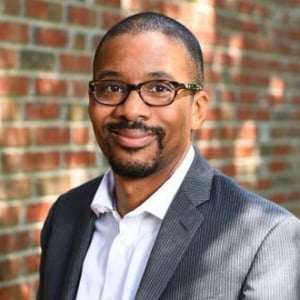
Agnes Williams Sesquicentennial Professor of Financial Technology, Georgetown Law
Chris Brummer is the Agnes Williams Sesquicentennial Professor of Financial Technology at Georgetown University Law Center and the Faculty Director of Georgetown’s Institute of International Economic Law. As a professor, advisor, board member and advocate, Chris has lent his expertise to policymakers, founders, startups, and nonprofits around the world grappling with some of the most challenging puzzles facing innovation, regulation, and inclusion. His work has been featured in The New York Times, CNN, Marketwatch, Fast Company, The Wall Street Journal, Bloomberg, Yahoo Money, Roll Call, Cointelegraph, and Coin Desk, among others.
Chris’s public service and volunteer work extend across government. In addition to serving as a member of the Commodity Futures Trading Commission’s Subcommittee on Virtual Currencies and the Consultative Working Group for the European Securities and Markets Authority’s Financial Innovation Standing Committee, Chris has served as a member of the National Adjudicatory Council of FINRA. Most recently, he served as a member of the Biden-Harris Transition team, assisting in leading work streams relating to financial technology, racial equity and systemic risk for the Treasury ART. He is currently the Co-Chair of CNAS Task Force on FinTech, Crypto, and National Security.
A frequent speaker and lecturer, Chris was asked to deliver the keynote speech for the SEC’s Black History celebration in 2021, FinCEN’s Black History celebration in 2022, and the Office of the Comptroller of the Currency’s celebration in 2023.
Chris graduated summa cum laude from Washington University in St. Louis, holds a J.D. with honors from Columbia Law School and a Ph.D. from the University of Chicago. He is the author or editor of several books, including Cryptoassets: Legal, Regulatory and Monetary Perspectives and Fintech Law in a Nutshell.
Chris is the host of CQ Roll Call’s Fintech Beat podcast, and founder of Washington DC’s Fintech Week, an annual free event for the public.

Judge, United States Court of Appeals, Ninth Circuit
Patrick J. Bumatay was confirmed as a U.S. Circuit Judge for the U.S. Court of Appeals for the Ninth Circuit in December 2019. He is based in San Diego, California.
Prior to his appointment, Judge Bumatay served as an Assistant United States Attorney in the U.S. Attorney’s Office for the Southern District of California, where he was a member of the Appellate and Narcotics Sections. He also served as a Counselor to the Attorney General on criminal law issues, including on national opioid strategy and combating transnational organized crime.
Judge Bumatay has also worked in the Office of the Deputy Attorney General, the Office of the Associate Attorney General, and the Office of Legal Policy at the U.S. Department of Justice. Judge Bumatay has twice received the Attorney General’s Distinguished Service Award.
Judge Bumatay previously worked as an associate at Morvillo, Abramowitz, Grand, Iason, and Bohrer in New York, New York. Judge Bumatay clerked for the Honorable Timothy M. Tymkovich of the U.S. Court of Appeals for the Tenth Circuit and the Honorable Sandra L. Townes of the U.S. District Court for the Eastern District of New York. Judge Bumatay earned his B.A., cum laude, from Yale University and his J.D. from Harvard Law School.
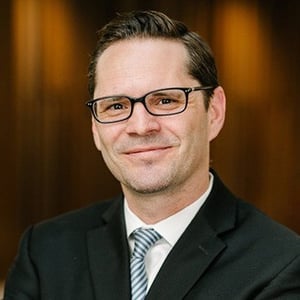
John J. Flynn Endowed Professor of Law, University of Utah S.J. Quinney College of Law
Christopher Peterson is the John J. Flynn Endowed Professor of Law at the University of Utah's S.J. Quinney College of Law. He previously served as a Special Advisor in the Office of the Director at the United States Consumer Financial Protection Bureau, as a Special Advisor in the Office of Legal Policy for Personnel and Readiness in the United States Department of Defense, and as Senior Counsel for Enforcement Policy and Strategy in the Consumer Financial Protection Bureau's Office of Enforcement. Professor Peterson has written dozens of scholarly articles and published three books on consumer finance. He has frequently testified in Congressional hearings and has presented his research to the Federal Deposit Insurance Corporation, the Federal Reserve Board of Governors, and at the White House in both Democratic and Republican administrations. He is a fellow of the American College of Consumer Financial Services Lawyers, the American Bar Association's Consumer Financial Services Committee, and serves on the community advisory board of the American Fintech Council. Professor Peterson is a recipient of the National Association of Consumer Agency Administrators’ Consumer Advocate of the Year award and the Pentagon’s Office of the Secretary of Defense Award for Excellence.
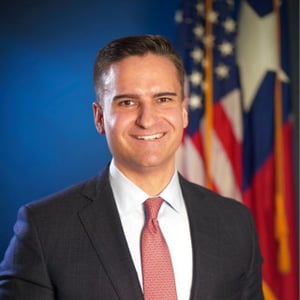
Deputy Attorney General, Civil Litigation, Texas Attorney General
James Lloyd is the Deputy Attorney General for Civil Litigation for the Texas Attorney General. He serves alongside over 600 lawyers and staff across eleven practice groups handling more than 35,000 cases involving the State of Texas. James also serves as Chief of the Antitrust Division, leading the enforcement of state and federal antitrust laws and representing the interests of Texas in national antitrust matters alongside federal enforcers.
James previously practiced at global law firms Sidley Austin LLP and Mayer Brown LLP, managing a range of high-profile matters for public and private companies. He began his legal career as a law clerk to Justice David Medina on the Texas Supreme Court.
James has served in a variety of roles in public service. He is currently an Intelligence Officer in the U.S. Navy Reserve, assigned to the Commander of the U.S. Pacific Fleet. James served on the Presidential Transition Team for President Donald Trump, where he advised on financial regulatory policy and led the transition of the U.S. Securities and Exchange Commission. James previously served at the White House as Senior Writer to President George W. Bush. He was also a member of the national security staff, coordinating policymaking and oversight with senior officials among the Cabinet departments and agencies.
James received his J.D. from The University of Texas School of Law, where he was Articles Editor for the Texas Law Review and a teaching assistant to Admiral Bobby Inman. He earned his bachelor’s degree from Rice University, where he was student body president and received the Joseph Cooper Prize in Public Policy.
A seventh-generation Texan, James comes from a family of litigators, including his mother, his sister, and his father who has served over 18 years on the Texas judiciary. James is Chair of the State Bar of Texas Antitrust and Business Litigation Section and serves on the Executive Committee of The Federalist Society’s Corporations, Securities, and Antitrust Practice Group.
James has spent over a decade as a volunteer attorney for veterans legal clinics in Houston and Austin. He is also a member of the Legal Affairs Roundtable for the Intelligence and National Security Alliance (INSA) and is also a longtime supporter of the Houston Livestock Show and Rodeo, serving on the Mutton Bustin' Committee.
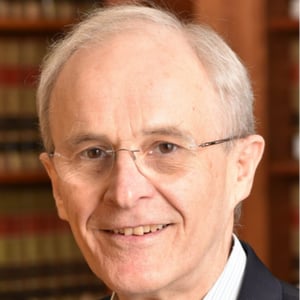
Levin, Mabie & Levin Professor of Law, University of Florida Levin College of Law
Professor Lynn M. LoPucki comes to UF in August 2022 from the UCLA School of Law where he taught Secured Transactions and Business Associations for twenty-two years. His Stakeholder Takeover Project is an effort to provide corporate stakeholders with the information they need to control corporations through markets. For example, the Project website ranks the S&P 500 companies by their greenhouse gas emissions. The UC Davis Law Review published the first Project article, Repurposing the Corporation Through Stakeholder Markets, in February 2022 and will publish the second, Corporate Greenhouse Gas Disclosures, in November.
Professor LoPucki has published more than seventy-five articles in highly regarded law reviews, including the Yale Law Journal, Stanford Law Review, University of Chicago Law Review, University of Michigan Law Review, University of Pennsylvania Law Review, Virginia Law Review, Cornell Law Review, Duke Law Journal, and Northwestern University Law Review. He co-authors three Aspen Casebooks: Business Associations: A Systems Approach (2020) (with Andrew Verstein); Secured Transactions: A Systems Approach (9th edition with Elizabeth Warren and Robert M. Lawless), and Commercial Transactions: A Systems Approach (7th edition with Elizabeth Warren, Daniel L. Keating, Ronald Mann, and Robert M. Lawless).
Since 1994, the Florida-UCLA-LoPucki Bankruptcy Research Database has collected large, public company bankruptcy data and disseminated it to the public and to bankruptcy researchers throughout the world. Those data provided the foundation for Professor LoPucki’s books, Courting Failure: How Competition for Big Cases is Corrupting the Bankruptcy Courts (University of Michigan Press 2005) and Professional Fees in Corporate Bankruptcies: Data, Analysis, and Evaluation (Oxford University Press, 2011) (with Joseph Doherty).
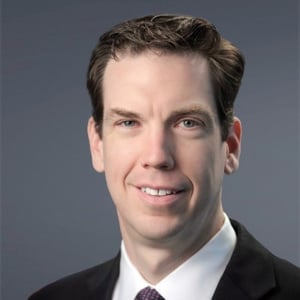
Partner, Fusion Law, PLLC
Paul is the founding partner of Fusion Law, PLLC. He has extensive experience with state, federal, and global regulators building coalitions and implementing policies to promote innovation in financial services. He is responsible for designing and implementing the first state (Arizona) and federal (CFPB) FinTech sandboxes in the United States. He also designed the CFPB no-action letter and trial disclosure policies. He helped found the first global regulatory innovation coalition (Global Financial Innovation Network) and led the founding of the first U.S. regulatory innovation coalition (American Consumer Financial Innovation Network). He served on the Financial Stability Oversight Council subcommittee on digital assets. He also has drafted state-level laws on blockchain and utility tokens.
Paul also has significant enforcement and litigation experience. He led many multi-state consumer protection enforcement matters as Civil Litigation Division Chief at the Arizona Attorney General’s Office.
Prior to his government service, Paul practiced law in the areas of securities litigation and transactional work for approximately six years at two well-known law firms. He also clerked on the U.S. Court of Appeals for the Fourth Circuit.
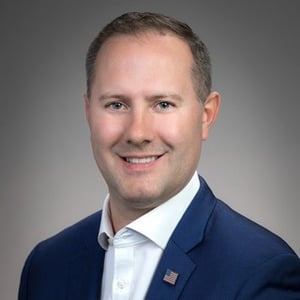
Head of Corporate Governance, Strive Asset Management
Justin Danhof is the Head of Corporate Governance at Strive Asset Management. Previously, he served as General Counsel for the National Center for Public Policy Research, as well as Director of the Center’s Free Enterprise Project. He also worked in the Miami-Dade State’s Attorney’s Office in the Economic Crimes and Cybercrimes Division, for the Massachusetts Alliance for Economic Development and at the U.S. Securities and Exchange Commission.
Mr. Danhof’s work has been widely published and quoted in major newspapers, including the Wall Street Journal, the New York Times, Politico, USA Today, the Los Angeles Times, the San Francisco Chronicle, the Boston Globe, the Christian Science Monitor, and the Washington Post. He has also appeared on the Fox News Channel, One America News Network, and the Fox Business Channel, among others.
Mr. Danhof is a member of the Federalist Society and Christian Legal Society.
Mr. Danhof is a graduate of Bentley University (Waltham, MA), where he received a Bachelor of Science in economics and finance and pitched for three seasons on the school’s NCAA Division II baseball team. Mr. Danhof completed his graduate studies at the University of Miami School of Law where he received his Juris Doctor and Master of Laws in Taxation.
Mr. Danhof is licensed to practice law in New York and Washington, D.C.
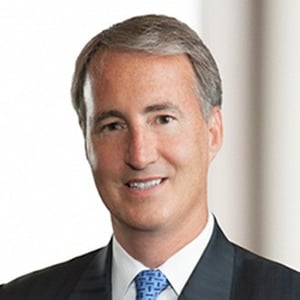
Partner, Foley & Lardner LLP
Ed Burbach is a Partner at Foley & Lardner LLP.
As a focused litigation lawyer, Ed Burbach represents corporations, individuals and governmental entities in matters involving local, state and federal governments – with emphasis on the state of Texas. He has special experience as a Medicaid fraud attorney, with deceptive trade practices, FTC, FOIA litigation /Public Information Act litigation and attorney general opinions. Ed also has nearly 30 years of experience litigating significant government, energy, maritime, insurance, financial services, pharmaceutical, health care provider, retailer, corporate, multistate and class action claims.
Appointed by now-Texas Governor Greg Abbott as his original Deputy Attorney General for Litigation, Ed served as Texas’ lead litigator and directly supervised all of Attorney General Abbott’s 11 civil litigation divisions, including 250 attorneys, over 600 employees and a $35 million budget. Ed also served as Texas’ main litigation liaison with the National Association of Attorneys General during Attorney General Abbott’s first and second terms. Ed maintained a heavy litigation docket representing the state and its leadership in high-profile litigation, such as Medicaid fraud, energy, financial services, environmental, Public Information Act, the historic Texas Tobacco Settlement, school finance, congressional redistricting and election law challenges brought by major political candidates. Upon announcing Ed’s return to private practice Governor Abbott advised:
“For more than three years, Ed Burbach has been a trusted advisor whose expert legal skills and careful management have yielded real results for the State of Texas,” said Attorney General Abbott.
“Under Ed’s leadership, our Consumer Protection Division obtained tens of millions of dollars in restitution for Texas consumers, and our Civil Medicaid Fraud Division uncovered more than a hundred million dollars in fraudulent Medicaid overpayments. Ed also guided the State through its most difficult legal disputes, including lawsuits challenging the Texas tobacco settlement and the state’s school funding plan. We all appreciate Ed’s distinguished service to this agency and wish him well on his return to the private sector.”
Ed’s clients often face costly, multiyear, high-stakes claims. For example, in State of Texas v. Petroleum Wholesale, et al., Ed defended claims brought by the state of Texas alleging $200 million in civil penalties for allegedly misrepresenting the amount of fuel delivered at retail gasoline and diesel pumps in Texas. He also served as lead counsel in the defense of the state Multidistrict Litigation Panel proceeding and as lead counsel in defense of various state purported class action litigation.
Ed serves as the Austin Office Chair for Corporate, and he remains active with the attorney’s general offices throughout the United States.
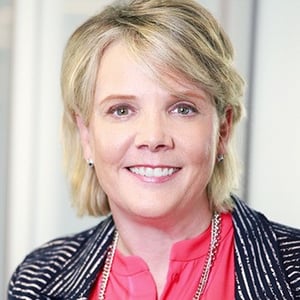
Co-CEO, Neora
Deborah Heisz is the Co-CEO of Neora, a Texas-based global relationship marketing company offering proprietary age-fighting skincare and wellness products.
With more than 20 years of leadership experience in a variety of roles within the multibillion dollar direct selling industry, Deborah Heisz has successfully built and led strong teams to achieve strategic goals.
Deborah has successfully chaired Neora’s global steering committee and directed the leadership team to position the company for new growth domestically and internationally. Deborah is driven to ensure that Neora continues to move forward as a unique model of positivity, diversity, innovation and integrity in the worldwide direct selling industry.
In addition to her position as Neora’s Co-CEO, Deborah maintains her role as Chief Executive Officer of Live Happy, LLC. Deborah is the co-founder and editorial director of the positive lifestyle magazine Live Happy and the happiness movement. A graduate of Texas Tech University with a bachelor’s degree in English, Deborah also holds an MBA from The University of Dallas.

Professor of Law, Georgetown University Law Center, Georgetown University
Urska Velikonja is a Professor of Law at Georgetown University Law Center. Before joining the Georgetown faculty in 2017, Professor Velikonja taught at Emory University and the University of Maryland, and visited at UC Berkeley, the University of Chicago and Duke Law School. She graduated first in her class at University of Ljubljana School of Law and earned her LL.M. and J.D. magna cum laude from Harvard Law School. Prior to entering academia, Professor Velikonja clerked for Judge Stephen F. Williams of the U.S. Court of Appeals for the D.C. Circuit and worked for several years as a banking and finance associate and cross-border M&A with an Austrian law in her native Slovenia.
Professor Velikonja has written extensively on securities regulation and securities enforcement. Her work has been published by the California Law Review, the Cornell Law Review, the Notre Dame Law Review, the Stanford Law Review, the Washington University Law Review, the Yale Law Journal, and the Yale Journal on Regulation, among others. Her article on SEC fair funds was selected as one of top ten articles published in 2015, and two of her articles were selected for presentation at the Harvard-Stanford-Yale Junior Faculty Forum.
Professor Velikonja’s work on SEC enforcement is regularly discussed by regulators and has been featured in exclusive and/or major stories in the Wall Street Journal, Bloomberg, the New York Times, and The Economist, and quoted in the Financial Times, Reuters, The American Banker, as well as international press. Professor Velikonja also regularly contributes to three corporate law and financial regulation law blogs: the Harvard Law School Corporate Governance and Financial Regulation Forum, the NYU PCCE Compliance & Enforcement Blog, and the Columbia Law School Blue Sky Blog.
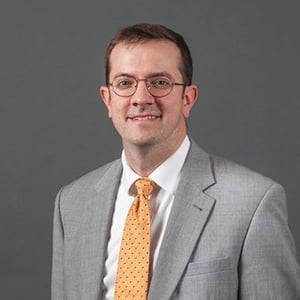
Associate Professor of Law, Antonin Scalia Law School, George Mason University
Associate Professor of Law J.W. Verret joined the Antonin Scalia Law School, George Mason University faculty in 2008. In 2013, he took leave for two years to serve as the Chief Economist and Senior Counsel for the U.S. House Committee on Financial Services. He received his JD and MA in Public Policy from Harvard Law School and the Harvard Kennedy School of Government, respectively, in 2006. While in law school, Professor Verret served an Olin Fellowship in Law and Economics at the Harvard Program on Corporate Governance under the guidance of Prof. Lucian Bebchuk.
Professor Verret then served as a law clerk for Vice-Chancellor John W. Noble of the Delaware Court of Chancery. Prior to joining the faculty at Scalia Law, Professor Verret was an associate in the SEC Enforcement Defense Practice Group at Skadden, Arps in Washington, D.C. He has written extensively on corporate law topics, including Delaware's Guidance, co-written with Chief Justice Myron T. Steele of the Delaware Supreme Court. His academic work has been featured in the Yale Journal on Regulation, The Business Lawyer, the Delaware Journal of Corporate Law, the Stanford Law Review, the University of Pennsylvania Journal of Business Law, and the Virginia Law and Business Review. Professor Verret was selected by the Northwestern Law School Searle Center on Law, Regulation, and Economic Growth for a 2009-2010 Searle-Kaufmann Research Fellowship.
Professor Verret is also a Senior Scholar at the Mercatus Center Working Group on Financial Markets, where he regularly briefs Congressional staff, members of Congress, SEC Commissioners and other financial regulatory agencies on financial regulation topics. He also directs the Corporate Federalism Initiative, where he obtains research grants for a network of students and faculty scholars who study the division between states and the federal government as sources of corporate law. Professor Verret has been invited to testify before various House and Senate Committees four times during the financial crisis of 2009 regarding all of the central provisions of the Obama Administration's 2009 financial regulatory reform proposals. For a full list of Professor Verret's C-Span appearances, including testimony before the U.S. House of Representatives and the U.S. Senate, see http://www.c-spanvideo.org/jwverret.
Professor Verret has been an invited panelist for various television appearances, including an interview on The NewsHour with Jim Lehrer. Professor Verret has been quoted in various media on financial regulation and corporate law topics, including the New York Times, CNN Money, the CNN Political Ticker, CNBC, ABC News, Investor's Business Daily, ESPN.com, The American Banker, The American Lawyer, The Huffington Post, CBS.com, and AP News. Professor Verret's op-eds have been featured in Forbes, The Chicago Tribune, The Orange County Register, and The Wall Street Journal. Professor Verret is also a regular guest contributor to three of the most noted corporate law and financial regulation law blogs: the Harvard Law School Corporate Governance and Financial Regulation Forum, Deallawyers.com, and The Conglomerate.
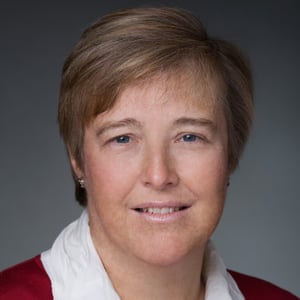
Senior Vice President, Government Affairs, T-Mobile
As Senior Vice President, Government Affairs for T-Mobile, Kathleen O’Brien Ham is the chief public policy advocate for the Un-carrier. Kathleen manages all public policy issues before federal and state governments impacting the company. Her team regularly engages Congress, the FCC, state agencies, and other governmental bodies on a wide range of regulatory and policy issues, including spectrum, consumer, public safety, and competition matters. She has led numerous successful efforts to gain additional radio spectrum for the company, including most recently, the acquisition of 600 MHz frequencies to expand T-Mobile’s coverage and deploy 5G technology. She has also testified before Congress numerous times in support of the company’s public policy positions.
Prior to joining T-Mobile, she worked for fourteen years at the FCC in several top policy positions, including Deputy Chief of the Wireless Telecommunications Bureau. She was the first Chief of the FCC’s Spectrum Auctions Program where she was responsible for the early landmark PCS spectrum auctions. She also served on the FCC’s Spectrum Management Task Force and was involved in the Intergovernmental Advisory Committee that negotiated the reallocation of third generation (3G) wireless spectrum from government to commercial use.
A graduate of Catholic University’s Columbus School of Law, she received her undergraduate degree from the University of Colorado, with a Bachelor of Science in Journalism. For several years, she taught telecommunications as an adjunct professor at Catholic University. She has received numerous industry honors and recognition, most recently being named as one of 50 of the Most Influential Women in Wireless to Watch in 2017 by Global Telecoms Business. The Hill named her as one of the Top Lobbyists in 2016. In 2014 the Competitive Carriers Association celebrated her contributions to the industry with an Outstanding Achievement Award for her work in support of spectrum auction rules that benefit smaller carriers and help promote competition in the wireless ecosystem. And, since 2010 she has been named four times as one of the Most Influential Women in Wireless by FierceWireless.

President & CEO, Center for Democracy & Technology
Nuala O’Connor is the President & CEO of the Center for Democracy & Technology, a global nonprofit committed to advancing our digital rights. She is a vocal advocate for harnessing the potential of the internet and emerging technologies to increase equality, amplify voices, and promote human rights. At CDT, Nuala leads a diverse team that is driving policy solutions that advance the rights of the individual in the digital age. Her experience working in the federal government, multinational corporations, tech start-ups, and noted law firms informs her innovative and collaborative leadership approach.
Nuala began her career in the private sector, working at the law firms of Venable, Hudson Cook, and Sidley. She entered the technology sector when she joined the start-up DoubleClick as Deputy General Counsel. While there, and in her later position as Vice President & Chief Privacy Officer of Email & Emerging Technologies, she worked on numerous class actions, a multistate settlement with state attorneys general, and an FTC investigation before helping to create the company’s privacy compliance department, which still serves as an influential model for companies in the technology sector and beyond. She later served as Global Privacy Leader at General Electric (GE) and was responsible for privacy policy and practices across GE’s numerous divisions. Her most recent corporate experience was at Amazon.com, where she served as Vice President, Compliance & Consumer Trust, and Associate General Counsel Data & Privacy Protection.
Between her stints in the private sector, Nuala served in various capacities within the federal government. At the U.S. Department of Commerce she worked on global technology policy, including internet governance and industry best practices, in her roles as Deputy Director of the Office of Policy & Strategic Planning, Chief Privacy Officer, and Chief Counsel for the Technology Administration. She later became the first statutorily appointed Chief Privacy Officer (CPO) in federal service when she was named as CPO at the Department of Homeland Security (DHS). At DHS she was responsible for groundbreaking policy creation and implementation regarding the use of personal information in national security and law enforcement. Under her leadership, the DHS Privacy Office issued a seminal report criticizing the use of private-sector data in national security efforts.
Nuala serves on several nonprofit boards, and is the recipient of the International Association of Privacy Professionals (IAPP) Vanguard Award, the Executive Women’s Forum’s Woman of Influence Award, and was named as “Geek of the Week” by the Minority Media & Telecom Council. She served as a member of the board of the IAPP for six years, including a term as chairman. Nuala has also been known to serve as a “class mom” on more than one occasion.
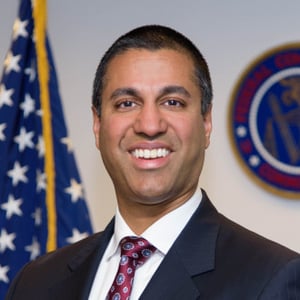
Nonresident Fellow, American Enterprise Institute
Ajit Pai, a former chairman of the Federal Communications Commission (FCC), is a nonresident fellow at the American Enterprise Institute, where he focuses on issues pertaining to technology and innovation, telecommunications regulatory policy, and market-based incentives for investment in broadband deployment. Concurrently, he is a partner at Searchlight Capital Partners, a global investment firm.
Mr. Pai’s distinguished career at the FCC includes two leadership roles following presidential appointments. He was appointed commissioner by President Barack Obama in 2012, designated chairman by President Donald Trump in 2017, and twice confirmed by the US Senate. While at the helm of the FCC, Mr. Pai had a transformative impact on the future of US technology and communications policy, implementing major initiatives to help close the digital divide; advance US leadership in 5G and other wireless technologies; promote innovation; protect consumers, public safety, and national security; and make the agency itself more open, transparent, and data-driven.
Earlier in his career, Mr. Pai served in various public-sector positions in the FCC’s Office of General Counsel, the US Department of Justice, the US Senate Judiciary Committee, and the US District Court for the Eastern District of Louisiana. He also worked as a partner at Jenner & Block and associate general counsel at Verizon Communications.
Mr. Pai graduated with honors from Harvard University, where he received a bachelor’s degree, and from the University of Chicago Law School, where he received a law degree and was an editor on the University of Chicago Law Review.

Judge, United States Court of Appeals, Fifth Circuit
Judge Smith was appointed U.S. Circuit Judge for the Fifth Circuit by President Reagan and entered on duty in January 1988. He attended public schools in Lubbock, Texas, and graduated from Yale University, receiving a B.A. in 1969 and a J.D. in 1972.
Judge Smith was a Law Clerk to U.S. District Judge Halbert Woodward, Northern District of Texas, 1972-1973; with the Houston law firm of Fulbright & Jaworski as an Associate, 1973-1981, and as Partner, 1981-1984; and as City Attorney, City of Houston, 1984-1988. He was Chairman, Civil Service Commission, City of Houston, 1982-1984; and a Director, Harris County Housing Authority, 1978-1980.
Judge Smith lives in Houston and is married to Mary Jane Smith and has four children: Ruth Ann, Clark, J.J., and Brandon. He formerly was Chair of the Advisory Committee on Federal Rules of Evidence of the Judicial Conference of the United States. He assists LexisNexis/Matthew Bender & Co. in periodic revisions of several chapters of Moore’s Federal Practice.
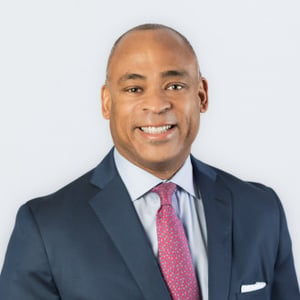
President & CEO, Internet Association
K. Dane Snowden is the President and CEO of Internet Association. Under his leadership, IA advocates for public policy that fosters innovation, promotes economic growth, and empowers people through a free and open internet.
Prior to joining IA, Dane served as Chief Operating Officer of The Internet & Television Association (NCTA). In this position, he led the Association’s day-to-day operations including its policy planning and strategic initiatives.
His past experience also includes a tenure at CTIA – The Wireless Association as Vice President of External and State Affairs where he focused on promoting policies to grow the wireless ecosystem. Dane’s government experience features his appointment as Chief of the Federal Communications Commission’s Consumer & Governmental Bureau where he was responsible for the development and execution of vision, strategic direction, telecommunication policy, and management of the Bureau’s activities and 300 employees. He began his career working in the private and non-profit sectors for MissionFish.com, America’s Promise- The Alliance for Youth, and the United Negro College Fund. He is a graduate of The College of William and Mary.
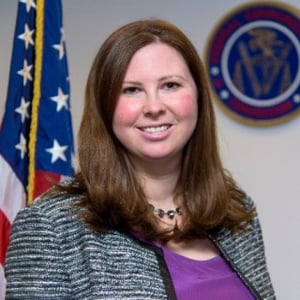
Legislative Director for Senator Marsha Blackburn, U.S. Senate
Jamie Susskind is the Legislative Director for Senator Marsha Blackburn (R-TN). Prior to becoming Legislative Director, she served for two years as the Senator’s Technology Policy Advisor. In that role, she advised on issues such as data privacy, cybersecurity, broadband, spectrum, content moderation, and antitrust, in addition to staffing the Senator on the Senate Commerce Subcommittee on Consumer Protection, Product Safety, and Data Security. Susskind previously worked on the Hill as Chief Counsel to Senator Deb Fischer (R-NE) and as an FCC Detailee for the Senate Committee on Commerce, Science, and Transportation. She also served as Chief of Staff to FCC Commissioner Brendan Carr and as Vice President of Policy and Regulatory Affairs at the Consumer Technology Association. A native Michigander, Susskind earned a Juris Doctor from the Antonin Scalia Law School and a Bachelor of Arts degree from the University of Michigan (Go Blue!).

Judge, United States Court of Appeals, Ninth Circuit
Judge Carlos Bea serves as a judge on the United States Court of Appeals for the Ninth Circuit. He received his Bachelor's Degree from Stanford University in 1956 and his J.D. from Stanford Law School in 1958. Judge Bea was born in San Sebastian, Spain, and immigrated with his family to Cuba in 1939. In 1952, he represented Cuba on the Cuban National basketball team in the Helsinki Olympics. Judge Bea became a naturalized citizen of the United States in 1958. He engaged in private practice in San Francisco, principally in the area of civil trials (jury and non-jury), from 1959-75 at Dunne, Phelps & Mills and from 1975-90 at Carlos Bea, A Law Corporation. He taught courses in civil litigation advocacy at Hastings College of Law and Stanford Law School. From 1990 to 2003, Judge Bea served as a judge of the San Francisco Superior Court. He was nominated by President George W. Bush to the United States Court of Appeals for the Ninth Circuit and was confirmed in 2003.
Judge Bea and his wife Louise reside in San Francisco, where they raised their four sons, Sebastian, Alexander, Nicholas, and Dominic.

Laurence A. Tisch Professor of Law and Director, Classical Liberal Institute, New York University School of Law; Senior Fellow, The Civitas Institute, University of Texas at Austin
Richard A. Epstein is the inaugural Laurence A. Tisch Professor of Law at NYU School of Law. Prior to his joining the faculty, he was a visiting law professor at NYU from 2007 through 2009. He served as the Peter and Kirstin Bedford Senior Fellow at the Hoover Institution from 2000 to 2024. Since 2024 to the present he is a senior lecturer at the Civitas Institute at the University of Texas—Austin. Epstein is also the James Parker Hall Distinguished Service Professor of Law Emeritus and a senior lecturer at the University of Chicago. His initial law school appointment was at the University of Southern California from 1968 to 1972. Epstein received an LL.D., h.c. from the University of Ghent, 2003. He has been a member of the American Academy of Arts and Sciences since 1985 and was a Senior Fellow of the Center for Clinical Medical Ethics at the University of Chicago Division of Biological Sciences, also from 1983. to 2022 He served as editor of the Journal of Legal Studies from 1981 to 1991, and of the Journal of Law and Economics from 1991-2001. From 2001 to 2010 he was a director of the John M. Olin Program in Law and Economics at the University of Chicago.
His newest book, The Myth of Birthright Citizenship: What the Fourteenth Amendment Really Says was published in 2026 (Encounter Books). Prior to that he has published many books including, The Dubious Morality of the Modern Administrative State (Roman & Littlefield 2020).Earlier he published th Classical Liberal Constitution: The Uncertain Quest for Limited Government (Harvard 2014) iHis previous books include Design for Liberty: Private Property, Public Administration and the Rule of Law (Harvard 2011); The Case Against the Employee Free Choice Act (Hoover 2009); Supreme Neglect: How to Revive the Constitutional Protection of Property Rights (Oxford 2008); Antitrust Decrees in Theory and Practice: Why Less is More (AEI 2007); Overdose: How Excessive Government Regulation Stifles Pharmaceutical Innovation (Yale University Press. 2006); How Progressives Rewrote the Constitution (Cato 2006); Cases and Materials on Torts (Aspen Law & Business; 8th ed. 2004); Skepticism and Freedom: A Modern Case for Classical Liberalism (University of Chicago, 2003); Torts (Aspen Law & Business 1999); Principles for a Free Society: Reconciling Individual Liberty with the Common Good (Perseus Books, 1998): Mortal Peril: Our Inalienable Rights to Health Care (Addison-Wesley, 1997); Simple Rules for a Complex World (Harvard, 1995); Bargaining With the State (Princeton, 1993); Forbidden Grounds: The Case Against Employment Discrimination Laws (Harvard , 1992); Takings: Private Property and the Power of Eminent Domain (Harvard, 1985); and Modern Products Liability Law (Greenwood Press, 1980). He has also edited(with Catherine M. Sharkey) Cases and Materials on the Law of Torts (10th edition 2012).
Professor Epstein has written numerous articles on a wide range of legal and interdisciplinary subjects. He has taught courses in administrative law, antitrust law, civil procedure, communications, constitutional law, contracts, corporations, criminal law, employment discrimination law, environmental law, food and drug law health law and policy, legal history, labor law, property, real estate development and finance, jurisprudence, labor law; land use planning, patents, individual, estate and corporate taxation, Roman Law; torts, and workers' compensation.
Professor Epstein also writes a regular column for Civitas Institute, which also sponsors his podcast, The Libertarian with Charles C.W. Cooke, and Law Talk, with Cooke and John Yoo. He also does a podcast with John Batchelor. And appears regularly on the Freedom File with Judge Andrew Napolitano.
Nomura Professor of International Financial Systems and Director, Harvard Law School
Hal S. Scott is the Nomura Professor and Director of the Program on International Financial Systems (PIFS) at Harvard Law School, where he has taught since 1975.
He teaches courses on Capital Markets Regulation, International Finance, and Securities Regulation. He has a B.A. from Princeton University (Woodrow Wilson School, 1965), an M.A. from Stanford University in Political Science (1967), and a J.D. from the University of Chicago Law School (1972). In 1974-1975, before joining Harvard, he clerked for Justice Byron White.
The Program on International Financial Systems, founded in 1986, engages in a variety of research projects. Its book, Capital Adequacy Beyond Basel (Oxford University Press 2004), examines capital adequacy rules for banks, insurance companies and securities firms. The Program also organizes the annual invitation-only U.S.-China, U.S.-Europe, U.S.-Japan, and U.S.-Latin America Symposia on Building the Financial System of the 21st Century, attended by financial system leaders in the concerned countries.
Professor Scott's books include the law school textbook International Finance: Transactions, Policy and Regulation (21st ed. Foundation Press 2016); Connectedness and Contagion (M.I.T. Press 2016) and The Global Financial Crisis (Foundation Press 2009).
Professor Scott is the Director of the Committee on Capital Markets Regulation, a bi-partisan non-profit organization dedicated to enhancing the competitiveness of U.S. capital markets and ensuring the stability of the U.S. financial system via research and advocacy. He is also a member of the Bretton Woods Committee, a member of the Market Monitoring Group of the Institute of International Finance, a past independent director of Lazard, Ltd. (2006-2016), a past President of the International Academy of Consumer and Commercial Law and a past Governor of the American Stock Exchange (2002-2005).

Senior Fellow, Arthur F. Burns Fellow in Financial Policy Studies, American Enterprise Institute
Peter J. Wallison holds the Arthur F. Burns Chair in Financial Policy Studies and is co-director of AEI’s program on Financial Policy Studies. Prior to joining AEI, he practiced banking, corporate and financial law at Gibson, Dunn & Crutcher in Washington, D.C., and New York. Mr. Wallison has held a number of government positions. From June 1981 to January 1985, he was General Counsel of the United States Treasury Department, where he had a significant role in the development of the Reagan Administration's proposals for deregulation in the financial services industry. During 1986 and 1987, Mr. Wallison was White House counsel to President Ronald Reagan, and between 1972 and 1976, he served first as Special Assistant to New York's Gov. Nelson A. Rockefeller and, subsequently, as counsel to Mr. Rockefeller as vice president of the United States.
Mr. Wallison was admitted to practice before the courts of New York and the District of Columbia, and is retired from practice in New York. He continues to be a member of the District of Columbia Bar Association. He received his undergraduate degree from Harvard College in 1963 and law degree from Harvard Law School in 1966.
Mr. Wallison is the author of Ronald Reagan: The Power of Conviction and the Success of His Presidency, published in December 2002 by Westview Press. On campaign finance, he is the author (with Joel Gora) of Better Parties, Better Government, (AEI Press 2009). On financial or regulatory matters, he is the author of Back From the Brink, a proposal for a private deposit insurance system, and co-author of Nationalizing Mortgage Risk: The Growth of Fannie Mae and Freddie Mac; The GAAP Gap: Corporate Disclosure in the Internet Age; Competitive Equity: A Better Way to Organize Mutual Funds; Bad History, Worse Policy: How a False Narrative about the Financial Crisis Led to the Dodd-Frank Act (AEI Press 2013); and Hidden In Plain Sight: What Caused the World’s Worst Financial Crisis and Why it Could Happen Again (Encounter Books 2015). His most recent book is Judicial Fortitude: The Last Chance to Rein in the Administrative State, published by Encounter Books in October 2018.
He testifies frequently before committees of Congress, and is a frequent contributor to the op-ed pages of the Wall Street Journal and other print and online journals. He has also been a speaker at many conferences on financial services, housing, the causes of the financial crisis, the Dodd-Frank Act, accounting, and corporate governance, and was a member of the Shadow Financial Regulatory Committee between 1995 and 2015. He was a member of the SEC Advisory Committee on Improvements to Financial Reporting (2008), co-Chair of the Pew Financial Reform Task Force (2009), and a member of the congressionally- appointed Financial Crisis Inquiry Commission (2009-2011). In May 2011, for his work in financial policy, Mr. Wallison received an honorary doctorate in Humane Letters from the University of Colorado.
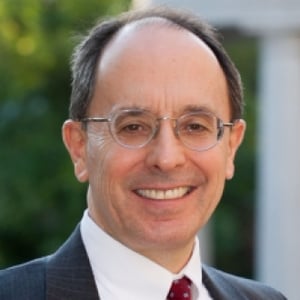
Professor Emeritus, The George Washington University Law School
Art Wilmarth is a Professor Emeritus of Law at George Washington University Law School (GW Law). He was a member of GW Law’s full-time faculty from 1986 to 2020. Prior to joining the faculty, he was a partner in Jones Day’s Washington, DC office. He served as Executive Director of GW Law’s Center for Law, Economics & Finance from 2011 to 2014.
Professor Wilmarth is the author of Taming the Megabanks: Why We Need a New Glass-Steagall Act (Oxford University Press, 2020), and co-editor of The Panic of 2008: Causes, Consequences, and Implications for Reform (Edward Elgar, 2010). He has published more than 50 law review articles and book chapters in the fields of financial regulation and American constitutional history.
In 2005, the American College of Consumer Financial Services Lawyers (ACCFSL) awarded Professor Wilmarth its annual prize for the best law review article published in the field of consumer financial services law. He has testified before committees of the U.S. Congress, the California legislature, and the U.K. House of Lords on financial regulatory issues. In 2010, he served as a consultant to the Financial Crisis Inquiry Commission, the body established by Congress to investigate the causes of the global financial crisis of 2007-09. He is a Fellow of ACCFSL and a member of the international advisory board of the Journal of Banking Regulation (Springer). He received his B.A. degree from Yale University and his J.D. degree from Harvard University.
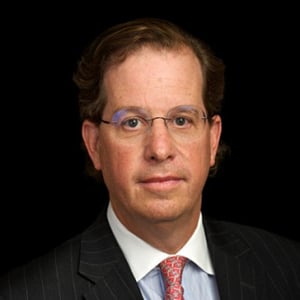
Managing Partner, Cooper & Kirk PLLC
David Thompson is the Managing Partner of Cooper & Kirk and joined the firm at its founding. Mr. Thompson has extensive trial and appellate experience in a wide range of matters and has secured victories worth billions of dollars. He has successfully challenged numerous laws on Second Amendment grounds. He has also litigated cases in over 30 federal district courts, argued in each of the 13 federal circuit courts of appeal, and argued before the U.S. Supreme Court, as well as many state courts. Mr. Thompson was awarded an A.B. degree, magna cum laude, from Harvard University in 1991, where he was elected to Phi Beta Kappa. In 1994, Mr. Thompson received a J.D. degree, cum laude, from Harvard Law School.
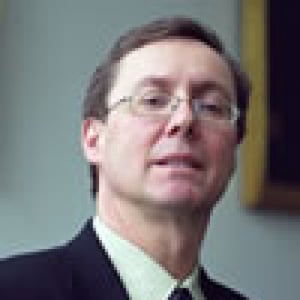
William J. Friedman and Alicia Townsend Friedman Professor of La, Harvard Law School
Lucian Bebchuk is the William J. Friedman and Alicia Townsend Friedman Professor of Law, Economics, and Finance and Director of the Program on Corporate Governance at Harvard Law School. Bebchuk is also a Fellow of the American Academy of Arts and Sciences, Research Associate of the National Bureau of Economic Research, Inaugural Fellow of the European Corporate Governance Network, and Director of the SSRN Corporate Governance Network.
Trained in both law and economics, Professor Bebchuk holds an LL.M. and S.J.D. from Harvard Law School and an M.A. and a Ph.D. in Economics from the Harvard Economics Department. His research focuses on corporate governance, law and finance, and law and economics. Upon electing him to membership in 2000, the American Academy of Arts and Sciences cited him as "[o]ne of the nation's leading scholars of law and economics," who "has made major contribution to the study of corporate control, governance, and insolvency."
Bebchuk is the author or coauthor of more than one hundred research papers, as well the widely acclaimed book Pay without Performance: the Unfulfilled Promise of Executive Compensation. Bebchuk’s papers have appeared in the top academic journals in law, in economics, and in finance. The Social Science Research Network (SSRN) ranks him first among legal academics of all fields in terms of citations to his work.
Bebchuk’s work has been recognized by his having been elected to serve as President of the Western Economics Association International, President of the American Law and Economics Association, and Chair of the Business Association Section of the American Association of Law Teachers. His recent awards include the International Corporate Governance Network’s Award for Excellence in Corporate Governance, the Investor Responsibility Research Center Institute’s best academic paper award, and the Marshall Blume prize in financial research.
Bebchuk has been a frequent contributor to policy-making, practice, and public debate in the fields of corporate governance and financial regulation. He has appeared in hearings and roundtables before the Senate Finance Committee, the Senate Banking Committee, the House of Representatives Committee of Financial Services, and the SEC; has authored numerous op-ed pieces, including in the Wall Street Journal, the New York Times, and the Financial Times; has advised governmental bodies, such as the Special Master on TARP executive compensation during the financial crisis, and publicly traded firms; has served on the board of directors of OJSC MMC Norilsk Nickel, the world’s largest producer of nickel and palladium; and heads the Shareholder Rights Project, a program that has represented public pension funds and charitable organizations in bringing about board declassifications at more than 75 S&P 500 and Fortune 500 companies. Bebchuk was included in the list of the "100 most influential players in corporate governance" of Directorship, the "100 most influential people in finance" of Treasury & Risk Management, and the list of top 10 ”governance stars” of Global Proxy Watch.
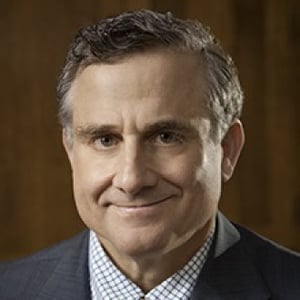
Sam Harris Professor of Corporate Law, Corporate Finance, and Securities Law, Yale Law School
Jonathan R. Macey is Sam Harris Professor of Corporate Law, Corporate Finance, and Securities Law at Yale University, and Professor in the Yale School of Management. From 1991 – 2004, Professor Macey was J. DuPratt White Professor of Law, Director of the John M. Olin Program in Law and Economics at Cornell Law School, and Professor of Law and Business at the Cornell University Johnson Graduate School of Business. Professor Macey earned his B.A. cum laude from Harvard in 1977, and his J.D. from Yale Law School in 1982, where he was Article and Book Review editor of The Yale Law Journal. In 1996, Professor Macey received a Ph.D. honoris causa from the Stockholm School of Economics. Following law school, Professor Macey was law clerk to Judge Henry J. Friendly on the U.S. Court of Appeals for the Second Circuit.
Professor Macey is the author of several books including the two-volume treatise, Macey on Corporation Laws, published in 1998 (Aspen Law & Business), and co-author of two leading casebooks, Corporations: Including Partnerships and Limited Liability Companies (2003 Thomson West), which is in its eighth edition, and Banking Law and Regulation (2002 Aspen Law & Business), which is now in its third edition. He also is the author of over 100 scholarly articles. His recent articles have appeared in the Banking Law Journal, the University of Chicago Law Review, the Stanford Law Review, The Yale Law Journal, the Cornell Law Review, the Journal of Law and Economics, and the Brookings Wharton Papers on Financial Institutions. He has published numerous editorials in such publications as The Wall Street Journal, Forbes, The Los Angeles Times, and The National Law Journal.
Professor Macey has taught at major universities throughout the world, including Bocconi University (Milan), the University of Tokyo; the University of Toronto; the University of Turin, the University of Amsterdam Department of Finance, and the Stockholm School of Economics, Department of Law. He also has been Professor of Law at the University of Chicago (1990) and Visiting Professor of Law at Harvard Law School (1999). Professor Macey is a Senior Research Fellow at the International Centre for Economic Research (ICER) in Turin, Italy. Professor Macey also serves on the Academic Advisory Board (Comitato Scientifico) of the Associazione Disiano Preite for the study of corporate law (per lo studio del diritto dell’impresa). In 1995, Professor Macey was awarded the Paul M. Bator prize for excellence in Teaching, Scholarship and Public Service by the Federalist Society for Law and Public Policy. In 1996, he received a Ph.D., honoris causa from the Stockholm School of Economics. And in 1998, he received the D.P. Jacobs prize for the most significant paper in volume 6 of the Journal of Financial Intermediation for his paper (co-authored with Maureen O’Hara), “The Law & Economics of Best Execution.”
In 1999 Professor Macey was made an honorary Fellow of the Society For Advanced Legal Studies. In 2000, Professor Macey became a member of the Legal Advisory Committee to the Board of Directors of the New York Stock Exchange. In 2001 Professor Macey was appointed a Bertil Daniellson Distinguished Visiting Professor in Banking and Finance at the Stockholm School of Economics. In 2002 Professor Macey was appointed to the Economic Advisory Board of the National Association of Securities Dealers (NASD). In 2004 Professor Macey was awarded a Teaching Award by the Yale Law Women in recognition of his “commitment to excellence in teaching, mentoring and inspiring.” In 2005 Professor Macey became a member of the Board of Editors of Thomson West Publishing Company.
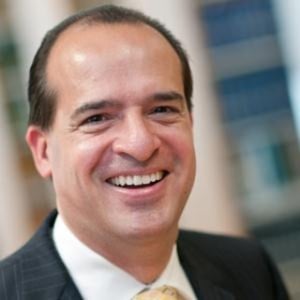
Professor of Law and Rouse Chairholder, Antonin Scalia Law School, George Mason University
Professor Miller holds an Allison and Dorothy Rouse Chair in Law at the Antonin Scalia Law School. An elected member of the American Law Institute and a research member of the European Corporate Governance Institute, Professor Miller is also a Fellow and the Co-Director of the Program on Organizations, Business and Markets at the Classical Liberal Institute at the New York University Law School, an Adjunct Fellow at the Manhattan Institute, and an Affiliated Scholar at the James Wilson Institute on Natural Rights and the American Founding. Prior to joining George Mason University in 2025, Professor Miller was the F. Arnold Daum Chair in Corporate Finance and Law and a Professor of Law at the University of Iowa College of Law, where he had also served as the Associate Dean for Faculty Development.
Professor Miller’s research concerns corporate and securities law, the economic analysis of law, and the philosophy of law. He is particularly interested in applying economic concepts and methods to understand provisions in contracts between sophisticated commercial parties. He has written on material adverse effect clauses under Delaware law, the fiduciary duties of corporate directors, director oversight liability, the history and development of Delaware corporate law, and much more. His articles and working papers are available on his SSRN page.
Professor Miller has been cited by federal and state courts in the United States, including the Delaware Supreme Court and the Delaware Court of Chancery, as well as by the Commercial Court of the United Kingdom and the Ontario Superior Court of Justice (Commercial List) in Canada. Additionally, he is a member of the Committee on Mergers, Acquisitions & Corporate Control Contests and a former chair of the Corporation Law Committee of the New York City Bar Association.
Earlier in his career, Professor Miller was a Professor of Law at the Villanova University School of Law and the Associate Director of the Matthew J. Ryan Center for the Study of Free Institutions and the Public Good at Villanova University. He has been a Visiting Professor of Law at the University of Pennsylvania Law School, a Visiting Assistant Professor of Law at the Cardozo Law School, and an Olin Fellow in Law and Economics at the Columbia Law School.
Before entering academia, Professor Miller was an associate with Wachtell, Lipton, Rosen & Katz. He earned his J.D. from the Yale Law School where he was a Senior Editor of the Yale Law Journal and an Olin Fellow in Law, Economics and Public Policy. He earned his M.A. and M.Phil. degrees in philosophy from Columbia University, where he held a Mellon Fellowship in the Humanities from the Woodrow Wilson National Fellowship Foundation and a Western Civilization Fellowship from the Intercollegiate Studies Institute. He earned his B.A. in philosophy and mathematics from Columbia College.

Partner, Wachtell, Lipton, Rosen & Katz
Steven A. Rosenblum has been a partner at Wachtell, Lipton, Rosen & Katz since 1989, and serves as co-chair of the firm’s Corporate Department. He focuses on mergers and acquisitions, buyouts, takeover defense, shareholder and hedge fund activism, proxy fights, joint ventures, corporate governance and securities law. Mr. Rosenblum has extensive experience representing major companies in each of these areas. He has been recognized by Chambers Global as one of the world's leading transactional lawyers.
Mr. Rosenblum received his J.D. from Yale Law School in 1982 and his B.A. from Harvard College magna cum laude and Phi Beta Kappa in 1978. Prior to joining the firm, he was a law clerk to the Honorable Joseph L. Tauro, United States District Court Judge for the District of Massachusetts.
Mr. Rosenblum is a member of the American Law Institute, the ABA Committee on Corporate Laws, and the Board of Advisors of the Yale Law School Center for the Study of Corporate Law. He has written and participated in panels on a number of topics, including mergers and acquisitions, shareholder and hedge fund activism, corporate disclosure, proxy reform and corporate governance. He has served as co-chair of the Annual Federal Securities Institute in Miami since 2005.
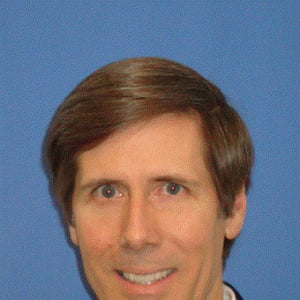
Vice President & Senior Counsel, American Bankers Association
Timothy E. Keehan is Vice President and Senior Counsel at the Center for Securities, Trust and Investments at the American Bankers Association. The Center resides in the ABA’s Financial Institutions Policy and Regulatory Affairs group and is dedicated to assisting member banks with legislation, regulations, and other issues involving securities, trust, and investment activities. Mr. Keehan's areas of focus include trust and asset management, ERISA, and fiduciary and advisory products and services.
Before joining the ABA in January 2011, Mr. Keehan had been a partner in the Financial Regulatory Practice of Latham & Watkins and a partner in the Financial Services Regulatory Practice of Mayer Brown.
Mr. Keehan received his B.A. in Government & Foreign Affairs from the University of Virginia, his M.A. from Reformed Theological Seminary, and his J.D. from the University of Virginia School of Law. He is a member of the District of Columbia bar.
Policy Director, Americans for Financial Reform
Marcus Stanley is the Policy Director of Americans for Financial Reform. Americans for Financial Reform is the major public interest coalition supporting stronger financial reform. Dr. Stanley has a Ph.D. in public policy from Harvard University, and previously worked as an economic and policy advisor to Senator Barbara Boxer, as a Senior Economist at the U.S. Joint Economic Committee, and as an Assistant Professor of Economics at Case Western Reserve University

Executive Vice President, The Federalist Society
Dean Reuter is Executive Vice President at the Federalist Society for Law and Public Policy Studies. He has served in two federal government agency Offices of the Inspector General, as Counsel to the Inspector General and Deputy Inspector General, responsible for policing the use of federal funds granted and contracted through those agencies. As such, he helped conduct and oversee criminal investigations across the country. He is the principal author of the non-fiction book, The Hidden Nazi: The Untold Story of America's Deal with the Devil, and editor of Liberty’s Nemesis: The Unchecked Expansion of the State and Confronting Terror: 9/11 and the Future of American National Security. He was appointed by the President and served as Vice-Chairman of the Board of Directors of the Corporation for National and Community Service, and recently served as an appointee on the U.S. Commission on Presidential Scholars. He is a graduate of Hood College (BA with Honors) and the University of Maryland School of Law.


Hyperextension? Federal Financial Agencies & Cryptocurrency Regulation
Brian P. Brooks, Chris Brummer, Patrick J. Bumatay, Caitlin Long, Christopher L. Peterson
In recent years federal executive branch agencies have enacted a “whole of government” approach to...
How Reliable are Corporate ESG Ratings?
James R. Lloyd, Lynn M. LoPucki, Paul N. Watkins, Justin Danhof
Environmental, Social, and Corporate Governance (ESG) investing has grown in popularity in recent years. As...
Deep Dive Episode 101 – Litigation Update: Neora v. FTC
Ed Burbach, Deborah Heisz
On November 1, 2019, Neora, a Texas-based healthcare products multi-level marketing (MLM) business, filed suit...
Deep Dive Episode 38 – The Debate Over the SEC's Accredited Investor Standard
Urska Velikonja, J.W. Verret
This teleforum will consider the U.S. Securities and Exchange Commission’s accredited investor standard. This standard...
The Current Landscape of Telecommunications Law
Kathleen Ham, Nuala O'Connor, Ajit V. Pai, Jerry E. Smith, K. Dane Snowden, Jamie Susskind
The Trump administration has emphasized the importance of ensuring existing regulations are not stifling innovation...
Financial Regulation: The Apotheosis of the Administrative State?
Carlos T. Bea, Richard A. Epstein, Hal S. Scott, Peter J. Wallison, Arthur E. Wilmarth
Concern with “the regulatory state" often focuses on reforms to formal institutional structures and legal...
Giveth & Taketh Away? - Podcast
David H. Thompson
After a bailout that arguably helped keep them afloat, the United States government has effectively...
Topics
The Mortgage Shakedown's Atrocious Shake Out
The Obama Administration, as part of a regulatory investigation that included a coalition of 49...
The Short-Termism Debate
Lucian Bebchuk, Jonathan R. Macey, Robert T. Miller, Steven A. Rosenblum, E Veasey
For thirty years, the economic analysis of corporate law has been based on the assumption...
Debating the Volcker Rule - Podcast
Timothy E. Keehan, Marcus Stanley, Dean Reuter
Last week, U.S. banking regulators issued the 900-page Volcker Rule. The rule, long under consideration,...