
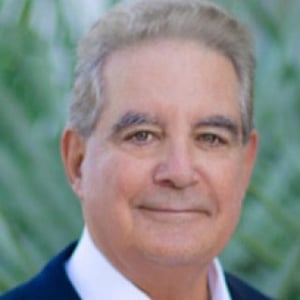
Chairman, Secura/Isaac Group
William “Bill” Isaac served as Chairman of the FDIC during one of the most important and tumultuous periods in US banking history. Some 3,000 banks and thrifts failed during the 1980s, including Continental Illinois and nine of the ten largest banks in Texas. In addition to the failures of many of the largest regional banks throughout the US, most of the money center banks in the US were on the watch list due in large part to the enormous amount of loans on their books to less developed countries.
President Carter appointed Bill Isaac to the board of the FDIC in 1978. He was confirmed by the Senate at the age of 34. President Reagan named him Chairman of the FDIC two years later, making him the youngest FDIC board member and Chairman in history. Bill Isaac also served as Chairman of the Federal Financial Institutions Examination Council (1983-85), as a member of the Depository Institutions Deregulation Committee (1981–85), and on the Vice President’s Task Group on Regulation of Financial Services (1984).
Bill Isaac is currently Chairman and principal owner of three premier consulting firms, Secura/Isaac Consulting, Blue SaaS Solutions, and Secura/Isaac Talent Advisors. He is a member of the boards of directors of Emigrant Bank and New York Private Bank & Trust and serves as Chairman of Sarasota Private Trust and Cleveland Private Trust, all of which are owned by Howard Milstein and his family.
After completing his service as Chairman of the FDIC at the end of 1985, Bill Isaac founded The Secura Group, a leading consulting firm, which he sold in 2008. He served as Chairman of the Board of Fifth Third Bancorp, one of the nation’s leading banks, and worked as Senior Managing Director at FTI Consulting from 2011 to 2019. He then joined Howard Milstein in the financial services business. Bill Isaac is a former board member at TSYS, a leading payment processing company that today is part of Global Payments. He has served on the boards of Amex Bank, The Associates (a finance company formerly owned by Ford Motor Company), credit reporting company TransUnion, and staffing firm MPS Group.
Bill Isaac is involved extensively in thought leadership relating to the financial industry. He is the author of ‘Senseless Panic: How Washington Failed America’ with a foreword by legendary former Federal Reserve Chairman Paul Volcker. ‘Senseless Panic’ provides an inside account of the banking and savings and loans crises of the 1980s and compares that period to the financial crisis of 2008/2009. Bill Isaac’s articles appear in the Wall Street Journal, the Washington Post, the New York Times, The Hill, American Banker, Forbes, the Financial Times, the Washington Times, and other leading publications. He appears regularly on television and radio, testifies before Congress, and is a speaker before audiences throughout the world (www.WilliamIsaac.com).
Bill Isaac was formerly a senior partner at Arnold & Porter, which was a founding partner of The Secura Group. He left the law firm in 1993 when Secura purchased Arnold & Porter’s interest in Secura. Before his appointment to the FDIC, Bill Isaac served as vice president, general counsel and secretary of First Kentucky National Corporation and its subsidiaries, including First National Bank of Louisville and First Kentucky Trust Company. He began his career with Foley & Lardner in Milwaukee where he practiced general corporate law specializing in banking law.
Bill Isaac received a Distinguished Achievement Medal in 1995 from Miami University and a Distinguished Alumnus Award in 2013 from The Ohio State University. He is a Life member of both the Board of Directors of the Miami University Foundation and the Board of Directors of The Ohio State University Foundation. Bill co- founded in 2016, with his former classmate, the William Isaac & Michael Oxley Center for Business Leadership at Miami University.

Partner, Simpson Thacher
Mr. Noreika leads projects related to the U.S. banking industry, as well as clients that span beyond traditional banking including financial technology and cryptocurrency companies. He is the company’s focal point for C-suite advice on compliance and regulatory requirements at all levels, domestic and international.
Prior to joining Patomak, Mr. Noreika was a partner at Simpson Thacher & Bartlett LLP and was a lead lawyer in the firm’s financial institutions regulatory practice, focusing on banking regulation and related litigation. In that role, he advised domestic and international financial institutions on regulatory issues relating to mergers and acquisitions, minority investments, capital issuances, structuring and compliance activities, and litigation matters.
Mr. Noreika’s extensive experience includes advising regional and multinational banks on the structuring of their U.S. operations, compliance with the Volcker Rule, Consumer Financial Protection Bureau and other federal agency regulations, Bank Secrecy Act and anti-money laundering rules, as well as transactional matters and related regulatory applications. He has counseled numerous private equity funds with respect to investments in banking organizations.
In 2017, Mr. Noreika served as acting Comptroller of the Currency where he led the 4,000-person independent agency responsible for chartering, regulating, and supervising all national banks and federal savings associations as well as federal branches and agencies of foreign banks in the U.S. There, he worked to make regulation more accountable, improved the efficiency of chartering and licensing decisions, and sought the enhance the value of the national bank and federal thrift charters and their ability to meet the credit and banking needs of their communities. In this role, he also served as director of the Federal Deposit Insurance Corporation and member of the Financial Stability Oversight Council.
Mr. Noreika has been recognized as a leader in his field by Chambers USA in “Financial Services Regulation: Banking Compliance” since 2014. He received his law degree from Harvard Law School, where he was editor of the Harvard Law Review. He earned his B.S. in economics with a concentration in finance from The Wharton School of the University of Pennsylvania.
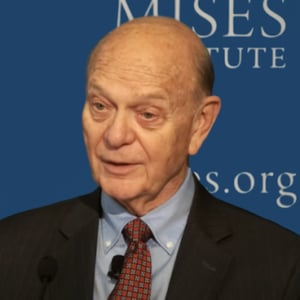
Senior Fellow, Mises Institute
Alex J. Pollock is a Senior Fellow with the Mises Institute, providing thought and policy leadership on financial issues and the study of financial systems. His work includes cycles of booms and busts, financial crises with their political responses, housing finance, government-sponsored enterprises, risk and uncertainty, central banking, banking and financial regulation, corporate governance, retirement finance, student loans, and the politics of finance.
He previously served as the Principal Deputy Director of the Office of Financial Research in the U.S. Treasury Department 2019-2021. He was a Distinguished Senior Fellow with the R Street Institute 2015-2019 and 2021, and a resident fellow at the American Enterprise Institute, 2004-2015. Among the many aspects of his AEI work, he developed the One Page Mortgage Form to give borrowers in clear form the key information they need in order to know what they are committing themselves to. He was President and CEO of the Federal Home Loan Bank of Chicago from 1991 to 2004. There he invented the Mortgage Partnership Finance program, which successfully created front-end mortgage credit risk sharing beginning in 1997. His decades of banking experience include being a Visiting Scholar at the Federal Reserve Bank of St. Louis, 1991.
Pollock was a director of the CME Group 2004-2019 and of Ascendium Education Group 1989-2019. He is a director and past-chairman of the Great Books Foundation and a past president of the International Union for Housing Finance.
He is the co-author of Surprised Again! - The COVID Crisis and the New Market Bubble (2022), and the author of Finance and Philosophy—Why We’re Always Surprised (2018) and Boom and Bust: Financial Cycles and Human Prosperity (2011), as well as numerous articles and Congressional testimony.
Pollock is a graduate of Williams College, the University of Chicago, and Princeton University.
His work is available on alexjpollock.com.
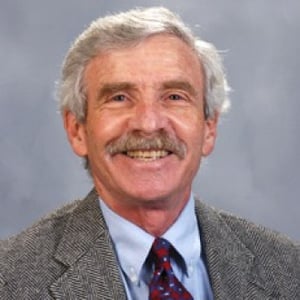
Robert Kavesh Professorship in Economics, Leonard N. Stern School of Business, New York University
Lawrence J. White has been with New York University Leonard N. Stern School of Business for more than 35 years. His primary research areas of interest include financial regulation, antitrust, network industries, international banking and applied microeconomics.
Professor White has published numerous articles in the Journal of Business, Journal of Economic Perspectives, Journal of Economic Literature, Journal of Political Economy, American Economic Review, Review of Economics and Statistics, Quarterly Journal of Economics, and other leading journals in economics, finance, and law. He is the author of The S&L Debacle: Public Policy Lessons for Bank and Thrift Regulation, among other books, and he is the co-editor (with John Kwoka) of the 6th of edition of The Antitrust Revolution. He contributed chapters to both of the NYU Stern books on the financial crisis - Restoring Financial Stability and Regulating Wall Street. He is the co-author (with Stern's Viral Acharya, Matthew Richardson, and Stijn Van Nieuwerburgh) of Guaranteed to Fail: Fannie Mae, Freddie Mac, and the Debacle of Mortgage Finance.
Chairman, Secura/Isaac Group
William “Bill” Isaac served as Chairman of the FDIC during one of the most important and tumultuous periods in US banking history. Some 3,000 banks and thrifts failed during the 1980s, including Continental Illinois and nine of the ten largest banks in Texas. In addition to the failures of many of the largest regional banks throughout the US, most of the money center banks in the US were on the watch list due in large part to the enormous amount of loans on their books to less developed countries.
President Carter appointed Bill Isaac to the board of the FDIC in 1978. He was confirmed by the Senate at the age of 34. President Reagan named him Chairman of the FDIC two years later, making him the youngest FDIC board member and Chairman in history. Bill Isaac also served as Chairman of the Federal Financial Institutions Examination Council (1983-85), as a member of the Depository Institutions Deregulation Committee (1981–85), and on the Vice President’s Task Group on Regulation of Financial Services (1984).
Bill Isaac is currently Chairman and principal owner of three premier consulting firms, Secura/Isaac Consulting, Blue SaaS Solutions, and Secura/Isaac Talent Advisors. He is a member of the boards of directors of Emigrant Bank and New York Private Bank & Trust and serves as Chairman of Sarasota Private Trust and Cleveland Private Trust, all of which are owned by Howard Milstein and his family.
After completing his service as Chairman of the FDIC at the end of 1985, Bill Isaac founded The Secura Group, a leading consulting firm, which he sold in 2008. He served as Chairman of the Board of Fifth Third Bancorp, one of the nation’s leading banks, and worked as Senior Managing Director at FTI Consulting from 2011 to 2019. He then joined Howard Milstein in the financial services business. Bill Isaac is a former board member at TSYS, a leading payment processing company that today is part of Global Payments. He has served on the boards of Amex Bank, The Associates (a finance company formerly owned by Ford Motor Company), credit reporting company TransUnion, and staffing firm MPS Group.
Bill Isaac is involved extensively in thought leadership relating to the financial industry. He is the author of ‘Senseless Panic: How Washington Failed America’ with a foreword by legendary former Federal Reserve Chairman Paul Volcker. ‘Senseless Panic’ provides an inside account of the banking and savings and loans crises of the 1980s and compares that period to the financial crisis of 2008/2009. Bill Isaac’s articles appear in the Wall Street Journal, the Washington Post, the New York Times, The Hill, American Banker, Forbes, the Financial Times, the Washington Times, and other leading publications. He appears regularly on television and radio, testifies before Congress, and is a speaker before audiences throughout the world (www.WilliamIsaac.com).
Bill Isaac was formerly a senior partner at Arnold & Porter, which was a founding partner of The Secura Group. He left the law firm in 1993 when Secura purchased Arnold & Porter’s interest in Secura. Before his appointment to the FDIC, Bill Isaac served as vice president, general counsel and secretary of First Kentucky National Corporation and its subsidiaries, including First National Bank of Louisville and First Kentucky Trust Company. He began his career with Foley & Lardner in Milwaukee where he practiced general corporate law specializing in banking law.
Bill Isaac received a Distinguished Achievement Medal in 1995 from Miami University and a Distinguished Alumnus Award in 2013 from The Ohio State University. He is a Life member of both the Board of Directors of the Miami University Foundation and the Board of Directors of The Ohio State University Foundation. Bill co- founded in 2016, with his former classmate, the William Isaac & Michael Oxley Center for Business Leadership at Miami University.
Partner, Simpson Thacher
Mr. Noreika leads projects related to the U.S. banking industry, as well as clients that span beyond traditional banking including financial technology and cryptocurrency companies. He is the company’s focal point for C-suite advice on compliance and regulatory requirements at all levels, domestic and international.
Prior to joining Patomak, Mr. Noreika was a partner at Simpson Thacher & Bartlett LLP and was a lead lawyer in the firm’s financial institutions regulatory practice, focusing on banking regulation and related litigation. In that role, he advised domestic and international financial institutions on regulatory issues relating to mergers and acquisitions, minority investments, capital issuances, structuring and compliance activities, and litigation matters.
Mr. Noreika’s extensive experience includes advising regional and multinational banks on the structuring of their U.S. operations, compliance with the Volcker Rule, Consumer Financial Protection Bureau and other federal agency regulations, Bank Secrecy Act and anti-money laundering rules, as well as transactional matters and related regulatory applications. He has counseled numerous private equity funds with respect to investments in banking organizations.
In 2017, Mr. Noreika served as acting Comptroller of the Currency where he led the 4,000-person independent agency responsible for chartering, regulating, and supervising all national banks and federal savings associations as well as federal branches and agencies of foreign banks in the U.S. There, he worked to make regulation more accountable, improved the efficiency of chartering and licensing decisions, and sought the enhance the value of the national bank and federal thrift charters and their ability to meet the credit and banking needs of their communities. In this role, he also served as director of the Federal Deposit Insurance Corporation and member of the Financial Stability Oversight Council.
Mr. Noreika has been recognized as a leader in his field by Chambers USA in “Financial Services Regulation: Banking Compliance” since 2014. He received his law degree from Harvard Law School, where he was editor of the Harvard Law Review. He earned his B.S. in economics with a concentration in finance from The Wharton School of the University of Pennsylvania.
Senior Fellow, Mises Institute
Alex J. Pollock is a Senior Fellow with the Mises Institute, providing thought and policy leadership on financial issues and the study of financial systems. His work includes cycles of booms and busts, financial crises with their political responses, housing finance, government-sponsored enterprises, risk and uncertainty, central banking, banking and financial regulation, corporate governance, retirement finance, student loans, and the politics of finance.
He previously served as the Principal Deputy Director of the Office of Financial Research in the U.S. Treasury Department 2019-2021. He was a Distinguished Senior Fellow with the R Street Institute 2015-2019 and 2021, and a resident fellow at the American Enterprise Institute, 2004-2015. Among the many aspects of his AEI work, he developed the One Page Mortgage Form to give borrowers in clear form the key information they need in order to know what they are committing themselves to. He was President and CEO of the Federal Home Loan Bank of Chicago from 1991 to 2004. There he invented the Mortgage Partnership Finance program, which successfully created front-end mortgage credit risk sharing beginning in 1997. His decades of banking experience include being a Visiting Scholar at the Federal Reserve Bank of St. Louis, 1991.
Pollock was a director of the CME Group 2004-2019 and of Ascendium Education Group 1989-2019. He is a director and past-chairman of the Great Books Foundation and a past president of the International Union for Housing Finance.
He is the co-author of Surprised Again! - The COVID Crisis and the New Market Bubble (2022), and the author of Finance and Philosophy—Why We’re Always Surprised (2018) and Boom and Bust: Financial Cycles and Human Prosperity (2011), as well as numerous articles and Congressional testimony.
Pollock is a graduate of Williams College, the University of Chicago, and Princeton University.
His work is available on alexjpollock.com.
Robert Kavesh Professorship in Economics, Leonard N. Stern School of Business, New York University
Lawrence J. White has been with New York University Leonard N. Stern School of Business for more than 35 years. His primary research areas of interest include financial regulation, antitrust, network industries, international banking and applied microeconomics.
Professor White has published numerous articles in the Journal of Business, Journal of Economic Perspectives, Journal of Economic Literature, Journal of Political Economy, American Economic Review, Review of Economics and Statistics, Quarterly Journal of Economics, and other leading journals in economics, finance, and law. He is the author of The S&L Debacle: Public Policy Lessons for Bank and Thrift Regulation, among other books, and he is the co-editor (with John Kwoka) of the 6th of edition of The Antitrust Revolution. He contributed chapters to both of the NYU Stern books on the financial crisis - Restoring Financial Stability and Regulating Wall Street. He is the co-author (with Stern's Viral Acharya, Matthew Richardson, and Stijn Van Nieuwerburgh) of Guaranteed to Fail: Fannie Mae, Freddie Mac, and the Debacle of Mortgage Finance.
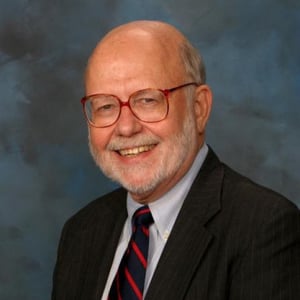
Principal, Ely & Company, Inc.
Bert Ely has specialized in deposit insurance and banking structure issues since 1981. In 1986, he became an early predictor of the S&L crisis and a taxpayer bailout of the FSLIC. In 1991, he was the first person to correctly predict the non-crisis in commercial banking; in 1992, he predicted an eventual taxpayer bailout of the Japanese banking system.
Bert continuously monitors conditions in the banking and S&L industries, monetary policy, and the growing federalization of credit risk. He has helped to draft legislation to enact the cross-guarantee concept for privatizing banking regulation and its related deposit insurance and systemic risks. He has testified on numerous occasions before congressional committees on banking issues and he often speaks on these matters to bankers and others.
Bert first established his consulting practice in 1972. Before that, he was the chief financial officer of a public company, a consultant with Touche, Ross & Company, and an auditor with Ernst & Ernst. He received his MBA from the Harvard Business School in 1968 and his Bachelor's degree in economics in 1964 from Case Western Reserve University.
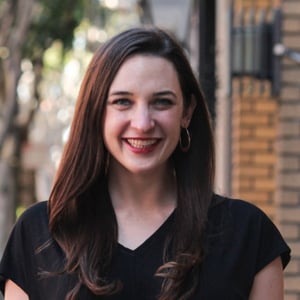
General Counsel, Strive
Before joining Strive, Alexandra served as the Director of Regulatory Affairs at River Financial, where she handled all regulatory and government matters and served as product counsel. Prior to her time at River, Alexandra worked at the U.S. Department of Treasury, first in the General Counsel’s office and then as the youngest-ever Executive Secretary, where she worked directly with Secretary Mnuchin. Alexandra previously worked as an associate in the Washington, D.C. office of Akin Gump. She clerked for then-Justice Allison Eid on the Colorado Supreme Court and Judge Jennifer Elrod on the U.S. Court of Appeals for the Fifth Circuit. She holds a J.D. from the University of Texas and a B.A. from The King’s College.

Partner, Norton Rose Fulbright
Steven Lofchie advises financial institutions on regulatory issues and financial instruments.
In his regulatory practice, Steven counsels clients on securities laws, the CEA, and related bankruptcy issues. His transactional practice focuses on securities credit and derivative transactions.
Steven is the founder and manager of an acclaimed legal website (now renamed Fried Frank Regulatory Intelligence) that has been endorsed by former chairpersons of both the SEC and CFTC. Subscribers to the website include government regulators and major buy- and sell-side firms.
Chambers USA has ranked Steven in Band 1 for eight years running, for both financial services regulation and derivatives. He is the only lawyer in the country to be top-ranked in both of those categories. Steven was also part of the team that was named 2020 Regulatory Team of the Year by IFLR Americas. The Best Lawyers in America recognized Steven as “Lawyer of the Year” for Administrative/Regulatory Law in New York in 2017, and U.S. News and World Report ranked him as the best regulatory lawyer in New York for 2014. In 2012, a derivatives transaction developed by Steven was cited as the best international structured product of the year by International Financial Law Review.
Senior Fellow, Mises Institute
Alex J. Pollock is a Senior Fellow with the Mises Institute, providing thought and policy leadership on financial issues and the study of financial systems. His work includes cycles of booms and busts, financial crises with their political responses, housing finance, government-sponsored enterprises, risk and uncertainty, central banking, banking and financial regulation, corporate governance, retirement finance, student loans, and the politics of finance.
He previously served as the Principal Deputy Director of the Office of Financial Research in the U.S. Treasury Department 2019-2021. He was a Distinguished Senior Fellow with the R Street Institute 2015-2019 and 2021, and a resident fellow at the American Enterprise Institute, 2004-2015. Among the many aspects of his AEI work, he developed the One Page Mortgage Form to give borrowers in clear form the key information they need in order to know what they are committing themselves to. He was President and CEO of the Federal Home Loan Bank of Chicago from 1991 to 2004. There he invented the Mortgage Partnership Finance program, which successfully created front-end mortgage credit risk sharing beginning in 1997. His decades of banking experience include being a Visiting Scholar at the Federal Reserve Bank of St. Louis, 1991.
Pollock was a director of the CME Group 2004-2019 and of Ascendium Education Group 1989-2019. He is a director and past-chairman of the Great Books Foundation and a past president of the International Union for Housing Finance.
He is the co-author of Surprised Again! - The COVID Crisis and the New Market Bubble (2022), and the author of Finance and Philosophy—Why We’re Always Surprised (2018) and Boom and Bust: Financial Cycles and Human Prosperity (2011), as well as numerous articles and Congressional testimony.
Pollock is a graduate of Williams College, the University of Chicago, and Princeton University.
His work is available on alexjpollock.com.
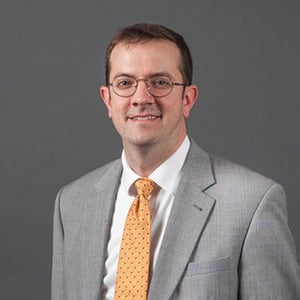
Associate Professor of Law, Antonin Scalia Law School, George Mason University
Associate Professor of Law J.W. Verret joined the Antonin Scalia Law School, George Mason University faculty in 2008. In 2013, he took leave for two years to serve as the Chief Economist and Senior Counsel for the U.S. House Committee on Financial Services. He received his JD and MA in Public Policy from Harvard Law School and the Harvard Kennedy School of Government, respectively, in 2006. While in law school, Professor Verret served an Olin Fellowship in Law and Economics at the Harvard Program on Corporate Governance under the guidance of Prof. Lucian Bebchuk.
Professor Verret then served as a law clerk for Vice-Chancellor John W. Noble of the Delaware Court of Chancery. Prior to joining the faculty at Scalia Law, Professor Verret was an associate in the SEC Enforcement Defense Practice Group at Skadden, Arps in Washington, D.C. He has written extensively on corporate law topics, including Delaware's Guidance, co-written with Chief Justice Myron T. Steele of the Delaware Supreme Court. His academic work has been featured in the Yale Journal on Regulation, The Business Lawyer, the Delaware Journal of Corporate Law, the Stanford Law Review, the University of Pennsylvania Journal of Business Law, and the Virginia Law and Business Review. Professor Verret was selected by the Northwestern Law School Searle Center on Law, Regulation, and Economic Growth for a 2009-2010 Searle-Kaufmann Research Fellowship.
Professor Verret is also a Senior Scholar at the Mercatus Center Working Group on Financial Markets, where he regularly briefs Congressional staff, members of Congress, SEC Commissioners and other financial regulatory agencies on financial regulation topics. He also directs the Corporate Federalism Initiative, where he obtains research grants for a network of students and faculty scholars who study the division between states and the federal government as sources of corporate law. Professor Verret has been invited to testify before various House and Senate Committees four times during the financial crisis of 2009 regarding all of the central provisions of the Obama Administration's 2009 financial regulatory reform proposals. For a full list of Professor Verret's C-Span appearances, including testimony before the U.S. House of Representatives and the U.S. Senate, see http://www.c-spanvideo.org/jwverret.
Professor Verret has been an invited panelist for various television appearances, including an interview on The NewsHour with Jim Lehrer. Professor Verret has been quoted in various media on financial regulation and corporate law topics, including the New York Times, CNN Money, the CNN Political Ticker, CNBC, ABC News, Investor's Business Daily, ESPN.com, The American Banker, The American Lawyer, The Huffington Post, CBS.com, and AP News. Professor Verret's op-eds have been featured in Forbes, The Chicago Tribune, The Orange County Register, and The Wall Street Journal. Professor Verret is also a regular guest contributor to three of the most noted corporate law and financial regulation law blogs: the Harvard Law School Corporate Governance and Financial Regulation Forum, Deallawyers.com, and The Conglomerate.
Principal, Ely & Company, Inc.
Bert Ely has specialized in deposit insurance and banking structure issues since 1981. In 1986, he became an early predictor of the S&L crisis and a taxpayer bailout of the FSLIC. In 1991, he was the first person to correctly predict the non-crisis in commercial banking; in 1992, he predicted an eventual taxpayer bailout of the Japanese banking system.
Bert continuously monitors conditions in the banking and S&L industries, monetary policy, and the growing federalization of credit risk. He has helped to draft legislation to enact the cross-guarantee concept for privatizing banking regulation and its related deposit insurance and systemic risks. He has testified on numerous occasions before congressional committees on banking issues and he often speaks on these matters to bankers and others.
Bert first established his consulting practice in 1972. Before that, he was the chief financial officer of a public company, a consultant with Touche, Ross & Company, and an auditor with Ernst & Ernst. He received his MBA from the Harvard Business School in 1968 and his Bachelor's degree in economics in 1964 from Case Western Reserve University.
General Counsel, Strive
Before joining Strive, Alexandra served as the Director of Regulatory Affairs at River Financial, where she handled all regulatory and government matters and served as product counsel. Prior to her time at River, Alexandra worked at the U.S. Department of Treasury, first in the General Counsel’s office and then as the youngest-ever Executive Secretary, where she worked directly with Secretary Mnuchin. Alexandra previously worked as an associate in the Washington, D.C. office of Akin Gump. She clerked for then-Justice Allison Eid on the Colorado Supreme Court and Judge Jennifer Elrod on the U.S. Court of Appeals for the Fifth Circuit. She holds a J.D. from the University of Texas and a B.A. from The King’s College.
Partner, Norton Rose Fulbright
Steven Lofchie advises financial institutions on regulatory issues and financial instruments.
In his regulatory practice, Steven counsels clients on securities laws, the CEA, and related bankruptcy issues. His transactional practice focuses on securities credit and derivative transactions.
Steven is the founder and manager of an acclaimed legal website (now renamed Fried Frank Regulatory Intelligence) that has been endorsed by former chairpersons of both the SEC and CFTC. Subscribers to the website include government regulators and major buy- and sell-side firms.
Chambers USA has ranked Steven in Band 1 for eight years running, for both financial services regulation and derivatives. He is the only lawyer in the country to be top-ranked in both of those categories. Steven was also part of the team that was named 2020 Regulatory Team of the Year by IFLR Americas. The Best Lawyers in America recognized Steven as “Lawyer of the Year” for Administrative/Regulatory Law in New York in 2017, and U.S. News and World Report ranked him as the best regulatory lawyer in New York for 2014. In 2012, a derivatives transaction developed by Steven was cited as the best international structured product of the year by International Financial Law Review.
Senior Fellow, Mises Institute
Alex J. Pollock is a Senior Fellow with the Mises Institute, providing thought and policy leadership on financial issues and the study of financial systems. His work includes cycles of booms and busts, financial crises with their political responses, housing finance, government-sponsored enterprises, risk and uncertainty, central banking, banking and financial regulation, corporate governance, retirement finance, student loans, and the politics of finance.
He previously served as the Principal Deputy Director of the Office of Financial Research in the U.S. Treasury Department 2019-2021. He was a Distinguished Senior Fellow with the R Street Institute 2015-2019 and 2021, and a resident fellow at the American Enterprise Institute, 2004-2015. Among the many aspects of his AEI work, he developed the One Page Mortgage Form to give borrowers in clear form the key information they need in order to know what they are committing themselves to. He was President and CEO of the Federal Home Loan Bank of Chicago from 1991 to 2004. There he invented the Mortgage Partnership Finance program, which successfully created front-end mortgage credit risk sharing beginning in 1997. His decades of banking experience include being a Visiting Scholar at the Federal Reserve Bank of St. Louis, 1991.
Pollock was a director of the CME Group 2004-2019 and of Ascendium Education Group 1989-2019. He is a director and past-chairman of the Great Books Foundation and a past president of the International Union for Housing Finance.
He is the co-author of Surprised Again! - The COVID Crisis and the New Market Bubble (2022), and the author of Finance and Philosophy—Why We’re Always Surprised (2018) and Boom and Bust: Financial Cycles and Human Prosperity (2011), as well as numerous articles and Congressional testimony.
Pollock is a graduate of Williams College, the University of Chicago, and Princeton University.
His work is available on alexjpollock.com.
Associate Professor of Law, Antonin Scalia Law School, George Mason University
Associate Professor of Law J.W. Verret joined the Antonin Scalia Law School, George Mason University faculty in 2008. In 2013, he took leave for two years to serve as the Chief Economist and Senior Counsel for the U.S. House Committee on Financial Services. He received his JD and MA in Public Policy from Harvard Law School and the Harvard Kennedy School of Government, respectively, in 2006. While in law school, Professor Verret served an Olin Fellowship in Law and Economics at the Harvard Program on Corporate Governance under the guidance of Prof. Lucian Bebchuk.
Professor Verret then served as a law clerk for Vice-Chancellor John W. Noble of the Delaware Court of Chancery. Prior to joining the faculty at Scalia Law, Professor Verret was an associate in the SEC Enforcement Defense Practice Group at Skadden, Arps in Washington, D.C. He has written extensively on corporate law topics, including Delaware's Guidance, co-written with Chief Justice Myron T. Steele of the Delaware Supreme Court. His academic work has been featured in the Yale Journal on Regulation, The Business Lawyer, the Delaware Journal of Corporate Law, the Stanford Law Review, the University of Pennsylvania Journal of Business Law, and the Virginia Law and Business Review. Professor Verret was selected by the Northwestern Law School Searle Center on Law, Regulation, and Economic Growth for a 2009-2010 Searle-Kaufmann Research Fellowship.
Professor Verret is also a Senior Scholar at the Mercatus Center Working Group on Financial Markets, where he regularly briefs Congressional staff, members of Congress, SEC Commissioners and other financial regulatory agencies on financial regulation topics. He also directs the Corporate Federalism Initiative, where he obtains research grants for a network of students and faculty scholars who study the division between states and the federal government as sources of corporate law. Professor Verret has been invited to testify before various House and Senate Committees four times during the financial crisis of 2009 regarding all of the central provisions of the Obama Administration's 2009 financial regulatory reform proposals. For a full list of Professor Verret's C-Span appearances, including testimony before the U.S. House of Representatives and the U.S. Senate, see http://www.c-spanvideo.org/jwverret.
Professor Verret has been an invited panelist for various television appearances, including an interview on The NewsHour with Jim Lehrer. Professor Verret has been quoted in various media on financial regulation and corporate law topics, including the New York Times, CNN Money, the CNN Political Ticker, CNBC, ABC News, Investor's Business Daily, ESPN.com, The American Banker, The American Lawyer, The Huffington Post, CBS.com, and AP News. Professor Verret's op-eds have been featured in Forbes, The Chicago Tribune, The Orange County Register, and The Wall Street Journal. Professor Verret is also a regular guest contributor to three of the most noted corporate law and financial regulation law blogs: the Harvard Law School Corporate Governance and Financial Regulation Forum, Deallawyers.com, and The Conglomerate.
Chairman, Secura/Isaac Group
William “Bill” Isaac served as Chairman of the FDIC during one of the most important and tumultuous periods in US banking history. Some 3,000 banks and thrifts failed during the 1980s, including Continental Illinois and nine of the ten largest banks in Texas. In addition to the failures of many of the largest regional banks throughout the US, most of the money center banks in the US were on the watch list due in large part to the enormous amount of loans on their books to less developed countries.
President Carter appointed Bill Isaac to the board of the FDIC in 1978. He was confirmed by the Senate at the age of 34. President Reagan named him Chairman of the FDIC two years later, making him the youngest FDIC board member and Chairman in history. Bill Isaac also served as Chairman of the Federal Financial Institutions Examination Council (1983-85), as a member of the Depository Institutions Deregulation Committee (1981–85), and on the Vice President’s Task Group on Regulation of Financial Services (1984).
Bill Isaac is currently Chairman and principal owner of three premier consulting firms, Secura/Isaac Consulting, Blue SaaS Solutions, and Secura/Isaac Talent Advisors. He is a member of the boards of directors of Emigrant Bank and New York Private Bank & Trust and serves as Chairman of Sarasota Private Trust and Cleveland Private Trust, all of which are owned by Howard Milstein and his family.
After completing his service as Chairman of the FDIC at the end of 1985, Bill Isaac founded The Secura Group, a leading consulting firm, which he sold in 2008. He served as Chairman of the Board of Fifth Third Bancorp, one of the nation’s leading banks, and worked as Senior Managing Director at FTI Consulting from 2011 to 2019. He then joined Howard Milstein in the financial services business. Bill Isaac is a former board member at TSYS, a leading payment processing company that today is part of Global Payments. He has served on the boards of Amex Bank, The Associates (a finance company formerly owned by Ford Motor Company), credit reporting company TransUnion, and staffing firm MPS Group.
Bill Isaac is involved extensively in thought leadership relating to the financial industry. He is the author of ‘Senseless Panic: How Washington Failed America’ with a foreword by legendary former Federal Reserve Chairman Paul Volcker. ‘Senseless Panic’ provides an inside account of the banking and savings and loans crises of the 1980s and compares that period to the financial crisis of 2008/2009. Bill Isaac’s articles appear in the Wall Street Journal, the Washington Post, the New York Times, The Hill, American Banker, Forbes, the Financial Times, the Washington Times, and other leading publications. He appears regularly on television and radio, testifies before Congress, and is a speaker before audiences throughout the world (www.WilliamIsaac.com).
Bill Isaac was formerly a senior partner at Arnold & Porter, which was a founding partner of The Secura Group. He left the law firm in 1993 when Secura purchased Arnold & Porter’s interest in Secura. Before his appointment to the FDIC, Bill Isaac served as vice president, general counsel and secretary of First Kentucky National Corporation and its subsidiaries, including First National Bank of Louisville and First Kentucky Trust Company. He began his career with Foley & Lardner in Milwaukee where he practiced general corporate law specializing in banking law.
Bill Isaac received a Distinguished Achievement Medal in 1995 from Miami University and a Distinguished Alumnus Award in 2013 from The Ohio State University. He is a Life member of both the Board of Directors of the Miami University Foundation and the Board of Directors of The Ohio State University Foundation. Bill co- founded in 2016, with his former classmate, the William Isaac & Michael Oxley Center for Business Leadership at Miami University.
Partner, Simpson Thacher
Mr. Noreika leads projects related to the U.S. banking industry, as well as clients that span beyond traditional banking including financial technology and cryptocurrency companies. He is the company’s focal point for C-suite advice on compliance and regulatory requirements at all levels, domestic and international.
Prior to joining Patomak, Mr. Noreika was a partner at Simpson Thacher & Bartlett LLP and was a lead lawyer in the firm’s financial institutions regulatory practice, focusing on banking regulation and related litigation. In that role, he advised domestic and international financial institutions on regulatory issues relating to mergers and acquisitions, minority investments, capital issuances, structuring and compliance activities, and litigation matters.
Mr. Noreika’s extensive experience includes advising regional and multinational banks on the structuring of their U.S. operations, compliance with the Volcker Rule, Consumer Financial Protection Bureau and other federal agency regulations, Bank Secrecy Act and anti-money laundering rules, as well as transactional matters and related regulatory applications. He has counseled numerous private equity funds with respect to investments in banking organizations.
In 2017, Mr. Noreika served as acting Comptroller of the Currency where he led the 4,000-person independent agency responsible for chartering, regulating, and supervising all national banks and federal savings associations as well as federal branches and agencies of foreign banks in the U.S. There, he worked to make regulation more accountable, improved the efficiency of chartering and licensing decisions, and sought the enhance the value of the national bank and federal thrift charters and their ability to meet the credit and banking needs of their communities. In this role, he also served as director of the Federal Deposit Insurance Corporation and member of the Financial Stability Oversight Council.
Mr. Noreika has been recognized as a leader in his field by Chambers USA in “Financial Services Regulation: Banking Compliance” since 2014. He received his law degree from Harvard Law School, where he was editor of the Harvard Law Review. He earned his B.S. in economics with a concentration in finance from The Wharton School of the University of Pennsylvania.
Senior Fellow, Mises Institute
Alex J. Pollock is a Senior Fellow with the Mises Institute, providing thought and policy leadership on financial issues and the study of financial systems. His work includes cycles of booms and busts, financial crises with their political responses, housing finance, government-sponsored enterprises, risk and uncertainty, central banking, banking and financial regulation, corporate governance, retirement finance, student loans, and the politics of finance.
He previously served as the Principal Deputy Director of the Office of Financial Research in the U.S. Treasury Department 2019-2021. He was a Distinguished Senior Fellow with the R Street Institute 2015-2019 and 2021, and a resident fellow at the American Enterprise Institute, 2004-2015. Among the many aspects of his AEI work, he developed the One Page Mortgage Form to give borrowers in clear form the key information they need in order to know what they are committing themselves to. He was President and CEO of the Federal Home Loan Bank of Chicago from 1991 to 2004. There he invented the Mortgage Partnership Finance program, which successfully created front-end mortgage credit risk sharing beginning in 1997. His decades of banking experience include being a Visiting Scholar at the Federal Reserve Bank of St. Louis, 1991.
Pollock was a director of the CME Group 2004-2019 and of Ascendium Education Group 1989-2019. He is a director and past-chairman of the Great Books Foundation and a past president of the International Union for Housing Finance.
He is the co-author of Surprised Again! - The COVID Crisis and the New Market Bubble (2022), and the author of Finance and Philosophy—Why We’re Always Surprised (2018) and Boom and Bust: Financial Cycles and Human Prosperity (2011), as well as numerous articles and Congressional testimony.
Pollock is a graduate of Williams College, the University of Chicago, and Princeton University.
His work is available on alexjpollock.com.
Robert Kavesh Professorship in Economics, Leonard N. Stern School of Business, New York University
Lawrence J. White has been with New York University Leonard N. Stern School of Business for more than 35 years. His primary research areas of interest include financial regulation, antitrust, network industries, international banking and applied microeconomics.
Professor White has published numerous articles in the Journal of Business, Journal of Economic Perspectives, Journal of Economic Literature, Journal of Political Economy, American Economic Review, Review of Economics and Statistics, Quarterly Journal of Economics, and other leading journals in economics, finance, and law. He is the author of The S&L Debacle: Public Policy Lessons for Bank and Thrift Regulation, among other books, and he is the co-editor (with John Kwoka) of the 6th of edition of The Antitrust Revolution. He contributed chapters to both of the NYU Stern books on the financial crisis - Restoring Financial Stability and Regulating Wall Street. He is the co-author (with Stern's Viral Acharya, Matthew Richardson, and Stijn Van Nieuwerburgh) of Guaranteed to Fail: Fannie Mae, Freddie Mac, and the Debacle of Mortgage Finance.
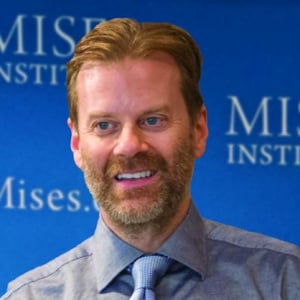
President, Mises Institute
Jeff Deist is president of the Mises Institute, where he serves as a writer, public speaker, and advocate for property, markets, and civil society. He takes particular interest in private legal systems and private money as tools for radically decentralizing political power. He previously worked on the congressional staff of Congressman Ron Paul, for whom he wrote hundreds of articles and speeches. In his years with Dr. Paul he worked with countless grassroots activists and organizations dedicated to reducing the size and scope of government.
Jeff also spent many years as an attorney advising private equity clients on mergers and acquisitions.
Principal, Ely & Company, Inc.
Bert Ely has specialized in deposit insurance and banking structure issues since 1981. In 1986, he became an early predictor of the S&L crisis and a taxpayer bailout of the FSLIC. In 1991, he was the first person to correctly predict the non-crisis in commercial banking; in 1992, he predicted an eventual taxpayer bailout of the Japanese banking system.
Bert continuously monitors conditions in the banking and S&L industries, monetary policy, and the growing federalization of credit risk. He has helped to draft legislation to enact the cross-guarantee concept for privatizing banking regulation and its related deposit insurance and systemic risks. He has testified on numerous occasions before congressional committees on banking issues and he often speaks on these matters to bankers and others.
Bert first established his consulting practice in 1972. Before that, he was the chief financial officer of a public company, a consultant with Touche, Ross & Company, and an auditor with Ernst & Ernst. He received his MBA from the Harvard Business School in 1968 and his Bachelor's degree in economics in 1964 from Case Western Reserve University.
General Counsel, Strive
Before joining Strive, Alexandra served as the Director of Regulatory Affairs at River Financial, where she handled all regulatory and government matters and served as product counsel. Prior to her time at River, Alexandra worked at the U.S. Department of Treasury, first in the General Counsel’s office and then as the youngest-ever Executive Secretary, where she worked directly with Secretary Mnuchin. Alexandra previously worked as an associate in the Washington, D.C. office of Akin Gump. She clerked for then-Justice Allison Eid on the Colorado Supreme Court and Judge Jennifer Elrod on the U.S. Court of Appeals for the Fifth Circuit. She holds a J.D. from the University of Texas and a B.A. from The King’s College.
Partner, Norton Rose Fulbright
Steven Lofchie advises financial institutions on regulatory issues and financial instruments.
In his regulatory practice, Steven counsels clients on securities laws, the CEA, and related bankruptcy issues. His transactional practice focuses on securities credit and derivative transactions.
Steven is the founder and manager of an acclaimed legal website (now renamed Fried Frank Regulatory Intelligence) that has been endorsed by former chairpersons of both the SEC and CFTC. Subscribers to the website include government regulators and major buy- and sell-side firms.
Chambers USA has ranked Steven in Band 1 for eight years running, for both financial services regulation and derivatives. He is the only lawyer in the country to be top-ranked in both of those categories. Steven was also part of the team that was named 2020 Regulatory Team of the Year by IFLR Americas. The Best Lawyers in America recognized Steven as “Lawyer of the Year” for Administrative/Regulatory Law in New York in 2017, and U.S. News and World Report ranked him as the best regulatory lawyer in New York for 2014. In 2012, a derivatives transaction developed by Steven was cited as the best international structured product of the year by International Financial Law Review.
Senior Fellow, Mises Institute
Alex J. Pollock is a Senior Fellow with the Mises Institute, providing thought and policy leadership on financial issues and the study of financial systems. His work includes cycles of booms and busts, financial crises with their political responses, housing finance, government-sponsored enterprises, risk and uncertainty, central banking, banking and financial regulation, corporate governance, retirement finance, student loans, and the politics of finance.
He previously served as the Principal Deputy Director of the Office of Financial Research in the U.S. Treasury Department 2019-2021. He was a Distinguished Senior Fellow with the R Street Institute 2015-2019 and 2021, and a resident fellow at the American Enterprise Institute, 2004-2015. Among the many aspects of his AEI work, he developed the One Page Mortgage Form to give borrowers in clear form the key information they need in order to know what they are committing themselves to. He was President and CEO of the Federal Home Loan Bank of Chicago from 1991 to 2004. There he invented the Mortgage Partnership Finance program, which successfully created front-end mortgage credit risk sharing beginning in 1997. His decades of banking experience include being a Visiting Scholar at the Federal Reserve Bank of St. Louis, 1991.
Pollock was a director of the CME Group 2004-2019 and of Ascendium Education Group 1989-2019. He is a director and past-chairman of the Great Books Foundation and a past president of the International Union for Housing Finance.
He is the co-author of Surprised Again! - The COVID Crisis and the New Market Bubble (2022), and the author of Finance and Philosophy—Why We’re Always Surprised (2018) and Boom and Bust: Financial Cycles and Human Prosperity (2011), as well as numerous articles and Congressional testimony.
Pollock is a graduate of Williams College, the University of Chicago, and Princeton University.
His work is available on alexjpollock.com.
Associate Professor of Law, Antonin Scalia Law School, George Mason University
Associate Professor of Law J.W. Verret joined the Antonin Scalia Law School, George Mason University faculty in 2008. In 2013, he took leave for two years to serve as the Chief Economist and Senior Counsel for the U.S. House Committee on Financial Services. He received his JD and MA in Public Policy from Harvard Law School and the Harvard Kennedy School of Government, respectively, in 2006. While in law school, Professor Verret served an Olin Fellowship in Law and Economics at the Harvard Program on Corporate Governance under the guidance of Prof. Lucian Bebchuk.
Professor Verret then served as a law clerk for Vice-Chancellor John W. Noble of the Delaware Court of Chancery. Prior to joining the faculty at Scalia Law, Professor Verret was an associate in the SEC Enforcement Defense Practice Group at Skadden, Arps in Washington, D.C. He has written extensively on corporate law topics, including Delaware's Guidance, co-written with Chief Justice Myron T. Steele of the Delaware Supreme Court. His academic work has been featured in the Yale Journal on Regulation, The Business Lawyer, the Delaware Journal of Corporate Law, the Stanford Law Review, the University of Pennsylvania Journal of Business Law, and the Virginia Law and Business Review. Professor Verret was selected by the Northwestern Law School Searle Center on Law, Regulation, and Economic Growth for a 2009-2010 Searle-Kaufmann Research Fellowship.
Professor Verret is also a Senior Scholar at the Mercatus Center Working Group on Financial Markets, where he regularly briefs Congressional staff, members of Congress, SEC Commissioners and other financial regulatory agencies on financial regulation topics. He also directs the Corporate Federalism Initiative, where he obtains research grants for a network of students and faculty scholars who study the division between states and the federal government as sources of corporate law. Professor Verret has been invited to testify before various House and Senate Committees four times during the financial crisis of 2009 regarding all of the central provisions of the Obama Administration's 2009 financial regulatory reform proposals. For a full list of Professor Verret's C-Span appearances, including testimony before the U.S. House of Representatives and the U.S. Senate, see http://www.c-spanvideo.org/jwverret.
Professor Verret has been an invited panelist for various television appearances, including an interview on The NewsHour with Jim Lehrer. Professor Verret has been quoted in various media on financial regulation and corporate law topics, including the New York Times, CNN Money, the CNN Political Ticker, CNBC, ABC News, Investor's Business Daily, ESPN.com, The American Banker, The American Lawyer, The Huffington Post, CBS.com, and AP News. Professor Verret's op-eds have been featured in Forbes, The Chicago Tribune, The Orange County Register, and The Wall Street Journal. Professor Verret is also a regular guest contributor to three of the most noted corporate law and financial regulation law blogs: the Harvard Law School Corporate Governance and Financial Regulation Forum, Deallawyers.com, and The Conglomerate.

How Risky Are the Banks Now? What Regulatory Reforms Make Sense?
William M. Isaac, Keith Noreika, Alex J. Pollock, Lawrence J. White
Six months ago, we experienced bank runs and three of the four largest bank failures...
How Risky Are the Banks Now? What Regulatory Reforms Make Sense?
William M. Isaac, Keith Noreika, Alex J. Pollock, Lawrence J. White
Six months ago, we experienced bank runs and three of the four largest bank failures...
How Risky Are the Banks Now? What Regulatory Reforms Make Sense?
A Regulatory Transparency Project Webinar
TeleforumLanguage Vandals: Defense of Language/Specific Meanings
Pittsburgh Lawyers Chapter
Pittsburgh, PAWhat’s Next for Crypto: Implications of Deflated Prices and Turmoil in Cryptocurrency Markets
Bert Ely, Alexandra Gaiser, Steven Lofchie, Alex J. Pollock, J.W. Verret
Events of 2022 brought a "crypto winter," with average prices of cryptocurrencies falling about 70%...
What’s Next for Crypto: Implications of Deflated Prices and Turmoil in Cryptocurrency Markets
Bert Ely, Alexandra Gaiser, Steven Lofchie, Alex J. Pollock, J.W. Verret
Events of 2022 brought a "crypto winter," with average prices of cryptocurrencies falling about 70%...
What’s Next for Crypto: Implications of Deflated Prices and Turmoil in Cryptocurrency Markets
Topics
So What if the Fed Loses Money?
Can the Federal Reserve lose money? If so, what does it matter? In fact, within...
Language and Lawyering in an Age of PC
Pittsburgh, PATopics
Originally Speaking: Climate Change and Common Law Public Nuisance
Originally Speaking is a written debate series that approaches a contemporary topic from diverse perspectives. The...