
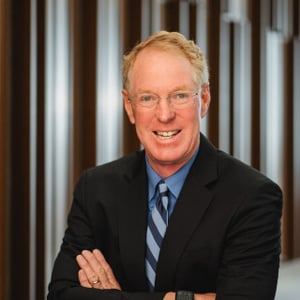
Ronald N. Boyce Presidential Professor of Criminal Law and University Distinguished Professor of Law, The University of Utah College of Law
Paul G. Cassell is an internationally recognized legal scholar on criminal and civil justice, crime victims' rights, constitutional law, evidence, judicial process, and other legal issues. Cassell received a B.A. (1981) and a J.D. (1984) from Stanford University, where he graduated Order of the Coif and was President of the Stanford Law Review. He clerked for then-Judge Antonin Scalia when Scalia was on the U.S. Court of Appeals for the D.C. Circuit (1984-85) and for Chief Justice Warren Burger of the United States Supreme Court (1985-86). Cassell then served as an Associate Deputy Attorney General with the U.S. Justice Department (1986-88) and as an Assistant U.S. Attorney for the Eastern District of Virginia (1988 to 1991). Cassell joined the faculty at the College of Law in 1992, where he taught full-time until he was sworn in as a U.S. District Court Judge for the District of Utah in July 2002. In November 2007, he resigned his judgeship to return full-time to the College of Law to teach, write, and litigate concerning issues relating to crime victims' rights and criminal and civil justice reform. Professor Cassell has also published numerous law review articles in journals such as the Stanford Law Review, the Michigan Law Review, the Harvard Journal of Law and Public Policy, and the Journal of Criminal Law and Criminology. He is a co-author of the nation's only law school textbook on crime victims' rights, Victims in Criminal Procedure (various editions, most recently in its fifth edition published in 2025). Professor Cassell has argued pro bono cases relating to criminal procedure and crime victims' rights before the United States Supreme Court, the 2nd, 4th, 5th, 6th, 7th, 8th, 9th, 10th, 11th, and D.C. Circuits (including the 5th and 11th Circuits en banc), several U.S. District Courts, the Utah Supreme Court, and the Arizona Supreme Court. In 2020, Cassell received the Ronald Wilson Reagan Public Policy Award - National Crime Victims' Service Award from the U.S. Department of Justice. Cassell is a member of the American Law Institute, a fellow of the American Bar Foundation, and an inaugural member of the Council on Criminal Justice. He is also an occasional blogger at The Volokh Conspiracy.
Professor of Law, The University of Utah S.J. Quinney College of Law
In collaboration with other leading experts at the University of Utah S.J. Quinney College of Law, Professor Guiora helps lead the school's efforts to provide cutting-edge research, innovative training, and public service initiatives in the prevention and mitigation of global conflict.
Professor Guiora writes and lectures extensively on issues such as the legal aspects of counterterrorism, rearticulating international law, global perspectives on counterterrorism, terror financing, international law and morality in armed conflict, educating IDF commanders and soldiers on international law and morality, religion and terrorism, domestic terror courts, self defense, and geo-politics and international law. He has testified before the U.S. Senate Judiciary Committee on handling terrorism detainees within the American justice system, and before a subcommittee of the U.S. House of Representatives Committee on Homeland Security on the effectiveness, accountability, and resilience in homeland security. As an expert commentator, Professor Guiora is frequently interviewed by and quoted in the media, including CNN, the Washington Post, PBS, the New York Times, the Wall Street Journal, the Los Angeles Times, the Chicago Sun Times, the BBC, the Associated Press, the Jersualem Post, Al-Jazerrah TV, the Bloomberg Report, C-Span, the Christian Science Monitor, Fox TV, the New York Daily News, and NPR.
Prior to joining the faculty at the College of Law, Professor Guiora was Professor of Law and the Founding Director of the Institute for Global Security Law and Policy at Case Western Reserve University School of Law. Before joining Case Western in 2004, Professor Guiora served for 19 years in the Israel Defense Forces Judge Advocate General's Corps (Lt. Col. Ret.), where he held a number of senior command positions, including Commander of the IDF School of Military Law, Judge Advocate for the Navy and Home Front Command, and the Legal Advisor to the Gaza Strip. During his military service, Professor Guiora was involved in the capture of the PLO weapons ship Karine A, implementation of the Gaza-Jericho Agreement, the Israeli-Palestinian Interim Agreement, and "Safe Passage" between the Gaza Strip and the West Bank. Professor Guiora also had command responsibility for the development of an interactive software program that teaches an eleven point code-of-conduct based on International Law, Israeli Law, and the IDF code. This internationally acclaimed program is used to teach IDF soldiers and commanders their obligations regarding a civilian population during an armed conflict. Based on this experience, Professor Guiora was invited by the Center for Civic Education and Leadership Development of the Armed Forces of the Federal Republic of Germany to discuss research and developments in the ethical education of armed forces.
Professor Guiora teaches Criminal Law, Criminal Procedure, International Law, Global Perspectives on Counterterrorism, and Religion and Terrorism, and he uses innovative scenario-based instruction methods to educate students regarding national and international security issues.
Partner, Sidley Austin LLP
RICHARD D. KLINGLER is a partner based in the Washington, D.C., office. He focuses his practice on national security matters and complex litigation in U.S. courts involving constitutional law and cross-border disputes. He has extensive litigation and regulatory experience working on behalf of telecommunications, finance, energy, and media clients. He has participated in matters before the U.S. Supreme Court, other appellate courts, and trial and regulatory bodies. He has worked extensively on matters being addressed in Congressional and other investigations or pending before Executive Branch departments and agencies.
Mr. Klingler joined the firm in 1990 and first became a partner in 1996. He served from 2006-2007 as the General Counsel and Legal Adviser on the National Security Council staff, advising senior government officials on an array of intelligence, defense, foreign policy, litigation, and investigatory matters. From 2005-2007, he served in the Office of the Counsel to the President, concluding as Senior Associate Counsel to the President. His work focused on litigation, Congressional investigations, and issues before the Departments of State and Homeland Security. He worked from 1997-2002 as an investment banker with Credit Suisse First Boston on equity capital market and M&A transactions in the telecommunications, energy, and finance sectors. From 1994-96 he worked in Australia as Regulatory Advisor and then Regulatory Counsel for Telstra Corp., where he addressed litigation, legislative, transactional, and regulatory issues.
Mr. Klingler is an Adjunct Fellow with the American Enterprise Institute, addressing counter-terrorism legal issues, and, from 1993-94, was Guest Scholar at The Brookings Institution, which published his book, The New Information Industry: Regulatory Challenges and the First Amendment (1996). He testified several times before Congress on Constitutional, counter-terrorism, and sovereign immunity issues, and has written on public policy matters for various national publications.
Mr. Klingler was a law clerk to U.S. Supreme Court Justice Sandra Day O'Connor (1989-90) and Judge Kenneth W. Starr of the U.S. Court of Appeals for the D.C. Circuit (1988-89). He obtained law degrees from Oxford University, which he attended as a Rhodes Scholar, and from Stanford Law School, where he was Senior Articles Editor of The Stanford Law Review and a member of Order of the Coif.
Co-Founder, Dickey & Campbell PLC
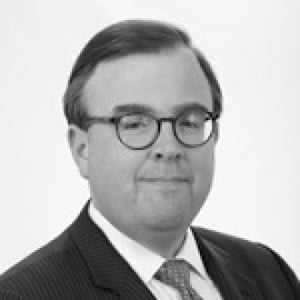
Partner, Morgan, Lewis & Bockius LLP
Michael Edney defends executives and corporations in criminal prosecutions and agency enforcement actions, successfully challenging numerous regulatory agencies—from the Justice Department to the US Securities and Exchange Commission and the US Commodity Futures Trading Commission, among others—against federal government overreach. Many of the regulations Mike has convinced the courts to reverse would have arbitrarily ended hundreds of businesses absent the courts’ intervention. He has also successfully challenged government decisions to break contracts and end projects in cooperation with private industry.
In addition to his criminal defense practice, Mike regularly brings actions challenging government agency regulations as illegal and unconstitutional before they are enforced. He has sued government agencies and reversed their attempted regulations seeking to upend the energy, financial, and tobacco industries.
His civil litigation practice spans beyond anti-regulatory suits. He has brought some of the leading First Amendment cases in the country. On behalf of The Washington Free Beacon, he vindicated the publication’s First Amendment right to access sealed court records before the Arizona Supreme Court. He has defended corporations in bet-the-company litigation concerning securities, environmental, employment, and fair housing. He has represented states at the request of their governors. He has repeatedly served as counsel for former Attorneys General of the United States when they appear as amici curiae before the Supreme Court.
Mike also represents clients on numerous national security matters, including the Classified Information Procedures Act, the Foreign Agent Registration Act, matters before the Committee on Foreign Investment in the United States, government cybersecurity investigations into companies regarded as critical national infrastructure, the handling of classified information by government contractors, and prepublication review of books authored by former government officials for sensitive and classified information.
His private practice draws from a half decade of prior government service. During the administration of former President George W. Bush, he served as deputy legal advisor to the National Security Council at the White House and in the Office of Legal Counsel at the United States Department of Justice, where he helped the administration address many legal issues pertaining to the United States' post-9/11 campaign against terrorism.
Before joining Morgan Lewis, Mike was a litigation partner at another global law firm.
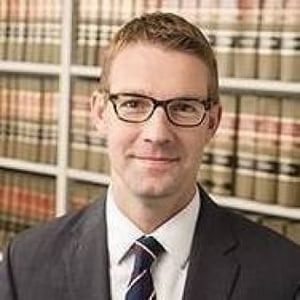
Chief Policy Advisor and Senior Legal Counsel, Office of Governor Kim Reynolds
Akin Gump Strauss Hauer & Feld, LLP
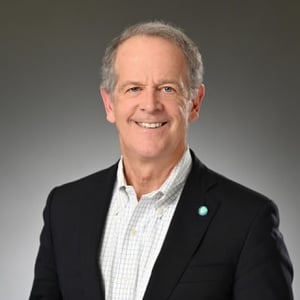
Visiting Professor of Public and International Affairs, Charles and Marie Robertson Visiting Professor, Princeton School of Public and International Affairs
Martin S. Flaherty is a longtime is Visiting Professor at the Princeton School of Public and International Affairs, where he was Fellow in the Program in Law and Public Affairs. He is also Leitner Family Professor of International Human Rights Law and Founding Co-Director of the Leitner Center for International Law and Justice at Fordham Law School. Professor Flaherty also currently teaches at Columbia Law School and Barnard College. Previously he has taught at China University of Political Science and Law and the National Judges College in Beijing, Sungkyunkwan University in Seoul, Queen’s University Belfast. Professor Flaherty earlier served as a law clerk for Justice Byron R. White of the U.S. Supreme Court and Chief Judge John Gibbons of the U.S. Court of Appeals for the Third Circuit.
Flaherty received a J.D. from Columbia Law School, where he was Book Reviews and Articles Editor of the Columbia Law Review, an M.A. and M.Phil., with distinction, from Yale (in history), and B.A. summa cum laude from Princeton. For the Leitner Center, Human Rights First, and the New York City Bar Association, he has led or participated in human rights missions to Northern Ireland, Turkey, Hong Kong, Mexico, Malaysia, Kenya, Romania and China. Professor Flaherty is currently the President of the American Association of the International Commission of Jurists, https://www.aaicj.org, a member of the Council on Foreign Relations, and a legal expert advisor at the Sixth Committee of the United Nations General Assembly.
Flaherty’s scholarly publications focus upon international human rights, foreign affairs, and constitutional law and history, and appear in such journals as the Columbia Law Review, the Yale Law Journal, the Michigan Law Review, the University of Chicago Law Review, Constitutional Commentary, the Harvard Journal of Law and Policy, and the Harvard Human Rights Journal. He has written, appeared, or been quoted in The New York Times, The Washington Post, The New Yorker, The Boston Globe, The Daily News, Newsday, the PBS Newshour, CNN, MSNBC, and NPR. He is also the author of the Restoring the Global Judiciary: Why the Supreme Court Should Rule in Foreign Affairs (Princeton University Press, 2019).
Associate Dean and Associate Professor of Law, University of Notre Dame Law School
William K. Kelley teaches constitutional law and administrative law, and focuses on public law issues in his scholarship. He serves as Associate Dean with responsibility for coordinating special projects. During Spring 2008 semester, he will act as Associate Dean for Faculty Research. From 2005-2007, he served in the White House as Deputy Counsel to the President. In that capacity, he was responsible for advising the President of the United States on all legal matters affecting the Executive Branch. He joined the faculty in 1995 after practicing with two major law firms, and serving from 1991-1994 as assistant to the solicitor general at the Department of Justice in Washington, D.C. Professor Kelley began his legal career by serving as law clerk to the Honorable Kenneth W. Starr on the U.S. Court of Appeals for the District of Columbia Circuit (1987-88), as well as for Chief Justice Warren E. Burger and Associate Justice Antonin Scalia (1988-89). He earned his B.A. from Marquette University in 1984, where he was a member of Phi Beta Kappa, and his J.D. from Harvard Law School in 1987, where he served as Supreme Court editor of the Harvard Law Review.
Professor of Law, Fordham University School of Law
Professor Andrew Kent teaches and writes about constitutional law, foreign relations law, federal courts and procedure, national security law, public international law, professional responsibility and legal ethics. He received the Dean’s Distinguished Research Award (2016-17) for his scholarship.
After graduating from Yale Law School, Professor Kent clerked for the Hon. Robert A. Katzmann of the U.S. Court of Appeals for the Second Circuit and the Hon. Carol B. Amon of the U.S. District Court for the Eastern District of New York. Before joining Fordham’s faculty, he was a Climenko Fellow at Harvard Law School and an attorney at both Sullivan & Cromwell and WilmerHale.
From 2014-2015, Professor Kent served as Senior Counsel to the Solicitor General, State of New York, Office of the Attorney General.
Professor Kent is a member of the New York City Bar’s Professional Responsibility Committee. He provides appellate representation to the indigent as a member of the Pro Bono Panel of the U.S. Court of Appeals for the Second Circuit.

Fellow, National Security Institute, Antonin Scalia Law School, George Mason University
Vince Vitkowsky chaired the Executive Committee of the Federalist Society’s International and National Security Law and Policy Practice Group for over a decade. He is also a Fellow at the National Security Institute of George Mason University Law School. Vince spent 45 years in private practice, primarily in AmLaw 100/200 firms and their spin-offs. His practice included domestic and international commercial arbitration and litigation, as well as cyber risks and liabilities. Vince's current focus is on national security policy, artificial intelligence, cybersecurity, and counterterrorism. He has often written and spoken on national security and other public policy issues. Among other affiliations, Vince has been an Adjunct Fellow at the Center for Law and Counterterrorism of the Foundation for the Defense of Democracies, a member of the Executive Committee of the American Branch of the International Law Association, and Co-Chair of the Committee on Interventions and Trial Observations of the International Bar Association’s Human Rights Institute. He received his B.A. from Northwestern University and his J.D. from Cornell Law School.

Miranda & Terror Suspects - Podcast
Paul G. Cassell, Amos N. Guiora, Richard D. Klingler
To what extent are law enforcement personnel required to read the standard Miranda warning to...
From Guantanamo Bay to Thomson, Illinois: A Debate on the Detention and Prosecution of Alleged Terrorists in 2010 and Beyond
Angela Campbell, Michael J. Edney, Larry J. Eisenhauer, Ryan G. Koopmans
Approximately one year after President Barack Obama announced his intention to close the detainee holding...
Will Trying Suspected Terrorists in Federal Court Advance the Interests of Justice and National Security?
James J. Benjamin, Reuvain Borchardt, Martin Flaherty, William K. Kelley, Andrew Kent, Vincent Vitkowsky
The Federalist Society's Fordham Student Chapter, New York Lawyers Chapter, and the International & National...
Criminal Confessions and Police Tactics: TN Supreme Court Tosses Murder Conviction under Miranda
Aaron Chastain
In a unanimous decision in January, the Tennessee Supreme Court suppressed two confessions made by...