
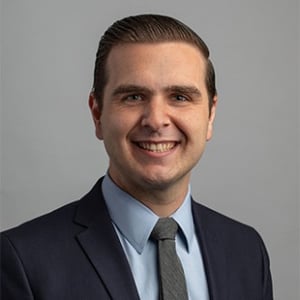
Litigation Fellow, Institute for Justice
Trace Mitchell is a Litigation Fellow at the Institute for Justice.
Prior to joining IJ, Trace clerked for the Honorable Judge Biran of the Court of Appeals of Maryland. He previously served as Policy Counsel for NetChoice, a technology-focused trade association dedicated to the principles of free enterprise and free expression on the internet, where he focused on issues surrounding content moderation, antitrust policy, and entrepreneurialism and innovation more generally. Before that, Trace worked as a Research Associate with the Mercatus Center and as a Program Associate with the Liberty & Law Center at George Mason University. Trace was the 2019 winner of Think Freely Media’s “Great Communicators Tournament” and his writing has appeared in the Wall Street Journal, Law360, InsideSources, The Hill, National Review, as well as various other publications nationwide.
Trace received his undergraduate degree from Florida Gulf Coast University and his law degree from the George Mason University, Antonin Scalia Law School.
Trace is a member of the D.C. bar.
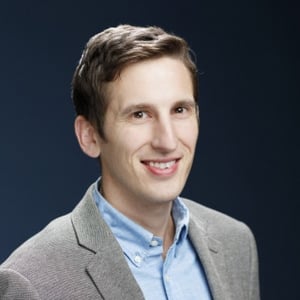
Legal Fellow, Center for Constitutional Studies, Cato Institute
Brent Skorup is a legal fellow in the Cato Institute’s Robert A. Levy Center for Constitutional Studies.
Before joining Cato, he was a senior research fellow at the Mercatus Center at the George Mason University. His research areas include free speech, technology law, Fourth Amendment protections, regulation, and property law. Skorup has published pieces in economics and law journals and in popular media, including The Wall Street Journal, The New York Times, Bloomberg Law, Reuters, and Wired. He’s appeared as a TV and radio interview guest for news outlets like C‑SPAN, NPR, CBS News, ABC News, and CNBC Asia.
The Pennsylvania Supreme Court, a dissenting opinion at the Illinois Supreme Court, and the ALI's Restatement of the Law of Property have cited his legal research and he has testified as a technology and legal expert in legislative hearings in several states. Skorup has been appointed to several federal and state advisory bodies and he is currently a member of the Texas Advanced Air Mobility Advisory Committee.
Skorup has a BA in economics from Wheaton College and a law degree from the George Mason University School of Law, where he was articles editor for the Civil Rights Law Journal. He was a legal clerk at the FCC’s wireless bureau and Office of General Counsel and at the Energy and Commerce Committee in the U.S. House of Representatives.
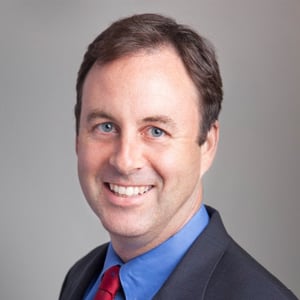
Senior Policy Analyst, Speech, Privacy, and Technology Project, ACLU
Jay Stanley (@JayCStanley) is senior policy analyst with the ACLU Speech, Privacy, and Technology Project, where he researches, writes and speaks about technology-related privacy and civil liberties issues and their future. He is the editor of the ACLU’s Free Future blog and has authored and co-authored a variety of influential ACLU reports on privacy and technology topics. Before joining the ACLU, he was an analyst at the technology research firm Forrester, served as American politics editor of Facts on File’s World News Digest, and as national newswire editor at Medialink. He is a graduate of Williams College and holds an M.A. in American History from the University of Virginia.
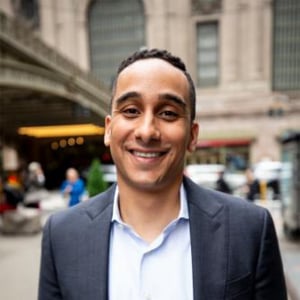
Nick Ohnell Fellow, The Manhattan Institute
Rafael Mangual is the Nick Ohnell Fellow at the Manhattan Institute, a contributing editor of City Journal, and a member of the Council on Criminal Justice. His first book, Criminal (In)Justice, was released in July 2022. He has authored and coauthored a number of MI reports and op-eds on issues ranging from urban crime and jail violence to broader matters of criminal and civil justice reform. His work has been featured and mentioned in a wide array of publications, including the Wall Street Journal, The Atlantic, New York Post, The New York Times, The Washington Post, Philadelphia Inquirer and City Journal. Mangual also regularly appears on Fox News and has made a number of national and local television and radio appearances on outlets such as C-SPAN and Bloomberg Radio. In 2020, he was appointed to serve a four-year term as a member of the New York State Advisory Committee of the U.S. Commission on Civil Rights.
Prior to joining MI in 2015, Rafael worked in corporate communications for the International Trademark Association. He holds a B.A. in corporate communications from the City University of New York’s Baruch College and a J.D. from DePaul University in Chicago, where he was president of the Federalist Society and vice president of the Appellate Moot Court team. After graduating from law school, Mangual was inducted into the Order of the Barristers, a national honor society for excellence in oral and written advocacy.

Senior Vice President for Legal Studies, Cato Institute
Clark Neily is senior vice president for legal studies at the Cato Institute. His areas of interest include constitutional law, overcriminalization, civil forfeiture, police accountability, and gun rights. Neily is the author of Terms of Engagement: How Our Courts Should Enforce the Constitution’s Promise of Limited Government. His writing has appeared in the Wall Street Journal, Forbes, and National Review Online, as well as various law reviews, including the Harvard Journal of Law and Public Policy, George Mason Law Review, Georgetown Journal of Law and Public Policy, NYU Journal of Law and Liberty, and Texas Review of Law and Politics. Neily is a frequent guest speaker and lecturer for the Federalist Society, Institute for Humane Studies, and American Constitution Society.
Before joining Cato in 2017, Neily was a senior attorney and constitutional litigator at the Institute for Justice and director of the Institute’s Center for Judicial Engagement. He is also an adjunct professor at the University of Texas School of Law, where he teaches constitutional litigation and public-interest law.
Neily served as co-counsel in District of Columbia v. Heller, the historic case in which the Supreme Court held for the first time that the Second Amendment protects an individual right to own a gun for self-defense.
Neily began his legal career as a law clerk to Judge Royce Lamberth on the U.S. District Court for the District of Columbia. After that he spent four years in the trial department of the Dallas-based firm Thompson & Knight. Neily received his undergraduate and law degrees from the University of Texas, where he was Chief Articles Editor of the Texas Law Review.
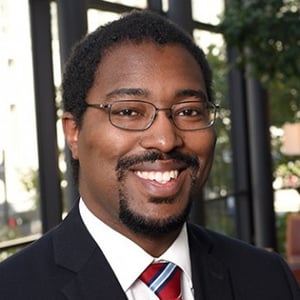
Partner, Taft Stettinius & Hollister LLP
Philip litigates complex matters in state and federal courts. He has briefed appeals in multiple U.S. Courts of Appeals, including the Sixth, Seventh, and Ninth Circuits, as well as state appellate courts in Ohio, Kentucky, and Georgia. Philip has also represented amici at both the cert petition and merits stages in the U.S. Supreme Court.
Prior to joining Taft, Philip served as a law clerk for Judge Raymond M. Kethledge of the U.S. Court of Appeals for the Sixth Circuit, Judge Amul R. Thapar of the U.S. District Court for the Eastern District of Kentucky, and Judge Lavenski R. Smith of the U.S. Court of Appeals for the Eighth Circuit.
Philip serves on the board of directors for the Cincinnati and Northern Kentucky lawyers chapters of the Federalist Society. He was a 2018 James Wilson Fellow with the James Wilson Institute, a 2013 John Marshall Fellow with the Claremont Institute Center for Constitutional Jurisprudence, and a 2011 Blackstone Fellow with the Alliance Defending Freedom.
Philip received his undergraduate degree, with Highest Honors, from Ouachita Baptist University. He received his J.D. from the University of Virginia School of Law, where he served as the submissions review editor for the Journal of Law and Politics.
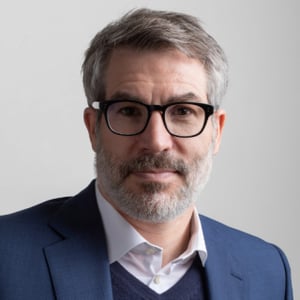
Senior Fellow and Chair, Violent Crime Work Group, at the Council on Criminal Justice
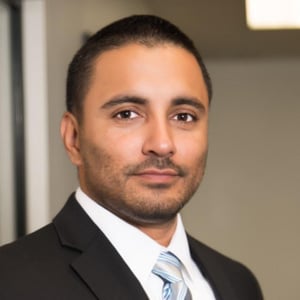
Director, Giffords Center for Violence Intervention
Paul is the director of Giffords Law Center’s Community Violence Initiative. Paul was raised in Southeast Los Angeles in an environment with gangs, drugs, and gun violence. He began his career as a volunteer for a hospital-based violence intervention organization and in 2005 co-founded Southern California Crossroads, a nonprofit organization that provides violence prevention and intervention services throughout the greater Los Angeles region.
In 2012, Paul co-founded the national Gang Violence Prevention and Intervention Conference, which brings over 800 practitioners in the field of community violence together to share best practice approaches to violence. In addition, Paul has also worked as a consultant on community violence in a number of places around the world, including Guatemala, London, the Dominican Republic, Ireland, Tunisia, St. Kitts and Nevis, and El Salvador.
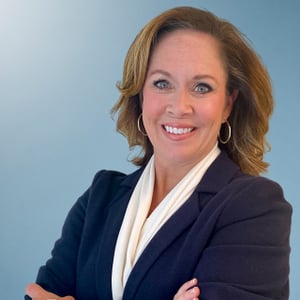
Partner, Faegre Drinker
Erica MacDonald is a former U.S. Attorney and district court judge who has successfully litigated hundreds of cases in federal court and presided over thousands of cases in state court for more than two decades. She serves clients in white collar defense, internal investigations, trial strategies and quasi-judicial matters such as monitorships. Erica knows how to run investigations, how to try and win cases, how to work collaboratively with clients and counsel, and how to work with the media in any crisis situation.
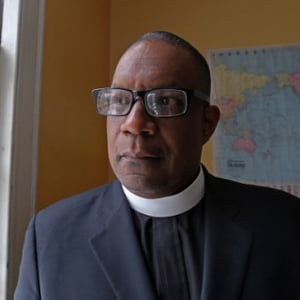
Associate Pastor, Azusa Christian Community, Azusa Christian Community and Seymour Institute for Black Church and Policy Studies
Reverend Mark V. Scott is the Associate Pastor of the Azusa Christian Community in Boston. The Azusa Christian Community seeks to follow Jesus’ inaugural declaration to under the anointing of the Holy Spirit preach good news to the poor. Reverend Scott is a Fellow with the Seymour Institute for Black Church and Policy Studies. He currently works at the Boston Public Health Commission as the Director of the Division of Violence Prevention. He is the Board chair for the Massachusetts Coalition to Prevent Gun Violence.
He is a board member of the Ella J. Baker House where he helped create the Violence Reduction Task Force. He directed the Community Health Worker program for the Codman Square Health Center. He was involved with Amachi effort to mobilize people of faith to mentor children who had a mother or father in prison. He served in the White House Office of Faith-Based and Community Initiatives and in the U.S. Air Force.
Reverend Scott is married with four children and two grandchildren.

Judge, United States Court of Appeals, Sixth Circuit
Amul R. Thapar serves as a judge on the United States Court of Appeals for the Sixth Circuit. His judicial career began in 2007 when President George W. Bush nominated him to serve on the Eastern District of Kentucky, making him the first South Asian Article III judge in American history. In 2017, he became President Donald J. Trump’s first appellate court nominee.
Before joining the bench, Judge Thapar served as the United States Attorney for the Eastern District of Kentucky. While United States Attorney, Judge Thapar worked on the Attorney General’s Advisory Committee (“AGAC”) and chaired the AGAC’s Controlled Substances and Asset Forfeiture subcommittee. He also served on the Terrorism and National Security subcommittee, the Violent Crime subcommittee, and the Child Exploitation working group.
Judge Thapar has worked in private practice, at Williams & Connolly in Washington, D.C., and Squire, Sanders & Dempsey in Cincinnati, Ohio. He also served as an Assistant United States Attorney in both the Southern District of Ohio and the District of Columbia.
Judge Thapar received his undergraduate degree from Boston College and his law degree from the University of California, Berkeley. After graduating, Judge Thapar worked as a law clerk to the Honorable S. Arthur Spiegel of the United States District Court for the Southern District of Ohio, and the Honorable Nathaniel R. Jones of the United States Court of Appeals for the Sixth Circuit.
Judge Thapar has also published in the Yale Law Journal, Michigan Law Review, and Catholic University Law Review. He teaches courses on originalism, the Federalists and Anti-Federalists, and legal writing at Notre Dame Law School, the University of Virginia School of Law, and Vanderbilt Law School.

Judge, United States Court of Appeals, Third Circuit
Stephanos Bibas is a judge on the U.S. Court of Appeals for the Third Circuit. Judge Bibas was previously a professor of law and criminology at the University of Pennsylvania Law School. As director of the Penn Law Supreme Court Clinic, he argued six cases before the Supreme Court of the United States and filed briefs in dozens of others. He graduated summa cum laude and Phi Beta Kappa from Columbia University in 1989 with a B.A. in political theory and from Oxford University in 1991 with a B.A. in jurisprudence. He then earned his J.D. from Yale Law School in 1994.
After graduating from Yale Law, Judge Bibas clerked for Judge Patrick Higginbotham of the U.S. Court of Appeals for the Fifth Circuit and Justice Anthony Kennedy on the Supreme Court and was a litigation associate at Covington & Burling LLP in Washington, D.C. Thereafter, Judge Bibas served as an Assistant U.S. Attorney in the Southern District of New York, where he successfully prosecuted the world’s leading expert in Tiffany stained glass for hiring a grave robber to steal priceless Tiffany windows from cemeteries. Before his tenure at Penn Law, Judge Bibas taught at the University of Chicago Law School and the University of Iowa College of Law and was a research fellow at Yale Law School. He has published two books and seventy scholarly articles.
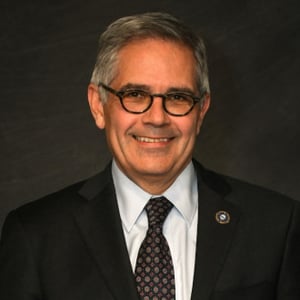
District Attorney, City of Philadelphia
Lawrence S. Krasner was officially sworn in on January 2, 2018, as the City of Philadelphia’s 26th District Attorney. Before being elected District Attorney, Mr. Krasner served of-counsel at Greenblatt, Pierce, Funt, and Flores, LLC. Larry was born in 1961 in St. Louis, the son of a World War II veteran and author father and evangelist mother. After attending public schools in St. Louis and the Philadelphia area, Larry earned degrees from the University of Chicago and Stanford Law School with the help of student loans and scholarships.
Mr. Krasner attended public school in the St. Louis and Philadelphia areas. He received his undergraduate degree at the University of Chicago in 1983 and his law degree from Stanford Law School in 1987, where he was selected to the Stanford Law Review. After multiple offers of employment in prosecutors’ and public defenders’ offices throughout the country, he worked as a public defender in Philadelphia from ’87 – ’91 and was then promoted to the Federal Public Defender’s Office in Philadelphia (’91- ’93). In 1993 he started his own private practice, specializing in criminal defense and police misconduct matters. He has remained in private practice ever since. During that time, Mr. Krasner has tried thousands of bench and jury trials in criminal and civil court in the Philadelphia area as well as other counties and states.
Throughout his 30 year career, Mr. Krasner has also proudly demonstrated a steadfast commitment to social justice, having defended protesters pro bono who were involved with movements including ACT UP, Black Lives Matter, progressive clergy with POWER, Casino-Free Philadelphia, DACA Dreamers, Decarcerate PA, anti-gun clergy with Heeding God’s Call, anti-poverty and homelessness advocates with Kensington Welfare Rights Union, Occupy Philly and Reclaim Philadelphia, and Grannies for Peace, among many others.
He has resided in Philadelphia for over 30 years with his wife of 28 years. His wife has been a judge of the Court of Common Pleas for 17 years. They have two adult sons.
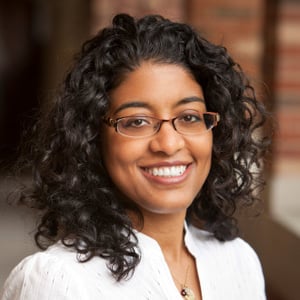
Walton Hale Hamilton Professor of Law, Yale Law School
Tracey Meares is the Walton Hale Hamilton Professor and a Founding Director of the Justice Collaboratory at Yale Law School. Before joining Yale, she was a professor at the University of Chicago Law School from 1995 to 2007. She was the first African American woman granted tenure at both law schools. Meares is a nationally recognized expert on policing in urban communities, who has worked extensively with the federal government, including being a member of President Barack Obama’s Task Force on 21st Century Policing. In 2019, Meares was elected a member of the American Academy of Arts and Sciences.
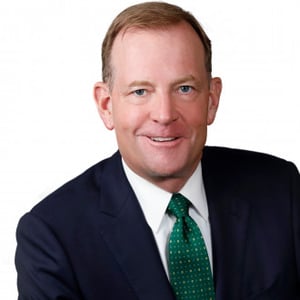
Partner, King & Spalding LLP
Former U.S. Attorney for the Eastern District of California, a 34-county district with an area that stretches from the Oregon border to Bakersfield, Greg Scott is an experienced trial lawyer who represents major companies facing government investigations and litigation, with a focus in the healthcare, retail, and construction industries. He has extensive knowledge on matters involving consumer protection, construction disputes, the Foreign Corrupt Practices Act (FCPA) and the False Claims Act (FCA).
Greg represents corporations under investigation by state district attorneys concerning potential violations of consumer protection laws, as well as corporations operating senior assisted livingfacilities under investigation by the state attorney general regarding potential violations of elder abuse laws. In addition, he represents construction companies under investigation by state district attorneys when employees are involved in serious accidents at worksites.
A retired Lieutenant Colonel after serving more than 20 years in the California Army National Guard & United States Army Reserve, Greg went on to become a deputy district attorney in Contra Costa County and twice-elected District Attorney of Shasta County. He also served as an Adjunct Professor of National Security Law at the University of the Pacific, McGeorge School of Law following his first term as U.S. Attorney for the E.D. of California. Between his two terms as U.S. Attorney for the E.D. of California, Greg was the vice chair of the white-collar defense and corporate investigations practice at an AmLaw 50 firm.
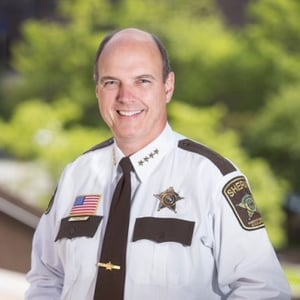
Sheriff (Ret.); Co-Founder and Principal Consultant, Public Safety Strategies Group LLC
Rich Stanek is co-founder and Principal Consultant with Public Safety Strategies Group, LLC., bringing his wealth of knowledge from 36 years of public safety experience to clients across the country, including organizational leadership, agency management, national law enforcement best practices, crime reduction strategies, public policy advocacy, corporate security, and expert testimony.
Rich served as the 27th Sheriff of Hennepin County, Minnesota for 12 years, with responsibility for the safety and security of 1.2 million residents. He managed over 1100 employees and volunteers, a budget of $125 million, and provided care and custody for inmates in the largest Jail and Sheriff’s Office in the Upper Midwest.
He is the author of numerous publications providing education for residents regarding emerging public safety and justice issues: Mental Illness among Jail inmates, Opioid Abuse and Addiction, the nexus between Mass Shootings and Mental Illness, the Collapse of the 35W Bridge, Intelligence-led Policing, and FirstNet, the dedicated National Public Safety Broadband Network for First Responders.
Rich served two terms on the Board of Directors for FirstNet: its mission is to develop, build and operate the Nationwide Public Safety Broadband Network that equips first responders. FirstNet operates within the U.S. Department of Commerce with a nonpartisan Congressional authorization and $7 billion appropriation. Rich was first appointed in 2014 and in his second term, Rich served as FirstNet’s Chair of Outreach and Advocacy efforts nationwide.
Rich started his policing career in 1983, with the Cottage Grove Police Department and joined the Minneapolis Police Department in 1986; he rose through the ranks to Captain and led the Criminal Investigations Division (Homicide, Burglary, Robbery, Rape, Gangs & Narcotics). During those years, Rich developed strong relationships with residents, pastors, business owners, community groups and local elected leaders; they developed strategies to fight and lower violent crime in Minneapolis. They worked to elect Rich as Hennepin County Sheriff and he re-prioritized Agency personnel and resources for three proven crime fighting initiatives: a Violent Offender Task Force, Criminal Information Sharing & Analysis Unit (CISA) to serve the Sheriff’s Office and 36 local Police Departments in Hennepin County and 7 Counties regionally; and new Crime Lab technology (DNA testing, firearms testing, and Property Crime initiatives). As a result of his leadership, these efforts, and new partnerships, violent crime in Hennepin County dropped by 38% from 2006-2018.
Prior to serving as Sheriff, Rich was appointed by Governor Tim Pawlenty as the State’s Commissioner of Public Safety, and Director of Homeland Security, overseeing nine State Agencies with over 2200 employees; including the Minnesota State Patrol, Bureau of Criminal Apprehension, Emergency Management, Office of Justice Programs and State Fire Marshal.
Rich came to the forefront of State leadership when he was appointed Chairman of the State Peace Officer Standards & Training Board (POST) and then elected as a State Legislator; he served for 5 terms while also working as a Minneapolis Police Officer. He chaired the House of Representatives Public Safety Policy & Finance Committees and authored numerous key legislative initiatives, including Minnesota’s entry into the Nation’s Emergency Management Assistance Compact (“EMAC”), and post-9/11 information sharing and communications initiatives to better equip First Responders.
At both the state and national level, Rich has become well-known for his strong and visible advocacy for advancements in law enforcement public policy, technology, education, and best practices, through his elected and appointed leadership roles. As a result, Rich is a much sought-after media spokesperson, faculty presenter and keynote speaker.
During his service as Sheriff, Rich served as President of the Major County Sheriffs of America (MCSA), Vice President of the National Sheriffs Associations (NSA); and President of the Minnesota Sheriff’s Association (MSA). He served as a Law Enforcement Senior Advisor to the Director of National Intelligence (DNI), Secretary of Department of Homeland Security (DHS), and the Director of the Federal Bureau of Investigation (FBI); He is the Past President of the Leaders in National Counterterrorism (LinCT); and served on the Criminal Intelligence Coordinating Council (CICC) and FBI’s Joint Terrorism Task Force (JTTF), where he held a top-secret national security clearance. Rich has testified numerous times before Congress regarding community policing strategies, 21st century Policing, countering violent extremism and community engagement.
Rich’s educational background includes an M.A. in Public Administration from Hamline University and a B.A. in Criminal Justice from the University of Minnesota. Additional professional training includes; the Southern Police Institute in Louisville, PERF’s Senior Management Institute for Police at Cambridge University, the U.S. Army War College in Pennsylvania, FBI National Executive Institute in Virginia and the Leaders in National Counterterrorism Training in Australia and the Jewish Institute for National Security Affairs (JINSA) in Israel.
Rich lives in Maple Grove, Minnesota, and has been married to his wife, Sally for 36 years; they have 2 adult children and a dog named Teddy. Rich is an avid Northwoods outdoorsman; where he enjoys time at his northern Minnesota cabin; hunting, fishing, boating, hiking and snowmobiling.
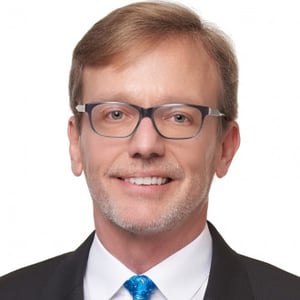
Managing Partner and Co-Founder, EducationCounsel
With extensive background in providing legal, policy, strategic planning, and advocacy services to educators throughout the country, Mr. Coleman focuses principally on issues of access, diversity, inclusion, and institutional quality in post-secondary education.
Mr. Coleman is a 1984 honors graduate of Duke University School of Law and a 1981 Phi Beta Kappa graduate of the University of Virginia. Mr. Coleman served as Deputy Assistant Secretary of the U.S. Department of Education’s Office for Civil Rights from June 1997 until January 2000, following his tenure as Senior Policy Advisor to the Assistant Secretary for Civil Rights. He has testified before the U.S. Senate and the U.S. Commission on Civil Rights; he has served as an adjunct professor at two law schools and at two graduate schools of education. He currently teaches at the USC Rossier School of Education.
He is a current member of GLSEN’s Board of Directors; a Board member of the National Council for State Authorization Reciprocity (NC-SARA); and a Board member of the Lab School of Washington, which serves students with learning differences. He is a past Chairperson of the Board of Directors for the Institute for Higher Education Policy. Mr. Coleman leads the legal and policy work of the College Board's Access and Diversity Collaborative that he helped establish in 2004, and has been a principal author of numerous amicus briefs filed in federal courts on issues associated with the educational benefits of student diversity and the consideration of race in admissions, as well as the rights of transgender students to a non-discriminatory school environments.

Senior Scholar, Manhattan Institute; Professor of Law Emerita, University of San Diego
Gail Heriot is a Senior Scholar at the Manhattan Institute, a Professor of Law Emerita at the University of San Diego and the Chairman of the Board of the American Civil Rights Project. She served on the U.S. Commission on Civil Rights for 18 years. Her new book is entitled “Why We Walk on Eggshells: How Our Civil Rights Laws Stifle Our Public Discourse.”
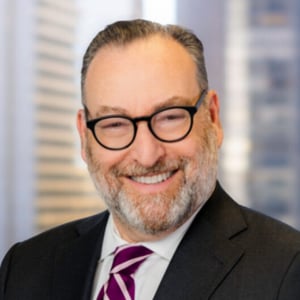
Founder, Chairman, and CEO, Louis D. Brandeis Center for Human Rights Under Law
Hon. Kenneth L. Marcus is an internationally recognized expert in civil and human rights, as well as a leader in the fight against anti-Semitism on and off university campuses. He is the Founder, Chairman, and CEO of The Louis D. Brandeis Center for Human Rights Under Law, the leading civil rights legal organization fighting against anti-Semitism. The New York Times has called him “The Man Who Helped Redefine Campus Anti-Semitism.” He been described, in that paper, as “the single most effective and respected force” to combat anti-Semitism.
During his public service career, Marcus served as Assistant U.S. Secretary of Education for Civil Rights; Staff Director at the U.S. Commission on Civil Rights; and General Deputy Assistant U.S. Secretary of Housing and Urban Development for Fair Housing and Equal Opportunity.
In academia, he serves as Professorial Lecturer in Law at George Washington University. He formerly held the Lillie and Nathan Ackerman Chair in Equality and Justice in America at the City University of New York’s Bernard M. Baruch College, served as Visiting Research Professor of Political Science at Yeshiva University, and was a Board of Visitors member George Mason University and Distinguished Senior Fellow at that university’s law school. He is a member of the editorial board of the Journal of Contemporary Antisemitism and previously served as Associate Editor of the Journal for the Study of Anti-Semitism.
Marcus is also author of The Definition of Anti-Semitism (Oxford University Press) and Jewish Identity and Civil Rights in America (Cambridge University Press). He has published widely in academic journals as well as in more popular venues such as The Wall Street Journal, Washington Post, Newsweek, USA Today, and Politico. He is a graduate of Williams College and the University of California at Berkeley School of Law.
Earlier in his career, he was a litigation partner in two major law firms, where he conducted complex commercial and constitutional litigation. He also serves as Chairman emeritus of the Executive Committee of the Federalist Society for Law & Public Policy Civil Rights Practice Group.
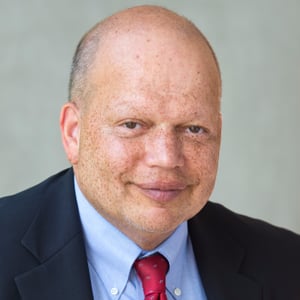
Julius L. Chambers Distinguished Professor of Law and Director of the Center for Civil Rights, University of North Carolina School of Law
Theodore M. Shaw is the Julius L. Chambers Distinguished Professor of Law and Director of the Center for Civil Rights at the University of North Carolina School of Law at Chapel Hill. Professor Shaw teaches Civil Procedure and Advanced Constitutional Law/Fourteenth Amendment. Before joining the faculty of UNC Law School, from 2008-2014 Professor Shaw taught at Columbia University Law School, where he was Professor of Professional Practice. During that time he was also “Of Counsel” to the law firm of Norton Rose Fulbright (formerly Fulbright & Jaworski, LLP). His practice involved civil litigation and representation of institutional clients on matters concerning diversity and civil rights.
Professor Shaw was the fifth Director-Counsel and President of the NAACP Legal Defense and Educational Fund, Inc., for which he worked in various capacities over the span of twenty-six years. He has litigated education, employment, voting rights, housing, police misconduct, capital punishment and other civil rights cases in trial and appellate courts, and in the United States Supreme Court.From 1982 until 1987, he litigated education, housing, and capital punishment cases and directed LDF's education litigation docket. In 1987, under the direction of LDF's third Director-Counsel, Julius Chambers, Mr. Shaw relocated to Los Angeles to establish LDF's Western Regional Office. In 1990, Mr. Shaw left LDF to join the faculty of the University of Michigan Law School, where he taught Constitutional Law, Civil Procedure and Civil Rights. While at Michigan, he played a key role in initiating a review of the law school's admissions practices and policies, and served on the faculty committee that promulgated the admissions program that was upheld by the U.S. Supreme Court in 2003 in Grutter v. Bollinger.
In 1993, Mr. Shaw returned to LDF as Associate Director-Counsel, and in 2004, he became LDF's fifth Director-Counsel. Mr. Shaw's legal career began as a Trial Attorney in the Honors Program of the United States Department of Justice, Civil Rights Division in Washington, D.C., where he worked from 1979 until 1982.
Mr. Shaw has testified on numerous occasions before Congress and before state and local legislatures. His human rights work has taken him to Africa, Asia, Europe, and South America. In addition to teaching at Columbia and at Michigan Law School, Professor Shaw held the 1997-1998 Haywood Burns Chair at CUNY School of Law at Queens College and the 2003 Phyllis Beck Chair at Temple Law School. He was a visiting scholar at the Constitution Center in Philadelphia in 2008-2009. He is a member of the faculty of the Practicing Law Institute (PLI).
Mr. Shaw served on the Obama Transition Team after the 2008 presidential election, as team leader for the Civil Rights Division of the Justice Department.
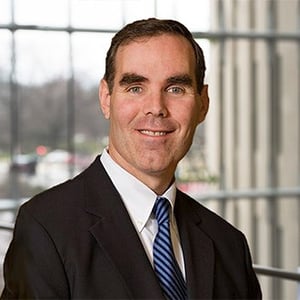
Partner, Jones Day
Eric Dreiband represents clients in investigations, litigation, and counseling in civil rights, employment discrimination, whistleblower, wage and hour, and other matters. Prior to rejoining Jones Day in 2021, Eric served as the 18th Assistant Attorney General for the Civil Rights Division at the U.S. Department of Justice (DOJ), and he also served as the 12th General Counsel of the U.S. Equal Employment Opportunity Commission (EEOC).
Under Eric's leadership, DOJ's Civil Rights Division set enforcement records for prosecutions of law enforcement officers and sexual harassment, religious liberty, and servicemember cases; charged the highest number of hate crimes cases in decades; significantly expanded resources for human trafficking prosecutions; prosecuted race and other forms of illegal discrimination in education, employment, housing, lending, and voting; reached historic disability rights settlements with several states; opposed unlawful COVID-19-related civil liberty restrictions; and successfully litigated to protect the Constitutional and civil rights of all people in the United States.
As EEOC general counsel, Eric led the Commission's litigation of the federal employment antidiscrimination laws, and he issued the Regional Attorneys' Manual, which established the policies of EEOC's litigation program. Eric also served at the Department of Labor (DOL) as deputy wage and hour administrator and directed DOL's enforcement of the Fair Labor Standards Act (FLSA), the Family and Medical Leave Act (FMLA), and other laws.
From 1997 to 2000, Eric served as a prosecutor in the Office of Independent Counsel Kenneth W. Starr.
Eric has spoken and written extensively about civil rights and other employment laws, and he has testified about these subjects before committees of the U.S. House of Representatives and the U.S. Senate.
Judge, United States District Court, Northern District of Illinois
John Fitzgerald Kness is a judge on the United States District Court for the Northern District of Illinois. He was nominated by President Donald Trump on June 24, 2019. The United States Senate confirmed Kness on February 12, 2020, by a vote of 81-12.
Kness was the general counsel of the College of DuPage from 2016 to 2020.
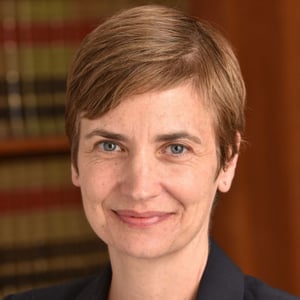
Vice Dean for Faculty Development and Professor of Law, UCLA Law
Joanna Schwartz is Vice Dean for Faculty Development and Professor of Law at UCLA School of Law. She teaches Civil Procedure and a variety of courses on police accountability and public interest lawyering. In 2015, she received UCLA's Distinguished Teaching Award.
Professor Schwartz is one of the country's leading experts on police misconduct litigation. Professor Schwartz additionally studies the dynamics of modern civil litigation. She is co-author, with Stephen Yeazell, of a leading casebook, Civil Procedure (9th Edition), and her scholarship has appeared in the New York University Law Review, the Texas Law Review, the UCLA Law Review, and the Yale Law Journal, among others.
Professor Schwartz is a graduate of Brown University and Yale Law School. After law school, Professor Schwartz clerked for Judge Denise Cote of the Southern District of New York and Judge Harry Pregerson of the Ninth Circuit Court of Appeals. She was then associated with Emery Celli Brinckerhoff & Abady LLP, in New York City, where she specialized in police misconduct, prisoners' rights, and First Amendment litigation.
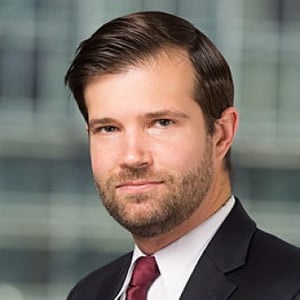
Research Fellow, CATO Institute
Jay Schweikert is a research fellow with the Cato Institute’s Project on Criminal Justice. His research and advocacy focuses on accountability for prosecutors and law enforcement, plea bargaining, Sixth Amendment trial rights, and the provision and structuring of indigent defense.
Before joining Cato, Schweikert spent four years doing civil and criminal litigation at Williams & Connolly LLP. He holds a JD from Harvard Law School, where he was an articles editor for the Harvard Law Review, and chaired the Harvard Federalist Society’s student colloquium program. Following law school, Schweikert clerked for Judge Diane Sykes of the U.S. Court of Appeals for the Seventh Circuit and Judge Laurence Silberman of the U.S. Court of Appeals for the DC Circuit.
He holds a BA in political science and economics from Yale University.

Professor of Law, University of Michigan Law School
Christopher J. Walker is a Professor of Law at the University of Michigan. Prior to joining Michigan law faculty in 2022, he spent a decade teaching at The Ohio State University Moritz College of Law. He previously clerked for Justice Anthony Kennedy of the U.S. Supreme Court, worked on the Civil Appellate Staff at the U.S. Department of Justice, and served on the Senate Judiciary Committee staff for the Gorsuch Supreme Court confirmation. Professor Walker’s research focuses on administrative law, regulation, and law and policy at the agency level. Outside the law school, he chaired the American Bar Association’s Section of Administrative Law and Regulatory Practice in 2020-21 and served as one of forty Public Members of the Administrative Conference of the United States from 2016-2022, and he continues to serve in both organizations in various capacities. He also works of counsel at the U.S. Chamber Litigation Center. In 2022, he received the Federalist Society’s Joseph Story Award.

Tech Roundup Episode 20 – Drone Surveillance and the Fourth Amendment
Trace Mitchell, Brent Skorup, Jay Stanley
Are we ready to live under the watchful eye of drones? In this Tech Roundup...
Feddie Night Fights: Criminal (In)Justice?: Is the Push for Decarceration & Depolicing Backfiring?
Rafael A. Mangual, Clark Neily, Philip D. Williamson
The Federalist Society’s Student Division & Boston College Law School Chapter present Feddie Night Fights:Criminal...
What Can Be Done About Violent Crime?
Thomas Abt, Paul Carillo, Erica H. MacDonald, Mark V. Scott, Amul R. Thapar
America’s national conversation about firearms is primarily about mass shootings and gun control. Some experts...
Criminal Justice 2021 and The Rule of Law
Stephanos Bibas, Lawrence S. Krasner, Tracey Meares, McGregor W. Scott, Rich Stanek
The 2021 National Lawyers Convention took place November 11-13, 2021 at the Mayflower Hotel in...
Civil Rights in the New Administration
Art Coleman, Gail L. Heriot, Kenneth L. Marcus, Theodore M. Shaw, Eric Dreiband
The Biden Administration has signaled, in various respects, that it would take a new course...
The Doctrine of Qualified Immunity
John F. Kness, Joanna C. Schwartz, Jay R. Schweikert, Christopher J. Walker
On August 17, 2020, The Federalist Society's Chicago Lawyers Chapter hosted a virtual panel on...