
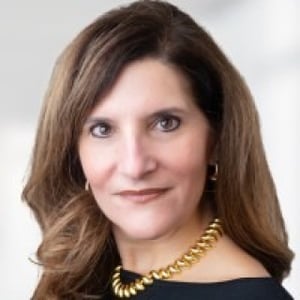
Partner and Co-Chair of Securities & Regulatory Enforcement, Stradley Ronon
As a former supervisory assistant chief litigation counsel in the Enforcement Division of the U.S. Securities and Exchange Commission (SEC), Jan Folena has led and successfully litigated many of the financial service industry’s most complex and high-profile cases. She has appeared in federal courts across the United States as lead trial counsel, handling issues at the forefront of the securities industry, including in one of only a few financial fraud jury trials, a highly publicized insider trading trial, and an enforcement action against the Big Four accounting firms.
As co-chair of Stradley Ronon’s securities and regulatory enforcement practice, Jan focuses her practice on assisting firms and individuals in navigating internal investigations, regulatory enforcement matters, commercial disputes and, when necessary, arbitration, mediation and trial. She regularly advises asset managers, broker-dealers, registered and private funds, public companies, officers, directors, principals and auditors on complex matters involving enforcement of federal and state securities laws, including regulatory examinations, internal investigations and litigation. Jan also represents clients in congressional inquiries, before state regulators, and in third-party litigation.
In her previous supervisory role at the SEC, Jan managed a team of trial lawyers and investigative staff while providing legal guidance and litigation risk assessment to the commission and SEC division heads. Jan was selected to serve as the first assistant chief litigation counsel to the SEC’s Asset Management Unit providing legal advice and serving as litigation counsel for cases brought under the Investment Company Act of 1940 and the Investment Advisers Act of 1940. Prior to joining the SEC, Jan served as chief trial counsel at the Commodity Futures Trading Commission and as trial counsel at the U.S. Department of Justice, Commercial Litigation Branch.
Jan’s expansive government career serves as the foundation for her substantial insights and firsthand knowledge into industry best practices and solutions for clients. She is frequently sought after for her sophisticated knowledge and understanding of federal securities laws, administrative procedure, federal and state court litigation, and enforcement actions at the SEC and other regulatory agencies.
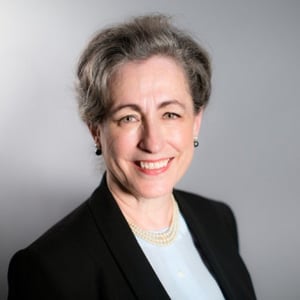
Senior Litigation Counsel, New Civil Liberties Alliance
Peggy Little, Senior Counsel at New Civil Liberties Alliance, a new public interest law firm challenging the administrative state founded in 2017 by Professor Philip Hamburger, has over three decades of experience as a trial and appellate litigator in complex, high-stakes regulatory, mass-tort, class-action, products liability, securities, commercial and civil rights litigation representing individuals and high-profile litigants including Fortune 50 companies, financial institutions, public companies, and universities in state and federal courts, including the United States Supreme Court.
Peggy is a graduate of Yale College and Yale Law School, where she was awarded the Potter Stewart Prize. She was a law clerk to the Hon. Ralph K. Winter on the U.S. Court of Appeals for the Second Circuit. Prior to starting her own trial and appellate law firm in 1997, where she was appellate consulting counsel to the New Haven firefighters in Ricci v.DeStefano, a landmark 2009 United States Supreme Court decision, Peggy was a partner at Tyler, Cooper & Alcorn in New Haven, Connecticut. From 2004 to early 2018, Peggy directed, part-time, the Federalist Society Pro Bono Center.
Peggy has participated in many national conferences and symposia addressing issues of current importance in constitutional law – specifically state and federal constitutional questions regarding the separation of powers and the first amendment – and regularly speaks, blogs and publishes on the topic of the unconstitutional exercise of governmental power. In May of 2017, she presented her paper, Pirates at the Parchment Gates, to a conference of state and federal judges at the Law and Economics Center at the Antonin Scalia Law School. Her work has been published by law reviews, legal publications, the Federalist Society, the Wall Street Journal, Law and Liberty and the Manhattan Institute.
Recent publications include: How the SEC silences its critics, The SEC should listen to Sen. Cotton, Lucia v. SEC, Opening Salvos in the Opioid Litigation Wars, Straight Dope on the Opioid Crisis
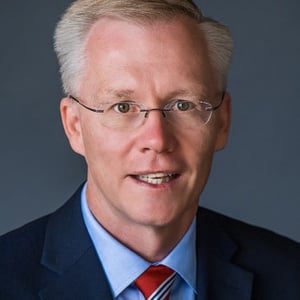
Executive Director, Milken Institute Center for Financial Markets
Michael S. Piwowar is the executive director of the Milken Institute Center for Financial Markets. Dr. Piwowar served as a Commissioner at the U.S. Securities and Exchange Commission from August 15, 2013 to July 6, 2018. He was first appointed to the SEC by President Barack Obama and was designated Acting Chairman of the Commission by President Donald Trump from January 23, 2017 to May 4, 2017. He was previously the Republican chief economist for the U.S. Senate Committee on Banking, Housing, and Urban Affairs under Senators Mike Crapo (R-ID) and Richard Shelby (R-AL) and served as the lead Republican economist on the four SEC-related titles of the Dodd-Frank Act and the JOBS Act. During the financial crisis and its immediate aftermath, Dr. Piwowar served in a one-year fixed-term position at the White House as a senior economist at the President’s Council of Economic Advisers (CEA) in both the George W. Bush and Barack Obama Administrations. Before joining the White House, Dr. Piwowar worked as a Principal at the Securities Litigation and Consulting Group (SLCG). He received a B.A. in Foreign Service and International Politics from the Pennsylvania State University, an M.B.A. from Georgetown University, and a Ph.D. in Finance from the Pennsylvania State University.
Partner and Co-Chair of Securities & Regulatory Enforcement, Stradley Ronon
As a former supervisory assistant chief litigation counsel in the Enforcement Division of the U.S. Securities and Exchange Commission (SEC), Jan Folena has led and successfully litigated many of the financial service industry’s most complex and high-profile cases. She has appeared in federal courts across the United States as lead trial counsel, handling issues at the forefront of the securities industry, including in one of only a few financial fraud jury trials, a highly publicized insider trading trial, and an enforcement action against the Big Four accounting firms.
As co-chair of Stradley Ronon’s securities and regulatory enforcement practice, Jan focuses her practice on assisting firms and individuals in navigating internal investigations, regulatory enforcement matters, commercial disputes and, when necessary, arbitration, mediation and trial. She regularly advises asset managers, broker-dealers, registered and private funds, public companies, officers, directors, principals and auditors on complex matters involving enforcement of federal and state securities laws, including regulatory examinations, internal investigations and litigation. Jan also represents clients in congressional inquiries, before state regulators, and in third-party litigation.
In her previous supervisory role at the SEC, Jan managed a team of trial lawyers and investigative staff while providing legal guidance and litigation risk assessment to the commission and SEC division heads. Jan was selected to serve as the first assistant chief litigation counsel to the SEC’s Asset Management Unit providing legal advice and serving as litigation counsel for cases brought under the Investment Company Act of 1940 and the Investment Advisers Act of 1940. Prior to joining the SEC, Jan served as chief trial counsel at the Commodity Futures Trading Commission and as trial counsel at the U.S. Department of Justice, Commercial Litigation Branch.
Jan’s expansive government career serves as the foundation for her substantial insights and firsthand knowledge into industry best practices and solutions for clients. She is frequently sought after for her sophisticated knowledge and understanding of federal securities laws, administrative procedure, federal and state court litigation, and enforcement actions at the SEC and other regulatory agencies.
Senior Litigation Counsel, New Civil Liberties Alliance
Peggy Little, Senior Counsel at New Civil Liberties Alliance, a new public interest law firm challenging the administrative state founded in 2017 by Professor Philip Hamburger, has over three decades of experience as a trial and appellate litigator in complex, high-stakes regulatory, mass-tort, class-action, products liability, securities, commercial and civil rights litigation representing individuals and high-profile litigants including Fortune 50 companies, financial institutions, public companies, and universities in state and federal courts, including the United States Supreme Court.
Peggy is a graduate of Yale College and Yale Law School, where she was awarded the Potter Stewart Prize. She was a law clerk to the Hon. Ralph K. Winter on the U.S. Court of Appeals for the Second Circuit. Prior to starting her own trial and appellate law firm in 1997, where she was appellate consulting counsel to the New Haven firefighters in Ricci v.DeStefano, a landmark 2009 United States Supreme Court decision, Peggy was a partner at Tyler, Cooper & Alcorn in New Haven, Connecticut. From 2004 to early 2018, Peggy directed, part-time, the Federalist Society Pro Bono Center.
Peggy has participated in many national conferences and symposia addressing issues of current importance in constitutional law – specifically state and federal constitutional questions regarding the separation of powers and the first amendment – and regularly speaks, blogs and publishes on the topic of the unconstitutional exercise of governmental power. In May of 2017, she presented her paper, Pirates at the Parchment Gates, to a conference of state and federal judges at the Law and Economics Center at the Antonin Scalia Law School. Her work has been published by law reviews, legal publications, the Federalist Society, the Wall Street Journal, Law and Liberty and the Manhattan Institute.
Recent publications include: How the SEC silences its critics, The SEC should listen to Sen. Cotton, Lucia v. SEC, Opening Salvos in the Opioid Litigation Wars, Straight Dope on the Opioid Crisis
Executive Director, Milken Institute Center for Financial Markets
Michael S. Piwowar is the executive director of the Milken Institute Center for Financial Markets. Dr. Piwowar served as a Commissioner at the U.S. Securities and Exchange Commission from August 15, 2013 to July 6, 2018. He was first appointed to the SEC by President Barack Obama and was designated Acting Chairman of the Commission by President Donald Trump from January 23, 2017 to May 4, 2017. He was previously the Republican chief economist for the U.S. Senate Committee on Banking, Housing, and Urban Affairs under Senators Mike Crapo (R-ID) and Richard Shelby (R-AL) and served as the lead Republican economist on the four SEC-related titles of the Dodd-Frank Act and the JOBS Act. During the financial crisis and its immediate aftermath, Dr. Piwowar served in a one-year fixed-term position at the White House as a senior economist at the President’s Council of Economic Advisers (CEA) in both the George W. Bush and Barack Obama Administrations. Before joining the White House, Dr. Piwowar worked as a Principal at the Securities Litigation and Consulting Group (SLCG). He received a B.A. in Foreign Service and International Politics from the Pennsylvania State University, an M.B.A. from Georgetown University, and a Ph.D. in Finance from the Pennsylvania State University.

Wayne A. Abernathy, Wild Bells
Wayne A. Abernathy is a former U.S. Treasury Assistant Secretary for Financial Institutions under President George W. Bush, receiving the Alexander Hamilton Award in recognition of his service. In that office he was also a member of the Board of Directors of the Securities Investor Protection Corporation. Prior to his work at the Treasury, Mr. Abernathy served as Staff Director of the Senate Banking Committee, under Chairman Phil Gramm.
Following his service at the Treasury, Mr. Abernathy worked for 15 years on the staff of the American Bankers Association, as Executive Vice President for Financial Institutions Policy and Regulatory Affairs.
Previous experience with the Senate Banking Committee includes serving as Staff Director of the Subcommittee on Securities during 1995-1998. From 1989 until 1994, Mr. Abernathy was a Republican economist for the committee. He previously worked as a senior legislative assistant for Senator Gramm during 1987-1989 and as an economist for the Banking Committee’s Subcommittee on International Finance and Monetary Policy during 1981-1986, under Chairman Jake Garn.
Mr. Abernathy earned his bachelor’s degree in International Studies from The Johns Hopkins University in 1978. In 1980, he received a master’s degree in International Studies from the School of Advanced International Studies of The Johns Hopkins University.
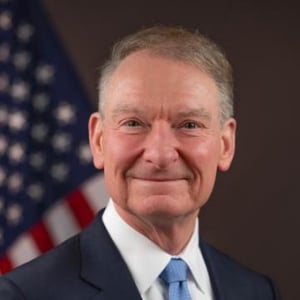
Chairman of the Securities and Exchange Commission
Paul S. Atkins was sworn into office as the 34th Chairman of the Securities and Exchange Commission on April 21, 2025, after being nominated by President Donald J. Trump on January 20, 2025, and confirmed by the U.S. Senate on April 9, 2025.
Prior to returning to the SEC, Chairman Atkins was most recently chief executive of Patomak Global Partners, a company he founded in 2009. Chairman Atkins helped lead efforts to develop best practices for the digital asset sector. He served as an independent director and non-executive chairman of the board of BATS Global Markets, Inc. from 2012 to 2015.
Chairman Atkins was appointed by President George W. Bush to serve as a Commissioner of the SEC from 2002 to 2008. During his tenure, he advocated for transparency, consistency, and the use of cost-benefit analysis at the agency. Chairman Atkins also represented the SEC at meetings of the President’s Working Group on Financial Markets and the U.S.-EU Transatlantic Economic Council. From 2009 to 2010, he was appointed a member of the Congressional Oversight Panel for the Troubled Asset Relief Program.
Before serving as an SEC Commissioner, Chairman Atkins was a consultant on securities and investment management industry matters, especially regarding issues of strategy, regulatory compliance, risk management, new product development, and organizational control.
From 1990 to 1994, Chairman Atkins served on the staff of two chairmen of the SEC, Richard C. Breeden and Arthur Levitt, ultimately as chief of staff and counselor, respectively. He received the SEC’s 1992 Law and Policy Award for work regarding corporate governance matters.
Chairman Atkins began his career as a lawyer in New York, focusing on a wide range of corporate transactions for U.S. and foreign clients, including public and private securities offerings and mergers and acquisitions. He was resident for 2½ years in his firm's Paris office and admitted as conseil juridique in France.
A member of the New York and Florida bars, Chairman Atkins received his J.D. from Vanderbilt University School of Law in 1983 and was Senior Student Writing Editor of the Vanderbilt Law Review. He received his A.B., Phi Beta Kappa, from Wofford College in 1980.
Originally from Lillington, North Carolina, Chairman Atkins grew up in Tampa, Florida. He and his wife Sarah have three sons.
Senior Fellow-in-Residence, Milken Institute
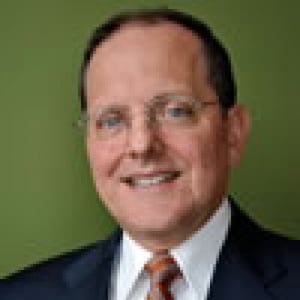
Ed DeMarco is a Senior Fellow in Residence at the Milken Institute Center for Financial Markets and a Visiting Professor in the Owen Graduate School of Management at Vanderbilt University. He is a member of the Comptroller General’s Advisory Board for the U.S. Government Accountability Office and a Fellow of the National Academy of Public Administration.
From September 2009 to January 2014 DeMarco served as Acting Director of the Federal Housing Finance Agency (FHFA), the conservator for Fannie Mae and Freddie Mac and regulator of those companies and the Federal Home Loan Banks. DeMarco was the Chief Operating Officer and Senior Deputy Director of FHFA and its predecessor from 2006 to 2009. From 2003 to 2006 he was an executive at the Social Security Administration (SSA), where he was Assistant Deputy Commissioner for Policy.
Before joining SSA, DeMarco was Director of the Office of Financial Institutions Policy at the U.S. Department of the Treasury, where he oversaw analyses of policy issues involving banks, government sponsored enterprises and other financial institutions. He worked at the U.S. General Accounting Office from 1986 to 1994.
Principal, Ely & Company, Inc.
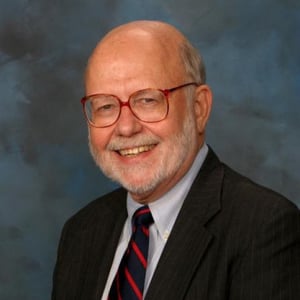
Bert Ely has specialized in deposit insurance and banking structure issues since 1981. In 1986, he became an early predictor of the S&L crisis and a taxpayer bailout of the FSLIC. In 1991, he was the first person to correctly predict the non-crisis in commercial banking; in 1992, he predicted an eventual taxpayer bailout of the Japanese banking system.
Bert continuously monitors conditions in the banking and S&L industries, monetary policy, and the growing federalization of credit risk. He has helped to draft legislation to enact the cross-guarantee concept for privatizing banking regulation and its related deposit insurance and systemic risks. He has testified on numerous occasions before congressional committees on banking issues and he often speaks on these matters to bankers and others.
Bert first established his consulting practice in 1972. Before that, he was the chief financial officer of a public company, a consultant with Touche, Ross & Company, and an auditor with Ernst & Ernst. He received his MBA from the Harvard Business School in 1968 and his Bachelor's degree in economics in 1964 from Case Western Reserve University.

Resident Scholar, American Enterprise Institute
Paul H. Kupiec is a resident scholar at the American Enterprise Institute (AEI), where he studies systemic risk and the management and regulations of banks and financial markets. He also follows the work of financial regulators such as the Federal Reserve and examines the impact of financial regulations on the US economy.
Before joining AEI, Kupiec was an associate director of the Division of Insurance and Research within the Center for Financial Research at the Federal Deposit Insurance Corporation (FDIC), where he oversaw research on bank risk measurement and the development of regulatory policies such as Basel III. Kupiec was also director of the Center for Financial Research at the FDIC and chairman of the Research Task Force of the Basel Committee on Banking Supervision. He has previously worked at the International Monetary Fund (IMF), Freddie Mac, J.P. Morgan, and for the Division of Research and Statistics at the Board of Governors of the Federal Reserve System.
Kupiec has edited many professional journals, including the Journal of Financial Services Research, Journal of Risk, and Journal of Investment Management.
He has a bachelor of science degree in economics from George Washington University and a doctorate in economics — with a specialization in finance, theory, and econometrics — from the University of Pennsylvania.
Wayne A. Abernathy, Wild Bells
Wayne A. Abernathy is a former U.S. Treasury Assistant Secretary for Financial Institutions under President George W. Bush, receiving the Alexander Hamilton Award in recognition of his service. In that office he was also a member of the Board of Directors of the Securities Investor Protection Corporation. Prior to his work at the Treasury, Mr. Abernathy served as Staff Director of the Senate Banking Committee, under Chairman Phil Gramm.
Following his service at the Treasury, Mr. Abernathy worked for 15 years on the staff of the American Bankers Association, as Executive Vice President for Financial Institutions Policy and Regulatory Affairs.
Previous experience with the Senate Banking Committee includes serving as Staff Director of the Subcommittee on Securities during 1995-1998. From 1989 until 1994, Mr. Abernathy was a Republican economist for the committee. He previously worked as a senior legislative assistant for Senator Gramm during 1987-1989 and as an economist for the Banking Committee’s Subcommittee on International Finance and Monetary Policy during 1981-1986, under Chairman Jake Garn.
Mr. Abernathy earned his bachelor’s degree in International Studies from The Johns Hopkins University in 1978. In 1980, he received a master’s degree in International Studies from the School of Advanced International Studies of The Johns Hopkins University.
Chairman of the Securities and Exchange Commission
Paul S. Atkins was sworn into office as the 34th Chairman of the Securities and Exchange Commission on April 21, 2025, after being nominated by President Donald J. Trump on January 20, 2025, and confirmed by the U.S. Senate on April 9, 2025.
Prior to returning to the SEC, Chairman Atkins was most recently chief executive of Patomak Global Partners, a company he founded in 2009. Chairman Atkins helped lead efforts to develop best practices for the digital asset sector. He served as an independent director and non-executive chairman of the board of BATS Global Markets, Inc. from 2012 to 2015.
Chairman Atkins was appointed by President George W. Bush to serve as a Commissioner of the SEC from 2002 to 2008. During his tenure, he advocated for transparency, consistency, and the use of cost-benefit analysis at the agency. Chairman Atkins also represented the SEC at meetings of the President’s Working Group on Financial Markets and the U.S.-EU Transatlantic Economic Council. From 2009 to 2010, he was appointed a member of the Congressional Oversight Panel for the Troubled Asset Relief Program.
Before serving as an SEC Commissioner, Chairman Atkins was a consultant on securities and investment management industry matters, especially regarding issues of strategy, regulatory compliance, risk management, new product development, and organizational control.
From 1990 to 1994, Chairman Atkins served on the staff of two chairmen of the SEC, Richard C. Breeden and Arthur Levitt, ultimately as chief of staff and counselor, respectively. He received the SEC’s 1992 Law and Policy Award for work regarding corporate governance matters.
Chairman Atkins began his career as a lawyer in New York, focusing on a wide range of corporate transactions for U.S. and foreign clients, including public and private securities offerings and mergers and acquisitions. He was resident for 2½ years in his firm's Paris office and admitted as conseil juridique in France.
A member of the New York and Florida bars, Chairman Atkins received his J.D. from Vanderbilt University School of Law in 1983 and was Senior Student Writing Editor of the Vanderbilt Law Review. He received his A.B., Phi Beta Kappa, from Wofford College in 1980.
Originally from Lillington, North Carolina, Chairman Atkins grew up in Tampa, Florida. He and his wife Sarah have three sons.
Senior Fellow-in-Residence, Milken Institute
Ed DeMarco is a Senior Fellow in Residence at the Milken Institute Center for Financial Markets and a Visiting Professor in the Owen Graduate School of Management at Vanderbilt University. He is a member of the Comptroller General’s Advisory Board for the U.S. Government Accountability Office and a Fellow of the National Academy of Public Administration.
From September 2009 to January 2014 DeMarco served as Acting Director of the Federal Housing Finance Agency (FHFA), the conservator for Fannie Mae and Freddie Mac and regulator of those companies and the Federal Home Loan Banks. DeMarco was the Chief Operating Officer and Senior Deputy Director of FHFA and its predecessor from 2006 to 2009. From 2003 to 2006 he was an executive at the Social Security Administration (SSA), where he was Assistant Deputy Commissioner for Policy.
Before joining SSA, DeMarco was Director of the Office of Financial Institutions Policy at the U.S. Department of the Treasury, where he oversaw analyses of policy issues involving banks, government sponsored enterprises and other financial institutions. He worked at the U.S. General Accounting Office from 1986 to 1994.
Principal, Ely & Company, Inc.
Bert Ely has specialized in deposit insurance and banking structure issues since 1981. In 1986, he became an early predictor of the S&L crisis and a taxpayer bailout of the FSLIC. In 1991, he was the first person to correctly predict the non-crisis in commercial banking; in 1992, he predicted an eventual taxpayer bailout of the Japanese banking system.
Bert continuously monitors conditions in the banking and S&L industries, monetary policy, and the growing federalization of credit risk. He has helped to draft legislation to enact the cross-guarantee concept for privatizing banking regulation and its related deposit insurance and systemic risks. He has testified on numerous occasions before congressional committees on banking issues and he often speaks on these matters to bankers and others.
Bert first established his consulting practice in 1972. Before that, he was the chief financial officer of a public company, a consultant with Touche, Ross & Company, and an auditor with Ernst & Ernst. He received his MBA from the Harvard Business School in 1968 and his Bachelor's degree in economics in 1964 from Case Western Reserve University.
Resident Scholar, American Enterprise Institute
Paul H. Kupiec is a resident scholar at the American Enterprise Institute (AEI), where he studies systemic risk and the management and regulations of banks and financial markets. He also follows the work of financial regulators such as the Federal Reserve and examines the impact of financial regulations on the US economy.
Before joining AEI, Kupiec was an associate director of the Division of Insurance and Research within the Center for Financial Research at the Federal Deposit Insurance Corporation (FDIC), where he oversaw research on bank risk measurement and the development of regulatory policies such as Basel III. Kupiec was also director of the Center for Financial Research at the FDIC and chairman of the Research Task Force of the Basel Committee on Banking Supervision. He has previously worked at the International Monetary Fund (IMF), Freddie Mac, J.P. Morgan, and for the Division of Research and Statistics at the Board of Governors of the Federal Reserve System.
Kupiec has edited many professional journals, including the Journal of Financial Services Research, Journal of Risk, and Journal of Investment Management.
He has a bachelor of science degree in economics from George Washington University and a doctorate in economics — with a specialization in finance, theory, and econometrics — from the University of Pennsylvania.
Partner and Co-Chair of Securities & Regulatory Enforcement, Stradley Ronon
As a former supervisory assistant chief litigation counsel in the Enforcement Division of the U.S. Securities and Exchange Commission (SEC), Jan Folena has led and successfully litigated many of the financial service industry’s most complex and high-profile cases. She has appeared in federal courts across the United States as lead trial counsel, handling issues at the forefront of the securities industry, including in one of only a few financial fraud jury trials, a highly publicized insider trading trial, and an enforcement action against the Big Four accounting firms.
As co-chair of Stradley Ronon’s securities and regulatory enforcement practice, Jan focuses her practice on assisting firms and individuals in navigating internal investigations, regulatory enforcement matters, commercial disputes and, when necessary, arbitration, mediation and trial. She regularly advises asset managers, broker-dealers, registered and private funds, public companies, officers, directors, principals and auditors on complex matters involving enforcement of federal and state securities laws, including regulatory examinations, internal investigations and litigation. Jan also represents clients in congressional inquiries, before state regulators, and in third-party litigation.
In her previous supervisory role at the SEC, Jan managed a team of trial lawyers and investigative staff while providing legal guidance and litigation risk assessment to the commission and SEC division heads. Jan was selected to serve as the first assistant chief litigation counsel to the SEC’s Asset Management Unit providing legal advice and serving as litigation counsel for cases brought under the Investment Company Act of 1940 and the Investment Advisers Act of 1940. Prior to joining the SEC, Jan served as chief trial counsel at the Commodity Futures Trading Commission and as trial counsel at the U.S. Department of Justice, Commercial Litigation Branch.
Jan’s expansive government career serves as the foundation for her substantial insights and firsthand knowledge into industry best practices and solutions for clients. She is frequently sought after for her sophisticated knowledge and understanding of federal securities laws, administrative procedure, federal and state court litigation, and enforcement actions at the SEC and other regulatory agencies.
Senior Litigation Counsel, New Civil Liberties Alliance
Peggy Little, Senior Counsel at New Civil Liberties Alliance, a new public interest law firm challenging the administrative state founded in 2017 by Professor Philip Hamburger, has over three decades of experience as a trial and appellate litigator in complex, high-stakes regulatory, mass-tort, class-action, products liability, securities, commercial and civil rights litigation representing individuals and high-profile litigants including Fortune 50 companies, financial institutions, public companies, and universities in state and federal courts, including the United States Supreme Court.
Peggy is a graduate of Yale College and Yale Law School, where she was awarded the Potter Stewart Prize. She was a law clerk to the Hon. Ralph K. Winter on the U.S. Court of Appeals for the Second Circuit. Prior to starting her own trial and appellate law firm in 1997, where she was appellate consulting counsel to the New Haven firefighters in Ricci v.DeStefano, a landmark 2009 United States Supreme Court decision, Peggy was a partner at Tyler, Cooper & Alcorn in New Haven, Connecticut. From 2004 to early 2018, Peggy directed, part-time, the Federalist Society Pro Bono Center.
Peggy has participated in many national conferences and symposia addressing issues of current importance in constitutional law – specifically state and federal constitutional questions regarding the separation of powers and the first amendment – and regularly speaks, blogs and publishes on the topic of the unconstitutional exercise of governmental power. In May of 2017, she presented her paper, Pirates at the Parchment Gates, to a conference of state and federal judges at the Law and Economics Center at the Antonin Scalia Law School. Her work has been published by law reviews, legal publications, the Federalist Society, the Wall Street Journal, Law and Liberty and the Manhattan Institute.
Recent publications include: How the SEC silences its critics, The SEC should listen to Sen. Cotton, Lucia v. SEC, Opening Salvos in the Opioid Litigation Wars, Straight Dope on the Opioid Crisis
Executive Director, Milken Institute Center for Financial Markets
Michael S. Piwowar is the executive director of the Milken Institute Center for Financial Markets. Dr. Piwowar served as a Commissioner at the U.S. Securities and Exchange Commission from August 15, 2013 to July 6, 2018. He was first appointed to the SEC by President Barack Obama and was designated Acting Chairman of the Commission by President Donald Trump from January 23, 2017 to May 4, 2017. He was previously the Republican chief economist for the U.S. Senate Committee on Banking, Housing, and Urban Affairs under Senators Mike Crapo (R-ID) and Richard Shelby (R-AL) and served as the lead Republican economist on the four SEC-related titles of the Dodd-Frank Act and the JOBS Act. During the financial crisis and its immediate aftermath, Dr. Piwowar served in a one-year fixed-term position at the White House as a senior economist at the President’s Council of Economic Advisers (CEA) in both the George W. Bush and Barack Obama Administrations. Before joining the White House, Dr. Piwowar worked as a Principal at the Securities Litigation and Consulting Group (SLCG). He received a B.A. in Foreign Service and International Politics from the Pennsylvania State University, an M.B.A. from Georgetown University, and a Ph.D. in Finance from the Pennsylvania State University.
Wayne A. Abernathy, Wild Bells
Wayne A. Abernathy is a former U.S. Treasury Assistant Secretary for Financial Institutions under President George W. Bush, receiving the Alexander Hamilton Award in recognition of his service. In that office he was also a member of the Board of Directors of the Securities Investor Protection Corporation. Prior to his work at the Treasury, Mr. Abernathy served as Staff Director of the Senate Banking Committee, under Chairman Phil Gramm.
Following his service at the Treasury, Mr. Abernathy worked for 15 years on the staff of the American Bankers Association, as Executive Vice President for Financial Institutions Policy and Regulatory Affairs.
Previous experience with the Senate Banking Committee includes serving as Staff Director of the Subcommittee on Securities during 1995-1998. From 1989 until 1994, Mr. Abernathy was a Republican economist for the committee. He previously worked as a senior legislative assistant for Senator Gramm during 1987-1989 and as an economist for the Banking Committee’s Subcommittee on International Finance and Monetary Policy during 1981-1986, under Chairman Jake Garn.
Mr. Abernathy earned his bachelor’s degree in International Studies from The Johns Hopkins University in 1978. In 1980, he received a master’s degree in International Studies from the School of Advanced International Studies of The Johns Hopkins University.
Chairman of the Securities and Exchange Commission
Paul S. Atkins was sworn into office as the 34th Chairman of the Securities and Exchange Commission on April 21, 2025, after being nominated by President Donald J. Trump on January 20, 2025, and confirmed by the U.S. Senate on April 9, 2025.
Prior to returning to the SEC, Chairman Atkins was most recently chief executive of Patomak Global Partners, a company he founded in 2009. Chairman Atkins helped lead efforts to develop best practices for the digital asset sector. He served as an independent director and non-executive chairman of the board of BATS Global Markets, Inc. from 2012 to 2015.
Chairman Atkins was appointed by President George W. Bush to serve as a Commissioner of the SEC from 2002 to 2008. During his tenure, he advocated for transparency, consistency, and the use of cost-benefit analysis at the agency. Chairman Atkins also represented the SEC at meetings of the President’s Working Group on Financial Markets and the U.S.-EU Transatlantic Economic Council. From 2009 to 2010, he was appointed a member of the Congressional Oversight Panel for the Troubled Asset Relief Program.
Before serving as an SEC Commissioner, Chairman Atkins was a consultant on securities and investment management industry matters, especially regarding issues of strategy, regulatory compliance, risk management, new product development, and organizational control.
From 1990 to 1994, Chairman Atkins served on the staff of two chairmen of the SEC, Richard C. Breeden and Arthur Levitt, ultimately as chief of staff and counselor, respectively. He received the SEC’s 1992 Law and Policy Award for work regarding corporate governance matters.
Chairman Atkins began his career as a lawyer in New York, focusing on a wide range of corporate transactions for U.S. and foreign clients, including public and private securities offerings and mergers and acquisitions. He was resident for 2½ years in his firm's Paris office and admitted as conseil juridique in France.
A member of the New York and Florida bars, Chairman Atkins received his J.D. from Vanderbilt University School of Law in 1983 and was Senior Student Writing Editor of the Vanderbilt Law Review. He received his A.B., Phi Beta Kappa, from Wofford College in 1980.
Originally from Lillington, North Carolina, Chairman Atkins grew up in Tampa, Florida. He and his wife Sarah have three sons.
Senior Fellow-in-Residence, Milken Institute
Ed DeMarco is a Senior Fellow in Residence at the Milken Institute Center for Financial Markets and a Visiting Professor in the Owen Graduate School of Management at Vanderbilt University. He is a member of the Comptroller General’s Advisory Board for the U.S. Government Accountability Office and a Fellow of the National Academy of Public Administration.
From September 2009 to January 2014 DeMarco served as Acting Director of the Federal Housing Finance Agency (FHFA), the conservator for Fannie Mae and Freddie Mac and regulator of those companies and the Federal Home Loan Banks. DeMarco was the Chief Operating Officer and Senior Deputy Director of FHFA and its predecessor from 2006 to 2009. From 2003 to 2006 he was an executive at the Social Security Administration (SSA), where he was Assistant Deputy Commissioner for Policy.
Before joining SSA, DeMarco was Director of the Office of Financial Institutions Policy at the U.S. Department of the Treasury, where he oversaw analyses of policy issues involving banks, government sponsored enterprises and other financial institutions. He worked at the U.S. General Accounting Office from 1986 to 1994.
Principal, Ely & Company, Inc.
Bert Ely has specialized in deposit insurance and banking structure issues since 1981. In 1986, he became an early predictor of the S&L crisis and a taxpayer bailout of the FSLIC. In 1991, he was the first person to correctly predict the non-crisis in commercial banking; in 1992, he predicted an eventual taxpayer bailout of the Japanese banking system.
Bert continuously monitors conditions in the banking and S&L industries, monetary policy, and the growing federalization of credit risk. He has helped to draft legislation to enact the cross-guarantee concept for privatizing banking regulation and its related deposit insurance and systemic risks. He has testified on numerous occasions before congressional committees on banking issues and he often speaks on these matters to bankers and others.
Bert first established his consulting practice in 1972. Before that, he was the chief financial officer of a public company, a consultant with Touche, Ross & Company, and an auditor with Ernst & Ernst. He received his MBA from the Harvard Business School in 1968 and his Bachelor's degree in economics in 1964 from Case Western Reserve University.
Resident Scholar, American Enterprise Institute
Paul H. Kupiec is a resident scholar at the American Enterprise Institute (AEI), where he studies systemic risk and the management and regulations of banks and financial markets. He also follows the work of financial regulators such as the Federal Reserve and examines the impact of financial regulations on the US economy.
Before joining AEI, Kupiec was an associate director of the Division of Insurance and Research within the Center for Financial Research at the Federal Deposit Insurance Corporation (FDIC), where he oversaw research on bank risk measurement and the development of regulatory policies such as Basel III. Kupiec was also director of the Center for Financial Research at the FDIC and chairman of the Research Task Force of the Basel Committee on Banking Supervision. He has previously worked at the International Monetary Fund (IMF), Freddie Mac, J.P. Morgan, and for the Division of Research and Statistics at the Board of Governors of the Federal Reserve System.
Kupiec has edited many professional journals, including the Journal of Financial Services Research, Journal of Risk, and Journal of Investment Management.
He has a bachelor of science degree in economics from George Washington University and a doctorate in economics — with a specialization in finance, theory, and econometrics — from the University of Pennsylvania.

Loper Bright Fallout for SEC Rulemaking?
Jan Folena, Margaret A. Little, Michael Piwowar
In an unprecedented action, the SEC in July dismissed with prejudice a pending enforcement case...
Loper Bright Fallout for SEC Rulemaking?
Jan Folena, Margaret A. Little, Michael Piwowar
In an unprecedented action, the SEC in July dismissed with prejudice a pending enforcement case...
Loper Bright Fallout for SEC Rulemaking?
CFPB Report
On October 15, The Wall Street Journal published an op-ed piece by Congressmen Kyrsten Sinema...
Credit to Cronies: Government’s Heavy—IF Hidden—Hand
Wayne A. Abernathy, Paul S. Atkins, Edward J. DeMarco, Bert Ely, Paul H. Kupiec
Key to a vibrant and increasingly productive economy is an efficient credit allocation process --...
Credit to Cronies: Government’s Heavy—IF Hidden—Hand
Wayne A. Abernathy, Paul S. Atkins, Edward J. DeMarco, Bert Ely, Paul H. Kupiec
Key to a vibrant and increasingly productive economy is an efficient credit allocation process --...
Credit to Cronies: Government’s Heavy—IF Hidden—Hand
2014 National Lawyers Convention
Washington, DC