
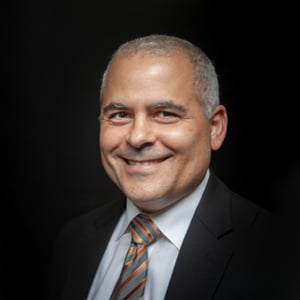
Associate Dean for Academic Affairs and Professor of Law, Ave Maria School of Law
Antony “Tony” Kolenc joined the Ave Maria School of Law faculty in 2022 as the Director of the Veterans and Servicemembers Law Clinic (VSLC), which gives students the opportunity to help those who have served in the U.S. Armed Forces, representing them in litigation, administrative proceedings, and veterans treatment courts. Professor Kolenc taught in several law schools after serving over 21 years in the United States Air Force, retiring as a Lieutenant Colonel from the Judge Advocate General’s (JAG) Corps. During his career as a JAG, he litigated both civil and criminal cases before trial and appellate courts, including the Court of Appeals for the Armed Forces and the U.S. Court of Appeals for the Tenth Circuit. He has also taught at the United States Air Force Academy in Colorado Springs and Florida Coastal School of Law as a tenured professor.
Professor Kolenc received his Juris Doctor degree in 1999, graduating at the top of his class from the University of Florida Levin College of Law. While there, he served as a senior editor on the Florida Law Review and as a competitor and coach on the Justice Campbell Thornal Moot Court Board. He also earned his Master of Arts degree in Theology and Christian Ministry from the Franciscan University of Steubenville. His professional writings have focused on matters of constitutional law and military policy, especially focusing on Freedom of Religion. His articles have appeared in several academic legal journals and magazines. He also writes a regular legal column for homeschooling families in Practical Homeschooling Magazine and has penned an award-winning historical fiction trilogy for teens. He and his wife, Alisa, homeschooled their five children. You can learn more about him at www.antonykolenc.com.
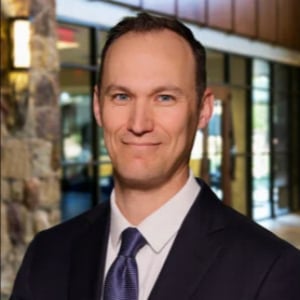
Senior Counsel, First Liberty Institute
Christopher J. Motz serves as Senior Counsel with First Liberty Institute. His practice focuses on First Amendment free exercise and Establishment Clause rights of United States service members domestically and internationally, chaplains of varying denominations, veterans, and defense industry contractors. He has also represented Catholic bishops and priests against state officials.
Chris currently serves part-time as a judge advocate in the Air Force Reserve Component, holding the rank of lieutenant colonel. Prior to that, he served as a Marine infantry officer, leading Marines on several combat tours. He has been forward deployed alongside soldiers, sailors, Marines, airmen, and Coast Guardsmen. His advocacy for the religious rights of service members has been published in the Wall Street Journal.
Before joining First Liberty, Chris served as general counsel and chief of staff to a Catholic diocese, where he led the Catholic Church’s efforts to oppose a state constitutional ballot measure reinstating Roe v. Wade, achieving a record-setting 18-point victory, a nationwide first in the wake of the Dobbs decision. Earlier in his career, he led a state Catholic conference, where he steered the successful passage of a state religious freedom restoration act. A member of the Knights of Columbus, he is a past member of the National Diocesan Attorneys Association and the National Association of State Catholic Conference Directors.
He graduated cum laude from the University of St. Thomas School of Law, where he served as editor-in-chief of the Journal of Law and Public Policy, represented a Messianic Jewish prisoner before the U.S. Court of Appeals for the Ninth Circuit with the school’s Religious Liberty Appellate Clinic, and published articles on attorney ethics and legal issues around drone strikes.
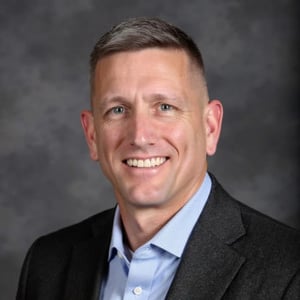
Chief Defense Counsel, U.S. Marine Corps
Colonel Iain Pedden currently serves as Chief Defense Counsel of the Marine Corps. His career experience includes trial and appellate litigation, academic instruction, constitutional advocacy, and service-level policy development within the military justice system.
Colonel Pedden’s recent litigation background includes serving as Director of the Appellate Government Division for the Navy and Marine Corps, where he led the representation of the United States in all criminal appeals within the Department of the Navy. He previously served as Chief Victims' Legal Counsel of the Marine Corps, Senior Defense Counsel, and Trial Counsel. His foundational appellate experience includes service as a clerk drafting briefs for the Illinois Attorney General’s Criminal Appeals Division in cases before the Illinois Supreme Court, the Seventh Circuit, and the United States Supreme Court.
Apart from litigation assignments, Colonel Pedden served as Associate Professor of Criminal Law at the U.S. Army Judge Advocate General’s Legal Center and School, teaching evidence and constitutional law. He later served as Branch Head of Military Justice at Headquarters Marine Corps, advising senior leaders on federal legislation, implementing the Military Justice Act of 2016, and drafting policy on criminal justice data-sharing protocols with the FBI. His operational assignments include a combat deployment to Afghanistan and service as a Staff Judge Advocate (general counsel) to the 26th Marine Expeditionary Unit. He went on to command Marines providing security at diplomatic facilities in Scandinavia, Western Europe and the Mediterranean.
Colonel Pedden holds an M.S. from the National War College, an LL.M. (International Law) from the U.S. Army JAG School, and a J.D. from Loyola University Chicago. He holds certifications as Victims’ Legal Counsel and military judge and is admitted to practice in Illinois and before the Navy-Marine Corps Court of Criminal Appeals and the U.S. Court of Appeals for the Armed Forces.
Colonel Pedden’s participation in programming, unless noted otherwise, is in his personal capacity. The views expressed are those of the speaker and do not necessarily represent the views of the Department of War, the Department of the Navy, the Marine Corps, or the U.S. Government.
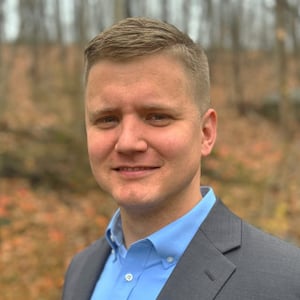
Special Counsel, Office of the Secretary of Defense, U.S. Department of Defense
Associate Dean for Academic Affairs and Professor of Law, Ave Maria School of Law
Antony “Tony” Kolenc joined the Ave Maria School of Law faculty in 2022 as the Director of the Veterans and Servicemembers Law Clinic (VSLC), which gives students the opportunity to help those who have served in the U.S. Armed Forces, representing them in litigation, administrative proceedings, and veterans treatment courts. Professor Kolenc taught in several law schools after serving over 21 years in the United States Air Force, retiring as a Lieutenant Colonel from the Judge Advocate General’s (JAG) Corps. During his career as a JAG, he litigated both civil and criminal cases before trial and appellate courts, including the Court of Appeals for the Armed Forces and the U.S. Court of Appeals for the Tenth Circuit. He has also taught at the United States Air Force Academy in Colorado Springs and Florida Coastal School of Law as a tenured professor.
Professor Kolenc received his Juris Doctor degree in 1999, graduating at the top of his class from the University of Florida Levin College of Law. While there, he served as a senior editor on the Florida Law Review and as a competitor and coach on the Justice Campbell Thornal Moot Court Board. He also earned his Master of Arts degree in Theology and Christian Ministry from the Franciscan University of Steubenville. His professional writings have focused on matters of constitutional law and military policy, especially focusing on Freedom of Religion. His articles have appeared in several academic legal journals and magazines. He also writes a regular legal column for homeschooling families in Practical Homeschooling Magazine and has penned an award-winning historical fiction trilogy for teens. He and his wife, Alisa, homeschooled their five children. You can learn more about him at www.antonykolenc.com.
Senior Counsel, First Liberty Institute
Christopher J. Motz serves as Senior Counsel with First Liberty Institute. His practice focuses on First Amendment free exercise and Establishment Clause rights of United States service members domestically and internationally, chaplains of varying denominations, veterans, and defense industry contractors. He has also represented Catholic bishops and priests against state officials.
Chris currently serves part-time as a judge advocate in the Air Force Reserve Component, holding the rank of lieutenant colonel. Prior to that, he served as a Marine infantry officer, leading Marines on several combat tours. He has been forward deployed alongside soldiers, sailors, Marines, airmen, and Coast Guardsmen. His advocacy for the religious rights of service members has been published in the Wall Street Journal.
Before joining First Liberty, Chris served as general counsel and chief of staff to a Catholic diocese, where he led the Catholic Church’s efforts to oppose a state constitutional ballot measure reinstating Roe v. Wade, achieving a record-setting 18-point victory, a nationwide first in the wake of the Dobbs decision. Earlier in his career, he led a state Catholic conference, where he steered the successful passage of a state religious freedom restoration act. A member of the Knights of Columbus, he is a past member of the National Diocesan Attorneys Association and the National Association of State Catholic Conference Directors.
He graduated cum laude from the University of St. Thomas School of Law, where he served as editor-in-chief of the Journal of Law and Public Policy, represented a Messianic Jewish prisoner before the U.S. Court of Appeals for the Ninth Circuit with the school’s Religious Liberty Appellate Clinic, and published articles on attorney ethics and legal issues around drone strikes.
Chief Defense Counsel, U.S. Marine Corps
Colonel Iain Pedden currently serves as Chief Defense Counsel of the Marine Corps. His career experience includes trial and appellate litigation, academic instruction, constitutional advocacy, and service-level policy development within the military justice system.
Colonel Pedden’s recent litigation background includes serving as Director of the Appellate Government Division for the Navy and Marine Corps, where he led the representation of the United States in all criminal appeals within the Department of the Navy. He previously served as Chief Victims' Legal Counsel of the Marine Corps, Senior Defense Counsel, and Trial Counsel. His foundational appellate experience includes service as a clerk drafting briefs for the Illinois Attorney General’s Criminal Appeals Division in cases before the Illinois Supreme Court, the Seventh Circuit, and the United States Supreme Court.
Apart from litigation assignments, Colonel Pedden served as Associate Professor of Criminal Law at the U.S. Army Judge Advocate General’s Legal Center and School, teaching evidence and constitutional law. He later served as Branch Head of Military Justice at Headquarters Marine Corps, advising senior leaders on federal legislation, implementing the Military Justice Act of 2016, and drafting policy on criminal justice data-sharing protocols with the FBI. His operational assignments include a combat deployment to Afghanistan and service as a Staff Judge Advocate (general counsel) to the 26th Marine Expeditionary Unit. He went on to command Marines providing security at diplomatic facilities in Scandinavia, Western Europe and the Mediterranean.
Colonel Pedden holds an M.S. from the National War College, an LL.M. (International Law) from the U.S. Army JAG School, and a J.D. from Loyola University Chicago. He holds certifications as Victims’ Legal Counsel and military judge and is admitted to practice in Illinois and before the Navy-Marine Corps Court of Criminal Appeals and the U.S. Court of Appeals for the Armed Forces.
Colonel Pedden’s participation in programming, unless noted otherwise, is in his personal capacity. The views expressed are those of the speaker and do not necessarily represent the views of the Department of War, the Department of the Navy, the Marine Corps, or the U.S. Government.
Special Counsel, Office of the Secretary of Defense, U.S. Department of Defense
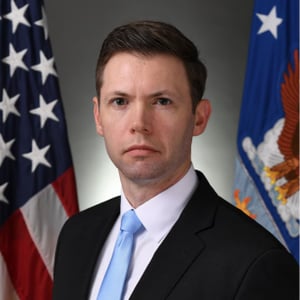
General Counsel, U.S. Department of the Air Force
William K. Lane III is the General Counsel of the Department of the Air Force. As the Chief Legal Officer and Ethics Official for the Air Force and Space Force, Mr. Lane provides oversight and guidance to 680,000 active duty, Guard, Reserve and civilian Airmen and Guardians. Mr. Lane additionally serves ex officio as Administrator of Wake Island.
Prior to his current position, Mr. Lane was a Partner with Wiley Rein, LLP, a Washington, D.C. based law firm. In his practice, Mr. Lane advocated on behalf of corporate and individual clients in a broad spectrum of appellate, constitutional, regulatory and complex commercial litigation.
During President Trump’s first administration, Mr. Lane served in the U.S. Department of Justice as Counsel to the Assistant Attorney General for the Civil Division, representing agencies in federal court throughout the United States.
Prior to attending law school, Mr. Lane received a U.S. Army commission in 2008 and served on active duty until 2012 as a Cavalry Officer, before transitioning to the Maryland Army National Guard and ultimately the U.S. Army Reserve. During his time on active duty, Mr. Lane completed a combat deployment to Iraq in support of Operation Iraqi Freedom.
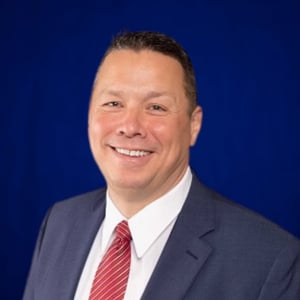
Founding Partner, The Sander Group, PLLC; Former General Counsel, U.S. Department of the Navy
Bob is the Founding Partner of The Sander Group, PLLC, which is a National Security and Government Contracts Boutique Law Firm located in Alexandria, VA. Bob previously served as the 23rd General Counsel of the Department of the Navy after his unanimous confirmation by the U.S. Senate on December 19, 2019. As General Counsel, Bob served as the Department of the Navy’s (DON) Chief Legal Officer and head of the Office of the General Counsel (OGC) where he led a team of over 1,100 civilian and uniformed attorneys and professional support staff in 140 offices worldwide. During this time, Bob provided legal advice to the Secretary of the Navy, the Under Secretary of the Navy, the Assistant Secretaries of the Navy and their staffs, and the multiple components of the Department, including the Navy and the Marine Corps.
Previously, in July 2018, Bob became the Principal Deputy General Counsel of the Department of the Army. He then became the Chief Legal Officer for the Army serving as The Senior Official Performing the Duties of the General Counsel of the Army in June 2019. During his time with the Army Office of General Counsel, Bob’s duties included providing legal and policy advice to the Secretary of the Army, the Army Secretariat, and other Senior Army leaders.
Prior to becoming Principal Deputy General Counsel of the Army, Bob performed a detail to the Office of the Director of National Intelligence Office of General Counsel. From 2010 to 2019, Bob worked as a Federal Prosecutor in the U.S. Department of Justice, National Security Division, Counterterrorism Section. Previously, Bob served as the Chief of the Economic Crimes Unit and the Captain of the Narcotics Enforcement Team in the Montgomery County, Pennsylvania, District Attorney’s Office. Bob also served as a Special Assistant United States Attorney for the Eastern District of Pennsylvania. As a state and federal prosecutor, Bob has handled thousands of cases, which includes trying dozens of jury trials to verdict.
In his military capacity, Bob is a Colonel in the U.S. Army Reserve Judge Advocate General’s Corps, where he serves as the Senior Legal Advisor/Staff Judge Advocate (IMA) for the Network Enterprise Technology Command and the U.S. Army Intelligence Center of Excellence at Fort Huachuca, AZ. Bob previously served as the Chief of the Procurement Fraud/Business Integrity Section for the Defense Logistics Agency at Fort Belvoir, VA and has performed duties as an Adjunct Professor at the National Intelligence University in Bethesda, Maryland. Bob previously deployed to Djibouti, Africa for 13 months as the Acting/Deputy Staff Judge Advocate for the Combined Joint Task Force-Horn of Africa, and was deployed for six months in support of Operations Enduring and Iraqi Freedom, where he served as Trial Counsel for V Corps in Darmstadt, Germany.
Bob received his Juris Doctor Degree from the Widener University School of Law, where he was a member of Law Review for the Delaware Journal of Corporate Law and a member of the Student Bar Association. Bob also has a Master of Science of Strategic Intelligence Degree from the National Intelligence University and a Bachelor of Business Administration Degree in Finance from Temple University. Bob holds an active Top Secret/Sensitive Compartmented Information (TS-SCI) Security Clearance.
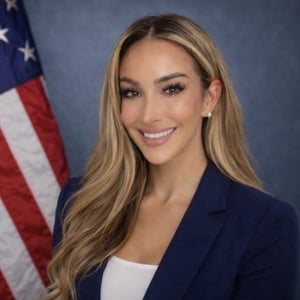
Senior Appellate Counsel, U.S. Navy
Stephanie Fisher recently completed six years as an active-duty Navy Judge Advocate and now serves in the Reserves. She will begin as a Trial Attorney in the Department of Justice’s National Security Division, Counterintelligence and Export Control Section, this summer (2026).
As a Judge Advocate, Stephanie served in numerous roles, including Senior Appellate Government Counsel, Legal Advisor to the Convening Authority for Military Commissions, Adjunct Professor of Law at the United States Naval Academy, and Trial Defense Counsel. She also completed temporary duty assignments with Naval Special Warfare Group 4, Submarine Squadron 6, and Commander, Navy Region Mid-Atlantic.
In her most recent role as Senior Appellate Government Counsel, she briefed and argued cases before the Navy-Marine Corps Court of Criminal Appeals and the Court of Appeals for the Armed Forces, where the courts affirmed more than 95% of the convictions she defended.
Before joining the JAG Corps, Stephanie clerked on the Arizona Supreme Court for the Honorable Justice William Montgomery. She earned her J.D. from Arizona State University’s Sandra Day O’Connor College of Law, where she served as a two-time Vice President of the Federalist Society student chapter. She earned her dual bachelor’s degree from the University of Michigan, where she was a four-year member of the varsity cheerleading team.
Stephanie currently serves on the DC Young Lawyer Chapter Board and the Armed Services Legal Network Executive Committee. In her free time, she enjoys skydiving, weightlifting, hiking, and traveling.
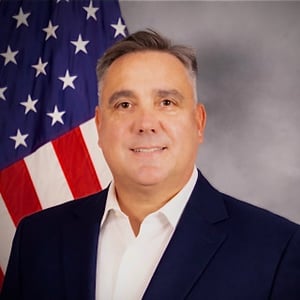
Deputy General Counsel, Office of the General Counsel, National Guard Bureau
Colonel Michael Mark Majors serves as Deputy General Counsel for the Office of the General Counsel, National Guard Bureau, with more than 27 years of military legal experience advising senior military leaders and government officials on military justice, administrative law, operational law, national security, and strategic policy. Throughout his career, he has served as a trusted legal advisor on complex issues spanning governance, risk management, compliance, homeland defense, and military operations.
As Deputy General Counsel, Colonel Majors advises senior National Guard leadership on legal and policy matters affecting more than 430,000 Soldiers and Airmen serving across the 54 states, territories, and the District of Columbia. In his primary role as Chief of the Strategic Engagement Division, he directs nationwide military legal professional development, accessions, and strategic engagement for more than 1,100 National Guard Judge Advocates and Legal Advisors. He develops and teaches National Guard legal education programs, authoring policy and regulatory guidance, and works closely with the Judge Advocate General's Corps, State Judge Advocates, and military legal organizations to strengthen legal readiness throughout the National Guard.
Colonel Majors has deployed in support of multinational operations in Bosnia-Herzegovina, Iraq, Bahrain, and Kosovo. His operational assignments include serving as Chief Deputy Legal Advisor for the NATO-led Kosovo Force (KFOR), advising senior commanders on the law of armed conflict, rules of engagement, international agreements, fiscal law, claims, and operational legal issues during a period of heightened regional instability following Russia's expanded invasion of Ukraine.
Colonel Majors is currently pursuing a Master of Laws (LL.M.) in Air and Space Law at the University of Mississippi School of Law, with a concentration in national security, space operations, commercial remote sensing, and international space law. He holds Master of Arts degrees in Defense and Strategic Studies from both the U.S. Army War College and the U.S. Naval War College, a Juris Doctor from Mississippi College School of Law, and a Bachelor of Science in Public Administration from Samford University.
He is admitted to practice law in the District of Columbia, Mississippi, and Alabama, as well as before the U.S. Court of Appeals for the Armed Forces and multiple federal courts. Colonel Majors serves on the Board of Directors of the Judge Advocate Association, is a Fellow of the Mississippi Bar, and is a frequent lecturer on military law, national security law, operational law, leadership, and emerging issues in air and space law. His military decorations include the Legion of Merit, the Defense Meritorious Service Medal (two awards), the Meritorious Service Medal (four awards), and the Combat Action Badge.

Director, International Legal Studies Program, Vanderbilt Law School
Michael Newton is an expert on terrorism, accountability, transnational justice, and conduct of hostilities issues. Over the course of his career, he has published more than 90 books, articles, op-eds and book chapters. He has been an expert witness in terrorism related trials and is admitted to the counsel list of the International Criminal Court, where, in 2018, he helped prepare the appeal of Jean-Pierre Bemba and participated in oral arguments in the Appeals Chamber. At Vanderbilt, he developed and teaches the innovative International Law Practice Lab, which provides expert assistance to judges, lawyers, legislatures, governments, and policy makers around the world. Professor Newton is most recently the editor of The United States Department of Defense Law of War Manual: Commentary and Critique, forthcoming from Cambridge University Press.
An authority on the law of armed conflict, Professor Newton served as the senior adviser to the Ambassador-at-Large for War Crimes Issues in the U.S. State Department from January 1999 to August 2002, during which he implemented a wide range of policy positions, including U.S. support to accountability mechanisms worldwide. He negotiated the “Elements of Crimes” for the International Criminal Court, and was the senior member of the team teaching international law to the first group of Iraqis who began to think about accountability mechanisms and a constitutional structure in November 2000. He shuttled to Baghdad repeatedly to aid international and Iraqi lawyers and jurists in drafting the Statute of the Iraqi High Tribunal while serving as the International Law Adviser to the Judicial Chambers from 2006 to 2008. He began assisting Iraqi officials, victims and civil society groups on legal issues associated with documentation and investigation of crimes committed by Da’esh on Iraqi soil days after Yazidi victims fled towards Mount Sinjar. He was the U.S. representative on the U.N. Planning Mission for the Sierra Leone Special Court and a founding member of its academic consortium. He is an elected member of the International Institute of Humanitarian Law and on the expert roster of Justice Rapid Response. In addition to teaching the Practice Lab, he develops and coordinates externships and educational opportunities for students interested in international legal issues, having supervised more than 150 such opportunities.
Professor Newton has served on the executive council of the American Society of International Law and as an invited expert for the Genocide Prevention Task Force established by the U.S. Holocaust Memorial Museum and the U.S. Institute of Peace. He is currently on the Advisory Board of the ABA International Criminal Court Project.
Professor Newton served in the U.S. Army more than 21 years, beginning with his commission from the U.S. Military Academy in May 1984 as an armor officer in the 4th Battalion, 68th Armor at Fort Carson, Colorado. After his selection for the Funded Legal Education Program, Newton served as chief of operational law with the Army Special Forces Command (Airborne) during Operation Desert Storm, and as the group judge advocate for the 7th Special Forces Group (Airborne). His deployments include Northern Iraq on Operation Provide Comfort to assist Kurdish civilians, and Haiti with 194th Armored Brigade (Separate), where he organized and led human rights and rules of engagement education for multinational forces, including police. He has taught international and operational law at the Judge Advocate General's School and Center in Charlottesville, Virginia, and taught international law at the United States Military Academy at West Point.
Senior Appellate Counsel, U.S. Navy
Stephanie Fisher recently completed six years as an active-duty Navy Judge Advocate and now serves in the Reserves. She will begin as a Trial Attorney in the Department of Justice’s National Security Division, Counterintelligence and Export Control Section, this summer (2026).
As a Judge Advocate, Stephanie served in numerous roles, including Senior Appellate Government Counsel, Legal Advisor to the Convening Authority for Military Commissions, Adjunct Professor of Law at the United States Naval Academy, and Trial Defense Counsel. She also completed temporary duty assignments with Naval Special Warfare Group 4, Submarine Squadron 6, and Commander, Navy Region Mid-Atlantic.
In her most recent role as Senior Appellate Government Counsel, she briefed and argued cases before the Navy-Marine Corps Court of Criminal Appeals and the Court of Appeals for the Armed Forces, where the courts affirmed more than 95% of the convictions she defended.
Before joining the JAG Corps, Stephanie clerked on the Arizona Supreme Court for the Honorable Justice William Montgomery. She earned her J.D. from Arizona State University’s Sandra Day O’Connor College of Law, where she served as a two-time Vice President of the Federalist Society student chapter. She earned her dual bachelor’s degree from the University of Michigan, where she was a four-year member of the varsity cheerleading team.
Stephanie currently serves on the DC Young Lawyer Chapter Board and the Armed Services Legal Network Executive Committee. In her free time, she enjoys skydiving, weightlifting, hiking, and traveling.
Deputy General Counsel, Office of the General Counsel, National Guard Bureau
Colonel Michael Mark Majors serves as Deputy General Counsel for the Office of the General Counsel, National Guard Bureau, with more than 27 years of military legal experience advising senior military leaders and government officials on military justice, administrative law, operational law, national security, and strategic policy. Throughout his career, he has served as a trusted legal advisor on complex issues spanning governance, risk management, compliance, homeland defense, and military operations.
As Deputy General Counsel, Colonel Majors advises senior National Guard leadership on legal and policy matters affecting more than 430,000 Soldiers and Airmen serving across the 54 states, territories, and the District of Columbia. In his primary role as Chief of the Strategic Engagement Division, he directs nationwide military legal professional development, accessions, and strategic engagement for more than 1,100 National Guard Judge Advocates and Legal Advisors. He develops and teaches National Guard legal education programs, authoring policy and regulatory guidance, and works closely with the Judge Advocate General's Corps, State Judge Advocates, and military legal organizations to strengthen legal readiness throughout the National Guard.
Colonel Majors has deployed in support of multinational operations in Bosnia-Herzegovina, Iraq, Bahrain, and Kosovo. His operational assignments include serving as Chief Deputy Legal Advisor for the NATO-led Kosovo Force (KFOR), advising senior commanders on the law of armed conflict, rules of engagement, international agreements, fiscal law, claims, and operational legal issues during a period of heightened regional instability following Russia's expanded invasion of Ukraine.
Colonel Majors is currently pursuing a Master of Laws (LL.M.) in Air and Space Law at the University of Mississippi School of Law, with a concentration in national security, space operations, commercial remote sensing, and international space law. He holds Master of Arts degrees in Defense and Strategic Studies from both the U.S. Army War College and the U.S. Naval War College, a Juris Doctor from Mississippi College School of Law, and a Bachelor of Science in Public Administration from Samford University.
He is admitted to practice law in the District of Columbia, Mississippi, and Alabama, as well as before the U.S. Court of Appeals for the Armed Forces and multiple federal courts. Colonel Majors serves on the Board of Directors of the Judge Advocate Association, is a Fellow of the Mississippi Bar, and is a frequent lecturer on military law, national security law, operational law, leadership, and emerging issues in air and space law. His military decorations include the Legion of Merit, the Defense Meritorious Service Medal (two awards), the Meritorious Service Medal (four awards), and the Combat Action Badge.
Director, International Legal Studies Program, Vanderbilt Law School
Michael Newton is an expert on terrorism, accountability, transnational justice, and conduct of hostilities issues. Over the course of his career, he has published more than 90 books, articles, op-eds and book chapters. He has been an expert witness in terrorism related trials and is admitted to the counsel list of the International Criminal Court, where, in 2018, he helped prepare the appeal of Jean-Pierre Bemba and participated in oral arguments in the Appeals Chamber. At Vanderbilt, he developed and teaches the innovative International Law Practice Lab, which provides expert assistance to judges, lawyers, legislatures, governments, and policy makers around the world. Professor Newton is most recently the editor of The United States Department of Defense Law of War Manual: Commentary and Critique, forthcoming from Cambridge University Press.
An authority on the law of armed conflict, Professor Newton served as the senior adviser to the Ambassador-at-Large for War Crimes Issues in the U.S. State Department from January 1999 to August 2002, during which he implemented a wide range of policy positions, including U.S. support to accountability mechanisms worldwide. He negotiated the “Elements of Crimes” for the International Criminal Court, and was the senior member of the team teaching international law to the first group of Iraqis who began to think about accountability mechanisms and a constitutional structure in November 2000. He shuttled to Baghdad repeatedly to aid international and Iraqi lawyers and jurists in drafting the Statute of the Iraqi High Tribunal while serving as the International Law Adviser to the Judicial Chambers from 2006 to 2008. He began assisting Iraqi officials, victims and civil society groups on legal issues associated with documentation and investigation of crimes committed by Da’esh on Iraqi soil days after Yazidi victims fled towards Mount Sinjar. He was the U.S. representative on the U.N. Planning Mission for the Sierra Leone Special Court and a founding member of its academic consortium. He is an elected member of the International Institute of Humanitarian Law and on the expert roster of Justice Rapid Response. In addition to teaching the Practice Lab, he develops and coordinates externships and educational opportunities for students interested in international legal issues, having supervised more than 150 such opportunities.
Professor Newton has served on the executive council of the American Society of International Law and as an invited expert for the Genocide Prevention Task Force established by the U.S. Holocaust Memorial Museum and the U.S. Institute of Peace. He is currently on the Advisory Board of the ABA International Criminal Court Project.
Professor Newton served in the U.S. Army more than 21 years, beginning with his commission from the U.S. Military Academy in May 1984 as an armor officer in the 4th Battalion, 68th Armor at Fort Carson, Colorado. After his selection for the Funded Legal Education Program, Newton served as chief of operational law with the Army Special Forces Command (Airborne) during Operation Desert Storm, and as the group judge advocate for the 7th Special Forces Group (Airborne). His deployments include Northern Iraq on Operation Provide Comfort to assist Kurdish civilians, and Haiti with 194th Armored Brigade (Separate), where he organized and led human rights and rules of engagement education for multinational forces, including police. He has taught international and operational law at the Judge Advocate General's School and Center in Charlottesville, Virginia, and taught international law at the United States Military Academy at West Point.
Associate Dean for Academic Affairs and Professor of Law, Ave Maria School of Law
Antony “Tony” Kolenc joined the Ave Maria School of Law faculty in 2022 as the Director of the Veterans and Servicemembers Law Clinic (VSLC), which gives students the opportunity to help those who have served in the U.S. Armed Forces, representing them in litigation, administrative proceedings, and veterans treatment courts. Professor Kolenc taught in several law schools after serving over 21 years in the United States Air Force, retiring as a Lieutenant Colonel from the Judge Advocate General’s (JAG) Corps. During his career as a JAG, he litigated both civil and criminal cases before trial and appellate courts, including the Court of Appeals for the Armed Forces and the U.S. Court of Appeals for the Tenth Circuit. He has also taught at the United States Air Force Academy in Colorado Springs and Florida Coastal School of Law as a tenured professor.
Professor Kolenc received his Juris Doctor degree in 1999, graduating at the top of his class from the University of Florida Levin College of Law. While there, he served as a senior editor on the Florida Law Review and as a competitor and coach on the Justice Campbell Thornal Moot Court Board. He also earned his Master of Arts degree in Theology and Christian Ministry from the Franciscan University of Steubenville. His professional writings have focused on matters of constitutional law and military policy, especially focusing on Freedom of Religion. His articles have appeared in several academic legal journals and magazines. He also writes a regular legal column for homeschooling families in Practical Homeschooling Magazine and has penned an award-winning historical fiction trilogy for teens. He and his wife, Alisa, homeschooled their five children. You can learn more about him at www.antonykolenc.com.
Senior Counsel, First Liberty Institute
Christopher J. Motz serves as Senior Counsel with First Liberty Institute. His practice focuses on First Amendment free exercise and Establishment Clause rights of United States service members domestically and internationally, chaplains of varying denominations, veterans, and defense industry contractors. He has also represented Catholic bishops and priests against state officials.
Chris currently serves part-time as a judge advocate in the Air Force Reserve Component, holding the rank of lieutenant colonel. Prior to that, he served as a Marine infantry officer, leading Marines on several combat tours. He has been forward deployed alongside soldiers, sailors, Marines, airmen, and Coast Guardsmen. His advocacy for the religious rights of service members has been published in the Wall Street Journal.
Before joining First Liberty, Chris served as general counsel and chief of staff to a Catholic diocese, where he led the Catholic Church’s efforts to oppose a state constitutional ballot measure reinstating Roe v. Wade, achieving a record-setting 18-point victory, a nationwide first in the wake of the Dobbs decision. Earlier in his career, he led a state Catholic conference, where he steered the successful passage of a state religious freedom restoration act. A member of the Knights of Columbus, he is a past member of the National Diocesan Attorneys Association and the National Association of State Catholic Conference Directors.
He graduated cum laude from the University of St. Thomas School of Law, where he served as editor-in-chief of the Journal of Law and Public Policy, represented a Messianic Jewish prisoner before the U.S. Court of Appeals for the Ninth Circuit with the school’s Religious Liberty Appellate Clinic, and published articles on attorney ethics and legal issues around drone strikes.
Chief Defense Counsel, U.S. Marine Corps
Colonel Iain Pedden currently serves as Chief Defense Counsel of the Marine Corps. His career experience includes trial and appellate litigation, academic instruction, constitutional advocacy, and service-level policy development within the military justice system.
Colonel Pedden’s recent litigation background includes serving as Director of the Appellate Government Division for the Navy and Marine Corps, where he led the representation of the United States in all criminal appeals within the Department of the Navy. He previously served as Chief Victims' Legal Counsel of the Marine Corps, Senior Defense Counsel, and Trial Counsel. His foundational appellate experience includes service as a clerk drafting briefs for the Illinois Attorney General’s Criminal Appeals Division in cases before the Illinois Supreme Court, the Seventh Circuit, and the United States Supreme Court.
Apart from litigation assignments, Colonel Pedden served as Associate Professor of Criminal Law at the U.S. Army Judge Advocate General’s Legal Center and School, teaching evidence and constitutional law. He later served as Branch Head of Military Justice at Headquarters Marine Corps, advising senior leaders on federal legislation, implementing the Military Justice Act of 2016, and drafting policy on criminal justice data-sharing protocols with the FBI. His operational assignments include a combat deployment to Afghanistan and service as a Staff Judge Advocate (general counsel) to the 26th Marine Expeditionary Unit. He went on to command Marines providing security at diplomatic facilities in Scandinavia, Western Europe and the Mediterranean.
Colonel Pedden holds an M.S. from the National War College, an LL.M. (International Law) from the U.S. Army JAG School, and a J.D. from Loyola University Chicago. He holds certifications as Victims’ Legal Counsel and military judge and is admitted to practice in Illinois and before the Navy-Marine Corps Court of Criminal Appeals and the U.S. Court of Appeals for the Armed Forces.
Colonel Pedden’s participation in programming, unless noted otherwise, is in his personal capacity. The views expressed are those of the speaker and do not necessarily represent the views of the Department of War, the Department of the Navy, the Marine Corps, or the U.S. Government.
Special Counsel, Office of the Secretary of Defense, U.S. Department of Defense
Senior Appellate Counsel, U.S. Navy
Stephanie Fisher recently completed six years as an active-duty Navy Judge Advocate and now serves in the Reserves. She will begin as a Trial Attorney in the Department of Justice’s National Security Division, Counterintelligence and Export Control Section, this summer (2026).
As a Judge Advocate, Stephanie served in numerous roles, including Senior Appellate Government Counsel, Legal Advisor to the Convening Authority for Military Commissions, Adjunct Professor of Law at the United States Naval Academy, and Trial Defense Counsel. She also completed temporary duty assignments with Naval Special Warfare Group 4, Submarine Squadron 6, and Commander, Navy Region Mid-Atlantic.
In her most recent role as Senior Appellate Government Counsel, she briefed and argued cases before the Navy-Marine Corps Court of Criminal Appeals and the Court of Appeals for the Armed Forces, where the courts affirmed more than 95% of the convictions she defended.
Before joining the JAG Corps, Stephanie clerked on the Arizona Supreme Court for the Honorable Justice William Montgomery. She earned her J.D. from Arizona State University’s Sandra Day O’Connor College of Law, where she served as a two-time Vice President of the Federalist Society student chapter. She earned her dual bachelor’s degree from the University of Michigan, where she was a four-year member of the varsity cheerleading team.
Stephanie currently serves on the DC Young Lawyer Chapter Board and the Armed Services Legal Network Executive Committee. In her free time, she enjoys skydiving, weightlifting, hiking, and traveling.
Deputy General Counsel, Office of the General Counsel, National Guard Bureau
Colonel Michael Mark Majors serves as Deputy General Counsel for the Office of the General Counsel, National Guard Bureau, with more than 27 years of military legal experience advising senior military leaders and government officials on military justice, administrative law, operational law, national security, and strategic policy. Throughout his career, he has served as a trusted legal advisor on complex issues spanning governance, risk management, compliance, homeland defense, and military operations.
As Deputy General Counsel, Colonel Majors advises senior National Guard leadership on legal and policy matters affecting more than 430,000 Soldiers and Airmen serving across the 54 states, territories, and the District of Columbia. In his primary role as Chief of the Strategic Engagement Division, he directs nationwide military legal professional development, accessions, and strategic engagement for more than 1,100 National Guard Judge Advocates and Legal Advisors. He develops and teaches National Guard legal education programs, authoring policy and regulatory guidance, and works closely with the Judge Advocate General's Corps, State Judge Advocates, and military legal organizations to strengthen legal readiness throughout the National Guard.
Colonel Majors has deployed in support of multinational operations in Bosnia-Herzegovina, Iraq, Bahrain, and Kosovo. His operational assignments include serving as Chief Deputy Legal Advisor for the NATO-led Kosovo Force (KFOR), advising senior commanders on the law of armed conflict, rules of engagement, international agreements, fiscal law, claims, and operational legal issues during a period of heightened regional instability following Russia's expanded invasion of Ukraine.
Colonel Majors is currently pursuing a Master of Laws (LL.M.) in Air and Space Law at the University of Mississippi School of Law, with a concentration in national security, space operations, commercial remote sensing, and international space law. He holds Master of Arts degrees in Defense and Strategic Studies from both the U.S. Army War College and the U.S. Naval War College, a Juris Doctor from Mississippi College School of Law, and a Bachelor of Science in Public Administration from Samford University.
He is admitted to practice law in the District of Columbia, Mississippi, and Alabama, as well as before the U.S. Court of Appeals for the Armed Forces and multiple federal courts. Colonel Majors serves on the Board of Directors of the Judge Advocate Association, is a Fellow of the Mississippi Bar, and is a frequent lecturer on military law, national security law, operational law, leadership, and emerging issues in air and space law. His military decorations include the Legion of Merit, the Defense Meritorious Service Medal (two awards), the Meritorious Service Medal (four awards), and the Combat Action Badge.
Director, International Legal Studies Program, Vanderbilt Law School
Michael Newton is an expert on terrorism, accountability, transnational justice, and conduct of hostilities issues. Over the course of his career, he has published more than 90 books, articles, op-eds and book chapters. He has been an expert witness in terrorism related trials and is admitted to the counsel list of the International Criminal Court, where, in 2018, he helped prepare the appeal of Jean-Pierre Bemba and participated in oral arguments in the Appeals Chamber. At Vanderbilt, he developed and teaches the innovative International Law Practice Lab, which provides expert assistance to judges, lawyers, legislatures, governments, and policy makers around the world. Professor Newton is most recently the editor of The United States Department of Defense Law of War Manual: Commentary and Critique, forthcoming from Cambridge University Press.
An authority on the law of armed conflict, Professor Newton served as the senior adviser to the Ambassador-at-Large for War Crimes Issues in the U.S. State Department from January 1999 to August 2002, during which he implemented a wide range of policy positions, including U.S. support to accountability mechanisms worldwide. He negotiated the “Elements of Crimes” for the International Criminal Court, and was the senior member of the team teaching international law to the first group of Iraqis who began to think about accountability mechanisms and a constitutional structure in November 2000. He shuttled to Baghdad repeatedly to aid international and Iraqi lawyers and jurists in drafting the Statute of the Iraqi High Tribunal while serving as the International Law Adviser to the Judicial Chambers from 2006 to 2008. He began assisting Iraqi officials, victims and civil society groups on legal issues associated with documentation and investigation of crimes committed by Da’esh on Iraqi soil days after Yazidi victims fled towards Mount Sinjar. He was the U.S. representative on the U.N. Planning Mission for the Sierra Leone Special Court and a founding member of its academic consortium. He is an elected member of the International Institute of Humanitarian Law and on the expert roster of Justice Rapid Response. In addition to teaching the Practice Lab, he develops and coordinates externships and educational opportunities for students interested in international legal issues, having supervised more than 150 such opportunities.
Professor Newton has served on the executive council of the American Society of International Law and as an invited expert for the Genocide Prevention Task Force established by the U.S. Holocaust Memorial Museum and the U.S. Institute of Peace. He is currently on the Advisory Board of the ABA International Criminal Court Project.
Professor Newton served in the U.S. Army more than 21 years, beginning with his commission from the U.S. Military Academy in May 1984 as an armor officer in the 4th Battalion, 68th Armor at Fort Carson, Colorado. After his selection for the Funded Legal Education Program, Newton served as chief of operational law with the Army Special Forces Command (Airborne) during Operation Desert Storm, and as the group judge advocate for the 7th Special Forces Group (Airborne). His deployments include Northern Iraq on Operation Provide Comfort to assist Kurdish civilians, and Haiti with 194th Armored Brigade (Separate), where he organized and led human rights and rules of engagement education for multinational forces, including police. He has taught international and operational law at the Judge Advocate General's School and Center in Charlottesville, Virginia, and taught international law at the United States Military Academy at West Point.

Senior Legal Fellow and Manager, National Security Law Program, The Heritage Foundation
Charles “Cully” Stimson is a widely recognized expert in national security, homeland security, crime control, drug policy and immigration. A senior legal fellow at The Heritage Foundation since 2007, Stimson became Manager of the National Security Law Program in Heritage’s Institute for Constitutional Government in April 2013 after serving as Heritage’s chief of staff for a year.
Stimson writes and lectures on policy issues such as the law of armed conflict, terrorist detainee policy and interrogations, the Geneva Conventions, military commissions, the Patriot Act and FISA, criminal law and the death penalty, immigration and the war on drugs. As chief of staff to then-Heritage President Edwin J. Feulner, he was a key adviser on public policy matters as well as manager of Feulner’s office staff and Heritage’s day-to-day operations.
Stimson’s many research papers, op-eds and articles include special reports such as “Adult Time for Adult Crime,” a comprehensive study on the constitutionality of life sentences for teen-age murderers, and Sexual Assault in the Military: Understanding the Problem and How to Fix It, a ground-breaking paper detailing the inner workings of the military justice system compared to its civilian counterpart. His work on criminal and immigration law has been cited in briefs before the U.S. Supreme Court.
He testifies before the U.S. Senate and House on national security issues, and recently testified before the Senate Armed Services Committee on the Law of Armed Conflict, Law of War, and the 2001 Authorization for Use of Military Force.
Before joining the think tank in 2007, Stimson served as Deputy Assistant Secretary of Defense for Detainee Affairs. He advised then-Secretaries of Defense Donald Rumsfeld and Robert Gates and coordinated the Pentagon’s global detention policy and operations, including at Guantanamo Bay and in Iraq and Afghanistan. He was chairman of detainee-related panels such as the Defense Senior Leadership Oversight Committee, and the Special Detainee Follow Up Group. He represented the United States before the U.N. in Geneva, Switzerland in May 2006 where he led the DOD delegation in defense of the United States’ Second Period Report on the Convention Against Torture.
An accomplished trial lawyer, Stimson worked as a prosecutor at the local, state and federal levels, where he concentrated on violent crimes such as homicide, sexual assault and domestic violence. A third generation naval officer, Cully also served as a military prosecutor, defense counsel, and recently served as Deputy Chief Judge of the Navy-Marine Corps Trial Judiciary. He continues to serve, with the rank of Captain, as the Commanding Officer of the Preliminary Hearing Unit.
Stimson’s thousands of media interviews and appearances include Fox News Channel, MSNBC, CNN, BBC, NPR and C-SPAN. He has been quoted by most major newspapers, including The Washington Post, Wall Street Journal, New York Times, Los Angeles Times, and London Times.
A businessman and educator by training, Stimson is Vice Chairman of his family’s commercial real estate company in Seattle. Before 9/11, he was a Vice President at a New York-based global financial services and insurance brokerage firm where ran the private equity mergers and acquisitions D.C. operation.
Stimson holds a law degree from the George Mason University School of Law, where he later taught as an Adjunct Professor of Law. He is a graduate of Kenyon College, where he was Captain of the men’s varsity soccer team and an All-Conference player. He also studied at Harvard and Exeter universities. An avid soccer player and triathlete, he serves as Chairman of the Board of the United States Soccer Foundation, the charitable giving arm of U.S. Soccer.
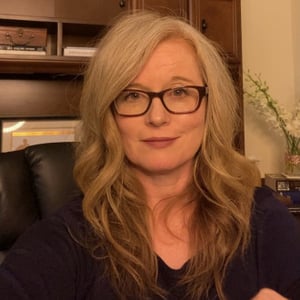
Executive Director of the Military Law and Policy Institute and AMVETS Legal Clinic
Professor Rotunda is regarded as a leading expert in military law and currently teaches Law of War and a Family Violence Clinic. She is the author of Honor Bound: Inside the Guantanamo Trials, published by Carolina Academic Press (2008). She directed the Clinic for Legal Assistance to Service Members at George Mason School of Law, where she and her students successfully represented military families in various legal disputes, including Physical Evaluation Boards and Traumatic Service Group Life Insurance Appeals. Rotunda has recovered hundreds of thousands of dollars for disabled troops.
Professor Rotunda began her career in the US Army JAG Corps and has since been recruited by the National Veterans Legal Services Program (NVLSP) to produce a series of instructional DVDs about military law. She has also authored a coordinating outline and co-authored NVLSP's forthcoming book regarding military administrative/disability proceedings, to be published by Lexis Nexis. She remains in the Army Reserves and holds the rank of Major. Rotunda has served in several missions related to the Global War on Terror: she served in Guantanamo Bay, was the legal advisor to a team of investigators pursuing leads in the war on terror, served as a prosecutor at the Office of Military Commissions, represented wounded troops at Walter Reed Army Medical Center, and was the lawyer assigned to Jessica Lynch after Lynch's rescue.
Professor Rotunda is an avid writer and advocate for soldiers. She has written op-eds for The Christian Science Monitor, The Wall Street Journal, The Chicago Tribune, and The Washington Times. She is a regular television and radio commentator regarding military law and the ongoing trials in Guantanamo Bay. She has appeared on more than 20 nationally-syndicated radio shows, including The Michael Reagan Show, The Dennis Miller Show, and the Jim Bohannon Show. Rotunda has also appeared on national and international television news programs, including Hannity's America, the Brit Hume Report, and Al Jazeera.
B.A., University of Wyoming; J.D., University of Wyoming College of Law


Service Members & the First Amendment
Antony Kolenc, Christopher J. Motz, Iain Pedden, Thomas N. Wheatley
Recent litigation has resurfaced longstanding debates over the scope of First Amendment protections for members...
Service Members & the First Amendment
Antony Kolenc, Christopher J. Motz, Iain Pedden, Thomas N. Wheatley
Recent litigation has resurfaced longstanding debates over the scope of First Amendment protections for members...
Virtual Fireside Chat with The Air Force General Counsel William Lane
William K. Lane, Robert J. Sander
Join us for a virtual fireside chat with William Lane, General Counsel of the Department...
Service Members & the First Amendment
Exploring the Landscape of Military Law and Best Practices for JAGs
Jesse Burbank, Stephanie Fisher, Mark Majors, Michael A. Newton
Military law encompasses a wide range of legal disciplines, including criminal law, national security, government...
Exploring the Landscape of Military Law and Best Practices for JAGs
Jesse Burbank, Stephanie Fisher, Mark Majors, Michael A. Newton
Military law encompasses a wide range of legal disciplines, including criminal law, national security, government...
Exploring the Landscape of Military Law and Best Practices for JAGs
Ten Interesting Facts About the Military Justice System
Harvard Student Chapter
Cambridge, MAWhat's Going on With the Military Justice System?
Syracuse Student Chapter
Syracuse, NYMilitary Law and Guantanamo Bay Time