

Executive in Residence, Wake Forest University School of Business
John Allison is an Executive in Residence at the Wake Forest School of Business. He is a member of the Cato Institute’s Board of Directors and Chairman of the Executive Advisory Council of the Cato Institute’s Center for Monetary and Financial Alternatives. Allison was president and CEO of the Cato Institute from October 2012 to April 2015. Prior to joining Cato, Allison was chairman and CEO of BB&T Corporation, the 10th-largest financial services holding company headquartered in the United States. During his tenure as CEO from 1989 to 2008, BB&T grew from $4.5 billion to $152 billion in assets. He was recognized by theHarvard Business Reviewas one of the top 100 most successful CEOs in the world over the last decade.
Allison has received the Corning Award for Distinguished Leadership, been inducted into the North Carolina Business Hall of Fame, and received the Lifetime Achievement Award from theAmerican Banker. He is the author of The Financial Crisis and the Free Market Cure: Why Pure Capitalism Is the World Economy’s Only Hope and The Leadership Crisis and the Free Market Cure: Why the Future of Business Depends on the Return to Life, Liberty, and the Pursuit of Happiness. In addition, he is a former Distinguished Professor of Practice at Wake Forest University School of Business, and serves on the Board of Visitors at the business schools at Wake Forest, Duke, and the University of North Carolina–Chapel Hill.
Allison is a Phi Beta Kappa graduate of the University of North Carolina–Chapel Hill. He received his master’s degree in management from Duke University and is also a graduate of the Stonier Graduate School of Banking. Allison is the recipient of six honorary doctorate degrees.
Wayne A. Abernathy, Wild Bells
Wayne A. Abernathy is a former U.S. Treasury Assistant Secretary for Financial Institutions under President George W. Bush, receiving the Alexander Hamilton Award in recognition of his service. In that office he was also a member of the Board of Directors of the Securities Investor Protection Corporation. Prior to his work at the Treasury, Mr. Abernathy served as Staff Director of the Senate Banking Committee, under Chairman Phil Gramm.
Following his service at the Treasury, Mr. Abernathy worked for 15 years on the staff of the American Bankers Association, as Executive Vice President for Financial Institutions Policy and Regulatory Affairs.
Previous experience with the Senate Banking Committee includes serving as Staff Director of the Subcommittee on Securities during 1995-1998. From 1989 until 1994, Mr. Abernathy was a Republican economist for the committee. He previously worked as a senior legislative assistant for Senator Gramm during 1987-1989 and as an economist for the Banking Committee’s Subcommittee on International Finance and Monetary Policy during 1981-1986, under Chairman Jake Garn.
Mr. Abernathy earned his bachelor’s degree in International Studies from The Johns Hopkins University in 1978. In 1980, he received a master’s degree in International Studies from the School of Advanced International Studies of The Johns Hopkins University.
Director, Washington Legislative Office, American Civil Liberties Union (ACLU)
Laura W. Murphy is in her second tenure as Director of the ACLU’s Washington Legislative Office, a position she first held from 1993-2005. Since returning Murphy has maintained strong relationships with leaders in the United States Congress and the Obama Administration to advance the ACLU’s public policy priorities including national security, criminal justice, human rights, privacy, reproductive rights, civil rights and First Amendment issues.
Recently, Murphy played a leadership role in the passage of the Fair Sentencing Act of 2010 signed into law by President Obama on August 3, 2010—a law that reduced the sentencing disparity between crack and powder cocaine and that begins to address some of the racial disparities in the criminal justice system. Under her leadership, the ACLU Washington Legislative Office worked with Congress and the White House to gain support around federally-funded abortions for servicewomen and military dependents in the cases of rape or incest. The provision was signed into law on January 2, 2013.
Prior to her return to the ACLU, she founded and directed her own firm, Laura Murphy & Associates, L.L.C., where she utilized her 30 years of policy-making and political expertise to guide and advise corporate and non-profit clients at the national, state and local levels.
Murphy is well known for her notable legislative career advancing human rights and civil liberties. Both major newspapers on Capitol Hill, Roll Call and The Hill, selected Murphy as one of the 50 most influential lobbyists and one of 17 top nonprofit lobbyists in 1997 and 2003, respectively. In 1997, and again in 2003, the Congressional Black Caucus honored her for her significant contributions to legislation that advances civil rights and civil liberties. She has been given awards for her work with Congress and the White House by ACLU affiliates in Massachusetts, Mississippi and Maryland. Murphy has also been instrumental in garnering support from African Americans for same sex marriage, especially in her home state of Maryland. Murphy’s family has a storied history in the civil rights movement and in the Black press, and they were intimately involved in the successful 2012 campaign for marriage equality in Maryland.
In previous professional positions Murphy served as chief of staff to a California Assembly Speaker and a cabinet member for the Mayor of the District of Columbia. Murphy has testified more than a dozen times before Congress and is an experienced national spokesperson. She has been a frequent guest on television and radio including PBS, “NBC Nightly News” and “The Today Show”, “ABC World News”, CNN, Fox News, and National Public Radio.

Founding Director, Knight First Amendment Institute at Columbia University
Jameel Jaffer is the founding director of the Knight First Amendment Institute at Columbia University, which works to protect and expand the freedoms of speech and the press through strategic litigation, research, and public education. Until recently, Jaffer was deputy legal director at the American Civil Liberties Union and director of the ACLU’s Center for Democracy, in which role he oversaw the ACLU’s work relating to free speech, privacy, technology, national security, and international human rights.
Jaffer has litigated some of the most significant post-9/11 cases relating to national security and civil liberties, including cases concerning detention, interrogation, surveillance, targeted killing, and government secrecy. He co-led the litigation that resulted in the publication of the Bush administration’s “torture memos”—a lawsuit the New York Times described as “among the most successful in the history of public disclosure.” More recently, he led the ACLU’s litigation that resulted in the publication of the Obama administration’s “drone memos.”
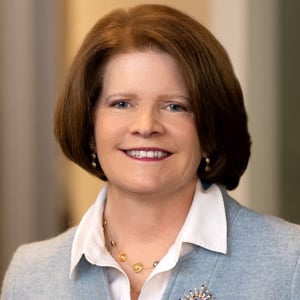
Partner, Antitrust and Competition, Wilson Sonsini Goodrich & Rosati
Maureen Ohlhausen is a partner in the Washington, D.C., office of Wilson Sonsini Goodrich & Rosati, where she advises industry-leading clients on complex antitrust and litigation matters, with a focus on high-profile cases. Sought after for her depth of experience on antitrust and Federal Trade Commission (FTC)-related issues, Maureen is known for her relationships with officials in the U.S. and abroad.
After finishing law school and clerking at the U.S. Court of Appeals for the D.C. Circuit, Maureen joined the FTC in 1997. She held a series of roles at the agency over the next 12 years, rising to the position of Director of the FTC Office of Policy Planning, where she led the agency’s work on e-commerce and headed the FTC’s Internet Access Task Force, which produced an influential report analyzing competition and consumer protection legal issues in the broadband and internet sectors. She then went into private practice at a leading telecommunications law firm, where she headed the FTC practice group.
In 2012, Maureen was confirmed by the Senate as a Commissioner of the FTC and was appointed Acting Chairman in January 2017, a role she held until May 2018. As Acting Chairman, Maureen directed all aspects of the agency’s antitrust work, including merger review, conduct enforcement, and all consumer protection enforcement, with an emphasis on privacy and technology issues. Under her leadership, the FTC won several influential merger challenges in court and reached a number of key digital privacy settlements.
To date, Maureen is the only FTC Commissioner to have received the Robert Pitofsky Lifetime Achievement Award in recognition of her contributions to the FTC.
Following the end of her term at the FTC, and immediately prior to joining Wilson Sonsini, Maureen was chair of the global antitrust and competition practice at Baker Botts, based in that firm’s Washington, D.C., office.
A recognized thought leader, Maureen is a frequent author and speaker, and is often quoted by leading print and broadcast media on antitrust, FTC, and privacy and data security matters. She has published dozens of articles on antitrust, privacy, intellectual property, regulation, FTC litigation, telecommunications, and international law issues in prestigious publications. During her tenure at the FTC and in private practice, she testified more than two dozen times before Congress, including before the Senate Commerce Committee and the House Energy and Commerce Antitrust Sub-Committee. She also testified before the Antitrust Modernization Commission.

President, Cass & Associates, PC
Ronald A. Cass is Dean Emeritus of Boston University School of Law (where he was Dean from 1990-2004), President of Cass & Associates, PC, former Vice-Chairman and Commissioner of the U.S. International Trade Commission, former faculty member at Boston University School of Law and the University of Virginia Law School, and Distinguished Senior Fellow at the C. Boyden Gray Center for the Study of the Administrative State. Dean Cass also sits as an arbitrator for commercial, international, and intellectual property rights disputes, and is a former United States member of the Panel of Conciliators of the International Centre for Settlement of Investment Disputes. He is a member of the Council of the Administrative Conference of the United States and has received seven presidential appointments, spanning Presidents Ronald Reagan to Donald J. Trump.
As a law professor, lecturer, and scholar, Dean Cass has been teaching and writing about a wide array of legal issues on topics such as administrative law and regulation, antitrust, constitutional law, communications, intellectual property, international trade, separation of powers, and legal process. He has published more than 160 scholarly books, chapters, articles, and papers, including a leading casebook on administrative law. Dean Cass has taught judges as well as students in schools of law, economics, business, and public policy and has held academic appointments in the United States, Europe, and Latin America.
In addition to his academic work, Dean Cass has participated in numerous important legal cases as an amicus, consultant, or expert, and has advised businesses, law firms, investment funds, and government agencies on a range of trade, antitrust, intellectual property, and regulatory issues. He has a broad range of affiliations with professional groups, and has received numerous honors, fellowships and awards.
Dean Cass is a graduate of the University of Virginia and the University of Chicago Law School.
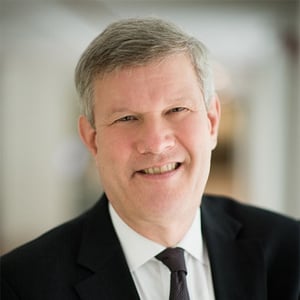
Senior Fellow and Director, Center for the Economics of the Internet, Hudson Institute
Harold Furchtgott-Roth is a senior fellow and director of the Center for the Economics of the Internet at Hudson Institute.
Mr. Furchtgott-Roth founded Furchtgott-Roth Economic Enterprises in 2003. He frequently comments on issues related to the communications sector of the economy. From 2001 to 2003, he was a visiting fellow at the American Enterprise Institute where he published A Tough Act to Follow, chronicling the difficulties implementing the Telecommunications Act of 1996.
From 1997 through 2001, Mr. Furchtgott-Roth served as a commissioner of the Federal Communications Commission. In that capacity, he served on the Joint Board on Universal Service. He is one of the few economists to have served as a federal regulatory commissioner, and the only one to have served on the Federal Communications Commission.
Before his appointment to the FCC, he was chief economist for the House Committee on Commerce and a principal staff member on the Telecommunications Act of 1996. Earlier in his career, he was a senior economist with Economists Incorporated and a research analyst with the Center for Naval Analyses.
Mr. Furchtgott-Roth is a member of the Washington Legal Foundation’s Legal Policy Advisory Board. He is the coauthor of three books: Cable TV: Regulation or Competition, with R.W. Crandall; Economics of A Disaster: The Exxon Valdez Oil Spill, with B.M. Owen et al; and International Trade in Computer Software, with S.E. Siwek.
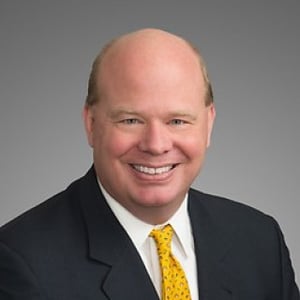
Principal, DeGroot Legal
Mr. DeGroot represents businesses in complex litigation, focusing on licensing, insurance, intellectual property, contract disputes, and toxic torts. He has experience in cases involving fraud, breach of contract, unfair competition, patents, business torts, mergers and acquisitions, creditors’ rights, and bankruptcy. He has extensive experience in all aspects of civil litigation, both in federal and state courts, including prejudgment remedies, discovery, trial, appeals, arbitration and mediation.
Mr. DeGroot works with clients in a variety of industries, including financial institutions, insurance, software, construction, semiconductors, and real estate.
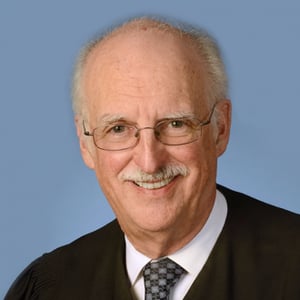
Senior Judge, United States Court of Appeals, District of Columbia Circuit
Circuit Judge Douglas H. Ginsburg was appointed to the United States Court of Appeals for the District of Columbia in 1986. After receiving his B.S. from Cornell University in 1970, and his J.D. from the University of Chicago Law School in 1973, he clerked on the D.C. Circuit and for Justice Thurgood Marshall on the United States Supreme Court. Thereafter, Judge Ginsburg was a professor at the Harvard Law School, the Deputy Assistant and then Assistant Attorney General for the Antitrust Division of the Department of Justice, as well as the Administrator of the Office of Information and Regulatory Affairs in the Office of Management and Budget. Concurrent with his service as a federal judge, Judge Ginsburg has taught at the University of Chicago Law School and the New York University School of Law. Judge Ginsburg is currently a Professor of Law at the George Mason University and a visiting professor at University College London, Faculty of Laws.
Judge Ginsburg is the Chairman of the International Advisory Board of the Global Antitrust Institute at the Law and Economics Center of the George Mason University School of Law. He also serves on the Advisory Boards of: Competition Policy International; the Harvard Journal of Law and Public Policy; the Journal of Competition Law and Economics; the Journal of Law, Economics & Policy; the Supreme Court Economic Review; the University of Chicago Law Review; the New York University Journal of Law and Liberty; and, at University College London, both the Centre for Law, Economics and Society and the Jevons Institute for Competition Law and Economics.
In 2020, Judge Ginsburg was the 11th recipient of the John Sherman Award, presented by the Antitrust Division of the Department of Justice in recognition of the awardee’s Lifetime Contributions to Antitrust Law and Policy.
In 2014, Judge Ginsburg received the Lifetime Achievement Award given annually by the Global Competition Review.
He is the author or co-author of several books and more than 100 articles on competition and regulation, including, most recently, Growing Convergence: The Limited Role of Antitrust in Standard Essential Patent Disputes, in CPI Antitrust Chronicle, Summer 2021, Vol. 1, No. 2.
Clinical Co-Director and Senior Fellow, Berkman Center for Inter, Harvard Law School
Phil Malone is a Clinical Professor of Law at Harvard Law School and the Director of the Law School’s Cyberlaw Clinic at the Berkman Center. Phil joined the Center in September, 2004 as a co-director of the Clinical Program; in the years since, he and his clinical colleagues have built the Clinic into one of the leading entities of its kind in the country.
Phil came to the Berkman Center after a little over 20 years as a federal prosecutor with theAntitrust Divisionof the U.S. Department of Justice, where he directed numerous civil and criminal investigations and prosecutions. Most of his DOJ experience over the past 10 years focused on high-technology industries, the Internet and computer software and hardware. Beginning in 1996 Phil was lead counsel in the DOJ's investigations of Microsoft, and he was the primary career counsel, along with outside counsel David Boies, in the trial ofU.S. v. Microsoft Corp.(D.D.C). Before leaving the Justice Department he was one of the lead lawyers in the government's antitrust case against Oracle Corp. Phil first became involved with the Berkman Center during the 2001-2003 academic years when he was the Victor H. Kramer Fellow at HLS. His research then focused on legal approaches to encouraging and preserving innovation in high-tech industries, evolving competition policy in the computer industry, and the use of technology in discovery and litigation.
Phil graduated long ago fromHarvard Collegeand the University of Arizona College of Law. When he is not at the Berkman Center he can often be found around Harvard'sQuincy House, where he and his wife Luci are resident tutors and kids Celia and Zulie are resident entertainment.
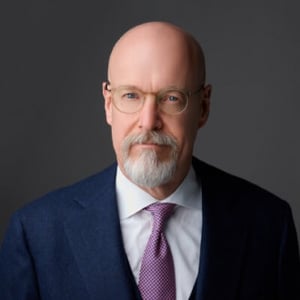
Partner, Rule Garza Howley LLP
Rick began his career in the 1980s in the Antitrust Division of the U.S. Department of Justice, becoming the Assistant Attorney General in charge of the Division from 1986-89 – the youngest person ever to be confirmed by the Senate to that position. Over the last 30+ years since leaving the Division, Rick has led the antitrust practices at several leading D.C. and New York firms including Covington & Burling and Paul, Weiss.
During his time in private practice, Rick has represented major multi-national companies and executives in virtually every industry – from, among others, agricultural and animal health (Monsanto, Elanco) to energy (ExxonMobil) to defense contractors (Northrop Grumman, United Technologies) to professional sports (NFL, NBA, MLB) to technology platforms (Microsoft, Nuance) to pharmaceutical manufacturers (Eli Lilly, Pfizer) to health insurers (Cigna). (For a complete list of industry experience, click here.)
Rick has represented his clients before the Antitrust Division, the Federal Trade Commission, State Attorneys General and major foreign antitrust regulators in connection with many of the most notable merger investigations, including Exxon’s merger with Mobil, US Airways’ merger with American Airlines, and Cigna’s acquisition of Express Scripts. At the same time, Rick has represented clients in some of most prominent government investigations of the last quarter century, including leading the team that settled the Government’s monopolization case against Microsoft and defending international companies and executives in major antitrust criminal investigations.
For four decades, Rick has been at the forefront of antitrust law and is uniquely capable of advising clients on the antitrust regulatory environment affecting the way they do business globally. As agencies and rules have evolved, he has helped clients to understand the dynamic legal framework, to assess the legal risk and rewards associated with a range of competitive strategies, and to work with government bodies to take advantage of, and ensure appropriate compliance with, the regulations governing the clients’ chosen strategy.
Principal, DeGroot Legal
Mr. DeGroot represents businesses in complex litigation, focusing on licensing, insurance, intellectual property, contract disputes, and toxic torts. He has experience in cases involving fraud, breach of contract, unfair competition, patents, business torts, mergers and acquisitions, creditors’ rights, and bankruptcy. He has extensive experience in all aspects of civil litigation, both in federal and state courts, including prejudgment remedies, discovery, trial, appeals, arbitration and mediation.
Mr. DeGroot works with clients in a variety of industries, including financial institutions, insurance, software, construction, semiconductors, and real estate.
Senior Judge, United States Court of Appeals, District of Columbia Circuit
Circuit Judge Douglas H. Ginsburg was appointed to the United States Court of Appeals for the District of Columbia in 1986. After receiving his B.S. from Cornell University in 1970, and his J.D. from the University of Chicago Law School in 1973, he clerked on the D.C. Circuit and for Justice Thurgood Marshall on the United States Supreme Court. Thereafter, Judge Ginsburg was a professor at the Harvard Law School, the Deputy Assistant and then Assistant Attorney General for the Antitrust Division of the Department of Justice, as well as the Administrator of the Office of Information and Regulatory Affairs in the Office of Management and Budget. Concurrent with his service as a federal judge, Judge Ginsburg has taught at the University of Chicago Law School and the New York University School of Law. Judge Ginsburg is currently a Professor of Law at the George Mason University and a visiting professor at University College London, Faculty of Laws.
Judge Ginsburg is the Chairman of the International Advisory Board of the Global Antitrust Institute at the Law and Economics Center of the George Mason University School of Law. He also serves on the Advisory Boards of: Competition Policy International; the Harvard Journal of Law and Public Policy; the Journal of Competition Law and Economics; the Journal of Law, Economics & Policy; the Supreme Court Economic Review; the University of Chicago Law Review; the New York University Journal of Law and Liberty; and, at University College London, both the Centre for Law, Economics and Society and the Jevons Institute for Competition Law and Economics.
In 2020, Judge Ginsburg was the 11th recipient of the John Sherman Award, presented by the Antitrust Division of the Department of Justice in recognition of the awardee’s Lifetime Contributions to Antitrust Law and Policy.
In 2014, Judge Ginsburg received the Lifetime Achievement Award given annually by the Global Competition Review.
He is the author or co-author of several books and more than 100 articles on competition and regulation, including, most recently, Growing Convergence: The Limited Role of Antitrust in Standard Essential Patent Disputes, in CPI Antitrust Chronicle, Summer 2021, Vol. 1, No. 2.
Clinical Co-Director and Senior Fellow, Berkman Center for Inter, Harvard Law School
Phil Malone is a Clinical Professor of Law at Harvard Law School and the Director of the Law School’s Cyberlaw Clinic at the Berkman Center. Phil joined the Center in September, 2004 as a co-director of the Clinical Program; in the years since, he and his clinical colleagues have built the Clinic into one of the leading entities of its kind in the country.
Phil came to the Berkman Center after a little over 20 years as a federal prosecutor with theAntitrust Divisionof the U.S. Department of Justice, where he directed numerous civil and criminal investigations and prosecutions. Most of his DOJ experience over the past 10 years focused on high-technology industries, the Internet and computer software and hardware. Beginning in 1996 Phil was lead counsel in the DOJ's investigations of Microsoft, and he was the primary career counsel, along with outside counsel David Boies, in the trial ofU.S. v. Microsoft Corp.(D.D.C). Before leaving the Justice Department he was one of the lead lawyers in the government's antitrust case against Oracle Corp. Phil first became involved with the Berkman Center during the 2001-2003 academic years when he was the Victor H. Kramer Fellow at HLS. His research then focused on legal approaches to encouraging and preserving innovation in high-tech industries, evolving competition policy in the computer industry, and the use of technology in discovery and litigation.
Phil graduated long ago fromHarvard Collegeand the University of Arizona College of Law. When he is not at the Berkman Center he can often be found around Harvard'sQuincy House, where he and his wife Luci are resident tutors and kids Celia and Zulie are resident entertainment.
Partner, Rule Garza Howley LLP
Rick began his career in the 1980s in the Antitrust Division of the U.S. Department of Justice, becoming the Assistant Attorney General in charge of the Division from 1986-89 – the youngest person ever to be confirmed by the Senate to that position. Over the last 30+ years since leaving the Division, Rick has led the antitrust practices at several leading D.C. and New York firms including Covington & Burling and Paul, Weiss.
During his time in private practice, Rick has represented major multi-national companies and executives in virtually every industry – from, among others, agricultural and animal health (Monsanto, Elanco) to energy (ExxonMobil) to defense contractors (Northrop Grumman, United Technologies) to professional sports (NFL, NBA, MLB) to technology platforms (Microsoft, Nuance) to pharmaceutical manufacturers (Eli Lilly, Pfizer) to health insurers (Cigna). (For a complete list of industry experience, click here.)
Rick has represented his clients before the Antitrust Division, the Federal Trade Commission, State Attorneys General and major foreign antitrust regulators in connection with many of the most notable merger investigations, including Exxon’s merger with Mobil, US Airways’ merger with American Airlines, and Cigna’s acquisition of Express Scripts. At the same time, Rick has represented clients in some of most prominent government investigations of the last quarter century, including leading the team that settled the Government’s monopolization case against Microsoft and defending international companies and executives in major antitrust criminal investigations.
For four decades, Rick has been at the forefront of antitrust law and is uniquely capable of advising clients on the antitrust regulatory environment affecting the way they do business globally. As agencies and rules have evolved, he has helped clients to understand the dynamic legal framework, to assess the legal risk and rewards associated with a range of competitive strategies, and to work with government bodies to take advantage of, and ensure appropriate compliance with, the regulations governing the clients’ chosen strategy.
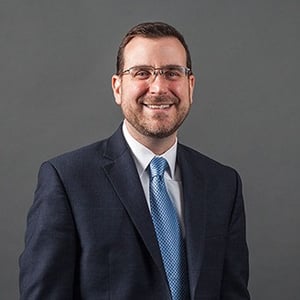
Professor of Law, Antonin Scalia Law School, George Mason University
Adam Mossoff is Professor of Law at Antonin Scalia Law School, George Mason University. He has published extensively on why patents, copyrights, and other intellectual property rights have been—and should be—legally secured to innovators and creators as property rights. His scholarship has been relied on by the United States Supreme Court, by lower federal courts, and by U.S. federal agencies. He has been invited to testify numerous times before the U.S. Senate and the House of Representatives on intellectual property legislation. His writings on intellectual property policy have also appeared in the Wall Street Journal, New York Times, Forbes, Investors Business Daily, and in other media outlets. His journal articles can be downloaded here.
Professor Mossoff is a longstanding member of the Executive Committee of the Intellectual Property Practice Group of the Federalist Society, on which he served as Chairperson from 2016-2018, and he is Chair of the Intellectual Property Working Group of the Regulatory Transparency Project of the Federalist Society. He is a Senior Fellow and Chair of the Forum for Intellectual Property at the Hudson Institute, a Visiting Intellectual Property Fellow at the Heritage Foundation, and a member of the Board of Directors of the Center for Intellectual Property Understanding. He is a member of the Intellectual Property Rights Policy Committee of ANSI and he has served as Chair and Vice-Chair of the Intellectual Property Committee of the IEEE-USA, on which he remains a member in good standing.
Associate Professor, Boston College Law School
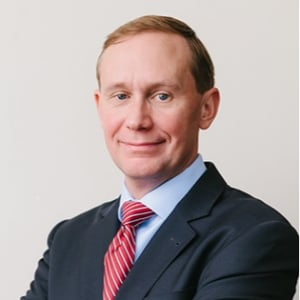
David Olson is an associate professor and the Faculty Director of the Program on Innovation and Entrepreneurship. He teaches patent law, intellectual property law, antitrust law, and various seminars. His research and writing primarily focus on patents, copyrights, antitrust, and incentives for innovation and competition. Since joining BC Law in 2007, he has been recognized for his teaching excellence and contributions. In 2011, he received the Business & Law Society Faculty Award for Achievement in Business & Law. In 2012, he received the Professor Emil Slizewski Award for Faculty Excellence. For one semester in 2015, Olson served as a visiting professor at Pontifical Catholic University, Rio de Janeiro, Brazil, where he conducted research and taught a course on intellectual property.
Olson has published scholarly articles on patent law, copyright law, antitrust, music licensing, and first amendment copyright issues. His writing has been cited in Supreme Court and other legal opinions. He has testified before the U.S. Congress on matters of drug patents, FDA regulation, and antitrust.
The media frequently seeks Olson’s insights and opinions. He has been quoted in the Wall Street Journal, Associated Press, and Reuters, among others. He has appeared as a guest panelist on WBUR’s Radio Boston, WAMU's Kojo Namdi Show, and Public Radio Canada. His op-eds have appeared in the Chicago Tribune, Washington Times, and The Hill.
Olson came to Boston College from Stanford Law School's Center for Internet and Society, where he conducted research on patent law and litigated copyright fair use impact cases. Before entering academia, Olson practiced law as a patent litigator. He clerked for Judge Jerry Smith of the U.S. Court of Appeals for the Fifth Circuit.
Partner, Fenwick & West LLP
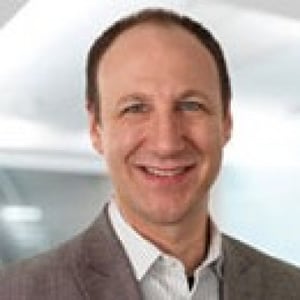
Robert Sachs is President at Robert R. Sachs PC and concentrates his practice on strategic patent counseling and prosecution for software technologies. Bob has extensive experience in developing patent portfolios for companies of all sizes, from startups to multi-nationals.
He is the primary evaluator for standards essential patents on today's most important audio, video, and communications technologies, including 3GPP-LTE, IEEE 802.11, MPEG-4 AAC, DVB-MHP, OCAP, Digital Radio Mondiale, AMR-NB, AMR-WB, AMR-WB+, G.711, G.729, AGORA-C, and NFC-IP. He conducts and supervises patent evaluations in US, as well as Europe, Japan, China, South Korea, Mexico and Canada.
One of Bob’s areas of expertise is patentable subject matter: the question of what kinds of inventions are eligible for patent protection, and particularly whether software and life sciences related inventions are patentable. This issue has become the new battleground in the development of the patent law, with several important cases having been recently decided by the Supreme Court and the Court of Appeals for the Federal Circuit. While most authors and scholars take a results-oriented approach to this question, Bob instead starts with the first principles of creativity and innovation that drive humans to solve functional problems. From that understanding, software and life sciences inventions are squarely in the domain of what the patent law is designed to protect.

Professor of Law, Southern Illinois University School of Law
Professor Mark F. Schultz joined the faculty in 2003. He teaches and writes primarily in the area of intellectual property.
Professor Schultz is a frequent author and speaker known for his work on the law and economics of the global intellectual property system. In one of his most influential projects, he worked with the Organization for Economic Cooperation and Development (OECD) to construct a groundbreaking global trade secret protection index (the TSPI). The TSPI is influencing policy discussions on this cutting-edge topic in capitals around the world. Other recent projects have included an empirical study that quantified for the first time the backlogs in patent offices worldwide, a report on how patented innovation is meeting global health challenges, and the construction of a new global index of copyright strength.
Professor Schultz is an influential voice in public policy debates regarding intellectual property. He has testified before the U.S. Congress on copyright law at the invitation of the House Judiciary Committee and has briefed the staff of the U.S. Senate Judiciary Committee on trade secret legislation. He speaks frequently around the world about the connection between secure and effective intellectual property rights and flourishing national economies and individual lives, with invitations from the U.S. Patent and Trademark Office, the U.S. Trade Representative, and the U.S. Copyright Office, as well as numerous academic institutions, think tanks, and industry groups. He served as an NGO delegate to the World Intellectual Property Organization (WIPO) for several years during the WIPO Development Agenda talks. He is also one of the organizers of an ongoing multilateral diplomatic dialogue on best practices in national trade secret laws, and is co-founder of the Center for Protection of Intellectual Property (CPIP) at George Mason University in Washington, D.C.
Among the awards and recognition he has received for his scholarship was the School of Law's Outstanding Scholar of the Year award in 2008. He has been a distinguished visiting scholar at the University of Botswana and a visiting professor at DePaul University College of Law.
Professor Schultz graduated with honors from the George Washington University School of Law. Following law school, he was a judicial clerk for the Hon. Daniel M. Friedman of the United States Court of Appeals for the Federal Circuit in Washington, D.C., and the Hon. Eric G. Bruggink of the United States Court of Federal Claims. Prior to joining academia, he practiced law for a decade, serving as outside general counsel to several tech startups and helping technology companies to expand their businesses and commercialize their intellectual property in dozens of countries. He holds a B.A. in International Economics from George Washington University and has done PhD level coursework in development economics at Southern Illinois University.
He is active in leadership roles in local and national organizations. He has served as chair of the Federalist Society's Intellectual Property Practice Group and the AALS Section on Internet and Computer Law. He is an officer of the American Bar Association's International IP Committee of the International Law Section and the American Intellectual Property Law Association’s Trade Secret Law Committee. He currently is chair of the Academic Advisory Board of the Copyright Alliance.
Professor Schultz teaches Copyright Law, Trade Secret Law, Trademark Law, and a senior seminar on Intellectual Property and Global Development. He established and directs both the Specialization in Intellectual Property Law and the IP Semester in Practice Externship Program. He also co-founded a Legal Globalization Class, offered every other year, that takes students to South Africa and Botswana after spending a semester learning about the legal system, culture, history, and politics of southern Africa. The popular course is a once-in-a-lifetime experience that introduces students to leading lawyers, judges, government officials, and human rights advocates, taking them from Cape Town to Johannesburg to Gaborone as well as many popular destinations including game reserves, national parks, the Cape of Good Hope, and the Cradle of Humankind.
Principal, DeGroot Legal
Mr. DeGroot represents businesses in complex litigation, focusing on licensing, insurance, intellectual property, contract disputes, and toxic torts. He has experience in cases involving fraud, breach of contract, unfair competition, patents, business torts, mergers and acquisitions, creditors’ rights, and bankruptcy. He has extensive experience in all aspects of civil litigation, both in federal and state courts, including prejudgment remedies, discovery, trial, appeals, arbitration and mediation.
Mr. DeGroot works with clients in a variety of industries, including financial institutions, insurance, software, construction, semiconductors, and real estate.
Senior Judge, United States Court of Appeals, District of Columbia Circuit
Circuit Judge Douglas H. Ginsburg was appointed to the United States Court of Appeals for the District of Columbia in 1986. After receiving his B.S. from Cornell University in 1970, and his J.D. from the University of Chicago Law School in 1973, he clerked on the D.C. Circuit and for Justice Thurgood Marshall on the United States Supreme Court. Thereafter, Judge Ginsburg was a professor at the Harvard Law School, the Deputy Assistant and then Assistant Attorney General for the Antitrust Division of the Department of Justice, as well as the Administrator of the Office of Information and Regulatory Affairs in the Office of Management and Budget. Concurrent with his service as a federal judge, Judge Ginsburg has taught at the University of Chicago Law School and the New York University School of Law. Judge Ginsburg is currently a Professor of Law at the George Mason University and a visiting professor at University College London, Faculty of Laws.
Judge Ginsburg is the Chairman of the International Advisory Board of the Global Antitrust Institute at the Law and Economics Center of the George Mason University School of Law. He also serves on the Advisory Boards of: Competition Policy International; the Harvard Journal of Law and Public Policy; the Journal of Competition Law and Economics; the Journal of Law, Economics & Policy; the Supreme Court Economic Review; the University of Chicago Law Review; the New York University Journal of Law and Liberty; and, at University College London, both the Centre for Law, Economics and Society and the Jevons Institute for Competition Law and Economics.
In 2020, Judge Ginsburg was the 11th recipient of the John Sherman Award, presented by the Antitrust Division of the Department of Justice in recognition of the awardee’s Lifetime Contributions to Antitrust Law and Policy.
In 2014, Judge Ginsburg received the Lifetime Achievement Award given annually by the Global Competition Review.
He is the author or co-author of several books and more than 100 articles on competition and regulation, including, most recently, Growing Convergence: The Limited Role of Antitrust in Standard Essential Patent Disputes, in CPI Antitrust Chronicle, Summer 2021, Vol. 1, No. 2.
Clinical Co-Director and Senior Fellow, Berkman Center for Inter, Harvard Law School
Phil Malone is a Clinical Professor of Law at Harvard Law School and the Director of the Law School’s Cyberlaw Clinic at the Berkman Center. Phil joined the Center in September, 2004 as a co-director of the Clinical Program; in the years since, he and his clinical colleagues have built the Clinic into one of the leading entities of its kind in the country.
Phil came to the Berkman Center after a little over 20 years as a federal prosecutor with theAntitrust Divisionof the U.S. Department of Justice, where he directed numerous civil and criminal investigations and prosecutions. Most of his DOJ experience over the past 10 years focused on high-technology industries, the Internet and computer software and hardware. Beginning in 1996 Phil was lead counsel in the DOJ's investigations of Microsoft, and he was the primary career counsel, along with outside counsel David Boies, in the trial ofU.S. v. Microsoft Corp.(D.D.C). Before leaving the Justice Department he was one of the lead lawyers in the government's antitrust case against Oracle Corp. Phil first became involved with the Berkman Center during the 2001-2003 academic years when he was the Victor H. Kramer Fellow at HLS. His research then focused on legal approaches to encouraging and preserving innovation in high-tech industries, evolving competition policy in the computer industry, and the use of technology in discovery and litigation.
Phil graduated long ago fromHarvard Collegeand the University of Arizona College of Law. When he is not at the Berkman Center he can often be found around Harvard'sQuincy House, where he and his wife Luci are resident tutors and kids Celia and Zulie are resident entertainment.
Partner, Rule Garza Howley LLP
Rick began his career in the 1980s in the Antitrust Division of the U.S. Department of Justice, becoming the Assistant Attorney General in charge of the Division from 1986-89 – the youngest person ever to be confirmed by the Senate to that position. Over the last 30+ years since leaving the Division, Rick has led the antitrust practices at several leading D.C. and New York firms including Covington & Burling and Paul, Weiss.
During his time in private practice, Rick has represented major multi-national companies and executives in virtually every industry – from, among others, agricultural and animal health (Monsanto, Elanco) to energy (ExxonMobil) to defense contractors (Northrop Grumman, United Technologies) to professional sports (NFL, NBA, MLB) to technology platforms (Microsoft, Nuance) to pharmaceutical manufacturers (Eli Lilly, Pfizer) to health insurers (Cigna). (For a complete list of industry experience, click here.)
Rick has represented his clients before the Antitrust Division, the Federal Trade Commission, State Attorneys General and major foreign antitrust regulators in connection with many of the most notable merger investigations, including Exxon’s merger with Mobil, US Airways’ merger with American Airlines, and Cigna’s acquisition of Express Scripts. At the same time, Rick has represented clients in some of most prominent government investigations of the last quarter century, including leading the team that settled the Government’s monopolization case against Microsoft and defending international companies and executives in major antitrust criminal investigations.
For four decades, Rick has been at the forefront of antitrust law and is uniquely capable of advising clients on the antitrust regulatory environment affecting the way they do business globally. As agencies and rules have evolved, he has helped clients to understand the dynamic legal framework, to assess the legal risk and rewards associated with a range of competitive strategies, and to work with government bodies to take advantage of, and ensure appropriate compliance with, the regulations governing the clients’ chosen strategy.

The Financial Crisis and the Free Market Cure: A Conversation with John A. Allison
John A. Allison, Wayne A. Abernathy
Note from the Editor: The following is a transcript of a Federalist Society Practice Group...
Jameel Jaffer and Laura Murphy Testimony Before The House Committee on the Judiciary Oversight Hearing on The Administration’s Use of FISA Authorities
Laura W. Murphy, Jameel Jaffer
Before The House Committee on the Judiciary Oversight Hearing on The Administration’s Use of...
Net Neutrality vs. Net Reality: Why an Evidence-Based Approach to Enforcement, And Not More Regulation, Could Protect Innovation on the Web
Maureen K. Ohlhausen
Related Links: Senate Committee on Commerce, Science, and Transportation, Hearing on “Network Neutrality” (testimony of...
Antitrust and High-tech: Regulatory Risks for Innovation and Competition
Ronald A. Cass
I. Target Selection in an Innovation Economy A. Regulatory Power, Regulations’ Problems, and Antitrust While...
Boon or Bane for Technological Innovation?: Software Patents
Intellectual Property Practice Group Teleforum
Assessing Competition in the Wireless Sector: How DoJ Can Clear Away the Fog from Proposed Mergers
Harold W. Furchtgott-Roth
I. Introduction and Background Over the past twenty years, the American wireless sector has grown...
U.S. v. Microsoft, 10 Years Later: Who Won, Who Lost, and Did It Matter?
David DeGroot, Douglas H. Ginsburg, Phil Malone, Charles "Rick" Rule
Ten years ago, Microsoft dominated the personal computer market with its ever-expanding operating system. Today,...
U.S. v. Microsoft, 10 Years Later: Who Won, Who Lost, and Did It Matter?
David DeGroot, Douglas H. Ginsburg, Phil Malone, Charles "Rick" Rule
Ten years ago, Microsoft dominated the personal computer market with its ever-expanding operating system. Today,...
U.S. v. Microsoft, 10 Years Later: Who Won, Who Lost, and Did It Matter?
San Francisco Lawyers Chapter
San Francisco, CAA Discussion on Microsoft v. i4i
San Diego, California