
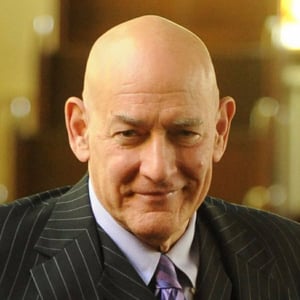
Raoul Berger Professor of Legal History at Northwestern University School of Law
Stephen Presser is a leading American legal historian and expert on shareholder liability for corporate debts. He is frequently an invited witness before committees of the U.S. Senate and House of Representatives on issues of constitutional law. He holds a joint appointment with the J. L. Kellogg Graduate School of Management and also teaches in Northwestern's history department.
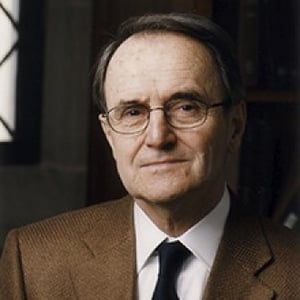
Sterling Professor Emeritus of Law, Yale Law School
Mirjan Damaška is Sterling Professor Emeritus of Law at Yale Law School. He teaches and writes in the fields of comparative and foreign law, procedural law, evidence, international criminal law, and continental legal history.
He is the author of six books, among which The Faces of Justice and Evidence Law Adrift were translated into several languages. He has published more than 100 articles in professional journals of numerous countries.
He received his basic law degree at the University of Zagreb in his native Croatia. He then studied at the Academy of International Law at The Hague, and the Comparative Law Faculty in Luxembourg. He earned his Ph.D. at the University of Ljubljana (Slovenia). Following time spent practicing in the courts of former Yugoslavia, he began his teaching career at the University of Zagreb Law School, rising quickly to the rank of full professor, and briefly serving as Acting Dean. In 1971, he left his native land, and accepted a tenured position at the University of Pennsylvania Law School. Since 1976, he has been on the faculty of Yale Law School.
Damaška is a fellow of the American Academy of Arts and Sciences, a member of the International Academy of Comparative Law, the Croatian Academy of Arts and Sciences, and the American Society of Comparative Law. In 1978-79, he was fellow of the National Endowment for the Humanities. He is also holder of several honorary degrees.
He was keynote speaker and general reporter at many international congresses. Five symposia were organized about his work: Bielefeld (Germany) in 1987; Siena (Italy) in 1988; San Francisco in 1998; Zagreb (Croatia) in 2006; and New Haven in 2008. From 1990 to 1995, he served on the Advisory Board of the Central and East European Legal Initiative of ABA. Since 1995, he has periodically advised the Croatian government in its relations with the International War Crimes Tribunal for the Former Yugoslavia, and the International Court of Justice in The Hague.
In 2005, he was appointed Amicus Curiae of the International War Crimes Tribunal for the Former Yugoslavia in the matter of transferring cases to domestic courts. In 2009, he was presented the lifetime achievement award by the American Society of Comparative Law. In 2014, he was awarded the Life Achievement award by Jadranko Crnic Foundation, Croatia. He does counseling work on foreign law problems for law firms in New York, Los Angeles, and Washington.
In 2010 he was appointed special adviser to the Prime Minister of Croatia, and agent of the Republic of Croatia before the International Court of Justice, heading a team of Croatian and English lawyers in the case of Croatia v. Serbia.
Two books of essays have been published in his honor: Jackson, Langer, & Tillers (eds.), "Crime, Procedure, and Evidence: Essays in honor of Mirjan Damaška (Oxford 2008), and Ackerman, Ambos, Sikiric (eds.), "Visions of Justice, Liber Amicorum Mirjan Damaška" (Berlin 2016).
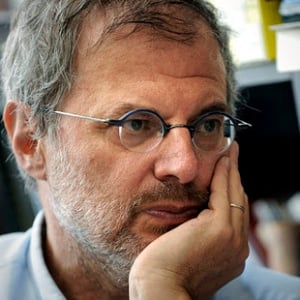
Professor of Comparative Constitutional Law, European University Institute
Since September 2016 Gábor Halmai, professor of law, is the chair of Comparative Constitutional Law at the European University Institute in Florence. Since January 2018 he is the Director of Graduate Studies at the Law Department. His primary research interests are comparative constitutional law, and international human rights. He has published several books and articles, as well as edited volumes on these topics in English, German and Hungarian. He is joining the EUI after a teaching and research career (at the Eötvös Loránd University in Hungary, the Princeton University in the USA, the the European Masters Program in Human Rights and Democratization in Italy) as well as years of professional career as chief advisor to the President of the Hungarian Constitutional Court, member of the EU Fundamental Rights Agency’s Management Board and numerous other civic activities.
Prior to joining to EUI Professor Halmai has worked on various research projects at the IWM in Vienna and the Woodrow Wilson School of Princeton University: Backsliding of liberal democracies within the European Union, with special focus on the development of constitutionalism and human rights in Hungary since its democratic transition in 1989-1990 till now; Models of state-church relations and religious freedom; Constitutionalism and transitional justice in Central and Eastern Europe. His most recent book, „Perspectives on Global Constitutionalism” deals with the use of foreign and international law by domestic courts (published by Eleven International Publishing in 2014). In addition to research, Professor Halmai has also been teaching and supervising students in Budapest, Princeton and Florence on the subjects of comparative constitutional law and human rights, as well as on rule of law.
Besides his academic work he was member of the EU Fundamental Rights Agency’s Management Board based in Vienna, Austria (2007-2010), the national director of the European Masters Program in Human Rights and Democratization in Venice, Italy (2003-2013), vice-chair of the Hungarian National Election Commission (2006-2010; chief counsellor to the President of the Hungarian Constitutional Court (1990-1996).
Gábor Halmai is founder and editor-in-chief of Fundamentum, the Hungarian human right quarterly, and Member of the Scientific Advisory Board of the European Yearbook on Human Rights, the Review of Constitutionalism and Constitutional Change (RC3), and the This Century’s Review.
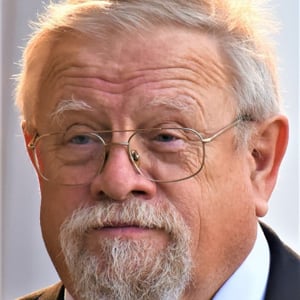
Assistant Professor, University of Ústí nad Labem
Daniel Kroupa is a Czech politician and philosopher, dissident, signatory of Charter 77, President of the Civic Democratic Alliance (ODA) from 1998 to 2001, former MP, Euro MP and senator. After the Velvet Revolution, he taught political philosophy at several faculties of Charles University in Prague. From 2005 to 2015, he was the Head of the Department of Political Science and Philosophy of the Faculty of Arts, University of Ústí nad Labem. Since 2015 he has been an assistant professor at this department.
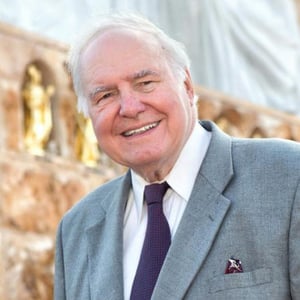
Philosopher, Journalist, Novelist, and Diplomat
Michael John Novak Jr. (1933–2017) was an American Roman Catholic philosopher, journalist, novelist, and diplomat. The author of more than forty books on the philosophy and theology of culture, Novak is most widely known for his book The Spirit of Democratic Capitalism (1982). In 1993 Novak was honored with an honorary doctorate at Universidad Francisco Marroquín due to his commitment to the idea of liberty. In 1994 he was awarded the Templeton Prize for Progress in Religion, which included a million-dollar purse awarded at Buckingham Palace. He wrote books and articles focused on capitalism, religion, and the politics of democratization.
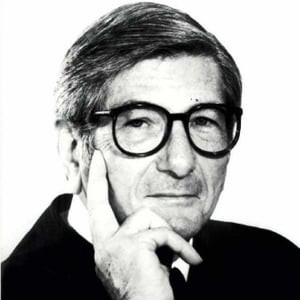
Former Judge, United States Court of Appeals, Fifth Circuit
Alvin Benjamin Rubin's long and storied tenure as a federal judge began with a nomination by President Lyndon B. Johnson in 1966 and ended in 1991 at his death.
Judge Rubin was born in Alexandria, Louisiana, in 1920, and received a B.S. from Louisiana State University in 1941. He started at Louisiana State University Law School in 1940. When World War II broke out, he enlisted in the U.S. Army, was assigned to General Patton's "Big Red 1," and served in the European Theatre of Operations in England, France, Belgium, and Germany, rising to the rank of Captain and serving as an Assistant Judge Advocate. After the war ended, he married Janice Ginsberg, also from Alexandria, and returned to Baton Rouge for law school in an accelerated post-war program for returning war veterans. He graduated first in his law school class in 1942 and was Editor-in-Chief of the Louisiana Law Review.
After his graduation, he began practicing law in Baton Rouge with J.Y. Sanders and Ben Miller, Sr., and after several years the firm of Sanders, Miller, Downing, Rubin and Kean was formed. Judge Rubin specialized in tax law, corporate transactions, and trust and estates law. He also was an arbitrator and mediator.
Soon after he started practice in 1942, the illness of a faculty member at the LSU Law School propelled Judge Rubin back into the classroom as a professor. Judge Rubin taught a variety of subjects continuously at the Law School until 1989, including Admiralty, Civil Code, Ethics, Negotiations, Constitutional Law, Federal Procedure, State and Local Tax Law, Federal Tax Law, Law Office Practice, and many others. Judge Rubin's love of teaching and of student interaction was particularly meaningful to him, and throughout his life Judge Rubin was invited to teach and lecture at schools around the world, including Harvard, Yale, Notre Dame, University of Pennsylvania, Cornell, University of Miami, University of Georgia, University of Texas, Tulane, and Duke. He also traveled to give presentations throughout Europe. Because of his expertise in civil law, during the Vietnam War, Judge Rubin was asked by the State Department to travel to South Vietnam and assist in drafting the constitution for South Vietnam. He also served as a moderator for the Aspen Institute and for many programs for the American Bar Association.
In 1963, Judge Rubin and Dean Henry George McMahon co-authored Louisiana Pleadings and Judicial Forms Annotated. For over 20 years, Judge Rubin continued the annual updates for this vital resource used by Louisiana attorneys. Before 1960, Louisiana civil law prohibited the establishment of Trusts. Judge Rubin was instrumental in the creation of a Trust Code for Louisiana, which was adopted by the Louisiana Legislature in 1960. In 1966 he and his wife, Janice, co-authored the Louisiana Trust Handbook, and later, he wrote Louisiana Wills and Trust: A Drafting System (with Professor Gerald LeVan). Judge Rubin's list of law review and journal articles spans many pages. Two of his most prominent works are "A Causerie on Lawyer's Ethics" and "Hazards of a Civilian Venturer in Federal Court: Travel and Travail on the Erie Railroad" (both in the Louisiana Law Review).
He then practiced law until 1966 when President Johnson nominated him to a new seat on the United States District Court for the Eastern District of Louisiana created by 80 Stat. 75. Judge Rubin served at an important time in the Court's history, hearing many of the desegregation and civil rights cases in the 1960s. He served as Chief Judge of the District and wrote and implemented the first comprehensive written pre-trial procedure rules for the District. He served on and chaired many committees for the Judicial Conference and co-wrote the first law clerk handbook for the federal system. Judge Rubin kept long hours and was often in his Chambers early. He always took home briefs to read and drafts of opinions to edit, keeping two secretaries busy at all times.
After eleven years as a judge on the federal district court, Judge Rubin was nominated in 1977 by President Jimmy Carter to fill a seat on the United States Court of Appeals for the Fifth Circuit vacated by John Minor Wisdom. Judge Rubin assumed senior status on July 1, 1989, and served in that capacity until his death in 1991 in Baton Rouge, Louisiana. In his memory, the Louisiana Law Review published a special edition (Vol. 52, 1992) dedicated solely to his life and work, including articles and remembrances by his wife, Justice Byron White, Judge John Minor Wisdom, Judge Charles Clark, Judge Fred Cassibry, Judge Henry Politz, and many others.
Judge Rubin wrote more than 700 important (and sometimes humorous) opinions during his time as a federal judge. His rulings included ones that ended Louisiana's exemption of women from juries, applied the Voting Rights Act to local elections, and upheld the rights of government employees to criticize their superiors and to organize unions. Judge Rubin's interests spanned poetry, drama, history, art, the classics, and music of all types. He enjoyed writing Gilbert-and-Sullivan-ish parodies concerning legal matters and performing them for students, clerks, lawyers, at judicial seminars, and even for United States Supreme Court Justices.
The judicial activity that Judge Rubin reportedly most enjoyed was conducting naturalization ceremonies in open court. Judge Rubin spoke not as a jurist but as the son of immigrants from Eastern Europe whose parents had lost many relatives to war and hatred. He spoke movingly of his parents, their courage, and their determination to give their children the education and opportunities they had never had. Judge Rubin always emphasized that those citizens, new though they were, had equal rights. They could vote. They could develop their own talents and those of their children. They were entitled to occupy as well as to stand before the bench of justice.
Judge Rubin also enjoyed the close friendship of his many law clerks (serving as officiant of at least one wedding) and was an avid tennis player and jogger, often enlisting law clerks and young lawyers as his tennis or running partner.
Judge Rubin was the first member of the LSU Law Center Hall of Alumni Distinction, and was the First Alumni Member of the LSU Phi Beta Kappa Chapter. He was awarded the Louisiana ACLU Award for his civil rights work and was active in the National Conference of Christians and Jews and his synagogue in Baton Rouge.
Judge John Minor Wisdom wrote that "Alvin Rubin was born to be a judge, a great judge. His intellect, scholarship, and judicial leadership place him in a select group. In recent years, some of this small group graced the Supreme Court: Holmes, Brandeis, and Cardozo. These judges would have welcomed him on equal intellectual terms and as a kindred spirit."
The New Orleans Chapter of the Federal Bar Association hosts an annual symposium in Judge Rubin's honor. The symposium is an annual discussion on aspects of federal law or practice as a living memorial to Judge Rubin's contribution to federal jurisprudence and legal scholarship. The symposium is well attended by his family, friends, former clerks, and lawyers.
Judge Rubin's wife, Janice, best summed him up. "[His] friends spanned continents and age barriers . . . . [He] was the jurist he was because he was the man the boy became, a man who remembered Biblical injunctions about relationships and courage, about discipline and standards, about justice and mercy and integrity, a man whose goal on the bench was the oath taken by judges on the Isle of Man: 'You shall do justice between cause and cause as equally as the backbone of the herring doth lie midmost of the fish.' "
Sterling Professor Emeritus of Law, Yale Law School
Mirjan Damaška is Sterling Professor Emeritus of Law at Yale Law School. He teaches and writes in the fields of comparative and foreign law, procedural law, evidence, international criminal law, and continental legal history.
He is the author of six books, among which The Faces of Justice and Evidence Law Adrift were translated into several languages. He has published more than 100 articles in professional journals of numerous countries.
He received his basic law degree at the University of Zagreb in his native Croatia. He then studied at the Academy of International Law at The Hague, and the Comparative Law Faculty in Luxembourg. He earned his Ph.D. at the University of Ljubljana (Slovenia). Following time spent practicing in the courts of former Yugoslavia, he began his teaching career at the University of Zagreb Law School, rising quickly to the rank of full professor, and briefly serving as Acting Dean. In 1971, he left his native land, and accepted a tenured position at the University of Pennsylvania Law School. Since 1976, he has been on the faculty of Yale Law School.
Damaška is a fellow of the American Academy of Arts and Sciences, a member of the International Academy of Comparative Law, the Croatian Academy of Arts and Sciences, and the American Society of Comparative Law. In 1978-79, he was fellow of the National Endowment for the Humanities. He is also holder of several honorary degrees.
He was keynote speaker and general reporter at many international congresses. Five symposia were organized about his work: Bielefeld (Germany) in 1987; Siena (Italy) in 1988; San Francisco in 1998; Zagreb (Croatia) in 2006; and New Haven in 2008. From 1990 to 1995, he served on the Advisory Board of the Central and East European Legal Initiative of ABA. Since 1995, he has periodically advised the Croatian government in its relations with the International War Crimes Tribunal for the Former Yugoslavia, and the International Court of Justice in The Hague.
In 2005, he was appointed Amicus Curiae of the International War Crimes Tribunal for the Former Yugoslavia in the matter of transferring cases to domestic courts. In 2009, he was presented the lifetime achievement award by the American Society of Comparative Law. In 2014, he was awarded the Life Achievement award by Jadranko Crnic Foundation, Croatia. He does counseling work on foreign law problems for law firms in New York, Los Angeles, and Washington.
In 2010 he was appointed special adviser to the Prime Minister of Croatia, and agent of the Republic of Croatia before the International Court of Justice, heading a team of Croatian and English lawyers in the case of Croatia v. Serbia.
Two books of essays have been published in his honor: Jackson, Langer, & Tillers (eds.), "Crime, Procedure, and Evidence: Essays in honor of Mirjan Damaška (Oxford 2008), and Ackerman, Ambos, Sikiric (eds.), "Visions of Justice, Liber Amicorum Mirjan Damaška" (Berlin 2016).
Professor of Comparative Constitutional Law, European University Institute
Since September 2016 Gábor Halmai, professor of law, is the chair of Comparative Constitutional Law at the European University Institute in Florence. Since January 2018 he is the Director of Graduate Studies at the Law Department. His primary research interests are comparative constitutional law, and international human rights. He has published several books and articles, as well as edited volumes on these topics in English, German and Hungarian. He is joining the EUI after a teaching and research career (at the Eötvös Loránd University in Hungary, the Princeton University in the USA, the the European Masters Program in Human Rights and Democratization in Italy) as well as years of professional career as chief advisor to the President of the Hungarian Constitutional Court, member of the EU Fundamental Rights Agency’s Management Board and numerous other civic activities.
Prior to joining to EUI Professor Halmai has worked on various research projects at the IWM in Vienna and the Woodrow Wilson School of Princeton University: Backsliding of liberal democracies within the European Union, with special focus on the development of constitutionalism and human rights in Hungary since its democratic transition in 1989-1990 till now; Models of state-church relations and religious freedom; Constitutionalism and transitional justice in Central and Eastern Europe. His most recent book, „Perspectives on Global Constitutionalism” deals with the use of foreign and international law by domestic courts (published by Eleven International Publishing in 2014). In addition to research, Professor Halmai has also been teaching and supervising students in Budapest, Princeton and Florence on the subjects of comparative constitutional law and human rights, as well as on rule of law.
Besides his academic work he was member of the EU Fundamental Rights Agency’s Management Board based in Vienna, Austria (2007-2010), the national director of the European Masters Program in Human Rights and Democratization in Venice, Italy (2003-2013), vice-chair of the Hungarian National Election Commission (2006-2010; chief counsellor to the President of the Hungarian Constitutional Court (1990-1996).
Gábor Halmai is founder and editor-in-chief of Fundamentum, the Hungarian human right quarterly, and Member of the Scientific Advisory Board of the European Yearbook on Human Rights, the Review of Constitutionalism and Constitutional Change (RC3), and the This Century’s Review.
Assistant Professor, University of Ústí nad Labem
Daniel Kroupa is a Czech politician and philosopher, dissident, signatory of Charter 77, President of the Civic Democratic Alliance (ODA) from 1998 to 2001, former MP, Euro MP and senator. After the Velvet Revolution, he taught political philosophy at several faculties of Charles University in Prague. From 2005 to 2015, he was the Head of the Department of Political Science and Philosophy of the Faculty of Arts, University of Ústí nad Labem. Since 2015 he has been an assistant professor at this department.
Philosopher, Journalist, Novelist, and Diplomat
Michael John Novak Jr. (1933–2017) was an American Roman Catholic philosopher, journalist, novelist, and diplomat. The author of more than forty books on the philosophy and theology of culture, Novak is most widely known for his book The Spirit of Democratic Capitalism (1982). In 1993 Novak was honored with an honorary doctorate at Universidad Francisco Marroquín due to his commitment to the idea of liberty. In 1994 he was awarded the Templeton Prize for Progress in Religion, which included a million-dollar purse awarded at Buckingham Palace. He wrote books and articles focused on capitalism, religion, and the politics of democratization.
Former Judge, United States Court of Appeals, Fifth Circuit
Alvin Benjamin Rubin's long and storied tenure as a federal judge began with a nomination by President Lyndon B. Johnson in 1966 and ended in 1991 at his death.
Judge Rubin was born in Alexandria, Louisiana, in 1920, and received a B.S. from Louisiana State University in 1941. He started at Louisiana State University Law School in 1940. When World War II broke out, he enlisted in the U.S. Army, was assigned to General Patton's "Big Red 1," and served in the European Theatre of Operations in England, France, Belgium, and Germany, rising to the rank of Captain and serving as an Assistant Judge Advocate. After the war ended, he married Janice Ginsberg, also from Alexandria, and returned to Baton Rouge for law school in an accelerated post-war program for returning war veterans. He graduated first in his law school class in 1942 and was Editor-in-Chief of the Louisiana Law Review.
After his graduation, he began practicing law in Baton Rouge with J.Y. Sanders and Ben Miller, Sr., and after several years the firm of Sanders, Miller, Downing, Rubin and Kean was formed. Judge Rubin specialized in tax law, corporate transactions, and trust and estates law. He also was an arbitrator and mediator.
Soon after he started practice in 1942, the illness of a faculty member at the LSU Law School propelled Judge Rubin back into the classroom as a professor. Judge Rubin taught a variety of subjects continuously at the Law School until 1989, including Admiralty, Civil Code, Ethics, Negotiations, Constitutional Law, Federal Procedure, State and Local Tax Law, Federal Tax Law, Law Office Practice, and many others. Judge Rubin's love of teaching and of student interaction was particularly meaningful to him, and throughout his life Judge Rubin was invited to teach and lecture at schools around the world, including Harvard, Yale, Notre Dame, University of Pennsylvania, Cornell, University of Miami, University of Georgia, University of Texas, Tulane, and Duke. He also traveled to give presentations throughout Europe. Because of his expertise in civil law, during the Vietnam War, Judge Rubin was asked by the State Department to travel to South Vietnam and assist in drafting the constitution for South Vietnam. He also served as a moderator for the Aspen Institute and for many programs for the American Bar Association.
In 1963, Judge Rubin and Dean Henry George McMahon co-authored Louisiana Pleadings and Judicial Forms Annotated. For over 20 years, Judge Rubin continued the annual updates for this vital resource used by Louisiana attorneys. Before 1960, Louisiana civil law prohibited the establishment of Trusts. Judge Rubin was instrumental in the creation of a Trust Code for Louisiana, which was adopted by the Louisiana Legislature in 1960. In 1966 he and his wife, Janice, co-authored the Louisiana Trust Handbook, and later, he wrote Louisiana Wills and Trust: A Drafting System (with Professor Gerald LeVan). Judge Rubin's list of law review and journal articles spans many pages. Two of his most prominent works are "A Causerie on Lawyer's Ethics" and "Hazards of a Civilian Venturer in Federal Court: Travel and Travail on the Erie Railroad" (both in the Louisiana Law Review).
He then practiced law until 1966 when President Johnson nominated him to a new seat on the United States District Court for the Eastern District of Louisiana created by 80 Stat. 75. Judge Rubin served at an important time in the Court's history, hearing many of the desegregation and civil rights cases in the 1960s. He served as Chief Judge of the District and wrote and implemented the first comprehensive written pre-trial procedure rules for the District. He served on and chaired many committees for the Judicial Conference and co-wrote the first law clerk handbook for the federal system. Judge Rubin kept long hours and was often in his Chambers early. He always took home briefs to read and drafts of opinions to edit, keeping two secretaries busy at all times.
After eleven years as a judge on the federal district court, Judge Rubin was nominated in 1977 by President Jimmy Carter to fill a seat on the United States Court of Appeals for the Fifth Circuit vacated by John Minor Wisdom. Judge Rubin assumed senior status on July 1, 1989, and served in that capacity until his death in 1991 in Baton Rouge, Louisiana. In his memory, the Louisiana Law Review published a special edition (Vol. 52, 1992) dedicated solely to his life and work, including articles and remembrances by his wife, Justice Byron White, Judge John Minor Wisdom, Judge Charles Clark, Judge Fred Cassibry, Judge Henry Politz, and many others.
Judge Rubin wrote more than 700 important (and sometimes humorous) opinions during his time as a federal judge. His rulings included ones that ended Louisiana's exemption of women from juries, applied the Voting Rights Act to local elections, and upheld the rights of government employees to criticize their superiors and to organize unions. Judge Rubin's interests spanned poetry, drama, history, art, the classics, and music of all types. He enjoyed writing Gilbert-and-Sullivan-ish parodies concerning legal matters and performing them for students, clerks, lawyers, at judicial seminars, and even for United States Supreme Court Justices.
The judicial activity that Judge Rubin reportedly most enjoyed was conducting naturalization ceremonies in open court. Judge Rubin spoke not as a jurist but as the son of immigrants from Eastern Europe whose parents had lost many relatives to war and hatred. He spoke movingly of his parents, their courage, and their determination to give their children the education and opportunities they had never had. Judge Rubin always emphasized that those citizens, new though they were, had equal rights. They could vote. They could develop their own talents and those of their children. They were entitled to occupy as well as to stand before the bench of justice.
Judge Rubin also enjoyed the close friendship of his many law clerks (serving as officiant of at least one wedding) and was an avid tennis player and jogger, often enlisting law clerks and young lawyers as his tennis or running partner.
Judge Rubin was the first member of the LSU Law Center Hall of Alumni Distinction, and was the First Alumni Member of the LSU Phi Beta Kappa Chapter. He was awarded the Louisiana ACLU Award for his civil rights work and was active in the National Conference of Christians and Jews and his synagogue in Baton Rouge.
Judge John Minor Wisdom wrote that "Alvin Rubin was born to be a judge, a great judge. His intellect, scholarship, and judicial leadership place him in a select group. In recent years, some of this small group graced the Supreme Court: Holmes, Brandeis, and Cardozo. These judges would have welcomed him on equal intellectual terms and as a kindred spirit."
The New Orleans Chapter of the Federal Bar Association hosts an annual symposium in Judge Rubin's honor. The symposium is an annual discussion on aspects of federal law or practice as a living memorial to Judge Rubin's contribution to federal jurisprudence and legal scholarship. The symposium is well attended by his family, friends, former clerks, and lawyers.
Judge Rubin's wife, Janice, best summed him up. "[His] friends spanned continents and age barriers . . . . [He] was the jurist he was because he was the man the boy became, a man who remembered Biblical injunctions about relationships and courage, about discipline and standards, about justice and mercy and integrity, a man whose goal on the bench was the oath taken by judges on the Isle of Man: 'You shall do justice between cause and cause as equally as the backbone of the herring doth lie midmost of the fish.' "
Sterling Professor Emeritus of Law, Yale Law School
Mirjan Damaška is Sterling Professor Emeritus of Law at Yale Law School. He teaches and writes in the fields of comparative and foreign law, procedural law, evidence, international criminal law, and continental legal history.
He is the author of six books, among which The Faces of Justice and Evidence Law Adrift were translated into several languages. He has published more than 100 articles in professional journals of numerous countries.
He received his basic law degree at the University of Zagreb in his native Croatia. He then studied at the Academy of International Law at The Hague, and the Comparative Law Faculty in Luxembourg. He earned his Ph.D. at the University of Ljubljana (Slovenia). Following time spent practicing in the courts of former Yugoslavia, he began his teaching career at the University of Zagreb Law School, rising quickly to the rank of full professor, and briefly serving as Acting Dean. In 1971, he left his native land, and accepted a tenured position at the University of Pennsylvania Law School. Since 1976, he has been on the faculty of Yale Law School.
Damaška is a fellow of the American Academy of Arts and Sciences, a member of the International Academy of Comparative Law, the Croatian Academy of Arts and Sciences, and the American Society of Comparative Law. In 1978-79, he was fellow of the National Endowment for the Humanities. He is also holder of several honorary degrees.
He was keynote speaker and general reporter at many international congresses. Five symposia were organized about his work: Bielefeld (Germany) in 1987; Siena (Italy) in 1988; San Francisco in 1998; Zagreb (Croatia) in 2006; and New Haven in 2008. From 1990 to 1995, he served on the Advisory Board of the Central and East European Legal Initiative of ABA. Since 1995, he has periodically advised the Croatian government in its relations with the International War Crimes Tribunal for the Former Yugoslavia, and the International Court of Justice in The Hague.
In 2005, he was appointed Amicus Curiae of the International War Crimes Tribunal for the Former Yugoslavia in the matter of transferring cases to domestic courts. In 2009, he was presented the lifetime achievement award by the American Society of Comparative Law. In 2014, he was awarded the Life Achievement award by Jadranko Crnic Foundation, Croatia. He does counseling work on foreign law problems for law firms in New York, Los Angeles, and Washington.
In 2010 he was appointed special adviser to the Prime Minister of Croatia, and agent of the Republic of Croatia before the International Court of Justice, heading a team of Croatian and English lawyers in the case of Croatia v. Serbia.
Two books of essays have been published in his honor: Jackson, Langer, & Tillers (eds.), "Crime, Procedure, and Evidence: Essays in honor of Mirjan Damaška (Oxford 2008), and Ackerman, Ambos, Sikiric (eds.), "Visions of Justice, Liber Amicorum Mirjan Damaška" (Berlin 2016).
Professor of Comparative Constitutional Law, European University Institute
Since September 2016 Gábor Halmai, professor of law, is the chair of Comparative Constitutional Law at the European University Institute in Florence. Since January 2018 he is the Director of Graduate Studies at the Law Department. His primary research interests are comparative constitutional law, and international human rights. He has published several books and articles, as well as edited volumes on these topics in English, German and Hungarian. He is joining the EUI after a teaching and research career (at the Eötvös Loránd University in Hungary, the Princeton University in the USA, the the European Masters Program in Human Rights and Democratization in Italy) as well as years of professional career as chief advisor to the President of the Hungarian Constitutional Court, member of the EU Fundamental Rights Agency’s Management Board and numerous other civic activities.
Prior to joining to EUI Professor Halmai has worked on various research projects at the IWM in Vienna and the Woodrow Wilson School of Princeton University: Backsliding of liberal democracies within the European Union, with special focus on the development of constitutionalism and human rights in Hungary since its democratic transition in 1989-1990 till now; Models of state-church relations and religious freedom; Constitutionalism and transitional justice in Central and Eastern Europe. His most recent book, „Perspectives on Global Constitutionalism” deals with the use of foreign and international law by domestic courts (published by Eleven International Publishing in 2014). In addition to research, Professor Halmai has also been teaching and supervising students in Budapest, Princeton and Florence on the subjects of comparative constitutional law and human rights, as well as on rule of law.
Besides his academic work he was member of the EU Fundamental Rights Agency’s Management Board based in Vienna, Austria (2007-2010), the national director of the European Masters Program in Human Rights and Democratization in Venice, Italy (2003-2013), vice-chair of the Hungarian National Election Commission (2006-2010; chief counsellor to the President of the Hungarian Constitutional Court (1990-1996).
Gábor Halmai is founder and editor-in-chief of Fundamentum, the Hungarian human right quarterly, and Member of the Scientific Advisory Board of the European Yearbook on Human Rights, the Review of Constitutionalism and Constitutional Change (RC3), and the This Century’s Review.
Assistant Professor, University of Ústí nad Labem
Daniel Kroupa is a Czech politician and philosopher, dissident, signatory of Charter 77, President of the Civic Democratic Alliance (ODA) from 1998 to 2001, former MP, Euro MP and senator. After the Velvet Revolution, he taught political philosophy at several faculties of Charles University in Prague. From 2005 to 2015, he was the Head of the Department of Political Science and Philosophy of the Faculty of Arts, University of Ústí nad Labem. Since 2015 he has been an assistant professor at this department.
Philosopher, Journalist, Novelist, and Diplomat
Michael John Novak Jr. (1933–2017) was an American Roman Catholic philosopher, journalist, novelist, and diplomat. The author of more than forty books on the philosophy and theology of culture, Novak is most widely known for his book The Spirit of Democratic Capitalism (1982). In 1993 Novak was honored with an honorary doctorate at Universidad Francisco Marroquín due to his commitment to the idea of liberty. In 1994 he was awarded the Templeton Prize for Progress in Religion, which included a million-dollar purse awarded at Buckingham Palace. He wrote books and articles focused on capitalism, religion, and the politics of democratization.
Former Judge, United States Court of Appeals, Fifth Circuit
Alvin Benjamin Rubin's long and storied tenure as a federal judge began with a nomination by President Lyndon B. Johnson in 1966 and ended in 1991 at his death.
Judge Rubin was born in Alexandria, Louisiana, in 1920, and received a B.S. from Louisiana State University in 1941. He started at Louisiana State University Law School in 1940. When World War II broke out, he enlisted in the U.S. Army, was assigned to General Patton's "Big Red 1," and served in the European Theatre of Operations in England, France, Belgium, and Germany, rising to the rank of Captain and serving as an Assistant Judge Advocate. After the war ended, he married Janice Ginsberg, also from Alexandria, and returned to Baton Rouge for law school in an accelerated post-war program for returning war veterans. He graduated first in his law school class in 1942 and was Editor-in-Chief of the Louisiana Law Review.
After his graduation, he began practicing law in Baton Rouge with J.Y. Sanders and Ben Miller, Sr., and after several years the firm of Sanders, Miller, Downing, Rubin and Kean was formed. Judge Rubin specialized in tax law, corporate transactions, and trust and estates law. He also was an arbitrator and mediator.
Soon after he started practice in 1942, the illness of a faculty member at the LSU Law School propelled Judge Rubin back into the classroom as a professor. Judge Rubin taught a variety of subjects continuously at the Law School until 1989, including Admiralty, Civil Code, Ethics, Negotiations, Constitutional Law, Federal Procedure, State and Local Tax Law, Federal Tax Law, Law Office Practice, and many others. Judge Rubin's love of teaching and of student interaction was particularly meaningful to him, and throughout his life Judge Rubin was invited to teach and lecture at schools around the world, including Harvard, Yale, Notre Dame, University of Pennsylvania, Cornell, University of Miami, University of Georgia, University of Texas, Tulane, and Duke. He also traveled to give presentations throughout Europe. Because of his expertise in civil law, during the Vietnam War, Judge Rubin was asked by the State Department to travel to South Vietnam and assist in drafting the constitution for South Vietnam. He also served as a moderator for the Aspen Institute and for many programs for the American Bar Association.
In 1963, Judge Rubin and Dean Henry George McMahon co-authored Louisiana Pleadings and Judicial Forms Annotated. For over 20 years, Judge Rubin continued the annual updates for this vital resource used by Louisiana attorneys. Before 1960, Louisiana civil law prohibited the establishment of Trusts. Judge Rubin was instrumental in the creation of a Trust Code for Louisiana, which was adopted by the Louisiana Legislature in 1960. In 1966 he and his wife, Janice, co-authored the Louisiana Trust Handbook, and later, he wrote Louisiana Wills and Trust: A Drafting System (with Professor Gerald LeVan). Judge Rubin's list of law review and journal articles spans many pages. Two of his most prominent works are "A Causerie on Lawyer's Ethics" and "Hazards of a Civilian Venturer in Federal Court: Travel and Travail on the Erie Railroad" (both in the Louisiana Law Review).
He then practiced law until 1966 when President Johnson nominated him to a new seat on the United States District Court for the Eastern District of Louisiana created by 80 Stat. 75. Judge Rubin served at an important time in the Court's history, hearing many of the desegregation and civil rights cases in the 1960s. He served as Chief Judge of the District and wrote and implemented the first comprehensive written pre-trial procedure rules for the District. He served on and chaired many committees for the Judicial Conference and co-wrote the first law clerk handbook for the federal system. Judge Rubin kept long hours and was often in his Chambers early. He always took home briefs to read and drafts of opinions to edit, keeping two secretaries busy at all times.
After eleven years as a judge on the federal district court, Judge Rubin was nominated in 1977 by President Jimmy Carter to fill a seat on the United States Court of Appeals for the Fifth Circuit vacated by John Minor Wisdom. Judge Rubin assumed senior status on July 1, 1989, and served in that capacity until his death in 1991 in Baton Rouge, Louisiana. In his memory, the Louisiana Law Review published a special edition (Vol. 52, 1992) dedicated solely to his life and work, including articles and remembrances by his wife, Justice Byron White, Judge John Minor Wisdom, Judge Charles Clark, Judge Fred Cassibry, Judge Henry Politz, and many others.
Judge Rubin wrote more than 700 important (and sometimes humorous) opinions during his time as a federal judge. His rulings included ones that ended Louisiana's exemption of women from juries, applied the Voting Rights Act to local elections, and upheld the rights of government employees to criticize their superiors and to organize unions. Judge Rubin's interests spanned poetry, drama, history, art, the classics, and music of all types. He enjoyed writing Gilbert-and-Sullivan-ish parodies concerning legal matters and performing them for students, clerks, lawyers, at judicial seminars, and even for United States Supreme Court Justices.
The judicial activity that Judge Rubin reportedly most enjoyed was conducting naturalization ceremonies in open court. Judge Rubin spoke not as a jurist but as the son of immigrants from Eastern Europe whose parents had lost many relatives to war and hatred. He spoke movingly of his parents, their courage, and their determination to give their children the education and opportunities they had never had. Judge Rubin always emphasized that those citizens, new though they were, had equal rights. They could vote. They could develop their own talents and those of their children. They were entitled to occupy as well as to stand before the bench of justice.
Judge Rubin also enjoyed the close friendship of his many law clerks (serving as officiant of at least one wedding) and was an avid tennis player and jogger, often enlisting law clerks and young lawyers as his tennis or running partner.
Judge Rubin was the first member of the LSU Law Center Hall of Alumni Distinction, and was the First Alumni Member of the LSU Phi Beta Kappa Chapter. He was awarded the Louisiana ACLU Award for his civil rights work and was active in the National Conference of Christians and Jews and his synagogue in Baton Rouge.
Judge John Minor Wisdom wrote that "Alvin Rubin was born to be a judge, a great judge. His intellect, scholarship, and judicial leadership place him in a select group. In recent years, some of this small group graced the Supreme Court: Holmes, Brandeis, and Cardozo. These judges would have welcomed him on equal intellectual terms and as a kindred spirit."
The New Orleans Chapter of the Federal Bar Association hosts an annual symposium in Judge Rubin's honor. The symposium is an annual discussion on aspects of federal law or practice as a living memorial to Judge Rubin's contribution to federal jurisprudence and legal scholarship. The symposium is well attended by his family, friends, former clerks, and lawyers.
Judge Rubin's wife, Janice, best summed him up. "[His] friends spanned continents and age barriers . . . . [He] was the jurist he was because he was the man the boy became, a man who remembered Biblical injunctions about relationships and courage, about discipline and standards, about justice and mercy and integrity, a man whose goal on the bench was the oath taken by judges on the Isle of Man: 'You shall do justice between cause and cause as equally as the backbone of the herring doth lie midmost of the fish.' "

Should the “Hollow Core” of Constitutional Theory Be Filled with the Framers’ Intentions?
Stephen B. Presser
A Review of The Hollow Core of Constitutional Theory: Why We Need the Framers, by...
The Judiciary and the Role of the Rule of Law [Archive Collection]
Mirjan R. Dama?ka, Gábor Halmai, Daniel Kroupa, Michael J. Novak, Alvin Rubin
On November 30- December 1, 1990, the Federalist Society hosted its annual National Lawyers Convention...
The Judiciary and the Role of the Rule of Law [Archive Collection]
Mirjan R. Dama?ka, Gábor Halmai, Daniel Kroupa, Michael J. Novak, Alvin Rubin
On November 30- December 1, 1990, the Federalist Society hosted its annual National Lawyers Convention...
The Judiciary and the Role of the Rule of Law [Archive Collection]
1990 National Lawyers Convention
New Orleans, LA