

Vice President & Senior Legal Fellow, Defending Education
Sarah Parshall Perry is vice president and senior legal fellow at Defending Education.
Before coming to Defending Education, Sarah served as a Senior Legal Fellow for the Edwin Meese III Center for Legal and Judicial Studies, part of the Institute for Constitutional Government at Heritage, where her work centered on civil rights and the proper role of the courts.
Sarah joined Heritage after serving as Senior Counsel to the Assistant Secretary for Civil Rights at the U.S. Department of Education where she focused on policy reform, technical guidance, and the Office for Civil Rights’ (OCR) annual report to Congress. While at OCR, she was appointed by the Acting Assistant Secretary to co-chair the Employment Engagement, Diversity, & Inclusion Council and, in coordination with the Deputy Assistant Secretary for Enforcement oversee the hiring of dozens of attorneys for OCR’s 12 regional offices nationwide. Prior to her tenure at the Department of Education, she spent six years at the Family Research Council in Washington, D.C. where she was Senior Fellow for Education Reform and later, became the regular substitute host for the “Washington Watch” radio show. Her work at the Family Research Council also included the building and oversight of multiple policy coalitions geared toward the fight against antisemitism in academia, curbing tech censorship, and protecting religious liberty.
Before joining FRC, Sarah was in-house counsel and director of development for a Baltimore advertising agency, providing management of all new business transactions from pitch to contract execution for the multi-million-dollar enterprise. She began her practice at the litigation firm of Simms Showers, LLP where her work included Title VII employment discrimination, maritime/admiralty, and False Claims Act (“Qui Tam”) law. Sarah has a law degree from the University of Virginia School of Law, where she was an editor of the Virginia Journal of International Law, a recipient of the American Jurisprudence award, a Phi Delta Phi honor society member, and a student practitioner in the appellate litigation clinic where she argued before the 4th Circuit Court of Appeals. She holds a B.S. in Journalism with honors from Liberty University.
Her commentary and analysis have appeared in media outlets across the country, including the AP, BBC, Fox News, NPR, The Hill, Washington Post, Washington Times, and the New York Times. She is the mother of three children, and the author of just as many books on the trials and triumphs of parenting children on the autism spectrum. Sarah is a member of the Kirkpatrick Society at the American Enterprise Institute, and makes her home north of Baltimore, Maryland.
General Counsel, Mountain States Legal Foundation
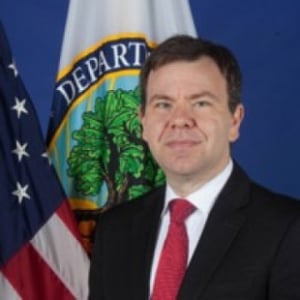
William E. Trachman is General Counsel for Mountain States Legal Foundation, where he protects the rights of individuals to live freely and securely under the U.S. Constitution. Previously, he was appointed to serve in the Department of Education as Deputy Assistant Secretary in the Office for Civil Rights. Prior to his appointment, he served as General Counsel to the Douglas County School District, where he helped litigate the fight for school choice in the school district. Presently, Mr. Trachman serves as Chair of the Colorado Federalist Society and the Vice Chair of the U.S. Commission on Civil Rights’ Colorado Advisory Board. He previously taught as an Adjunct Professor at the University of Denver, Sturm College of Law. He attended U.C. Berkeley for both undergraduate and law school, and then clerked for the Honorable Harris Hartz on the 10th Circuit Court of Appeals. Mr. Trachman is licensed in Colorado, California, and Washington, D.C.
Judge, United States District Court for the Western District of Kentucky
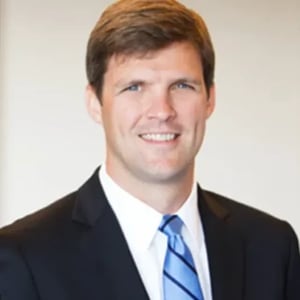
Prior to joining the bench, Judge Beaton was a Partner at Squire Patton Boggs LLP, where he co-chaired the firm’s Appellate & Supreme Court practice group. Judge Beaton’s represented clients engaged in complex commercial litigation in Federal and State courts, and before administrative agencies. Judge Beaton also served as an adjunct professor at the University of Louisville Brandeis School of Law, where he taught constitutional interpretation. Before joining Squire Patton Boggs, Judge Beaton practiced in the Washington, D.C. office of Sidley Austin, LLP, and also served as a legal fellow with the International Justice Mission in Kampala, Uganda. Upon graduation from law school, Judge Beaton served as a law clerk to Justice Ruth Bader Ginsburg of the United States Supreme Court, and to Judge A. Raymond Randolph of the United States Court of Appeals for the D.C. Circuit. Judge Beaton earned his B.A., summa cum laude, from Centre College, and his J.D. from Columbia Law School, where he served as an Articles Editor on the Columbia Law Review.

Chief Legal Officer, Paradigm
Civil Chief, Kentucky Office of the Attorney General
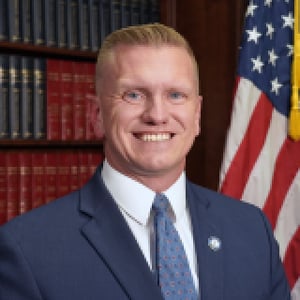
Justin manages the Office's Civil Division. He previously served as a litigator in the Attorney General's Office, where he brought complex cases, including against the manufacturers and distributors of deadly opioids. Along with almost two decades of private practice in a large Kentucky law firm, Justin served as the General Counsel of the Kentucky Cabinet for Health and Family Services and as Commissioner of the Kentucky Boxing & Wrestling Commission.
Partner, Fusion Law, PLLC
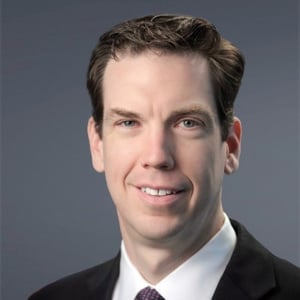
Paul is the founding partner of Fusion Law, PLLC. He has extensive experience with state, federal, and global regulators building coalitions and implementing policies to promote innovation in financial services. He is responsible for designing and implementing the first state (Arizona) and federal (CFPB) FinTech sandboxes in the United States. He also designed the CFPB no-action letter and trial disclosure policies. He helped found the first global regulatory innovation coalition (Global Financial Innovation Network) and led the founding of the first U.S. regulatory innovation coalition (American Consumer Financial Innovation Network). He served on the Financial Stability Oversight Council subcommittee on digital assets. He also has drafted state-level laws on blockchain and utility tokens.
Paul also has significant enforcement and litigation experience. He led many multi-state consumer protection enforcement matters as Civil Litigation Division Chief at the Arizona Attorney General’s Office.
Prior to his government service, Paul practiced law in the areas of securities litigation and transactional work for approximately six years at two well-known law firms. He also clerked on the U.S. Court of Appeals for the Fourth Circuit.
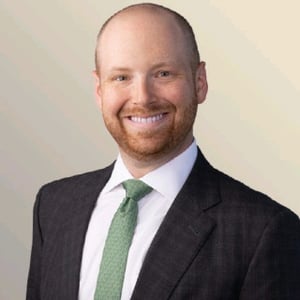
Solicitor General, Iowa Office of the Attorney General
Eric Wessan serves as Iowa’s Solicitor General in the Iowa Attorney General’s Office. In that role, Wessan leads Iowa’s litigation before State and federal appellate courts, including the Iowa and U.S. Supreme Courts. Before that role, Wessan worked on complex commercial litigation at two large law firms in Chicago. Wessan also served as a law clerk for the Honorable James C. Ho on the U.S. Court of Appeals for the Fifth Circuit and for the Honorable John F. Kness on the U.S. District Court for the Northern District of Illinois. Wessan is a graduate of the University of Chicago Law School, with honors, and of the University of Chicago.
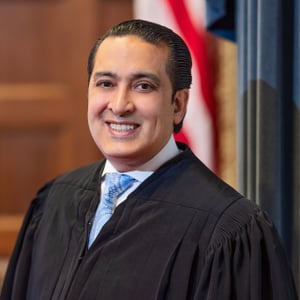
Judge, United States Court of Appeals, Sixth Circuit
John B. Nalbandian serves as a United States Circuit Judge from Kentucky on the U.S. Court of Appeals for the Sixth Circuit. He was nominated and confirmed to that position in 2018. Prior to that, Judge Nalbandian was a partner in the litigation practice group of Taft Stettinius & Hollister LLP in Cincinnati, where he served as the firm’s lead appellate lawyer and also practiced complex litigation in state and federal courts. Judge Nalbandian was board certified by the Ohio State Bar Association as a specialist in appellate law. Prior to joining Taft, Judge Nalbandian practiced for five years in the appellate section of Jones Day in Washington, DC. Upon graduation from law school, Judge Nalbandian clerked for the Honorable Jerry E. Smith of the U.S. Court of Appeals for the Fifth Circuit in Houston. While in private practice, he also served as a board member of the State Justice Institute, a nonprofit organization established by the federal government to improve the administration of justice in state courts. He served as President of the Cincinnati Lawyers Chapter of the Federalist Society. He has also been involved in his community as a board member of the Greater Cincinnati Minority Counsel Program, and as a board member of the Asian Pacific Bar Association of Southwest Ohio. Judge Nalbandian earned his B.S., magna cum laude, from the Wharton School at the University of Pennsylvania and his J.D. from the University of Virginia School of Law, where he was inducted into the Order of the Coif and served as managing editor of the Virginia Law Review.

John S. Battle Professor of Law, University of Virginia School of Law
Julia D. Mahoney teaches courses in property, government finance, constitutional law and nonprofit organizations. A graduate of Yale Law School, she joined the University of Virginia faculty as an associate professor in 1999 and is now John S. Battle Professor of Law. She has also taught at the University of Southern California Law School and the University of Chicago Law School, and before entering the legal academy, practiced law at the New York firm Wachtell, Lipton, Rosen & Katz. Her scholarly articles include works on land preservation, eminent domain, health care reform and property rights in human biological materials.

Professor of Law, Northwestern University Pritzker School of Law
Joshua Kleinfeld teaches and writes about political, legal, and moral philosophy, criminal law, and criminal procedure. He also practices law in Northwestern's Juvenile Criminal Defense Clinic. He is a full professor with tenure at the Northwestern Pritzker School of the Law and (by courtesy) in Northwestern’s philosophy department. In 2017-18, he was a visiting professor at Harvard and Stanford Law Schools. He is the recipient of the Bator Award, given annually to one American law professor under the age of 40 who has demonstrated "excellence in legal scholarship, a commitment to teaching, a concern for students, and who has made a significant public impact."
In philosophy, Kleinfeld's research focuses on the idea of "embodied ethical life," as developed in the socio-theoretic tradition of Hegel, Weber, and Durkheim. This tradition aims to understand and critique social life by bringing to light the normative ideas implicit in social practices and institutions. In law, this means that the most interesting philosophical concepts are often those reflected or actualized in legal practice – in the law as judges and lawyers think of it and wield it.
In criminal law and procedure, Kleinfeld has developed a theory known as "reconstructivism," which holds that the chief office of criminal law is not to dole out retributive justice, nor to optimize crime and cost control, but to reconstruct a violated normative order in the wake of a crime. This work, which draws on the thought of Hegel, Durkheim, Jean Hampton, and Antony Duff, develops an alternative to retributive and utilitarian theories of criminal law by focusing on the distinctive social function and sense of justice at work in the criminal system.
Kleinfeld is also involved in practical criminal justice reform. In this vein, he defends children accused of homicide in the Northwestern Juvenile Criminal Defense clinic and assists in litigation efforts meant to reform American criminal law through the courts. He has also developed a view of criminal justice reform known as "democratization," which holds that the root of the American criminal justice crisis is a set of bureaucratic attitudes, structures, and incentives divorced from the American public’s concerns and sense of justice, and that the primary solution is to make criminal justice more community-focused and responsive to lay influences. Working with others, he has developed a number of policy proposals meant to reform American criminal justice in a democratic direction.
Kleinfeld holds a JD from Yale Law School, a PhD in philosophy from the Goethe University of Frankfurt (supervised by Axel Honneth, Klaus Günther, and Rainer Forst), and a BA in philosophy from Yale College. He clerked for Judge J. Harvie Wilkinson on the United States Court of Appeals for the Fourth Circuit; Judge Janice Rogers Brown on the United States Court of Appeals for the D.C. Circuit; and President (chief justice) Aharon Barak of the Supreme Court of Israel. He worked as an Associate at Debevoise & Plimpton LLP in Frankfurt, Germany, in the area of corporate criminal law. Before law school, he worked as a Senior Research Analyst at the White House’s Council on Bioethics.
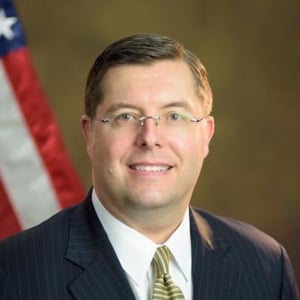
Chief Deputy Attorney General
Ryan Newman is currently Chief Deputy Attorney General for Florida Office of the Attorney General.
During the first Trump Administration, he served as Counselor to the United States Attorney General for national security and international affairs, Deputy General Counsel (Legal Counsel) for the Department of Defense, and Acting Assistant Attorney General for the Office of Legal Policy at the Department of Justice. Prior to serving in the Executive Branch, Ryan was Chief Counsel to United States Senator Ted Cruz during the 114th Congress.
Ryan served as a law clerk to the Honorable Samuel A. Alito, Jr. on the United States Supreme Court, the Honorable Richard J. Leon on the United States District Court for the District of Columbia, and the Honorable J.L. Edmondson on the United States Court of Appeals for the Eleventh Circuit.
Prior to law school, Ryan was an armor officer in the United States Army assigned to the 1st Squadron, 10th U.S. Cavalry Regiment (Buffalo Soldiers). He deployed to Iraq in 2003 for Operation Iraqi Freedom.
Ryan graduated from the United States Military Academy at West Point in 1998. He earned his law degree with high honors from The University of Texas School of Law in 2007.

Senior Vice President, Strategic Initiatives & Special Counsel to the President, Alliance Defending Freedom
Ryan Bangert serves as senior vice president for strategic initiatives and special counsel to the president at Alliance Defending Freedom. He oversees ADF’s Blackstone Legal Fellowship and Research & Innovation Team. He also advises executive leadership on strategic initiatives.
Before joining ADF, Bangert served as deputy first assistant attorney general and deputy for legal counsel in the office of the Texas attorney general, and as deputy for civil litigation for Missouri Attorney General Josh Hawley. Prior to his government service, Bangert was a litigation partner at Baker Botts L.L.P., where he was a member of the firm’s commercial litigation and appellate practice sections.
Bangert has been published at First Things, Civitas Outlook, Law & Liberty, National Review, Daily Wire, The Hill, Washington Examiner, The Federalist, Fox News, and the American Reformer. He speaks nationally on constitutional, cultural, and religious liberty issues. He also serves as Visiting Faculty in Law at the University of Austin.
He earned his J.D. from Southern Methodist University, where he was a Hatton Sumners scholar and graduated first in his class. Following law school, he clerked for the Honorable Patrick E. Higginbotham on the Fifth Circuit Court of Appeals.

General Counsel, xAI and X
John S. Battle Professor of Law, University of Virginia School of Law
Julia D. Mahoney teaches courses in property, government finance, constitutional law and nonprofit organizations. A graduate of Yale Law School, she joined the University of Virginia faculty as an associate professor in 1999 and is now John S. Battle Professor of Law. She has also taught at the University of Southern California Law School and the University of Chicago Law School, and before entering the legal academy, practiced law at the New York firm Wachtell, Lipton, Rosen & Katz. Her scholarly articles include works on land preservation, eminent domain, health care reform and property rights in human biological materials.
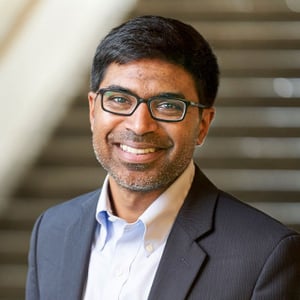
New York Alumni Chancellor's Chair in Law, Vanderbilt University Law School
Ganesh Sitaraman teaches and writes about constitutional law, the regulatory state, economic policy, democracy and foreign affairs. He joined the Vanderbilt Law faculty in 2011 and was named to the New York Alumni Chancellor's Chair in Law in 2021.
Sitaraman’s most recent book is The Great Democracy: How to Fix Our Politics, Unrig the Economy, and Unite America (Basic Books, 2019). He is also the co-author, with Anne Alstott, of The Public Option (Harvard Univ. Press, 2019), and the author of The Crisis of the Middle-Class Constitution: Why Economic Inequality Threatens Our Republic (Alfred A. Knopf, 2017), which was one of The New York Times’ 100 notable books of 2017, and The Counterinsurgent’s Constitution: Law in the Age of Small Wars (Oxford University Press, 2012), which won the 2013 Palmer Civil Liberties Prize.
Sitaraman is a public member of the Administrative Conference of the United States, a member of the American Law Institute, a senior fellow at the Center for American Progress, and a co-founder of the Great Democracy Initiative. He serves on the boards of The American Prospect, the American Constitution Society, and Foreign Policy for America. Sitaraman was also a longtime adviser to Elizabeth Warren, including serving as a senior adviser on her 2020 presidential campaign, her senior counsel in the Senate, and her policy director during her 2012 Senate campaign. He has been profiled in The New York Times and Politico for his work at the nexus of politics and ideas.
In 2018, Sitaraman was awarded an Andrew Carnegie Fellowship, and at Vanderbilt, he has been awarded a Chancellor’s Award for Research and a Chancellor’s Faculty Fellowship. In 2016, he was a visiting assistant professor at Yale Law School. Before joining Vanderbilt, Sitaraman was the Public Law Fellow and a lecturer at Harvard Law School, a research fellow at the Counterinsurgency Training Center – Afghanistan in Kabul, and a law clerk for Judge Stephen F. Williams on the U.S. Court of Appeals for the D.C. Circuit.
An Eagle Scout and a Truman Scholar, he earned his A.B. in government magna cum laude from Harvard College, a master’s degree in political thought from Emmanuel College, Cambridge, where he was the Lionel de Jersey Harvard Scholar, and his J.D. magna cum laude from Harvard Law School, where he was an editor of the Harvard Law Review.
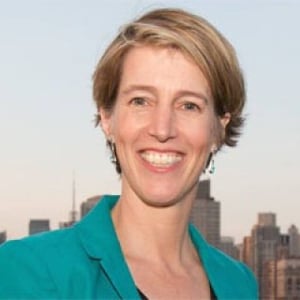
Professor of Law, Fordham Law School
Zephyr Teachout is a Professor at Law at Fordham Law School where she focuses on the intersection of corporate power and political power. She teaches corporations, election law, antitrust, and prosecuting white collar crime. Her most recent book, Break 'em Up (2020), makes a case for reimagining the relationship between democracy and antimonopoly law. Her prior book, Corruption in America (2014), argued that the American constitutional system has an embedded anti-corruption principle that has been discarded by the modern Court. Her public writings have appeared in the New York Times, Foreign Affairs, New York Review of Books, Washington Post, The Nation and The New Republic. In 2021, she took a leave to work as Special Advisor and Senior Counsel for Economic Justice at the New York Attorney General's Office. Before Law School, Zephyr Teachout had a career as a digital consultant and nonprofit entrepreneur, and represented clients on death row in North Carolina. She was a Law Clerk to then-Chief Judge Edward R. Becker., of the U.S. Court of Appeals for the Third Circuit.
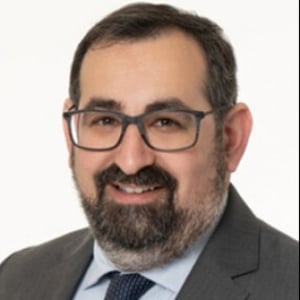
Research Scholar in Law and Executive Director, Center for Academic Freedom and Free Speech, Yale Law School
Joe Cohn is a research scholar in law at Yale Law school and the executive director of the Center for Academic Freedom and Free Speech (CAFFS).
Cohn has served as a staff attorney at the AIDS Law Project of Pennsylvania, a staff attorney for the Court of Appeals for the 3rd Circuit, an adjunct professor of law at the University of Pennsylvania Law School, where he supervised law students representing clients in litigation in state and federal courts, and as the interim legal director for ACLU affiliates in Nevada and Utah.
A majority of Cohn’s career has been dedicated to defending civil liberties on college campuses and free expression in society at large. As the Foundation for Individual Rights and Expression’s (FIRE’s) founding legislative and policy director, from 2012 to 2023, he testified on numerous occasions in legislatures across America and in Congress, drafted legislation on campus free speech, campus due process, and academic freedom that has been enacted in states across the country. Immediately before joining CAFFS, Cohn advocated for open inquiry, viewpoint diversity, and constructive disagreement in higher education as Heterodox Academy’s director of policy.
Cohn writes extensively on civil liberties, with articles published in a wide array of media outlets, including the Wall Street Journal, the Washington Post, Newsweek, the Hill, the New York Daily News, the Chicago Tribune, the Las Vegas Review Journal, the Minnesota Star Tribune, the Chronicle of Higher Education, Inside Higher Ed, and the Volokh Conspiracy.
He earned his bachelor of arts from the University of Nevada at Las Vegas in 2000. He is a 2004 graduate of the University of Pennsylvania Carey School of Law and the Fels Institute of Government Administration, where he earned his J.D. and M.A. in Government Administration.
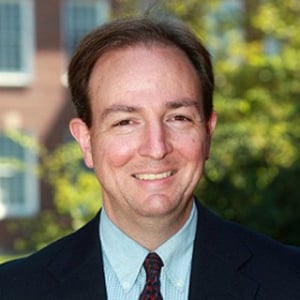
Political Science, Professor and Department Chair, University of Nebraska Omaha
Carson Holloway is Department Chair and Professor of Political Science at the University of Nebraska, Omaha and a Washington Fellow in the Claremont Institute’s Center for the American Way of Life. He is the author most recently of No Liberty to Libel: The Constitutional Case Against New York Times v. Sullivan (Encounter Books, 2026). He is co-editor, with Bradford P. Wilson, of The Political Writings of Alexander Hamilton (Cambridge University Press, 2017) and The Political Writings of George Washington (Cambridge University Press, 2023). He has held visiting fellowships in Princeton University’s James Madison Program in American Ideals and Institutions and at the Heritage Foundation. His scholarly articles have appeared in the Review of Politics, Interpretation, and Perspectives on Political Science, and he has written public commentary for The New Criterion, First Things, National Affairs, Public Discourse, National Review, Law and Liberty, The Federalist, the American Spectator, and the American Conservative.

Partner, Thomas & LoCicero PL
Carol is the managing partner in TLo's Tampa office. She practices at the trial and appellate levels, handling litigation concerning defamation and privacy, the Public Records Act, the Government in the Sunshine Law, court access and cameras in the courtroom. She leads advocacy efforts on media issues, including cameras in the courtroom, and sealed court records.
Carol is a nationally-recognized media lawyer routinely sought after as a speaker on media issues at national and statewide conferences. She often leads statewide advocacy efforts on media issues, most recently involving access to Florida courts and Florida’s anti-SLAPP law. Carol regularly renders pre-and post-publication advice on investigative news stories. She handles issues concerning newsgathering and technology – including smartphones, social media and drones. Carol has litigated many cases resulting in published opinions. In addition to media law, Carol is experienced in marketing law, web law and intellectual property matters. She manages trademark portfolios, policing programs and litigation for sophisticated corporations.
Carol is the Immediate Past Chair for the First Amendment Foundation's Board of Trustees. She is a former board member of the Junior League of Tampa, former vice-chair of the Media Law Committee of The Florida Bar, and is a governing committee member of the ABA Forum on Communications Law. She has litigated capital habeas cases with other lawyers in the firm. Carol also serves as the Program Coordinator for End 68 Hours of Hunger – Tampa, a charity dedicated to eradicating hunger among school children. She is an active member of Hyde Park Presbyterian Church.
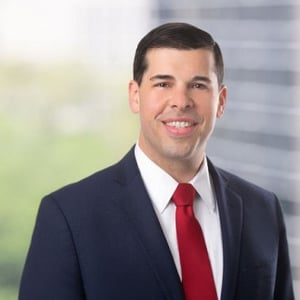
Partner, Boies Schiller Flexner LLP
Jesse, the former third-ranking official at the U.S. Department of Justice, helps clients with their most difficult litigation and regulatory issues─whether that means defending against an enforcement action, pursuing high-stakes litigation and appeals, navigating regulatory thickets at federal and state agencies, or crafting a comprehensive strategy to manage a crisis. He approaches these problems with the knowledge gained both from his broad private-practice experience and from having served at the highest levels of federal and state government.
Jesse has experience across a range of substantive and regulatory areas. He has sued the federal government and has also been one of its top law-enforcement officials; he has represented states and has also navigated their regulatory agencies on behalf of clients; and he has represented companies in business disputes, both as defendants and plaintiffs.
Before joining the firm, Jesse was the Acting Associate Attorney General at the United States Department of Justice. In that role, he oversaw the civil and criminal work of the Antitrust, Civil, Civil Rights, Environment and Natural Resources, and Tax Divisions. During Jesse’s tenure, the Associate’s office closely managed the Department’s most significant litigation, including matters involving large financial institutions, healthcare companies, automakers, energy companies, and state and local governments. In addition, Jesse served as Chair of DOJ’s Regulatory Reform Task Force and Vice Chair of DOJ’s Task Force on Market Integrity and Consumer Fraud. Jesse regularly provided legal and strategic advice to the highest-level decision makers in the federal government, including the Attorney General and Deputy Attorney General, general counsels across the spectrum of federal agencies, and White House officials.
Jesse served for three years as the secretary of Florida’s labor, economic-development, and land-use agency, the Florida Department of Economic Opportunity. Before that, he served as Governor (now Senator) Rick Scott’s general counsel.
Jesse maintains offices in both Washington D.C. and Florida. From Washington, he focuses on federal litigation and crisis management. In Florida, in addition to federal litigation, Jesse employs his knowledge of state government and regulation to help clients in courts across the state, from trial through the Florida Supreme Court.
Jesse currently serves on the Florida Supreme Court Judicial Nominating Commission, the body that provides the governor with nominees for appointment to the Florida Supreme Court. Jesse is also a fellow at the Center for the Study of the Administrative State at the Scalia Law School at George Mason University, where he writes and speaks about administrative law.
Counsel, Clare Locke
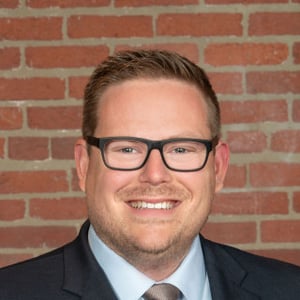
Jered is an experienced litigator relied upon by his clients to deliver practical and exacting legal advice guided by sound business judgment. He has spent his career representing clients ranging from Fortune 500 companies to controversial high-profile figures in sensitive and sometimes existential crises requiring extraordinary discretion.
Prior to joining Clare Locke, Jered was the chief legal officer of media non-profit Project Veritas, through which he managed a team of lawyers working on reputational risk. During his time at Veritas, Jered and his team obtained over five dozen corrections and retractions and avoided countless more inaccurate articles. Jered also oversaw a portfolio of defamation lawsuits, including Project Veritas’ lawsuit against The New York Times in which Clare Locke defeated The Times’ motion to dismiss – the first defamation case to survive New York’s newly-expanded anti-SLAPP law.
Jered has successfully represented clients in litigation and appeals in federal and state courts across the country. Throughout his career, Jered has handled a variety of matters, including media liability, fraud and deceptive trade practices, financial services, construction and real estate, bankruptcy, and harassment. Jered served as lead trial counsel in securing one of 2019’s top 50 highest bench awards in the United States in a real estate dispute, and in obtaining a first-of-its-kind national injunction and receivership over a fraudster leading to federal incarceration and a permanent restraining order.
Professor of Law, Northwestern University Pritzker School of Law
Joshua Kleinfeld teaches and writes about political, legal, and moral philosophy, criminal law, and criminal procedure. He also practices law in Northwestern's Juvenile Criminal Defense Clinic. He is a full professor with tenure at the Northwestern Pritzker School of the Law and (by courtesy) in Northwestern’s philosophy department. In 2017-18, he was a visiting professor at Harvard and Stanford Law Schools. He is the recipient of the Bator Award, given annually to one American law professor under the age of 40 who has demonstrated "excellence in legal scholarship, a commitment to teaching, a concern for students, and who has made a significant public impact."
In philosophy, Kleinfeld's research focuses on the idea of "embodied ethical life," as developed in the socio-theoretic tradition of Hegel, Weber, and Durkheim. This tradition aims to understand and critique social life by bringing to light the normative ideas implicit in social practices and institutions. In law, this means that the most interesting philosophical concepts are often those reflected or actualized in legal practice – in the law as judges and lawyers think of it and wield it.
In criminal law and procedure, Kleinfeld has developed a theory known as "reconstructivism," which holds that the chief office of criminal law is not to dole out retributive justice, nor to optimize crime and cost control, but to reconstruct a violated normative order in the wake of a crime. This work, which draws on the thought of Hegel, Durkheim, Jean Hampton, and Antony Duff, develops an alternative to retributive and utilitarian theories of criminal law by focusing on the distinctive social function and sense of justice at work in the criminal system.
Kleinfeld is also involved in practical criminal justice reform. In this vein, he defends children accused of homicide in the Northwestern Juvenile Criminal Defense clinic and assists in litigation efforts meant to reform American criminal law through the courts. He has also developed a view of criminal justice reform known as "democratization," which holds that the root of the American criminal justice crisis is a set of bureaucratic attitudes, structures, and incentives divorced from the American public’s concerns and sense of justice, and that the primary solution is to make criminal justice more community-focused and responsive to lay influences. Working with others, he has developed a number of policy proposals meant to reform American criminal justice in a democratic direction.
Kleinfeld holds a JD from Yale Law School, a PhD in philosophy from the Goethe University of Frankfurt (supervised by Axel Honneth, Klaus Günther, and Rainer Forst), and a BA in philosophy from Yale College. He clerked for Judge J. Harvie Wilkinson on the United States Court of Appeals for the Fourth Circuit; Judge Janice Rogers Brown on the United States Court of Appeals for the D.C. Circuit; and President (chief justice) Aharon Barak of the Supreme Court of Israel. He worked as an Associate at Debevoise & Plimpton LLP in Frankfurt, Germany, in the area of corporate criminal law. Before law school, he worked as a Senior Research Analyst at the White House’s Council on Bioethics.

Director of Research, American Economic Liberties Project
Matt Stoller is a public intellectual who writes about the American anti-monopoly
tradition. He is the author of the Simon and Schuster book Goliath: The Hundred Year
War Between Monopoly Power and Democracy. Stoller is the Director of Research at
the American Economic Liberties Project. He publishes an email newsletter called BIG.
Stoller is a former policy advisor to the Senate Budget Committee, and worked in the House of Representatives on the Dodd–Frank Wall Street Reform Act.
He has lectured on competition policy and media at Columbia University, Harvard Law, Duke Law, Bertelsmann Foundation, Vrije Universiteit Brussel, West Point and the National Communications Commission of Taiwan. His writing has appeared in the Washington Post, the New York Times, Fast Company, Foreign Policy, the Guardian, Vice, The American Conservative, and the Baffler.
He has also produced for MSNBC and starred in a short-lived television show on FX called Brand X with Russell Brand.

Partner, Barr & Klein PLLC
Steve Klein, a partner at Barr & Klein PLLC, is an experienced free speech attorney who has successfully fought for the First Amendment rights of his clients against local, state and federal regulators. As a lobbyist, Steve’s advocacy has led to the successful amendment of state laws to respect political engagement and prevented the enactment of laws that burden it. Steve has published articles in several legal journals, and his commentary has appeared in The Wall Street Journal, The Washington Times, The Detroit News, and other outlets. Steve earned a bachelors degree in politics at Hillsdale College and a law degree from Ave Maria School of Law, where he served as Managing Editor of the Ave Maria Law Review. He is licensed to practice law in the District of Columbia, Illinois and Michigan.

Courthouse Steps Oral Argument: Little v. Hecox and West Virginia v. B.P.J.
Sarah Parshall Perry, William E. Trachman
Little v. Hecox and West Virginia v. B.P.J., both involve the question of whether states...
SOC! SIDEBAR: March Madness
Benjamin Beaton
The Federalist Society's Student Division, Penn Law School Chapter, & University of Virginia School of...
A Conversation on the Right: The Future of the SEC & Cryptocurrency
Katie Biber, Justin Clark, Paul N. Watkins, Eric Wessan
What does the new administration mean for cryptocurrency regulation and the balance of authority between...
SOC! SIDEBAR: Whiskey & Cigars
John B. Nalbandian
The Federalist Society's Student Division & Rutgers Law School-Newark Chapterpresent SOC! SIDEBAR:Whiskey & Cigars featuring...
Open Minds with Prof. Julia Mahoney and Prof. Joshua Kleinfeld - Part I
Julia D. Mahoney, Joshua Kleinfeld
In Part I, Professor Julia Mahoney joins Professor Joshua Kleinfeld to delve into the complexities...
Open Minds: Concentrated Control, Acceptable Opinions, and Corporate Influence Part 2
Ryan Dean Newman
In Part 2 of Open Minds with Ryan Newman, we discuss government and private coercion...
NetChoice and the Future of State Regulation of Big Tech
Ryan L. Bangert, James M. Burnham, Julia D. Mahoney, Ganesh Sitaraman, Zephyr Teachout
A panel of experts from a variety of political perspectives will discuss the range of...
Panel I: New York Times v. Sullivan
Joe Cohn, Carson Holloway, Carol Jean Locicero, Jesse Panuccio, Jered Ede
In 1964, the U.S. Supreme Court issued its opinion in New York Times v. Sullivan...
Open Minds: Who is Exercising Private Power and What Do They Control? Part 2
Joshua Kleinfeld, Matt Stoller
In the second part of this interview, Matt and Prof. Kleinfeld discuss the roots of...
Courthouse Steps: Minnesota Voters Alliance v. Mansky
Stephen R. Klein
Most states have laws that prohibit electioneering within polling places on election day, and the...